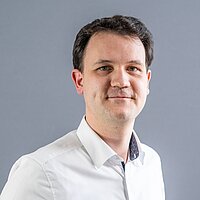
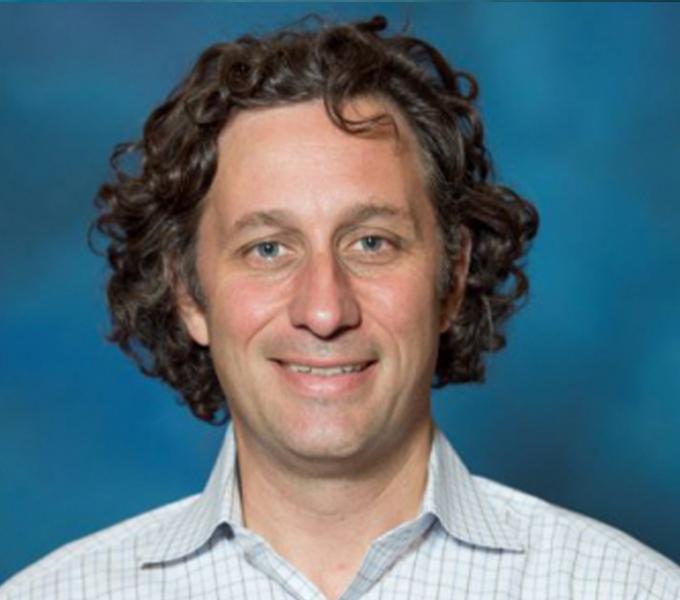
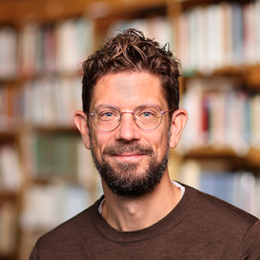
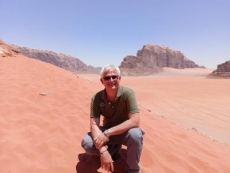
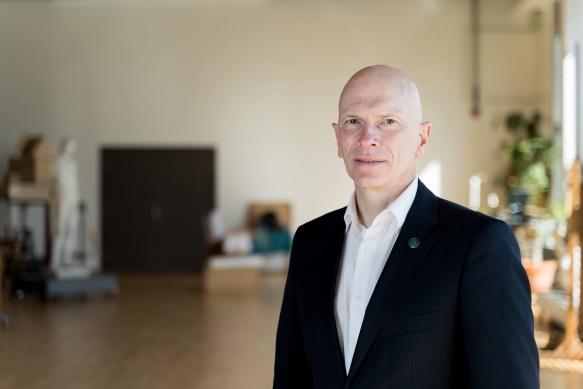
Balandino Di Donato is a Lecturer in interactive audio at Edinburgh Napier University's School of Computing Engineering and the Built Environment. His research focuses on soundscapes in mountaineering environments and embodied human-computer interaction in music. He led AHRC-funded projects on Sound Design Pipeline for Cross-platform 360 Virtual Productions BSL in Embodied Music Interaction and chaired the Audio Mostly 2023 conference. Education includes a 2021 PhD from Royal Birmingham Conservatoire (Birmingham City University) in Designing Embodied Human-Computer Interactions in Music Performance . Prior academic roles featured collaborations with Goldsmiths (ERC BioMusic project), De Montfort University (Creative AI Dataset), and University of Leicester (INCITE project). Research spans Mountain soundscape analysis Accessible audio-visual-haptic systems Biosignal-driven musical instruments 360 audio design British Sign Language integration Interactive sound art installations Scientific achievements include Biennale awards (2018, 2019) Audio Mostly steering committee Conference chair and session roles EPSRC and AHRC grant reviewer
Lais Barbudo Carrasco is a Senior Lecturer in Archival and Information Science at Mid Sweden University's Department of Communication, Quality Technology and Information Systems (KKI). Her academic credentials include a 2019 PhD in Information Science and a 2024 Master's by Research in Media and Communication Science from MIUN. Bachelor's in Library and Information Science Master's in European Digital Media and Cultural Heritage Studies Her research focuses on digital representation , metadata , and cultural heritage with active participation in international initiatives like: Europeana Data Model (EDM) CIDOC CRM Interest Group International Council on Archives (ICA) RiC Model Current projects emphasize Indigenous data governance , exploring: CARE Principles (Collective Benefit, Authority to Control, Responsibility, Ethics) Local Contexts Labels for culturally appropriate data management Participatory approaches to Indigenous knowledge systems Parallel research examines AI ethics and algorithmic bias , addressing: Power dynamics in digital systems Justice-driven technological frameworks Human-centered information governance She applies social constructionist and DEI (Diversity, Equity, Inclusion) perspectives in: Strategic communication for cultural organizations Transformative meaning-making practices Digital preservation ethics
Frank Reinhold serves as Professor of Mathematics Education at the University of Education Freiburg (Pädagogische Hochschule Freiburg), where he leads the Institute for Mathematical Education. His academic career spans research, teaching, and leadership roles focused on mathematics education and digital learning environments. Previously, he held postdoctoral positions at both the University of Education Freiburg and Technical University of Munich, where he completed his PhD in Mathematics Education in 2018. His educational background includes a PhD from Technical University of Munich (2018), State Examination for Gymnasium Teaching in Mathematics and Physics from University of Regensburg (2012), and undergraduate studies in Mathematics and Physics Education at University of Regensburg (2007-2012). Before his academic career, he worked as a high school teacher at Wilhelm-Hausenstein-Gymnasium Munich (2014-2017). Reinhold's research centers on mathematics education with emphasis on digital tools, fraction learning, cognitive processes, and teacher training. His work explores how technology-enhanced learning environments impact mathematical understanding, particularly in fraction concepts and statistical reasoning. He investigates cognitive processes through methods like eye-tracking and process data analysis from digital learning environments, examining how students develop conceptual understanding and how teachers can effectively diagnose and address misconceptions. His research portfolio includes significant projects such as Di.ge.LL2 (Digital teaching-learning settings for cognitive activation), eye-teach-stats (teacher training with eye-tracking vignettes), frACTIONs (learning fractions with digital tools), and MINT-ProNeD (professional networks for adaptive innovations in STEM teacher education). These projects collectively address how digital tools can enhance mathematical understanding while considering individual differences among learners. Scholarship for postdoctoral researchers 2021 from Daimler and Benz Foundation GDM Dissertation Award 2020 for outstanding mathematics education dissertation Nomination for Polytechnik-Preis 2019: Dealing with Diversity in MINT Education As a mentor, Reinhold guides doctoral students and emerging researchers in mathematics education. His research is supported by substantial funding from organizations including the German Federal Ministry of Education and Research (BMBF), Baden-Württemberg Ministry of Science, Research and Art, and Erasmus+. He serves as scientific advisor to the State Institute for School Quality and Educational Research (ISB) Munich and participates in expert panels for educational initiatives in Baden-Württemberg. Reinhold co-leads the working group 'Mathematics Education and Digital Tools (AK MdW)' of the Society for Didactics of Mathematics (GDM) and contributes to the development of educational standards for digital mathematics instruction. His collaborative work spans international partnerships with institutions in Germany, the Netherlands, Belgium, and Colombia, reflecting a commitment to advancing mathematics education through both theoretical insight and practical classroom applications.
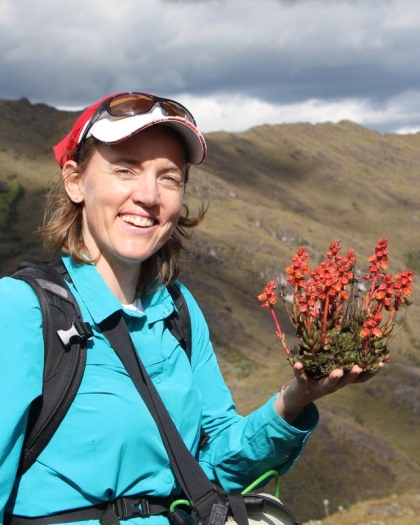
Suzette Flantua is a Researcher at the Department of Biological Sciences (BIO) , University of Bergen, Norway. She leads the PPF-Alpine project (2022-2026), funded by the Trond Mohn Foundation and the University of Bergen, integrating biology, geography, and climatology for mountain biodiversity conservation. Her research focuses on Global change ecology through macroecology, biogeography, and paleoecology Climate-biodiversity dynamics across past, present, and future time scales GIS and remote sensing applications in spatial analysis Historical environmental impacts on tropical mountain ecosystems Recent studies highlight 2025: Advancing paleoecological data standardization for global biomes 2024: Quantifying fire regime changes and bridging ecological disciplines through publishing guidelines 2023: Investigating diurnal temperature effects on plant elevation ranges and anthropogenic pollen indicators She contributes to Outreach via video communication about sustainability and has been featured in Science , Nature Geoscience , and J. Biogeography papers, with media coverage from Smithsonian Tropical Research Institute and Phys.org . Her work spans fieldwork in Andean expeditions, teaching university courses in GIS and global change, and organizing scientific events.
Stephen J. Quigley serves as a Teaching Professor in the Department of English at the University of Pittsburgh's Dietrich School of Arts & Sciences, where he teaches in the Digital Narrative and Interactive Design (DNID) Program. His academic affiliations include Homewood CEC, Pitt Cyber, Remake Learning, and the STEM Coding Lab. Quigley's research centers on digital rhetoric and basic coding education, with particular focus on craft theory applications in digital composition. His work bridges woodworking craftsmanship principles with digital pedagogy, emphasizing scaffolded learning approaches where technical skills inform theoretical development. Key projects include Open Fuego web tools for classroom coding integration and My Nature Study for environmental digital literacy. His publication portfolio demonstrates consistent contributions to digital humanities journals including Kairos , Reflections , and Computers and Composition Online . Recent work analyzes multimodal environmental education frameworks and digital archiving practices, showing strong interdisciplinary connections between rhetoric, computer science, and environmental studies. Quigley actively participates in educational technology initiatives, serving on the Senate Computing Committee and contributing to NSF-funded Computer Science for All (CSforALL) projects. His teaching portfolio spans technical communications, digital composing, usability studies, and project-based design courses that integrate writing with computational thinking.
Staffan Bergwik , Professor at Stockholm University 's Department of Culture and Aesthetics , specializes in the cultural history of modern natural sciences . His research intersects themes of temporality , science-society dynamics , and visual-sensory epistemologies . 2025-2027: Leading Temporalities of Science project funded by Riksbankens Jubileumsfond 2024: Published Terranauterna on aerial exploration technologies 2022: Co-edited Times of History, Times of Nature with Anders Ekström His methodological innovations include teaching theory/practice courses for humanities and STEM students, while anthology work redefines temporal analysis frameworks. Current focus on postwar scientometric policies reveals how measurement systems shaped scientific futures. Google Scholar publications (2014-2025) demonstrate chronotopic expertise across: Scientific emotion studies Expeditionary visualization Interdisciplinary temporal analysis Historiographic methodology Science education evolution As Science and Modernization program participant (2013-2018), he connected STS frameworks to engineering pedagogy while maintaining 100% data ownership research ethics.
Björn Johansson is a Professor at Chalmers University of Technology, specializing in Production Systems. His research focuses on sustainability aspects of manufacturing through virtual tools, aiming to minimize environmental, social, and economic impacts. Key methodologies include flow simulation, dynamic environmental assessments, 3D visualization, and layout optimization. Primary research areas: Sustainable Manufacturing, Digital Twins, Environmental Impact Assessment Collaborations: Mélanie Despeisse, Henrik Söderlund, and others in automotive, battery production, and maritime industries His work emphasizes integrating digital technologies (e.g., VR, IoT) with sustainable practices, addressing challenges in supply chain resilience, human-robot collaboration, and circular economy models. Recent studies explore VR training environments, 5G-enabled manufacturing, and extended reality (XR) frameworks. Current projects involve 44 initiatives across battery systems, servitization, and digitalization for sustainability. Publications span 179 articles, including topics like digital twin implementation, ergonomic VR assessments, and hybrid simulation models for environmental analysis.
Sean Michael is a Professor at Utah State University (USU) within the S.J. & Jessie E. Quinney College of Agriculture & Natural Resources, affiliated with the Landscape Architecture & Environmental Planning (LAEP) and Applied Sciences, Technology and Education (ASTE) departments. His work bridges landscape architecture with crime prevention and sustainable urban planning. Research Focus : Crime Prevention Through Environmental Design (CPTED), urban park security, and sustainable landscapes. Academic Contributions : Explored scholarly production trends, security design strategies, and historical preservation in landscape architecture.
Dr. Melike Schalomon serves as Dean of the Faculty of Arts and Science and Professor in the Department of Psychology at MacEwan University, Edmonton, Alberta. Her enduring commitment since completing her PhD has shaped the university's academic trajectory and research infrastructure, particularly through pioneering animal research programs. Her academic foundation includes advanced training in neuroscience: PhD, University of Alberta M.Sc., University of Alberta B.Sc., Laurentian University Dr. Schalomon's research centers on behavioural neuroscience using zebrafish models to investigate anxiety, memory, and neuropharmacological mechanisms. She develops innovative behavioural paradigms to assess pharmaceutical impacts on neural function, bridging neuroanatomy, psychopharmacology, and animal methodology. Her secondary research explores human sexuality in autism spectrum disorder, examining sexual orientation dynamics in neurodiverse populations. Analysis of her publication history reveals a dominant focus on zebrafish behavioural pharmacology since 2016, with increasing sophistication in anxiety and memory testing methodologies. Earlier work (2012-2014) established foundational contributions to autism and sexuality research, while recent publications (2023-2024) demonstrate methodological innovation in behavioural assessment and cross-disciplinary educational studies. Her distinguished contributions include: Distinguished Teaching Award, MacEwan University (2010) Dr. Schalomon actively mentors honours students and supervises senior independent research projects. Her institutional leadership spans multiple high-impact committees including Academic Planning and Quality Assurance (2020-present), Crisis Management Team (2018-present), Deans' Council (2018-2019, 2020-present), and Strategic Enrolment Management Steering Committee (2023-present), reflecting deep engagement in university governance. Her research operations involve specialized zebrafish behavioural neuroscience facilities at MacEwan, supporting collaborative work in anxiety pharmacology and memory mechanisms through standardized testing protocols developed within her team.
Emili García-Berthou is a prominent researcher affiliated with the Institute of Aquatic Ecology and the Department of Environmental Sciences at the University of Girona. His work focuses on understanding the impacts of human activities on freshwater fish, particularly species introductions, hydrologic alterations, and water quality degradation. As head of the GRECO research group, he leads studies on invasive species, ecosystem dynamics, and conservation strategies. Research Focus: Biological invasions, aquatic ecosystem health, environmental impact assessment. Methodologies: Species distribution modeling, genetic analysis, ecological time-series databases. Policy Engagement: Contributing to invasion science terminology standardization and EU invasive species lists. His recent publications emphasize global invasion patterns, human economic drivers of species spread, and physiological responses of fish to environmental stressors. While no explicit awards are listed, his editorial roles in journals like Biological Invasions highlight his influence in interdisciplinary ecological research.
Riccardo Morri is an Associate Professor at the Department of Modern Literature and Culture , Sapienza University of Rome . With a PhD in Geography (1999) and a Master in Human Geography (1993), he specializes in Historical Geography , Cartographic Education , and Public Geography . His work bridges geographical theory with educational practices and heritage preservation. Education PhD in Geography, University of Cassino (1999) Master in Human Geography, Sapienza University (1993) Morri's research focuses on historical urban landscapes , geographical heritage , and interdisciplinary methodologies . He explores how cartography and geography intersect with literature, memory, and education, particularly through projects like the MAGISTER initiative for territorial enhancement using geospatial tools. His recent publications (2022-2025) emphasize: Democratizing geographical knowledge Digital humanities applications in heritage studies Cartographic language in early childhood education Urban memory landscapes Participatory approaches to geographical heritage These works often integrate GIScience with cultural analysis and educational innovation. Scientific Awards include national qualifications as Full and Associate Professor, CNR's 'Promozione Ricerca 2005', and multiple research scholarships from Sapienza University and the Italian Foreign Office. Morri has: Led the MAGISTER Project (€165,000) for geospatial territorial enhancement Coordinated the Geocartography Laboratory at Sapienza since 2014 Managed EU-funded educational initiatives on remote sensing He serves on editorial boards for journals like J-Reading and Geotema , and organizes annual geography conferences with hundreds of participants.
Nils Kalstad serves as Associate Professor in Information Security at the Department of Information Security and Communication Technology (IIK) at the Norwegian University of Science and Technology (NTNU) and has been Director of NTNU Community Safety since January 2024. Previously, he directed NTNU's Center for Cyber and Information Security (2017-2023) and led the Department of Information Security and Communication Technology (2017-2023). His academic career began at Gjøvik University College where he served as Doctoral Fellow (2003-2008), Head of the Center for Cyber and Information Security (2014-2015), and Dean of the Department of Informatics and Media Technology (2014-2015). Kalstad earned a civil engineering degree from NTNU's Department of Mathematical Sciences followed by a PhD in information security from the University of Oslo. His doctoral dissertation 'Interdependencies in Critical Infrastructures: A Qualitative Approach to Model Physical, Logical, and Geographical Interdependencies' established his research foundation. He has maintained continuous academic appointment at NTNU since August 2008. His research focuses on cybersecurity, critical infrastructure protection, and community safety, with particular emphasis on modeling interdependencies between physical, logical, and geographical aspects of critical systems. Kalstad's work bridges theoretical security models with practical applications in emergency preparedness, examining vulnerabilities in communication networks, developing anomaly detection frameworks for control systems, and analyzing security policies. His competence areas include emergency preparedness, civil security, cybersecurity, information security, communication technology, and community safety. Analysis of Kalstad's publication record reveals a consistent trajectory from technical security mechanisms toward broader societal security frameworks. His early work focused on critical infrastructure interdependencies and SCADA systems security, while more recent publications address national security strategies and energy security. The pattern shows increasing emphasis on human factors in cyber defense and comprehensive community safety approaches. His research maintains strong connections between theoretical modeling and practical implementation needs. Kalstad serves on multiple national security advisory bodies including the National Reference Group for Civil Security (Research Council) since July 2024, the National Cyber Security Center Reference Group since February 2020, and the Forum for National ICT Security since April 2018. His leadership extends to various boards including NORSAR (since May 2019), the Norwegian Center for Information Security (NorSIS) (2017-2024), and Skeikampen skiarena AS (since October 2014). He has also contributed to NTNU's internal governance through committee service on equality and diversity, honorary doctorates, and academic integration.
François Demontoux is an Associate Professor at the University of Bordeaux, affiliated with the IMS Bordeaux research institute. He is part of the WAVES research group within the Department of Waves, Materials and Devices, focusing on electromagnetic waves, materials science, and digital accessibility. His work bridges engineering disciplines with social applications, particularly in making digital technologies accessible to people with disabilities. Dr. Demontoux's research spans two primary domains: electromagnetic wave applications in materials and structures, and digital accessibility for people with disabilities. In the first domain, he investigates microwave engineering, photonic crystals, soil moisture measurement, and non-destructive testing of concrete structures. In the second domain, he explores web accessibility standards, universal design principles, and assistive technologies for education. His publication record shows a clear evolution from technical electromagnetic research toward more interdisciplinary work integrating human factors. Early publications focused on microwave radiometry for soil moisture measurement and photonic crystal applications. More recent work emphasizes digital accessibility, particularly in educational contexts, showing his commitment to applying engineering expertise to social challenges. Web accessibility standards and evaluation Non-destructive testing of civil engineering structures Microwave remote sensing for environmental monitoring Assistive technologies for people with disabilities Photonic crystal applications Dr. Demontoux leads research within the WAVES group at IMS Bordeaux, which provides specialized facilities for electromagnetic testing and materials characterization. His team collaborates with industry partners including STMicroelectronics, Stellantis, and Thales through the GIS ALBATROS consortium.
Uģis Bratuškins is a Professor at Riga Technical University's Institute of Architecture and Design, holding this rank since 2012 after progressing from lecturer (1992–2003) to assistant professor (2003–2006) and associate professor (2006–2012). He concurrently serves as Vice-Rector of the Nordic-Baltic Academy of Architecture since 2013 and has held visiting professorships at institutions including Jona Minku University of Architecture (Bucharest), University of Sassari (Italy), HafenCity University (Hamburg), and Vilnius Gediminas Technical University. Education: Diploma of Architecture (1984) Master of Architecture (1994) Doctor of Architecture (2006) Bratuškins' research centers on identity and contemporary design of urban public outdoor spaces, with specialized focus on large housing estates, architectural heritage, and regeneration methodologies. His work integrates historical analysis (particularly Baltic and Latvian contexts) with contemporary challenges like digital placemaking and sustainable transformation, emphasizing practical applications in Riga's urban landscape. He examines tensions between socialist-era planning legacies and modern community needs through interdisciplinary lenses spanning architecture, sociology, and urban policy. Analysis of his 15 most recent publications (2018–2024) reveals dominant trends in participatory urban governance, mobility behavior in housing estates, and digital tools for heritage conservation. His scholarship consistently addresses Baltic regional contexts while engaging global frameworks like the 15-minute city concept, with strong emphasis on community-driven regeneration processes and the socio-spatial impacts of privatization on public spaces. As lead researcher, Bratuškins has directed significant projects including 'A new approach to high-quality European building culture' (2019–2022) on digital-craftsmanship integration and 'Modern Information Systems in Urban Regeneration' (2020–2022). He also contributed to architectural education reform through the EU standards-aligned restructuring project (2012–2016) and non-formal education initiatives in Latvia. His editorial roles span five academic journals across the Baltic region, including Scientific Proceedings of RTU and Journal of Architecture and Urbanism.
Jayan Chirayath Kurian is a Lecturer in Information Systems at the University of Technology Sydney's School of Computer Science within the Faculty of Engineering and Information Technology. He previously held academic positions at the University of the Sunshine Coast, Australian National University, and RMIT University in Vietnam. A Fellow of the Higher Education Academy (FHEA) and certified Pega Business Architect, Kurian brings extensive industry experience to his academic role. His educational background includes a PhD in Communication and Media Studies from the University of Canberra (2019), an M.Phil in Computer Science from the University of Nottingham, and professional certifications from PegaSystems, Oracle, Microsoft, and other leading technology providers. He also holds a Graduate Certificate in Tertiary Teaching and Learning from RMIT University. Kurian's research focuses on spatial computing applications, digital transformation in emergency management, and health informatics for chronic patient monitoring. His work bridges theoretical frameworks with practical implementations, particularly in mixed reality environments and digital health interventions. Recent projects examine dementia care technology, virtual reality for cognitive assessment, and metaverse applications in education. His publications demonstrate consistent output across prestigious venues including Computers & Education, Online Information Review, and various AIS conferences. The research shows a clear trajectory from social media analysis in emergency management toward increasingly sophisticated spatial computing applications in healthcare and education contexts. Fellow of the Higher Education Academy (2022-present) Canberra Citizen of the Year Award (2020) eINDIA Award for best ICT enabled University Invited to Google Summer of Code Mentors' summit Kurian has secured multiple research grants including the $5,000 performance bonus for the CogDec project under the ON Prime - CSIRO Program (2024), the Blue Sky Research Scheme ($10,000 from UTS), and several other projects through 2025. His teaching portfolio covers enterprise systems, creative programming, business informatics, and digital transformation courses. He actively supervises Masters and PhD students while collaborating with industry partners on practical technology implementations.