Nicholas Car is an Adjunct Professor at the School of Computing, Australian National University. Previously a CSIRO research engineer, he now primarily works in the private sector developing Semantic Web-based products and consulting. His research focuses on improving Semantic Web tools and theory, including data validation, API auto-generation, model profiling, and fuzzy spatial data models. He holds qualifications of BEng (Elec) from the University of Sydney and a PhD from the University of Melbourne. Nicholas is actively involved in international standards development through ISO, OGC, and W3C, as well as Australian government data committees like the IT-004 Standards Australia group. He maintains open-source tools such as Python's RDFlib to support research and development.
Prof. Dr.-Ing. Jochen Schiewe holds a professorship in Geoinformatics & Geovisualization at HafenCity University Hamburg, focusing on advanced cartography and spatial data analysis. He has extensive experience in academic roles, including research associate positions at the University of Osnabrück and Hochschule Vechta, and has served as a deputy professor at the University of Bonn. His career spans over three decades, beginning with studies in surveying at Leibniz University Hannover and the University of New Brunswick, Canada. His research emphasizes geovisualization techniques, thematic mapping innovations, and the integration of AI in spatial data interpretation. Key areas include preserving spatial patterns in choropleth maps, addressing visual biases in dark mode interfaces, and developing frameworks for multi-temporal data representation. He leads the Laboratory for Geoinformatics and Geovisualization, advancing projects like the GEWISS energy simulation system and collaborative tools for urban planning. Notable contributions include exploring user behavior in spatial data interpretation, optimizing data classification methods, and applying agent-based modeling for point data generalization. His work bridges traditional cartography with modern geospatial technologies, addressing challenges in urban sustainability and environmental adaptation.
Timothy Melbourne is a Professor at Central Washington University, specializing in seismology, continental dynamics, and GNSS geodesy. He holds a Ph.D. from the California Institute of Technology (1999). His research focuses on advancing real-time geodetic monitoring systems for earthquake early warning and tsunami forecasting, leveraging Global Navigation Satellite System (GNSS) technologies. He is a key contributor to initiatives like the Pacific Northwest Geodetic Array and the ShakeAlert system. His work emphasizes integrating geodetic data with seismological observations to improve disaster risk reduction strategies. Major contributions include developing algorithms for rapid earthquake source characterization and enhancing the performance of GNSS networks in detecting tectonic deformation during seismic events. Melbourne collaborates internationally on projects such as the GeTEWS Oceania workshop and the CRESCENT Working Group, aiming to standardize global Earth observation systems (GGOS). His publications highlight advancements in noise mitigation for real-time GNSS data, spatial analysis of crustal deformation, and vertical land motion studies related to sea-level rise. He has been pivotal in demonstrating the operational feasibility of GNSS-based early warning systems through synthetic testing and real-world applications like the 2019 Ridgecrest earthquakes.
Prof. Dr. Matthias Kowald is a Professor of Mobility Management and Mobility Behavior at the Department of Architecture and Civil Engineering, RheinMain University of Applied Sciences. His research focuses on mobility surveys, statistical analysis, traffic demand modeling, and sustainable mobility strategies. He previously worked at the Swiss Federal Office for Spatial Development (ARE) and ETH Zurich, where he conducted studies on transport demand, mobility networks, and evacuation behavior. His academic background includes a sociology degree from the University of Duisburg-Essen and a PhD examining social networks' impact on mobility behavior. Education: PhD in Transport Planning and Systems (ETH Zurich, 2012) Social Science Degree with Sociology Focus (University of Duisburg-Essen, 2008) Research Interests: Transportation demand forecasting Bike-sharing systems analysis Electric vehicle adoption dynamics Urban mobility policies Social network influences on travel behavior Transportation survey methodologies Grants & Projects: Lead researcher in multiple regional mobility projects (e.g., "KIGVI," "Wachstum findet InnenStadt") Co-developer of Switzerland's national transport modeling system (VM-UVEK) Principal investigator for EV policy studies and urban mobility evaluations Labs & Teams: Member of Mobility Management Group at HSRM Co-leader of transport modeling initiatives Advisor for mobility management practices in regional industries
Jeffrey D. Heflin is a Professor in the Department of Computer Science & Engineering at Lehigh University, leading the Semantic Web and Agent Technologies (SWAT) lab. His research focuses on semantic interoperability, ontology reasoning, and distributed knowledge systems. He is a pioneer in Semantic Web research, having authored the first Ph.D. dissertation on the topic. Heflin contributed to key Semantic Web languages like SHOE, DAML+OIL, and OWL, and developed the Lehigh University Benchmark (LUBM), a standard for evaluating large-scale Semantic Web systems. He holds a Ph.D., M.S., and B.S. in Computer Science from the University of Maryland and the College of William and Mary. His service includes editorial roles for the Journal of Web Semantics and organizing ISWC conferences, including co-chairing ISWC 2012. He received the 2004 NSF CAREER Award for his work on distributed ontology systems. Heflin's research addresses challenges in data discovery, table search, and neural-symbolic integration. His lab explores scalable solutions for semantic integration, including projects like the 'Google for research data' initiative and advancements in contextual tag clouds for linked data exploration.
Niels Batjes is a leading researcher at ISRIC - World Soil Information , specializing in soil data standardization, digital soil mapping, and carbon sequestration modeling. His work focuses on creating harmonized global soil databases like WoSIS and SoilGrids to support climate mitigation and environmental conservation. Key Research Areas : Soil Organic Carbon, Digital Soil Mapping, Pedotransfer Functions, Measurement Error Analysis Projects : Development of soil databases with quantified uncertainties, HoliSoils initiative for European forest soils Recent publications highlight his contributions to global soil water retention modeling, interoperable soil data exchange frameworks, and machine learning applications for carbon stock assessment. He plays a central role in international soil data infrastructure development.
Dr. Christopher Emrich is the Boardman Endowed Professor of Environmental Science and Public Administration at the University of Central Florida's School of Public Administration, part of the College of Community Innovation and Education. He also serves as Interim Director of UCF's National Center for Integrated Coastal Research. His research focuses on equitable disaster recovery solutions, geospatial technologies in emergency management, and social vulnerability analysis. He has worked with FEMA and conducted studies in regions like Florida, Louisiana, and Puerto Rico to address recovery inequities and climate impacts. Dr. Emrich's work emphasizes transdisciplinary approaches to understand disaster loss patterns and resilience, particularly for socially vulnerable populations. His projects include developing tools like the Social Vulnerability Index (SoVI) and impact assessments for federal recovery programs. He investigates how environmental stressors, such as heatwaves and flooding, affect health outcomes in marginalized communities. Recent publications explore topics like power outage inequities, heat-related health risks for elderly populations, and flood loss dynamics along U.S. coastlines. His research bridges geospatial analytics with policy to inform disaster mitigation and climate adaptation strategies. Despite his extensive contributions, no specific awards are listed in the provided text.
Dr. Sooyeon Lee is an Assistant Professor in the Department of Informatics at the New Jersey Institute of Technology (NJIT). Her research focuses on accessible technologies for people with disabilities, particularly those with visual impairments and deaf or hard-of-hearing (DHH) needs. She designs innovative solutions in areas such as AI-driven navigation systems, multimodal interaction frameworks, and inclusive virtual reality experiences. Her work bridges human-centered design principles with cutting-edge AI and sensor technologies. Dr. Lee holds a Ph.D. and B.S. in Information Sciences and Technology from Pennsylvania State University, with a specialization in Human-Computer Interaction. Her academic contributions span over 30 peer-reviewed publications, including seminal work on NaviGPT, an AI-driven navigation system for visually impaired users, and BubbleCam, a privacy-focused remote assistance tool. Central to her research are collaborations with user communities, including participatory design studies with blind users, DHH viewers, and ASL learners. She explores topics such as non-speech audio captioning trends, spatial audio descriptions for VR performances, and text simplification for DHH adults. Her datasets, such as the ASL-Homework-RGBD dataset, have become benchmark resources for sign language technology research. Dr. Lee’s work addresses emerging challenges in human-AI collaboration for accessibility, ethical AI practices in assistive tech, and the intersection of privacy and remote assistance systems. She actively contributes to advancing accessibility standards in multimedia content, educational tools, and smart environments.
Dr. Verónica N. Vélez is the Associate Dean for Academic Affairs and Professor of Secondary Education and Education & Social Justice at Western Washington University's Woodring College. She holds a Ph.D. from UCLA in Social Science and Comparative Education with a focus on Race and Ethnic Studies. Her research centers on racial inequities in education, particularly using GIS and Critical Race Spatial Analysis (CRSA), and co-developed QuantCrit to address race in quantitative research. She has led major grants, including a $1.1M NSF grant on spatial justice in physics education and a Spencer Foundation grant for QuantCrit methodologies. Education: B.A. Psychology, Stanford University M.A. & Ph.D. Social Science and Comparative Education, UCLA Research Interests: Critical Race Theory (CRT) and LatCrit frameworks Racialized spatial inequities in education GIS as anti-racist praxis Quantitative Critical Race Methodologies (QuantCrit) Chicana/Latina feminist methodologies Ethnic Studies integration in teacher education Grants & Awards: $1.1M NSF Spatial Justice in Physics Education Grant (2022–present) $75K Spencer Foundation Vision Grant (2023–present) AAHHE Faculty Fellow and Ford Foundation Fellow ESRI Women in GIS Innovator recognition (2024) Her work bridges academia and community, including 15 years as a migrant family organizer. She advises on education policy through partnerships with grassroots organizations and has published extensively in Race, Ethnicity, and Education and Science Education. Her recent books include QuantCrit: Examining Race and Racism through Quantitative Approaches (2023) and Handbook of Race and Refusal in Higher Education (2024).
Mika Siljander is an Associate Professor and Docent in the Department of Geosciences and Geography at the University of Helsinki. His work focuses on geoinformatics, remote sensing, and conservation biology, with significant contributions to understanding human-wildlife conflicts, land use change, and climate resilience in African ecosystems. He leads and collaborates on projects such as TAITAGIS (Geoinformatics capacity-building in Kenya) and VECLIMIT (vector-borne diseases in Finland). Key research areas include species distribution modeling, GIS applications for environmental management, and integrating remote sensing data into conservation strategies. Siljander has authored over 50 peer-reviewed articles and supervised multiple academic projects, including doctoral theses and international development initiatives. His work bridges academic research with practical solutions for ecological and public health challenges. Notable projects include TAITAFOREST (water and carbon sequestration in Kenyan forests) and AFERIA (food security adaptation in Africa). He actively participates in international conferences, peer-review processes, and public outreach events like the 7th World GIS Day in Tsavo, Kenya.
Dr. Christoph Lerche is a researcher at the Institute of Neuroscience and Medicine (INM) , specifically in the Physics of Medical Imaging (INM-4) department at Forschungszentrum Jülich GmbH . His research focuses on advanced medical imaging technologies, particularly positron emission tomography (PET) and hybrid imaging systems like PET-MRI. Key areas include improving PET detector design, developing novel reconstruction algorithms, and applying these techniques to neurodegenerative diseases (e.g., Alzheimer’s) and oncology (e.g., glioma diagnosis). His work emphasizes interdisciplinary collaborations, such as optimizing BrainPET insert compatibility with ultra-high field (UHF) MRI systems and analyzing sleep-related effects on synaptic density. He contributes to clinical applications, such as distinguishing glioma relapse from treatment effects using FET PET radiomics, and advancing multimodal imaging (e.g., simultaneous PET/MR/EEG). Notable projects include enhancing dead-time correction for accurate BrainPET quantification, designing dipole antenna arrays for hybrid systems, and developing photon-counting CT-based PET attenuation maps. His innovations aim to bridge gaps between imaging hardware, data processing, and clinical neuroscience.
Dr. Serdar Arslan is a Lecturer at the Department of Computer Engineering at Cankaya University. He holds a PhD in Computer Engineering from Middle East Technical University (METU), with a thesis on multidimensional data indexing. His academic background includes a Master's (2005) and Bachelor's (2001) in Computer Engineering from METU and Hacettepe University, respectively. His research focuses on database systems, machine learning, multimedia data indexing, and forecasting models. Education: Bachelor of Engineering, Computer Engineering, Hacettepe University (2001) Master of Science, Computer Engineering, METU (2005) Doctor of Philosophy, Computer Engineering, METU (2018) Research Interests: Machine Learning applications in healthcare forecasting and financial markets Advanced indexing techniques for multimedia databases (e.g., MM-FOOD structure) Natural language processing for stance detection in political discourse Hybrid forecasting models combining LSTM and Prophet algorithms Domain-specific NLP for product name extraction in Turkish text Publications: His recent work emphasizes machine learning-driven solutions for complex systems, including pandemic modeling, cryptocurrency analysis, and conflict discourse analysis. His earlier contributions focused on multimedia indexing and image retrieval systems using MPEG-7 standards. The 2025 paper on OSINT architecture frameworks highlights his expanding focus on cybersecurity and system design. Labs/Teams: While no specific lab is mentioned, his GitHub repositories (e.g., Forecasting, NLP projects) suggest active involvement in collaborative research projects related to his domains.
Hans Ringström is a Professor of Mathematics at KTH Royal Institute of Technology, affiliated with the department of Analysis, Dynamics, Geometry, PDE and Number Theory. His research focuses on mathematical aspects of Einstein's general theory of relativity, particularly cosmological models and the BKL conjecture. He investigates the robustness of the standard cosmological model under perturbations, exploring singularity formation and spacetime behavior near the Big Bang. Ringström's work emphasizes analytical methods for partial differential equations and dynamical systems in general relativity. He has contributed to understanding cosmic censorship, Gowdy spacetime dynamics, and the stability of cosmological solutions. His research bridges theoretical physics and pure mathematics, addressing foundational questions about the universe's structure and evolution. Prominent themes include the analysis of Einstein's equations under symmetry assumptions (e.g., Bianchi and Gowdy models), asymptotic behavior of spacetimes, and the interplay between curvature and cosmic expansion. His findings have advanced our understanding of gravitational singularities and the mathematical foundations of cosmology. Ringström teaches courses such as Foundations of Analysis, Analytical and Numerical Methods for Differential Equations, and Differential Equations I at KTH. He has authored influential books, including *The Cauchy Problem in General Relativity* (2009) and *On the Topology and Future Stability of the Universe* (2013).
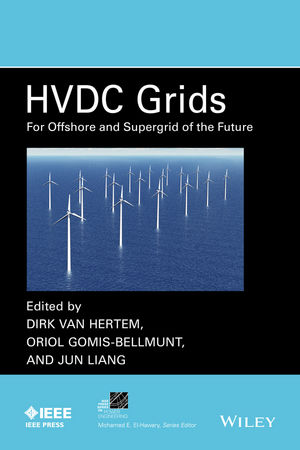
Professor Dirk Van Hertem is a faculty member at KU Leuven, Belgium, where he leads the Energy Transmission Competence Hub (ETCH) within the ELECTA division. He earned his M.Eng. (2001) from KHK Geel, M.Sc. (2003) and PhD (2009) from KU Leuven, and held a postdoctoral position at KTH Royal Institute of Technology (2010). His research focuses on power system planning, operation, and control, particularly for future transmission systems involving HVDC grids, offshore energy infrastructure, and supergrid concepts. Key research areas include: HVDC grid protection Underground power systems Cost-effective resilient energy supply Renewable energy integration Hybrid AC/DC system optimization He co-edited the seminal book HVDC GRIDS: For Offshore and Supergrid of the Future with researchers from UPC Barcelona and Cardiff University. His team includes 12 postdoctoral researchers and 24 PhD students working on topics ranging from grid restoration algorithms to cable fault localization and digital twin applications. Scientific distinctions: Fellow of the IEEE (PES, IAS) Active member of Cigré Principal investigator in multiple EU-funded projects Teaching responsibilities include advanced power system courses co-taught with senior professors. Regular PhD and postdoc vacancies are available through KU Leuven's job portal and the ETCH website.
So Young Sohn is a distinguished Professor at Korea University's College of Business, Department of Management Engineering, with over two decades of impactful research in technology management and operations research. Her scholarly contributions have established her as a leading expert in technology credit scoring, data mining applications, and technology convergence analysis. Dr. Sohn's research interests span technology credit scoring for SMEs, operational research methodologies, data mining techniques, machine learning applications in business contexts, technology convergence patterns, patent analysis, and SME financing mechanisms. Her work bridges theoretical rigor with practical business applications, particularly focusing on Korean case studies that have broader international relevance. She has pioneered innovative approaches using knowledge graphs, multiplex networks, and deep learning techniques to solve complex business problems. Her publication portfolio reveals consistent research trends toward increasingly sophisticated analytical methods, evolving from traditional statistical models to advanced machine learning and network science approaches. Recent work demonstrates particular focus on technology convergence, digital therapeutics, and AI applications in business decision-making. The interdisciplinary nature of her research spans business analytics, engineering, healthcare, and environmental science. Dr. Sohn has received recognition through numerous high-impact publications in premier journals including Expert Systems with Applications, European Journal of Operational Research, Scientometrics, and IEEE Transactions. Her research has been consistently funded through competitive grants focusing on technology management and innovation. As an academic mentor, Dr. Sohn has advised numerous doctoral students who have gone on to productive research careers, with many continuing to collaborate with her on ongoing projects. Her research team has secured substantial funding for projects related to technology credit scoring, technology convergence analysis, and predictive analytics applications. Dr. Sohn leads a dynamic research laboratory focused on technology analytics and decision support systems, collaborating with industry partners and government agencies to translate research findings into practical business solutions. Her current work emphasizes sustainable technology development and AI-driven decision support systems for complex business environments.