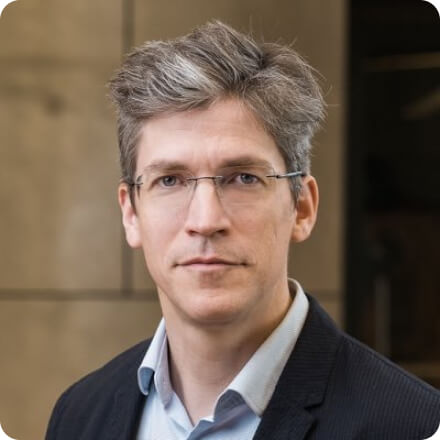
Dr Fabio Pierazzi is an Associate Professor in Information Security at the Department of Computer Science, University College London. His research focuses on enhancing systems security through AI, particularly in environments where attackers rapidly adapt to defenses. He investigates adversarial attacks, concept drift mitigation, and explainability of ML-based security systems. Research emphasizes adversarial machine learning in security contexts Works on practical applications in malware analysis and network intrusion detection Explores concept drift robustness and problem-space constraints Collaborates with industry to improve real-world security solutions His publications span top-tier venues like IEEE Security & Privacy, ACM CCS, and USENIX Security. Key themes include adversarial robustness, security evaluation methodologies, and AI's limitations in practice. He supervises research degrees and provides consultancy for security projects.
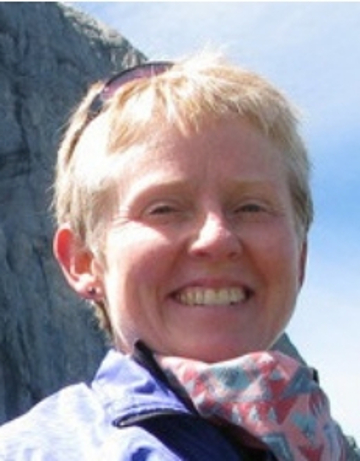
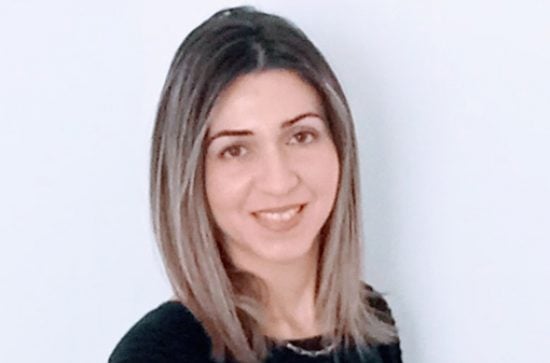
Dr. Caroline Howe is an Associate Professor in Environmental Social Science at Imperial College London , affiliated with the Centre for Environmental Policy under the Faculty of Natural Sciences . She serves as Vice President of the British Ecological Society and Deputy Programme Director for Imperial’s MSc in Environmental Technology. Dr. Howe co-founded Imperial College’s Network of Excellence in Women’s Health and contributes to the Global Development Hub as an Advisory Board Member. Research Focus: Interdisciplinary exploration of people-nature relationships, equity and justice in biodiversity and ecosystem services, urban health, and sustainable development. Labs: Leads the Transdisciplinary Centre for Nature and People (TCNP) , a global team advancing nature-based solutions. Scientific Contributions: Key author on IPBES assessments and ESPA textbook. Her work spans climate mitigation, sustainable food systems, and postcolonial narratives in conservation. Scientific Awards: Athena SWAN Bronze (departmental leadership). Education and Advocacy: Champions gender/diversity through EDI initiatives and co-leads the MSc in Environmental Technology program.
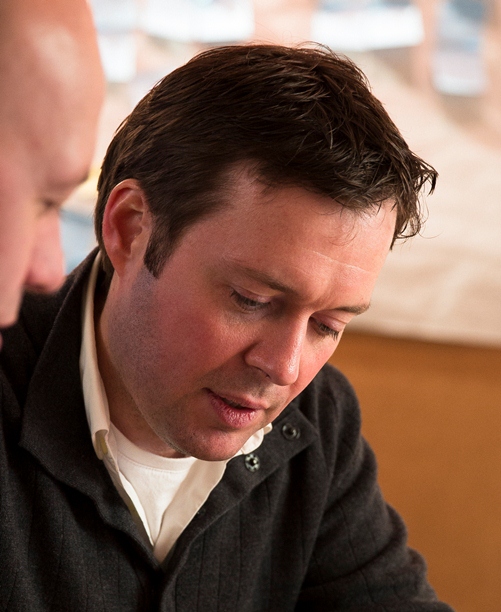
Philip Dutré is a full professor at the Department of Computer Science , Faculty of Engineering Science , KU Leuven. He leads the Computer Graphics Research Group and chairs the Human-Computer Interaction division . His teaching portfolio includes courses on algorithms, data structures, and computer graphics fundamentals. Research Focus : Rendering algorithms, photo-realistic and image-based rendering, perceptual-based rendering, material models, and intuitive controls for computer animation. He explores deep learning applications in global illumination and uses quantum field theory for efficient light transport in participating media. Publications : Recent work includes advancements in temporal coherence for light transport (2017–2023), functional integrals for scattering models (2025), and optimization of spatial data structures (2019). Teaching Innovations : Advocate for ungrading (feedback-only assignments), flipped classroom techniques, and interactive learning. His approach emphasizes conceptual understanding over rote memorization, with structured, self-contained lessons and active student engagement. Leadership : Serves on multiple academic councils and committees including the Commission on Research Integrity and Student Services Council .
Dr. J. David Frost is the Elizabeth and Bill Higginbotham Professor of Civil Engineering at Georgia Institute of Technology and a Regents' Entrepreneur. He has held academic positions at Purdue University and Georgia Tech, with a focus on geotechnical engineering and disaster response. As founding director of Georgia Tech's Savannah campus and head of the Geosystems Engineering Group, Frost has shaped academic programs and research initiatives. Education: B.A.I and B.A. in Civil Engineering and Mathematics, Trinity College, Dublin (1980) M.S. and Ph.D. in Civil Engineering, Purdue University (1986, 1989) Research Interests span geotechnical engineering, bio-inspired design, and disaster resilience. His work emphasizes digital data collection systems for subsurface hazard assessment, soil-polymeric material interactions, and geotechnical responses to earthquakes, hurricanes, and anthropogenic disasters. Recent projects integrate ant nest geometry, plant root mechanics, and geosynthetic innovations into infrastructure solutions. Scientific Contributions include two U.S. patents for subsurface data systems, leadership in NSF-funded post-disaster reconnaissance missions (e.g., 9/11, Türkiye earthquakes), and co-founding the Geotechnical Extreme Events Reconnaissance (GEER) Association. His articles reflect expertise in bio-inspired geotechnics, machine learning for disaster modeling, and advanced computational simulations. Awards & Recognition: ASCE Huber Civil Engineering Research Prize NSF National Young Investigator Award Georgia Society of Professional Engineers Engineer of the Year in Education Coastal Business & Education Technology Alliance Leadership Innovation Award Professional Engagement includes chairing the Savannah Area GIS board, advising on ASCE Geo-Legislative Committees, and founding a software company serving 350+ global clients. His work bridges academia, policy, and industry innovation.
Tri Setiyono is an Assistant Professor in the School of Plant, Environmental, and Soil Sciences at Louisiana State University (LSU). Previously, he served as a Scientist at the Sustainable Impact Platform of the International Rice Research Institute (IRRI), Los Baños, Philippines (2011–2021), and as a Postdoctoral Research Associate in the Department of Agronomy and Horticulture at the University of Nebraska-Lincoln (2007–2011). He is affiliated with the LSU AgCenter and the LSU College of Agriculture, contributing to research and extension services in precision agriculture and crop resilience. Education: PhD in Agronomy, University of Nebraska-Lincoln (2007) MS in Agronomy, Kansas State University (2003) BS in Agronomy, Bogor Agricultural University (1998) Research interests focus on precision agriculture, remote sensing, and AI applications to enhance crop production resilience against climate change. He specializes in GIS for agronomic research, crop growth models (e.g., ORYZA, SoySim), and integrating SAR and MODIS satellite data for yield estimation. His work emphasizes sustainable practices and technology-driven solutions for row crops in dynamic environments. Publications highlight advancements in rice monitoring systems, soybean and maize modeling, and decision tools for nutrient management. These contributions bridge technological innovation with practical agricultural challenges in Asia and the US. Scientific awards: None explicitly mentioned in the text. Advising and grants: No formal advisees/students are listed. Professional experience includes roles at IRRI and UNL, suggesting involvement in grant-funded research projects, but specific grant details are not provided. Labs/Teams: Associated with Louisiana State University AgCenter research stations and collaborative projects like the RIICE initiative, but no specific lab names or teams are detailed in the text.
Pam MacQuarrie is Associate Professor in the Department of Earth & Environmental Sciences at Mount Royal University. She teaches geospatial technologies including GIS and remote sensing applications. Research specialties: Geospatial analysis of weather and climate patterns Cartographic visualization techniques Applied GIS for environmental studies
Carlos Enrique Palau is a prominent researcher in the field of Internet of Things (IoT), edge computing, and cyber-physical systems. His work focuses on interoperability, security, and scalability in distributed systems, particularly in industrial and smart city applications. He has contributed to frameworks for cloud-edge continuum integration, blockchain-based IoT solutions, and federated computing architectures. Key areas of research include: IoT interoperability and semantic frameworks Edge computing and distributed workload management Cybersecurity for IoT and critical infrastructure Smart port logistics and real-time data analytics Cognitive services in legacy port management systems His recent work explores: Data-as-a-Product frameworks for Industry 4.0/5.0 Autonomous workload scheduling in energy-efficient edge-cloud systems Deception mechanisms for IoT security Self-* capabilities in cloud-edge nodes Palau has collaborated extensively with institutions like Universitat Politècnica de València and international partners in projects funded by EU initiatives. His research addresses practical challenges in industrial IoT deployments, smart city infrastructure, and emergency management systems.
Edward Lank was a Professor at the Cheriton School of Computer Science, University of Waterloo, and held an Inria International Research Chair at Inria Lille-Nord Europe (2019–2023). His research focused on Human-Computer Interaction (HCI), including intelligent user interfaces, mobile/multi-touch interaction, gesture recognition, and mathematical software design. He earned a BSc from the University of Prince Edward Island and a PhD from Queen's University. Research Highlights: Pioneered work on gesture-based interaction, including MathBrush for mathematical expression recognition. Explored large-display interaction, powerwall design, and mass user engagement with public displays. Investigated kinematics of user input, endpoint prediction, and mode inference in interfaces. Collaborated on persuasive technology for energy demand management and health-related serious games. Awards & Recognition: National Science Foundation Career Award (2004) Best of CHI Nominee (2008) Inria International Research Chair (2019–2023) Grants & Funding: Supported by Google, NSERC, GRAND NCE, and the ORF Program. His research addressed challenges in wearable tech, VR/AR, and sustainable HCI practices. Legacy: Edward Lank passed away on March 21, 2022. His contributions to HCI, including foundational work on gesture recognition and user-centered design, continue to influence the field. His courses, such as CS 889 (HCI Seminar) and CS 449 (HCI Fundamentals), emphasized user-centered design and empirical methods.
Andrea Stevenson Won is a researcher at Cornell University in the Department of Communication , focusing on virtual reality (VR), human-computer interaction, and social dynamics in immersive environments. Her work explores avatar embodiment , nonverbal behavior , and accessibility in VR for users with disabilities. Research Themes : Virtual embodiment and its psychological effects Accessibility solutions for blind and low-vision users in social VR Nonverbal communication analysis in immersive environments Pro-social behavior through VR interventions Collaborative VR systems and AI integration Recent Article Trends : 2024: Investigated avatar behavior transformation in mixed reality ( MRTransformer ), AI-guided accessibility tools, and nonverbal cue adaptations 2023-2022: Focused on educational VR applications, 360° video narratives, and longitudinal team dynamics 2021-2014: Pioneered avatar embodiment studies, anxiety detection via movement tracking, and homuncular flexibility in VR
Giles Foody is a Professor of Geographical Information Science at the School of Geography, University of Nottingham, and a member of the Rights Lab in the Faculty of Social Science. He is recognized as the UK’s most prolific and highly cited researcher in remote sensing, with a focus on interdisciplinary applications for real-world impact. Education: BSc (1st class honours) and PhD from the University of Sheffield. His research spans image classification for thematic mapping, particularly in land cover and human-induced changes. He pioneered soft image classifications, object-based methods, neural networks in remote sensing, and citizen sensors in mapping. Current projects include 'slavery from space' and Sargassum beaching analysis to meet UN SDGs. The trends in his publications highlight advancements in remote sensing, citizen science, and land cover mapping. His work integrates machine learning and geospatial analysis for social and environmental challenges. Scientific awards: IEEE Fellowship, David Landgrebe Award, Founder's Award (ISARA), multiple RSPSoc accolades, and SDG-related honors. Giles has supervised 51 research students and contributed to academic service via editorial roles, peer review leadership, and participation in national research assessment panels. His interdisciplinary work extends to European National Mapping Agencies and anti-slavery initiatives.
Miklós Koren is a Professor of Economics at Central European University and Senior Research Fellow at the HUN-REN Centre for Economic and Regional Studies. His work bridges international trade , economic development , and managerial economics , focusing on trade policy, productivity spillovers, and the role of managers in development. Ph.D., Harvard University (2005) M.A., Central European University (2000) M.Sc., Budapest University of Economics (1999) His research explores trade facilitation , managerial impact on firm performance , and technological diversification . Recent work includes studies on expatriate managers, pandemic-related business disruptions, and the legacy of communist-era management practices. Key trends in his publications (2020–2024) emphasize managerial mobility and firm productivity (2024) machine learning vs. gravity models (2024) trade volatility and development (2023) data transparency standards (2022) Scientific awards include ERC Starting Grant (2012) Nicholas Káldor Prize (2014) Young Economist Award (2002, 2004) As Data Editor for Review of Economic Studies and Associate Editor for Journal of International Economics , he shapes methodological rigor in empirical research. His 2013 paper on technological diversification remains foundational for understanding volatility in developing economies.
Andrea Burattin is an Associate Professor at the Department of Applied Mathematics and Computer Science, Technical University of Denmark. His work bridges formal methods and practical process analysis, focusing on process mining, business process management, and hybrid modeling techniques. He actively contributes to research in healthcare process optimization, streaming data analysis, and system verification through Petri nets and CCS transformations. UN Sustainable Development Goals: Poverty eradication, environmental protection, and prosperity for all (via process optimization) Active projects: Immersive Process Mining (2024-2027), Usability and Understandability of Hybrid Process Models (2018-2021) His research explores large language model integration with process mining, proposing frameworks like Tiramisù for multi-faceted process visualization and PN2CCS for formal model translation. Recent work emphasizes real-time monitoring, conformance checking, and IoT-driven process analytics. Key trends in his publications include: 1) Streaming process mining pipelines (2022-2025); 2) LLM-plan generation frameworks (2024); 3) Formal verification techniques (Petri nets, CCS); 4) Healthcare process modeling (2019-2023); 5) Behavioral pattern analysis in process compliance. Scientific Awards Best Demo Award (2022, 2016) Best Process Mining Dissertation Award (2014) Best Workshop Paper (EDBA and PODS4H, 2023) As advisor, he supervises PhD projects on process mining and hybrid modeling. His editorial roles include Information Systems reviewer (2024-2025) and past editor for Engineering Applications of AI (2022-2023). Collaborations span Denmark, Italy, and the Netherlands.
Dr. Galatia Cleanthous is a Lecturer in the Department of Mathematics and Statistics at Maynooth University, Ireland, affiliated with the Faculty of Science & Engineering and the Hamilton Institute. She joined Maynooth in 2020 after postdoctoral positions at Trinity College Dublin, Newcastle University, and University of Cyprus, and holds a PhD in Pure Mathematics from Aristotle University of Thessaloniki (2014). Education PhD in Mathematics, Aristotle University of Thessaloniki, Greece (2014) MSc in Mathematics, Aristotle University of Thessaloniki, Greece Diploma in Mathematics, Aristotle University of Thessaloniki, Greece Research Interests Her research bridges pure and applied mathematics, focusing on Mathematical Analysis , Probability , and Statistics . Specifically, she explores Geometric Analysis , Geometric Function Theory , and Harmonic Analysis on manifolds and metric spaces. In statistics, she works on Nonparametric , Spatial , and Environmental Statistics , developing adaptive estimation techniques and studying Gaussian random fields on spheres and other domains. Publication Trends From 2025 back to 2013, her work has consistently appeared in top journals such as Annals of Statistics , Bernoulli , Journal of Nonparametric Statistics , and Transactions of the American Mathematical Society . A clear trend emerges: early publications concentrate on pure analytic topics like Fourier multipliers and function spaces, while recent outputs integrate these theoretical tools into modern nonparametric statistics, density estimation on manifolds, and stochastic modeling of environmental and seismological data. Scientific Awards Master’s degree ranked first with grade 9.8/10, Aristotle University of Thessaloniki (2011) Diploma ranked first among ~200 students, grade 9.7/10, Aristotle University of Thessaloniki (2009) Undergraduate merit awards for three consecutive academic years (2005-2008), State Scholarship Foundation of Greece National first place in Cypriot high-school mathematics entrance exams (2005), Ministry of Education, Cyprus Advising & Outreach Dr. Cleanthous has supervised BSc and MSc students, including Ultán Doherty (BSc, 1st Class Honors, 2021) and Anush Harish (MSc, 2022). She serves as Chair of the Department PR Committee, Member of the University STEM Promotions Committee, and Member of the departmental Equality, Diversity & Inclusion committee. Beyond campus, she trains young mathematicians at the North Kildare Maths Problem Solving Club and organizes public engagement events for Science Week. Labs & Teams She is associated with the Hamilton Institute at Maynooth University, a multidisciplinary research institute fostering collaboration between mathematics, computer science, and engineering.
Kelly Bennion serves as an Associate Professor in the Psychology and Child Development Department at California Polytechnic State University. Her research examines how real-life variables—such as emotion, stress, physiological arousal, and sleep—affect memory encoding and consolidation using behavioral experiments, eye tracking, polysomnography, and neuroimaging. She investigates how sleep selectively enhances memories for emotionally salient or future-relevant information in ecologically valid contexts. (78 words) Her educational background includes: Ph.D. and M.A. in Psychology (Cognitive Neuroscience concentration) from Boston College Ed.M. in Mind, Brain, and Education from Harvard Graduate School of Education B.A. in Psychology and Spanish (summa cum laude, Phi Beta Kappa) from Middlebury College Dr. Bennion's work focuses on memory prioritization mechanisms during sleep-wake cycles, particularly how emotional arousal and physiological stress modulate consolidation. She explores real-world applications including educational strategies and mental health interventions, emphasizing the interaction between cortisol levels and sleep-dependent memory processing. Her multi-method approach bridges laboratory findings with naturalistic memory phenomena. (92 words) Analysis of her 2020-2025 publications reveals three dominant research streams: (1) sleep's role in enhancing emotional and future-relevant memories through selective consolidation, (2) cross-episode memory integration via semantic relatedness and surprise mechanisms, and (3) interdisciplinary extensions into public health (postpartum interventions) and environmental toxicology (bisphenol A effects). Her methodology increasingly combines behavioral metrics with physiological monitoring to capture memory dynamics in complex scenarios. (68 words) Dr. Bennion actively mentors undergraduate researchers, evidenced by student co-authorships on publications including Jackson (2019) on school shooter perceptions. While specific grant details aren't provided, her sophisticated research infrastructure implies substantial external funding. She teaches core psychology courses including Research Methods, Biopsychology, and Memory, emphasizing hands-on methodology training. Her laboratory maintains advanced capabilities for sleep monitoring, eye tracking, and neuroimaging to investigate memory consolidation across physiological states. (76 words)
Tyler Simko is an Assistant Professor of Political Science at the University of Michigan, specializing in US state and local politics, political geography, and computational social science. His research focuses on understanding and addressing inequality in American public policy through innovative methodological approaches. Education: Ph.D. in Government, Harvard University (2024) A.B. in Politics, Princeton University Simko's research examines state and local politics in the United States with particular focus on political geography and subnational policymaking. His active research agendas include legislative redistricting ("gerrymandering"), local public meetings, school segregation, affordable housing, and data privacy. Methodologically, he develops new techniques in computational social science and machine learning to evaluate subnational inequality and how it can be reduced. His work regularly involves partnerships with federal, state, and local officials to improve the design of public policy. His recent publications demonstrate a strong focus on applying computational methods to address real-world policy challenges, particularly in school desegregation, redistricting, and local government transparency. His research often leverages large-scale data collection efforts, such as LocalView (the largest database of local government meetings in the US), to analyze patterns of political behavior and policy outcomes across different jurisdictions. Awards and Recognition: APSA 2024-25 Best Paper in Education Politics and Policy Award APSA 2024-25 Best Paper in Urban and Local Politics, Honorable Mention MPSA 2024 Robert H. Durr Award for "the best paper applying quantitative methods to a substantive problem" Derek C. Bok Award for Excellence in Graduate Student Teaching of Undergraduates (2023) Simko teaches graduate and undergraduate courses in American Politics and Political Methodology at the University of Michigan. His teaching experience spans multiple institutions, including Harvard University and Princeton University. He has designed innovative courses on US Local Policymaking, data science, and computational social science. As a Data Scientist at the Office of Evaluation Sciences, he partners with federal, state, and local officials to improve program design and reduce administrative burdens. He is a co-PI of the Algorithm-Assisted Redistricting Methodology (ALARM) Project and co-creator of LocalView, the largest audio, video, and text database of local government meetings in the United States. These projects represent significant contributions to the field of computational social science and provide valuable resources for researchers studying local governance and policy-making.