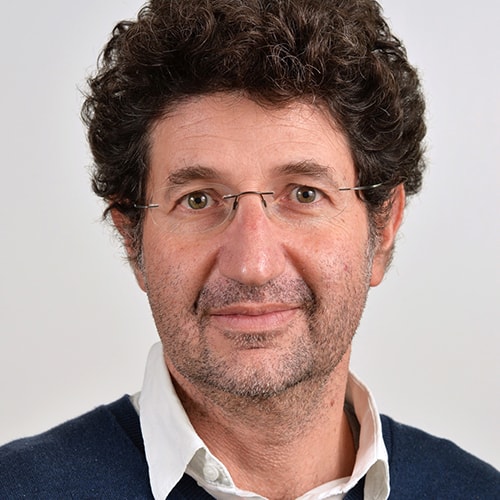
Teresa Hirzle is a Tenure Track Assistant Professor at the Department of Computer Science , University of Copenhagen , specializing in Human-Centred Computing . Her research focuses on Human-Computer Interaction (HCI) , Virtual Reality (VR) , Extended Reality (XR) , and Gaze-Based Interaction . Research Interests: Designing interaction techniques for immersive environments Eye movement analysis for educational applications Addressing digital eye strain in interactive systems Evaluating user experience in VR/AR Recent Research Trends: Her recent publications examine AI representation in VR co-creation, VR sickness in locomotion, eye strain in gaze-driven systems, and hybrid applications of comics/AR. She also explores pedagogical implications of eye tracking in remote learning. Contact: Email: tehi@di.ku.dk Office: Sigurdsgade 41, 2200 København N.
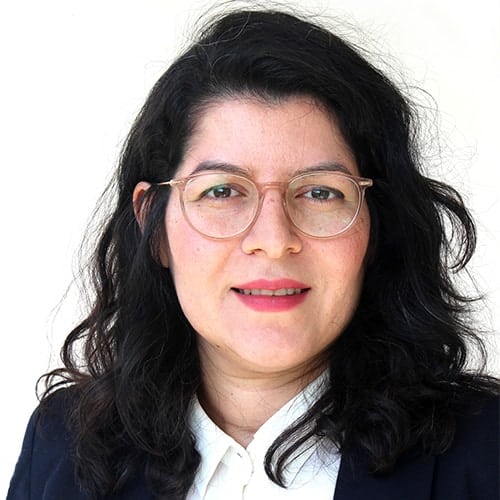
Mengni Chen is a Tenure Track Assistant Professor at the Department of Sociology , University of Copenhagen , affiliated with the Faculty of Social Sciences . She holds a PhD from the University of Hong Kong and previously worked as a research scientist at institutions including the University of Cologne (Germany), Catholic University of Louvain (Belgium), and Vienna University of Economics and Business (Austria). Her research focuses on marriage/family dynamics, gender inequality, intergenerational relationships, socioeconomic development, and population dynamics. She teaches courses such as 'Population and Society,' 'Social Problems,' 'Family Sociology of a Changing Society,' and 'Advanced Quantitative Data Analysis.' Recent Research Highlights: - Analyzes late parenthood trends in East Asia. - Explores intergenerational emotional dynamics in aging Chinese families. - Investigates gender equality in household labor via Hong Kong case studies. - Examines spatial-temporal suicide determinants in China. - Compares life expectancy between Hong Kong and Japan. Professional Contributions: - Authored/edited 27 peer-reviewed publications since 2015. - Research spans sociology, demography, public health, and policy analysis. - Collaborations with international institutions in Europe, Asia, and beyond. - Active in policy-relevant demographic studies addressing societal challenges.
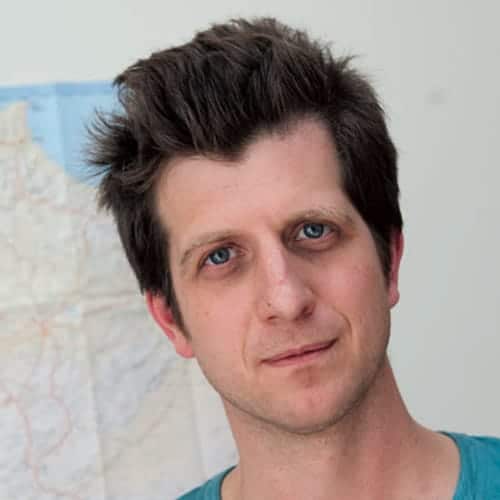
Melih Kandemir is an Associate Professor at the Department of Mathematics and Computer Science, Southern Denmark University. He also serves as Research Group Leader at the Bosch Center for Artificial Intelligence (2018–2021) and held a previous role as Assistant Professor at Ozyegin University (2017–2018). His research focuses on machine learning, Bayesian methods, reinforcement learning, and uncertainty quantification. **Education**: PhD in Computer Science from Aalto University (2013), specializing in 'Learning Mental States from Biosignals'. **Research Interests**: Machine Learning, Bayesian Inference, Reinforcement Learning, Deep Neural Networks, Stochastic Processes. His work emphasizes theoretical foundations and practical applications in domains like medical imaging, control systems, and robotics. **Awards**: Two Best Paper Awards (2017). **Grants & Projects**: Includes the Carlsberg Young Researcher Fellowship (2022–2026), Novo Nordisk Foundation grants (2021–2024), and DFF-funded research on PAC-Bayesian reinforcement learning (2025–2027). **Labs/Teams**: Leads research on Bayesian deep learning and reinforcement learning within the Bosch Center for AI and SDU's interdisciplinary groups.
Vito Latora is a Professor of Applied Mathematics and Chair of Complex Systems at the School of Mathematical Sciences, Queen Mary University of London, and also holds the position of Professor of Theoretical Physics at the University of Catania. He leads the Complex Systems and Networks Group, driving cutting-edge research at the intersection of physics, mathematics, and interdisciplinary sciences. His research focuses on complex systems, particularly the structure and dynamics of networks, including multiplex, temporal, and higher-order networks such as simplicial complexes and hypergraphs. He explores applications in social, biological, financial, and cognitive systems, with recent work on creativity, innovation, and success through network analysis. The 15 most recent publications reveal a strong trend in advancing network theory beyond pairwise interactions, with a focus on higher-order structures, memory effects, synchronization, and epidemic spreading. His work combines rigorous mathematical modeling with real-world applications, often published in high-impact journals like Nature Communications , Physical Review Letters , and Science Advances . Dual communities in spatial and biological networks Modeling epidemics with limited detection resources Synchronization via higher-order and directed interactions AI-driven financial risk management Evolutionary games on hypergraphs Interdisciplinary success and funding dynamics Vito Latora has mentored several researchers who appear as co-authors, including Iacopini, Williams, Di Bona, and Lacasa. While specific grants are not listed, his collaborative projects with neuroscientists and anthropologists, along with frequent publications, suggest active funding. He is involved in major scientific events such as NetSci 2023, indicating leadership in the network science community. He leads the Complex Systems and Networks Group at Queen Mary, fostering a collaborative environment for studying complex systems through theoretical, computational, and data-driven approaches.
Kristian Sevdari is a Postdoctoral Researcher at the Department of Wind and Energy Systems, Technical University of Denmark (DTU). He was born in Kucove, Albania, in 1995, and holds a B.Sc in electrical engineering from the Polytechnic University of Tirana (2016), an M.Sc from UiT Norges arktiske universitet, Norway (2020), and a Ph.D. from DTU (February 2024). Since 2020, he has been working at DTU on multiple projects including Solar-Move, AHEAD, FLOW, EV4EU, ACDC, and FUSE. His research focuses on renewable energy integration and electric vehicle grid integration, with specific expertise in vehicle-to-grid systems, power system dynamics and stability, prosumers and flexible demand, wind power integration, and smart grid technologies. His work contributes to UN Sustainable Development Goals related to sustainable energy and climate action. Dr. Sevdari's recent publications demonstrate a strong trend toward solving practical challenges in EV-grid integration, with emphasis on bidirectional charging technologies, harmonics analysis, battery second-life applications, and smart charging strategies for residential and urban environments. His research bridges theoretical control approaches with experimental validation across multiple European contexts. Best paper award at 2024 IEEE Transportation Electrification Conference & Expo Best paper award of the IEEE PES ISGT-Europe 2021 conference As a supervisor, he has guided multiple Master's theses on topics including telematics integration for EV cost reduction, open charge point protocol implementation, vehicle-to-grid testing, and compatibility testing for EV ecosystems. He is actively involved in the IEEE PES Task Force on electric vehicle grid integration and IEA Task 53, and is the founder of IEEE REST conferences, Qendra SUSALB, and EkoVolt.
Bo Markussen is a Professor at the University of Copenhagen within the Department of Mathematical Sciences . He is also a member of the Data Science Laboratory , where he contributes to statistical methodology and interdisciplinary collaborations. His academic journey began with a Cand.Scient (MSc) and PhD in Statistics from the University of Copenhagen, awarded in 1998 and 2002 respectively. 2012–present: Professor, Department of Mathematical Sciences, University of Copenhagen 2009–2012: Associate Professor, Department of Basic Sciences and Environment, University of Copenhagen 2006–2009: Assistant Professor, Department of Basic Sciences and Environment, University of Copenhagen Bo Markussen's research focuses on applied statistics , particularly in functional data analysis and multiple testing corrections in genetics . His work spans diverse domains including environmental science, agriculture, and public health. Recent research output highlights applications in Arctic climate data analysis, fire risk modeling, plant stress phenotyping, and nutritional biomarker prediction. His recent publications demonstrate a strong trend toward machine learning integration with statistical modeling , addressing challenges in high-dimensional data analysis and environmental risk assessment. Collaborations span institutions in Denmark and internationally, reflecting his engagement in pan-Arctic climate studies and tropical agricultural research. 2018–present: Associate Editor, Scandinavian Journal of Statistics 2017–2019: Chair, Danish Society for Theoretical Statistics 2015–2017: Board Member, Danish Society for Theoretical Statistics As a central figure in the Data Science Laboratory , Markussen leads statistical consultancy initiatives and contributes to methodological advancements. His expertise bridges theoretical statistics with real-world applications, particularly in handling complex datasets across biological and environmental domains.
Ole Winther is a Professor at the Department of Biology, University of Copenhagen, specializing in Computational and RNA Biology. He also holds a joint appointment as Professor at DTU Compute, Technical University of Denmark. His research bridges machine learning, bioinformatics, and natural language processing with applications in biological sequence analysis, transcriptomics, and health informatics. Education: 1998: PhD in Physics, University of Copenhagen 1994: Master of Science in Physics, University of Copenhagen Winther's research focuses on developing advanced machine learning methodologies for biological applications. He has pioneered protein language models for sequence analysis (DeepLoc, SignalP, DeepTMHMM), interpretable deep learning for RNA subcellular localization, and benchmarking frameworks for DNA language models. His work spans latent variable models, variational inference, diffusion models, and novel architectures for deep generative modeling, with increasing emphasis on practical healthcare applications including rare disease diagnosis through findzebra.com and medical question answering with large language models. Scientific Recognition: ELLIS Fellow (2021) Head of ELLIS Copenhagen Unit H-index of 61 (Google Scholar, May 2023) 19,700+ citations (Google Scholar, May 2023) Winther has supervised 25+ PhD students to completion with 7 currently in progress, along with over 100 master's projects. He frequently serves as PhD opponent and committee chairman across European institutions. His research is supported by substantial funding including multiple Novo Nordisk Foundation grants totaling over 60 million DKK for the Center for Basic Machine Learning Research in Life Science and CAZAI projects, plus significant funding from the Danish Independent Research Fund. He leads an active research group developing cutting-edge machine learning approaches for bioinformatics and NLP challenges. Winther co-founded two spin-out companies: findzebra.com (2014, 2018), a search engine for rare diseases, and raffle.ai, an NLP startup for enterprise search. He initiated DTU's popular BSc in AI and Data program and teaches the highly enrolled MSc course in Deep Learning (450+ students) and PhD course in Bayesian Data Analysis.
Márton Karsai is an Associate Professor and Head of the Department of Network and Data Science at the Central European University in Vienna, and a Research Professor at the HUN-REN Alfréd Rényi Institute of Mathematics in Budapest. He leads the Computational Human Dynamics Lab, focusing on data-driven modeling of social and biological systems. He is also the Editor-in-Chief of the journal Advances in Complex Systems . His research interests lie at the intersection of network science, human dynamics, and socioeconomic systems. He specializes in temporal and spatial networks, modeling contagion processes (both social and biological), and analyzing large-scale human behavioral datasets. His work integrates computational methods with real-world data to understand complex social phenomena such as mobility patterns, migration, segregation, and epidemic spread. He is particularly known for using remote sensing and digital trace data to infer poverty and socioeconomic conditions in urban areas. The recent publications highlight a strong trend in applying network science and machine learning to societal challenges. His work spans high-impact journals in complex systems, data science, and computational social science, with recurring themes in epidemic modeling, urban analytics, socioeconomic inference, and the structure of temporal and spatial networks. The research is highly interdisciplinary, combining physics, computer science, and social science methodologies. He has been invited to speak at major events such as the Conference on Complex Systems, the Lake Como School on Complex Networks, and workshops on data for vulnerability assessment. He served as general co-chair of CCS 2021 in Lyon, demonstrating leadership in the complexity science community. General Co-Chair, Conference on Complex Systems (CCS) 2021, Lyon Invited speaker, 4th Workshop on Data for the Wellbeing of the Most Vulnerable @ ICWSM'23 Invited speaker, Complexity72h Workshop Invited lecturer, Lake Como School on Complex Networks Invited talk, Hungarian Academy of Sciences on COVID-19 modeling While specific grant details are not listed, his coordination of projects on segregation, migration, and poverty inference—often in collaboration with the Complexity Science Hub—suggests active involvement in externally funded interdisciplinary research. He advises students through the Department of Network and Data Science at CEU, though specific advisees are not named. His lab, the Computational Human Dynamics Lab, serves as a hub for data-driven research on social systems.
Gyula Mate Kovács is a Research Fellow (Postdoctoral Researcher) at the Department of Geosciences and Natural Resource Management, Faculty of Science, University of Copenhagen. His research is funded by the Novo Nordisk Foundation through the Global Wetland Center. Education Ph.D. in Remote Sensing of Wetlands, University of Copenhagen (2020–2024) M.Sc. in Geography and Geoinformatics, University of Copenhagen (2017–2019) B.Sc. in Environmental Management, Birkbeck University of London (2013–2017) Research Focus Dr. Kovács specializes in AI-driven remote sensing for wetland ecosystem analysis. His work integrates machine learning, deep learning, and satellite data fusion to quantify natural/anthropogenic impacts on wetlands at global scales. Key methodologies include time series analysis, cloud computing, and convolutional neural networks for applications like carbon mapping, water body detection, and land-use impact assessment. Publication Trends His 7 recent publications demonstrate a strong focus on wetland dynamics using satellite remote sensing, with themes spanning deep learning applications (CNN U-Net algorithms), greenhouse gas emissions in croplands, continental-scale wetland inventories, and ecosystem change detection. Research consistently employs advanced AI techniques to address environmental challenges in diverse regions like the Sahel and Europe. Funding & Affiliation Supported by the Novo Nordisk Foundation via the Global Wetland Center, his work advances wetland monitoring capabilities. He collaborates with international teams on projects involving satellite data processing and ecological modeling.
Harpa Birgisdottir is a Professor and Head of the Building Sustainability Section at Aalborg University's Department of Construction, Urban and Environmental Engineering. Her work focuses on Life Cycle Assessment (LCA), net-zero carbon buildings, and circular economy strategies in construction. Key Research Areas: Greenhouse Gas Emissions, Environmental Product Declarations (EPD), Urban Development, and Climate Mitigation Academic Recognition: 2022 Best Paper at Sustainable Built Environment, 2020 Applied Energy Highly Cited Award Research Trends Recent publications emphasize data-driven sustainability assessments, embodied carbon in buildings, and fire safety LCA tools. She leads EU-wide projects on greenhouse gas emissions and co-develops frameworks for net-zero carbon buildings through IEA EBC Annex 89. Scientific Awards Best Paper (Sustainable Built Environment Berlin 2022) Highly Cited Research Paper (Applied Energy 2020) Det Bæredygtige Element - Produktprisen (2019) ROCKWOOL Prisen (2017) Best Paper (2013) As a principal investigator and supervisor, she guides PhD projects on biobased fire safety and urban circularity. Her team collaborates with international researchers on climate impact metrics and sustainable construction standards.
Tove Hels is an Associate Professor in the Department of the Built Environment at the Faculty of Engineering and Science, Aalborg University, Denmark. She is a key member of the Traffic Research Group, focusing on transportation safety, road user behavior, and traffic policy. Her work bridges engineering, public health, and social science to improve road safety outcomes. Research Interests: Her research spans traffic safety, cyclist-motorist interactions, speed enforcement, accident risk modeling, and the impact of vehicle technologies. She investigates both infrastructure design and behavioral factors influencing road safety, with a strong emphasis on data-driven analysis and policy evaluation. The recent publications reveal a consistent focus on improving cyclist safety through infrastructure (e.g., advanced stop boxes, roundabout design), addressing under-reporting of traffic injuries, and evaluating behavioral interventions for speeding. Her work integrates epidemiological methods, statistical modeling, and real-world policy applications. Scientific Contributions: Principal Investigator in the Danmarks Trafikulykker cohort study (2025–2029) Project participant in EASE: Intervention against speed offenders (2019–2025) Author of over 29 research outputs including journal articles, reports, and policy briefs Frequent contributor to national media and advisory bodies like Dansk Vejforening Advising and Grants: While no formal students are listed, her leadership in major funded research projects indicates a supervisory role in training junior researchers. She has secured and contributed to significant research grants related to traffic safety monitoring and intervention evaluation. Labs and Teams: She is part of the Traffic Research Group at Aalborg University, collaborating closely with researchers such as H. Lahrmann, T.K.O. Madsen, and A.V. Olesen. The group conducts field studies, data linkage projects, and policy evaluations with national impact.
Fariba Karimi is a Professor of Social Data Science at Graz University of Technology and leads the Algorithmic Fairness research group at the Complexity Science Hub (CSH) in Vienna. Her work sits at the intersection of computational social science, network science, and AI ethics, with a strong focus on fairness, inequality, and bias in algorithmic systems. She holds a PhD in Physics and Computational Science from Umeå University, Sweden (2015), and was a Postdoctoral Researcher at GESIS – Leibniz Institute for Social Sciences, Germany. Her research combines large-scale data analysis, agent-based modeling, and network science to study how social structures and algorithms interact to shape disparities, particularly for underrepresented groups. Computational Social Science Algorithmic Fairness and Bias Network Science and Homophily Digital Humanism Urban Inequality and Implicit Bias Gender and Age Equity in Academia Her recent publications reveal a consistent focus on understanding and mitigating algorithmic and structural inequities. Themes include the visibility of minorities in networks, the impact of segregation on health and cognition, gender citation gaps in physics, and the development of fair ranking and recommendation systems. She employs interdisciplinary methods to analyze both digital and real-world social systems. Fariba Karimi has received several prestigious recognitions, including: Young Scientist Award from the German Physical Society (2023) ERC Starting Grant (2024) Nomination for the Hedy Lamarr Award (2021) She leads the 'Humanized Algorithms' project at CSH, funded by the ERC, and co-leads an EU Horizon project (MAMMOth) on multi-criteria fairness in AI. She advises PhD researchers such as Lisette Espín-Noboa and collaborates with institutions like the University of Mannheim and the Centre for Social Sciences. Her work contributes to both academic knowledge and practical solutions for fairer AI systems and more equitable societies.
Renaud Lambiotte is Professor of Networks and Nonlinear Systems at the Mathematical Institute, University of Oxford. He holds a PhD in Physics from Université libre de Bruxelles and has held research and faculty positions at ENS Lyon, Université de Liège, UCLouvain, Imperial College London, and the University of Namur. He is currently an active academic in applied mathematics and network science. His research focuses on complex systems, particularly dynamics on networks, temporal networks, and stochastic processes. He applies these to social and brain networks, data mining, and urban systems. His work bridges theoretical modeling and real-world data, emphasizing the structure and evolution of complex systems. His recent publications demonstrate strong trends in network theory, including hypergraphs, community detection, multidimensional dynamics, and data quality in network interventions. He also explores applications in urban air quality and gentrification, showing a commitment to socially relevant complex systems research. Scientific Awards: Prix Wernaers 2013 Prix Wernaers 2016 Prix Wernaers 2020 Verdickt-Rijdams 2016 de l'Académie royale de langue et de littérature françaises He is the co-founder of L’Arbre de Diane, a publishing initiative at the science-literature interface, which received multiple awards. He teaches advanced courses such as Differential Equations II and Networks. He is affiliated with the Machine Learning and Data Science and the Oxford Centre for Industrial and Applied Mathematics research groups. He has authored or co-edited key texts in the field, including A Guide to Temporal Networks and Modularity and Dynamics on Complex Networks , and has published around 130 peer-reviewed articles. His research is supported by ongoing collaborations and active publication output, indicating sustained academic leadership.
Christian Pascal Hirsch is an Associate Professor for Data Science and Statistics at the Department of Mathematics, Aarhus University. His research focuses on random networks inspired by biology and health sciences, utilizing techniques from topological data analysis and stochastic geometry. He is affiliated with the Stochastics group, AU DIGIT Centre, and AU Quantum Campus. Research Interests: Topological data analysis, large deviations theory, spatial random networks, and stochastic geometry. His work includes studies on percolation theory, Gibbs measures, and applications to neural networks and geometric functionals. Publications span journals such as the Journal of Applied and Computational Topology, Journal of Statistical Physics, and Stochastic Processes and Their Applications, covering topics from network topology to Poisson approximation.
Jes Frellsen is an Associate Professor at the Department of Applied Mathematics and Computer Science (DTU) since 2016. Previously, he held academic positions at the IT University of Copenhagen (2016-2019), postdoctoral roles at University of Cambridge (2013-2016) and University of Copenhagen (2011-2013). Education: PhD in Bioinformatics (2011), University of Copenhagen MSc in Bioinformatics (2007), University of Copenhagen BSc in Mathematics and Computer Science (2005), University of Copenhagen EAP Exchange at University of California, Santa Cruz (2004-2005) Research Focus Jes Frellsen specializes in statistical machine learning , particularly generative AI and deep generative models with applications in bioinformatics . His work integrates Bayesian inference , directional statistics , and Markov chain Monte Carlo methods to address challenges in macromolecular structure prediction and missing data imputation . Recent efforts explore uncertainty quantification in image segmentation and generative modeling for materials science. Advising & Collaborations He actively supervises PhD students and postdoctoral researchers in projects spanning news recommendation systems , medical imaging , and 3D structure generation . Collaborations include work with Zoubin Ghahramani (Cambridge) and Thomas Hamelryck (Copenhagen), with contributions to protein structure prediction and statistical methods in structural bioinformatics .