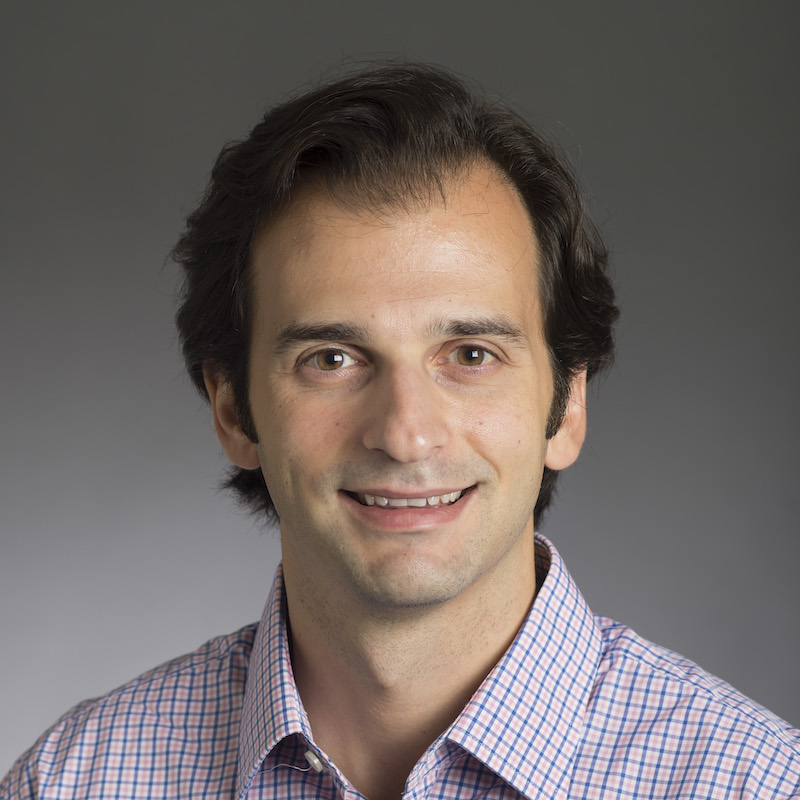
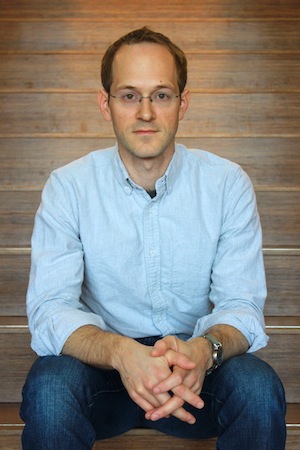
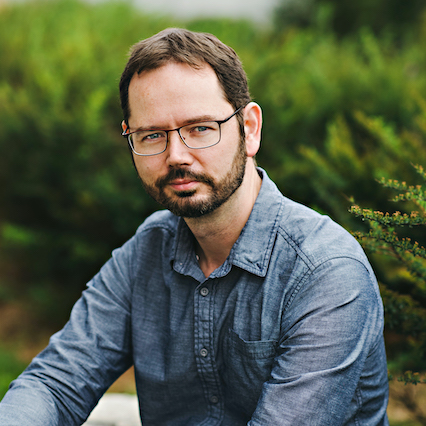
Barbara Caputo is a Full Professor at Politecnico di Torino, leading the VANDAL Laboratory and directing the AI@PoliTo Interdepartmental Lab. She holds a double affiliation with the Italian Institute of Technology (IIT) and has held roles at Idiap-EPFL and Sapienza University. Her research focuses on AI, computer vision, domain adaptation, and federated learning. She contributes to national AI policy, including the Italian Strategy on AI and the National PhD on AI for Industry 4.0. She is an ERC Laureate and ELLIS Fellow, co-founding ELLIS society. Her work spans visual place recognition, action recognition, and cross-domain learning. Education: PhD in Computer Science from KTH Royal Institute of Technology (2005). Major roles include Rector’s Advisor on AI at PoliTo, Board Member of ELLIS, and coordinator of the AI & Industry 4.0 vertical in the National PhD program. Awards include ERC Laureate (2017), ELLIS Fellow (2019), and Inspiring Fifty Italy (2018). Her research emphasizes federated learning, domain adaptation, and AI ethics. Recent articles explore domain generalization, resource-efficient federated models, and AI-environment interactions. She collaborates with institutions like MUR, CNR, and the European Commission on AI policy and tech initiatives.
Craig Davis is a Professor and holds the Bollenbach Chair in Wildlife Management at Oklahoma State University's Department of Natural Resource Ecology & Management. He has been a faculty member since 2001, advancing from Assistant Professor (2001-2007) to Associate Professor (2007-2012), and has served as Bollenbach Chair since 2014. Davis earned his PhD in Wildlife Science from Texas Tech University (1996), an MS from Iowa State University (1991), and a BS from Ohio State University (1988). He is also a Certified Wildlife Biologist through The Wildlife Society. His research focuses on avian ecology, wetland restoration, and gamebird management, with specific interests in fire-grazing interactions, invertebrate communities, and climate change impacts on ecosystems. Key areas include grassland bird survival, wetland classification systems, and the effects of anthropogenic development on wildlife habitats. Davis actively collaborates with conservation organizations and agencies, addressing challenges like invasive species management and water infrastructure resilience. Teaching responsibilities include undergraduate courses on Wildlife Management Techniques and Wetland Ecology, as well as graduate courses like Advanced Wetland Ecology. His grants emphasize wetland restoration outreach, climate adaptation strategies, and studies on northern bobwhite and wild turkey populations. Notable projects include evaluating cellular transmission technology in wildlife monitoring and assessing the impact of extreme weather on gamebird survival. Grants (Selected): Expansion of potential wetland restoration opportunities in Oklahoma (2024-2027) Linking Research and Stakeholder Engagement for Wetland Conservation (2024-2026) Effects of Extreme Weather and Hunting on Northern Bobwhite (2023-2025) Research Themes: Aligns with UN Sustainable Development Goals 15 (Life on Land), 13 (Climate Action), 6 (Clean Water), 11 (Sustainable Cities), 14 (Life Below Water), and 9 (Industry/Infrastructure).
B. L. Turner II is a Regents' Professor and Gilbert F. White Professor of Environment and Society at Arizona State University, affiliated with the School of Geographical Sciences and Urban Planning and the School of Sustainability. His work focuses on human-environment relationships, land system science, urban sustainability, and ancient Maya studies. Education: PhD in Geography from the University of Wisconsin-Madison (1974), MA and BS from the University of Texas at Austin. Research Interests: Land system architecture, tropical deforestation, urban heat islands, and sustainability science. His research has been supported by NSF, NASA, USDA, and others. Key contributions include studies on land change in the Southern Yucatán, vulnerability frameworks, and urban climate adaptation. Major Awards: Preston E. James Award, Sustainability Science Award, Fellowships from AAAS and NAS. Turner has advised over 50 doctoral students and contributed to interdisciplinary initiatives like the Central Arizona-Phoenix Long-Term Ecological Research (CAP LTER) and the Global Land Project.
Shauna Brail is Professor and Director at the Institute for Management & Innovation, University of Toronto Mississauga, with cross-appointments at the Munk School of Global Affairs & Public Policy. As an economic geographer and urban planner, her research examines urban transformation through economic, social, and technological change, particularly focusing on platform economy impacts, mobility innovation, and governance shifts in 21st-century cities. Education: PhD in Geography (University of Toronto), MA in Urban Planning (University of British Columbia), BA in Urban Studies/Geography (University of Toronto). Leadership Roles: Former Associate Director of Mobility Network, Director of Urban Studies Program, Associate Director of Partnerships & Outreach at School of Cities, and Interim Director of Master of Urban Innovation. Her work appears in top journals across geography, urban planning, and urban studies . Recent publications analyze pandemic impacts on cities, platform economy regulation, public housing finance models, and autonomous vehicle governance. She advises governments and civic organizations on housing, transportation, and digital platform policy while serving on editorial boards for Applied Geography , Progress in Economic Geography , and Canadian Geographies . Academic partnerships include collaborations with researchers like Tara Vinodrai, Ben Donald, and international scholars. Her current projects examine post-pandemic urban recovery, mobility-as-a-service business models, and equitable transportation technology implementation across Canadian cities.
Albert Presto is a Research Professor in the Department of Mechanical Engineering at Carnegie Mellon University with a courtesy appointment in Civil and Environmental Engineering. He serves as Director of the Center for Atmospheric Particle Studies (CAPS) and is a Faculty Affiliate at the Steinbrenner Institute for Environmental Education and Research. His work spans multiple interdisciplinary collaborations across environmental science, engineering, and public health domains. Department of Mechanical Engineering, College of Engineering Center for Atmospheric Particle Studies (CAPS) Steinbrenner Institute for Environmental Education and Research Africa Clean Air Network Advisory Council Health Effect Institute's Energy Review Committee Presto's research focuses on pollutant emissions from energy extraction and consumption and their subsequent atmospheric transformations. His work examines how gas and oil wells emit methane, how vehicles emit carbon monoxide and particulate matter, and how these pollutants undergo oxidation in the atmosphere to create secondary pollutants like ozone and secondary particulate matter. His approach combines ambient measurements, laboratory experiments, source testing of pollution sources, and atmospheric models to provide a holistic view of pollutant emissions and transformations. His recent publications reveal a strong emphasis on air quality monitoring technologies, particularly low-cost sensor networks deployed internationally. There's a clear trend toward studying air pollution in African cities (especially Nairobi, Kampala, and Addis Ababa), examining spatial and temporal variability of particulate matter, and investigating the health impacts of air pollution exposure. His work increasingly integrates machine learning approaches for pollution forecasting and leverages international collaborations to address global air quality challenges. Member of Africa Clean Air Network Advisory Council Collaborator with US embassies worldwide on air quality data collection Quoted in The Guardian on inequality of air pollution exposure, specifically noting how people of color are more likely to be exposed to harmful air pollution Collaborated on research regarding chemicals released during the Ohio train derailment Presto actively collaborates with medical professionals to develop neighborhood-by-neighborhood studies of pollutant exposure and to understand relationships between emissions and health effects like childhood asthma. His work includes investigating racial-ethnic exposure disparities to airborne pollutants and examining how proximity to pollution sources like fast-food restaurants affects pediatric asthma outcomes. He has received seed funding from the Scott Institute for Energy Innovation for research in clean hydrogen production, AI hardware efficiency, and decarbonizing transportation. As Director of CAPS, Presto leads a research team focused on atmospheric particle studies with applications ranging from local Pittsburgh air quality to global monitoring initiatives. His lab develops and deploys advanced air quality monitoring technologies, including low-cost sensor networks that have been implemented in multiple cities across Africa. The CAPS research group works at the intersection of environmental engineering, atmospheric science, and public health to address critical air quality challenges worldwide.
Ming Hu is a Professor and University of Toronto Distinguished Professor of Business Operations and Analytics at Rotman School of Management, University of Toronto. He serves as Area Coordinator for the Operations Management & Statistics Area and holds editorial leadership roles including Editor-in-Chief of Naval Research Logistics and Associate Editor for multiple top journals. MS in Applied Mathematics, Brown University (2003) PhD in Operations Research, Columbia University (2009) His research focuses on sharing economy , social operations , and platform economics , examining how operational decisions can maximize societal benefit. Key areas include crowdfunding , two-sided markets , crowdsourcing , and group buying , with applications to DEI , sustainability , and AI-empowered operations . Recent work analyzes spatial operations in delivery systems, algorithmic fairness , and climate change adaptation in agricultural supply chains. His publications span top journals like Management Science and Operations Research , covering topics from blockchain traceability to quantum-inspired optimization . Scientific recognitions include: Wickham Skinner Early-Career Research Award (2016) Best Operations Management Paper in Management Science (2017) 2018 Poets & Quants Best 40 Under 40 MBA Professors As an Amazon Scholar (2022–) and Chair of Chain Analytics Institute (2023–), he bridges academic research with industry applications in AI-driven logistics and sustainable operations.
Zahra Gharineiat is an Associate Professor at the University of Southern Queensland , affiliated with the School of Surveying and Built Environment . She has over 8 years of tertiary teaching experience and 11 years of administrative responsibilities. Bachelor of Surveying (BSurv), University of Tabriz Master of Engineering Management (MEngMgt), University of Melbourne PhD, University of Newcastle Research Interests : Zahra specializes in Geomatic Engineering and Machine Learning , with a focus on applications like Unmanned Aerial Vehicles (UAVs) , LiDAR , Digital Twins , and Remote Sensing . Her work spans Earth Science Observations , Satellite altimetry , and Geodetic data capturing , integrating Computational Modelling and Geoinformatics for innovative solutions. Professional Affiliations : She is a member of the Surveying and Spatial Sciences Institute (SSSI) and the International Union of Geodesy and Geophysics (IUGG) . Her research affiliations include the Centre for Future Materials (CFM) , Institute for Advanced Engineering and Space Sciences (IAESS) , and Centre for Astrophysics (CA) .
Andrew Childs is a Professor at the University of Maryland, affiliated with the Department of Computer Science and the Institute for Advanced Computer Studies (UMIACS). He serves as Director of the NSF Quantum Leap Challenge Institute for Robust Quantum Simulation (RQS) and is a Fellow at the Joint Center for Quantum Information and Computer Science (QuICS). His research focuses on quantum algorithms for simulating physical systems, algebraic problems, and quantum walk protocols, with applications in quantum computing and computational complexity. University of Maryland Institute for Advanced Computer Studies (UMIACS) Joint Center for Quantum Information and Computer Science (QuICS) NSF Quantum Leap Challenge Institute for Robust Quantum Simulation Childs' research spans quantum simulation, quantum Fourier transform, phase estimation, and Hamiltonian dynamics. He has developed techniques to reduce quantum computational resources for simulating quantum systems and explored limitations of quantum computers through hidden subgroup problems and non-unitary dynamics. His publications cover diverse areas including quantum walk optimization, Hamiltonian simulation methods, and applications to cryptography and condensed matter physics. Recent works address spatial search algorithms, product formulas for commutators, and quantum routing protocols. As an educator, Childs has taught courses on quantum algorithms and information processing at both the University of Maryland and University of Waterloo, with lecture notes and materials spanning multiple years. Contact: amchilds@umd.edu | Office: ATL 3359 | Affiliated with University of Maryland's quantum research institutes.
Ron Steinfeld is an Associate Professor in the Department of Software Systems & Cybersecurity at Monash University, Australia. He holds editorial roles in Designs Codes and Cryptography (since 2017) and has served on technical committees for top-tier conferences like ASIACRYPT, CRYPTO, and EUROCRYPT. His research focuses on quantum-safe cryptography, lattice-based cryptography, and blockchain security, with over 80 refereed publications and AUD$4M+ in research funding. Education: BSc Mathematics and Physics (Monash University, 1998) BE (Hons., First Class) Electrical and Computer Systems (Monash University, 2000) PhD Computer Science (Monash University, 2003) Research Interests: Design and analysis of cryptographic algorithms, quantum-safe protocols, lattice-based security foundations, and blockchain applications. His work underpins NIST standard algorithms like Kyber and Dilithium through structured lattice problem research. Recent Articles Trends: Focus on privacy-preserving blockchain protocols, post-quantum signature schemes, encrypted data search, and cryptographic applications in adversarial AI. Recent work includes fair Bitcoin watchtower schemes and genomic database privacy solutions. Awards: ASIACRYPT 2015 Best Paper Award Advising & Grants: Supervises PhD projects on quantum-safe cryptography and blockchain security. Leads initiatives like the AUD$4M ARC-funded Quantum Information Technology project. Collaborates with industry partners including CSIRO/Data61. Labs/Teams: Key contributor to Monash’s cybersecurity and cryptography research groups, involving interdisciplinary projects on materials discovery ( Æinstein initiative) and post-quantum blockchain security.
Goran Strbac is a Professor of Energy Systems at Imperial College London's Faculty of Engineering, holding the Chair in Electrical Energy Systems. He leads the Department of Electrical and Electronic Engineering and directs the joint Imperial-Tsinghua Research Centre on Intelligent Power and Energy Systems. His roles include IPCC WG 3 Leading Author, OFGEM RIIO-2 Challenging Group Member, and member of multiple EU energy platforms. Strbac's research focuses on multi-energy systems integration, energy market design, renewable integration, distributed energy resources, and grid resilience. Notable contributions include whole-energy system modeling across operation and investment scales, market mechanisms for flexibility services, and security assessments for low-carbon infrastructure. His work emphasizes resilience and decarbonization, with over 500 publications and 4 co-authored books. He advises governments and regulatory bodies on energy policy, including contributions to UK Smart System Forum and European Technology and Innovation Platforms. His recent articles explore AI-driven grid optimization, hydrogen integration, and transactive energy systems. Strbac leads major initiatives like the UK Centre for Grid Scale Energy Storage and chairs resilience-focused research clusters. His research bridges academia and industry, informing policy through rigorous systems analysis and innovative modeling frameworks.
Mark Crowley is an Associate Professor in the Department of Electrical and Computer Engineering at the University of Waterloo, with a cross-appointment in the Cheriton School of Computer Science. He is a member of the Waterloo Artificial Intelligence Institute (WAII) and the Waterloo Institute for Complexity and Innovation (WICI), and serves as National Secretary of the Canadian Artificial Intelligence Association (CAIAC). His educational background includes a Ph.D. and M.Sc. in Computer Science from the University of British Columbia, where he worked in the Laboratory for Computational Intelligence, and a B.A. in Computer Science from York University. He completed a postdoctoral fellowship at Oregon State University working with Tom Dietterich's machine learning group. Crowley's research focuses on developing dependable and transparent algorithms to augment human decision-making in complex domains with multiple agents, spatial structure, or uncertainty. His work spans Reinforcement Learning , Deep Learning , Ensemble Methods , and Manifold Learning . He frequently collaborates with researchers in applied fields including Computational Sustainability, Sustainable Forest Management, Autonomous Driving, Medical Imaging, and Material Design. His research is motivated by both theoretical opportunities and real-world challenges such as forest fire management, automotive applications, and medical imaging. His recent publications demonstrate a strong focus on addressing challenges in reinforcement learning, particularly around observation costs, multi-agent systems, and causal representation learning. His work on ChemGymRL provides a significant contribution to digital chemistry and material design through reinforcement learning frameworks. The textbook Elements of Dimensionality Reduction and Manifold Learning represents a major contribution to the theoretical foundations of machine learning. Crowley actively supervises graduate students, with recent thesis completions including Shayan Shirahmadi Gale Bagi (PhD, Feb 2025) and Oleksandra Nahorna (MASc, Dec 2024). His lab, UWECEML (Waterloo ECE Machine Learning Lab), focuses on developing new algorithms at the intersection of Machine Learning, Optimization, and Probabilistic Modeling. He teaches courses including ECE 457C (Reinforcement Learning), ECE 657A (Data & Knowledge Modelling & Analysis), and ECE 457B (Fundamentals of Computational Intelligence). His blog Computationally Thinking explores AI, machine learning, and the societal impact of these technologies.
Mark Lewis is the Kennedy Chair in Mathematical Biology at the University of Victoria, holding joint appointments in the Departments of Mathematics and Statistics and Biology. His research focuses on spatial ecology and mathematical modeling, addressing ecological challenges such as animal movement, invasive species, and disease dynamics. Lewis earned his D.Phil. in Mathematical Biology from the University of Oxford and has been elected a Fellow of the Royal Society UK. His work integrates mathematical analysis, field studies, and interdisciplinary approaches to solve ecological problems. Current projects include modeling polar bear populations, cyanobacteria dynamics, and the impact of climate change on wildlife. Lewis supervises students across both UVic and his former University of Alberta lab. Education: D.Phil. in Mathematics (Mathematical Biology), University of Oxford Awards: Royal Society Fellowship, CRM-Fields-PIMS Prize, and Okubo Prize Key Research Areas: Animal movement modeling, aquatic ecology, wildlife disease, and invasive species management Publications highlight his contributions to understanding disease spread, parasite dynamics, and ecological responses to environmental changes. Lewis collaborates widely, applying mathematical tools to real-world conservation and health challenges.
Gustavo Alonso is Full Professor at the Department of Computer Science (D-INFK) of ETH Zurich and Head of the Institute for Computing Platforms . He has been at ETH since 1995, first as a post-doc, then as Assistant Professor from April 1998, and promoted to Full Professor in October 2001. Within the Systems Group he leads the Information and Communication Systems Research Group . Education: 1989 – Telecommunications Engineering (undergraduate), Madrid Technical University (UPM-ETSIT), Spain 1992 – M.S. Computer Science, University of California, Santa Barbara (UCSB) 1994 – Ph.D. Computer Science, University of California, Santa Barbara (UCSB) Research Interests: His work spans databases, distributed systems, cloud-computing architecture, FPGAs, hardware acceleration for data science, parallel and reconfigurable computing . The group investigates how modern heterogeneous hardware—from GPUs to SmartNICs—can be integrated into data-processing systems to achieve orders-of-magnitude performance gains, energy savings, and new functionality such as in-network computation and serverless acceleration. Scientific Awards & Honors: Fellow of the ACM (Association for Computing Machinery) Fellow of the IEEE (Institute of Electrical and Electronics Engineers) Distinguished Alumnus, Department of Computer Science, UC Santa Barbara Four Test-of-Time / Most Influential Paper Awards across databases, programming languages, cloud computing, and software engineering Labs & Projects: He directs the Information and Communication Systems Research Group within the Systems Group ( systems.ethz.ch ). The lab develops open-source platforms such as Coyote v2 for FPGA abstractions, Shuhai for HBM benchmarking, and MicroRec for micro-second recommendation serving, while collaborating with industry on SmartNICs, serverless analytics, and cloud-scale data analytics.
Dr. Athos Agapiou serves as an Assistant Professor at the Department of Civil Engineering and Geoinformatics, Cyprus University of Technology, where he holds the 'Geoinformatics and Earth Observation' chair. He also serves as Deputy Director of the UNESCO Chair on Digital Cultural Heritage and coordinates the EOCult Laboratory, a specialized research group focused on applying Earth Observation and Geoinformatics for archaeological research and cultural heritage landscapes. His research interests center on developing and applying innovative remote sensing technologies for cultural heritage preservation, addressing challenges posed by environmental and anthropogenic factors. Dr. Agapiou has led numerous high-profile research initiatives at European and national levels, including Horizon Europe and Horizon 2020 projects, as well as programs funded by the Cyprus Research and Innovation Foundation. His publication record demonstrates consistent output in remote sensing applications for archaeology, with particular focus on satellite image fusion, UAV technologies, spatial resolution optimization, and advanced data analysis techniques for archaeological prospection. His work bridges technical remote sensing methodologies with practical archaeological applications. Young Scientist Award from International Society for Digital Earth (2023) Young Researcher Award by Cyprus Research Awards (2018) Top 2% researcher worldwide in field (Stanford studies 2020-2024) Top three global researchers in Geoinformatics for cultural heritage (2024) Dr. Agapiou actively contributes to major research projects and collaborations, with his work influencing both academic research and practical applications in cultural heritage management. His laboratory (EOCult) serves as a hub for interdisciplinary research connecting geospatial technologies with archaeological practice.
Zhuoyue Zhao is an Assistant Professor in the Department of Computer Science and Engineering at the University at Buffalo, School of Engineering and Applied Sciences. His office is located at 338I Davis Hall, Buffalo, NY 14260, and he can be reached at zzhao35@buffalo.edu or by phone at (716) 645-4735. Dr. Zhao received his PhD in Computer Science from the University of Utah in 2021, where he was advised by Prof. Feifei Li and Prof. Jeff Phillips. Prior to that, he earned his BS in Computer Science from Shanghai Jiao Tong University in 2016, where he was part of the prestigious ACM Class. During his undergraduate studies, he conducted research under Prof. Kenny Zhu and spent Fall 2015 as a research assistant at Hong Kong Polytechnic University supervised by Prof. Eric Lo. Dr. Zhao's research focuses on database management systems, with specific emphasis on traditional and approximate query processing, query optimization, database systems on modern hardware, transaction processing, indexing, and storage. His work bridges theoretical foundations with practical implementations, often resulting in systems that address real-world database challenges. He has made significant contributions to probabilistic query processing, transaction scheduling, and learned indexing techniques. His recent publications demonstrate a clear trajectory toward optimizing database performance in hybrid transactional/analytical processing environments. His research increasingly integrates systems techniques with machine learning approaches, particularly in the area of learned indexes. There's also a strong focus on making database operations more efficient through innovative scheduling mechanisms and query processing techniques that can handle concurrent updates. Google PhD Fellowship (2019-2021) Best Paper Award at SIGMOD 2016 for "Wander Join: Online Aggregation via Random Walks" Best Paper Award at SIGMOD 2025 for "Low-Latency Transaction Scheduling via Userspace Interrupts" Dr. Zhao currently advises several PhD students including Yunnan Yu, Congying Wang, Gaoxiang Liu (co-advised with Prof. Ziming Zhao), and Zhuoran Li. He has successfully guided MS student Nithin Sastry Tellapuri to graduation (Fall 2023), who is now employed at AirPay. His research is supported by significant funding including an NSF CAREER award (#2339596) totaling $599,977 for research on "Speedy and Reliable Approximate Queries in Hybrid Transactional/Analytical Systems" (2024-2029) and an unrestricted Google gift of $30,000 (2021). Dr. Zhao leads the ADBLab research group at UB, where students work on cutting-edge database systems research. His lab focuses on building practical database systems that address real-world challenges in query processing, transaction management, and indexing. The lab maintains strong connections with industry partners and regularly contributes to open-source database projects.