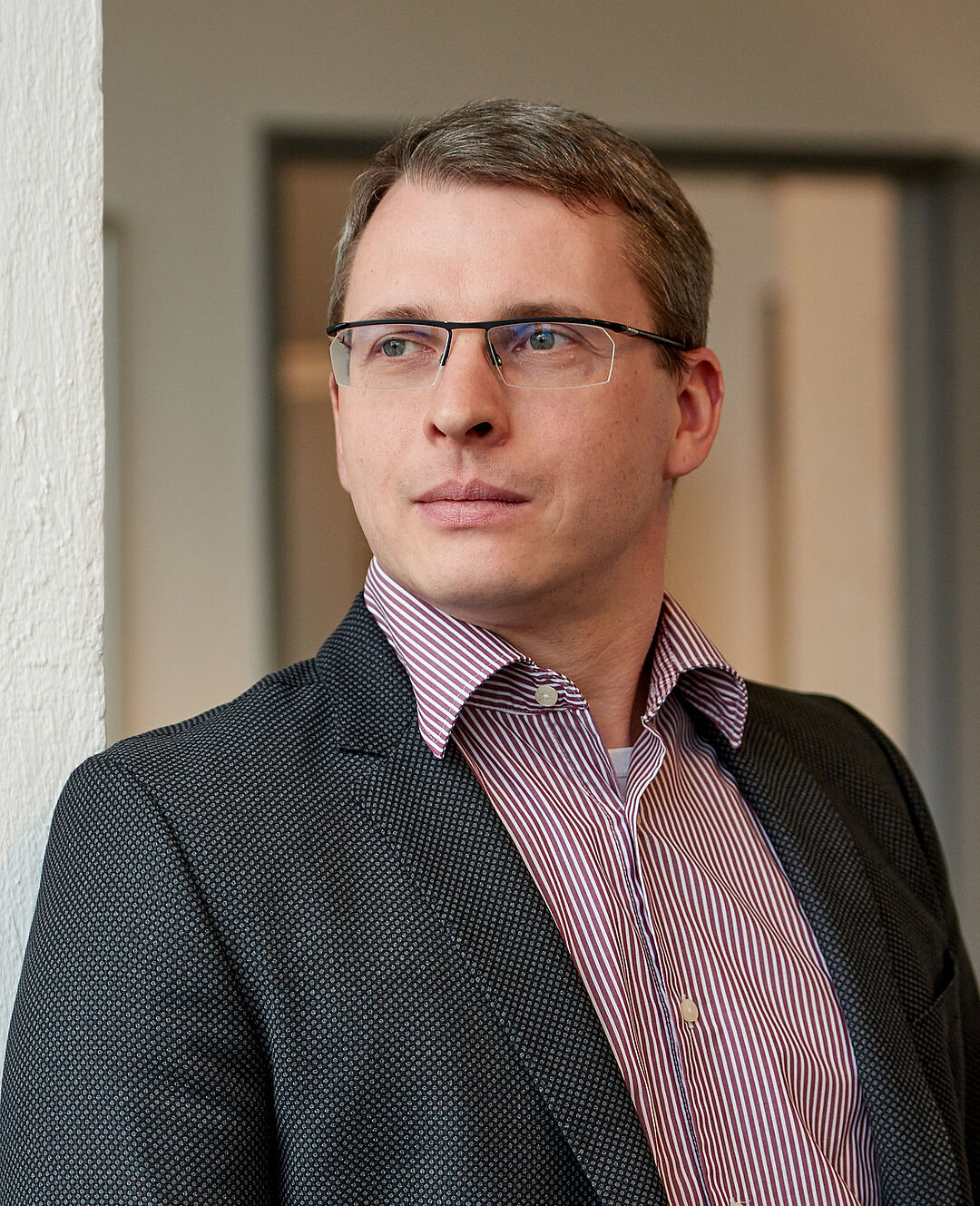
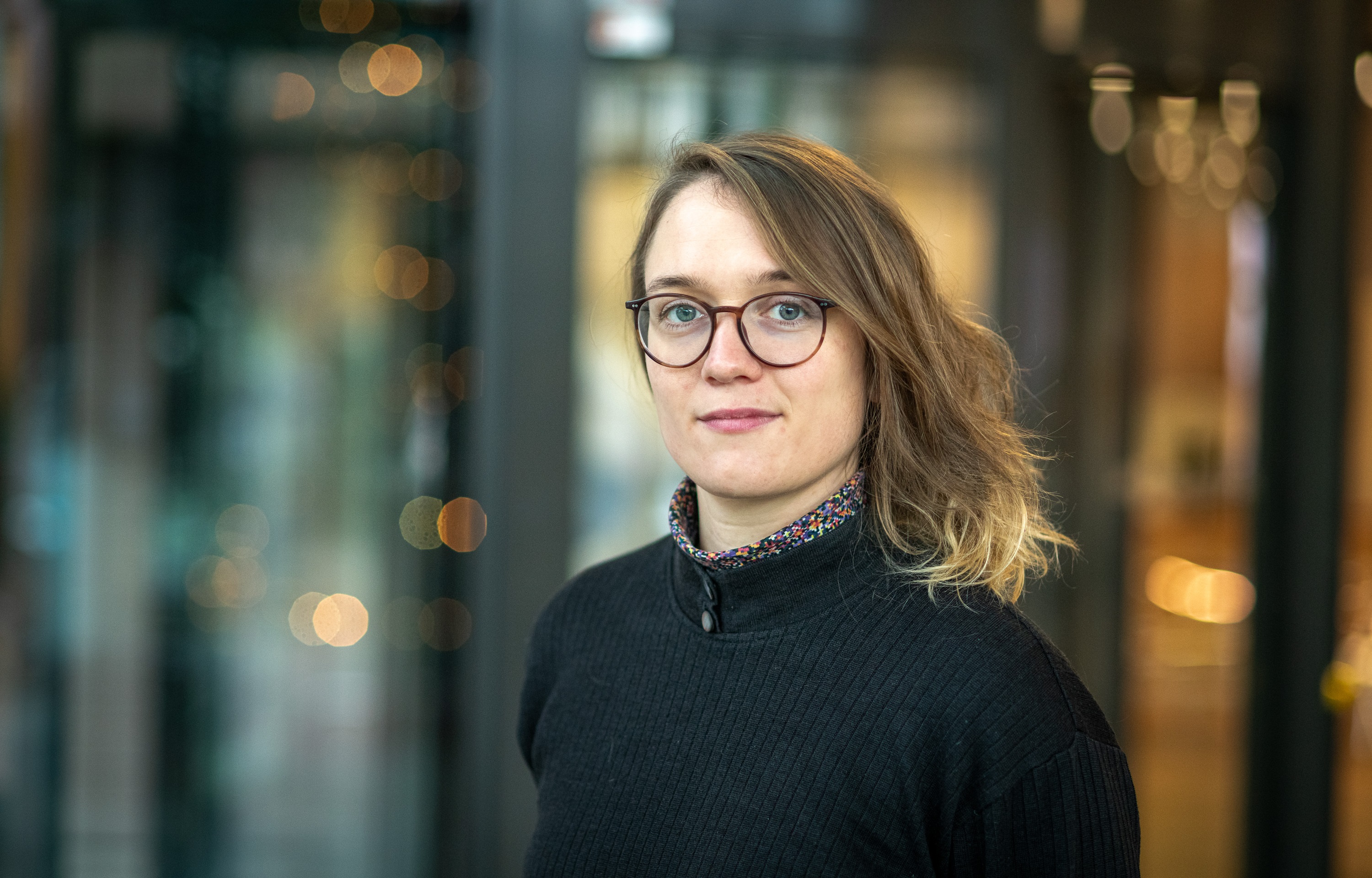
Martin Kada is Professor for Methods of Geoinformation Science at Technische Universität Berlin and Prodekan 'International' for Faculty VI. His research focuses on geoinformatics, 3D city modeling, and remote sensing applications. Research highlights include: Development of automated 3D building reconstruction methods Radar interferometry for deformation monitoring Machine learning for geospatial data analysis Spatial data quality assessment He has received multiple best paper awards for his work on 3D building reconstruction and geospatial data processing. Current projects involve using persistent scatterer interferometric SAR for monitoring infrastructure deformation and developing deep learning approaches for building footprint extraction.
Shih-Pei Chen is a Senior Research Scholar and IT Researcher at the Max Planck Institute for the History of Science (MPIWG), specializing in Digital Humanities and Digital Sinology. She bridges computer science with historical research, developing digital tools and methodologies for analyzing Chinese historical datasets. Co-developed Local Gazetteers Research Tools (LoGaRT) Created geospatial platforms like CHMap Contributed to research infrastructure (RISE & SHINE) Focuses on Digital Concordances and historical dataset publishing Her work integrates computational methods with traditional historiography, emphasizing practical applications in historical data analysis. She actively collaborates with historians and serves on editorial/advisory boards in Digital Humanities.
Jens Herder is a Professor of Virtual Studio/Virtual Reality at the Düsseldorf University of Applied Sciences since 2000. As former Dean of the Faculty of Media , he pioneered the Bachelor's in Media and Applied Information Technology and Master's in Virtual Reality programs. He founded the Journal of Virtual Reality and Broadcasting and leads research at the Virtual Sets and Virtual Environments Laboratory . Studied Computer Science with Architecture at TU Darmstadt PhD in Engineering from University of Tsukuba (1999) His research spans Virtual/Augmented/Mixed Reality , Spatial Media , and Interactive Environments . Key projects include: Sound Spatialization Framework development 3D Monument digitization with ethical participation Augmented Reality lighting control systems Volumetric capture integration for virtual teleportation He supervises 6+ graduate theses annually, focusing on: Real-time virtual production Photorealistic rendering Immersive media workflows AR/VR hardware integration Current affiliations: Head of Virtual Studio/VR Laboratory Internationalization Commissioner for Faculty of Media
Dr. Andrea Flack is an Independent Emmy Noether Group Leader at the Max Planck Institute of Animal Behavior, Konstanz, Germany, and a Junior Group Leader at the Centre for the Advanced Study of Collective Behaviour, University of Konstanz. Her research focuses on understanding how ecological, environmental, and genetic factors shape migratory behaviors in birds, particularly white storks, and their evolutionary consequences. Current Positions: Independent Emmy Noether Group Leader, Max Planck Institute of Animal Behavior (2022–present) Junior Group Leader, Centre for the Advanced Study of Collective Behaviour (2020–present) Education: DPhil in Zoology (2009), University of Oxford Diploma in Biology (2009), Freie Universität Berlin Her work integrates cutting-edge technologies such as high-resolution GPS, accelerometers, and on-board cameras with experimental approaches like delayed-releases and cross-fostering to explore behavioral variation and its implications. Recent research highlights include social learning in migration and the impact of anthropogenic habitats on stork movement patterns. Key trends across her publications emphasize collective decision-making, environmental adaptation, and technological innovations in tracking. Notable contributions appear in journals like PNAS , Current Biology , and Journal of Applied Ecology . Scientific Awards: Emmy Noether Fellowship Dr. Flack collaborates extensively, utilizing Movebank for data integration and leading studies on avian collision risks and migration phenology. Her lab team includes researchers like William Fiedler and Emily Aikens , focusing on experimental designs and ecological modeling.
Prof. Dr. Sybille Bauriedl is Professor in the Department of Integrative Geography at the University of Flensburg, serving as Head of the Study Program for the Interdisciplinary Institute for Environmental, Social and Human Sciences and Deputy Institute Spokesperson. Her institutional roles position her at the intersection of critical geography, environmental justice, and social transformation. Her research spans: Urban political ecology with focus on metabolic urbanism and climate justice Feminist critiques of platform capitalism in care and urban services Decolonial methodologies in mapping and spatial memory practices Gendered dimensions of climate adaptation and urban governance Critical analyses of smart city discourse and platform urbanism Analysis of her 2022-2025 publications reveals a concentrated focus on the platformization of urban life, particularly examining how digital platforms transform care work, urban metabolism, and spatial justice in European cities. Her work consistently integrates feminist and post-colonial perspectives into critiques of techno-capitalist urban restructuring, with growing attention to climate-resilient rural-urban cooperation models. While no formal advising relationships or scientific awards are documented in the provided materials, her institutional leadership roles suggest significant administrative and educational contributions. Her departmental focus on Integrative Geography reflects her commitment to transdisciplinary approaches addressing environmental and social crises.
Sebastian Wichert is the Head of the LMU-ifo Economics & Business Data Center (EBDC) since January 2022 and was Deputy Director of the ifo Center for Industrial Organization and New Technologies from 2018 to 2021. He holds a PhD in Economics from LMU Munich (2012–2018) and has affiliations with institutions like the ifo Institute and the DFG-Sonderforschungsbereich TRR 190 'Rationality & Competition'. Education: Diplom-Volkswirt (LMU Munich, 2011) Erasmus Exchange (University of Bern, 2009–2010) Abitur (Gymnasium Gröbenzell, 2006) His research interests span Big Data Economics , Health Economics , Innovation Economics , and Regional Economics . He focuses on empirical analyses of consumer behavior during crises, public transport policies, climate movements, and healthcare utilization. His scientific awards include the Science Prize of the German Society for Health Economics (2019) and admission to the Leibniz-Akademie für Führungskräfte (2022) . He has contributed to projects like the Horizon 2020 PILLARS program and Research Data Centers (RDCnet) . As a research associate at LMU Munich and ifo Institute, he has led initiatives to improve research data access and published extensively on topics such as economic recovery post-pandemic , mobility patterns , and health risk attitudes . He also teaches courses on digital transformation and empirical methods in economics .
Prof. Dr. Stephan Keuchel is a faculty member at the Westphalian University within the Faculty of Engineering and Natural Sciences , specifically in the Department of Economics, especially Transport Economics and Transport Policy . He teaches courses such as Volkswirtschaftslehre , Transport Policy , and Statistics in Mobility and Logistics at both Bachelor's and Master's levels, while also supervising final theses. Research Focus: Transport economics, environmental management, digitalization of transport, empirical transport research, discrete choice modeling His research projects include spatial effects of carbon pricing on transport equity (2024), ticket inspection impacts, and digitalization of transport systems. He leads the Institute for Mobility and Transport (MoVe) and collaborates on EU Commission initiatives, Eurostat data, and German Federal Ministry of Transport projects. His work emphasizes policy relevance, sustainability, and empirical analysis.
Karina M. Pallagst is a Professor of International Planning Systems at the Faculty of Spatial and Environmental Planning, Technische Universität Kaiserslautern (now RPTU). She serves as Dean of the Faculty (since 2023) and leads the 'Transformation and Digitalization of Region and City' research initiative (since 2024). Her work focuses on comparative urban/regional development , shrinkage in cities , and cross-border planning cultures , with notable contributions to the Handbook on Shrinking Cities (2022) and Border Futures publications (2018–2024). Key research areas: Planning cultures in shrinking cities, cross-border cooperation in Europe/Germany, sustainable growth management Awards: Distinguished Teaching Award (2020), Best Conference Paper Award (2024) Her recent articles (2021–2024) explore green infrastructure , digital urban tools , and cross-border planning theories , emphasizing borderland dynamics , ecosystem services , and smart city applications in diverse contexts like Helsinki and Mexico City. As a leader in AESOP and UniGR-CBS networks, she drives transdisciplinary initiatives such as the BMBF-funded GIAGEM project on green innovation areas in Germany/Mexico, while serving on editorial boards for journals like Sustainability and Town Planning Review .
Leonardo Tonetto is a researcher at Technical University of Munich (TUM) within the Chair of Connected Mobility, working under Prof. Jörg Ott. His office is located in FMI 01.05.038 and he maintains an active presence in both academic research and open-source development with significant GitHub contributions (19 repositories, 73 stars). His work bridges theoretical research and practical implementation in mobility systems. Dr. Tonetto's research spans Mobile User Modeling , Deep Learning & Data Analysis , Signal Processing , and Complex Networks . His work demonstrates particular expertise in extracting meaningful patterns from human mobility data while addressing critical privacy concerns. Recent publications show increasing focus on ethical implications of location-based data and energy-efficient computing for augmented reality applications. Analysis of his publication record from 2014-2025 reveals a consistent research trajectory evolving from fundamental mobility pattern analysis toward more complex systems integrating privacy considerations and energy efficiency. His work increasingly intersects computer science with social implications, particularly in location-based services and epidemic modeling. The research shows strong methodological diversity, employing machine learning, network analysis, and signal processing techniques across various application domains. Through his GitHub profile and open-source contributions, Tonetto demonstrates commitment to reproducible research and community engagement. His technical skills span multiple programming languages and systems, supporting both theoretical research and practical implementation of mobility-aware systems. While specific grant information isn't publicly available, his consistent publication output suggests successful research funding.
Smajil Halilovic is a Researcher at the Chair of Renewable and Sustainable Energy Systems at the Technical University of Munich . His work focuses on energy systems modeling and optimization, particularly for geothermal and renewable energy integration. Current projects include Geo.KW , a coupled hydrothermal and infrastructure model for urban-scale geothermal use Research emphasizes optimization techniques for groundwater heat pump systems Key contributions in PDE-constrained optimization and thermal resource assessment Halilovic has published extensively in Renewable Energy and Energy Conversion and Management , with recent work on spatial optimization of geothermal systems and urban heat planning. His collaborations with Prof. Thomas Hamacher and Kai Zosseder highlight his role in advancing sustainable energy infrastructure. He teaches Mathematical Modeling of Complex Systems in the Energy Field and contributes to interdisciplinary projects like the Interdisciplinary project internship: Concept development of a renewable energy system in a developing country . His publications demonstrate expertise in geothermal integration, optimization algorithms, and urban energy modeling.
Dr. Rebecca E. Döhl is a researcher at the Institute of Archaeology, Humboldt University of Berlin, specializing in the Department of Archaeology and Cultural History of Northeast Africa (AKNOA). Her work bridges traditional Egyptology with cutting-edge digital methodologies, focusing on prehistoric and Predynastic Egypt, rock art, and complex system theory. Doctorate from Free University of Berlin (2009-2017) on rock paintings in Egypt Part-time degree in Academic Geoinformatics from University of Salzburg (2009-2011) MA in Egyptology from Free University of Berlin (2008) Her research combines landscape archaeology with digital tools like GIS, 3D modeling, and agent-based modeling to analyze ancient Egyptian communication systems. Notable projects include: 2023: Leading field campaigns in Gebel el-Nezzi, Eastern Desert 2018-present: Project coordinator for CaeMmCom (Corpus of Ancient Egyptian Multimodal Communication) 2010-2016: Rock paintings survey in Wadi Berber She has received prestigious funding from Gerda Henkel, TOPOI, and DAAD, and her publications explore spatial approaches to rock art and multimodal communication in Ancient Egypt. Her work also contributes to theoretical discussions on social development and complex systems in archaeology.
Prof. Dr. Julian Reif is a Professor of Tourism and Deputy Director at the German Institute for Tourism Research (Department of Economics) at the West Coast University of Applied Sciences. His research focuses on tourist demand analysis, digital visitor measurement, smart destinations, and urban tourism dynamics. He holds a PhD in Tourism Geography from the University of Bonn (2021) and has authored/co-authored over 80 peer-reviewed publications. Research interests include Big Data applications in tourism, crowding perception, overtourism challenges, and the socio-spatial impacts of tourism. He leads projects like the AI-based Recommender for sustainable tourism and the Landesweites digitales Besuchermanagement (LAB-TOUR SH) in Schleswig-Holstein. His work bridges academic theory with practical destination management solutions. Key achievements include the Best Paper Award 2020 (Journal of Destination Marketing & Management) and co-authoring the award-winning Tourismusatlas Deutschland (2021). He teaches modules on scientific writing, tourism geography, and digitalization in international business management. Current research explores spatial footprint analysis of urban events, business traveler behavior, and the role of nudging in sustainable tourism. Leading projects: AI-Basierter Recommender, CRUISE (cruise passenger analysis), and EMOBÜS (tourist emotion mapping) Coordinated 10+ research initiatives including GreY (Grey Market Analysis), PUNK (punk subculture tourism), and DIGIPARK (national park visitor tracking) Teaching portfolio includes 'Digitalisierung im Tourismus' and 'Tourismusgeographie' at undergraduate and master's levels
Prof. Anika Groß is a Professor for Database Systems and Programming at the Department of Computer Science and Languages at Anhalt University of Applied Sciences in Köthen, Germany. She holds a PhD from the University of Leipzig (2014) and has held roles as a PostDoc in strategic research at Daimler AG and as a research assistant at the Interdisciplinary Centre for Bioinformatics (IZBI). She is actively involved in academic governance, serving on the faculty council, board of examiners, and various sustainability and research data management committees. Her research focuses on database systems, knowledge graphs, and ontology engineering, with applications in environmental science, medicine, and material sciences. Education - PhD (Dr. rer. nat.) in Computer Science, University of Leipzig (2014) - Diploma in Bioinformatics, MLU Halle-Wittenberg (2007) - Postdoctoral research at University of Leipzig's Database Group (2008–2013) Research Interests Her work emphasizes temporal graphs, ontology evolution, and semantic data integration. She develops tools like Region Evolution eXplorer (REX) and contributes to projects such as AgriRestore (ecosystem restoration) and MeineWaldKI (AI-based forest monitoring). Her recent focus includes wearable device applications in healthcare and digital twins for lithium value chains. Recent Research Trends Recent publications highlight interdisciplinary applications of knowledge graphs in agriculture and environmental science, leveraging temporal analysis and machine learning for tasks like chemical transformation prediction and bladder monitoring. She also explores cross-lingual semantic annotations in medical forms and holistic clustering of linked data. Professional Roles - Executive Committee Member, GI Database Systems Group - Fellow, Institute for Technologies and Economics of Lithium (ITEL) - Co-Chair of multiple workshops including FGDB-Workshop @ LWDA 2018 and BigDS@BTW 2017 Labs & Collaborations She leads research teams in projects funded by DFG, European Union (EFRE), and ITEL, collaborating with organizations like Daimler AG and ANU. Her lab focuses on advancing database systems and interdisciplinary data science applications.
Nora Mittelstädt is a Researcher and Project Lead at the Helmholtz Center for Environmental Research - UFZ in Leipzig, Germany. She has held roles in project coordination and research since 2020, focusing on nature-compatible renewable energy expansion and bioeconomy monitoring . Department : Systems Analysis and Sustainability Assessment Education : M.Sc. in European and International Economics and Politics Research Interests : Her work centers on renewable energy systems , environmental impact assessments , and data-driven sustainability solutions . She specializes in spatial analysis of energy infrastructure and policy integration for climate-neutral transitions. Publications : Her recent articles analyze ground-mounted PV near transport routes , EE-Monitor's role in environmental assessments , and bioeconomy stakeholder perceptions . These contributions align with energy data transparency and land-use optimization . Scientific Recognition : UFZ Research Award 2024 (team award for developing the EE-Monitor and BENOPT system) Contact : nora.mittelstaedt@ufz.de | +49 341 60252832
Mitra Baratchi is an Associate Professor at the Leiden Institute of Advanced Computer Science (LIACS) , Leiden University. She leads the Spatio-temporal data Analysis and Reasoning (STAR) research group, co-leads the Automated Design of Algorithms (ADA) group, and founded the Special Interest Group on Spatio-Temporal Data Mining (SIG-SDTM) . PhD from University of Twente (Mobility Data) Master’s/Bachelor’s in Computer Engineering, Iran Research Interests focus on automated pattern extraction from spatio-temporal data across urban, environmental, and industrial domains. Key applications include: Automated Machine Learning (AutoML) for Earth Observations Time-Series Forecasting for public health (e.g., pandemic modeling) Urban Mobility Optimization with ESA, Honda, and municipalities Reliable Vehicular Communication Systems Smart Garments for Health Risk Detection Geocast Protocols for Internet-wide Communication Grant Highlights include €120K NWO-Aspasia, €2.9M Marie Skłodowska-Curie, €350K NWO-KLEIN, and €135K Center for BOLD Cities funding. She has supervised 12 PhD students and 4 current Master’s students since 2011, with notable best paper award at WWIC'16. Teaching includes Machine Learning (2020-present) and Urban Computing (2018-present) at Leiden, plus past courses in Data Visualization, Software Engineering, and Research Methods.