Dr. Sylvia van Borkulo is an Assistant Professor at the Digital Technology and Education sub-department of Utrecht University's Faculty of Science. Her work bridges STEM education with digital innovations , focusing on computational thinking in mathematics and computer science instruction.
Tabea Sonnenschein is a Researcher at Utrecht University , affiliated with the Faculty of Geosciences and Human Geography and Spatial Planning . She is also a PhD Candidate in the Department of Population Health Sciences under the Faculty of Veterinary Medicine . Her work bridges environmental science, urban planning, and public health through advanced computational modeling. Coordinated EU-funded EXPANSE (Horizon 2020) and EXPOSOME-NL (NWO) projects. Research Associate at the MRC Epidemiology Unit at University of Cambridge, contributing to DARe Hub and UBD Policy initiatives. Research Interests Air Pollution and Health: Modeling health impacts of urban pollutants. Agent-Based Simulation: Developing tools like GenSynthPop and CellAutDisp . Urban Sustainability: Assessing interventions for resilient, low-emission cities. Recent Publications highlight her work on urban exposome, synthetic population modeling, and subway expansion impacts. She contributes to journals like Environmental Modeling and Software , Autonomous Agents and Multi-Agent Systems , and Semantic Web .
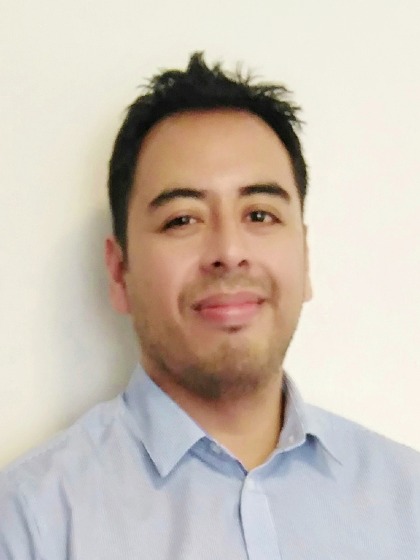
Dr. Joep Steegmans is a researcher at the Utrecht University School of Economics, Department of Economics, specializing in Applied Econometrics and Housing Market analysis. His work bridges big data applications with economic behavior. Expertise areas: Applied Econometrics, Applied Data Science, Housing Market, Regional Science Education: PhD in Economics (2017) from Utrecht University His research explores how digital data from platforms and Google Trends can enhance housing market understanding, questioning traditional theories in modern contexts. Recent publications focus on gravity models, online search behavior, and financial determinants in housing decisions. Scientific contributions include Empirical studies on household mobility and loss aversion Data science methodologies for housing market analysis Policy-relevant findings on real estate dynamics He also advises on academic IT infrastructure through contributions like What to know about the Google Cloud . Contact: j.w.a.m.steegmans@uu.nl
Janet Huang serves as Assistant Professor in the Industrial Design department at Eindhoven University of Technology (TU/e), where she contributes to the Future Everyday group. Her research pioneers human-AI co-learning frameworks that empower designers to harness AI as a creative material for solving complex real-world problems across diverse contexts. Academic Background: PhD in Computer Science, National Taiwan University (2018) MSc in Computer Science, National Taiwan University (2008) Research Focus: Dr. Huang designs novel toolkits bridging data sensemaking and decision-making support, with emphasis on creative AI applications and ethical human-AI collaboration . Her work spans healthcare data visualization, urban play systems, and memory augmentation tools, consistently exploring how AI can enhance human creativity while addressing societal implications. She employs participatory design methods to develop systems that balance technical innovation with user-centered values. Publication Trends: Recent articles (2023-2025) reveal three dominant trajectories: (1) generative AI for domain-specific problem-solving in nursing and biodesign, (2) playful urban exploration systems examining citizen-AI tensions, and (3) memory and decision-making support tools analyzing anthropomorphism effects. These works demonstrate her signature approach of embedding technical AI research within rich human contexts. Awards & Recognition: Ph.D. Thesis Honorable Mention, TAAI 2018 MOST Postdoctoral Scholarship (Taiwan) Mingler Scholarship 2023 Best Poster Honorable Mention, CSCW 2023 Academic Contributions: Dr. Huang teaches specialized courses including Creativity and Aesthetics of Data & AI and Digital Craftsmanship , while supervising 19 student projects. Her research receives support from competitive grants including the MOST scholarship, with applications spanning healthcare innovation and sustainable community development. She actively contributes to UN Sustainable Development Goals through human-centered AI solutions. Research Environment: As core member of TU/e's Future Everyday group, she collaborates with interdisciplinary teams spanning computer science, design, and domain experts. Her lab environment emphasizes iterative prototyping and real-world deployment, particularly in healthcare settings and urban contexts where AI systems interface with complex human practices.
Ondrej Mitas is a Lecturer at the Academy for Tourism Leisure and the Tourism Experiences Research group. His work focuses on the psychology of tourist and leisure experiences, emphasizing emotions, well-being, and quality of life outcomes. He has published extensively on topics such as emotional dynamics in tourism, digital transformation in hospitality, and innovative methodologies like EEG and VR for experience measurement. Active in longitudinal and mixed-methods research Collaborates on projects like HUBRIS (human-like in-vehicle systems) and Van Gogh Storysperience Provides peer-review services for journals including Annals of Tourism Research Research Interests : Ondrej Mitas investigates the temporal evolution of positive emotions during leisure activities, mechanisms of enjoyment and flow in tourism, and the application of digital tools for enhancing visitor experiences. His work bridges tourism studies with cognitive neuroscience and behavioral science. Recent Articles (2022–2025): Key themes include emotion measurement via biometric data, digitalization in hospitality resilience, VR/AR applications in cultural tourism, and cross-cultural comparisons of leisure satisfaction. Notable collaborations with Kokkinou, Shahvali, and Bastiaansen highlight interdisciplinary approaches. Scientific Awards : Literati Award (2020) Outstanding Paper Award (2024) Projects : Current research includes Flexibility in Education Calendars (2024–2025) and HUBRIS (2022–2026). Past projects span over-tourism policy responses, creative tourism in Bali, and emotional dynamics in fitness centers.
Rolando Gonzales Martinez is a Marie Skłodowska-Curie Postdoctoral Fellow at the University of Groningen's Faculty of Spatial Sciences, Department of Demography. He holds a PhD from Universitetet i Agder (Norway) and an MSc in Applied Statistics from the University of Alcalá (Spain). His research focuses on applying AI to socio-economic development, health, and disaster vulnerability. He has held postdoctoral roles at institutions including CASUS (Germany) and the Netherlands Interdisciplinary Demographic Institute (NIDI). Education: PhD, Universitetet i Agder, Norway MSc in Applied Statistics, University of Alcalá, Spain Advanced training in Bayesian modeling, MIT J-PAL, and Oxford University Research Interests: Sustainable development and AI applications Healthcare analytics (e.g., breast cancer detection with deep learning) Socioeconomic vulnerability and disaster modeling Epistemology of theory-driven vs. data-driven science Grants & Projects: MSCA-funded SMALACI project: Combines satellite imagery and machine learning to identify vulnerable children Collaborations with UN agencies, OPHI, and global NGOs Awards: Marie Skłodowska-Curie Postdoctoral Fellowship
Tina Comes is a Researcher at the Department of Technology, Policy and Management , Delft University of Technology , with a focus on Transport and Logistics . Her work integrates Decision Theory , Resilience Engineering , and Artificial Intelligence to address complex challenges in Disaster Management and Humanitarian Logistics . 2025: Agent-Based Modeling for crisis adaptation 2025: HILP Event Taxonomy for risk classification 2024: Dynamic Bayesian Networks in emergency mapping Her research combines Computer Science and Urban Planning to develop Data-Driven Decision Support Systems , with recent studies on flood response , healthcare resilience , and ethical AI . She has contributed to 70+ research outputs and supervised interdisciplinary projects like 4TU Resilience Engineering Centrum initiatives. Selected Trends: Prior work emphasizes information asymmetries , cognitive biases , and multi-modal data in crisis scenarios. She actively explores spatio-temporal analytics and blockchain applications for humanitarian coordination. Key Collaborations: Partnerships with European Safety and Reliability Conference (2020), ISCRAM Conference (2025), and Kenyan Election Fact-Finding (2018) Press Mentions: Highlighted in AI for Mobility (2025) and 4TU Resilience Centrum Launch (2018)
Dr. Serkan Girgin is an Associate Professor at the Department of Geo-information Processing, Faculty of Geo-Information Science and Earth Observation, University of Twente. He leads the Center of Expertise in Big Geodata (CRIB) and contributes to global initiatives in geospatial big data, cloud computing, and disaster risk assessment. His work bridges academic, private, and scientific sectors with over two decades of experience since 1996. M.Sc. and Ph.D. in Environmental Engineering Second M.Sc. in Geodetic and Geographic Information Technologies Research interests span geospatial data science, machine learning for remote sensing, open science frameworks, and Natech risk assessment. He has designed systems like ITC's Geospatial Computing Platform, eNatech Database, and RAPID-N for risk mapping. Recent publications focus on digital twins for soil-plant systems, SAR benchmark datasets, and automated workflows for Sentinel-1 interferometry. His projects include ESA EO AFRICA R&D Facility, SURF's Next Generation Data Repositories, and Netherlands eScience Centre's EcoExtreML. eScience Center Fellow (2022) SURF Research Support Champion (2022) Multiple early-career awards in programming (1993-1996) and thesis excellence (2005) He actively develops tools for citizen science (e.g., QGIS Light) and advocates for FAIR data management. His collaborations extend to Zenodo datasets and international conferences on geospatial resilience.
Karin Pfeffer is a Full Professor at the Department of Urban and Regional Planning and Geo-Information Management within the Faculty of Geo-Information Science and Earth Observation at the University of Twente. Previously, she served as Associate Professor at the University of Amsterdam (2009-2016) and as Vice-Dean Research at ITC (2020-2024). Her work bridges geospatial technologies with urban sustainability, focusing on infrastructure, equity, and digital innovation. PhD in Physical Geography, Utrecht University Research Interests: Urban infrastructures, socio-spatial inequality, digital twins, participatory GIS, and climate-resilient urbanism. She integrates GIS, remote sensing, and qualitative methods to analyze urban poverty, smart cities, and nature-based solutions. Recent Article Trends: Her 2024-2025 work examines remote work's urban-rural impacts , inclusive mapping tools , and digital twins for drainage systems . Themes span geospatial analytics, equity in infrastructure, and collaborative planning. Scientific Awards: 2022-23: Room for Failure in Science Grant (Diversity, Equity & Inclusion Fund) Supervised Work & Grants: She guides 12 ongoing and 23 completed PhD projects (e.g., urban mobility in Saudi Arabia, digital twins for drainage systems). Past projects include DynaSlum (slum growth modelling) and CODALoop (energy behavior feedback). Her research aligns with UN SDGs 11 (Sustainable Cities) and 13 (Climate Action).
Gamze Dane is a tenured Assistant Professor at the Department of Built Environment of Eindhoven University of Technology (TU/e). She is also affiliated with EAISI Mobility and EAISI Health. Additionally, she served as a Principal Investigator of the Digital City Program of Urban Development Initiative (UDI) between 2020 and 2024. Her work focuses on integrating citizens in urban transformation processes through digital tools and data-driven approaches. Dr. Dane has a strong interdisciplinary background with a Ph.D. in "Urban Planning" and an MSc. in "Geographical Information Systems (GIS) and Decision Making". Her educational qualifications provide the foundation for her research at the intersection of urban planning, GIS, and data analytics. Dr. Dane's research centers on three key areas: (i) developing methods and digital tools as design and decision support systems for public participation in urban transformations; (ii) performing urban (big) data science within people as sensors concept for understanding citizens' behaviors; and (iii) investigating the impact of digitalization on sustainable urban developments. She employs approaches like VR-based digital twins, web platforms, and information dashboards to create citizen-centered solutions for urban challenges. Her recent publications reveal a strong focus on immersive virtual reality applications for urban planning, agent-based modeling of pedestrian behavior, and digital tools for citizen engagement. There's a clear trend toward using advanced computational methods and virtual environments to understand human-environment interactions and improve urban design processes. Dr. Dane has received several prestigious awards including: Best Poster Award at 19th International Conference on Computational Urban Planning and Urban Management (2025) Cuperusprijs 2020 - 2nd place for master thesis of student Kim Raijmakers Dutch Design Week Drivers of Change Exhibition (2021) ISPRS International Journal of Geographic Information Cover Story of November 2020 As an educator, Dr. Dane supervises PhD, PDEng, master's, and bachelor's students in urban planning and urban informatics. She has led multiple education innovation projects, developing online teaching materials and integrating emerging technologies like VR, online mapping tools, GPS, drones, and mobile apps into curriculum activities. Her grant portfolio includes significant projects such as CARE (NWO funded), EQUAL (EWUU Alliance), I BELONG, HEADS 4 Health, Future Foodscapes, Dutch Societal Innovation Hub (EU Commission), CoHeSIVE, and several Horizon 2020 projects including CLIC and ROCK. Dr. Dane is involved with several research groups and labs including the Real Estate and Urban Development group, Information Systems Built Environment group, EAISI Mobility, and EAISI Health. She leads the UBeX Urban Behavior eXtended reality lab (2024-2026) and has been instrumental in establishing virtual reality applications for urban planning and citizen engagement.
Pavel Sinitcyn is an Assistant Professor at Utrecht University working in the AI Technology for Life group within the Department of Information and Computing Sciences and the Biomolecular Mass Spectrometry and Proteomics group within the Department of Pharmaceutical Sciences. His research focuses on computational methods for analyzing mass spectrometry-based proteomics data, including advanced machine learning techniques. He previously conducted postdoctoral research at the University of Wisconsin-Madison and completed his PhD at the Max Planck Institute of Biochemistry in Munich. Ph.D. from Ludwig Maximilian University of Munich (2014-2020), Faculty for Chemistry and Pharmacy, Summa Cum Laude B.Sc./M.Sc. from Lomonosov Moscow State University (2009-2014), Faculty of Bioengineering and Bioinformatics Pavel Sinitcyn's research spans multiple interdisciplinary fields at the intersection of computational biology, mass spectrometry, and artificial intelligence. His primary focus is on developing computational methods for analyzing proteomics data, with particular expertise in deep proteome sequencing, phosphoproteomics, and integrative bioinformatics approaches. His work bridges human-centered artificial intelligence with life sciences applications, creating novel algorithms that improve the depth and accuracy of proteome analysis. His research has significant implications for understanding disease mechanisms, developing therapeutic targets, and advancing personalized medicine through comprehensive proteome characterization. Analysis of Sinitcyn's recent publications reveals a strong trajectory in developing computational tools for next-generation proteomics. His work consistently focuses on improving the depth, speed, and accuracy of proteome analysis through innovative algorithm development. Key trends include the application of artificial intelligence to mass spectrometry data, development of tools for variant and isoform detection, and creation of methods for comprehensive proteome characterization within practical timeframes. His publications demonstrate increasing impact in high-profile journals, with notable contributions to Nature Biotechnology, Nature Communications, and other leading scientific publications. Pavel Sinitcyn has been involved in teaching courses such as "Statistical learning and stochastic processes" at the College of Pharmaceutical Sciences. His work has been widely recognized in the scientific community, with numerous publications receiving substantial citations and attention, particularly his contributions to the MaxQuant and Perseus software platforms which have become standard tools in proteomics research.
Bettina Speckmann is a full Professor in the Department of Mathematics and Computer Science at Eindhoven University of Technology (TU Eindhoven), where she leads the Applied Geometric Algorithms group. She holds additional appointments as EAISI Health Professor and EAISI Foundational Professor, and is affiliated with the Data Science Center Eindhoven. Her research bridges theoretical algorithm design with practical applications in spatial computing. Her research interests lie primarily in computational geometry and geometric algorithms, with strong applications in GIScience, Smart Mobility (including moving object analysis and automated cartography), geo-visualization, visual analytics, and e-Humanities. She focuses on developing efficient algorithms and data structures for spatial data, combining rigorous theoretical methods with practical engineering for real-world impact. Her recent publications (2025) show a strong trend in geometric data processing, particularly in polycube segmentations, dual loop algorithms, density estimation for moving groups, and topological analysis using merge trees and Fréchet distances. These works reflect her interdisciplinary focus on computational geometry, visualization, and data structures. Scientific awards received include: Netherlands Prize for ICT Research (2011) NWO Vici Award (2012) PEriTiA Prize (2020) Bettina Speckmann has advised numerous students and researchers through her group and has secured major grants, including the NWO Vici. She has served in leadership roles such as PC co-chair for Graph Drawing (GD 2011), PC chair for ICALP Track A (2015), and PC co-chair for SoCG (2018). She teaches courses such as Data Structures and Heuristic Algorithms. She leads the Applied Geometric Algorithms group, which actively collaborates with industry partners like HERE Global B.V., Fugro NL Land B.V., and OCLC B.V., and contributes to UN Sustainable Development Goals in areas related to data and mobility.
Dr. D. Adlakha is an Associate Professor and Delft Technology Fellow in the Department of Urbanism at Delft University of Technology’s Faculty of Architecture and the Built Environment. She holds a PhD from Washington University in St. Louis (2016) and has extensive international research experience in urban design, public health, and architecture. Her work focuses on reducing health inequities through evidence-based urban interventions, particularly promoting access to nature and active living environments. Education: PhD, Washington University in St. Louis (2011–2016) Master of Urban Design, Washington University in St. Louis (2009–2011) Bachelor of Architecture, School of Architecture and Planning (2002–2007) Research Interests: Dr. Adlakha investigates how urban environments influence health outcomes, particularly for vulnerable populations. She advocates for policy and design solutions to enhance equitable access to nature, physical activity opportunities, and climate-resilient cities. Her work spans interdisciplinary collaborations with community partners and policy makers. Recent Contributions: Her research addresses global challenges such as pandemic response strategies, greenspace equity, and climate action plans. Recent articles explore barriers to nature prescriptions, urban mobility in Bogotá, and data-driven urban planning frameworks. Awards & Grants: Fulbright-Nehru Fellowship (2009–2011) Delft Technology Fellowship (2023–2028) Global Challenges Research Fund (2017–2020) Activities & Projects: She leads initiatives such as the Participatory Action Research for Healthy Cities and Beyond Business as Usual: Climate Action Plans . Recent speaking engagements include webinars on bicycle justice and urban biodiversity. Labs/Teams: Cross-disciplinary teams focusing on urban health equity, climate resilience, and global south urbanization challenges.
Luc Steinbuch is a Research Associate at Wageningen University & Research specializing in Geostatistics and Digital Soil Mapping . His work bridges Bayesian statistical frameworks with environmental science applications. Key Research Areas: Geostatistical modeling, luminescence detection, AI in academia, sustainability education Notable Projects: Bayesian geostatistics for soil mapping (2014-2021), crosstalk analysis in luminescence data (2025), AI implications for academic work (2023 keynote) Recent publications demonstrate methodological innovations in Geoderma (2024) and Radiation Measurements (2025), focusing on improving spatial data accuracy through machine learning and Bayesian approaches. His work impacts both fundamental scientific understanding and educational practices in soil science. As a contributor to open-source software development, Steinbuch has created tools for luminescence data analysis. He actively engages in academic communication, evidenced by his 2023 media spotlight and 2025 Zenodo report on sustainability education.
Claudio di Ciccio is an Associate Professor at the Department of Information and Computing Science within the Faculty of Science at Utrecht University, Netherlands. Previously, he worked with the Department of Computer Science of Sapienza University of Rome (Italy) and the Institute for Information Business of the Vienna University of Economics and Business (WU Vienna), Austria. He received his PhD in Computer Science and Engineering in 2013 from Sapienza University. His research interests span across Process Mining, Formal Methods, Automated Reasoning, and Blockchain & Distributed Ledger Technologies. He has developed expertise in Process Modelling and Simulation, Distributed Computing, Logic, and Artificial Intelligence. His work bridges theoretical formal methods with practical applications in business process management and decentralized systems. His recent publications focus on advancing Process Mining techniques while addressing critical challenges in data privacy and security, particularly in decentralized environments. His research explores the intersection of visual analytics and process mining, developing innovative approaches for multi-faceted process information analysis through time and space. He has made significant contributions to formal methods for process specification verification and constraint satisfaction. Member of the Steering Committee of the IEEE Task Force on Process Mining General Chair of the Conference on Process Mining (ICPM) in 2023 PC chair of ICPM in 2021 PC chair of the Conference on Business Process Management (BPM) in 2022 PC chair of the Blockchain Forum at BPM in 2019 and 2024 Di Ciccio has been actively involved in numerous significant research projects related to process mining, blockchain applications, and formal methods. His work demonstrates a consistent focus on developing practical tools and frameworks that address real-world challenges in business process management while maintaining strong theoretical foundations. His research group appears to focus on the intersection of process science with emerging technologies, particularly in secure and decentralized environments.