Mika Toyota is a Researcher at the Max Planck Institute for Educational Research in Berlin, specializing in transnational migration, aging, and social care systems. Her work bridges sociology, gerontology, and cultural studies through comparative analyses of Japan, Southeast Asia, and Germany. PhD in Southeast Asian Studies (University of Hull, UK, 2000) Former Professor at University of Rikkyo (2012-2020), Assistant Professor at National University of Singapore (2008-2012) Focus areas: aging populations, migrant caregiving, public responses to unclaimed deaths Her research examines emotional labor in death care industries, transnational retirement strategies, and the politics of migrant skill recognition. Recent publications (2022-2024) analyze social incapacitation among Japanese retirees in Thailand and the evolution of death narratives in Japan. Toyota's career spans institutions in the UK, Japan, Singapore, and Germany, with fieldwork-based studies on ethnic minorities in borderlands and transnational householding practices. She contributes to debates on globalization's asymmetrical impacts through interdisciplinary lenses.
Professor Mick Lennon is a distinguished academic at University College Dublin, where he serves as Professor in the School of Architecture, Planning and Environmental Policy. With a career spanning both academic and professional planning practice, Professor Lennon brings extensive experience to his role. His academic journey at UCD has progressed from Research Fellow (2013-2014) to Lecturer (2015-2021), Associate Professor (2021-2025), and currently Professor (since July 2025). Prior to UCD, he was a Lecturer in Spatial Planning at Cardiff University. His professional background includes significant experience as a town planner in both public and private sectors across Ireland, the UK, and New Zealand. Professor Lennon's academic foundation is robust and interdisciplinary: BA in Geography from University College Cork MA in Geography from University College Cork MSc in City & Regional Planning from University of Wales Cardiff PhD in Planning & Environmental Policy from University of Wales Cardiff Prof Cert in University Teaching & Learning from University College Dublin Professor Lennon's research sits at the dynamic intersection of planning theory, environmental policy, and socio-ecological systems. His work spans a spectrum from practical applications to philosophical inquiry, with current focus on four interrelated areas: Socio-Ecological Relationships, The Politics and Policy of Change, Planning Sustainable Environments, and Planning Theory & Practice. His scholarship demonstrates particular expertise in green infrastructure planning, environmental justice, and climate change adaptation strategies. A distinctive feature of his approach is the integration of theoretical frameworks from thinkers like Paul Ricoeur, Alasdair MacIntyre, and Charles Taylor into planning practice, offering novel perspectives on the concept of the "common good" in planning contexts. Analysis of Professor Lennon's recent publications reveals a strong thematic focus on the challenges of planning in the face of climate change and environmental degradation. His work consistently examines the tensions between theoretical planning frameworks and their practical implementation, with particular attention to issues of justice, equity, and community participation. A notable trend is his exploration of "managed retreat" as a climate adaptation strategy, examining its environmental justice implications across multiple contexts. His scholarship also demonstrates growing engagement with multispecies perspectives and the role of green infrastructure in addressing urban inequalities, particularly in marginalized communities and informal settlements. While specific awards are not prominently featured in the available information, Professor Lennon's professional standing is evidenced by: Corporate (Full) Membership in the Irish Planning Institute Chartered (Full) Membership in the Royal Town Planning Institute Though specific details of Professor Lennon's advising activities and grant funding are not extensively documented in the available materials, his research output suggests significant involvement in collaborative research projects focused on climate adaptation, environmental justice, and planning theory. His publications frequently appear with co-authors from multiple institutions, indicating active participation in research networks. His work on green infrastructure planning, managed retreat, and environmental assessment appears to be supported by research funding that enables international comparative studies, as evidenced by projects examining cases in Ireland, Germany, and Iran. His role as editor for special issues in prominent planning journals further suggests leadership in directing research agendas within his field. Professor Lennon appears to be actively engaged with multiple research networks and collaborative initiatives, though specific laboratory structures are not detailed in the available information. His work on the Citizens' Assembly on Biodiversity Loss suggests involvement with policy-focused research groups at UCD. The international scope of his collaborations, particularly with researchers in Germany examining coastal management, indicates participation in transnational research consortia. His focus on participatory approaches to planning and environmental assessment suggests alignment with community-engaged research frameworks that prioritize co-production of knowledge with stakeholders.
Robb W Lindgren is a Professor at the University of Illinois at Urbana-Champaign with appointments in Curriculum and Instruction and Educational Psychology . He serves as Associate Dean for Research in the College of Education and holds affiliations with the National Center for Supercomputing Applications (NCSA) , Beckman Institute for Advanced Science and Technology , and Center for Social & Behavioral Science . His research focuses on Embodied learning through gesture and physical interaction Design of mixed/augmented reality educational systems Collaborative STEM education with immersive technologies Recent publications highlight his work in: Biochemistry simulations using haptic feedback (2024) VR-based spatial reasoning for astronomy education (2023) Metaverse learning environments with theory-driven design (2023) Climate change simulations with full-body tracking (2022) His research group explores how physical movement and gestural interfaces shape scientific understanding and conceptual change. Key collaborations include work with Jee Hyang Park , Jun Kang , and Thomas Kim , focusing on Gesture-mediated collaboration XR learning analytics Agency in embodied design
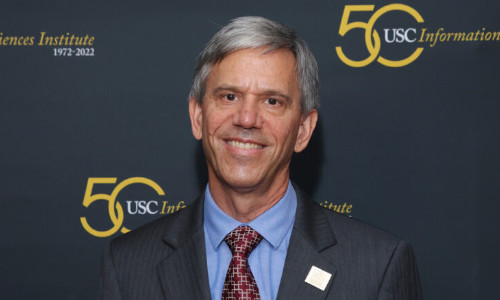
Craig Knoblock serves as the Keston Executive Director of the Information Sciences Institute (ISI) at the University of Southern California, Vice Dean of Engineering for the Viterbi School of Engineering, and Research Professor of both Computer Science and Spatial Sciences. He also directs USC's Data Science Program and leads the Center on Knowledge Graphs as Research Director. Dr. Knoblock's research focuses on techniques for describing, acquiring, and exploiting the semantics of data. His extensive work spans source modeling, schema and ontology alignment, entity and record linkage, data cleaning and normalization, extracting data from the Web, and building comprehensive knowledge graphs. With over 300 published works in these areas, his research has significantly advanced the field of semantic data integration. His work demonstrates strong trends toward practical applications of knowledge graphs across diverse domains including cultural heritage, geospatial information systems, human trafficking detection, and sensor networks. The evolution of his publications shows a progression from foundational ontology alignment techniques to sophisticated knowledge graph applications addressing real-world challenges. Fellow of the Association for the Advancement of Artificial Intelligence (AAAI) Fellow of the Association of Computing Machinery (ACM) Past President and Trustee of the International Joint Conference on Artificial Intelligence (IJCAI) Recipient of the 2014 Robert S. Engelmore Award Seven best paper awards for his research contributions As Executive Director of USC's Information Sciences Institute, Dr. Knoblock leads one of the world's premier research centers in computer science and information technology. His leadership extends to directing the Center on Knowledge Graphs and serving as Associate Director of the Informatics Program at USC. His educational background includes a Bachelor of Science from Syracuse University and Master's and Ph.D. degrees in Computer Science from Carnegie Mellon University.
Professor Edgar Pieterse is the founding director of the African Centre for Cities (ACC) at the University of Cape Town, based in the Environmental & Geographical Science Building on Upper Campus. His work is enriched through active global engagements with Bauhaus der Erde (Berlin), Club of Rome, 10X100 Forum, Robert Bosch Stiftung's Science Circle (Stuttgart), Indian Institute for Human Settlements (Bangalore), Pathways to Sustainability (Utrecht University), UNITAC-Hamburg, and UCLG's Ubuntu Board (Barcelona). His research explores urban imaginaries, alternative futures, sustainable infrastructure, place-making, public cultures, responsive design, and adaptive governance. Focusing on climate change, inequality, informality, governance, and technology in African and Global South urban contexts, he develops radical yet grounded urban futures through experimental practices in doing, organizing, regulating, and social narration. His conceptual framework integrates critical urban theory, open systems approaches, design-based methods, technological intermediation, and aesthetics. Recent publications (2020-2023) demonstrate concentrated expertise in sustainable urban infrastructure transitions, climate-resilient cities, and urban equity frameworks. Key thematic clusters include the politics of urban legibility, mainstreaming sustainable investment models, reframing African urbanism, and situated innovation practices. His work consistently bridges theoretical rigor with actionable pathways for just urban transitions, emphasizing context-specific solutions for African cities facing systemic emergencies. No scientific awards or fellowships were mentioned in the provided text. Professor Pieterse supervises doctoral and post-doctoral candidates while leading transformative educational initiatives including the African Mayoral Leadership Initiative (AMALI), MPhil in Southern Urbanism, and MA in Sustainable Urban Practice. His projects portfolio features the Integrated Urban Development Framework for SA, Coalition for Urban Transitions, REframe Conversation Series, and #NextGenCities, supported by partnerships with the Presidential Climate Commission, Cities Support Programme, and World Bank. Through the Cityscapes platform co-curated with Tau Tavengwa, he produces boundary-pushing exhibitions and the podcast 'The City Show,' with upcoming 2024 projects including decentralized urban complexity installations and the 'Museum for the City.' His leadership of the African Centre for Cities fosters collaborative ecosystems through Urban Academy and ReBuilt Cape Town initiatives.
Lieke Stelling is an Associate Professor at Utrecht University , affiliated with the Department of Languages, Literature and Communication and the Institute for Cultural Inquiry . As Director of Education for English, she bridges academic leadership with research in early modern literature. Specializes in Shakespeare and Early Modern Cultural History Focuses on Europe's literary identity and humor's role in religious conflict Her research spans two major funded projects: 2022-2027 : NWO Vidi grant for Discovering Europe in the Early Modern Period , examining how fiction shaped European identity through multilingualism and urban symbolism 2017-2021 : NWO Veni grant for Faith in Jest , analyzing humor's function in Reformation-era literature Recent publications explore: 2024 : Humor in The Merry Wives of Windsor and literary responses to European integration crises 2022 : Digital humanities project MacBERTh creating historical language models Awarded: NWO Veni/Vidi grants Huntington Library Fellowship Andrew W. Mellon Fellowship Collaborates with: Prof. Els Stronks (Utrecht) Dr. Lauren Fonteyn (Leiden) Flatland Agency (design thinking)
Oded Nir is an Assistant Professor of Hebrew at Queens College (CUNY), holding a PhD from The Ohio State University (2014). His research employs Marxist theory to analyze how Israeli cultural texts reflect tensions within contemporary capitalism, examining intersections of literature, film, and social form. As Associate Editor for CLCWeb: Comparative Literature and Culture , Nir maintains active scholarly engagement. Research interests include Israeli-Palestinian conflict representation, political economy of culture, and materialist approaches to cultural production. Recent publications explore themes ranging from structural analysis of Hebrew fiction to examinations of populism in Israeli television. Teaching encompasses Hebrew literature, Israeli film/TV, and conflict representation courses, emphasizing multidisciplinary analysis of cultural texts as social commentary. Publications demonstrate consistent focus on cultural critique and social theory.
John Kwadwo Osei-Tutu is a Professor at the Department of Historical and Classical Studies, Faculty of Humanities, NTNU. His research focuses on African history, particularly colonialism, fortifications, and Ghanaian socio-political dynamics. He has supervised numerous Master’s theses and authored/co-authored books like Forts, Castles and Society in West Africa (2018) and Shadows of Empire (2017). His work bridges historical analysis with contemporary issues like Ghana’s oil policies and African-Chinese relations. Osei-Tutu collaborates internationally, notably through the Norpart project on Ghanaian forts, and actively engages in public lectures on topics ranging from Nelson Mandela to postcolonial governance. Education & Research: Holds a PhD in History (2013, NTNU) and advanced degrees from Ghana and Norway. Research areas include pre-colonial African states, colonial fortifications’ socio-cultural impacts, and postcolonial development. His recent work examines oil industry policies in West Africa and transnational historical networks. Key Projects: Led excavations at Ghana’s historical forts (OSUpro project) and co-edited volumes on European fortifications’ legacies. Serves as discussant for films and conferences addressing African socio-political issues.
Anna Treydte is an Associate Professor in Nature and Environmental Management with a focus on Sustainable Development at Stockholm University's Department of Physical Geography. She also holds Adjunct Professor positions at the University of Hohenheim (Ecology of Tropical Agricultural Systems) and the Nelson Mandela African Institution of Science and Technology (Department of Life Sciences and Bioengineering). Her work spans multiple continents, addressing biodiversity conservation and human-wildlife coexistence across temperate climates (Germany, Sweden, Italy), desert environments (Mongolia, Saudi Arabia), savanna systems (eastern and southern Africa), mountain regions (Andes), and tropical forests (China, Vietnam, Thailand, Tanzania). Dr. Treydte's research centers on biodiversity and conservation challenges in human-impacted, changing environments. She investigates how climate change and human activities alter structural, species, and functional biodiversity in natural and agro-ecological systems. Her work examines plant-animal interactions, animal population management, human-wildlife coexistence, and livestock impacts on rangelands. She specifically studies shifts in nutrient cycling, carbon stocks, and species diversity in landscapes under varying human land use pressure, including corridors, buffer zones, protected lands, and cultivated areas facing climate-induced weather extremes. She integrates socio-ecological aspects into her research, emphasizing that sustainable human-wildlife coexistence requires local stakeholder involvement in resource use decision-making. Analysis of her recent publications reveals a strong focus on landscape ecology, rangeland management, and human-wildlife conflict across diverse ecosystems. Her work combines field observations, GPS tracking of wildlife and livestock, socio-ecological surveys, and advanced spatial modeling techniques. Key thematic areas include pastoral mobility patterns, invasive species management, pollination networks in rangelands, and the impacts of land use change on wildlife habitat suitability. Her research consistently addresses the intersection of ecological processes and human livelihoods in changing environments. Dr. Treydte actively supervises numerous PhD, MSc, and BSc students across multiple institutions, with current projects investigating human-wildlife coexistence in Sweden and Tanzania, rangeland restoration techniques, and invasive plant species management. She leads several major research projects including 'Human-Wildlife Coexistence: Reaching a sustainable human-wildlife coexistence by understanding patterns, predicting conflict hotspots and improving communication' and 'Rangeland Ecology: Adapting to change – co-management scenarios of local pastoralists and protected area management to maintain cultural and biological diversity in the Dzungarian Gobi, Mongolia.' Her laboratory, 'NG| Landscape Ecology,' focuses on how landscape patterns, climate, and land use influence ecological processes, biodiversity, and ecosystems. The group employs interdisciplinary approaches that bridge natural and social sciences to address contemporary environmental challenges in a changing world.
Dr. Tomasz Rozmyslowicz is a researcher specializing in translation studies, focusing on human differentiation within multilingual communication contexts. His work examines the intersection of translation practices, politics, and social categorizations like 'Migrant,' particularly in state-managed language mediation systems in Germany. Researches state-led translation management in institutions (e.g., authorities, schools) Investigates shifts in translation practices under frameworks of diversity and inclusion Explores historical translation dynamics during the Third Reich and academic exile His publications highlight the role of machine translation in redefining human-machine boundaries and the historical evolution of translation theory. He actively contributes to methodological advances in translation history through archival digitization and open-access resources.
Prof. Dr. Udo Schickhoff is a Professor of Physical Geography specializing in Biogeography and Landscape Ecology at the University of Hamburg's Department of Earth System Sciences. His research focuses on mountain environments, forest and steppe ecosystems across diverse regions including the Arctic, Central and South Asia, North America, and Middle Europe. With decades of academic experience, he has established himself as a leading researcher in human-environment interactions within high mountain systems. University of Hamburg, Department of Earth System Sciences, since 2004 Professor of Physical Geography, University of Bonn (2003-2004) Professor of Landscape Ecology, University of Rostock (2002-2003) Professor of Biodiversity, University of Greifswald (1999-2002) Prof. Schickhoff's research interests span biogeography, vegetation and landscape ecology, with particular emphasis on mountain ecosystems and human-nature interactions. His work examines vegetation patterns along elevation gradients, treeline dynamics, and the impacts of climate change on high-altitude ecosystems. He has conducted extensive field research in the Himalayas, Karakoram, Hindu Kush, and other mountain regions worldwide, investigating how these sensitive ecosystems respond to environmental change. His recent publications reveal a strong focus on treeline dynamics, glacial lake monitoring, and climate change impacts across mountain regions globally. Schickhoff's research employs advanced methodologies including species distribution modeling, remote sensing analysis, and field-based ecological investigations. His work demonstrates consistent attention to the interactions between climate change, land use, and ecosystem dynamics in vulnerable mountain environments. Throughout his career, Prof. Schickhoff has taught numerous courses on physical geography, climate-vegetation relationships, and mountain ecosystems. His teaching portfolio includes regular field excursions to diverse regions including the Himalayas, Central Asia, and other mountain systems worldwide, providing students with hands-on experience in biogeographical research. Prof. Schickhoff maintains an active research group focused on mountain ecosystem dynamics, with ongoing projects examining vegetation responses to climate change across multiple continents. His interdisciplinary approach integrates physical geography, ecology, and human dimensions to understand complex environmental systems in transition.
Neal Alexander is Senior Lecturer in Twentieth Century Literature at Aberystwyth University's Department of English and Creative Writing. A Fellow of the Higher Education Academy and Academic Integrity Officer for the university, he leads the 'Place and Belonging' research strand within his department. His scholarly identity bridges Literary Geography Welsh Writing in English Modernist Studies Climate Crisis Literature Irish Studies Alexander's research explores how space, place, and landscape shape literary form, with particular focus on late modernism and contemporary writing. Recent work examines literary engagements with energy production systems, producing nuclear criticism studies and fossil economy poetry analysis. He has co-edited The Routledge Handbook of Literary Geographies Poetry & Geography Regional Modernisms His editorial roles span Literary Geographies journal International Journal of Welsh Writing in English peer-review for Textual Practice, Comparative Literature and examination duties for MA Contemporary Literature programs. Supervising four PhD candidates, Alexander maintains active involvement in mentoring doctoral research across literary geographies and experimental fiction domains.
Fanny Guillet is a sociologist and Researcher at the French National Center for Scientific Research (CNRS), working at the Centre d'écologie et des sciences de la conservation (CESCO) within the National Museum of Natural History (MNHN) in Paris. She is also associated with the Laboratoire interdisciplinaire innovations, sciences, société (LISIS). Her work focuses on environmental public action, particularly in territorial planning, examining its implementation and effects on both social organization and environmental conditions. Her research interests span environmental sociology, biodiversity conservation policies, and the science-policy interface. She investigates planning documents, protection tools, and environmental assessment procedures by connecting institutional, organizational, and expertise-related issues. Her work particularly examines biodiversity offsetting mechanisms, the mitigation hierarchy (avoid-reduce-compensate), and zero net artificialization policies in France. Guillet's recent publications reveal a consistent focus on biodiversity offsetting frameworks, environmental governance, and the implementation challenges of ecological policies. Her work often compares different approaches across countries and examines the tension between scientific knowledge and policy implementation. She has notably explored the conflicts between natural and procedural timeframes in environmental law, the role of biodiversity indicators in public action, and the institutional challenges in achieving zero net land artificialization. Guillet coordinates multiple research projects including 'Energie renouvelable et biodiversité, un dilemme de la transition écologique' (2025-2027), 'Mise en œuvre du Zéro artificialisation nette dans les territoires' (2023-2025), and 'Construction et mise en œuvre du Zéro artificialisation nette' (2021-2024). These projects are funded by French governmental bodies including MTES and ADEME, reflecting the policy relevance of her work.
Assoc. Prof. Dr. Wayne FULLER is a faculty member at Near East University's Faculty of Veterinary Medicine, Department of Genetics. He earned his BSc in Zoology from the University of Oxford before pursuing doctoral research at Exeter Universities' Centre for Ecology and Conservation in North Cyprus. Specializing in Mediterranean marine turtle conservation and ecology, his work spans climate change impacts, plastic pollution, and stable isotope applications. Education: BSc in Zoology, PhD in Marine Ecology Current Roles: Head of Department of Genetics, Near East University Key Projects: IUCN Marine Turtle Specialist Group (2017-present), EU Nature 2000 implementation in Cyprus (2008) His recent research explores phenological shifts in sea turtle offspring under climate change, macroplastic ingestion patterns, and avian conservation in Mediterranean forests. Publications emphasize ecological monitoring, habitat connectivity, and conservation technology applications like GPS and stable isotopes. Scientific recognition includes: Member of IUCN Marine Turtle Specialist Group
Ale Pålsson is a Researcher at the Department of History, Uppsala University, specializing in Caribbean colonial history with focus on Swedish colonial practices. Contact information shows office at Engelska parken, Thunbergsvägen 3 A, Uppsala. Research interests center on Caribbean History , Colonial History , and Gender History , particularly examining political culture in St Barthélemy (1800-1825) as demonstrated in doctoral thesis Our Side of the Water . Additional expertise includes postcolonial theory, intersectionality, and 19th century political history. Current work focuses on making St Barthélemy archives publicly accessible. Recent publications reveal strong thematic continuity in Caribbean colonial studies, with 2023-2024 articles analyzing street-level social conflicts, literary representations, and digital census mapping. Work consistently bridges historical methodology with postcolonial theory, emphasizing gendered experiences and archival accessibility. No scientific awards or major grants are publicly documented in available materials. Academic advising and grant activities are not specified in current documentation. Research appears primarily independent though collaborative on interdisciplinary projects like the Baltic Cod metabolic study. No dedicated laboratory or research team is mentioned; work seems centered on archival research and digital humanities approaches within departmental frameworks.