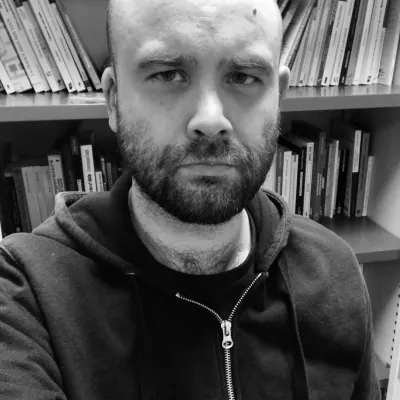
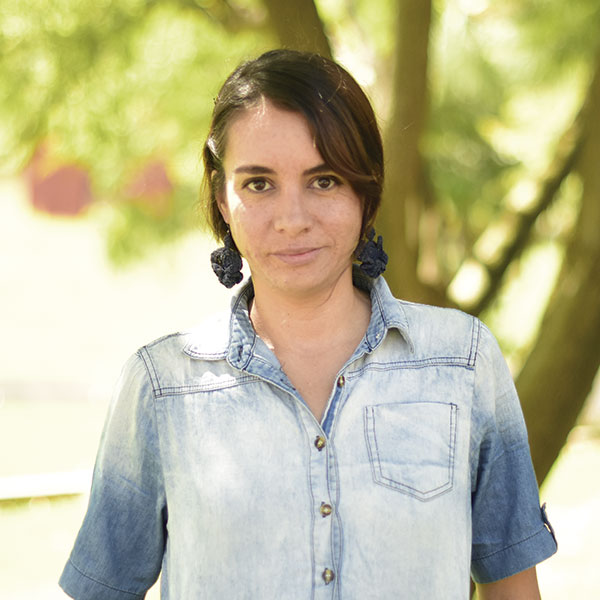
Shunichi Ohmori , a Professor at the Faculty of Science and Engineering , Waseda University , holds a Doctorate in Engineering from the same institution. His academic journey includes continuous affiliation with Waseda University since 2011, currently serving as a faculty member and concurrently as Director of Research Institute at the Institute of Global Production & Logistics (2022-2026). Education: Doctorate (2009-2012), Master's (2007-2009), and Bachelor's (2004-2007) from Waseda University His research focuses on industrial engineering and operations research , with specific interests in optimization , facility planning , logistics , and supply chain management . He has developed innovative frameworks for: Robust supply chain design under disruption risks Multi-echelon inventory optimization 3D facility layout planning with pipeline arrangements Collaborative vehicle routing cost allocation Green product portfolio strategies under uncertainty His publication record demonstrates expertise in stochastic optimization (15+ peer-reviewed papers) and heuristic algorithms (14+ conference proceedings). He has received multiple Best Paper Awards (2012-2016) and contributed to curriculum development through courses like Advanced Facilities Planning , Supply Chain Transformation , and Logistics at both undergraduate and graduate levels.
Dr. Kuai Xu serves as a Professor of Computer Science at Arizona State University's School of Mathematical and Natural Sciences within the New College of Interdisciplinary Arts and Sciences. He maintains affiliations with the Center for Cybersecurity and Trusted Foundations, focusing on securing critical network infrastructures. His academic credentials include: Ph.D. in Computer Science, University of Minnesota (2006) M.S. in Computer Science, Peking University, China (2001) B.S. in Computer Science, Peking University, China (1998) Dr. Xu's research centers on network security , network measurement , and IoT systems , with significant contributions to smart home security, network behavior analysis, and social media epidemiology. His work bridges theoretical modeling and practical implementations for real-world network challenges. Recent publications (2022-2025) reveal a concentrated focus on IoT security frameworks, machine learning-driven activity inference from device traffic, and pandemic surveillance through social media analysis. Key themes include DNS security hardening, attack graph modeling, and privacy-preserving spatial analytics in smart environments. Through courses like ACO 331 (Network Forensics Analysis) and ACO 361 (Secure Coding Concepts), Dr. Xu mentors students in cybersecurity fundamentals while supervising research via ACO 399 and individualized instruction (ACO 499). His teaching integrates cutting-edge research into classroom applications. As an active affiliate of ASU's Center for Cybersecurity and Trusted Foundations, Dr. Xu contributes to interdisciplinary initiatives addressing emerging threats in home networks, IoT ecosystems, and social media platforms.
Thomas Leduc is an Associate Professor at Nantes Université, affiliated with the École Nationale Supérieure d'Architecture de Nantes and the UMR AAU CNRS 1563 research unit. He has been a key figure in urban climate and geospatial research, serving as Director of the CRENAU research team (2015-2019) and Deputy Director of UMR AAU (2014-2019). Currently, he remains an active researcher and member of the Council of UMR CNRS 1563 through 2025, while also contributing to the Scientific Council of École de Design Nantes Atlantique and serving on the Doctoral School Council SIS. Professor Leduc's research focuses on the intersection of urban climate science and geospatial analysis, with particular emphasis on urban thermal comfort, pedestrian mobility, and visibility analysis in urban environments. His work combines advanced GIS methodologies with practical urban planning applications, developing innovative approaches to measuring and modeling urban microclimates. He has made significant contributions to understanding how urban form affects thermal comfort and has developed specialized techniques for analyzing urban visibility using isovists and wavelet transforms. His recent publications (2022-2025) demonstrate a strong research trajectory in urban climate modeling, with a focus on practical applications for climate adaptation. The publications reveal a consistent pattern of interdisciplinary collaboration, particularly with researchers specializing in environmental science, urban design, and computer vision. His work increasingly integrates mobile measurement techniques with geospatial frameworks to provide more nuanced understandings of urban microclimates at pedestrian level. Active participant in multiple research projects including Coolscapes, ResilientGAIA, and Lunne Coordinator of the Urbaclim research action of the GDR MAGIS Organizer of significant scientific events including SCAN'18 and Vu-pas-vu-2017 Co-supervisor of numerous doctoral students working at the intersection of urban climate and geospatial analysis Professor Leduc's research group maintains strong connections with both academic and professional communities, regularly collaborating with urban planners, architects, and environmental scientists to translate research findings into practical urban design strategies. His work on urban cooling strategies and thermal comfort has direct relevance to cities facing increasing heat stress due to climate change.
Suzel Balez is Professor at Grenoble National School of Architecture and researcher at Cresson (UMR CNRS 1563), a research unit affiliated with Université Grenoble Alpes, CNRS, ENSA Nantes, ENSA Grenoble, and Centrale Nantes. As an architect and engineer scientist, she teaches in the discipline of construction, engineering, and ambient control, specializing in the sensory aspects of architectural and urban environments. Professor Balez has established herself as a leading expert in olfactory atmospheres, with her HDR focusing on the olfactory experience of places. Her research bridges architecture, urban studies, and sensory ethnography, developing the concept of 'odorant effect' to understand and design situated olfactory phenomena. She examines how materials, air circulation patterns, and spatial configurations collectively shape our sensory experience of places, moving beyond simple cataloging of smells to develop practical frameworks for intentional olfactory design. Her recent publications reveal an increasing engagement with ecological dimensions of sensory experience, particularly evident in her 2024 book 'Fragrances architecturales' and her involvement in the 2025 'Glossaire Sensible / Écologie' project. These works synthesize contemporary knowledge on relationships between places and odors while proposing keys for spatialized olfactory design that addresses environmental challenges. Professor Balez is actively involved in the International Ambiances Network and regularly presents her work at international conferences, including the 5th International Congress on Ambiances in Lisbon (2024), where she conducted workshops on smell walk cartography. Her research has practical applications across architecture, urban planning, museum curation, and commercial design, providing tools for professionals seeking to thoughtfully incorporate sensory considerations into spatial experiences.
Khaoula Raboudi serves as an Associate Professor at the Higher Institute of Multimedia Arts of Manouba in Tunisia and is an active member of the CRESSON research team within the AAU Laboratory. Her institutional affiliations extend to the Joint Research Unit (UMR) comprising CNRS, UGA, ENSA Nantes, ENSA Grenoble, and Centrale Nantes, with significant collaborative work at the Grenoble Computer Science Laboratory. Professor Raboudi's research centers on the innovative application of generative techniques and machine learning in architectural and urban design. She specializes in developing solar control systems and sustainable building morphologies that address contemporary challenges in energy efficiency and user well-being. Her work uniquely integrates technical computational approaches with qualitative design dimensions, creating solutions that are both scientifically rigorous and human-centered. Analysis of her publication record from 2011-2024 reveals consistent research evolution from foundational solar envelope modeling to advanced machine learning applications. Her recent work shows increasing focus on artificial intelligence in environmental design, with notable contributions to both physical architecture and digital environments like animated films. The research demonstrates strong interdisciplinary connections between architecture, computer science, and environmental engineering. Professor Raboudi maintains an active research profile with regular conference presentations and journal publications. Her work with the CRESSON team demonstrates commitment to advancing architectural knowledge through computational methods, particularly in sustainability-focused design applications. Current projects like AMaL (Ambiances Machine Learning) indicate continued innovation at the intersection of architecture and artificial intelligence. Her research methodology combines theoretical architectural knowledge with practical computational techniques, often collaborating with computer scientists to develop specialized tools for solar analysis and morphological generation. This approach has produced valuable contributions to sustainable design practices and educational resources for architectural computation.
Nicole Peccoud is a CNRS Researcher at Université Grenoble Alpes, affiliated with the Joint Research Unit (UMR) AAU (Ambiances, Architectures, Urbanités) – a collaborative structure involving CNRS, ENSA Nantes, ENSA Grenoble, and Centrale Nantes. She is a core member of the CRESSON research team within the AAU Laboratory. Her research centers on urban sensory anthropology , investigating how people experience neglected spaces through embodied perception. Key focuses include: Fallow land dynamics in Paris' Goutte d'Or neighborhood Emotional geographies of urban abandonment Atmosphere studies in transforming territories Sensory methodologies for architectural analysis Peccoud's recent publications reveal a strong emphasis on sad atmospheres and despairing cities , analyzing how spatial configurations generate collective emotional states. Her work bridges architectural theory with socio-anthropological fieldwork, prioritizing residents' lived experiences over visual aesthetics. As supervisor, she mentors doctoral researchers like Paul Bai through hands-on fieldwork and international conference participation. The lab operates under the Digital RDL Research Chair, enabling digital documentation of urban atmospheres. CRESSON maintains active ties with the International Ambiances Network, facilitating cross-border collaboration on sensory urban studies.
Petra Marguc is a researcher specializing in urban design and architecture at the National School of Architecture of Nantes (ENSA Nantes), operating within the Joint Research Unit UMR CNRS - UGA - ENSA Nantes - ENSA Grenoble - Centrale Nantes. She is affiliated with the CRENAU Research Team and AAU Laboratory, focusing on transversal design practices and contact urbanism. Her research interests center on urban design innovation through play mechanisms , examining how disruptive gaps in urban environments become spaces for creative investigation. Key areas include transversal design practices, contact urbanism, intergenerational spaces, and community-based urban transformation. Marguc's work bridges theoretical frameworks with practical applications in neighborhood development and architectural education. Marguc's recent publications reveal a consistent focus on play as a creative driver in spatial design, with increasing emphasis on crossdisciplinary collaboration and community engagement. Her work spans from theoretical explorations of transversal design practices to practical applications in urban interventions like the Doulon-Gohards neighborhood transformation and the Côté Cour Côté Tour playground project. As a recently completed doctoral researcher (2023), Marguc has established herself through multiple conference presentations and publications within European architectural research networks. Her work demonstrates strong connections between theoretical innovation and practical urban applications, particularly through the lens of contact urbanism and transversal design methodologies. Marguc actively participates in research training initiatives and international collaborations, including the Nantes-Mauritius School of Architecture project. Her work with the CRENAU Research Team positions her at the intersection of academic research and practical urban design applications, contributing to evolving methodologies in architectural education and community-engaged spatial design.
Étienne Walker is a Lecturer in Social Geography at the University of Caen Normandy, affiliated with the ESO (Espaces et Sociétés) research unit, specifically the Caen site. Since 2024, he has served as Department Head of the Carrières Sociales (Social Careers) department at IUT Grand Ouest Normandie in Alençon. His research focuses on social geography, with particular emphasis on nighttime urban spaces, social movements (especially the Yellow Vests movement), spatial appropriation, and metropolitan dynamics. He has been actively involved in multiple research axes within ESO, particularly Axis 2: Practices, experiences and representations of space (2022-2027). Walker's research interests center on social divisions of space (morphological, administrative, demographic, productive, socio-residential and electoral), modes of spatial appropriation through collective action and social movements, and the Yellow Vest Movement. His work employs sociohistorical, morphogenetic, and structural-constructivist perspectives, utilizing dimensional approaches to space. He investigates inequalities, power relations, and domination through mixed methods including questionnaires, comprehensive and biographical interviews, cartography, geomatics, press reviews, and analysis of programmatic and institutional documents. His geographical focus spans France, particularly Lower Normandy, with case studies in Caen, Rennes, Orne, regional metropolises, and small towns. Walker's recent publications demonstrate a strong focus on the Yellow Vests movement, spatial dimensions of social conflict, and university working conditions. His work shows a consistent pattern of examining how spatial dynamics intersect with social movements, political mobilization, and governance. He has developed particular expertise in analyzing the spatial configurations of protest movements and the relationship between peripheral France and political mobilization. His methodological approach integrates both quantitative and qualitative techniques to provide nuanced understandings of spatial politics. As an active researcher, Walker leads the ANR Yellow Vests research project (2020-2025), specifically heading the 'Configurations and spatialities of the Yellow Vest movement' axis. He also co-founded the Observatory of Working Conditions at the University of Caen Normandy, demonstrating his commitment to both academic research and practical engagement with workplace issues. His collaborative work extends across multiple institutions and research networks focused on social geography and political mobilization. Walker teaches courses in social geography, urban studies, and research methodology for students in social careers programs. His teaching emphasizes territorial analysis, urban history and architecture, and field research methods. He has supervised student research, including co-encadrement of master's theses, and has been involved in developing educational programs that connect theoretical knowledge with practical territorial analysis.
Professor Miriam Lay Brander serves as Head of the Chair of Romance Literary Studies II and Director of the Central Institute of Latin American Studies (ZILAS) at the Catholic University Eichstätt-Ingolstadt since 2018. Previously, she held research positions at the University of Konstanz where she completed her doctorate (2010) and habilitation (2017), and received a Junior-Fellowship at the University of Bern (2016-2017). Her research spans Latin American literature, post-colonial studies, genre theory, aphorism studies, digital humanities, Caribbean studies, and Amazonian studies. Professor Lay Brander employs innovative approaches to analyzing space-time configurations in literature, particularly in urban contexts and post-colonial settings. Her work often examines how literary forms transform across cultural boundaries with special attention to archipelagic approaches to literature and digital memory practices. Professor Lay Brander's recent publications demonstrate a growing focus on ecological perspectives in Latin American literature, particularly regarding Amazonian studies, while maintaining her established expertise in genre transformation and post-colonial discourse. Her work bridges traditional literary analysis with contemporary digital humanities approaches, creating interdisciplinary connections between literary studies, memory studies, and spatial theory. Werner Krauss Prize of the German Hispanic Association (2013) Award of the City of Konstanz for promotion of young scientists (2011) Baden-Württemberg Foundation's elite programme scholarship (2014-2017) Brigitte-Schlieben-Lange-Programme scholarship (2011-2014) Professor Lay Brander currently supervises seven doctoral candidates and one postdoctoral researcher, with research projects spanning topics from Venezuelan migrant women's literature to Amazonian representations. She leads two major DFG-funded projects including 'Practicing Place: Soziokulturelle Praktiken und epistemische Konfigurationen' (2025-2030) and 'Espacio, tiempo y género en la literatura narrativa de las mujeres migrantes venezolanas' (2024-2027). Her editorial work includes the series 'Americana Eystettensia' and 'Transozeanische Literatur- und Kulturbeziehungen', demonstrating her commitment to fostering scholarly exchange in Latin American studies. As Director of ZILAS, Professor Lay Brander oversees a vibrant research center dedicated to interdisciplinary Latin American studies, providing students and researchers with resources and opportunities for collaborative work across disciplinary boundaries. Her leadership has strengthened the university's connections with Latin American academic institutions and research networks.
Tamara Ilieva-Tsvetkova is a Senior Assistant Professor at the Department of Geodesy and Geoinformatics within the Faculty of Geodesy at the University of Architecture, Civil Engineering and Geodesy (UACEG) in Sofia, Bulgaria. She also serves as a Technical Associate at the Center for Quality and Accreditation and maintains her office in Cabinet 411P, with reception hours on Mondays from 11:30-12:30 during the winter semester of the 2025-26 academic year. Her educational background includes: Master's degree in Geodesy from UACEG, Sofia (2007) Master's degree in Marketing with specialization in "Advertising Management" from UNWE, Sofia (2015) Doctorate in "General, Higher and Applied Geodesy" from UACEG, Sofia (2019) Tamara Ilieva-Tsvetkova's research focuses on geospatial technologies and methodologies, with particular expertise in geodetic measurements, spatial databases, CAD and GIS systems development, engineering project management, and coordinate systems. She is proficient in English (excellent level) and Russian (basic level), and possesses extensive technical skills in AutoCAD, ArcGIS, QGIS, PostgreSQL with PostGIS, and web mapping libraries like Leaflet and OpenLayers. Her recent publications (2021-2024) show a strong trend toward web-based GIS applications, indoor positioning systems, climate change monitoring using geospatial data, and the integration of artificial intelligence with geospatial technologies. Her work spans practical applications in urban planning, transport infrastructure risk assessment, real estate management, and environmental monitoring, with a particular focus on Bulgarian territories. She is an active member of professional organizations: Chamber of Engineers in Investment Design Chamber of Engineers in Geodesy European Geosciences Union (EGU) Tamara Ilieva-Tsvetkova has participated in numerous research and construction projects: Upgrading information systems for AGKK (2013-2014) Information platform for environmental research and modeling at UACEG (2018-2019) Center of Excellence "Heritage BG" (2018-2023) Geodetic surveying for the South Stream gas pipeline Cadastral mapping for multiple Bulgarian villages and regions Geodetic survey for Sofia Metro expansion Geodetic survey for Sofia Airport infrastructure Her technical expertise spans multiple domains including geodetic measurement processing, GIS system development, spatial database management, and programming for geospatial applications using C#, SQL, JavaScript, and various GIS APIs.
Lydie Launay is a Lecturer in sociology at the University of Toulouse Jean Jaurès, where she has been a faculty member since 2023. She is affiliated with the Interdisciplinary Laboratory for Solidarity, Societies, Territories (LISST-CERS), where she conducts research on urban sociology and social inequalities. Prior to her current position, she was a Lecturer at Institut National Universitaire Champollion in Albi from 2015-2023 and has held research positions at INED Paris, Université Paris-Dauphine, and London Metropolitan University. Professor Launay's research focuses on socio-spatial segregation, examining it through three main perspectives: social diversity as a benchmark for territorialized social policies, residential trajectories of working and middle classes, and urban sociability. Her work combines urban sociology with social network analysis methods to study how local relationships function within personal networks and contribute to social segregation processes. She frequently employs international comparative approaches, particularly between Paris and London, to investigate urban gentrification in working-class neighborhoods and the integration of socially rehoused populations in middle-class areas. Her recent publications show a strong focus on the social impacts of the Covid-19 pandemic, examining disruptions to interpersonal relationships, residential trajectories, and neighborhood dynamics during lockdown periods. This work builds on her longstanding expertise in housing policies, social mix, and urban segregation. Professor Launay currently co-coordinates the ANR PANELVICO project (2023-2027) which examines the long-term social consequences of the health crisis, and previously contributed to the ANR VICO project on social relationships during lockdown. Her research demonstrates a consistent commitment to understanding how spatial contexts shape social relations and inequalities. She supervises one doctoral student and multiple Master's students in sociology, social intervention, and urban planning. Her academic career shows progression through the French academic system with increasing research responsibilities and leadership roles in major national research projects.
Professor István Z. Kiss is a Professor of Network Science at the Network Science Institute, Northeastern University London. His research bridges network science, dynamical systems, and stochastic processes with applications in epidemic modeling, computational neuroscience, and complex systems analysis. He leads the Systems Processes and Networks Lab (SPAN Lab) and maintains active collaborations across multiple institutions globally. Current position: Professor of Network Science Institution: Northeastern University London Research unit: Network Science Institute (SPAN Lab) Key collaborators: Péter L. Simon (Eötvös Loránd University), Joel C. Miller (La Trobe University), Gregory A. Rempała (Ohio State University) His research focuses on theoretical and data-driven problems at the intersection of network science and dynamical processes. Key areas include network inference, exactness of mean-field models, temporal and higher-order networks, adaptive/dynamic networks, and resilience of power networks. He has made significant contributions to understanding epidemic dynamics on complex networks, developing mathematical frameworks that connect approximate models with rigorous counterparts. Recent work emphasizes higher-order network structures, network inference from system-level data, and applications to public health and infrastructure resilience. His publication record demonstrates consistent output in top journals including Journal of Mathematical Biology, Bulletin of Mathematical Biology, and Physical Review E. The research shows a clear progression toward increasingly complex network structures, with recent publications focusing on higher-order interactions, temporal dynamics, and practical applications in epidemiology and infrastructure networks. His work bridges theoretical mathematics with real-world applications in disease control and network resilience. Professor Kiss actively supervises postdoctoral researchers and PhD students, with current advisees including Federico Cosimo Malizia (higher-order network contagion), Kevin Teo (shipping networks), and Yan Li (trade dynamics). His supervision spans mathematical theory, computational modeling, and data analysis across multiple domains. Leverhulme Trust grant RPG-2017-370: Bayesian Inference and Approximations in High-dimensional Network Models Network Science Institute Boston funding for higher-order network research EPSRC grant EP/H001085/1 for information diffusion modeling He leads the Systems Processes and Networks Lab (SPAN Lab), which develops mathematical frameworks for complex networked systems. The lab focuses on both theoretical advancements in network science and practical applications to epidemiology, neuroscience, and infrastructure networks. Current projects include developing tools for sequential temporal network analysis, understanding failure prediction in utility networks, and disentangling contact network structure effects on system-level outputs.
Katya Meredith García Quevedo serves as a DGAPA Postdoctoral Fellow at the Center for Environmental Geography Research (CIGA) of the National Autonomous University of Mexico (UNAM) in Morelia, Michoacán, with contact via kgarcia@ciga.unam.mx and telephone (+52 443 322-2777). Her academic foundation includes: PhD in Architecture (Honorable Mention) from Michoacana University of San Nicolás de Hidalgo (UMSNH), specializing in History and Conservation of Architecture and the City Master's degree in Architecture, Research and Restoration of Sites and Monuments from UMSNH Dr. García Quevedo's research interrogates the intersection of social processes and spatial configurations through Urban Imaginaries, Socio-spatial segregation, and Subjective landscape analysis. Her work employs qualitative methodologies to examine how cultural heritage territories manifest in everyday urban experiences, particularly focusing on Semblance as a theoretical framework for understanding perceptual landscapes. This research bridges architectural conservation, human geography, and social theory to address Mexico's complex urban dynamics. Her scholarly recognition encompasses: DGAPA Postdoctoral Fellowship from UNAM National System of Researchers (SNI) Candidate status PhD Honorable Mention for exceptional dissertation work She maintains active international collaborations through research stays at Complutense University of Madrid (2013), Polytechnic University of Catalonia (2019), UNAM's Institute of Geography (2019), and Autonomous University of Querétaro (2021). As a member of the Ibero-American Research Network on Imaginaries and Representations and the Mexican Academy of Tourism Research, she contributes to transnational scholarly dialogues on urban representation and heritage.