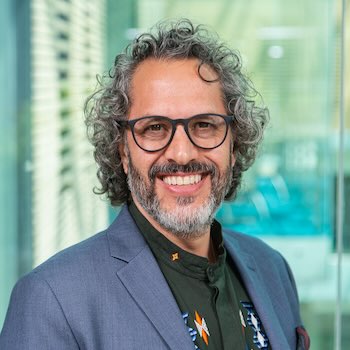
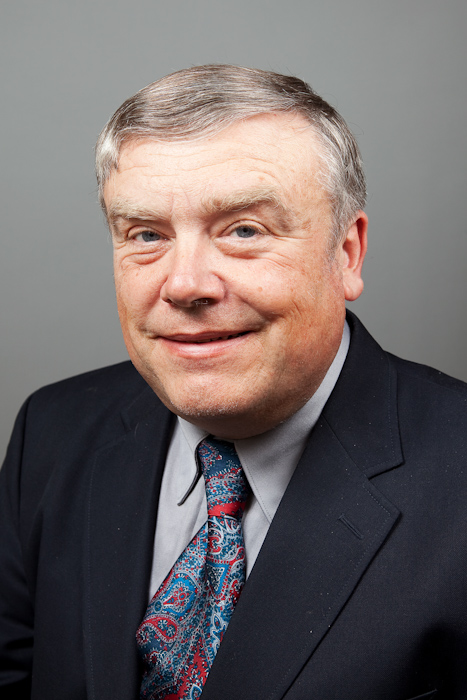
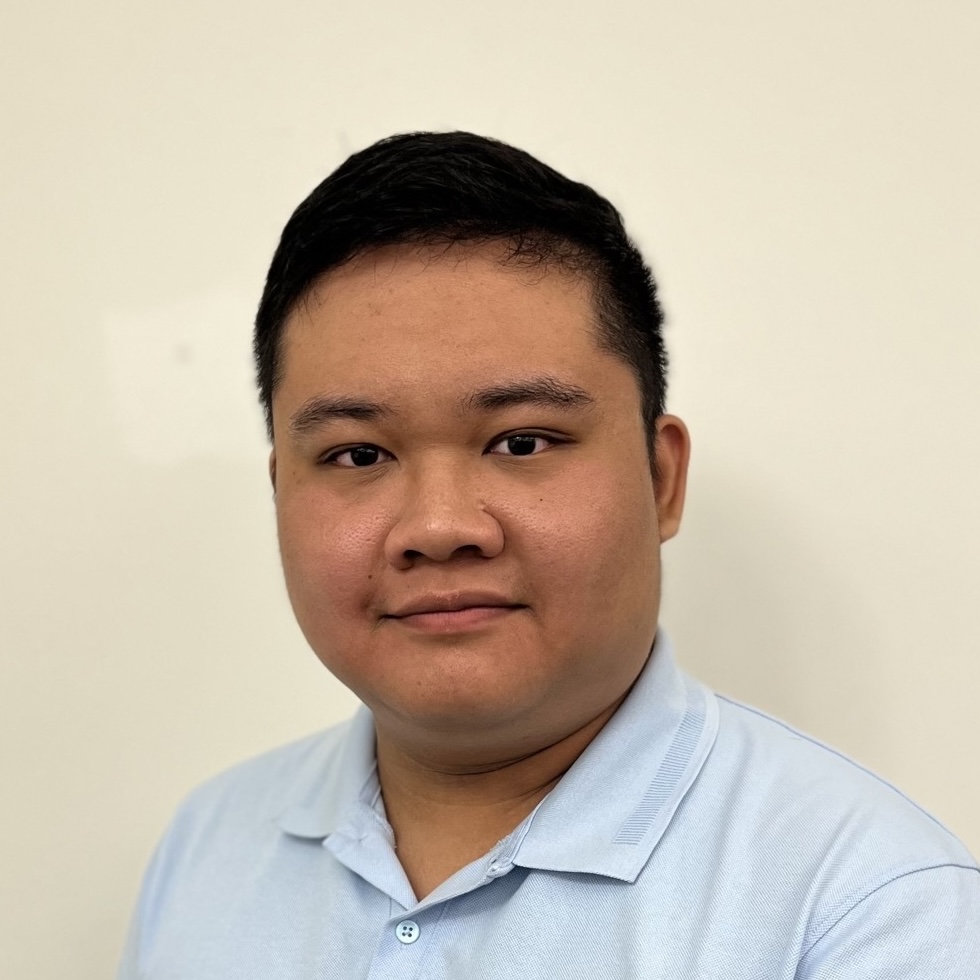
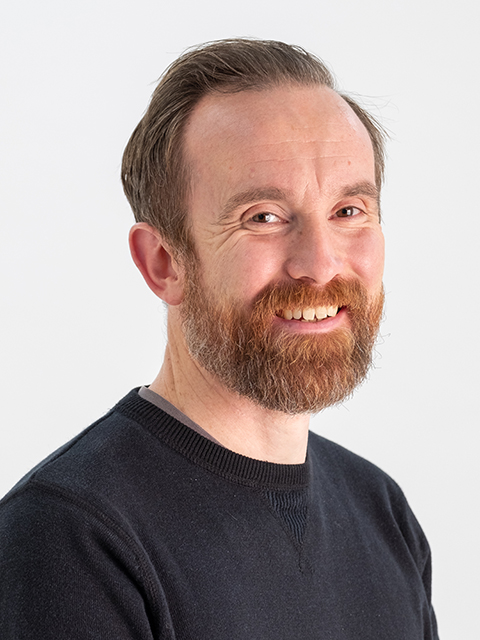
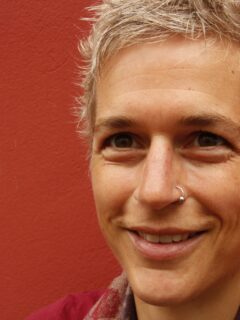
Toby Davies is an Associate Professor in Criminal Justice Data Analytics at the University of Leeds, School of Law. His work focuses on quantitative criminology, spatial analysis, and computational methods to inform crime prevention. He holds a Mathematics degree from the University of Oxford (2008) and a PhD from University College London (UCL), followed by postdoctoral research on the EPSRC-funded Crime, Policing and Citizenship project. Before joining Leeds in 2023, he was at UCL’s Department of Security & Crime Science. His research spans interdisciplinary topics including urban form and crime, crime modeling, social networks, and cybercrime. He has collaborated with police agencies (West Yorkshire, Thames Valley, West Midlands Police) and governmental bodies (UK Home Office, London Mayor’s Office). A strong advocate for Open Science, he co-founded JDI Open to promote open practices in crime science. His recent work emphasizes policy interventions like phasing out pointed kitchen knives to reduce knife crime, leveraging data-driven approaches. He publishes widely in criminology, physics, network science, and general science journals, and has guest-edited special issues. His applied research aims to bridge theory and practice, developing tools deployed operationally in policing. Current interests include financial crime dynamics, social contagion of crime, and street network configurations’ impact on crime patterns.
Ignacio Castillo is a Professor and Associate Dean of Business (Graduate Academic Programs) at the Lazaridis School of Business and Economics, Wilfrid Laurier University. His expertise spans facility location optimization, supply chain management, and sustainable operations. He holds a leadership role in graduate academic programming and teaches courses in operations and statistics. Research focuses on optimizing facility layouts, material handling systems, and closed-loop supply chains. He has developed frameworks for multi-objective facility design and advanced packing optimization algorithms. His work bridges theoretical models with real-world applications in manufacturing and retail sectors. Publications emphasize nonlinear optimization techniques, packing problems, and supply chain coordination strategies. Recent work explores irregular object configurations and retail category space optimization. His textbooks include Business Statistics for Contemporary Decision Making and Operations Management , emphasizing practical decision-making tools. Office: LH4001M | Languages: English, Spanish
Alva L. Couch is an Associate Professor at Tufts University's School of Engineering, Department of Computer Science, with a career spanning over 30 years. His work bridges network/system administration, autonomic computing, and hydrologic data science, focusing on scalable solutions for data management and automated system administration. Education: Ph.D. in Mathematics (1988), B.S. in Architecture (1978), and B.A. in Bassoon/Contrabassoon Performance (1978). Research Interests His research centers on: Network and System Administration: Tools like SLINK, Maelstrom, and Babble for dependency analysis, cloud migration, and policy enforcement. Geo-informatics: MEDFORD metadata language and HydroShare platform for hydrologic data curation and discovery. Autonomic Computing: Promise theory, convergent operators, and closure models for self-managing systems. Recent Work Trends His 2024-2018 publications emphasize: Cloud-based hydrologic data management (AnVILMEDFORD, HydroShare) Metadata standards for interdisciplinary research Machine learning for system administration Agent-based resource sharing models Scientific Awards Liebner Teaching Award (1996) Seymour Simches Advising Award (2017) Best Paper Awards: LISA 1996, AIMS 2008, LISA 2001 LISA 2000 Best Student Paper (with Michael Gilfix) Contributions He developed key software like Peep (network auralization) and Slink (configuration management), supported by NSF grants and industry partnerships. His work with CUAHSI's Water Data Center shapes national hydrologic data infrastructure. He also advocates for science education and privacy in computing.
Young Ook Kim is a Professor at the Department of Architecture, Sejong University. His research focuses on spatial morphology, space syntax, and urban design, with applications in pedestrian behavior analysis and urban regeneration. 1999 Ph.D., University College London 1994 M.S., University of Colorado, Denver 1986 B.S., Yonsei University His work explores the relationship between spatial layouts and human behavior, particularly in crowded environments. Recent studies include predictive modeling for crowd accidents and agent-based simulations for subway station design. Key methodologies involve space syntax and computational modeling. Latest research trends emphasize pedestrian safety, urban walkability, and regional spatial characteristics, leveraging space syntax tools and agent-based simulations to analyze crowd dynamics and urban configurations. He has collaborated extensively on projects related to spatial configuration and urban planning, with contributions to conferences like the International Space Syntax Symposium. His h-index is 7, with 13 Scopus citations on recent works. 2024: Crowd accident risk prediction, improved agent simulations, and regional walking behavior studies 2023: Pedestrian behavior analysis in Seoul's Gangnam Station 2022: Mega-shelter layout planning and user-behavior studies
Ahmed Saeed is an Assistant Professor in the School of Computer Science at Georgia Institute of Technology, specializing in scalable computer networks and systems. His research spans congestion control, operating systems, LEO satellite networks, and formal methods, with a strong record of publications and active mentorship. Education: PhD in Computer Science, Georgia Institute of Technology (2019) Bachelor's in Computer and Systems Engineering, Alexandria University (2010) Postdoctoral Associate, MIT (with Prof. Mohammad Alizadeh) Research Interests: Ahmed's work focuses on the theory, design, and implementation of scalable networked systems. Key themes include: Congestion control algorithms for datacenter and WAN traffic Overload control mechanisms for microsecond-scale RPCs Performance debugging tools for datacenter applications LEO satellite network modeling and policy analysis Formal verification of network protocols and resource schedulers Recent Publications Trend: His 2024-2025 papers emphasize LEO satellite resilience and datacenter performance , with contributions to emergency failover modeling, latency debugging tools, and congestion control protocols. These works combine empirical measurement, formal modeling, and policy recommendations. Awards & Funding: NSF CAREER Award (2024) – LEO satellite variability ($600k) NSF CNS Core Awards (2022) – Edge server stacks & formal verification (total $2.38M) Google Research Award (2022) – Scalable edge systems ($80k) DARPA Risers Top 5 Poster (2022) Spec Tech Award (2023) – Nanomodular electronics routing ($40k) Teaching & Service: He regularly teaches Computer Networking I (CS 3251) and Datacenter Networks & Systems (CS 8803) . Service includes PC roles for SIGCOMM, NSDI, CoNEXT, and Networking area co-chair for JSys. Lab & Students: Ahmed leads an active research group with PhD students Peidi Song, Bhaskar Pardeshi, Sherif Abdelrazek; MS students Dhyey Thummar, Pratyush Sahu, Sammy Kapoor; and undergraduate Demi Lei. Alumni have joined industry leaders like Juniper, Microsoft, and Snowflake.
Sam Griffiths is an Associate Professor in Spatial Cultures at University College London's Bartlett School of Architecture, where he has been a key member of the Space Syntax Laboratory since 2002. He holds a PhD from UCL (2008), preceded by studies in History at Sheffield (1994), International Relations at LSE (1996) with ESRC scholarship, and postgraduate work at Oxford (1997-8). His academic progression includes Research Fellow (2006), Teaching Fellow (2008), Lecturer (2009), and Associate Professor (2018). Dr. Griffiths' research focuses on the intersection of space syntax methodology and urban social history, particularly examining how spatial configurations shaped nineteenth and twentieth-century urban life. His scholarly interests include the socio-economic organization of industrial cities, processional culture, high street development as social spaces, spatial morphology as everyday heritage, and Bakhtin's chronotope of encounter. He has published extensively on these topics, with recent work exploring spatial heritage in post-socialist Tirana, high street longevity, and the spatial dimensions of literary narratives. His publications reveal a consistent scholarly trajectory examining spatial configurations across historical periods and geographical contexts, with increasing attention to interdisciplinary applications of space syntax methods. Recent works demonstrate sophisticated integration of spatial analysis with cultural, historical, and social dimensions of urban environments. ESRC scholarship for International Relations studies EPSRC-sponsored PhD research EPSRC Inclusions award (2012) for ethnographic research on suburban walking tours As an educator, Griffiths leads core modules on the MSc Space Syntax: Architecture and Cities programme, including Investigations in Spatial Morphology and Spatial Cultures. He previously served as Course Director (2009-2014) and edited Urban Design International (2011-2013). Currently, he serves on the Editorial Board of the Journal of Urban Morphology and continues to supervise doctoral students researching urban spatial cultures and spatial-morphological heritage.
Yelena McLane is an Associate Professor and Director of Graduate Studies in the Department of Interior Architecture and Design at Florida State University. She holds a Specialist Degree from Moscow State University, an M.S. and Ph.D. from FSU, and has conducted postgraduate research at the Russian Academy of Sciences. Her work bridges design theory, history, and practice, focusing on spatial analysis, Soviet design history, and humanitarian design for homelessness. She leads the Design Resources for Homelessness initiative and has authored/co-authored influential books such as Homelessness and the Built Environment (2021) and Foundations of Interior Design (2025). Education: B.A./Specialist Degree, Moscow Lomonosov State University (1998) Post-Graduate Research, Russian Academy of Sciences (1998–2000) M.S. Interior Design, Florida State University (2002) Ph.D. Art Education, Florida State University (2013) Research Interests: McLane’s research explores spatial configurations’ impact on human experience, mid-20th-century Soviet design, and design solutions for homelessness. She employs quantitative/qualitative methods to study how interior spaces reflect cultural and institutional influences. Her work on Soviet material culture challenges Western-centric narratives in design history. Professional Contributions: As an NCIDQ-certified designer, she led museum exhibitions in the U.S. and Caribbean. Her recent projects include curating Kul’ttovary: Bringing Culture into the Soviet Home and co-editing Experiential Design – Rethinking Relations between People, Objects and Environments . She also holds leadership roles in IDEC, EDRA, and the Society of Architectural Historians. Awards: IDEC 2022 Book Award for her 2021 publication on homelessness design. Grants & Fellowships: 2015 National Endowment for the Humanities Fellowship for teaching design history.
Dr. Allan Watson is a Reader in Economic Geography at Loughborough University, serving as School Director of Studies (PGT) and Programme Leader for the PGT Human Geography Programme. His academic career spans roles at Loughborough University (2016–present) and Staffordshire University (2008–2016), progressing from Lecturer to Senior Lecturer. He chairs the Royal Geographical Society’s Economic Geography Research Group (2021–2024) and serves as an Associate Director of GaWC (Globalization and World Cities Research Network). His research focuses on the spatial dynamics of creative industries, digital economies, and cultural policy, with particular attention to music, media, and regional development. Key themes include platform capitalism’s impact on creative sectors, regional music industry clusters, and the interplay between intellectual property and digital innovation. Watson’s publications analyze topics such as platformization in music industries, the geographies of transnational media corporations, and the role of ‘CreaTech’ in regional economic strategies. His work bridges economic geography with cultural studies, emphasizing policy relevance and empirical rigor. Professional engagements include editorial roles and contributions to global networks, reflecting his expertise in world city systems and creative industries’ spatial configurations.
Samer M. Khanafseh is a Research Associate Professor in the Department of Mechanical, Materials, and Aerospace Engineering at Illinois Institute of Technology (IIT), affiliated with the CARNATIONS research group. He holds a Ph.D. in Mechanical and Aerospace Engineering from IIT (2008), an M.S. from IIT (2002), and a B.S. in Mechanical Engineering from Jordan University of Science and Technology (2000). His research focuses on high-accuracy navigation algorithms, cycle ambiguity resolution, fault monitoring, and robust estimation techniques. Key areas include GNSS spoofing detection, integrity risk bounding, and sensor integration for aerospace applications. He is a member of the Institute of Navigation (ION) and the American Institute of Aeronautics and Astronautics (AIAA). His publications span navigation integrity, fault-tolerant systems, and GNSS applications, with notable work on Bayesian fault-tolerant estimators and GNSS spoofing attack detection using aircraft autopilot responses. His work bridges theoretical modeling with experimental validation, such as testing ground-based augmentation systems (GBAS). Awards: Best-of-Session Paper Award, Institute of Navigation (2006) Institute of Navigation 2011 Early Achievement Award Grants/Advising: Active involvement in CARNATIONS research initiatives, though no formal advisee list is provided. Labs/Teams: CARNATIONS (Context-Aware Navigation and Optimal Sensing) research group at IIT.
Igor Jankovic is an Associate Professor in the Department of Civil, Structural and Environmental Engineering at the University at Buffalo's School of Engineering and Applied Sciences. His research focuses on groundwater flow and contaminant transport in heterogeneous aquifers, with particular emphasis on the impact of aquifer heterogeneity on solute movement and transport modeling. Education: PhD in Civil Engineering, University of Minnesota (1997) MS in Civil Engineering, University of Minnesota (1993) BS in Civil Engineering, University of Split, Croatia (1990) His work addresses critical issues in groundwater hydrology including: Advective transport mechanisms in heterogeneous media Breakthrough curve prediction and analysis Effective hydraulic conductivity modeling Upscaling of flow and transport parameters Application of the Analytic Element Method (AEM) for complex aquifer simulations Comparison of transport models (CTRW, MRMT) in heterogeneous environments Research trends in his publications reveal a focus on: Three-dimensional heterogeneous aquifer modeling Non-Fickian and anomalous transport behavior Impact of spatial variability on contaminant migration Development of numerical algorithms for large-scale groundwater simulations Validation of stochastic transport theories against field experiments (e.g., MADE and Borden aquifers) Interaction between physical and chemical heterogeneity in reactive transport
Yelda Semizer Kaplan is an Assistant Professor at the New Jersey Institute of Technology within the College of Humanities and Social Sciences . Her research intersects cognitive psychology and visual neuroscience, focusing on fundamental mechanisms of human perception and attention. Specializes in temporal integration and ensemble perception Investigates peripheral vision limitations in complex tasks Develops computational models of maze-solving cognition Key research themes analyze how visual clutter affects search performance, how temporal dynamics influence attentional blink, and how spatial configurations impact cognitive processing. Her work has been featured in Journal of Vision and Attention, Perception & Psychophysics , with collaborations across neuroscience and human factors domains. Media engagement highlights include contributions to NJIT's Research Institutes Showcase (2021) and Cyberpsychology Seminar Series (2021). Current work explores mental maze-solving mechanisms through novel behavioral paradigms.
PD Dr. Viola Thimm is an Associate Professor (Privatdozentin) of Anthropology at the University of Heidelberg and Senior Lecturer at the University of Erlangen-Nürnberg, where she serves as Program Director of the Elite Master Program 'Standards of Decision-Making Across Cultures (SDAC)'. Her academic journey includes a Habilitation in Cultural Anthropology (2021) and a Ph.D. from the University of Göttingen (2013), focusing on gender and educational migration in Southeast Asia. Her research interests revolve around cultural mobilities (migration, pilgrimage, tourism), gender, sexuality, queer theory, and intersectionality, with regional expertise in Malaysia, Singapore, and the Arabian Peninsula. She has held visiting research positions at institutions such as Universiti Malaya (2023–2024), Zayed University (2017–2018), and Monash University (2017). Dr. Thimm has secured major grants from the German Research Foundation (DFG) and the Olympia Morata Programme. Her publications include monographs like Shopping with Allah: Muslim Pilgrimage, Gender, and Consumption (2023) and edited volumes on intersectionality and Muslim mobilities. She actively supervises PhD students researching queer mobilities, transnational migration, and Muslim life-worlds. Education: M.A. (2007), Ph.D. (2013), Habilitation (2021) Key Projects: 'Sexual im/mobilities in Muslim pilgrimage' (ongoing), 'From Malaysia to Dubai: Muslim pilgrimage and gender' (2017–2021) Awards: Olympia Morata Fellowship, DFG Research Fellowship Dr. Thimm teaches courses on decoloniality, queer anthropology, and gender theory at both universities. Her fieldwork spans Malaysia, the UAE, and Germany, emphasizing ethnographic approaches to marginalized communities and religious practices.
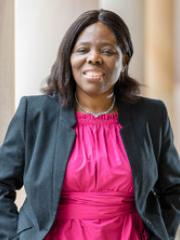
Associate Professor Remi Ayoko (Oluremi B. Ayoko) is a Senior Fellow of the Higher Education Academy working in the Management Discipline at the UQ Business School, University of Queensland. With expertise in conflict management, emotions, leadership, and workplace physical environments, she leads the Next Generation of Workspaces Research Network and chairs the UQ Cultural Inclusion Council. PhD in Management from University of Queensland Senior Fellow - Higher Education Academy Her research explores how physical workspaces influence employee wellbeing, productivity, and organizational outcomes; conflict dynamics in diverse teams; and leadership practices in hybrid work environments. Current projects examine the intersection of AI surveillance, cybersecurity behaviors, and workspace design. Recent publications investigate territoriality in organizational change (2024), diversity-inclusion linkages (2023), open-plan office communication (2023), and noise reactions in modern workspaces (2023). Her work spans organizational behavior , leadership studies , and workplace ergonomics . Scientific contributions include: Australian Research Council Discovery Grant Co-editor of Handbook of Conflict Management Research and Organizational Behaviour and the Physical Environment of Work Editor-in-Chief of Journal of Management and Organization (2019-2021) Current editorial board member for International Journal of Conflict Management and Strategic Change Professional service includes convening research networks, chairing diversity councils, and presenting workplace environment insights through international media channels. She actively contributes to academic societies including the Academy of Management and Australian and New Zealand Academy of Management.
Luca D'Acci is an Associate Professor in Sustainable Urban Forms and Evaluations at the Polytechnic of Turin, affiliated with the Interuniversity Department of Territorial Sciences, Planning and Policies (DIST). He holds additional affiliations as a Senior Research Fellow at the University of Portsmouth and as a member of research networks at the University of Birmingham and Erasmus University Rotterdam. His academic journey includes international roles such as Head of Urban Environment at Erasmus University Rotterdam and visiting researcher positions at the University of Oxford, University of Cambridge, and ETH Zurich. Education: MSc in Architecture-Science of Cities, Polytechnic of Turin (2003, cum laude) PhD in Economic Assessments, Polytechnic of Turin (2007) BSc in Mathematics, University of Turin (2007) BSc in Construction Engineering, Polytechnic of Turin (2009, cum laude) Post-PhD in Urbanism, University of Campinas (2010) Anthropology, University of Oxford (2020, 20 credits) Luca D'Acci’s research focuses on urban morphology, urban allometry, isobenefit urbanism, and the socio-economic-environmental impacts of urban form. His work bridges humanistic and quantitative approaches, integrating engineering, architecture, economics, and anthropology. He investigates how urbanicity, urban form, and spatial configuration influence well-being, sustainability, and resilience. His recent publications (2023–2025) reveal a strong trend toward computational modeling and simulation of urban growth, particularly through the lens of isobenefit urbanism —a concept he has pioneered. These works combine cellular automata, agent-based modeling, and morphogenetic frameworks to simulate sustainable urban futures. He also explores fractal patterns in housing markets, the psychology of urban living, and the mental costs of urbanicity. His research spans disciplines including urban science, environmental psychology, urban economics, and complex systems. Scientific Awards and Honors: Fellow, Erasmus Happiness Economics Research Organisation (EHERO), Erasmus University Rotterdam (2022–) Senior Research Fellow, University of Portsmouth (2017–) Fellow, Cluster for Sustainable Cities, University of Portsmouth (2017–2020) Fellow, Urban Morphology Research Group, University of Birmingham (2016–2021) Member, Cambridge Networks Network, University of Cambridge (2016–) Honorary Fellow, University of Birmingham (2016–) Luca D'Acci actively advises PhD students as a member of the Doctoral Collegium for Urban and Regional Development at Politecnico di Torino (2020–2024). He has secured and contributed to significant research grants, including projects funded by the World Bank, Asian Development Bank, European Commission, EPSRC, Lincoln Institute of Land Policy, and University College London (Future Urban Growth Lab). His editorial roles include membership on the boards of PLOS ONE , PLOS Mental Health , and Humanities & Social Sciences Communications . Labs and Research Networks: Future Urban Growth Lab (UCL, 2019–) LEUr Urban Ecology Lab (UFSC, 2022–) URban Evolution Morphology (UReM, 2024–) Erasmus Universiteit Rotterdam (EHERO, 2022–2024) Spatial Intelligence Unit (SPIN Unit), Estonia (2013–) International Society of Biourbanism (2013–)
Mengqiu Cao is a Lecturer in Urban Systems Predictive Analytics and Machine Learning at the University College London (UCL) within the Bartlett School of Environment, Energy and Resources . He integrates academia and industry expertise to advance interdisciplinary research at the intersection of transport analysis and urban studies. Research Focus : Sustainable transport, urban mobility, logistics, social equity, and low carbon transitions. Teaching : Coordinates modules on climate sciences, data-driven consumer behavior analysis, and transport policy. Awards : Holds fellowships with the Royal Geographical Society, Royal Statistical Society, and Royal Society of Arts. Publications : Recent works examine green space impacts on mobility, equitable EV charging access, dockless bike-sharing patterns, and 15-minute city frameworks.