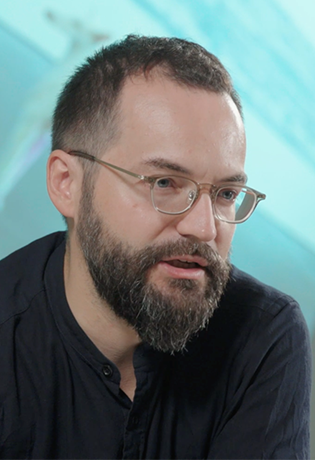
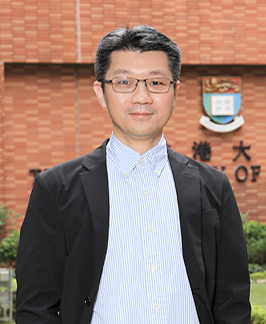
Dr. Damien Charrieras is an Associate Professor at the School of Creative Media , City University of Hong Kong, where he serves as Program Leader for the Master of Art in Creative Media and deputy program leader for the PhD in Creative Media. His work bridges cultural studies, new media theory, and the intersection of financial technologies with artistic practices through the ACIM Laboratory for Interventions in Speculative Finance . Doctoral research on digital artists' trajectories in Montreal FRQSC Postdoctoral Fellowship at McGill University Research spans game engine design , datafication of creativity , blockchain in art , and post-anthropocentric creative processes . With over HK$3.14M in grants as Principal Investigator, he explores situated digital creativity in urban contexts, critical worldbuilding pedagogy , and the mediation of technical systems in cultural production. His publications in Cities , Organized Sound , and Human Relations analyze the reconfiguration of artistic practices through software infrastructures and automation paradigms. Scientific awards include: FRQSC Postdoctoral Fellowship
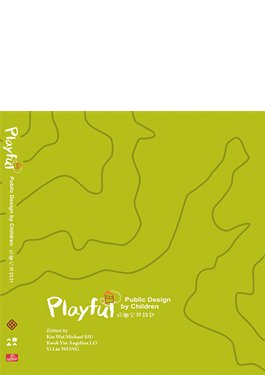
Kin Wai Michael Siu is the Eric C. Yim Professor in Inclusive Design and Chair Professor of Public Design at The Hong Kong Polytechnic University (PolyU) . He founded the Public Design Lab and directs two joint research centers: the PolyU-HIT Inclusive Environment Center and the PolyU-WUT Ship/Marine Aesthetic Design Lab . His roles include PhD/postdoc supervision, coordination of design research methods, and extensive editorial/advisory board memberships. PhD, The Hong Kong Polytechnic University PhD, University of Bath MSc, City University of Hong Kong MA, The Hong Kong Polytechnic University MEd, The University of Hong Kong BA(Hons), Loughborough University of Technology A leading figure in inclusive design, Siu integrates Vygotsky's ZPD and Bruner's scaffolding theory into his 'Scaffolding Innovation' framework. His work balances creative design with technological application, focusing on inclusive public spaces (playgrounds, country parks, recycling facilities) and pandemic prevention strategies (e.g., COVID-19/NID mitigation through design ). Recent projects explore AI-enhanced recycling , bioinspired wearables , and cultural heritage semiotics . His publications span design education , participatory design , and cross-cultural heritage preservation , with a fingerprint highlighting 'Public Design', 'Inclusive Design', 'Visually Impaired', 'Cultural Semantics', and 'Spatial Practice'. Key collaborators include researchers from Hong Kong, China, and international institutions. Scientific Awards : 2024 G Cross Award for Excellent Guidance (Instructor) 2024 Hong Kong Contemporary Design Awards for Exceptional Advisor Multiple international design/invention awards (over 100 total) 2008 Romanian Ministry Invention Awards for Rapid Demountable Platform (RDP) Awarded over 50 patents, Siu has secured numerous external grants for public design innovations. His Public Design Lab collaborates with institutions like Tsinghua University, MIT, and Cambridge, while his editorial roles span design, engineering, and education journals.
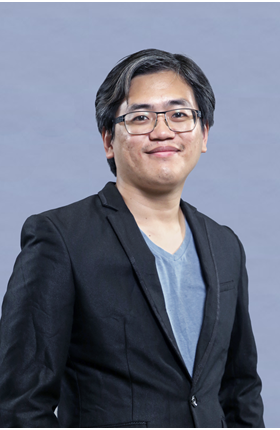
Sky Lo Tian Tian is an Assistant Professor at the School of Design, Hong Kong Polytechnic University. His research focuses on "Spatial Phygital Interaction", integrating technologies like XR (Extended Reality), BIM (Building Information Modeling), and gamification to bridge virtual and physical environments through human-centred architectural design. Key expertise includes computational architecture, digital fabrication, and interactive design Developed novel concepts like Human-Virtual Reality Interaction (HVRI) and phygital-aided construction systems His notable projects include the Green Weaved Corridor bamboo pavilion in Chaozhou, China, and the Meta Archive platform for 3D model archiving. He actively organizes workshops at international venues like DigitalFuture, CCD-ASC, and POLAR. Scientific Awards : Full Doctoral Scholarship recipient from The Chinese University of Hong Kong and Victoria University of Wellington
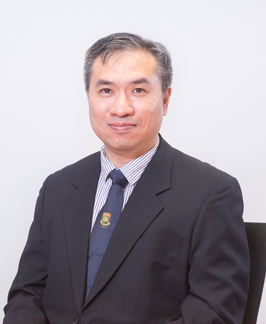
Professor Reynold Cheng is a faculty member at the University of Hong Kong (HKU), specifically within the Department of Computer Science in the School of Computing and Data Science (CDS). He currently serves as the Division Head of the AI & Data Science Division at CDS and is part of the Steering Committee of the Musketers Foundation Institute of Data Science. His academic journey includes a BEng and MPhil from HKU (1998–2000) and an MSc and PhD from Purdue University (2003–2005). Prior to HKU, he was an Assistant Professor at the Hong Kong Polytechnic University (HKPU) from 2005 to 2008. Cheng’s research focuses on data science, big graph analytics, and uncertain data management. He has received numerous awards, including the SIGMOD Research Highlights Reward 2020, HKICT Awards 2021, and HKU Knowledge Exchange Award (Engineering) 2021. His work has been recognized through grants such as the HKU-TCL Joint Research Centre for AI-funded project (HKD 1M, 2020–2022) and a CRF-funded project for real-time monitoring of infectious diseases (HKD 6.5M, 2021–2022). Cheng actively contributes to academic service, including serving as PC co-chair for IEEE ICDE 2021 and editorial roles in journals like IS and DAPD. His publications span top venues like SIGMOD, VLDB, and KDD, emphasizing algorithm design for large graphs and probabilistic data systems.
Professor Benjamin C.M. Kao is a faculty member in the Department of Computer Science at The University of Hong Kong (HKU), affiliated with the School of Computing and Data Science. He holds a BSc from HKU (1989) and a PhD from Princeton University (1995). His career includes roles as a teaching/research assistant at Princeton (1989-1991) and a research fellow at Stanford University (1992-1995). His research focuses on Database Management Systems, Data Mining, Real-time Systems, and Information Retrieval Systems. Notable contributions include S-OLAP for sequence data analysis, collaborative resource discovery in social tagging systems, and algorithms for mining periodic patterns in sequences. He has led research grants such as the GRF-funded 'Online Analytical Processing on Sequence Data' (2008) and computational studies in uncertain data mining (2006). Professor Kao has served on program committees for major computer science conferences and reviewed for leading journals. His work bridges theoretical foundations with practical applications in data systems and information retrieval.
Oscar Carl Olof Dahlsten is an Associate Professor in the Department of Physics at City University of Hong Kong. He works in the field of quantum information science with research spanning information thermodynamics, foundations of quantum theory, and quantum computation and machine learning. His academic journey includes training at Imperial College and previous positions at ETH Zurich, NUS Singapore, Oxford University, and SUSTech before joining CityUHK. Dahlsten's research interests focus on the intersection of quantum mechanics and information theory. His work explores how quantum systems process information, the thermodynamic implications of quantum operations, and the application of quantum principles to computational problems. Key areas include quantum causal inference, quantum energy harvesting, black hole information theory, and quantum machine learning algorithms. His fingerprint analysis shows strong contributions to Quantum Theory (100%), Statistical Mechanics (55%), Quantum Dot physics (55%), and Free Energy concepts (40%). Recent publications demonstrate a strong trend toward experimental validation of quantum information concepts, particularly in quantum causal inference and quantum thermodynamics. His work bridges theoretical foundations with practical applications, especially in energy harvesting and quantum computing. The integration of quantum principles with thermodynamic laws appears as a consistent theme across his recent publications. Dahlsten currently serves as Principal Investigator for the GRF project 'Exploiting Quantum Systems for More Efficient Extraction of Energy From Random Sources' starting September 1, 2025. He actively supervises PhD students in quantum information science and is accepting new PhD candidates. His research group focuses on cutting-edge problems at the intersection of quantum information, thermodynamics, and computation.
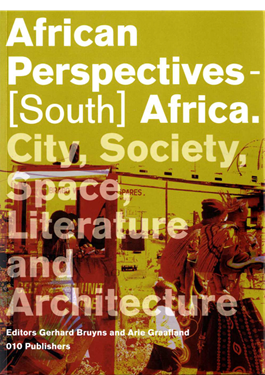
Dr. ir. Gerhard Bruyns is a tenured Associate Professor at the School of Design, The Hong Kong Polytechnic University , where he serves as Associate Dean (Academic Programmes) and Director of RPg Studies . Previously, he held tenured positions at the Delft University of Technology , Netherlands, in both the Delft School of Design and the Department of Urbanism. His expertise spans spatial morphology, volumetric urbanism, and critical environments in dense urban contexts.
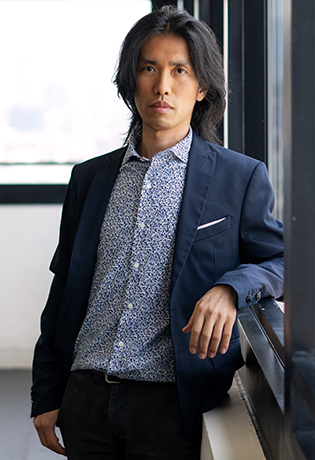
Jeffrey C. F. Ho is an Associate Professor at the School of Design, The Hong Kong Polytechnic University. He serves as Deputy Specialism Leader of Interaction Design and Chairman of the School Learning & Teaching Committee. His research centers on virtual reality (VR) and interaction design, applying social science principles to influence attitudes and behaviors through immersive technologies. He leads projects in VR applications for safety training, virtual museums, and healthcare, and collaborates with the Asian Lifestyle Design Lab and the Technology and Social Behavior Lab at the University of Illinois at Urbana-Champaign. PhD in Communication, City University of Hong Kong MSc in Human-Computer Interaction with Ergonomics, University College London MPhil in Computer Science, The University of Hong Kong BEng in Software Engineering, The University of Hong Kong Ho’s research explores VR’s role in perspective-taking experiences, focusing on empathy, prosocial behavior, and spatial cognition. His work bridges VR with public health, education, and cultural preservation, such as designing VR environments for elderly care and dietary reflection. His recent publications highlight trends in generative AI ethics, beginner-friendly design software, and spatio-social impacts in VR applications. His articles span virtual reality games, VR safety training, and interactive museum design, with keywords like Virtual Reality, Human-Computer Interaction, and Cultural Preservation. Key subfields include immersive technology, social behavior analysis, and ethical design frameworks. UGC Teaching Award - Nominee (2024) Best Paper Award, EAI ArtsIT 2020 (2020) Exemplary Teaching and Learning Award - Merit (2024) QS Reimagine Education Awards 2024 - Global Education Award (2024) QS Reimagine Education Awards 2024 - Gold Award in Smart Omnichannel Campus (2024) Ho has secured grants from Hong Kong’s Research Grant Council, including HK$678,607 for immersive VR construction safety training (2024–2026) and HK$741,961 for VR safety education focusing on accident victims (2021–2023). He contributes as a reviewer for journals like Universal Access in the Information Society and Frontiers in Psychology , and leads teaching initiatives in information architecture and interactive media design.
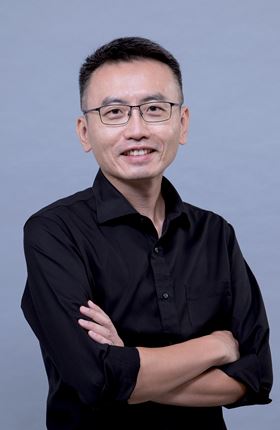
Ryo Ikeshiro is an Assistant Professor at the School of Creative Media, City University of Hong Kong, and co-director of the spatial audio art/research unit SoundLab. His work bridges sound art, computational creativity, and cultural studies through immersive installations, algorithmic audio-visual systems, and sonification techniques. PhD in Creative Practice (Goldsmiths, University of London) MPhil in Music (University of Cambridge) BMus (King's College London) Ikeshiro's research interrogates the materiality of sound through: Multichannel Ambisonics and directional audio Neural network-driven temporal dislocation Sonification of climate data and historical soundscapes Machine learning for artistic interpretation Interplay of identity and technology East Asian ideophonic traditions His 2010-2024 publications and installations reveal cross-disciplinary engagement with: Fractal mathematics in audiovisual art Algorithmic composition systems Interactive installation technologies Sonic cartography Historical memory in sound Collaborative research frameworks SoundLab, which he co-directs, develops spatial audio research at the intersection of: Technical innovation Cultural representation Experimental pedagogy Public engagement International artistic exchange Practice-based research
Meng Gu is an Assistant Professor in the Department of Physics at The University of Hong Kong, where she conducts research on galaxy formation and stellar population synthesis. She holds the prestigious HKU-100 Scholar position and specializes in understanding the physical mechanisms driving the interplay between star formation and galaxy mass assembly. Education: Bachelor of Science (BSc) from Nanjing University (NJU) Master of Arts (MA) from Harvard University PhD from Harvard University, completed with Prof. Charlie Conroy Prof. Gu's research addresses fundamental questions in astrophysics regarding the stellar initial mass function of galaxies, its global and local variations, and implications for mass measurements. She investigates how environmental factors shape galaxy formation and evolution, particularly focusing on how massive galaxies grow and what spatial information of stellar populations reveals about these processes. Her work combines observational data with advanced modeling techniques to unravel the complex history of galaxy assembly. Analysis of Prof. Gu's publications reveals a consistent focus on massive galaxy evolution, with particular emphasis on the stellar initial mass function, galaxy cluster dynamics, and ultra-diffuse galaxies. Her research spans observational astronomy using major telescope facilities, theoretical modeling, and computational cosmology. The progression of her work shows increasing sophistication in connecting observational data with theoretical frameworks to understand galaxy formation mechanisms. Scientific Awards: HKU-100 Scholar Henry Norris Russell postdoctoral fellow at Princeton University Prof. Gu has secured research funding to utilize major observational facilities including Magellan Telescopes, ESO's Very Large Telescope, and the Sloan Digital Sky Surveys. She is preparing to leverage next-generation facilities like the James Webb Space Telescope (JWST) and Subaru Prime Focus Spectrograph (PFS) survey for future research. Her collaborative work spans multiple international institutions, reflecting the global nature of modern astrophysics research. Prof. Gu is actively involved in observational astronomy projects and collaborates with major research groups working on galaxy evolution. Her work with the MASSIVE survey represents a significant contribution to understanding the most massive galaxies in the nearby universe, utilizing high-quality spectroscopic data to constrain fundamental properties of stellar populations.
Professor John Shi Wen-zhong is Chair Professor of Geographical Information Science and Remote Sensing at The Hong Kong Polytechnic University, where he serves as Head of the Department of Land Surveying and Geo-Informatics. He also holds leadership positions as Director of the Otto Poon Charitable Foundation Smart Cities Research Institute and Director of the PolyU-Shenzhen Technology and Innovation Research Institute (Futian). Professor Shi is recognized as an international leader in uncertainty modeling and quality control for spatial data and spatial analyses, with contributions dating back to the 1990s. He currently serves as President of the International Society for Urban Informatics and Editor-in-Chief of the international journal Urban Informatics. Professor Shi's research focuses on urban informatics for smart cities, geographical information science and remote sensing, artificial intelligence-based object extraction and change detection from satellite imagery, intelligent analytics and quality control for spatial big data, and mobile mapping and 3-D modelling based on LiDAR and remote sensing imagery. His work has solved fundamental uncertainty issues in spatial data and spatial analyses, making significant contributions to geographical information science. He has authored over 300 research articles in Web of Science-indexed journals and 20 books, and has been granted 44 patents as of July 2023. Professor Shi has received numerous prestigious awards for his groundbreaking work: ESRI Award for Best Scientific Paper by the American Society for Photogrammetry and Remote Sensing (2006) State Natural Science Award (Second Award), China's highest award for fundamental research (2007) Wang Zhizhuo Award by the International Society for Photogrammetry and Remote Sensing (2012) Founder's Award by the International Spatial Accuracy Research Association (2020) CPGIS Distinguished Scholar Award (2021) Gold Medals at both the 2021 and 2023 Geneva Invention Expos Smart 50 Awards (2021) Gold Medal in Asia International Innovative Invention Exhibition (2023) He is also listed among the world's top 2% most cited researchers according to Elsevier BV's standardized citation indicators. Professor Shi has been elected as an Academician of the International Eurasian Academy of Sciences and is a Fellow of the Academy of Social Sciences (UK), the Royal Institution of Chartered Surveyors, and the Hong Kong Institute of Surveyors.
Dr. Can Liu is an Assistant Professor at the School of Creative Media, City University of Hong Kong, where she leads the ERFI Lab (Laboratory of Empirical Research for Future Interfaces). Her research focuses on designing future interfaces for ubiquitous technologies through empirical understanding of human cognition and behavior, with emphasis on multimodal interaction combining physical and digital elements. Education: PhD in Human-Computer Interaction, Université Paris-Sud (France), INRIA labs ex)situ and ILDA MSc in Media Informatics, RWTH Aachen University (Germany) Dr. Liu's research spans three primary domains: AI-assisted Input (using LLMs/NLP to enhance text manipulation and speech interfaces), Spatial Computing (multimodal interfaces for AR/VR and large displays), and Hybrid/Remote Collaboration (supporting intuitive remote interaction through understanding collocated collaboration). Her work integrates empirical user studies with real-world system deployments in public spaces. Recent publications demonstrate strong trends toward LLM-integrated interfaces, wearable computing applications, and novel interaction techniques for foldable devices. Her team consistently publishes at top venues including CHI, UIST, and CSCW, with increasing focus on practical AI integration for everyday tasks. Awards and Recognition: Best Paper Award at ACM CHI 2014 (top 1%) Honourable Mention at ACM CHI 2012 (top 5%) Dr. Liu actively mentors PhD students and researchers while securing substantial research funding including Google Faculty Research Awards, National Natural Science Foundation grants, and RGC Early Career Schemes. She serves on numerous program committees including ACM CHI (Associate Chair 2024, 2022, 2021, 2020, 2019, 2017) and co-organizes research initiatives like the HCIX Summer Research Program. Her laboratory ecosystem includes the ERFI Lab, affiliation with the Augmented Materiality Lab and Kowloon Interaction Center, and active participation in the Greater Bay HCI community, supporting both fundamental research and industry collaboration with partners including Google, Huawei, and Lenovo.
Professor Shenghua Gao is an Associate Professor at the School of Computing and Data Science of the University of Hong Kong (HKU), concurrently serving as Assistant Director for Shanghai Initiatives. He holds a PhD from Nanyang Technological University. His research focuses on integrating machine learning, spatio-temporal data analysis, and database systems to address challenges in mobility prediction, traffic management, and geospatial representation learning. He has contributed significantly to trajectory modeling, indexing frameworks for multi-dimensional data, and the application of large language models (LLMs) in spatio-temporal contexts. Key research interests include: Spatio-Temporal Data Science: Developing frameworks for efficient processing and analysis of point cloud, trajectory, and traffic data. Machine Learning for Databases: Innovating indexing algorithms (e.g., BMTree, MAST) and query optimization techniques leveraging ML. Trajectory and Mobility Prediction: Creating personalized models for next-location prediction and transfer learning across regions. Geographic AI (GeoAI): Enhancing road network representation and urban function inference using physics-guided and foundation models. Recent work highlights include the ST-LLM+ framework for traffic prediction, the MAST system for point cloud analytics, and the exploration of City Foundation Models for urban challenges. His publications span top venues in databases (SIGMOD, VLDB) and AI/data science (ICML, NeurIPS). While no awards are explicitly mentioned, his prolific output and leadership roles indicate significant academic contributions. He is actively involved in teaching and supervising research in the School’s undergraduate and postgraduate programs, including MSc(AI) and MPhil/PhD tracks.
Professor Yang Chai is an esteemed academic at The Hong Kong Polytechnic University, serving as Professor in the Department of Applied Physics and Associate Dean (Research) in the Faculty of Science. His research focuses on nanoelectronics devices , emerging computation paradigms , and in-sensor computing , with groundbreaking work published in journals like Nature and Nature Electronics . Key affiliations: Chair Professor of Semiconductor Physics, PolyU Academy for Interdisciplinary Research, Vice President of the Physical Society of Hong Kong. Research Interests span microelectronics , nanotechnology , and integrated circuits , aiming to develop imaging technologies capable of capturing 4D spatial-temporal and 5D spectral information beyond visible light. Recent research outputs include innovations in 2D semimetal heterojunctions (Advanced Materials, 2025), nonlinear memory selectors (Advanced Functional Materials, 2024), and moisture-electric generators (Nature Communications, 2024). His work leverages MoS2/WSe2 structures and supramolecular hydrogels . Scientific Awards & Recognitions: World's Top 2% Most-Cited Scientists (Stanford University) Nano Research Young Innovators Award (2021) Young Scientist of ICON-2DMAT (2019) IEEE Distinguished Lecturer since 2016 Professor Chai actively contributes to professional bodies, including leadership roles in IEEE and editorial work for the Journal of Cleaner Materials .
Ken M. L. Yiu is a Professor in the Department of Computing at Hong Kong Polytechnic University , Faculty of Engineering. He received his PhD and Bachelor's degree from the University of Hong Kong in 2006 and 2002, respectively, and was previously affiliated with Aalborg University (2006–2009). He is a leading researcher in databases, with a focus on spatiotemporal data, query processing, and multidimensional data management. PhD, University of Hong Kong (2006) Bachelor of Computer Engineering, University of Hong Kong (2002) His research interests lie at the intersection of database systems and spatial analytics. He investigates efficient indexing, query optimization, and privacy-preserving techniques for large-scale spatial and temporal datasets. His recent work explores learned index structures, GPU-accelerated query processing, and high-dimensional data retrieval. He has made significant contributions to spatial query processing, trajectory analytics, and location-based services. The trends in his recent publications (2021–2025) reflect a strong focus on high-performance database systems, including GPU acceleration (GHive), perfect hashing on GPUs (GPH), and learned cardinality estimation. His work increasingly integrates machine learning with traditional database techniques, as seen in AlayaDB for LLM inference and learning-based query optimization. He also continues to advance core database problems such as spatial indexing, trajectory analysis, and similarity search. SSTD 2025 10-Year Impact Award Ken Yiu has successfully led multiple competitive research projects funded by the Hong Kong GRF, including grants on learned index structures (2024–2026), smart memory for vector data mining (2021–2023), and efficient spatial data management (2017–2019). He has supervised numerous PhD and MPhil students, many of whom now hold academic positions (e.g., Bo Tang at SUSTech, Yu Li at HDU) or work in top tech companies (e.g., Huawei, Alibaba). His professional service is extensive, including roles as PI for major grants, area chair (ICDE 2024), and program committee member for top conferences like SIGMOD, VLDB, and ICDE. He is actively involved in research groups and projects related to database systems, particularly in spatiotemporal data management and efficient query processing. His lab collaborates closely with students and co-supervisors like Bo Tang on topics such as trajectory mining, spatial indexing, and learned databases. The research group maintains strong ties with international institutions and contributes to major open problems in database performance and scalability.