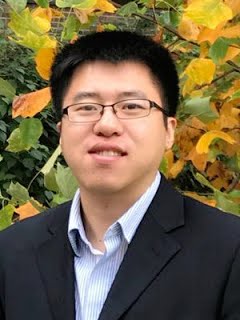
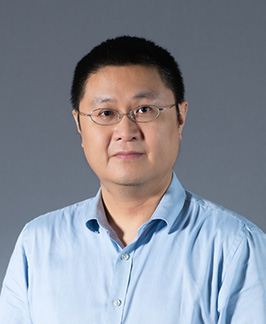
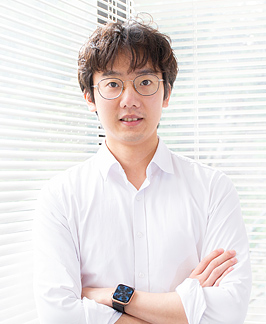
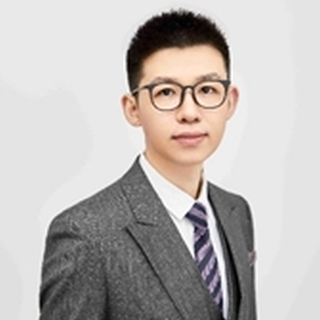
Chen Wang is an Assistant Professor in the Department of Statistics and Actuarial Science at The University of Hong Kong. He holds a PhD in Statistics from the National University of Singapore (NUS). His research focuses on Random Matrix Theory, Time Series Analysis, and High-dimensional Data Analysis. His work explores theoretical foundations and applications in econometrics, multivariate statistics, and high-dimensional inference. Key contributions include studies on spurious factor analysis, spectral distribution of time series, and cointegration analysis in large VARs. His teaching includes courses such as STAT2602 (Probability and Statistics II) and STAT3600 (Linear Statistical Analysis). Recent publications highlight advancements in AI-driven methodologies for single-cell biology, molecular modeling, and biomedical applications. Notable trends include integrating AI agents for experimental design, spatial biology analysis, and deep learning for medical imaging. Chen's work bridges statistical theory with practical applications, emphasizing high-dimensional data challenges in diverse scientific domains.
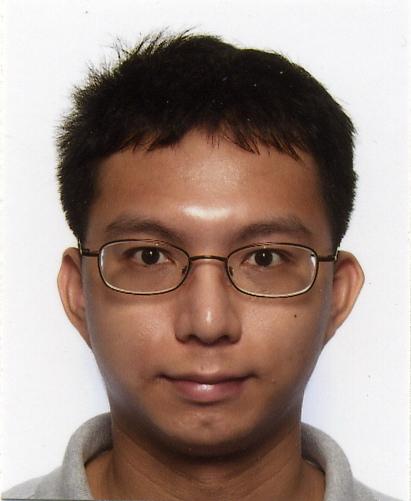
Ken M. L. Yiu is a Professor in the Department of Computing at Hong Kong Polytechnic University , Faculty of Engineering. He received his PhD and Bachelor's degree from the University of Hong Kong in 2006 and 2002, respectively, and was previously affiliated with Aalborg University (2006–2009). He is a leading researcher in databases, with a focus on spatiotemporal data, query processing, and multidimensional data management. PhD, University of Hong Kong (2006) Bachelor of Computer Engineering, University of Hong Kong (2002) His research interests lie at the intersection of database systems and spatial analytics. He investigates efficient indexing, query optimization, and privacy-preserving techniques for large-scale spatial and temporal datasets. His recent work explores learned index structures, GPU-accelerated query processing, and high-dimensional data retrieval. He has made significant contributions to spatial query processing, trajectory analytics, and location-based services. The trends in his recent publications (2021–2025) reflect a strong focus on high-performance database systems, including GPU acceleration (GHive), perfect hashing on GPUs (GPH), and learned cardinality estimation. His work increasingly integrates machine learning with traditional database techniques, as seen in AlayaDB for LLM inference and learning-based query optimization. He also continues to advance core database problems such as spatial indexing, trajectory analysis, and similarity search. SSTD 2025 10-Year Impact Award Ken Yiu has successfully led multiple competitive research projects funded by the Hong Kong GRF, including grants on learned index structures (2024–2026), smart memory for vector data mining (2021–2023), and efficient spatial data management (2017–2019). He has supervised numerous PhD and MPhil students, many of whom now hold academic positions (e.g., Bo Tang at SUSTech, Yu Li at HDU) or work in top tech companies (e.g., Huawei, Alibaba). His professional service is extensive, including roles as PI for major grants, area chair (ICDE 2024), and program committee member for top conferences like SIGMOD, VLDB, and ICDE. He is actively involved in research groups and projects related to database systems, particularly in spatiotemporal data management and efficient query processing. His lab collaborates closely with students and co-supervisors like Bo Tang on topics such as trajectory mining, spatial indexing, and learned databases. The research group maintains strong ties with international institutions and contributes to major open problems in database performance and scalability.
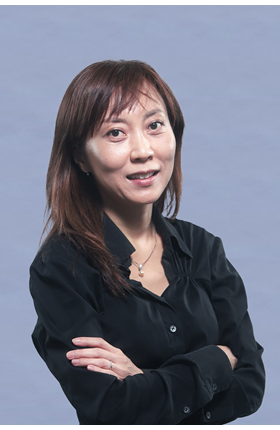
Sunny Choi is an Assistant Professor at the School of Design , The Hong Kong Polytechnic University , specializing in urban design, environmental design, and hyper-morphology. She is a founding partner of Choi-Comer Asia Ltd. , a research-practice lab focusing on interior urban environments, and serves as Chairperson for Media and Publications at the Hong Kong Institute of Urban Design and Chief Editor of its online journal Urbanie & Urbanus . BA in Urban Studies, RMIT University MA in Housing and Urbanism, Architectural Association School of Architecture MPhil in Town Planning, University College London PhD in Urban Design, Oxford Brookes University Post-doctoral Research in Urban Ecology, University of Oxford Professional Practice in Urban Economics, Harvard University Her research examines human-centered urbanism , with a focus on spatial cognition , vertical urban complexes , and metaverse applications in sustainability education . She investigates how digital technologies transform urban experiences and how hyper-morphological frameworks can address ecological challenges. Recent publications highlight her work on emotional assessment metrics for urban spaces , metaverse-driven learning , and waterfront regeneration strategies . Her research bridges design practice with academic inquiry, emphasizing hybrid walkable networks and transitional environments. Best Paper Award (2022) Best Research Award Nomination (2025) Prize for Educational Metaverse Development (2023) Honorary Award in Urban Design (2023) Recognition for Hybrid Urban Networks Study (2023) As an advisor and educator, she contributes to UN Sustainable Development Goals through urban design pedagogy. Her collaborative projects span institutions in Hong Kong, China, and the UK. She also leads Choi-Comer Asia Ltd. , integrating design, research, and policy advocacy.
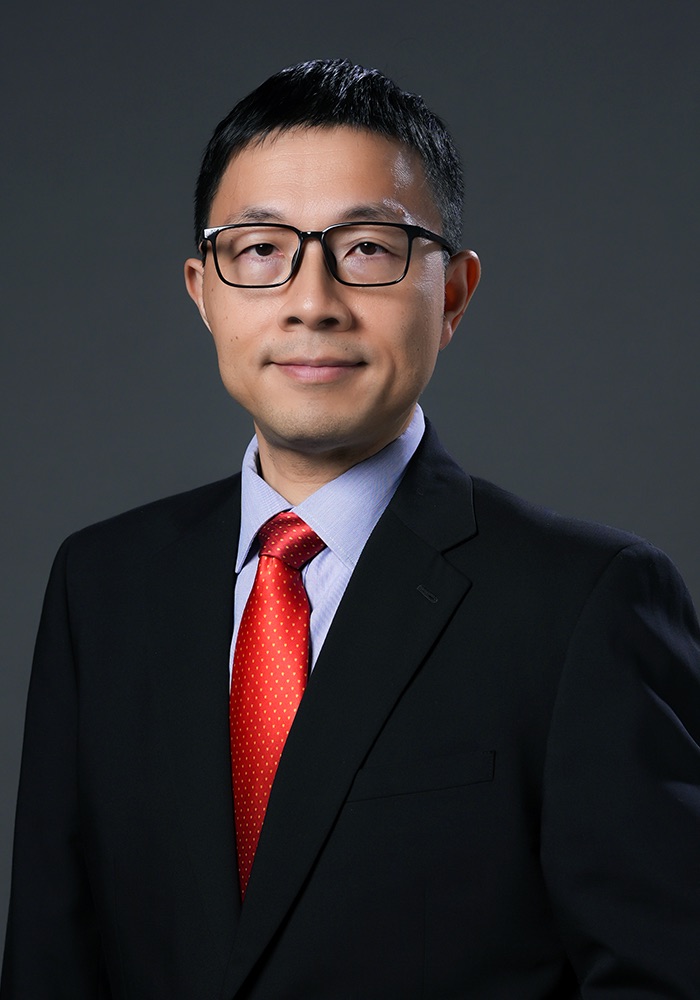
Prof. Yuk Yiu IP is an Associate Professor at the School of Creative Media, City University of Hong Kong. As an experimental filmmaker, media artist, art educator, and independent curator, his work spans emergent cinema, new media art, and game design, exhibited internationally at festivals like Transmediale, ISEA, and VideoBrasil. He founded the art.ware project to promote new media art in Hong Kong. Research Interests: Experimental Cinema New Media Art Digital Art Media Archaeology Video Art Visual Ethnography Computer Game Design Artistic Trends: His recent works explore hybrid cinema, interactive installations, and game-based art, merging digital and physical spaces. Twelve of his 15 most recent publications focus on these intersections, with keywords like "ludonarrative design," "algorithmic aesthetics," and "post-cinema." Scientific Recognition: Hong Kong Arts Development Awards (2018) PACT Zollverein Residency (2025) ACC Cinema Fund Recipient (2018) Hong Kong Contemporary Art Awards (2012) Collaborations: He works with digital artists like Jeffrey Shaw and Olli Tapio Leino, focusing on virtual environments and critical interactivity. His projects include "Critical Games" and "Value-rich Peer Community Assessment."
Edmund Yin Mun LAM is a Professor of Electrical and Electronic Engineering at the University of Hong Kong (HKU), with a courtesy appointment in Computer Science. He also serves as Associate Dean (Innovation and Career Development) of HKU's Graduate School. His academic journey includes a B.S., M.S., and Ph.D. from Stanford University. Key roles include Director of the Computer Engineering program and founding Director of the Imaging Systems Laboratory. He has held a Visiting Associate Professorship at MIT. His research focuses on computational optics and imaging, spanning algorithm design to applications in semiconductor manufacturing and biomedicine. Notable contributions include pioneering AI-driven computational imaging and deep learning for holographic microscopy. Awards include the IBM Faculty Award and multiple HKU accolades. He is a Fellow of IEEE, Optica, SPIE, IS&T, IOP, and HKIE, and a founding member of the Hong Kong Young Academy of Sciences. Education: B.S., M.S., and Ph.D. in Electrical Engineering from Stanford University (1995–2000). Research Interests: Computational optical imaging, digital holography, neuromorphic imaging, biomedical imaging, AI integration in computational optics. His work bridges algorithmic innovation with practical applications, emphasizing cross-disciplinary solutions for imaging challenges in healthcare and engineering. Awards and Recognition: Over 400 publications, 30+ advised students, IBM Faculty Award, HKU Outstanding Researcher Award (2019), and multiple teaching awards. His research impacts fields like semiconductor lithography and medical diagnostics. Labs and Teams: Imaging Systems Laboratory (founded), Computer Engineering Program leadership, involvement in SPIE conference organization, and editorial roles in top journals like IEEE Transactions on Biomedical Circuits and Systems.
Dr. Hengshuang Zhao is an Assistant Professor at the Department of Computer Science, University of Hong Kong. He holds a PhD from The Chinese University of Hong Kong and completed postdoctoral research at MIT CSAIL and the University of Oxford. His research focuses on computer vision, machine learning, and AI, emphasizing visual scene understanding, generative modeling, autonomous driving, and embodied AI. He leads a lab actively recruiting PhD students and researchers. Education: PhD in Computer Science, Chinese University of Hong Kong (2017) Bachelor's Degree, Huazhong University of Science and Technology Affiliations: Member of Hong Kong Robotics Institute Organizer of CVPR/ICML workshops on point clouds and embodied AI His research interests include: Scene Understanding (e.g., semantic segmentation, 3D reconstruction), Multimodal Learning (vision-language models), and Generative Modeling (image/video synthesis). Recent work includes Depth Anything (CVPR 2024 Best Demo), Point Transformer V3 (CVPR 2024), and DriveGPT4 series for autonomous driving. He has been recognized with awards including the Excellent Young Scientists Fund (2024), AI 2000 Influential Scholar in CV (2022-2024), and organized multiple top-tier conferences' workshops and tutorials.
Zhenqin Wu is an Assistant Professor at the Department of Computer Science, University of Hong Kong. He holds a PhD from Stanford University (2016–2022) under advisors Prof. James Zou and Dr. Vijay Pande, with research focused on applying AI/ML to computational biology and spatial omics. His work bridges machine learning and spatial biology, developing tools for analyzing spatial proteomics, transcriptomics, and histopathological imaging. Education: PhD in Computer Science, Stanford University (2016–2022) BSc in Chemistry, Peking University Research Interests: AI-driven spatial omics analysis Multimodal data integration in biology Machine learning for medical imaging Computational modeling of cellular microenvironments His recent work highlights include developing the ROSIE AI framework for immunofluorescence generation and the CORAL method for spatial multiomics integration. Articles focus on immunotherapy response prediction, disease biomarker discovery, and interpretable models for tissue structure analysis. Professional Affiliations: Scientific Advisor, Enable Medicine (biotechnology startup) AI Fellow, Genesis Therapeutics He actively mentors PhD/postdoc researchers and collaborates on AI-driven drug discovery projects. His lab focuses on translating spatial omics insights into clinical applications.
Huaxin Wei is an Associate Professor at the School of Design , The Hong Kong Polytechnic University, specializing in interaction design and game design. Her research focuses on creating meaningful interactive experiences through systematic analysis of video game narratives and tangible interaction design for memory practices. Key Projects : Reviving Digital Past (RGC General Research Fund 2022/23), Narrative Perspective Analysis (RGC General Research Fund 2019/20) Research Areas : Interactive Digital Narrative (IDN), Game Design Analysis, Tangible Interaction Design, Narrative Experience Frameworks Her work has been published in leading venues including Entertainment Computing , FDG , TEI , and ICIDS . Recent articles explore tangible storytelling artifacts, cinematic composition tools, and multiplayer narrative design challenges. Major Contributions : Descriptive framework for game narratives, Design methodology for tangible memory interfaces Dr. Wei has received academic honors such as the Dean’s Awards for Outstanding Teaching Performance (2014) and EAI Distinguished Member recognition (2021). She has supervised student projects winning multiple international awards and serves as reviewer/editorial board member for journals like Proceedings of the ACM on IMWUT .
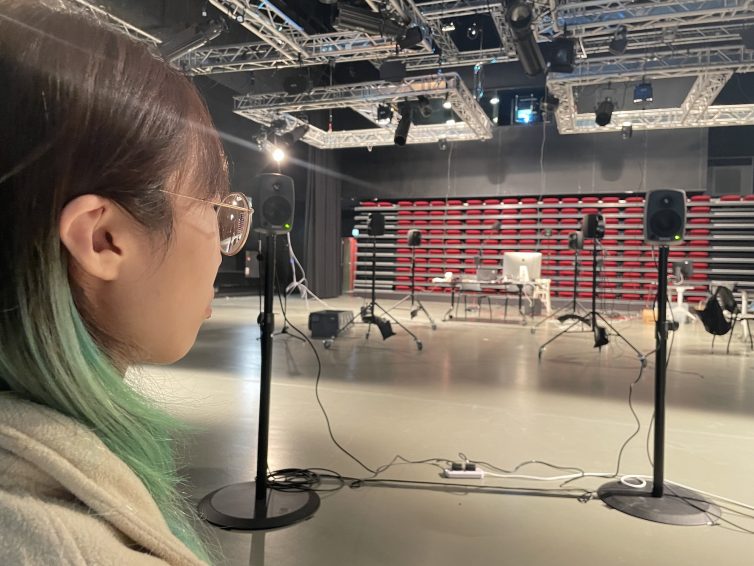
PerMagnus Lindborg is a composer, sound artist, and researcher in sound perception with over 150 scholarly publications, compositions, and media artworks. Currently serving as Associate Professor at City University of Hong Kong's School of Creative Media, he teaches sound, music, research skills, and perception while coordinating research degrees. PhD: KTH Stockholm (2015) DEA: Paris (2003) IRCAM: Paris (1999) BMus: Oslo His research focuses on sound perception , sonification , spatial audio , multi-sensory environments , and data-driven art . He pioneered low-cost spatial audio solutions through the Open Ambisonics Toolkit and explores sensory heritage documentation via soundscapes and smellscape analysis in Hong Kong. Recent publications demonstrate trends in climate data sonification , neural audio processing , and immersive sound design . His work intersects computer music , psychoacoustics , and environmental art . Scientific Awards : Best New Director (World Film Carnival, Cannes Short Film Festival, ISA Awards - 2020) First Prize (Stavanger Symphony Orchestra Prize - 2002) Fellowships: The Arctic Circle (2023), SCM Team Research (2020-25), TBA The Current (2016) As principal investigator for Multi-Modal Hong Kong (GRF 2023-25) and Data Art for Climate Action (2020-23), he supervises PhD students in areas like multi-sensory cultural heritage , deep learning audio processing , and virtual reality sound design . He co-founded the SoundLab and DACA Conference .
Professor Dong Xu is a faculty member at the University of Hong Kong's School of Computing and Data Science, Department of Computer Science. He holds a PhD from the University of Science and Technology of China (USTC). His research focuses on computer vision, multimedia, and machine learning, with applications in autonomous driving, AR/VR, medical image analysis, and video surveillance. He has published over 150 papers in top venues like CVPR, ICCV, and IEEE Transactions. He has received prestigious awards including IEEE and IAPR Fellowships, and holds editorial roles at ACM Computing Surveys and multiple IEEE Transactions journals. Education: B.Eng. and PhD from USTC (2001, 2005). Postdoctoral work at Columbia University, tenure-track roles at Nanyang Technological University and the University of Sydney. Current research includes developing machine learning methods for vision and multimedia systems. His publications emphasize cross-domain adaptation, neural networks for video analysis, and medical imaging. Recent work explores spatial-temporal modeling, adversarial learning, and generative AI in HCI. Leadership roles include Program Coordinator for ACM Multimedia 2024, steering committee member for ICME, and program co-chair for multiple conferences. Awards highlight his editorial contributions and research impact in pattern analysis. Advising: Supervised students whose work earned Best Student Paper (CVPR 2010) and IEEE Prize Paper (2014). Active in organizing international conferences and training future researchers.
Chao Huang is an Assistant Professor at the Department of Computer Science and Institute of Data Science at the University of Hong Kong (HKU). As the director of the Data Intelligence Lab@HKU, his research focuses on Large Language Models (LLMs), LLM Agents, Graph Learning, Recommender Systems, and AI for Smart Cities. He holds a PhD from the University of Notre Dame. Education: PhD in Computer Science from University of Notre Dame (USA). Research Interests: His work bridges machine learning with practical applications, including: Developing advanced LLM frameworks like GraphGPT and UrbanGPT Creating automated research tools (AutoAgent, AI-Researcher) Designing recommendation systems with LLM integration (RLMRec, LLMRec) Exploring spatio-temporal AI for urban challenges Notable Achievements: Over 11,000 Google Scholar citations (h-index 55), multiple top conference awards (WWW/SIGIR/KDD), and open-source projects with thousands of GitHub stars. His work has been recognized as most influential/pioneering in major AI conferences. Labs/Teams: Leads the Data Intelligence Lab, collaborating on projects like LightRAG, MiniRAG, and VideoRAG. The lab emphasizes open-source contributions with repositories on GitHub. Grants/Advising: Supervises PhD/MPhil students and offers research internships. Active in recruiting motivated researchers and students through HKU's programs.
Man Yee Sandy Ng is an Assistant Professor at the School of Design, The Hong Kong Polytechnic University. Her research focuses on art and design history, visual and material culture, and gender studies in modern China. Ph.D., School of Oriental and African Studies (SOAS), University of London M.A., University of Hawaii (Asian Pacific Scholarship) B.A., Hawaii Pacific University Her scholarly contributions include analyzing hybrid modernism in Chinese art, female identity in design, and cross-cultural design transfer. Recent projects explore poetic metaphors in product design and mental health apps for Chinese women. Selected Awards: Asian Pacific Scholarship She serves as a Field Editor for caa.reviews and is active in conferences like IASDR and the European Association for Chinese Studies. Collaborations with Dr. Sabrina Zhen Zhen Qin highlight her interdisciplinary approach.
Dr. SONG Jun serves as a Research Assistant Professor in the Department of Geography at Hong Kong Baptist University and is an active member of the Smart Society Lab. His work bridges artificial intelligence with geographical and environmental challenges, focusing on practical urban sustainability solutions. His academic credentials include: Ph.D. from Imperial College London (2017-2021) M.Sc. and B.Sc. from Southwest Jiaotong University, China (2010-2016) Dr. SONG pioneers AI-driven geographical analysis , environmental monitoring systems , and smart city infrastructure . His research develops machine learning frameworks for air pollution mapping, methane monitoring optimization, and pandemic exposure reduction through IoT networks. Key methodologies integrate deep learning with spatiotemporal data to address climate resilience in Chinese urban contexts. His 2021-2023 publications reveal a strong trajectory in applying computer vision to transportation systems and neural networks to environmental sensing. The work spans climate science, public health, and urban informatics, with notable emphasis on carbon management and pandemic response infrastructure in China. Major recognitions include: China Youth Entrepreneurship Award (2017) Cloud-Guizhou Young Scientist Award (2018) AI Challenger Award (2018) As Associate Editor for IEEE Transactions on Emerging Topics in Computational Intelligence, Dr. SONG contributes to academic discourse while serving on the Beijing-Tianjin-Hebei Big Data Association's Environment Protection Committee and the Yangtze River Delta Carbon Neutrality Strategic Development Committee. His Smart Society Lab initiatives focus on real-world AI deployment for sustainable urban development.