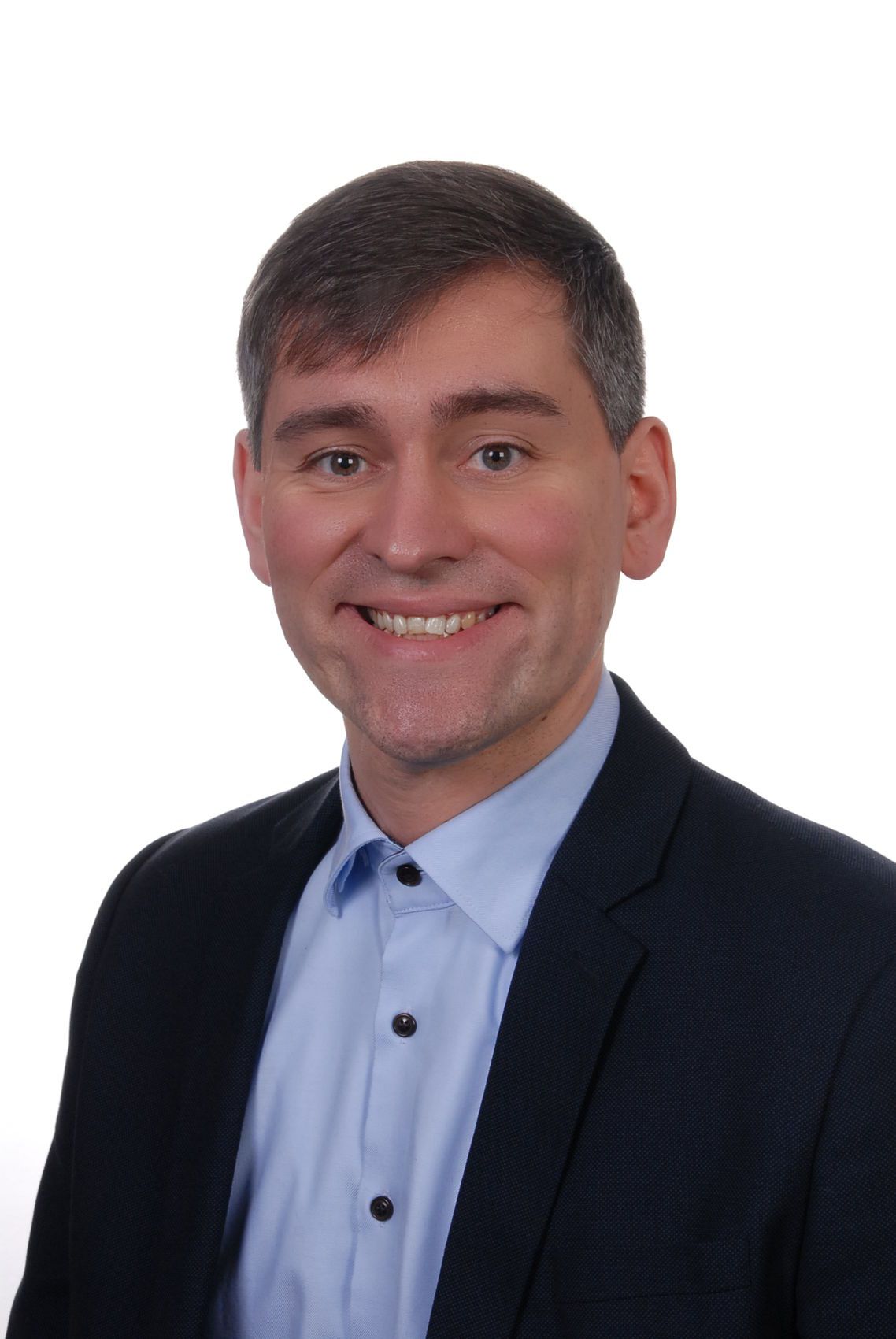
Vadim Bulitko is a Professor in the Faculty of Science at the University of Alberta, affiliated with the Department of Computing Science. He holds a Ph.D. in Computer Science from the University of Illinois at Urbana-Champaign. Research Interests: His work spans heuristic search, program synthesis, and deep learning applications for sound. Recent projects focus on AI-driven puzzle generation, pathfinding in dynamic game environments, and neural network classification. Publications: His 15 most recent articles explore AI advancements in puzzle design, video-game navigation, and bioacoustic classification, emphasizing heuristic optimization and explainable AI techniques.
Dr. Diane Srivastava is a Professor in the Department of Zoology at the University of British Columbia's Faculty of Science, and Director of the Canadian Institute of Ecology and Evolution (CIEE). Her research focuses on community ecology, particularly biodiversity's role in ecosystem functioning and responses to environmental changes. Her work addresses how trophic diversity influences ecosystem processes, the regional species pool's impact on local diversity, habitat effects on species richness, and human-driven changes. She leads the Living Data Project, preserving legacy environmental datasets through collaborations with early-career researchers. Key research areas include tropical ecosystem dynamics, climate change impacts, and functional trait-based community assembly. Recent studies highlight cross-ecosystem interactions (e.g., bromeliad microcosms), predator-prey dynamics under climate variability, and urban biodiversity patterns. Her work spans field experiments and collaborative data science initiatives. Dr. Srivastava’s projects emphasize global ecological challenges, including biodiversity loss mitigation and climate resilience strategies. She actively promotes equitable academic practices, such as triple-blind peer review and inclusive working groups. She directs the CIEE, fostering collaborative research across ecology and evolutionary biology. Her work is supported by UBC’s Biodiversity Research Centre and involves international field sites in tropical regions like Costa Rica and Trinidad.
Michael Storper is a Distinguished Professor of Regional and International Development in Urban Planning and Director of Global Public Affairs at UCLA's Luskin School of Public Affairs. He holds concurrent appointments as Professor of Economic Sociology at Sciences Po (Paris) and Professor of Economic Geography at the London School of Economics. His research focuses on urban and regional economic development, globalization, and the interplay between technology, cities, and inequality. Storper earned his Ph.D. in Geography from UC Berkeley. His work examines how technological change and globalization shape urban economies, regional inequalities, and spatial disparities in economic success. Notable publications include Keys to the City (2013) and The Rise and Fall of Urban Economies (2015), which analyze divergent development trajectories of San Francisco and Los Angeles. His research highlights political reactions to economic disparities, including debates over trade, migration, and regional policy. Awards include the Sir Peter Hall Award (2012) and recognition as a 'World's Most Influential Scientific Mind' (2014). Current projects address the impacts of new technologies on urban employment and the political consequences of regional inequality.
Dr. Shengda Zhu is an Honorary Associate at the Institute of Transport and Logistics Studies (ITLS), University of Sydney Business School. He earned his PhD in 2020 from ITLS, focusing on vertical integration between container shipping lines and terminal operators. His research spans maritime transport, city logistics, sustainable transport, and emerging technologies in transport, emphasizing economic methodologies. His research explores socio-economic impacts of shipping routes like the Northwest Passage, system dynamics in global trade lanes, and co-modality strategies for urban logistics. He has also studied the viability of ship recycling in coal ports and the application of emerging technologies in container terminals. Dr. Zhu’s work bridges theoretical economic frameworks with practical transport challenges, addressing issues such as port expansion implications, pandemic-driven supply chain disruptions, and infrastructure resilience in urban settings. His findings aim to inform policy decisions and enhance operational efficiency in maritime and urban logistics sectors.
Ben Ansell is a Professor of Comparative Democratic Institutions at the University of Oxford and Nuffield College. He holds a PhD from Harvard University and has taught at the University of Minnesota before joining Oxford in 2013. His research focuses on political economy, inequality, and democratic institutions, with notable contributions on housing policy, wealth distribution, and the challenges of collective political goals. He has authored award-winning books including Inward Conquest (2021) and Why Politics Fails (2023), and co-edits Comparative Political Studies . His work has been recognized with prestigious awards like the William H. Riker Prize and the Woodrow Wilson APSA Best Book Prize. Ansell leads the ERC-funded WEALTHPOL project on wealth inequality and delivered the BBC Reith Lectures (2023) on democratic futures. His research integrates empirical analysis with policy relevance, addressing issues like populism, social policy, and the interplay of self-interest and collective goals in politics. Education: PhD in Government, Harvard University (2006) Key Roles: Fellow of the British Academy (2018), Co-Editor of Comparative Political Studies Media Engagement: BBC Reith Lectures, Tortoise Media podcast What’s Wrong with Democracy?
Dr. Benjamin Mulvey is a Lecturer in the School of Education at the University of Glasgow, specializing in the sociology of international higher education, particularly focusing on China. He serves as Programme Leader for the MSc in Education, Public Policy and Equity, and Deputy Director of Postgraduate Research. Previously, he held roles at the Education University of Hong Kong (RGC Post-doctoral Fellow), the University of Sydney, and University College London as a Visiting Researcher. His research examines international student mobility between Africa and China, rural-urban inequalities in education, and academic freedom in China. He contributes to journals like Higher Education , Sociology , and British Journal of Sociology of Education , and is an editorial board member for Global Networks and others. He frequently engages with media outlets such as The Economist and Times Higher Education . Recent work includes analyzing socio-spatial backgrounds among Chinese graduates and exploring academic freedom dynamics in China. His grants include studies on housing precarity among international students in Scotland (British Academy/Leverhulme grant) and doctoral education hubs in Hong Kong (Public Policy Research Funding Scheme).
Dr Enrico Vanino is a Senior Lecturer in Economics at the University of Sheffield's School of Economics, appointed in 2019. He holds a PhD in Economics from the University of Birmingham (2016) and has prior affiliations with the London School of Economics (LSE) and the National Institute of Economic and Social Research (NIESR). His roles include organizing the Sheffield Economic Research Paper Series and economics seminars. Enrico specializes in applied microeconometrics, focusing on international economics, economic geography, and regional development. Education: Bachelor's in International Economics, University of Padova (2009) MSc in Economics, University of Birmingham (2011) PhD in Economics, University of Birmingham (2016) Research interests span firms' behavior under globalization, trade policy impacts, and spatial economic disparities. He examines topics like trade defense instruments, infrastructure-driven economic diversification, and environmental adaptation strategies. Enrico collaborates with institutions like LSE's Department of Geography and Environment and has published in journals such as Economica and Journal of International Economics . Teaching: Enrico teaches Research Methods and Introductory Econometrics, emphasizing real-world applications and linking coursework to cutting-edge research. He actively supervises PhD students in microeconometrics, trade, and development economics. Affiliations: In addition to the University of Sheffield, he is affiliated with LSE and collaborates with NIESR on external research projects.
Dr William (Mack) Durham is a Senior Lecturer in Biological Physics at the University of Sheffield, affiliated with the School of Mathematical and Physical Sciences and the Department of Physics and Astronomy. His research focuses on microbial strategies for environmental exploitation, spanning biofilm dynamics, phytoplankton ecology, and porous environment microbiology. He holds a BSc from Clemson University and advanced degrees (SM/PhD) from MIT. Before joining Sheffield (2016-present), he was a Departmental Research Lecturer at the University of Oxford (2012-2016). Research interests include bacterial surface motility using pili, phytoplankton response to ocean turbulence, and competition in porous soils. His group employs microfluidics, molecular biology, and computational models. Current grants include BBSRC funding for chemotaxis studies and EPSRC support for interdisciplinary research. Awards include the HFSP Long-Term Fellowship and Andreas Acrivos Dissertation Award. Teaching responsibilities include undergraduate physics modules (e.g., PHY1001 Motion & Heat, PHY248 Labview) and advanced microscopy courses. He leads undergraduate admissions and coordinates degree programs with employment experience components. The Durham group comprises two postdocs (Jamie Wheeler and Oliver Meacock) and four PhD students. Labs/Teams: Imagine: Imaging Life Group, Biological Physics Research Group Key Projects: Bacterial spatial sensing, phytoplankton turbulence interaction, biofilm competition models
Joachim Voth is the UBS Foundation Professor of Economics and Scientific Director of the UBS Center for Economics in Society at the University of Zurich. His research focuses on Cultural Economics, Long-Run Growth, Asset Market Volatility, and the interplay between history and contemporary economic phenomena. He holds a Ph.D. from UCLA and has held visiting positions at institutions including Stanford and NYU. Research Interests : Voth’s work bridges historical analysis with modern economic challenges. Key themes include the impact of cultural factors on economic outcomes, the role of historical institutions, and the application of novel data sources (e.g., historical narratives, visual datasets) to understand societal trends. His recent projects analyze cultural convergence via high school yearbook portraits and the legacy of medieval anti-Semitism in Nazi-era violence. Publications : Over 50 peer-reviewed articles and three books, including Lending to the Borrower from Hell (2014) and Prometheus Shackled (2013). His work frequently combines economic theory with historical evidence, such as linking British industrialization to colonial slave wealth or explaining WWII resistance patterns through Allied bombing and radio propaganda. Grants & Awards : Supported by the UBS Foundation, European Research Council, and National Science Foundation. He is a frequent commentator in venues like VoxEU and The Economist , and his research has been featured in podcasts and documentaries. Advising : Supervised 10+ doctoral students now at top institutions like UCLA, NYU, Stanford, and the Norwegian School of Economics.
Prof. Dr. Sascha Schneider is an Assistant Professor of Educational Technology at the University of Zurich's Institute of Educational Science, affiliated with the Digital Society Initiative (DSI). His research focuses on optimizing digital learning media design to enhance cognitive, emotional, and motivational processes in education. He holds a PhD in Media and Instructional Psychology and has held postdoctoral positions at TU Chemnitz. His work investigates topics like decorative elements' impact, motivational effects of choice, emotional design, and adaptive learning environments, targeting K-12 students, university learners, and adults. Education: Bachelor's: Educational Science & English, University of Erfurt Master's: Continuing Education & Educational Technology, University of Erfurt PhD: Media and Instructional Psychology, TU Chemnitz (2017) Habilitation: Educational Psychology, TU Chemnitz (2022) His research emphasizes experimental and meta-analytical methods to explore multimedia learning theory extensions, including social processes and instructional design principles. Key projects include the DEEP initiative for differentiated instruction and the LiT+ educational transfer program. Prof. Schneider's awards include the Erik De Corte Award (2021), a Dissertation Prize (2019), and the Commerzbank Prize (2018). He actively contributes to academic communities, organizing conferences and serving on editorial boards. Advising & Grants: Supervises doctoral research in educational technology Leads projects funded by BMBF and Swiss National Science Foundation His team at the Chair of Educational Technology collaborates on labs like NARRATID , focusing on narrative-driven instructional design.
Jeremy W. Fox is a Professor in the Department of Biological Sciences at the University of Calgary. He holds a PhD in Ecology and Evolutionary Biology from Rutgers University (2000) and a BA from Williams College (1995). His work focuses on community assembly processes, combining experimental and theoretical approaches with microbial systems. Key interests include dispersal effects, ecosystem function, and the dynamics of competitive interactions. Research highlights include challenging the Intermediate Disturbance Hypothesis (2013), quantifying biodiversity's role in ecosystem stability (2013), and analyzing meta-analytic approaches in ecology (2022). His lab explores how environmental fluctuations and species traits influence community structure and stability. Fox has been recognized with awards including the British Ecological Society Early Career Award (2007) and Alberta Ingenuity grants (2005-2007). Teaching includes courses on quantitative biology (ECOL 425, BIOL 315). His work emphasizes experimental rigor, theoretical frameworks, and open science practices. The Fox Lab's research spans ecological restoration, food web dynamics, and evolutionary ecology, with a focus on long-term community processes and their applied implications.
Tsuyoshi Kawasaki is a Professor in the Department of Political Science at Simon Fraser University specializing in international relations of the Asia-Pacific region. His research examines Japanese foreign affairs, Canada-Asia relations, and grand strategy frameworks. He holds an LLB from Doshisha University, MA from University of Toronto, and PhD from Princeton University. His research interests focus on Japanese foreign policy, Indo-Pacific international relations, and the holistic analysis of defense, economic, and cultural policies within grand strategy frameworks. As a bilingual scholar, he maintains active research collaborations in both Canada and Japan. Kawasaki's publications demonstrate consistent focus on geopolitical analysis of the Indo-Pacific region, Japanese security policy, and Canada's strategic positioning. Key thematic patterns include alliance formation theories, regional power dynamics, and historical evolution of defense concepts. Notable methodological approaches include comparative foreign policy analysis and theoretical examinations of international order. No major scientific awards or student advising relationships are detailed in available records. Research collaborations extend across Canadian and Japanese academic institutions, think tanks, and policy circles. Grant support appears focused on international relations and security studies, though specific funding details are unavailable.
Chris Jenkins is a Professor and Head of Production in the Department of Film and Media Studies at the University of California, Santa Barbara. He holds a Master's degree in Documentary Film & Video from Stanford University and a Bachelor's in Fine Arts from the University of Wyoming, with additional experience as a United Nations Volunteer in East Africa and an Ambassadorial Scholar in Chile. His work spans award-winning documentaries for Netflix, PBS, and Sundance, and he is a recipient of the Alex Trebek Legacy Fellowship. Education: Masters in Documentary Film & Video, Stanford University Bachelor's of Fine Arts in Bronze Sculpture and Oil Painting, University of Wyoming Photography studies as an Ambassadorial Scholar, Universidád de Concepción, Chile Research Interests: Jenkins specializes in documentary production, animation, cinematography, and environmental media. His work emphasizes hands-on filmmaking, blending theoretical foundations with practical skills such as lighting for the moving image and digital activism. Courses like GreenScreen and Crew Production reflect his commitment to immersive, industry-relevant education. Awards: 2024 Alex Trebek Legacy Fellowship Advising & Grants: Jenkins co-teaches Crew Production , a competitive course where students develop scripts into films with industry professionals. He mentors through initiatives like the Coastal Media Project, which screens environmental documentaries at festivals. No specific grants are mentioned in the provided materials. Labs/Teams: Active in the Coastal Media Project, which integrates environmental education and filmmaking, and oversees film productions that connect theory with practice.
Nahim Bin Zahur is an Assistant Professor of Economics at Queen's University, where he has been since 2020. He holds a B.Soc.Sc. from the National University of Singapore, and an M.A. and Ph.D. from Cornell University. His research focuses on Empirical Industrial Organization, Environmental Economics, and Energy Economics, with notable contributions to topics like LNG market dynamics, electric vehicle policies, and industrial policy impacts. Zahur has been recognized with the Louis Walinsky Fund Teaching Award (2016) for his pedagogical excellence at Cornell. In his research, he employs structural econometric models to analyze policy-relevant questions such as the trade-offs between long-term contracts and market efficiency in energy sectors, the role of government subsidies in accelerating technology adoption, and the spatial dimensions of market power in global commodity trades. His work frequently intersects with public policy, emphasizing evidence-based solutions for energy sustainability and industrial competitiveness. Education: B.Soc.Sc., National University of Singapore M.A., Cornell University Ph.D., Cornell University Teaching: Instructor for Environmental Economics (undergraduate/graduate) Instructor for Industrial Organization and Public Policy Key Contributions: Quantified welfare impacts of LNG market power Explored learning-by-doing effects in EV battery production Analyzed container shipping contract rigidities during economic cycles His interdisciplinary approach bridges microeconomic theory with applied policy analysis, addressing critical challenges in energy markets, environmental sustainability, and global industrial structures.
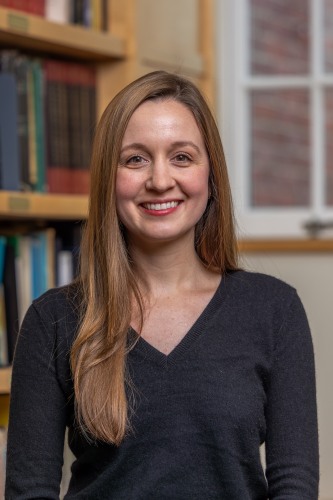
Serra Favila is an Assistant Professor in the Department of Cognitive and Psychological Sciences at Brown University, affiliated with the Carney Institute for Brain Science. She holds a BA in Human Biology from Stanford University and a PhD in Psychology from New York University, followed by postdoctoral training at Columbia University. Her research focuses on the neural mechanisms underlying episodic memory, employing methods such as functional neuroimaging, intracranial recordings, behavioral measurements, eye-tracking, and computational modeling. She teaches CLPS 1480I: Memory, Space, and the Hippocampus. Dr. Favila's work investigates how humans form flexible yet durable memories, emphasizing the interaction between environmental cues, cognitive goals, and neural processes. Her lab explores memory’s selectivity and susceptibility to interference, with implications for understanding how memory shapes future behavior. Key topics include hippocampal contributions to spatial and temporal memory, neural remapping, and memory-guided navigation. Her articles span themes like hippocampal mechanisms for resolving memory competition, visual cortex contributions to recall success, and neural underpinnings of spatial perception. She maintains an active lab website detailing ongoing projects and collaborates across disciplines to advance cognitive neuroscience. Office hours are held Mondays from 4-5pm in Metcalf Research 245.