Rachel Lara Cohen is a Professor in Sociology, Work and Employment at City, University of London , where she joined in 2013 after prior roles at the University of Surrey, University of Warwick, and St Petersburg State University. Her research focuses on the sociology of work, particularly non-standard employment forms like self-employment, mobile work, and homeworking, with a strong emphasis on work-life boundaries, body work, and gendered labor dynamics in occupations such as hairdressing, car mechanics, and accountancy. A mixed-methods researcher, she co-edited special issues on body work and everyday self-employment and led the City Q-Step Centre to enhance data literacy in social science students. Established : 2022-2025 ESRC-funded project ‘L-Earning: Rethinking young women's working lives’ Education : PhD in Sociology (UCLA), BA in Politics and Modern History (University of Manchester) Her research spans gender disparities in student employment, feminist methodologies, and quantitative literacy. She has served as Associate Editor of Work in the Global Economy and former Editor of Radical Statistics , with leadership roles including Head of Department of Sociology (2017-2020) and Elected Senator at City. Notable awards include the British Academy Postdoctoral Research Fellowship (2007-2010) and Senior Fellow of the Higher Education Academy (2021). Students supervised include topics on care sector workers, student employment in service work, ethnic identity negotiation, gender in higher education administration, and statistical studies of diversity. Her work has been published in journals such as The British Journal of Sociology , Sociology , and Gender, Work & Organization , covering themes like precarity, gendered labor patterns, and methodological innovation.
Professor Sara Bernardini is a leading academic in Artificial Intelligence at the University of Oxford's Department of Computer Science, where she holds a joint appointment as a Tutorial Fellow at Mansfield College. Her research specializes in decision-making for autonomous systems, automated planning, and robotics, with applications in extreme environments like space missions, nuclear decommissioning, and offshore energy. She bridges theoretical AI with real-world challenges through projects funded by Innovate UK, EPSRC, NERC, and the Alan Turing Institute. Her research interests span: Autonomous Systems : Developing agents that support humans in complex cognitive tasks. Automated Planning : Algorithms for goal recognition, pathfinding, and multi-agent coordination. Robotics : Solutions for subterranean exploration, offshore wind farms, and UAV operations. AI Safety : Risk-aware autonomous systems and interpretable decision-making. Bernardini's publications emphasize algorithmic robustness in path planning, multi-agent coordination , and real-world AI deployments . Recent work explores goal legibility in uncertain environments, energy-efficient robotics, and AI education tools. Her 65+ papers in top venues (e.g., AIJ, JAIR, ICAPS) show a trend toward safety-critical applications and human-AI collaboration. Awards & Leadership: ICAPS-2020 Best Paper Honorable Mention Executive Council Member, Association for the Advancement of Artificial Intelligence (AAAI) Program Chair, International Conference on Automated Planning and Scheduling (ICAPS 2024) Associate Editor, Artificial Intelligence Journal She leads interdisciplinary teams for projects like autonomous offshore wind farm maintenance and modular robots for extreme environments. As Principal Scientist at the UK National Oceanography Centre, she advanced marine robotics. She mentors PhD candidates and collaborates globally (e.g., NASA Ames, MIT).
Dr. Ben Harvey is an Associate Professor (with Ius Promovendi) in the Perception Group of the Department of Experimental Psychology at Utrecht University, Netherlands, within the Faculty of Social and Behavioural Sciences. He is based at the Helmholtz Institute and can be contacted at b.m.harvey@uu.nl. Harvey completed his DPhil at Oxford University with Professor Oliver Braddick in 2009, followed by postdoctoral work with Professor Serge Dumoulin at Utrecht. In 2015, he moved to Coimbra on a starter grant from the Portuguese Foundation for Science and Technology before returning to Utrecht in 2016 as an Assistant Professor. He was promoted to Associate Professor in 2019 and has led his own research group since 2015. Harvey's research focuses on characterizing sensory and cognitive systems in the human brain, particularly neural responses and computations within these systems. His work combines cutting-edge neuroimaging approaches with computational modeling and behavioral experiments. Initially studying the early visual system as a model of neural processing, he extended invasive animal neurophysiological approaches to non-invasive human neuroimaging. His recent work investigates neural responses underlying cognition in the human association cortex, examining how visual space and number processing differs between cultures and in clinical disorders. His fingerprint reveals expertise in Functional Magnetic Resonance Imaging, Numerosity, Receptive Field, Visual Cortex, Population Receptive Field, Nerve Potential, Early Visual Cortex, and Topographic Maps. His publication record demonstrates significant impact, with works like 'Topographic representation of numerosity in the human parietal cortex' (2013) receiving over 360 citations. His research spans visual neuroscience, with emphasis on how the brain processes visual information, attention mechanisms, and numerical cognition, revealing generalized quantity processing systems in the human brain. Award for highest-rated abstract (2013) Brain Centre Rudolph Magnus Research Award (Best Paper of the Year) (2014) Causal link between cortical organization and conscious perception: human fMRI and electrophysiology (2009, 2010) Harvey has been actively engaged in knowledge dissemination, with multiple invited talks at institutions including INSERM in Paris (2016) and the University of Parma (2015). His research has received significant media attention, with interviews on National Public Radio (NPR) USA, Livescience.com, and Science Magazine in 2013. Beyond academic publications, he writes popular science articles exploring the relationship between visual neuroscience and visual arts. As part of the Helmholtz Institute Experimental Psychology research program, Harvey collaborates widely to investigate visual space and number processing across different populations, contributing to our understanding of how these cognitive functions vary between cultures and in clinical disorders.
Prof. Gerhard Jäger holds the Chair of General Linguistics at the Faculty of Humanities, University of Tübingen . He serves as a Principal Investigator (PI) in the Clusters of Excellence Human Origins and Machine Learning for Science , and leads projects like Phylomilia (funded by Volkswagen Foundation) and CrossLingference (ERC Advanced Grant). His career spans multiple institutions, including Bielefeld University (2004-2009) and Stanford University (visiting scholar, 2004). Habilitation (2002) at Humboldt University Berlin with thesis on Anaphora and Type Logical Grammar PhD (1996) at Humboldt University Berlin on Dynamic Semantics His research bridges computational linguistics , phylogenetic analysis , and game theory , focusing on Bayesian models , language evolution , and cross-linguistic typology . Recent work explores phylogenetic inference from acoustic speech data and geographic influences on language trees . Key contributions include 15+ recent publications on topics spanning phylogenetic typology , cognate detection , and Bayesian language modeling . These works employ machine learning , statistical inference , and evolutionary game theory to analyze language change , typological variation , and linguistic stability . Honors include ERC Advanced Grant , Volkswagen Foundation funding , and DFG-Humanities Centre for Advanced Studies participation. He has taught courses in Computational Historical Linguistics , Phylogenetic Methods , and Bayesian Data Analysis across institutions like Tübingen, Bielefeld, and Stanford. He actively contributes to academic communities through workshop organization (e.g., Quantitative Theoretical Linguistics , Game Theory in Pragmatics ) and serves on the faculty council at Tübingen. His team collaborates with institutions like Max Planck Institute for Evolutionary Anthropology , University of Pennsylvania , and LMU Munich .
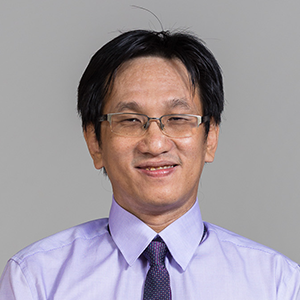
Ngoc Thanh Nguyen is a Full Professor at Wroclaw University of Science and Technology where he serves as Head of the Department of Applied Informatics. He holds the prestigious title of Professor granted by the President of Poland and has been recognized as a Distinguished Scientist of ACM since 2009. He serves as Editor-in-Chief of both the Journal of Information and Telecommunication (JIT) and the Vietnam Journal of Computer Science (VJCS), and chairs the IEEE SMC Technical Committee on Computational Collective Intelligence. His research spans computational collective intelligence, knowledge integration, data mining, social media analysis, and sentiment analysis. Professor Nguyen has pioneered significant methodologies in spatial data clustering within network space, inter-sequence pattern mining, and graph neural network applications. His work bridges theoretical computer science with practical applications in intelligent information systems, demonstrating particular expertise in handling complex spatial and sequential data structures. His research has evolved from foundational pattern mining techniques to sophisticated neural network approaches for geospatial and social data analysis. The analysis of his recent publications reveals a strong focus on spatial data analysis in network environments, with significant contributions to clustering algorithms, graph neural networks, and pattern mining. His work consistently addresses efficiency challenges in data processing while expanding into emerging areas like Vietnamese language processing and topological data analysis. The research demonstrates a clear trajectory from traditional data mining techniques toward more sophisticated AI-driven approaches that incorporate spatial relationships and network topologies. Distinguished Scientist of ACM (2009) ACM Distinguished Speaker (2009-2013) IEEE Distinguished Visitor (2009-2013) Title of Professor granted by the President of Poland Professor Nguyen has supervised over 20 PhD students to completion and currently mentors several ongoing doctoral candidates. His academic leadership extends to founding two major conference series: the Asian Conference on Intelligent Information and Database Systems (ACIIDS) and the International Conference on Computational Collective Intelligence (ICCCI), which have become significant venues in their respective fields. His collaborative network spans multiple institutions, particularly with Yeungnam University as evidenced by several co-supervised PhD projects. As founder and chair of the IEEE SMC Technical Committee on Computational Collective Intelligence, he leads an international community of researchers advancing this specialized field. His departmental leadership at Wroclaw University of Science and Technology positions him at the center of applied informatics research and education in Poland, with particular emphasis on computational intelligence applications.
Anthony TUNG Kum Hoe is a Professor in the Department of Computer Science at the National University of Singapore (NUS), where he has established himself as a leading researcher in database systems and data mining. He is also affiliated with the NUS Graduate School for Integrative Sciences and Engineering and serves as a SINGA supervisor. His educational background includes a Ph.D. in Computer Science from Simon Fraser University (2001), an M.Sc. in Information Systems & Computer Science from NUS (1998), and a B.Sc. with 2nd Class Upper Honours in Information Systems & Computer Science from NUS (1997). Professor Tung's research spans several interconnected areas within database systems and data mining. His primary focus is on developing efficient methods for indexing and searching complex data structures including time series, trajectories, trees, graphs, and high-dimensional objects. He has pioneered work in visual query processing, keyword search, and ranking systems. His GENIE (Generic Inverted Index) and LAMP (semi-Lazy Mining Paradigm) projects represent significant contributions to big data analytics, particularly in handling the 'variety' aspect of big data by providing unified frameworks for processing diverse data structures while preserving semantic meaning. His research bridges theoretical database concepts with practical applications in visual data mining, collaborative analytics, and just-in-time model construction. His recent publications reveal a clear evolution from traditional database research toward more complex analytics on diverse data types. While maintaining his core expertise in database indexing and query processing, his work has expanded to incorporate machine learning techniques, particularly in areas like nearest neighbor search, anomaly detection, and predictive analytics. There's a noticeable trend toward interdisciplinary applications, with publications spanning computer vision, natural language processing, transportation systems, and social computing. His research group consistently publishes in top-tier venues including SIGMOD, VLDB, ICDE, and KDD, demonstrating both theoretical rigor and practical relevance. 2005 Best Paper Award for 'Indexing DNA Sequences Using q-grams' 2007 Invited panel speaker on 'Advice for a successful database researcher career in Asia' at SIGMOD 2010 Guest Lecturer for VLDB Database School 2012 VLDB 2012 Research PC Co-chairs 2015 10 Years Best Paper Award, DASFAA 2015 Invited to SIGMOD 2008 and SIGKDD 2008 Program Committees Professor Tung has supervised numerous PhD students and research associates throughout his career, including notable researchers like Zhang Zhenjie (recipient of the 2007 President Graduate Fellowship) and Wang Nan (published in SIGMOD'08). His research group has been consistently productive, with students publishing in top conferences including SIGMOD, ICDE, and VLDB. His professional service is extensive, having served as PC Chair for COMAD'06, Research PC Co-chair for VLDB 2012, and on program committees for virtually all major database and data mining conferences over the past two decades. His research has been supported by various grants that have enabled significant contributions to database technology. His GENIE and LAMP projects represent a cohesive research direction focused on developing systematic approaches to big data analytics. GENIE provides a unified platform for storage and retrieval of big data with various structures, while LAMP introduces a novel paradigm for predictive analytics that combines the strengths of lazy and eager learning approaches. These projects have evolved to incorporate GPU acceleration and parallel processing capabilities, reflecting his commitment to addressing real-world scalability challenges in data-intensive applications.
Anne-Marie Oswald is an Associate Professor in the Department of Neurobiology within the Biological Sciences Division at the University of Chicago. Her research profile indicates active engagement in neuroscience research with a particular focus on cortical circuits, neural coding, and sensory processing systems. She maintains an active research program with publications spanning from 2011 to the present. Dr. Oswald's research interests span multiple areas of neuroscience, with particular emphasis on cortical circuit function, neural coding mechanisms, and sensory processing. Her work investigates how inhibitory interneurons shape cortical dynamics, how neural assemblies form during learning, and how sensory information is processed across different brain regions. Notably, she has also contributed to discussions on diversity in science through her publication "Curating more diverse scientific conferences" in Nature Reviews Neuroscience (2020). Her research employs a combination of electrophysiological, computational, and behavioral approaches to understand neural circuit function. Analysis of her publication record reveals a strong focus on cortical circuit mechanisms, particularly in the olfactory system. Her work demonstrates expertise in understanding how different interneuron subtypes (particularly parvalbumin and somatostatin-positive cells) regulate cortical dynamics, assembly formation, and sensory processing. Over time, her research has evolved from examining basic circuit mechanisms to investigating how these circuits support complex cognitive functions like odor discrimination and associative learning. The consistent presence of computational and systems neuroscience approaches throughout her publication history indicates a rigorous quantitative approach to understanding neural function. Dr. Oswald appears to be actively mentoring students and postdoctoral researchers, as evidenced by her consistent publication record with multiple collaborators. While specific grant information isn't provided in the available data, her sustained publication output suggests successful funding of her research program. Her work bridges cellular and systems neuroscience, contributing to our understanding of how microcircuit properties shape sensory processing and behavior.
Chandra L. Muller is a Professor at the University of Texas at Austin, holding the Alma Cowden Madden Centennial Professorship and Ashbel Smith Professorship within the Department of Sociology in the College of Liberal Arts. She earned her Ph.D. from the University of Chicago and maintains an active research and teaching profile at UT Austin, with her office located in RLP 2.408G (campus mail code: G1800). Professor Muller's research program focuses on how schools and education shape life course outcomes, particularly examining inequalities in work, health, and cognitive aging. Her work centers on diversity in educational experiences and disparities according to gender, race and ethnicity, social class, disability status, and immigration or language minority status. She has a specific focus on STEM (science, technology, engineering and math) preparation and careers across the lifespan. Her recent publications reveal a strong concentration on educational effects on midlife cognitive functioning, using data from the High School and Beyond (HS&B) and National Longitudinal Study of the Class of 1972 (NLS-72) cohorts. These studies examine how school context, educational quality, and timing of educational attainment influence health outcomes, cognitive aging, and socioeconomic status in midlife. Her research increasingly incorporates biomarker data, physical measurements, and neurocognitive assessments to understand the mechanisms linking education to long-term outcomes. Professor Muller leads the Education and Transition to Adulthood Research Group (ETAG) and teaches courses including SOC 387J (Fundamentals of Research Methods) and SOC 321L/AFR 321L/WGS 345 (Sociology of Education). Her work is closely affiliated with the Population Research Center at UT Austin, which provides infrastructure for population-level research on social problems and human well-being.
Vincent Bonin is a Senior Lecturer in the Department of Biology at KU Leuven's Faculty of Sciences. He is affiliated with the VIB-KU Leuven Center for Neuro Electronics Research Flanders (NERF) and the KU Leuven Brain Institute (LBI). His research focuses on neural circuits and visual neuroscience, with an emphasis on cortical and subcortical mechanisms of perception and plasticity. Research Interests: Vincent investigates visual coding, cortical connectivity, and brain circuit dynamics. His work spans topics like: Role of non-hierarchical visual pathways in perception Dendritic processing in the superior colliculus Cell type-specific connectivity in layer 2/3 visual cortex Astrocyte-mediated cortical plasticity Development of high-resolution intracortical visual prosthetics Recent Projects: • The contributions of non-hierarchical visual pathways to visual coding and perceptual behavior (2025-2028) • An investigation into cell type-specific connectivity rules in visual cortex (2024-2027) • Short- and long-term circuit mechanisms of motor rehabilitation after spinal cord injury (2024-2027)
Mathieu Couttenier serves as Professor of Economics at Ecole Normale Superieure de Lyon and Head of the Center for Economic Research on Governance, Inequality and Conflict (CERGIC). He is additionally a Research Fellow at the Centre for Economic Policy Research (CEPR) specializing in International Trade, Regional Economics, and Political Economy. His interdisciplinary research spans political economy, economic development, civil conflicts, natural resources, and media dynamics, with significant contributions to understanding conflict determinants and resource-driven socio-economic impacts. His academic trajectory includes a PhD in Economics from University Paris 1 Sorbonne (2011), followed by positions as Assistant Professor at the University of Geneva and post-doctoral researcher at the University of Lausanne. He has held visiting appointments at Stanford University, Sciences Po Paris, and the University of Bologna, building expertise in spatial conflict analysis and resource economics. PhD in Economics, University Paris 1 Sorbonne (2011) Assistant Professor, University of Geneva Post-doctoral researcher, University of Lausanne Visiting researcher: Stanford University, Sciences Po Paris, University of Bologna Couttenier's research program centers on microeconomic analyses of conflict diffusion, examining how income shocks, climate variability, and natural resource extraction influence violence patterns across space and time. His work integrates economic modeling with geospatial techniques to investigate resource-conflict linkages and local development impacts, particularly in African contexts. His publication record reveals a consistent methodological evolution toward spatial and quantitative approaches, with recent work employing deep learning for geospatial mining detection and network analysis for conflict cost measurement. Key thematic threads connect natural resource governance, media effects on political behavior, and climate-conflict interactions across his American Economic Review, Journal of EEA, and Economic Journal publications. Major scientific recognition includes: ERC Consolidator Grant (2023) for socio-economic impact research on African artisanal mining Ongoing CEPR Research Fellowship status As head of CERGIC and EMR CNRS 5001 Equality and Conflict, Couttenier directs research teams investigating governance structures and inequality drivers. His current ERC-funded project will conduct field studies on artisanal mining communities in Africa, aiming to produce evidence-based policy recommendations for sustainable resource management and conflict prevention through interdisciplinary collaboration.
Professor Seda Kundak at Istanbul Technical University's Faculty of Architecture is a leading expert in Disaster Risk Management , Urban Resilience , and Multi-hazard Impact Chains . She has served as Program Head, Deputy Head of Department, and Commission President at Istanbul Technical University's Urban and Regional Planning Department since 2010. PhD in Urban Planning (Istanbul Technical University) Research focus: Seismic Risk, Climate Change Adaptation, Disaster Logistics Her scientific work includes 21 research outputs (Scopus h-index: 94) analyzing earthquake scenarios, compound disasters, and systemic risk assessment. Recent articles explore Impact Chains frameworks and Istanbul's seismic risk dynamics. Awards : SRA Fellow (2022) SRA/Sigma Xi Distinguished Lecturer (2017) She leads the PARATUS Project (€2,064,375 budget) developing open-source tools for multi-hazard risk assessment and has completed 5 major research projects on disaster logistics since 2005.
Professor Vlad Mykhnenko is Professor of Geography and Political Economy in the University of Oxford Department for Continuing Education, and a Research Fellow in Sustainable Urban Development at St. Peter's College, Oxford. He serves as Academic Director for Social Sciences at Oxford Lifelong Learning and has been with the Department since January 2017, initially taking up an Associate Professorship in Sustainable Urban Development. His academic career spans multiple institutions including the University of Birmingham, Al-Farabi Kazakh National University, the University of Nottingham, the University of Glasgow, and the Central European University. Professor Mykhnenko's educational background includes: PhD in Political Economy from Darwin College, the University of Cambridge (2005) MA in International Relations and European Studies from the Central European University (1999) MA (1998) and BA (1996) in International Relations from Taras Shevchenko National University of Kyiv As an economic geographer specializing in geographical political economy, Professor Mykhnenko challenges conventional wisdom about urban and regional development. His research initially focused on transition economies of Eastern Europe (particularly Polish Upper Silesia and the Ukrainian Donbas) before expanding to cities and regions worldwide. He has produced over 140 research outputs and secured £16 million in external research funding, with £2 million as Principal Investigator. His current research initiatives focus on green steel - rebuilding Ukraine's iron and steel sector post-war without fossil fuels - and sustainable urban development in Kazakhstan. His publication record demonstrates significant scholarly impact across diverse areas including urban shrinkage, post-war reconstruction, geopolitical analysis, and future trends in technology and governance. The breadth of his research interests spans from analyzing spatial economic patterns in African cities to examining the implications of the metaverse for future business practices. Professor Mykhnenko has substantial policy impact, with research quoted in at least 79 policy documents by 49 organizations across 21 countries. His work contributes to UN Sustainable Development Goals, with 30% directly attributed to SDG11: Sustainable Cities and Communities. He has advised governments, intergovernmental organizations, and multinational enterprises, including serving on a UN expert group to shape the New Urban Agenda and providing expert evidence to the UK House of Commons on Ukraine's recovery. In early 2025, he was appointed a commissioner for the Lancet Commission on Ukraine. Professor Mykhnenko has taught over 3,100 students across various institutions and currently contributes to Oxford's MSc in Sustainable Urban Development program. He has supervised numerous doctoral students and received recognition for his teaching excellence, including Fellow of the Higher Education Academy status and a Postgraduate Certificate in Academic Practice. His commitment to research-led teaching has resulted in innovative pedagogical approaches documented in peer-reviewed academic publications.
Professor Yasuyuki Fukukawa is a distinguished academic affiliated with the School of Humanities and Social Sciences, Faculty of Letters, Arts and Sciences. Holding a PhD in Literature from Waseda University, he has established himself as a leading researcher in social psychology with a particular focus on evolutionary perspectives, aging, and public health. His extensive academic contributions span multiple disciplines, reflecting his interdisciplinary approach to understanding human behavior and social dynamics. Dr. Fukukawa's research interests encompass social interactions, stress mechanisms, evolutionary adaptation, and gerontology. His work often bridges psychological theory with practical applications for understanding aging populations and social health determinants. He has made significant contributions to the understanding of the behavioral immune system, social capital's impact on health, and evolutionary perspectives on human social behavior. His scholarly output demonstrates a clear progression from foundational work in stress and social support among aging populations toward more recent investigations of evolutionary psychology frameworks applied to contemporary social issues. A notable trend in his recent publications involves the behavioral immune system, emotion measurement technologies, and cross-cultural examinations of psychological phenomena. Best Poster Award (2022.06) - Human Behavior and Evolutionary Society Outstanding Poster Award (2019.10) - International Association of Gerontology and Geriatrics Excellent Presentation Award (May 2017) - Japan Society for Occupational Health Hideo Onuki Educational Award (Psychology Category) (2007) Foundation for the Promotion of Longevity Science and Technology Chairman's Award (2004) Dr. Fukukawa has maintained an active research program with numerous collaborations, particularly with researchers like Ryoko Takikawa and Wataru Onoguchi. His work has been supported by significant research grants from the Japan Society for the Promotion of Science, focusing on topics including the behavioral immune system, social capital's impact on health among older adults, and fall prevention programs for elderly populations. His laboratory work has increasingly incorporated technological approaches to psychological measurement while maintaining strong theoretical foundations in evolutionary and social psychology.
Alexander Skopalik is an Assistant Professor in the Mathematics of Operations Research department, specializing in Game Theory, Congestion Games, and Algorithmic Game Theory. His work explores Strategic Resource Allocation, Equilibrium Analysis, and Network Games, with significant contributions to multi-agent systems and facility location optimization. Key research areas: Congestion Games Facility Location Nash Equilibrium Strategic Resource Allocation Algorithmic Game Theory His recent publications focus on equilibrium dynamics in facility location, battery charging games, and strategic resource allocation, emphasizing the interplay between theoretical guarantees and practical applications in AI and mobility systems. He actively participates as a committee member in leading conferences such as IJCAI and AAMAS.
Kitty Stewart serves as Professor in the Department of Social Policy and Associate Director of the Centre for Analysis of Social Exclusion (CASE) at the London School of Economics and Political Science. With a PhD in Economics from the European University Institute in Florence, she brings over two decades of research experience to her role, having joined CASE as a post-doctoral researcher in 2001 after working at UNICEF's Innocenti Research Centre. Her educational background includes a PhD in Economics from the European University Institute, Florence, establishing her interdisciplinary approach that bridges economics and social policy analysis. Stewart's research focuses primarily on child poverty, social security policies, and early childhood education and care systems. Her work examines the impact of welfare reforms on family wellbeing, with particular attention to larger families and ethnic minority groups. She employs mixed methods approaches to investigate how cash support for children affects family finances, how benefit caps influence housing choices, and how welfare conditionality shapes parental behavior. Her research demonstrates how policy design affects both immediate family wellbeing and long-term intergenerational outcomes, with recent work highlighting the intersection of poverty, ethnicity, and welfare conditionality in the UK context. Analysis of her recent publications reveals a consistent focus on welfare conditionality and its consequences, particularly examining the two-child limit and benefit cap policies. Her research demonstrates how these policies create poverty traps, disproportionately affect ethnic minority families, and fail to achieve their stated employment incentives while increasing hardship. She has developed innovative conceptual frameworks, including the 'adult-behavior-orientated' policy category, to better understand contemporary welfare reforms. Fellow of the Academy of Social Sciences Trustee of the Education Policy Institute Trustee of the Child Poverty Action Group Stewart leads multiple significant research projects including 'Family finances: What difference does cash support for children make?' funded by the abrdn Financial Fairness Trust, which examines the Scottish Child Payment, and a four-year Nuffield Foundation study on 'Benefit changes and larger families' investigating the two-child limit and Benefit Cap. Her work frequently employs mixed methods approaches combining quantitative analysis with in-depth qualitative interviews to capture both statistical trends and lived experiences of policy changes. She regularly contributes to policy debates through CASEbriefs and engagements with organizations like the Child Poverty Action Group. As Associate Director of CASE (Centre for Analysis of Social Exclusion), Stewart works within one of the UK's leading research centers focused on poverty, inequality, and social exclusion. CASE operates within LSE's Department of Social Policy and maintains strong connections with policymakers, third sector organizations, and international research networks. The center's multidisciplinary approach enables comprehensive analysis of social policy issues from economic, sociological, and political perspectives.