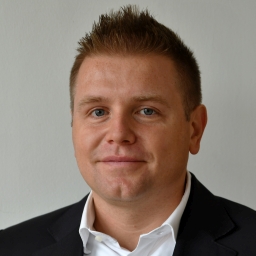
Prof. Bernhard U. Seeber is an Extraordinary Professor at the Technical University of Munich (TUM), leading the Chair of Audio Signal Processing within the TUM School of Computation, Information and Technology. His work bridges auditory neuroscience and engineering, focusing on improving hearing aids, cochlear implants, and virtual acoustic systems. He holds affiliations with the Bernstein Center for Computational Neuroscience, Munich Institute of Biomedical Engineering, and others. Education: Studied and earned his PhD (2003) in Electrical Engineering and Information Technology at TUM. Postdoctoral research included time at UC Berkeley and the MRC Institute of Hearing Research (UK), where he pioneered studies on binaural hearing and cochlear implant optimization. Research Interests: Combines experimental and theoretical approaches to explore auditory scene analysis, binaural unmasking, and spatial hearing. Key areas include signal coding for cochlear implants, virtual acoustics, and non-destructive acoustic monitoring. His work emphasizes interdisciplinary collaboration with industry and academia. Awards: Lothar Cremer Award (2010), Emmy Noether Fellowship (2007), and recognition from the German Acoustical Society. Teaching: Offers courses on audio communication, computational neuroscience, and technical acoustics. Projects: Leads initiatives like HAPPAA and Auralization, advancing sound field synthesis and hearing aid algorithms. Current Roles: Head of Chair of Audio Signal Processing, Board Member of DEGA, and spokesperson for the ITG Technical Committee on Hearing Acoustics.
Wesley Willett is an Associate Professor in the Department of Computer Science at the University of Calgary, holding the NSERC CRC II Chair in Visual Analytics. His primary research focuses on information visualization, human-computer interaction, and new media applications. He leads the Data Experience Lab and Interactions Lab, exploring innovative methods for data representation and interaction in augmented/virtual reality environments. Education includes a B.S. in Computer Science from the University of Colorado (2006) and a Ph.D. in Computer Science from UC Berkeley (2012). His work bridges technical innovation with user-centered design principles, emphasizing ethical considerations in data visualization and inclusive representation. Key research contributions include: spatial visualization techniques for large environments, gesture-based interfaces for AR/VR, and physical data representations through projects like Cetonia (swarm robotics visualization) and Data Embroidery. His work has been recognized with Best Paper awards at CHI 2015 and Pervasive 2010. Current research emphasizes immersive analytics, wearable visualization systems, and demographically diverse anthropographics. He collaborates with urban designers, neurologists, and environmental scientists to apply visualization in diverse domains like epilepsy surgery planning and air quality monitoring.
Abhinav Shrivastava is an Associate Professor in the Department of Computer Science at University of Maryland, College Park, with a joint appointment in the Institute of Advanced Computer Studies (UMIACS). Previously, he served as an Assistant Professor at the same institution from August 2018 to June 2024, and spent one year as a Visiting Research Scientist at Google Research from September 2017 to August 2018. His educational background includes: PhD in Robotics and Artificial Intelligence from Carnegie Mellon University (2017), advised by Abhinav Gupta, with thesis titled 'Discovering and Leveraging Visual Structure for Large-scale Recognition' MS in Artificial Intelligence from Carnegie Mellon University (2011), supervised by Alyosha Efros and Martial Hebert BTech in Computer Science and Engineering from Jaypee Institute of Information Technology (2010) Professor Shrivastava's research focuses on computer vision and machine learning, with particular expertise in object detection, image recognition, and neural representations. His work bridges theoretical advances with practical applications, exploring how visual systems can discover and leverage structure in large-scale recognition problems. He has made significant contributions to understanding the role of supervision in vision transformers, developing novel approaches for object-state composition recognition, and creating efficient neural representations for videos and 3D scenes. His research often addresses fundamental challenges in visual recognition, including handling novelty in open-world environments and improving the efficiency of visual systems. An analysis of his recent publications reveals a strong emphasis on neural representations, particularly for dynamic content like videos and 3D scenes. His work demonstrates increasing sophistication in handling open-world vision problems, with research spanning object discovery, localization, and representation learning. The publications show a clear progression toward more efficient and scalable models, with recent work focusing on model compression, sparse representations, and addressing the challenges of working with limited annotations. His scientific contributions have been recognized with several prestigious awards: Best Paper Award (Applications) at IEEE Winter Conference on Applications of Computer Vision (2020) Microsoft Research PhD Fellowship (2014-2016) Best Student Paper Award at IEEE Winter Conference on Applications of Computer Vision (2014) Outstanding Reviewer Award at IEEE CVPR (2015) Professor Shrivastava has successfully mentored numerous graduate students, many of whom have become prominent researchers in computer vision. His Amazon Research Awards (2020 and 2023) have supported innovative projects including 'The pursuit of knowledge: discovering and localizing new concepts using dual memory' and 'Audio-conditioned Diffusion Models for Generating Lip-synchronized Videos.' He has served as Area Chair for major conferences including ICCV, CVPR, and AAAI, demonstrating his leadership in the computer vision community. His research has attracted significant funding from both academic and industry sources, supporting his exploration of fundamental questions in visual recognition and representation learning.
Dr. Sam Ferguson is a Senior Lecturer at the School of Computer Science, University of Technology Sydney (UTS), with a multidisciplinary background in music performance, cognitive science, and psycho-acoustics. His research explores the intersection of sound, music, and human experience through creative coding, machine learning, and interactive systems. Key Research Areas: Sound and Music Computing, Human-Computer Interaction, Creative Coding, Cognitive Science, Installation Art, and Acoustics. Current Projects: ARC Linkage project on creative coding and multiplicitous media; industry collaborations on IoT-based audiovisual systems. Recent Publications: Focus on spatial audio complexity, gestural interaction with networked sound, music emotion recognition frameworks, and robotic performance through genre-based cultural platforms. Leadership Roles: Director of Teaching & Learning Engagement; former Deputy Head of School (Teaching and Learning); active in ACM Creativity and Cognition Steering Committee. Teaching: Courses like Digital Media Studio , Prototyping Physical Interaction , and Data Processing using R within UTS's interdisciplinary Software Development Studio.
Dimitris Samaras is a SUNY Empire Innovation Professor in the Department of Computer Science at Stony Brook University, affiliated with the College of Engineering and Applied Sciences. He leads the Computer Vision Lab and holds adjunct roles in Biomedical Informatics and Radiology. His research focuses on computer vision, machine learning, medical imaging, and computational behavioral sciences, with interdisciplinary collaborations in psychology and neuroscience. Education: Ph.D. in Computer Science (University of Pennsylvania, 2001), M.S. in Computer Science (Northeastern University, 1994), Diploma in Computer Engineering (University of Patras, Greece, 1992). Research Interests: Modeling 3D shape and illumination interactions, facial expression analysis, medical image analysis, and applying machine learning to brain imaging. Current funded projects include NIH/NIDA grants, NSF initiatives, and collaborations with institutions like Brookhaven National Lab and Adobe. Publications: Over 150 peer-reviewed papers in top venues like ICCV, CVPR, and MICCAI, with impactful work on shadow removal, face relighting, and digital pathology. Recent trends emphasize medical AI, generative models, and multimodal interactions. Awards: SUNY Chancellor’s Award (2018), Dean’s Millionaire’s Club (2016), and multiple NIH/NSF grants. Recognized for contributions to scholarship and creative activities in academia. Grants & Teams: Leads over $10M in active grants, including projects on AI for penguin population tracking, histopathology image analysis, and robotic assistance. Collaborates with interdisciplinary teams in medicine, engineering, and cognitive science. Labs & Initiatives: Directs the Computer Vision Lab, contributes to the ColdSteel/NSF CVDI-NY SPIR consortium, and co-leads the Sensor and Transportation Security Center with Farmingdale State College.
Robert S. Allison is a Professor in the Department of Electrical Engineering & Computer Science at York University's Lassonde School of Engineering. His research focuses on human perceptual responses in virtual environments, stereoscopic vision, and eye movement analysis. He is affiliated with the York Centre for Vision Research, Sensorium (Digital Arts & Technology), and the Centre for Innovation in Computing at Lassonde. His research interests include depth perception in natural and virtual environments, human-computer interface design for VR, machine vision applications, and the measurement of human motion. He has supervised multiple graduate students and contributed to over 260 publications. His work spans topics like cybersickness mitigation, display lag effects, and perceptual adaptation in VR. Key grants include NSERC-funded projects on perception in virtual environments and collaborations with institutions like the Australian Research Council. His teaching includes courses on human perception in human-computer interaction and digital logic design. Recent articles highlight advancements in understanding motion perception, VR-induced sickness, and multisensory integration. He collaborates widely, with affiliations including the VISTA program and York's Connected Minds initiative.
Prof. Vesa Välimäki is an Audio Signal Processing Professor at Aalto University's School of Electrical Engineering, leading the Audio Signal Processing Research Group within the Aalto Acoustics Lab. He also serves as Vice Dean for Research and Head of the Doctoral Programme at the university. His research focuses on digital signal processing, machine learning, and their applications in audio, acoustics, and music technology, particularly in artificial reverberation, audio filter design, and virtual analog modeling. He has pioneered techniques like velvet noise for reverberation synthesis and contributed to open-source tools like FLAMO. His academic accolades include IEEE, AES, and AAIA Fellowships, along with multiple best paper awards at venues like DAFx and ICASSP. He has advised numerous students, including recipients of prestigious awards like the Huawei Master's Thesis Award. Prof. Välimäki has held editorial roles at the Journal of the Audio Engineering Society and organized major conferences such as SMC-17. His work extends to applied projects like acoustic optimization for early childhood education facilities and immersive audio in virtual reality (e.g., the 'Space Walk' project). Key Projects: NordicSMC (Nordic University Hub for Sound and Music Computing), Aalto Acoustics Lab, FLAMO library Grants: NordForsk funding (2018–2023), Foundation for Aalto University Science and Technology His research spans both theoretical advancements (e.g., diffusion models for audio restoration) and practical implementations (e.g., real-time equalizers, headphone compensation systems). He collaborates internationally, contributing to acoustic measurement techniques and noise reduction strategies for diverse environments.
Henrik von Coler is an Assistant Professor at Georgia Institute of Technology's School of Music within the College of Design. His work bridges engineering, electronic music, and empirical research, focusing on spatial audio systems, live electronics, and human-computer interaction in musical contexts. He joined Georgia Tech in 2023 after serving as director of the TU Studio for Electronic Music at Technische Universität Berlin from 2015 to 2023, where he founded the Electronic Orchestra Charlottenburg (EOC) to explore live electronic ensembles in multichannel environments. His research emphasizes the integration of sound, space, and HCI to enhance compositional and performative expressiveness. Notable projects include immersive audio installations, virtual instrument design, and AI-assisted composition. Coler has performed globally on immersive audio systems and curated international concerts. His technical contributions span spatial sound synthesis algorithms, networked music systems, and real-time signal processing tools. Key areas of exploration include volumetric music performances in metaverse environments, hybrid spatial interaction via ARCube, and statistical models for spectral synthesis. He has developed open-source systems like Orchestra (for metaverse performances) and SPRAWL (for ensemble interaction). Coler’s work often combines empirical research with artistic practice, aiming to redefine the boundaries of live electronic music through technological innovation. His academic output spans over 30 peer-reviewed articles since 2011, with recent focus on metaverse applications, AI-human collaboration, and immersive audio design. While no formal awards are listed, his leadership roles and project outcomes highlight significant contributions to music technology and spatial audio engineering.
Valeria Bruschi is a Researcher at the Department of Information Engineering (DII) within the Faculty of Engineering at Università Politecnica delle Marche (UNIVPM) in Ancona, Italy. Her academic profile was last updated on April 13, 2024, and she maintains her office at the Engineering Faculty on via Brecce Bianche, with contact information including phone +39 071-220-4486 and email v.bruschi@staff.univpm.it. Dr. Bruschi's research spans multiple domains within audio and signal processing, with particular expertise in spatial audio systems, automotive human-computer interaction, and biomedical signal applications. Her work bridges theoretical signal processing techniques with practical implementations across diverse fields including automotive safety systems, hearing aid technology, sleep medicine, and agricultural monitoring. She has made significant contributions to head-related transfer function (HRTF) processing, real-time audio enhancement algorithms, and innovative monitoring systems that utilize acoustic signals for various applications. Analysis of Dr. Bruschi's recent publications reveals a strong trajectory in developing practical audio processing solutions with real-world applications. Her work shows increasing integration of machine learning techniques with traditional signal processing approaches, particularly in areas like driver monitoring systems, snoring detection and cancellation, and spatial audio rendering. A notable trend is her focus on creating lightweight, real-time implementations suitable for embedded systems and practical deployment scenarios, while maintaining high performance standards. Her research consistently demonstrates interdisciplinary collaboration, connecting audio engineering with fields as diverse as automotive safety, sleep medicine, and agricultural technology. Dr. Bruschi actively contributes to advancing audio engineering through her research on equalization techniques, noise reduction systems, and immersive audio technologies. Her work on pulse compression techniques for hearing aid distortion measurement represents an important contribution to audiological assessment methodologies. Her publication record demonstrates consistent scholarly output with increasing impact across multiple application domains, reflecting her ability to translate theoretical signal processing concepts into practical engineering solutions.
Dr. Dimitrios Koutsonikolas is an Associate Professor in the Electrical and Computer Engineering Department at Northeastern University, leading the WiNS Lab. Previously, he held a tenured position at the University at Buffalo. His research focuses on experimental wireless networking and mobile computing, particularly millimeter-wave systems, 5G/6G networks, energy-efficient protocols, and high-bandwidth applications like VR/AR. He has published over 80 papers in top venues (e.g., MobiCom, INFOCOM), received NSF CAREER and IEEE awards, and led major grants including an NSF-funded $3M project for an open 5G/6G testbed. His lab explores cutting-edge technologies like O-RAN, beam management, and edge computing for latency-critical applications. Education: PhD in Electrical and Computer Engineering from Purdue University (2010). Research Interests: Experimental validation of wireless protocols, mmWave networking, latency-optimized edge computing, and cross-layer design. Current projects include TARGET (5G/6G latency solutions) and the X5G testbed for open spectrum utilization. Recent Trends in Articles: Focus on 5G deployment maturity, mmWave beam management, and 6G-ready technologies like autonomous space networks. Work bridges theoretical contributions with practical implementations, leveraging testbeds for real-world validation. Awards: Notable honors include IEEE Region 1 Innovation (2019), NSF CAREER (2016), and multiple best paper awards at MobiCom, WCNC, and Globecom. Recognized for both research and teaching excellence. Grants & Labs: Principal investigator on NSF grants ($3M+), leading collaborations with IMDEA Networks and industry partners. WiNS Lab develops open-source tools for 5G testing and explores sub-THz channels. Advises over 15 students, many advancing to top tech firms (e.g., Apple, HP Labs).
Professor Adrian Hilton is a distinguished faculty member at the University of Surrey, serving as Director of the Centre for Vision, Speech and Signal Processing (CVSSP) and Director of the Surrey Institute for People-Centred AI. He is affiliated with the School of Computer Science and Electronic Engineering and leads the Visual Media Research Lab (V-Lab). His research focuses on pioneering next-generation 4D computer vision technologies that enable machines to understand and model dynamic real-world scenes. Key areas include 3D/4D shape capture, computer vision, machine learning, graphics, and animation for applications in sports analysis, film/TV production, virtual reality, and medical imaging. His work bridges the gap between real and computer-generated imagery, with notable contributions in volumetric capture, motion capture, and free-viewpoint video. Hilton's recent publications demonstrate a strong trend toward multimodal integration, particularly combining audio and visual processing for spatial audio applications, while advancing 4D reconstruction techniques for human performance capture. His work increasingly incorporates transformer architectures and neural rendering techniques for improved illumination estimation, shadow modeling, and multi-view consistency. Scientific Awards and Recognition Two EU IST Innovation Prizes Manufacturing Industry Achievement Award Royal Society Industry Fellowship (2008-2011) Royal Society Wolfson Research Merit Award in 4D Vision (2013-2018) Fellow of the Royal Academy of Engineering (FREng) Fellow of the International Association for Pattern Recognition (FIAPR) Fellow of the Institution of Engineering and Technology (FIET) Hilton actively mentors PhD and post-doctoral researchers through his leadership of CVSSP, which has a grant portfolio exceeding £31M and comprises 170 researchers. He has successfully commercialized several technologies, including systems used by the BBC for sports commentary visualization. His research collaborations span major industry partners including BBC, BT, Sony, Framestore, and The Foundry. He co-founded the G3 Games forum and the CVMP Conference on Visual Media Production, demonstrating strong engagement with the creative industries. Current research projects include the S3A Programme Grant in Future Spatial Audio and InnovateUK's ALIVE project for 360 video reconstruction.
Christian Timmerer is a Professor at the Institute of Information Technology, Alpen-Adria-Universität Klagenfurt. His research focuses on adaptive video streaming , energy efficiency , MPEG standardization , and quality of experience (QoE) , with significant contributions to HTTP Adaptive Streaming (HAS), multi-codec optimization, and immersive media systems. Email: christian.timmerer@aau.at Office Hours: Monday 3:00-4:00 PM (by appointment) Projects: CD-Labor ATHENA, GAIA, SPIRIT His research integrates machine learning and generative AI to enhance video encoding, super-resolution, and voice dubbing, while prioritizing sustainability through energy-aware algorithms and open-source tools like GREEM and VEED. Current work emphasizes latency reduction and dynamic bitrate adaptation in live streaming environments. Recent publications address VVC optimization , multi-resolution encoding , and perceptual quality modeling , reflecting interdisciplinary efforts in networking , computer vision , and human-computer interaction . Awards include leading funded projects on adaptive streaming and green video systems.
Archontis Politis is an Assistant Professor in the Department of Computing Sciences at Tampere University's Faculty of Information Technology and Communication Sciences. His research focuses on signal processing, machine learning, and their applications in audio engineering, particularly in spatial audio, sound source separation, and parametric audio coding. He explores topics such as Ambisonics, reverberation control, and neural network-based approaches for audio processing. His work emphasizes spatial audio reproduction, including six degrees of freedom (6DOF) rendering, microphone array processing, and efficient compression techniques for higher-order Ambisonics. He also investigates sound event localization and detection, leveraging machine learning for real-world acoustic scenarios. His contributions span theoretical advancements in spherical harmonics and practical implementations of spatial audio systems. Recent research highlights include developing datasets for music source separation, improving synthetic-to-real generalization in classical music, and creating neural encoding models for irregular microphone arrays. His methodologies often integrate deep learning with traditional signal processing to address challenges in multi-speaker environments and dynamic acoustic scenes.
Agnieszka Roginska is a Professor of Music Technology at the Steinhardt School, New York University, specializing in immersive audio, spatial sound, and auditory displays. Her work integrates acoustic science with virtual reality and medical applications, including postural stability studies for vestibular rehabilitation. She holds leadership roles as AES President-Elect and co-edited the authoritative book 'Immersive Sound'. Education: B.A. in Piano Performance and Computer Applications in Music (McGill University, 1996); M.M. in Music Technology (NYU, 1998); Ph.D. in Music Technology (Northwestern University, 2004). Research focuses on 3D audio technologies, auditory displays for virtual environments, and sensory integration studies. She leads NYU's Music and Audio Research Lab (MARL) and advises the Society for Women in TeCHnology (SWiTCH) at NYU. Awards include AES Fellowship and leadership in international audio engineering societies. Recent publications emphasize audio's role in postural control, distributed music performance frameworks (Holodeck), and VR sound design. Her work bridges technical innovation with artistic applications, including collaborative music systems in mixed reality.
Konrad Kowalczyk is an Associate Professor at AGH University of Science and Technology in Krakow, Poland, where he heads the Signal Processing Group within the Faculty of Computer Science, Electronics and Telecommunications. With extensive international experience from institutions including Queen's University Belfast, Stanford University, and Fraunhofer Institute, he has established himself as a leading researcher in audio and speech signal processing. His academic journey includes B.Eng. and M.Sc. degrees from AGH University (2005), a Ph.D. from Queen's University Belfast (2009), and a Habilitation in ICT from AGH University (2020). B.Eng. and M.Sc. in Electronics and Telecommunications, AGH University of Krakow (2005) Ph.D. in Electronics, Queen's University Belfast, UK (2009) Habilitation (D.Sc.) in Information and Communication Technology, AGH University of Krakow (2020) Kowalczyk's research spans multiple cutting-edge areas in audio processing, with particular focus on speech and audio signal processing enhanced by machine learning techniques. His work integrates deep neural networks with traditional signal processing methods to address challenges in array signal processing , speech enhancement , and speaker recognition . The research group he leads explores innovative applications in distributed signal processing for IoT , acoustic event detection , and spatial audio rendering , bridging theoretical advances with practical implementations. His recent publications demonstrate a clear trend toward integrating deep learning with traditional signal processing techniques, particularly in speaker diarization, source separation, and robust speech recognition. The research increasingly focuses on real-world applications requiring reverberation-robust processing , distributed microphone array systems , and end-to-end neural architectures that can operate in challenging acoustic environments. There's a noticeable shift toward more complex, integrated systems that combine multiple signal processing tasks. Stanislaw Staszic Medal for best graduate of AGH (2005) IEEE Best Student Paper Contest finalist (2007) AES Student Technical Paper Award winner (2008) Best Student Paper Award at IWAENC conference (2014) Best Paper Awards at IEEE SPA conferences (2016, 2019) Polish Ministry of Science Scholarship for Distinguished Young Scientists (2016-2019) Prime Minister Award for outstanding scientific achievements (2020) As Principal Investigator, Kowalczyk leads multiple significant research projects including "Acoustic Intelligence" (2024-2028) funded by National Science Center, and "Deep extraction for robust speech recognition" (2023-2028). He has successfully secured funding from prestigious programs including First TEAM from the Foundation for Polish Science, and EU FP7 projects. His research group actively supervises Ph.D., M.Sc., and B.Eng. students, with strong connections to international institutions including Aalto University and IEEE Signal Processing Society. The research output includes numerous journal publications, conference papers, patents, and software implementations that have advanced the field of audio signal processing. Kowalczyk leads the Signal Processing Group at AGH University, which focuses on developing innovative solutions for speech and audio processing challenges. The group maintains strong collaborations with international institutions including Aalto University (Finland), and participates in European research initiatives. Their work spans theoretical development through practical implementation, with applications ranging from medical voice assistants to distributed acoustic sensor networks.