Prof. Dr. Eva Spies is a Professor for the Study of Religion with Focus on Africa at the University of Bayreuth within the Faculty of Humanities & Social Sciences . She holds a PhD in Cultural Anthropology from the University of Mainz and leads the Research Section Moralities in the Africa Multiple Cluster of Excellence (EXC 2052). Key Roles : Principal Investigator, Bayreuth International Graduate School of African Studies (BIGSAS) Vice Dean of Research Co-founder, German Association for the Study of Religion's Africa working group Research Interests span religious plurality, development cooperation, and transformative practices. She coined the concept of religious engineering to analyze how religious resources shape social/political worlds. Regional expertise in Niger/West Africa and Madagascar/Indian Ocean , with focus on: South-South mission Religion and pandemic response Intercultural hermeneutics Epistemological conflicts Material culture in development Projects : Africa Multiple Cluster of Excellence (2025): "Religious engineering. The making of moralities, development and religion in Niger" Humboldt Research Hub (2021): "Fighting pandemics with religion?" (with Moi University and University of Zimbabwe) Education : PhD in Cultural Anthropology, University of Mainz
Dr. Michael R. Griffiths is a Senior Lecturer in English Literatures at the University of Wollongong, where he has been teaching since 2014. He serves as the Internationalisation Director in the School of the Arts, English and Media, managing global collaborations including UOW's campuses in Hong Kong and Dubai. Previously, he was a Postdoctoral Fellow at Columbia University's Institute for Comparative Literature and Society from 2012-2014. His educational background includes: PhD in English from Rice University (2012) Griffiths's research focuses on postcolonial literary theory, settler colonial studies, and Indigenous literatures, with a growing emphasis on decolonial thought. His work critically examines representations of Aboriginal people and culture in Australian literature, the politics of authorship in anticolonial thought, and intersections between critical animal studies and ecocriticism. In his scholarship, Griffiths explores how literature engages with questions of identity, difference, and belonging in settler colonial contexts, often challenging conventional approaches to cultural appropriation and representation. His recent publications demonstrate a clear trajectory toward examining the intersections between poststructuralist literary theory and anticolonial thought. The publication of his 2025 book The Death of the Author and Anticolonial Thought represents a significant contribution to understanding how thinkers like Edward Said and Édouard Glissant responded to Roland Barthes's "death of the author" thesis. His earlier work, particularly his 2018 monograph The Distribution of Settlement: Appropriation and Refusal in Australian Literature and Culture , established him as a scholar examining representations of Aboriginal people by non-Indigenous writers in Australian literature. Griffiths serves as Chair of the South Pacific Association for Commonwealth Literature and Language Studies (SPACLALS) and is on the editorial advisory board of Australian Literary Studies . He has also co-edited special issues of Continuum on freedom of speech debates, which received notable attention and was reprinted as a book titled Unsettled Voices . As a supervisor, Griffiths has mentored numerous PhD and Master's students through projects examining diverse topics including Indigenous Trinidadian theatre, hauntings in Chinese-Australian literature, and cosmopolitanism in Indian English fiction. His grant history shows consistent funding support for research on Australian literature, settler colonial studies, and international academic collaborations, particularly with Wuhan University in China. Griffiths contributes to several research networks focused on postcolonial studies and settler colonialism, including the South Pacific Association for Commonwealth Literature and Language Studies, which he chairs, and maintains active engagement with global scholarly conversations through his academic profiles and social media presence.
Tracey Galloway is an Associate Professor in the Department of Anthropology at the University of Toronto Mississauga (UTM), where she conducts critical research on Indigenous health disparities and policy interventions in northern Canada. Her work bridges medical anthropology, public health, and community-based participatory research to address systemic inequities affecting circumpolar populations. Education: PhD, McMaster University, 2008 MA (institution unspecified) BA (institution unspecified) BScN (institution unspecified) Dr. Galloway's research program centers on chronic disease risk assessment and health system improvement in Indigenous communities, with specific expertise in nutrition transition, food security, child growth patterns, and public health policy evaluation. She examines the impact of federal programs like Nutrition North Canada while developing community-led solutions for health equity. Her methodological approach combines quantitative analysis of health outcomes with qualitative community engagement, emphasizing Indigenous research sovereignty and decolonizing methodologies. Her publication record reveals consistent thematic focus across 15 recent articles, demonstrating interdisciplinary collaboration between anthropology, epidemiology, and health economics. Key trends include rigorous evaluation of colonial impacts on Indigenous food systems, innovative analysis of subsidy program effectiveness, and centering Indigenous patient experiences in healthcare design. Her work consistently prioritizes community-defined research questions and actionable policy recommendations. Dr. Galloway actively mentors graduate students including Darci Belmore, Carly Checholik, Neda Maki, and Hiliary Monteith, guiding research on Indigenous health determinants and policy interventions. While specific grant details aren't publicly enumerated, her collaborative projects involve partnerships with Indigenous communities across Northern Canada and interdisciplinary teams addressing complex health system challenges. She maintains strong community partnerships for her applied research, particularly in Nunavut and Northwestern Ontario, working directly with Anishinabeck and Inuit communities to translate findings into culturally safe health initiatives and policy reforms that address the root causes of health inequities.
Jan Oliver Borchers is a full professor of computer science and head of the Media Computing Group at RWTH Aachen University, where he holds the endowed Chair in Media Informatics and Human-Computer Interaction (Computer Science 10). He established his research group in 2003 and pioneered modern HCI academic research and teaching in Germany, becoming a leading lab in terms of archival publications at CHI, the top international conference in HCI. Before joining RWTH, he held faculty positions at Stanford University and ETH Zurich. His research focuses on Human-Computer Interaction with particular interest in new user interfaces for soft robotics, textile user interfaces, 3D printing and personal fabrication, augmented reality, wearable and tangible computing, interfaces for software development, deceptive patterns, and interactive guides and exhibits. He opened Germany's first Fab Lab in 2009 and has been instrumental in advancing digital fabrication and maker culture in academia. His work bridges theoretical HCI research with practical applications, as evidenced by his consulting for major companies including AirBus, Apple, ARD, Bayer, Children's Museum Boston, Daimler, Handelsblatt, OTIS, Scout24, TEDx, and Deutsche Telekom. His recent publications show a strong focus on deceptive patterns in UI design, textile interfaces, and the intersection of AI with human interaction. The research demonstrates consistent innovation in tactile interaction techniques, with numerous honorable mentions at top conferences like CHI. His lab has produced significant contributions to eyes-free interaction, textile computing, and the ethical implications of dark patterns, particularly regarding children's experiences with deceptive designs. IDC 2025 Best Work in Progress for research on children's assessment of deceptive designs CHI'25 Student Games Competition Winner for The Deceptive Dungeon RWTH-Wissenschaftsnacht 2024 Best Science Slam for Usability: 4 Prinzipien guter User Interfaces Multiple CHI Honorable Mentions spanning from 2008-2021 Best Note and Best Demo awards at ITS and UIST conferences Borchers has served in numerous leadership roles including heading the Computer Science Department's Examination Board (2015-2025), coordinating the department's public relations since 2010, and organizing the weekly Faculty Lunch since 2003. He is an active member of the ACM, SIGCHI, SIGCHI Germany, and GI, and introduced the Interactivity format to the CHI conference in 2005. His PhD thesis, A Pattern Approach to Interaction Design, became the first book to bring design patterns to HCI. The Media Computing Group under his leadership has developed significant expertise in physical computing, textile interfaces, and fabrication technologies, with a strong emphasis on both theoretical contributions and practical applications. His lab continues to push boundaries in interactive technologies while maintaining a strong ethical stance on user experience, particularly regarding deceptive design patterns.
Dr. Sabine Krabbe is a Group Leader at the German Center for Neurodegenerative Diseases (DZNE) in Bonn, Germany, where she leads research on neural circuit mechanisms underlying adaptive learning and state-dependent decision-making. Her work integrates neuroscience, molecular biology, and behavioral approaches to understand how internal states influence behavior and how these processes are disrupted in neurological disorders. Dr. Krabbe's research focuses on the interactions between midbrain circuits of the substantia nigra and ventral tegmental area with their output structures such as the striatum and amygdala. She investigates how these networks integrate internal states with environmental cues to produce appropriate behavioral responses. Her laboratory employs state-of-the-art techniques including deep-brain calcium imaging at single-cell resolution in mice, opto- and pharmacogenetic manipulations, anatomical tracings, and molecular approaches to characterize neural circuit elements in detail. Her recent publications reveal significant insights into amygdala interneuron plasticity during fear learning, brain-wide representational drift in memory consolidation, and the molecular mechanisms underlying Parkinson's disease progression. Her work demonstrates how activity patterns within specific neural circuits change in early stages of neurodegenerative diseases and how this dysfunction contributes to cognitive deficits and emotional disturbances. Dr. Krabbe is actively involved in the neuroscience community, organizing the BonnBrain Conference 2026 and sharing research through social media platforms. She has established herself as an emerging leader in the field of systems neuroscience with a particular focus on the neural basis of emotional states and decision-making processes.
Lucia Dolce serves as the Numata Professor of Japanese Buddhism within the Department of Religions and Philosophies at SOAS University of London, part of the School of History, Religions and Philosophies. Her academic base is room 342 in the Russell Square: College Buildings campus. Her educational background includes: Laurea MA (University of Venice) PhD (Leiden University) Professor Dolce's research centers on two interconnected projects: first, the discourse on the body in medieval Japanese Buddhist rituals and its connections to continental Tantric practices, emphasizing ritual fluidity and performative theory applications; second, contemporary Buddhism-Shinto syncretism with focus on revival of premodern practices in Kyoto shrines. She also examines Tokyo's urban pilgrimage routes like the Seven Gods of Fortune, analyzing institutional negotiations and religious marketing dynamics. Her journal articles (1992-2023) consistently explore ritual knowledge transfer in Japanese Buddhism, with recent works on scriptural repurposing and tantric exegesis highlighting material culture and practice-centered approaches. Earlier publications establish foundational studies on Nichiren Buddhism's esoteric dimensions, astrological cults, and celestial body worship, revealing enduring thematic threads across three decades of scholarship. Scientific awards: No awards listed in provided text Advising and grants: She currently supervises four PhD candidates: Rachel Williams (Japanese Secularity), Haruka Saito (Repentance Rituals), Sooyeun Yang (Korean Astrological Buddhism), and Yeonju Lee (Korean Nationalism). Previous supervisees include twelve PhD graduates such as Emanuela Sala (2022, Sannō Shintō), Ronit Wang (2022, Thai Hell Parks), and multiple 2011 completions. Dolce led the Newton Fellowship-associated project 'The Lucky Gods of Tokyo' (2014-2016), investigating spatial politics in Buddhist-Shinto pilgrimage networks.
Rosa Andujar is a Senior Lecturer in Liberal Arts at King's College London, where she is affiliated with both the Department of Liberal Arts and the Department of Classics within the Faculty of Arts & Humanities. She serves as Editor of the American Journal of Philology and holds positions on the editorial boards of Brazilian journals Nuntius Antiquus and PhaoS - Revista de Estudos Clássicos. Dr. Andujar was elected to the Program Committee of the Society for Classical Studies for a three-year term (2022-2025), serving as Vice President for Program and Chair from 2023-2025. Her research focuses on two complementary areas: Ancient Greek tragedy, particularly the tragic chorus and its performance capabilities Global receptions of Greek drama, with special emphasis on Latin America and the Caribbean Dr. Andujar's work examines how engagements with Graeco-Roman antiquity intersect with questions of gender, race, class, and national identity. She has particular expertise in Cuban adaptations of Greek tragedy and Latinx receptions of classical drama, exploring how these cultural encounters create new narratives that challenge traditional understandings of classical reception. Her research has been recognized with prestigious awards including the 2020 London Hellenic Prize for 'The Greek Trilogy of Luis Alfaro' and the 2022 AJP Best Article Prize. She has secured significant research funding from the Loeb Classical Library Foundation, British Academy, A. G. Leventis Foundation, Harvard Center for Hellenic Studies, Andrew W. Mellon Foundation, and Fundación BBVA. Dr. Andujar's current research projects include 'The Cambridge Companion to Classics and Race' (edited volume), 'La Puerta Electra/The Electra Door' (critical bilingual anthology of Cuban rewritings), and 'Tragedy and Revolución' (monograph on Greek drama in Caribbean cultural history), supported by recent fellowships from the Loeb Classical Library Foundation and British Academy. She is actively involved in academic service as Editor of the American Journal of Philology, co-editor of the 'Classics and the Postcolonial' book series for Routledge, and Advisory Board member of 'Hesperides: Classics in the Luso-Hispanic World.' Her external examining work for the University of Birmingham (2018-2023) demonstrates her commitment to academic standards across institutions.
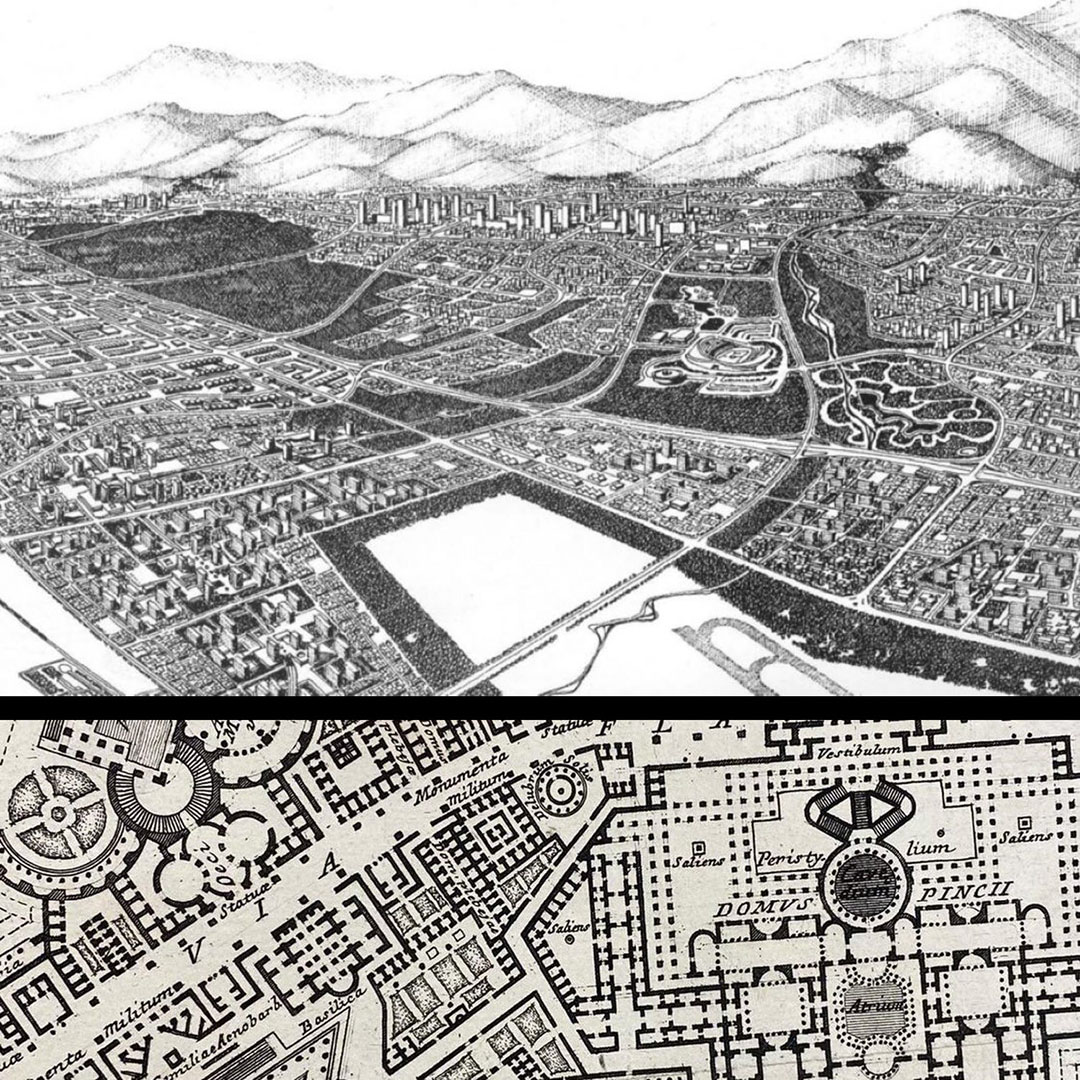
Asma Mehan, Ph.D. , is an Assistant Professor at the Huckabee College of Architecture, Texas Tech University , with a Ph.D. in Architecture, History, and Project from Politecnico di Torino (2017). Her work bridges architectural humanities and critical urban studies , focusing on urban inclusivity, heritage preservation, and climate justice. She authored two books— Tehran: From Sacred to Radical (2022) and Kuala Lumpur: Community, Infrastructure, and Urban Inclusivity (2020)—and leads the Coordination Team of the AESOP Young Academics network. Education: Ph.D. in Architecture, History, and Project, Politecnico di Torino (2017) Her research spans spatial justice , feminist placemaking , and heritage studies , addressing issues like oil urbanism , digital citizen participation , and resilient housing . Articles highlight her interdisciplinary approach to urban resilience, AI integration, and socio-environmental equity. She has held fellowships including the FCT Scientific Employment Stimulus and NIAS-KNAW Urban Citizenship Fellowship. Scientific Awards: AESOP Young Academics Award European Architectural History Network (EAHN) Fellowship Society of Architectural Historians (SAH) Grant ZK/U Berlin Researcher-in-Residence SAHGB Award Dr. Mehan has taught at TU Delft and Politecnico di Torino, guest lectured at TU Munich and Deakin University, and conducted visiting research in Switzerland, Australia, and Berlin. Her work appears in over 50 publications across English, Persian, and Italian, emphasizing critical pedagogy , collaborative design , and policy toolkits for urban inclusivity.
Jia-Yan Mi serves as Associate Professor of Chinese and English in the Department of World Languages and Cultures at The College of New Jersey's School of Humanities and Social Sciences, where she has held key roles since 2002 including Director of the Chinese Program and Faculty Advisor for the Chinese Students Association. Her academic foundation includes a Ph.D. in Comparative Literature and Film Studies from the University of California at Davis (2002). Mi's research critically intersects Comparative Literature, Asian American Studies, Critical Theory, and Film Studies with specialized focus on Chinese poetry, diaspora narratives, and cultural identity. Her work examines embodied experience in modern Chinese literature, border theory in global contexts, and pandemic-era poetic responses, consistently bridging literary analysis with visual culture and postcolonial frameworks. Recent scholarly output reveals an escalating engagement with viral optics, diasporic consciousness, and therapeutic nation-building in Chinese literary traditions, evolving from foundational studies of modern poetry to contemporary analyses of global Chinese-language expressions during crisis. Her scientific recognition includes: Outstanding Research on Modern and Contemporary Poetics, Jianghan University, PRC (2018) Support of Scholarly Activities (SOSA) Award, The College of New Jersey (2023) Mi maintains extensive institutional engagement through committee leadership including: Director of Chinese Program (2002–present) Chair of Minor in Comparative Literature Committee (2023–present) Roebling Committee and Art on Campus Committee membership (2021–present) Department Promotion Committee service (2018–present)
Jan Borchers is a full professor of computer science and head of the Media Computing Group, an endowed Chair in the Computer Science Department at RWTH Aachen University. He serves as deputy member of the Faculty Council for Mathematics, Computer Science and Natural Sciences (2024-2026) and previously headed the Computer Science Department's Examination Board from 2015 until February 2025. Borchers established his research group in 2003, pioneering modern HCI academic research and teaching in Germany, and opened Germany's first Fab Lab in 2009. Borchers received his PhD 'summa cum laude' in computer science from Darmstadt University of Technology in 2000. Before joining RWTH Aachen, he held faculty positions at Stanford University and ETH Zurich. His PhD thesis, 'A Pattern Approach to Interaction Design,' became the first book to bring design patterns to HCI. His research focuses on Human-Computer Interaction with particular interest in new user interfaces for soft robotics, textile user interfaces, 3D printing and personal fabrication, augmented reality, wearable and tangible computing, interfaces for software development, deceptive patterns, and interactive guides and exhibits. He is a member of ACM, SIGCHI, SIGCHI Germany, and GI, and introduced the Interactivity format to the CHI conference in 2005. Recent publications reveal a strong emphasis on deceptive patterns/dark patterns in UI design, textile interfaces, and the impact of generative AI on creative teamwork. His work spans from fundamental research in interaction techniques to practical applications in smart homes, accessibility, and children's interfaces, with a consistent focus on usability and user-centered design. IDC 2025 Best Work in Progress: 'If They Have No Choice, They'll Accept!' CHI'25 Student Games Competition Winner: 'The Deceptive Dungeon' RWTH-Wissenschaftsnacht 2024 Best Science Slam: 'Usability: 4 Prinzipien guter User Interfaces' Multiple CHI/UIST Honorable Mentions and Best Paper awards spanning two decades Author of influential books including 'A Pattern Approach to Interaction Design' and 'Arduino In A Nutshell' Borchers has provided extensive consulting, training, and user interface design services to major clients including AirBus, Apple, ARD, Bayer, Children's Museum Boston, Daimler, Handelsblatt, OTIS, Scout24, TEDx, and Deutsche Telekom. He actively organizes the Computer Science Department's weekly Faculty Lunch since 2003 and coordinates the department's public relations and web presence since 2010. He leads the Media Computing Group, which has become a leading German lab in terms of archival publications at CHI, the top international conference in HCI. Since March 2025, he serves as faculty patron for TechLabs Aachen, a student initiative providing practical digital skills training.
Britt Kramvig is a Professor at the School of Business and Economics , part of the Faculty of Biosciences, Fisheries and Economics (BFE) at UiT The Arctic University of Norway. Her research intersects decolonization , Indigenous (Sámi) studies, and creative industries , with a focus on storytelling, archive decolonization, and Arctic land-seascapes. She coordinates PhD studies in Tourism and Northern Studies and teaches courses on qualitative methods, climate change impacts on tourism, and knowledge co-production. Research Interests: Kramvig explores the decolonial potential of Indigenous archives , creative industries as decolonial praxis , and Arctic environmental humanities . Her work emphasizes ontology over epistemology , art-science collaborations (e.g., Dark Ecology, BAT), and indigenous survivance in tourism and cultural policy. She actively disrupts appropriation processes in Arctic landscapes through pluriversal storytelling. Key Collaborations: Kramvig contributes to international projects like Surviving the Unthinkable and The New Sámi Renaissance , advocating for indigenous data sovereignty and decolonial research ethics . She leads interdisciplinary efforts to integrate Sámi epistemologies into environmental science and policymaking. Recent Publications: Her 2023-2025 works address Arctic decolonization , indigenous archival practices , and co-creation in tourism , often published in journals like Environmental Research Letters and GeoHumanities . Notable topics include counter-mapping , indigenous survivance , and collaborative listening in Arctic soundscapes. Academic Affiliations: Member of the Norwegian Scientific Academy for Polar Research and the Indigenous Voices research group at UiT. She participates in the OKTA - Sami Art and Friction-Filled Communities on Festivals project.
Sunny Stalter-Pace serves as the Hargis Professor of American Literature in Auburn University's College of Liberal Arts, English Department. A specialist in modernist performance, literature, and urban space, she authored Imitation Artist: Gertrude Hoffmann's Life in Vaudeville and Dance (2020) and is currently completing a cultural history of the New York Hippodrome. Her work bridges academic research with public engagement through blogs, interviews, and collaborations with institutions like the Library of Congress. Her educational foundation includes: Ph.D. in English, Rutgers University (2007) M.A. in English, Rutgers University (2003) B.A. in English and French, Loyola University Chicago (1997), magna cum laude Stalter-Pace's research interrogates intersections of mobility, gender, and performance in 20th-century American culture. She examines how vaudeville, subway systems, and theatrical spectacles shaped public identity, with particular attention to women's experiences and spatial politics. Her methodology combines literary analysis, archival research, and visual studies to reveal how imitation and movement function as cultural forces. Current projects explore aquatic performances at the New York Hippodrome and the legacy of vaudeville producer Gertrude Hoffmann. Her 15 most recent publications demonstrate an evolving trajectory from subway systems ( Underground Movements , 2013) toward aquatic spectacles and vaudeville legacies, consistently centered on New York City's infrastructure. This body of work establishes mobility studies as a critical lens for understanding modernism, revealing how transportation networks and performance venues structured social interactions. Her interdisciplinary approach connects theater history, gender studies, and urban theory to uncover marginalized narratives in American cultural production. Key recognitions include: Harry Ransom Center Fellowship (2020) New York Public Library Short-Term Research Fellowship (2020) Alabama Humanities Foundation Grant (2014) College of Liberal Arts Excellence in Teaching Award nomination (2011) Multiple research fellowships from 2003-2017 Stalter-Pace has secured substantial funding for archival research through fellowships from the NEH, MLA, and university grants. She serves on Biographer’s International Organization's program committee and curated the 'Common Grounds' exhibition at Auburn's Jule Collins Smith Museum. Her teaching innovations include the first-year seminar 'Thinking Through the Arts' and courses on contemporary drama that integrate Hamilton into American literature pedagogy. As Book Review Editor for Transfers: Interdisciplinary Journal of Mobility Studies , she shaped scholarly discourse in mobility studies. Through her Hippodrome research blog and collaborations with the New York Public Library, Stalter-Pace transforms specialized scholarship into accessible public history. Her Library of Congress presentation on Albertina Rasch and the Hippodrome exemplifies her commitment to bridging academic research with community engagement, while ongoing interviews and blog posts extend her work beyond traditional academic boundaries.
Dr. Hester Lees-Jeffries is a University Associate Professor at the University of Cambridge and Fellow of St Catharine's College, where she serves as Director of Studies in English. She earned her BA and MA (Hons.) from the University of Canterbury, New Zealand, before completing her PhD at Cambridge as a Commonwealth Scholar. Her academic career includes a Research Fellowship at Magdalene College (2003-2006) and ongoing fellowship at St Catharine's since 2006. Her research focuses on Shakespeare and early modern literature, with particular expertise in performance studies, visual culture, and material textuality. She investigates topics including Renaissance textiles, costume semiotics, garden symbolism, and material objects in literature. Her interdisciplinary approach connects literary analysis with cultural history and performance theory. Lees-Jeffries maintains an active publication record with scholarly works spanning Shakespearean criticism, material culture studies, and Renaissance literature. Her research demonstrates consistent focus on textual materiality, performance interpretation, and interdisciplinary methodologies bridging literary analysis with visual and material culture. Her forthcoming publications include monographs on textile symbolism in Shakespeare and an introduction to Shakespeare's histories. Honors and Awards: Commonwealth Scholarship Research Fellowship, Magdalene College (2003-2006) Fellowship, St Catharine's College (since 2006) She coordinates exhibitions for the Centre for Material Texts and regularly contributes to Shakespeare Survey as London theater reviewer. Her innovative #SlowShakespeare projects provide daily literary analysis of Shakespeare's plays through social media platforms.
Lea Rees is Lady Wallis Budge Junior Research Fellow in Egyptology at University College, Oxford, and an Associate Member of the University’s Faculty of Asian and Middle Eastern Studies. She leads and collaborates on fieldwork at Dahshur with the German Archaeological Institute in Cairo and on conservation and publication in the tomb of Ramesses III (KV 11). Research interests span Egyptian settlement and landscape archaeology, cultural interactions, archaeological theory, and the history of Egyptology. She employs phenomenological, sociological, and archival perspectives to investigate ancient lived environments and their modern reception. Egyptian settlement archaeology Landscape biography and phenomenology Cross-cultural iconography (e.g., Bes in the Achaemenid Empire) Archaeological theory and spatial sociology Conservation and epigraphy in the Valley of the Kings Her recent publications concentrate on two major arenas: the Valley of the Kings , where multi-year conservation and documentation campaigns in KV 11 have yielded richly illustrated reports and new insights into Ramesside burial equipment; and Dahshur , where she interrogates long-term landscape transformations from Early Dynastic encampments to Old Kingdom pyramid towns and their subsequent deconstruction. Scientific recognition includes the competitive Lady Wallis Budge Junior Research Fellowship and ongoing collaboration with the German Archaeological Institute, the Ramesses III Conservation Project, and international scholarly networks. Current projects & teams : Post-doctoral project ‘Historicising phenomenology: A landscape biography of Dahshur’ at Oxford Field director, Dahshur excavations (German Archaeological Institute Cairo) Research collaborator, Ramesses III (KV 11) Publication and Conservation Project
Sir Paul Collier is a distinguished Professor of Economics and Public Policy at the Blavatnik School of Government, University of Oxford, where he also directs the Centre for the Study of African Economies. He serves as the Oxford Academic Director of the International Growth Centre, a collaboration between the London School of Economics and Oxford University. Professor Collier has established himself as a leading authority on development economics, particularly focusing on African economies, poverty reduction, and the political economy of development. His academic journey includes significant public service, having served as Director of the World Bank Research Development Department from 1998 to 2003. He currently advises the International Monetary Fund Strategy and Policy Department and writes regularly for major publications including The Independent and The New York Times. His extensive contributions to economic thought have been recognized with numerous prestigious awards. Professor Collier's research interests span a wide range of critical development issues. He has made significant contributions to understanding the "bottom billion" - the poorest populations in the world - and has developed innovative approaches to addressing regional inequality, natural resource management, and the political barriers to development. His work consistently bridges academic rigor with practical policy applications, making complex economic theories accessible to policymakers and the general public alike. His publications reveal a consistent focus on practical solutions to development challenges. Recent works have examined urbanization in developing countries, the relationship between elections and economic performance, infrastructure investment in Africa, and the cultural foundations of economic success or failure. His research demonstrates how institutional design, cultural factors, and appropriate policy frameworks can enable neglected regions to "spiral up" toward prosperity. A.SK Social Science Award (2013) Arthur Ross Prize (for The Bottom Billion) Handesblatt Prize (for The Future of Capitalism) Adam Smith Prize by Glasgow's Philosophical Society (2023) Global Citizenship Award by Belgium's cooperative movement (2018) Professor Collier is actively engaged in advising governments on practical approaches to regional renewal. His recent work emphasizes the importance of local agency, collective learning, and moral leadership in addressing the challenges faced by neglected communities in both developed and developing countries. He challenges conventional economic orthodoxies that prioritize market forces alone and advocates for more nuanced, context-specific policy approaches that recognize the complex interplay of economic, social, and political factors in development processes.