Ozlem Gezgin is a Lecturer at the School of Design, The Glasgow School of Art, focusing on immersive theatre and environment-behavior studies. Her work explores audience interaction dynamics in spatially driven performance settings. Her research integrates methodologies from environmental psychology and theatre studies to analyze how immersive environments influence audience behavior. A recent publication in Studies in Theatre and Performance examines Punchdrunk’s Sleep No More as a case study, highlighting trends in spatial design and interactive performance frameworks. The absence of listed scientific awards or student advisement information suggests these aspects may not be publicly documented in the provided materials.
Dhruv Shah is an Incoming Assistant Professor of Electrical and Computer Engineering at Princeton University starting January 2026 and currently serves as a Senior Research Scientist at Google DeepMind. He is also an Associated Faculty member in Princeton's Center for Statistics and Machine Learning, focusing on the convergence of machine learning and robotics for real-world deployment. His academic credentials include a Ph.D. and M.S. in Electrical Engineering and Computer Sciences from the University of California, Berkeley (2024) and a B.Tech. (Honors) in Computer Science and Engineering from the Indian Institute of Technology, Bombay (2019). Shah's research pioneers foundation models for robotics, emphasizing large-scale robot learning, out-of-distribution generalization, and long-horizon reasoning. His group adopts a full-stack methodology spanning algorithmic innovation to system design, drawing from cognitive science to develop physical AI systems at the perception-learning-control interface. Key focus areas include reinforcement learning, human-robot interaction, and continual learning for challenging environments. Analysis of his 15 most recent publications reveals dominant trends in foundation models for visual navigation, language-conditioned policies, and multi-agent systems. His work increasingly integrates multimodal inputs (vision, language) while addressing generalization gaps in real-world settings, with strong emphasis on efficient data curation and scalable robot learning frameworks. His accolades feature the Microsoft Future Leaders in Robotics & AI Fellowship (2024), two IEEE ICRA Best Conference Paper Awards (2024), multiple ICRA finalist awards across cognitive robotics and manipulation categories, and the Berkeley Fellowship (2019-2024). Shah will recruit PhD students for Princeton's upcoming admissions cycle, establishing a research group dedicated to full-stack robotics development. While specific grant details aren't provided, his trajectory indicates significant funding for AI-robotics convergence projects, particularly in foundation model development and real-world deployment challenges. His laboratory at Princeton will integrate algorithmic innovation with system design, focusing on physical AI systems that bridge perception, learning, and control while maintaining strong ties to cognitive science principles for human-aligned robotic intelligence.
Professor Lorraine Maltby , OBE, is a distinguished academic at the University of Sheffield , specifically within the School of Biosciences and the Department of Animal and Plant Sciences . She currently serves as the Deputy Vice-President for Research at the university (2017–2022). With a career spanning over three decades at the University of Sheffield, she has held various significant roles including Head of the Department of Animal and Plant Sciences (2008-2012) and progression from Lecturer to Professor of Environmental Biology (2004). PhD – University of Glasgow (1984) BSc – University of Newcastle (1981) Research Interests: Professor Maltby is a leading expert in freshwater ecology and ecotoxicology , focusing on the impacts of anthropogenic activities on freshwater ecosystems. Her research examines how pollution and climate change affect these delicate environments and the ecosystem services they provide. She aims to develop a mechanistic understanding of key ecosystem services and the ecological processes that underpin them, particularly how they are affected by human inputs and activities. Her recent publications reflect her research focus on topics such as spatial variation in macroinvertebrate sensitivity to chemicals, linking ecotoxicity to ecosystem service damage , and heterogeneity in biological assemblages for chemical risk assessment. Scientific Awards and Recognition: Officer of the Most Excellent Order of the British Empire (OBE) for services to Environmental Biology and Animal and Plant Sciences (2020) Elected Fellow of the Royal Society of Biology (2021) Elected Fellow of the Freshwater Biological Association (2019) Portrait of a Woman Exhibition (2017) Elected Fellow of the Society of Environmental Toxicology and Chemistry (2016) Society of Environmental Toxicology and Chemistry Environmental Education Award (2009) Society of Environmental Toxicology and Chemistry Exceptional Service Award (2005) Professional Activities: Professor Maltby has significant leadership and service roles in her field, including: Chair of UK-SCAPE Programme Advisory Board Chair of Irish Research Council COALESCE International Review Panel Member of NERC peer review panels Member of European Centre for Ecotoxicology and Toxicology of Chemicals Scientific Committee (2010-) Member of European Food Safety Authority Stakeholder Bureau (2023-) Member of SETAC Panel on Chemicals Management (2023 - )
Sankar Sivarajah is the Head of Kingston Business School and Professor of Technology Management and Circular Economy at Kingston University London. He joined the university in September 2024 after serving as Dean of the School of Management at the University of Bradford (2017-2024). His academic career began at Brunel University London in 2014 as a post-doctoral researcher. Qualifications: PhD in Management and Information Systems Studies, Brunel University London MSc in Management (Entrepreneurship), Bayes Business School BSc in Business and Management (Computing), Brunel University London His research focuses on leveraging digital technologies for societal benefit, particularly in Technology Management , Circular Economy , and Operations/Supply Chain Management . Recent work analyzes AI-driven decision-making in public sectors, blockchain integration for sustainable supply chains, and smart technology applications in green HRM. His publications span journals like Government Information Quarterly , Annals of Operations Research , and Information Systems Frontiers , covering topics from drone-based food security to ethical AI frameworks. Trends show increasing emphasis on Industry 5.0, 6G impact evaluation, and cross-country sustainability practices. Scientific Recognition: Included in World’s Top 2% Scientists (2023, 2024) Fellow of the UK Higher Education Academy (FHEA) He serves as Deputy Editor for the Journal of Enterprise Information Management , peer reviewer for EFMD and AACSB accreditations, and governing council member of Chartered Association of Business Schools (CABS). His £3M+ funded projects address 6G evaluation, AI strategy, and Smart Cities.
Tom Ian Battin is a Full Professor at the École Polytechnique Fédérale de Lausanne (EPFL), affiliated with the School of Architecture, Civil and Environmental Engineering (ENAC). He holds roles in three departments: the River Ecosystems Research Laboratory (RIVER), the Laboratory of Management of Infrastructures, Networks and Construction (LIMNC-GE), and the SSIE Teaching Unit (ENS). His research focuses on aquatic ecosystems, microbial communities in glacier-fed streams, climate change impacts, and biogeochemical processes in alpine environments. He advises numerous doctoral students and has supervised over ten theses at EPFL. Battin teaches courses such as 'Fundamentals in Ecology,' 'Aquatic Ecosystems,' and 'Global Change Ecology and Fluvial Ecosystems.' He is actively involved in academic governance, serving on the EPFL Academic Strategic Committee (ASC) and the ENAC Academic Evaluation Committee (CEA). His work investigates how glacier retreat affects stream microbiomes, dissolved organic carbon dynamics, and ecosystem resilience. Key themes include microbial metabolism, biofilm functionality, and the interplay between hydrology and biogeochemistry. Battin leads research projects on global glacier-fed stream biogeography and the resistome of stream biofilms. His interdisciplinary approach bridges ecology, microbiology, and environmental engineering, addressing critical questions about mountain ecosystems under climate change.
Dr. Kaibo Liu is the Grainger STAR Professor in the Department of Industrial and Systems Engineering at the University of Wisconsin-Madison and serves as Associate Director of the UW-Madison IoT Systems Research Center. He earned his B.S. from the Hong Kong University of Science and Technology (2009), and M.S. and Ph.D. from Georgia Tech (2011/2013). His research focuses on system informatics, big data analytics, and data fusion for process modeling, monitoring, and decision-making. He has been funded by NSF, ONR, DOE, and industry partners. Notable awards include the 2024 Hromi Medal (ASQ), 2021 IISE Technical Innovation Award, and multiple early-career recognitions. Recent work emphasizes real-time cyber-physical security, reinforcement learning for data streams, and Bayesian methods for prognosis. He edits IEEE Transactions on Automation Science and Engineering and IISE Transactions on Data Science.
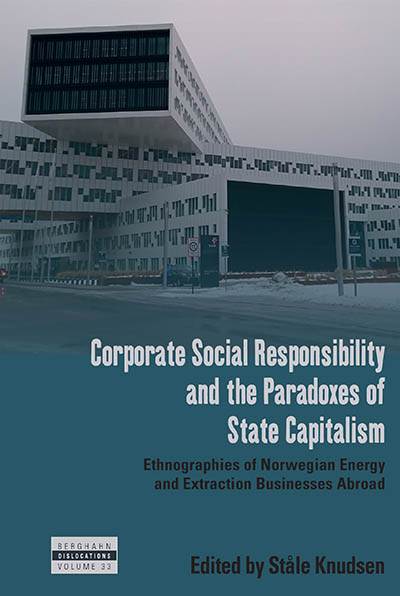
Ståle Knudsen is a Professor in the Department of Social Anthropology at the University of Bergen, Norway. His research bridges environmental anthropology and political ecology, focusing on transnational corporations, corporate social responsibility (CSR), and environmental governance. Key areas include Norwegian energy corporations' CSR practices abroad, Turkish fisheries management, and global energy policies. He led the EU-funded KNOWSEAS (2009–2013) and ENERGETHICS (2015–2019) projects, examining CSR in state-owned energy sectors. Knudsen has authored Fishers and Scientists in Modern Turkey (2009) and co-edited Corporate Social Responsibility and the Paradoxes of State Capitalism (2023). His work critiques the intersection of financial logics and environmental accountability in global corporate operations. From 2014–2021, he served as Head of the Department of Social Anthropology at UiB. Research Interests: Corporate responsibility, energy governance, political ecology, environmental conflict, and transnational corporations. Key Projects: ENERGETHICS (CSR in energy companies), KNOWSEAS (European marine management), and ELMÉ (EU fisheries policies). Knudsen’s research combines long-term fieldwork in Turkey with interdisciplinary analysis of global energy systems and CSR paradoxes. He critiques the 'Nordic Model' as a CSR framework and explores tensions between corporate profit and sustainability goals in Norway’s state-owned enterprises.
Yingjin Zhang is a Distinguished Professor of Modern Chinese Literature at the University of California San Diego (UCSD), affiliated with the School of Arts and Humanities. He holds a Ph.D. in Comparative Literature from Stanford University (1992). His research focuses on Chinese literature, comparative literature, cinema studies, visual culture, cultural history, and urban studies. Previously, he taught at Indiana University and served as President of the American Association of Chinese Comparative Literature. He has held prestigious fellowships including the Fulbright China Research Fellowship (2003-04) and has been a visiting professor at institutions like the University of Chicago and Nanjing University. Education: Ph.D. in Comparative Literature, Stanford University (1992) M.A., University of Iowa (1987) Research Interests: Zhang’s work interrogates intersections between literature, cinema, and urbanization in modern China. He analyzes how cultural forms like documentary film and urban narratives reflect societal transformations, translocal identities, and global cultural flows. Notable themes include post-disaster epistemologies in Chinese reportage, the politics of space in Jia Zhangke’s films, and the reconfiguration of Shanghai’s cinematic legacy. His scholarship bridges comparative literature methodologies with empirical film and literary analysis. Awards & Fellowships: Fulbright China Research Fellowship (2003-04) National Endowment for the Humanities Summer Fellowship (1999) Outstanding Junior Faculty Award (Indiana University, 1996) Advising & Editorial Roles: Doctoral advisor for scholars now at institutions like Peking University and Texas A&M Editorial board member for journals including Journal of Chinese Cinemas and Prism: Theory and Modern Chinese Literature His transnational research collaborations and editorial work position him as a key figure in global Sinophone studies and Chinese cinema scholarship.
Sebastian Conrad is a Professor of Modern History and Global History at the Friedrich Meinecke Institute, Freie Universität Berlin. He earned his academic credentials through training in German and Japanese history, later expanding into colonial/postcolonial and global history. His roles include directing the MA program 'Global History' and the graduate school 'Global Intellectual History,' alongside leading the Cluster of Excellence 'Temporal Communities.' Research focuses on global history frameworks, including colonialism, nationalism, and the Enlightenment's global dimensions. Notable works include What is Global History? (2016) and Die Königin: Nofretetes globale Karriere (2024), exploring cultural globalization and historical iconography. He has held fellowships at institutions like the Institute for Advanced Study in Berlin and has authored over 20 books and numerous articles. Advises PhD projects on topics like veterans' movements, waste moralities, and Ottoman political communities. Awards include membership in the Berlin-Brandenburg Academy and Academia Europaea. His work bridges historical scholarship with contemporary debates on memory, colonial restitution, and global interconnectedness.
Samer Faraj is a Professor and Canada Research Chair in Technology, Innovation & Organizing at McGill University's Desautels Faculty of Management. He leads the Research Group on Complex Collaboration and directs the PhD program. His research focuses on healthcare collaboration, innovation, and the impact of emerging technologies on organizations. He holds affiliations with the Department of Social Studies of Medicine and has been a visiting professor at institutions like HEC-Paris and Cambridge University. Faraj earned a BSc from the University of Wisconsin-Milwaukee (1980), an SM in Technology & Policy from MIT (1986), and a PhD in Management from Boston University (1998). His work has been funded by SSHRC, NSF, IBM, and the Quebec government, totaling over CAD $7.4M in grants. His research interests span healthcare collaboration, organizational change, and digital innovation. Notable contributions include studies on robotic surgery coordination, AI's role in organizing, and open-source health IT systems. He has authored over 130 peer-reviewed articles and serves on editorial boards for Organization Science and Information and Organization . Faraj has received prestigious awards like the FNEGE 2018 Prix Académique, AOM Best Paper Awards, and the 2013 Desautels Best Doctoral Advisor Award. His work is highly cited, with 23K+ Google Scholar citations. He advises numerous PhD students and leads interdisciplinary research initiatives, including a focus on postgenomics ecosystems and open science consortia. Current projects include the governance of open science, digital infrastructure development, and AI's implications for strategy and organization. His work bridges academic inquiry with real-world applications, emphasizing the societal and organizational impacts of technological change.
Dr. Sarah Young is an Associate Professor at the School of Slavonic and East European Studies (SSEES), University College London. Her academic journey includes a BA (Honours) in Russian and French from Trinity College, Cambridge, followed by an MA in European Languages and Culture at the University of Manchester and a PhD in Russian Literature from the University of Nottingham. Her research focuses on Russian literature, particularly Dostoevsky’s narrative structures, prison narratives, and the history of penal systems in Russia. She has held a Leverhulme Fellowship and previously taught at the University of Leeds and the University of Toronto. Her work explores themes like Siberian exile, political imprisonment, and revolutionary memoirs, as seen in her book Writing Resistance: Revolutionary Memoirs of Shlissel’burg Prison, 1884-1906 . She also investigates Gulag literature, societal impacts of quantum technologies, and inclusive STEM education for neurodivergent students. Her blogs ( www.sarahjyoung.com ) and websites ( Mapping Petersburg , Shlisselburg ) further her interdisciplinary research. Her scholarly contributions span literary criticism, historical analysis, and policy studies. Awards include the Leverhulme Special Research Fellowship (2001-2003). She actively engages in academic mentoring and has published on research practices across disciplines like environmental engineering and marine conservation.
Toni Kotnik is an Associate Professor in the Department of Architecture at Aalto University, Finland. He holds dual expertise in mathematics and architecture, with a Ph.D. from the University of Zurich and a second degree in architecture. His roles include principal of d’HKL , a Zurich-based experimental architecture firm, and adjunct lecturer at institutions like Harvard University and the Bartlett School of Architecture. His research focuses on integrating science, engineering, and computation into architectural design, emphasizing structural innovation and sustainability. Education: Ph.D. in Mathematics (Dr. sc. Nat.), University of Zurich, 1999 Second degree in Architecture Research Interests: Computational design and generative systems Structural aesthetics and neuroaesthetics Sustainable urban and architectural solutions Parametric modeling and material systems Key Contributions: Advances in graphic statics and form-finding Design strategies for high-density urban environments Integration of AI and generative tools in architectural practice Recent Work Trends: Recent articles emphasize computational methods for industrial layout optimization, AI’s role in architecture, and embodied perception in structural design. His work bridges theoretical research with practical applications, such as the Singapore Hawker Centre redesign and experimental structures like hypar-combined shells. Awards: Aalto University Doctoral Thesis Awards (2022) Best Presentation Award (2019) Oscari-Vilamo Award (2023) Advising & Grants: Supervised 4 theses, including recipients of awards like the Metex Award shortlist. Active in international academic networks, serving on conference committees (e.g., International Association for Shell and Spatial Structures) and editorial roles (e.g., Automation in Construction journal). Labs & Teams: Leads the d’HKL studio, collaborating globally on projects like the AA/ETH Pavilion and the Hypercube for Gardens by the Bay. Research focuses on experimental design and material systems.
Christophe Viavattene is an Associate Professor of Environmental Sustainability at Middlesex University , specializing in flood risk management and urban resilience. He has spent 17 years at the Flood Hazard Research Centre , leading interdisciplinary research across economic and physical sciences in water and flood risk. Research Focus: Flood vulnerability (coastal, urban, fluvial), GIS tools (INDRA model), Multi-Coloured Manual (MCM) methodology, mental health impacts of flooding, groundwater flood risk in arid regions, and air quality risk assessment. Teaching: Programme Leader for the MSc Sustainability and Environmental Management , teaching problem-based sustainability, GIS, and environmental monitoring. Key Collaborations: EU FP7 RISC-KIT, EU CONHAZ, Environment Agency UK projects. Recent Publications: Bayesian flood models, coastal hotspots analysis, and groundwater flood damage methodologies. His work bridges academic research with practical applications, including flood storage compensation frameworks and vulnerability indicator libraries.
Scott McDougall is an Associate Professor in the Department of Earth, Ocean & Atmospheric Sciences at the University of British Columbia (UBC). He specializes in geohazards, particularly landslides and related risks, with a focus on improving risk assessment and mitigation strategies. His work integrates field data, statistical analysis, numerical modeling, and laboratory experiments to understand landslide dynamics. Education: PhD in Geological Engineering, UBC (2006) BASc in Civil Engineering, University of Toronto (1998) Research Interests: Landslide mobility and runout modeling Tailings dam breaches and their impacts Risk evaluation frameworks for geohazards Shoreline erosion and landslide-generated waves Applications of machine learning in hazard prediction Key Contributions: Development of the UBC Geohazards Research Team to advance landslide risk reduction Leadership in the CanBreach project to improve tailings dam breach analysis Pioneering probabilistic runout prediction models for rock avalanches and debris flows Awards: Engineering Geology Best Paper Award 2024 CDA Published Paper Award Advising & Grants: Supervised over 15 graduate students and postdoctoral fellows Active industry collaborations with mining and engineering firms Funded by NSERC, Mitacs, and industry partnerships Labs & Teams: UBC Geohazards Research Team CanBreach Collaborative Research and Development Project
Edward Awh is a Professor at the University of Chicago in the Department of Psychology, specializing in cognitive neuroscience, working memory, and attentional mechanisms. His research explores the neural basis of memory storage, spatial attention, and the interplay between cognitive systems using EEG and neuroimaging techniques. University of Chicago, Department of Psychology NIH R01 grants on working memory and ADHD Research Interests: Awh investigates discrete resource limits in working memory, the role of alpha oscillations in attention, and neural mechanisms underlying memory encoding and retrieval. His work addresses how the brain manages distractor suppression, spatial representations, and the relationship between attention and memory capacity. Scientific Trends: Recent publications focus on content-independent memory encoding, EEG decoding of attentional processes, and the intersection of sustained attention with memory performance. His studies frequently employ human behavioral experiments, EEG analysis, and computational modeling. Grants: Principal Investigator on multiple NIH R01 grants, including projects on working memory states (R01MH087214), perceptual interference in ADHD (R01MH077105), and attentional control mechanisms.