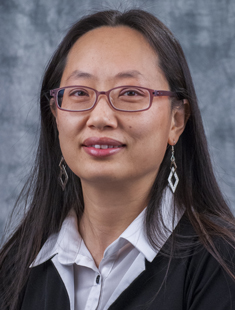
Dr. Mei Nan is an Associate Professor in the Department of Communication at Tongji University's School of Art and Media. With a career spanning since 2004, she previously held positions at Chang'an University before joining Tongji in 2017. Her academic credentials include a Master's from Shaanxi Normal University, postgraduate studies at Communication University of China, and ongoing doctoral research at Xi'an Jiaotong University's School of Economics and Finance. Research Expertise Her research bridges media economics, AI-driven communication paradigms, and film studies, with specific focus areas including: Media economics and corporate governance interactions Artificial intelligence's impact on communication theory Film/audiovisual language analysis Media culture evolution Marketing models in digital ecosystems Teaching Portfolio Dr. Nan teaches both undergraduate courses ( Audiovisual Language, Chinese/Foreign Film History, Media Culture, Chinese Film Appreciation ) and graduate seminars ( Intelligent Communication Theory and Practice ). Her pedagogical approach integrates contemporary media developments with theoretical foundations. Awards and Grants Tongji University Hongda Award (2021) Tongji Cup General Education Course Paper Competition Teaching Teacher Excellent Organization Award (2021) Principal Investigator: Shanghai Philosophy and Social Science Planning Project (2018BGL025) studying media impact on corporate recovery
Zhe Zhang is an Assistant Professor of Innovation, Technology, and Operations at the Rady School of Management, University of California San Diego (UCSD). He holds a Ph.D. in Information Systems and Management from Carnegie Mellon University's Heinz College and dual bachelor's degrees in Economics and Statistics from Stanford University. His research focuses on the societal and spillover impacts of information technology, including fairness in algorithmic decision-making, sharing economy dynamics, and digital transformation effects. Ph.D., Carnegie Mellon University (Heinz College) B.S. in Mathematical and Computational Sciences, Stanford University B.A. in Economics (with honors), Stanford University His work spans disciplines like machine learning, applied microeconomics, and operations management. Current research includes analyzing cashierless retail technology's operational and behavioral impacts, algorithmic bias mitigation strategies, and the economic implications of Amazon Prime adoption. Key findings highlight how digital innovations reshape consumer demand, manufacturer strategies, and algorithmic fairness outcomes. Recent publications address: Bias amplification through data imputation in healthcare Strategic overfitting in data science contests Sharing economy's effect on durable goods markets He has presented at top conferences in information systems (CIST, WISE), economics (NBER), and computer science (KDD, FAccT). Awards include runner-up for the ACM SIGMIS Doctoral Dissertation Award (2019) and a POMS 2017 Supply Chain Management best paper finalist. Prior to his current role, Zhang worked as a part-time Data Creative staff member at DataKind (NYC) and was a 2016 fellow at the Data Science for Social Good Summer Fellowship (Chicago). He has also contributed to fairness methods in AI at Facebook and nonprofit research at NRDC and Union of Concerned Scientists.
Robert Hamilton is a Professor in the Department of Communication Studies & Media Arts at McMaster University's Faculty of Humanities in Hamilton, Canada. With an extensive career as both an academic and practicing artist, he has established himself as a significant figure in contemporary media arts education and creation since joining McMaster University. Hamilton holds dual MFA degrees from the Art Institute of Chicago and the Jan van Eyck Academie in Maastricht, Netherlands, complemented by a Diploma from the Alberta College of Art + Design. His academic journey spans from 1981-1985 at the Alberta College, followed by advanced studies from 1991-1993 at the Jan van Eyck Academie. His research and creative practice centers on visual media with particular focus on video art, photography, and animation. Hamilton's work consistently explores themes of identity, community, and the evolving urban environment, often reflecting on societal events and contemporary issues. His artistic approach combines technical mastery with conceptual depth, resulting in works that challenge viewers' perceptions of everyday spaces and social structures. He has developed a distinctive methodology that blends documentary techniques with artistic interpretation, creating works that are simultaneously observational and transformative. Hamilton's recent body of work demonstrates a clear trajectory toward examining human relationships with urban spaces, particularly during times of societal transformation like the pandemic. His projects increasingly incorporate digital technologies and AI elements while maintaining a strong foundation in traditional media arts. The thematic continuity across his work reveals a persistent concern with how individuals navigate and make meaning within constructed environments. German Video Art Prize Silver Hugo Award at the Chicago Film Festival Work featured in National Gallery of Canada collection As an educator, Hamilton has mentored numerous students through senior thesis projects and specialized courses in media production. His teaching portfolio spans animation, video art, digital cinema, photographic techniques, and emerging media. While specific grant information isn't detailed in the available materials, his sustained creative output suggests successful acquisition of research funding to support his artistic practice. His work has been exhibited internationally at venues including Maison des Arts de Laval, Museum of Contemporary Art in Castello, Spain, and Transmediale in Berlin. Hamilton maintains an active studio practice that directly informs his teaching approach. His creative process involves both digital and traditional techniques, often experimenting with the intersection of physical and virtual spaces. He has developed specialized approaches to documenting urban environments that reveal hidden patterns and structures within everyday landscapes, creating what might be described as visual commentaries on contemporary life.
Dr. Jaswinder Lota is a Reader in Engineering at the University of East London , School of Architecture, Computing and Engineering, Department of Engineering & Construction. He is also a Visiting Academic at University College London’s Department of Electronic and Electrical Engineering, and a Chartered Engineer with extensive industry and academic experience. Education: BSc BEng MEng PGCert HE PhD Research Interests: Dr. Lota specializes in signal processing, circuits and systems, wireless communication, and their applications in radar systems (weather/military), low-power sustainable networks beyond 5G/6G (robotics, automation, healthcare), and electronic technologies for hydrogen propulsion. His work integrates AI-driven channel modeling and impulsive noise analysis. Scientific Awards: IEEE CAS Society Certificate of Appreciation (2019) Grants and Collaborations: He has secured significant funding, including a £2.5K International Research Collaboration Award (2016), £2.5K Research Internship Award (2015), £76K Impact Grant (2014), and a £7M MoD-funded project (1999-2004). Collaborators include UCL and NYU. Leadership: Dr. Lota leads the Smart Cities Research group at UEL and contributed to the REF 2021 submission. He has served as Associate Editor for IEEE TCAS I and Guest Editor for multiple IEEE journals.
Gregory D. Hager is the Mandell Bellmore Professor of Computer Science at Johns Hopkins University with joint appointments in Electrical and Computer Engineering, Mechanical Engineering (Whiting School of Engineering), and Surgery (School of Medicine). He serves as founding director of the Malone Center for Engineering in Healthcare and is a member of the Data Science and AI Institute. Research Focus Hager leads the Computational Interaction and Robotics Lab (CIRL), specializing in dynamic spatial interaction at the intersection of imaging, robotics, and human-computer interaction. His pioneering work in real-time computer vision algorithms has driven innovations in surgical training, medical diagnostics, warehouse automation, and ultrasound-guided procedures. Research spans collaborative robotics, time-series image analysis, and AI-driven healthcare systems with over 500 publications. Scientific Recognition IEEE Fellow MICCAI Society Fellow ACM Fellow AIMBE Fellow AAAS Fellow Hans Fischer Fellowship (Technical University of Munich) Fulbright Fellowship Leadership & Service Hager chairs the NSF Computer and Information Science and Engineering Directorate (appointed 2024) and co-founded startups Clear Guide Medical and Ready Robotics. He previously chaired JHU's Computer Science Department (2010-2015) and served as deputy director of the NSF Engineering Research Center for Computer-Integrated Surgical Systems. His advisory roles include Stanford’s AI100 Study, National Academies AI panels, and editorial boards of IEEE Transactions on Robotics and IEEE PAMI. Laboratory Affiliations CIRL operates within the Laboratory for Computational Sensing and Robotics (LCSR) and partners with the NSF Engineering Research Center for Computer-Integrated Surgical Systems and Technology (ERC-CISST), focusing on translational healthcare robotics research.
Nicolò Dell'Unto serves as Professor of Archaeology at Lund University's Department of Archaeology and Ancient History within the Faculty of Humanities and Theology. His research pioneers digital methodologies for archaeological analysis, specializing in 3D visualization, spatial technology, and virtual reality applications that transform how we perceive and investigate the past. Based at Helgonavägen 3 in Lund (Room LUX:A122), he directs the Digital Archaeology Laboratory (DARKLab) and oversees undergraduate/postgraduate digital archaeology programs. His educational background includes: Archaeology studies at University of Rome, La Sapienza PhD in Technology and Management of Cultural Heritage from IMT Lucca, Italy Postdoctoral fellowship at University of California Merced Dell'Unto's research focuses on how laser scanners, photogrammetry, GIS, and virtual reality technologies fundamentally reshape archaeological practice. His work bridges technical innovation with theoretical frameworks in landscape archaeology, emphasizing practical field applications while addressing methodological challenges in data interpretation. Key themes include digital documentation standards, 3D data management, and the cognitive impact of visualization tools on archaeological reasoning. His publication trends reveal a shift toward AI integration in archaeological data interpretation, infrastructure development for 3D data sharing, and cross-disciplinary collaborations examining Mediterranean connectivity. Recent works emphasize practical frameworks for implementing digital tools in fieldwork while addressing sustainability challenges in digital heritage preservation. Award highlights: Einar Hansen Prize for Humanities (2017) Royal Physiographic Society of Lund election (2024) Best Paper Award (2014) Highly Cited Research recognition (2017) Dell'Unto supervises PhD and master's students while leading major projects including RE-OSTRAKON (3D artifact scanning), TETRARCHs (data reuse), and AIR (Archaeological Interactive Report). His DARKLab serves as Sweden's national infrastructure for digital archaeology, collaborating with institutions like University of Oslo's Museum of Cultural History where he holds a visiting professorship since 2019. He actively shapes digital archaeology policy as Domain Specialist for Swedish National Data Service, Board Member for Statens historiska museer, and Open Science Champion at Lund University, driving national standards for archaeological data management and open science practices.
Orit Shaer is a Professor and co-Chair of Computer Science at Wellesley College , where she founded and directs the Human-Computer Interaction (HCI) Lab . Her work bridges tangible interaction, human-AI collaboration, and mixed-reality interfaces, focusing on transforming work and learning environments through embodied technologies. Education : B.A. from Academic College of Tel-Aviv, M.S. and Ph.D. in Computer Science from Tufts University Research interests center on novel human-computer interaction paradigms : Human-AI collaboration frameworks Tangible and embodied interface design Mixed-reality applications for productivity Genomics collaboration tools STEAM education technologies Recent publications highlight human-AI co-creation (CHI 2024), temporal dynamics in automated work (CHIWork 2024), and pandemic-era remote interaction studies (IEEE Pervasive Computing 2021). Awarded: NSF CAREER Award Agilent Technologies Research Award Google App Engine Education Award Pinanski Prize for Excellent Teaching Best Paper Honorable Mention (ACM CHI 2014) Honorable Mention (CHIWork 2022) She co-founded the international CHIWork Symposium and chairs the ACM TEI conference. Her NSF IRES grant (2022) supports US-German collaboration on human-automation interaction.
Dr. Sahani Pathiraja is a Lecturer (tenure track assistant professor) at UNSW Sydney , specializing in Data Science . Her research bridges mathematical and statistical foundations with practical applications in environmental and biomedical sciences. Research Focus : Sequential Bayesian inference, Monte Carlo methods, stochastic analysis of non-linear filtering, uncertainty quantification, and real-time parameter estimation. Current Projects : Co-investigator in the ARC Industrial Transformation Training Centre: Data Analytics for Resources and Environment (DARE) and the Next Generation Graduate Program (NGGP) in Sports Data Science and AI . Research Supervision : Dr. Pathiraja supervises PhD students in areas including: Bayesian inference Stochastic differential equations Data assimilation Non-linear filtering Scientific Collaborations : Her work intersects with environmental science, biomedical applications, and machine learning. Projects include stochastic hydrology, SDEs, and operator learning for environmental systems. Contact Information : Email: s.pathiraja@unsw.edu.au Phone: +61 2 8065 0836 Office: Room 2070, Level 2, The Red Centre, UNSW Sydney
Hye-Chung Kum is a Professor in the Department of Health Policy & Management at Texas A&M University, where she pioneers Population Informatics to transform digital data into evidence-based health policy solutions. Her work bridges computer science, public health, and social work to address critical data challenges in healthcare systems. Education: PhD, University of North Carolina at Chapel Hill (UNC-CH), 2004 MSW (Master of Social Work), UNC-CH, School of Social Work, 1998 MS, UNC-CH, Department of Computer Science, 1997 BS, Yonsei University, Seoul, Korea, Department of Computer Science, 1995 Research Vision: Dr. Kum develops privacy-preserving human-computer hybrid systems for cleaning and integrating chaotic real-world data (e.g., EHRs, administrative records). Her Population Informatics framework enables ethical large-scale analysis while addressing data genocide in marginalized communities through innovations like the Secure Decoupled Linkage (SDLink) system. Publication Trends: Recent work (2024-2025) reveals three dominant threads: (1) Mental health service utilization dynamics during/post-pandemic, (2) Racial/ethnic disparities in emergency department use and cancer outcomes, and (3) Ethical data sharing frameworks for vulnerable populations. Her Texas-focused studies on Medicaid payment models and AI-driven record linkage demonstrate practical policy applications. Research Infrastructure: As director of the Population Informatics Lab, she leads cross-disciplinary teams developing Privacy-by-Design tools that balance public health needs with data sovereignty—particularly for American Indian and Alaska Native communities. Her grant-funded work consistently addresses Medicaid transformation and healthcare cost drivers through secondary data analytics.
Ryo Ikeshiro is an Assistant Professor at the School of Creative Media, City University of Hong Kong, and co-director of the spatial audio art/research unit SoundLab. His work bridges sound art, computational creativity, and cultural studies through immersive installations, algorithmic audio-visual systems, and sonification techniques. PhD in Creative Practice (Goldsmiths, University of London) MPhil in Music (University of Cambridge) BMus (King's College London) Ikeshiro's research interrogates the materiality of sound through: Multichannel Ambisonics and directional audio Neural network-driven temporal dislocation Sonification of climate data and historical soundscapes Machine learning for artistic interpretation Interplay of identity and technology East Asian ideophonic traditions His 2010-2024 publications and installations reveal cross-disciplinary engagement with: Fractal mathematics in audiovisual art Algorithmic composition systems Interactive installation technologies Sonic cartography Historical memory in sound Collaborative research frameworks SoundLab, which he co-directs, develops spatial audio research at the intersection of: Technical innovation Cultural representation Experimental pedagogy Public engagement International artistic exchange Practice-based research
Sushil Prasad is a Professor of Computer Science at the University of Texas at San Antonio (UTSA), affiliated with the College of Sciences. His research focuses on data-intensive computing, energy-efficient deep learning models, parallel algorithms, and high-performance software systems. He holds a Ph.D. from the University of Central Florida, an M.S. from Washington State University, and a B.Tech. from the Indian Institute of Technology, Kharagpur. His work emphasizes integrating parallel and distributed computing into early computer science curricula. Key research interests include geospatial data analysis using ICESat-2 and Sentinel-2 imagery, edge device-optimized neural networks, and scalable polygon processing algorithms. He has contributed to frameworks like MPI-GIS and Crayons for high-performance geospatial computing. His educational initiatives include NSF-funded curriculum modernization efforts in parallel computing education. Recent work trends show a focus on climate science applications (e.g., polar sea ice classification), energy-efficient AI, and GPU/OpenMP parallelization. He has organized workshops like EduHPC and EduPar to advance HPC education strategies. Notable recognition includes the TCPP Outstanding Service Award (2012). His projects span cloud-based GIS systems, distributed ML training, and big spatial data processing. Collaborations include NSF-funded research on colocation mining, trajectory analysis, and curriculum development for undergraduate HPC education.
Nikitas Karanikolas serves as Professor in the Department of Informatics and Computer Engineering at the University of West Attica since March 2018, following a distinguished career progression from Assistant Professor (2004) to Associate Professor (2010) and Professor (2014) at the Technological Educational Institute of Athens. His professional trajectory includes significant roles as Systems Head of TEI Athens Library (1996-1997) and Chief of Informatics at Aretaieio University Hospital (1997-2004), alongside leadership positions in the Greek Computer Society as Board Member (2004-2006) and Secretary General (2006-2008). His academic foundation includes: Bachelor's in Statistics and Informatics from Athens University of Economics and Business (1988) PhD in Applied Informatics from Athens University of Economics and Business (1994) with thesis "Technological and Linguistic approaches in Natural Language Understanding" Dr. Karanikolas maintains an exceptionally broad research portfolio spanning Natural Language Processing , Computational Linguistics , Medical Informatics , and Green Energy systems. His work consistently bridges theoretical computational frameworks with practical healthcare applications, particularly evident in recent dementia care technologies and Greek language processing systems. The interdisciplinary nature of his research connects computational phonology with medical diagnostics and e-government applications. Analysis of his 15 most recent publications reveals a pronounced shift toward AI-driven healthcare solutions (particularly dementia patient monitoring), multilingual NLP systems (Greek and Polish), and urban safety applications . His work demonstrates consistent methodology development in ontological representations and multimodal fusion techniques, with increasing emphasis on real-world clinical and governmental implementations since 2023. No scientific awards were documented in the source materials. With 16 journal papers, 68 conference publications, and six authoritative Greek university textbooks, Dr. Karanikolas maintains an active research trajectory. His advising capacity is evidenced through extensive publication mentorship, particularly in medical informatics and NLP projects. While specific grant details are unavailable, his hospital information system implementations and textbook authorship suggest successful research funding acquisition. Current research activities focus on multimodal aggression prediction systems for dementia care, Greek language ontological frameworks, and urban navigation safety applications, primarily conducted through the University of West Attica's informatics infrastructure.
Dr. Irene Fubara-Manuel is an Associate Professor in Digital Media Practice at the University of Sussex's School of Media, Arts and Humanities. Their work bridges media art, animation, game design, and critical theory, focusing on race, migration, surveillance, and queer futurities. They hold a PhD from Sussex (2016-2019) and a PgCert in Higher Education (2020-2022). Their research interrogates biometric surveillance systems, digital colonialism, and intersectional feminist praxis in technology. Key research areas include: Algorithmic governance of migration Data colonialism and global south perspectives Feminist digital infrastructures Queer media representation Intersectional methodologies in digital humanities Recent projects include the AHRC-funded Full Stack Feminism initiative (2021-2024), exploring anti-racist feminist tech ecosystems. Their creative practice spans installations addressing border control algorithms and queer digital futurisms. Notable works include the Full Stack Feminism Archive and Manifestations exhibition. Awards include the JUST AI Fellowship (2020). Teaching focuses on critical media production and digital culture. Their publications span peer-reviewed journals, edited collections, and creative-critical exhibitions, demonstrating a commitment to interdisciplinary praxis.
Dr. Jing Zhang is an Assistant Professor in the Department of Computer Science at the University of California, Irvine (UCI), affiliated with the Donald Bren School of Information and Computer Sciences. She holds a Ph.D. in Electrical Engineering and Molecular/Computational Biology from the University of Southern California (2012) and completed postdoctoral training in Computational Biology at Yale University. Her research focuses on developing computational methods to unravel gene regulation mechanisms and link genetic variations to diseases, particularly in noncoding regions of the genome. She has contributed extensively to the ENCODE project, co-authoring pivotal studies in Nature and producing over 5,900 experimental datasets. Dr. Zhang’s work bridges engineering, mathematics, and biology, with applications in precision medicine for cancers and psychiatric disorders. She emphasizes the importance of noncoding DNA in disease causation and has pioneered tools like EN-TEx and scENCORE to analyze epigenomes and regulatory elements. Her lab actively seeks to recruit Ph.D. students, postdocs, and interns to advance genomic technologies. Key research areas include single-cell and spatial transcriptomics, gene regulatory networks, and computational methods for multi-omics data integration. Despite pandemic-related challenges, she maintains strong collaborations and teaches courses in bioinformatics. Her future goals include expanding lab interactions and applying computational models to predict disease susceptibility and treatment responses.
Raymond H. Cuijpers is an Associate Professor at Eindhoven University of Technology in the Human Technology Interaction group. His research focuses on Cognitive Robotics , Human-Robot Interaction , and Artificial Intelligence for cognitive agents, with applications in healthcare robotics and aging population support. PhD in Physics of Man from Utrecht University (2000) Postdoctoral research at Erasmus MC Rotterdam and Radboud University Nijmegen Key research areas include: Developing socially intelligent robots with proper social cue interpretation Hybrid AI approaches for real-world complexity handling Visual-haptic perception integration in human motor control Service robots for COPD patient assistance (KSERA project) Rescue robotics and tele-operation applications Recent research output (2025) includes studies on: Personalization in human-robot communication Optimal lighting for elderly visual perception Human-robot bonding mechanisms Interactive sensorized platforms for homecare (GUARDIAN) Audiovisual temporal integration in virtual environments He coordinates large-scale European projects like GUARDIAN and previously KSERA, contributes to sustainable development goals through healthcare robotics, and serves on editorial boards of leading journals including International Journal of Social Robotics . His work spans both technical robotics development and human-centric interaction studies.