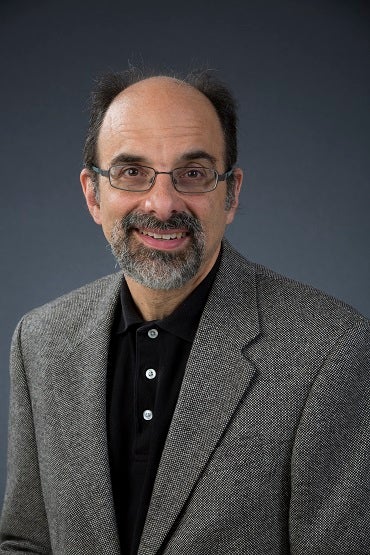
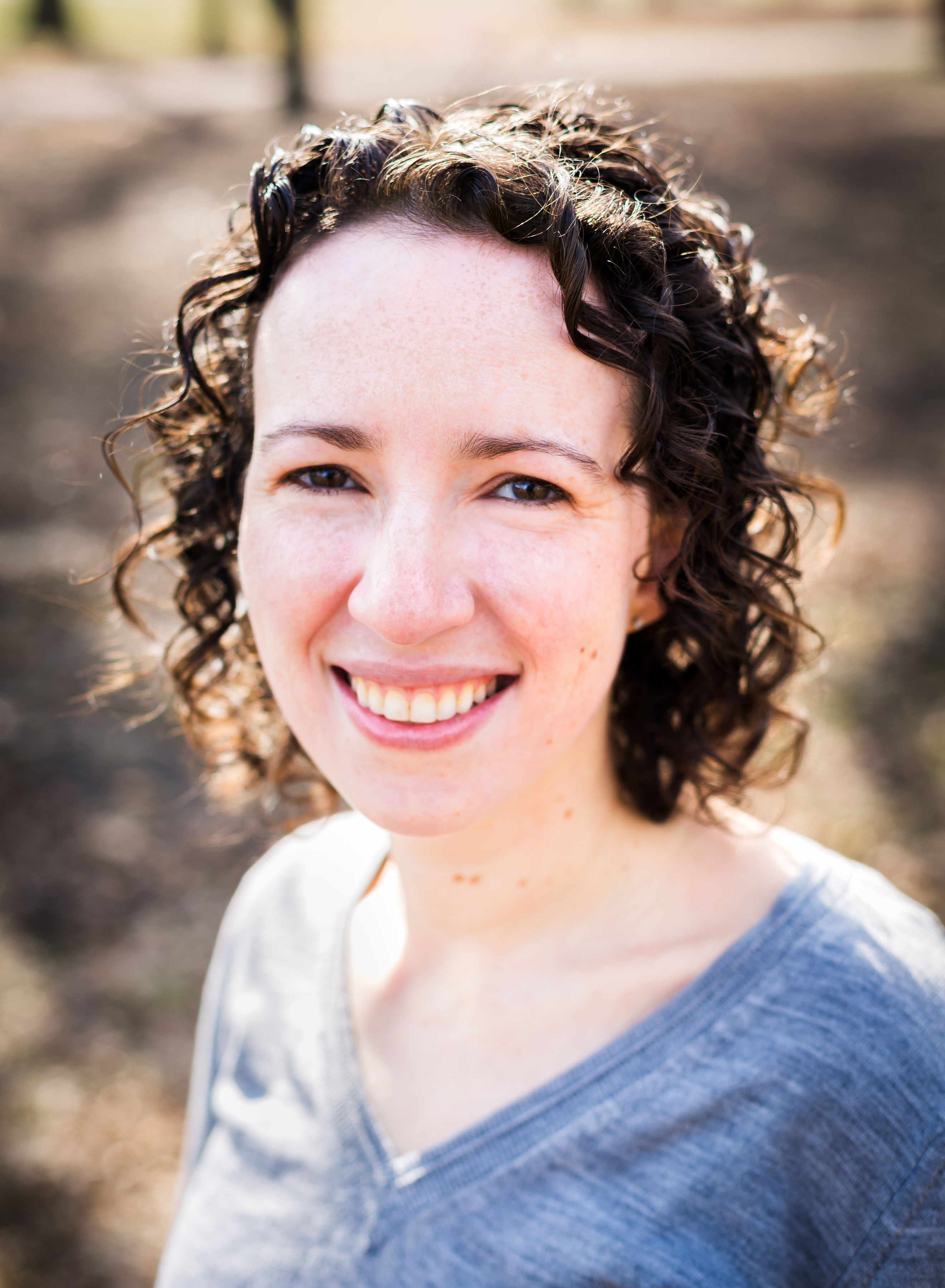
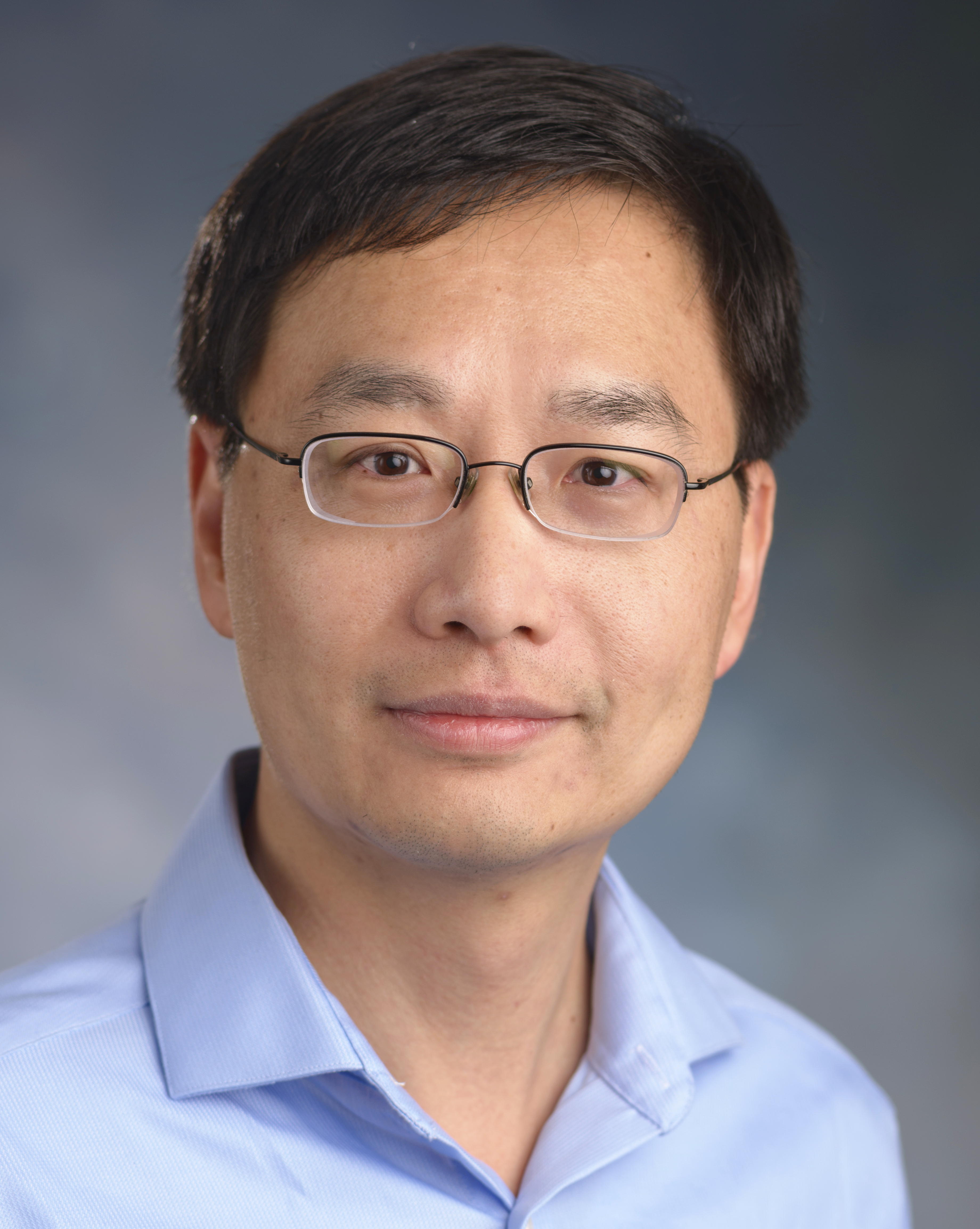
Stephen A. Vavasis is a Professor in the Department of Combinatorics and Optimization at the University of Waterloo, part of the Faculty of Mathematics. He holds a PhD in Computer Science from Stanford University (1989) and has held academic positions at Cornell University (1989–2006) before joining Waterloo. His research focuses on continuous optimization, data science, first-order methods, scientific computing, and computational mechanics. Current teaching includes courses on convex optimization and portfolio optimization methods. He has served as Associate Dean of Computing (2017–2020) and Interim Director of Data Science graduate programs. His work is supported by NSERC grants. Notable awards include the Hertz Fellowship, Churchill Scholarship, and Guggenheim Fellowship. Vavasis's research emphasizes applications of optimization to clustering, machine learning, and fracture mechanics. His publications span convex optimization frameworks, algorithmic analysis of gradient methods, and numerical methods in mechanics. Recent work explores unifying analyses of first-order optimization algorithms and robust optimization techniques for high-dimensional data problems.
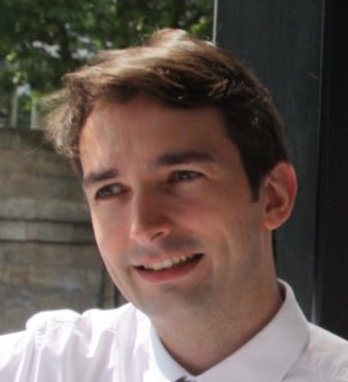
Ismael Castillo is a Professor of Statistics at Sorbonne Université , affiliated with the Laboratoire de Probabilités, Statistique et Modélisation (LPSM) and its Statistics, Data, Algorithms team. He serves as Associate Editor for Annals of Statistics , Bernoulli , and co-Editor for Bayesian Analysis . Research Interests : Mathematical statistics with emphasis on Bayesian nonparametrics , inference in high-dimensional structures , uncertainty quantification , and applications in signal processing and life sciences . Recent Work spans deep neural networks with heavy-tailed weights , posterior and variational inference , fractional posteriors in semiparametric models , and deep Gaussian processes . His publications demonstrate expertise in multiple testing procedures , Spike and Slab priors , and nonparametric Bayesian methods . Awards : IMS Fellow , Honorary Fellow of Institut Universitaire de France , and Best Paper Prize (2021) for research on Pólya tree posterior distributions. Students : Supervised PhD candidates Paul Egels , Thibault Randrianarisoa , and co-supervised Bo Ning (FSMP postdoc) and Kweku Abraham (Hadamard postdoc). Grants : ANR BACKUP (2023-2027, coordinator) and ANR GAP (2021-2025, member).
Andrea Montanari is a Professor of Mathematics and Statistics at Stanford University, affiliated with the Department of Mathematics and Statistics. His research focuses on high-dimensional statistics, machine learning theory, optimization algorithms, and statistical physics, with applications to neural networks and complex systems. He has contributed extensively to understanding generalization in overparametrized models, spin glass theory, and algorithmic methods like approximate message passing. His work bridges theoretical computer science and mathematical physics, addressing challenges in data analysis and learning from high-dimensional datasets. Notable themes include analyzing neural network dynamics, optimizing high-dimensional landscapes, and developing efficient algorithms for sparse and low-rank matrix estimation. Montanari’s publications explore topics such as the interplay between statistical and computational limits, the behavior of gradient-based methods, and the theoretical foundations of modern machine learning. His recent research demonstrates a focus on fundamental questions in learning theory, including the study of phase transitions in statistical estimation, the role of overparametrization in generalization, and the mathematical underpinnings of contemporary algorithms. While no specific awards are listed here, his contributions reflect significant impact in interdisciplinary fields.
Tengyao Wang is a Professor in the Department of Statistics at the London School of Economics and Political Science (LSE), serving as the MSc Statistics (Financial Statistics) Programme Director. Prior to LSE, he held positions as a Lecturer at University College London and a Research Fellow at the Cantab Capital Institute for the Mathematics of Information, University of Cambridge. His research focuses on high-dimensional statistics, computational efficiency, and statistical limitations imposed by computational constraints. Education: PhD in Statistics under Prof Richard Samworth at the University of Cambridge, with earlier studies including a Part III Essay in Empirical Process Theory. Research interests include sparse signal detection, change-point analysis, dimension reduction, robust statistics, and applications in medical statistics, financial data analysis, and material discovery. Key contributions include methodologies for handling missing data, high-dimensional change-point detection algorithms, and statistical learning techniques. Publications span theoretical advancements and applied innovations, with recent work emphasizing deep learning with missing data, residual permutation tests, and semi-supervised learning via random projections. His work has been recognized with awards such as the Royal Statistical Society Research Prize (2019) and the Guy Medal in Bronze (2023). He is an Associate Editor of the Journal of the Royal Statistical Society, Series B (JRSS B), and actively contributes to open-source tools like the 'ocd' and 'MissInspect' R packages for changepoint detection and missing data analysis.
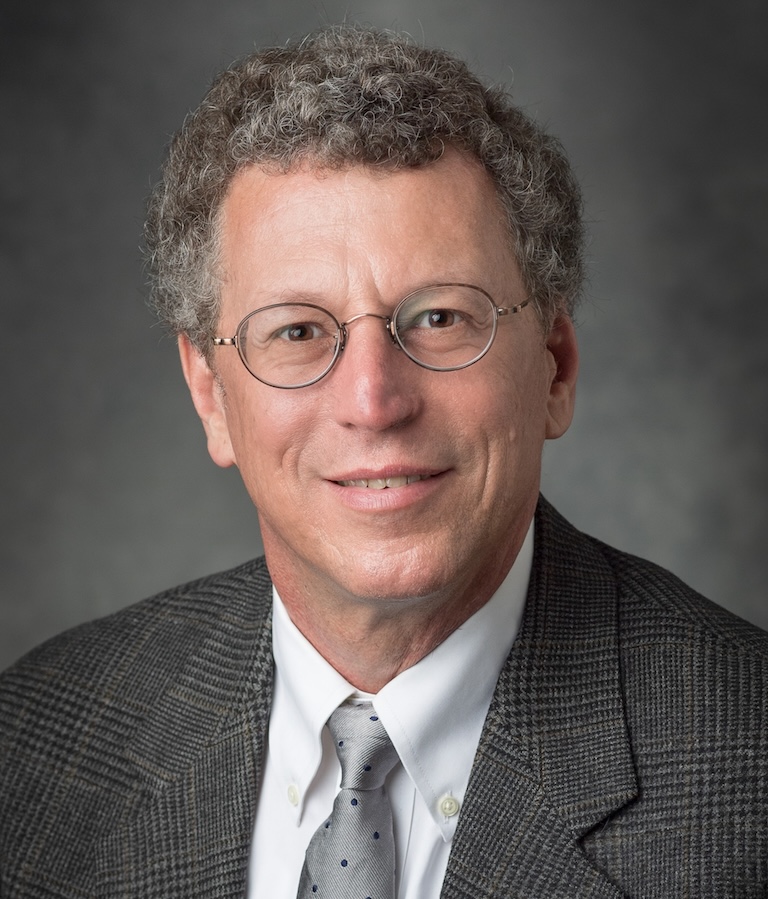
Charles A. Bouman is the Showalter Professor of Electrical and Computer Engineering and Biomedical Engineering at Purdue University, with a courtesy appointment in Mathematics. He is a leading researcher in computational imaging, integrating statistical signal processing, physics, and computation for applications in healthcare, scientific, and industrial imaging. Education: B.S.E.E., University of Pennsylvania, 1981 M.S., University of California at Berkeley, 1982 Ph.D. in Electrical Engineering, Princeton University, 1989 His research focuses on computational imaging , including statistical image models, multiscale techniques, tomographic reconstruction, and fast algorithms. Key areas include Model-Based Iterative Reconstruction (MBIR), Plug-and-Play priors, document processing, and multiscale segmentation. His work has led to foundational contributions in total variation regularization and sparse-view reconstruction. The recent publications highlight a strong trend in integrating machine learning with physical models for image reconstruction, particularly through Plug-and-Play methods. His work spans optical tomography, halftoning, image scaling, and document compression, demonstrating consistent innovation in both theory and practical software implementation. Scientific Awards and Honors: Member, National Academy of Inventors Life Fellow, IEEE Fellow, IS&T; Honorary Member (2022); Service Award (2023) Fellow, SPIE and AIMBE IEEE Signal Processing Society Claude Shannon-Harry Nyquist Award (2021) Electronic Imaging Scientist of the Year (2014) SIAM Imaging Science Best Paper Prize (2020) Founder, IS&T Computational Imaging Conference (2003) Co-Founder, IEEE Transactions on Computational Imaging Vice President, IS&T; Former VP of Publications (2000–2004) Bouman has advised numerous graduate students and leads a vibrant research group developing open-source tools like MBIRJAX , SVMBIR , and OpenMBIR . His research has been supported by the National Science Foundation, General Electric, Intel, Xerox, Hewlett-Packard, and the State of Indiana 21st Century Fund. He maintains an active presence through tutorials, conference leadership, and educational resources including video lectures and a textbook on Foundations of Computational Imaging. Labs and Research Teams: His group develops cutting-edge software for tomographic reconstruction, clustering, segmentation, and dynamic sampling. Projects include Gaussian Mixture modeling (GMCluster), Plug-and-Play implementations, Sparse Matrix Transforms, and UAV sensing datasets. The research is highly interdisciplinary, bridging engineering, mathematics, and biomedical applications.
Rina Foygel Barber is the Louis Block Professor in the Department of Statistics at the University of Chicago, where she also serves as Co-chair of the Committee on Community, Diversity, and Inclusion (CCDI) and is a member of the Committee on Computational and Applied Mathematics (CCAM). Her educational background includes: PhD in Statistics, University of Chicago (2012), advised by Mathias Drton and Nati Srebro MS in Mathematics, University of Chicago (2009) ScB in Mathematics, Brown University (2005) NSF postdoctoral fellow, Stanford University Department of Statistics (2012-13), supervised by Emmanuel Candès Professor Barber's research focuses on the theoretical foundations of statistical problems in estimation, prediction, and inference, particularly in high-dimensional settings where classical methods may not be reliable. She specializes in distribution-free inference methods such as conformal prediction, multiple testing methods, algorithmic stability, and shape-constrained inference. Her work also extends to modeling and optimization problems in medical imaging reconstruction. Her recent publications demonstrate a strong focus on distribution-free inference, with particular emphasis on conformal prediction, false discovery rate control, and algorithmic stability. Her work bridges theoretical statistics with practical applications, especially in the medical imaging domain. Professor Barber has received numerous prestigious awards: Elected to National Academy of Sciences (2025) MacArthur Fellowship (2023) IMS Fellow (2023) COPSS Presidents' Award (2020) Peter Gavin Hall Early Career Prize (2020) She actively mentors students and collaborators, with many co-authored publications across statistics, machine learning, and medical imaging. Her research has been supported by significant grants that enable her work on theoretical foundations of statistical inference and practical applications in medical imaging. Professor Barber also co-organizes the International Seminar on Selective Inference. Her research group focuses on developing and analyzing estimation, inference, and optimization tools for structured high-dimensional data problems. They work on false discovery rate control, distribution-free inference, and applications in medical imaging reconstruction.
Anna Levina is an Assistant Professor for Computational Neuroscience at the University of Tübingen , affiliated with the Department of Computer Science under the Faculty of Science. Her research focuses on the self-organization of neuronal activity, critical dynamics in neural networks, and the excitation/inhibition balance in cortical circuits. Current positions: Assistant Professor (since 2018), Group Leader (2017-2018), Equality Officer (Computer Science) Previous roles: IST Fellow (2015-2017), Associated Researcher (2011-2015), Postdoc/PI (2011-2015), Postdoc (2008-2011) Her research integrates mathematical modeling , statistical physics , and computational neuroscience to study criticality phenomena, neural avalanches, and adaptive network dynamics. Key interests include: Self-organized criticality in neural systems Excitation/Inhibition balance mechanisms Network topology and dynamics Timescale analysis in neural processing Stochastic modeling of neural activity Recent publications reveal trends in understanding critical dynamics across biological and artificial networks, with applications to memory systems, sensorimotor integration, and disease modeling. She has received recognition as an IST Fellow .
Aaron Smith is an Associate Professor in the Department of Mathematics and Statistics at the University of Ottawa, affiliated with the Faculty of Science. He holds a PhD from Stanford University. His research focuses on applied probability, computational statistics, Monte Carlo methods, and Markov chains, with an emphasis on advancing theoretical understanding and practical applications of these methodologies. Dr. Smith's work includes contributions to community detection algorithms, Markov chain mixing times, and synthetic health data generation. His recent publications explore topics such as nonstandard Dirichlet form representations, perturbation analysis of MCMC algorithms, and sparse Bayesian multidimensional scaling. He advises students in applied probability and has supervised postdoctoral researchers in related fields. His research interests span a wide range of topics, including stochastic processes, statistical inference, and algorithm design. He is particularly known for his analysis of convergence rates in Markov chains and the development of efficient sampling techniques for complex models. His interdisciplinary work bridges theoretical mathematics and practical computational challenges in data science and healthcare. Dr. Smith collaborates on projects involving synthetic data frameworks for privacy-preserving applications and has contributed to foundational work on mixing times and perturbation effects in stochastic systems.
Jonathan Shihao Ji is an Associate Professor in the School of Computing at the University of Connecticut (UConn), leading the Intelligent Systems Lab. He holds a Ph.D. in Electrical and Computer Engineering from Duke University and previously served as an Associate Professor at Georgia State University and Director of the DoD Center of Excellence (CiARE). His research focuses on deep learning applications in computer vision, NLP, robotics, and high-performance computing, with over 50 publications in top venues like CVPR, NeurIPS, and IEEE journals. He has secured grants from NSF, NIH, DoD, and industry partners including VMware and Nvidia. His work emphasizes efficient algorithms for large-scale data processing, parameter-efficient model fine-tuning (e.g., VB-LoRA), and 3D perception benchmarks for UAVs (UAV3D). Notable contributions include sparse network optimization (Dep-L0), energy-based models (M-EBM), and robust defenses against adversarial attacks (Defense-VAE). He is a Senior Member of IEEE and has developed open-source tools like Parallel Word2Vec and WordRank. Recent projects include accelerating Llama2 models on FPGAs (LlamaF) and improving text-to-image synthesis via contrastive learning. His research spans theoretical advancements and practical applications, with industry collaborations in healthcare, robotics, and embedded systems.
LEE Wee Sun is a Professor in the Department of Computer Science at the National University of Singapore (NUS), where he previously served as Head of Department, Vice Dean of Undergraduate Studies, and Vice Dean of Research. His academic journey began with a B.Eng. in Computer Systems Engineering from the University of Queensland (1992) and a Ph.D. from the Australian National University (1996), followed by research roles at the Australian Defence Force Academy and MIT. Education: Ph.D., Australian National University, Canberra, Australia (1996) B.Eng. in Computer Systems Engineering, University of Queensland, Brisbane, Australia (1992) Research Focus: Professor Lee pioneers work in Machine Learning , Planning Under Uncertainty , and Approximate Inference , with emphasis on integrating AI subfields for holistic reasoning. His current projects include "Learning to Decompose for Reasoning and Planning" (enhancing LLMs via self-supervised problem decomposition) and "Learning to Reason with Visual-Linguistic Inputs" (unifying vision, language, and reasoning in single architectures). Publication Trends: Recent work (2023-2025) centers on bridging LLMs with classical AI techniques, featuring breakthroughs in uncertainty quantification, multi-task optimization, and graph-based reasoning. Key themes include sparsity-aware vehicle routing, epistemic uncertainty for reliable LLMs, and differentiable neural solvers for combinatorial problems. Awards: IJCAI-JAIR Best Paper Prize (2022) RSS Test of Time Award (2021) RoboCup Best Paper Award (IROS 2015) HRATC 1st Place (2015) IPPC POMDP Track 1st Place (2011, 2014) UAI Google Best Student Paper (2014) Semeval-1 1st/2nd Place (2007) J.G. Crawford Prize (ANU 1996) Leadership & Service: As steering committee chair for ACML and area chair for NeurIPS/ICML/AAAI/IJCAI, Professor Lee shapes global AI discourse. His administrative roles at NUS and collaborations with MIT/Singapore-MIT Alliance demonstrate commitment to advancing AI education and research infrastructure. While student advisees aren't listed, his leadership positions imply extensive mentoring. Research Ecosystem: His work drives NUS's AI initiatives including Knowledge@Computing projects on reasoning frontiers. Current efforts focus on making AI systems robust through uncertainty-aware planning and multi-modal integration, with applications in robotics, verification systems, and combinatorial optimization.
Chris De Sa is an Associate Professor in the Department of Computer Science at Cornell University, affiliated with the Cornell Machine Learning Group and leading the Relax ML Lab. His research focuses on algorithmic, software, and hardware techniques for high-performance machine learning, particularly relaxed-consistency stochastic algorithms like asynchronous and low-precision stochastic gradient descent (SGD). He earned his Ph.D. from Stanford University under advisors Kunle Olukotun and Chris Ré. His work emphasizes constructing efficient, parallel, and distributed machine learning frameworks for deep learning and data analytics. Education: Ph.D. in Computer Science, Stanford University (2017) Research Interests: Algorithmic techniques for scalable ML, quantization, distributed optimization, hyperbolic geometry in ML, and reliable measurement of ML systems. His group develops frameworks for efficient inference/training and explores the intersection of ML with domains like agriculture and plant science through courses like PLSCI 7202. Recent Highlights: DARPA YFA Grant (2024), NSF CAREER Award, Google Research Scholar Award, and multiple best paper recognitions. Key contributions include QuIP quantization methods, Coneheads attention mechanisms, and theoretical advances in decentralized training. Awards: NSF CAREER Award DARPA YFA Grant (2024) Google Research Scholar Award Mr. & Mrs. Richard F. Tucker Teaching Award Grants & Advising: Advises 8 Ph.D. students (including Ruqi Zhang, Yucheng Lu, A. Feder Cooper) and holds leadership roles in MLSys conferences. Active in grant-funded research (e.g., NSF Robust Intelligence). Labs/Teams: Leads the Relax ML Lab and participates in Cornell’s Institute for Digital Agriculture (CIDA).
Wenping Wang is a Professor in the Department of Computer Science & Engineering at Texas A&M University, part of the College of Engineering. His research focuses on computer graphics, computer vision, geometric modeling, and visualization. He holds Fellowships from ACM and IEEE, and has received notable awards including the 2021 AsiaGraphics Outstanding Technical Contributions Award and the 2017 John Gregory Memorial Award. Wang's educational background includes a Ph.D. from the University of Alberta and M.Eng. and B.Sc. degrees from Shandong University. His work spans advancements in neural implicit surfaces, 3D reconstruction, and medical imaging applications such as orthodontic treatment prediction. He has authored numerous influential papers in top-tier conferences like SIGGRAPH and journals like ACM Transactions on Graphics. His research interests emphasize bridging geometric modeling with machine learning, particularly in neural rendering, surface parameterization, and medical visualization. Recent projects include developing frameworks for automatic tooth alignment and high-fidelity 3D geometry generation. Wang's contributions have significantly impacted both theoretical foundations and practical applications in computer graphics.
Hau-Tieng Wu is a Professor in the Department of Mathematics at the Courant Institute of Mathematical Sciences, New York University. Originally from Kaohsiung, Taiwan, he holds an MD from National Yang-Ming University (2003) and a PhD in Mathematics from Princeton University (2011). His research focuses on developing mathematical foundations for biomedical signal analysis, particularly in high-frequency and heterogeneous physiological signals such as ECG, EEG, and PPG. He leads the MISTA Lab, which bridges theoretical advancements with clinical applications in areas like sleep dynamics, surgical monitoring, and wearable device data analysis. Key academic roles include tenured positions at Duke University (2017–2023) and the University of Toronto (2014–2017). Notable awards include the Sloan Research Fellowship (2015) and PIMS Early Career Award (2017). His lab actively collaborates with physicians and engineers to advance interpretable medical AI systems. Research interests span nonlinear time-frequency analysis, manifold learning, and spatiotemporal data processing. Over 100+ journal publications and 10 conference proceedings highlight contributions to signal processing theory and clinical applications. The lab is recruiting PhD students/postdocs with backgrounds in applied math, statistics, or biomedical engineering.
Francis Bach is a Professor and researcher at INRIA, leading the SIERRA project-team since 2011, which is part of the Computer Science Department at Ecole Normale Supérieure (ENS) within PSL Research University. His work bridges CNRS, ENS, and INRIA as a joint research effort. Elected to the French Academy of Sciences in 2020, he currently runs the ERC project SEQUOIA following his previous ERC project SIERRA (2009-2014). His research spans statistical machine learning with focus on optimization, sparse methods, kernel-based learning, neural networks, graphical models, and signal processing. Bach completed his Ph.D. in Computer Science at U.C. Berkeley under Professor Michael Jordan, followed by work at Ecole des Mines de Paris and the WILLOW project-team at INRIA/ENS/CNRS (2007-2010). His recent book "Learning Theory from First Principles" was published by MIT Press in December 2024. Bach's publication record shows consistent high-impact contributions across machine learning theory and applications, with recent work focusing on conformal prediction, diffusion models, optimization theory, and learning theory foundations. His research demonstrates strong connections between theoretical guarantees and practical algorithms, with applications spanning generative modeling, robust optimization, and statistical inference. Elected to French Academy of Sciences (2020) ERC project SIERRA (2009-2014) ERC project SEQUOIA (current) Author of "Learning Theory from First Principles" (MIT Press, 2024) Bach actively mentors numerous PhD students and postdocs, with many alumni now holding faculty positions at institutions like EPFL, Ecole Polytechnique, University of Washington, and University of Montreal. His teaching includes advanced courses on learning theory at ENS's Master's programs. He regularly presents tutorials at major conferences including COLT, NeurIPS, and ICML, demonstrating his leadership in the theoretical machine learning community.
Prof. Dr.-Ing. Ahmad Osman is a Professor at the Saarland University of Applied Sciences (htw saar), specializing in Test Technologies and Test Methods within the Faculty of Engineering. He also holds an Adjunct Professor position at Laval University in Quebec, Canada, in the Department of Electrical Engineering and Computer Science. His research focuses on Artificial Intelligence applications in Signal and Image Processing for Non-destructive Testing (NDT) , with extensive work on Deep Learning , 3D Ultrasound Tomography , and Sensor Data Fusion in industrial contexts. Engineering Artificial Intelligence Signal Processing Image Processing Non-destructive Testing Quality Control Augmented Reality Osman leads the AutomaTiQ research group and serves as Head of the Algorithms/Signal and Data Processing Department at Fraunhofer IZFP . His recent publications (2017–2022) emphasize Deep Learning for defect detection in CFRP , Terahertz Imaging for artwork diagnostics, and Acoustic Sensors for agricultural quality control. He has organized international conferences on Structural Health Monitoring and contributed to Springer books on NDT technologies. His projects include ComforTex-AI (2024) and development of 3D positioners for ultrasound measurements. Collaborations span institutions in Germany, Canada, Italy, and Brazil, with advisory roles in the German Society for NDT and technical committees for conferences in Montreal and Egypt.