Jonathon Shlens is a principal scientist and research director at Google DeepMind, focusing on vision, language, and learning. He has led teams in deploying production systems, invented TensorFlow, and collaborated with Waymo. His work spans machine learning, computer vision, basic science, and autonomous driving. Research interests include: Machine learning with applications in multimodal and transformer models Computer vision, particularly robustness and 3D object detection Neuroscience, analyzing neural computations in the primate retina Autonomous driving systems and motion forecasting Recent articles highlight trends in: Vision-language models and semantic guidance Transformer architectures for scene flow and calibration Adversarial robustness across human and machine perception Scalable datasets and model architectures Scientific awards include: Best Paper Award at CVPR 2013 Former advisees include notable researchers now at institutions like Stanford, MIT, and OpenAI.
Jaouad Mourtada is an Assistant Professor in the Department of Statistics at ENSAE Paris, a founding member of the Institut Polytechnique de Paris, and a permanent member of CREST (Center for Research in Economics and Statistics). Since September 2020 he has held this faculty position, after completing a post-doctoral fellowship at the University of Genoa and earning his PhD from École Polytechnique. Education PhD in Statistics, École Polytechnique (2016–2019) MSc in Mathematics, "Probability and Random Models", Université Pierre et Marie Curie (2016) MSc in Mathematics, "Fundamental Mathematics", Université Pierre et Marie Curie (2015) BSc in Mathematics, Université Pierre et Marie Curie & École Normale Supérieure (2013) Student at École Normale Supérieure (2012–2016) Research Interests Mourtada’s work lies at the intersection of statistics and learning theory, with a focus on understanding the fundamental complexity of prediction and estimation tasks. His interests span: High-dimensional statistics and minimax theory Statistical learning theory and generalization bounds Online learning, regret minimization, and expert aggregation Density estimation and robust statistics Random forests, kernel methods, and convex optimization Research Output Trends Across more than fifteen recent publications, Mourtada has systematically advanced the understanding of statistical and computational limits in learning. His contributions range from exact minimax analyses of linear least squares and novel robust regression guarantees to refined PAC-Bayesian bounds for aggregation and sharp asymptotics for ridge regression. A recurrent theme is the development of estimators that achieve optimal or near-optimal rates while remaining computationally tractable and adaptive to unknown parameters. Scientific Awards & Recognition While the provided materials do not list specific awards, his sustained publication record in top venues such as Annals of Statistics , Journal of Machine Learning Research , Journal of the European Mathematical Society , and leading ML conferences (NeurIPS, COLT, AISTATS) attests to significant peer recognition. Teaching & Mentoring Mourtada has extensive teaching experience at both undergraduate and graduate levels, covering probability, statistics, and machine learning. Courses delivered include: Statistical Learning Theory (M2 Data Science, École polytechnique & ENSAE) Probability Theory (ENSAE) Python for Probability, Statistics, and Machine Learning (École polytechnique) Optimization for Data Science (M2 Data Science, École polytechnique) Laboratories & Collaborations He is affiliated with CREST/ENSAE and has previously collaborated with the Laboratory for Computational and Statistical Learning at the University of Genoa, the Center for Applied Mathematics (CMAP) at École Polytechnique, and maintains ongoing research ties with international scholars in statistical learning and optimization.
Lizhen Lin is a Professor of Statistics in the Department of Mathematics at the University of Maryland. Her research bridges statistical theory, Bayesian methods, and machine learning through theoretical and applied work in statistics on manifolds, deep learning, and network analysis. University: University of Maryland Department: Mathematics Email: lizhen01@umd.edu Office: Kirwan 1107 Her research focuses on: Foundations of deep neural networks via statistical theory Bayesian modeling for infinite-dimensional and high-dimensional data Geometry and statistics for manifold-valued data Network analysis with covariates and topological structures Robust optimization and inference on non-Euclidean spaces Recent publications emphasize: Bayesian community detection and stochastic blockmodels Variational inference and posterior contraction Manifold-adaptive deep generative models High-dimensional change point detection Applications to microbiome networks and DNA topology Teaching includes courses on linear models (STAT 741) and statistical foundations of deep learning (STAT 818).
Bin Li is an Associate Professor at the School of Electrical Engineering and Computer Science. His research focuses on wireless networks, network scheduling, sufficient dimension reduction, and statistical inference. NSF-funded projects: EAGER: TaskDCL, CAREER: Wireless Collaborative Mixed Reality Networking, CNS Core: Scalable Algorithms for Virtual Reality Over Wireless Networks. Grants include foundational work in AI-driven task training, geospatial digital twins, and joint communication-computation-learning systems. His research spans wireless scheduling algorithms, data freshness optimization, and nonlinear sufficient dimension reduction. Recent work explores Fréchet regression, functional graphical models, and kernel-based hypothesis testing. Articles highlight interdisciplinary applications in computer science, statistics, and mathematics. Statistical methods dominate his contributions, including Bayesian credible sets, copula models, and additive independence frameworks. Collaborations extend to multi-source genomic data analysis and immersive educational platforms via augmented reality. With an h-index of 16 and 74 research outputs, Bin Li’s expertise intersects wireless network optimization and statistical learning. His work addresses challenges in edge computing, cloud offloading, and cyber-physical systems through algorithmic innovation and theoretical rigor.
Professor Lee Jun-ho is affiliated with the Department of Information and Communication Engineering at Sejong University . His research focuses on Radar Signal Processing , Array Signal Processing , and Radio Signal Processing , with emphasis on analytical performance analysis of radar systems and electronic warfare modeling. Email: joonhlee@sejong.ac.kr Research Trends: Recent work includes performance analysis of the MUSIC algorithm under correlated noise, monopulse algorithm optimizations, and compressive sensing for direction-of-arrival (DOA) estimation. Key subfields involve array manifold errors , antenna stability , and statistical error modeling .
Yukai Yang is a Senior Lecturer at the Department of Statistics, School of Economics and Business, Uppsala University. His research bridges econometric theory with applied statistical methods. Education : B.Eng, Shanghai Jiao Tong University Cand. Polit, University of Copenhagen PhD, Aarhus University (2012) His research spans smooth transition models , state-space models , Bayesian VAR , panel data analysis , and directional statistics , with recent interdisciplinary work in medical data science . Articles highlight methodological innovation in time series , machine learning , and mobile biometrics . Scientific Awards : None listed in provided data. His work includes software development (e.g., mfbvar package) and collaborations in multimedia systems and health economics .
Tota Suko is an Associate Professor at the School of Social Sciences, Waseda University, specializing in statistical learning theory and business analytics. With a Ph.D. in Engineering from Waseda University, Dr. Suko leads the Suko Seminar (Management Science Seminar) where students learn to solve business problems using mathematical and management science approaches, primarily through data science techniques including statistical analysis and machine learning. Dr. Suko's research spans multiple domains in statistics and data science. His primary interests include Bayesian statistics, statistical learning theory, business statistics, data mining, and information theory. He has developed methods for analyzing survey data with selection bias, detecting poor responses in questionnaires, and parameter estimation in regression models. His work bridges theoretical statistics with practical applications in business analytics, e-commerce, and even nanotechnology through collaborations with physics researchers. Dr. Suko's recent publications demonstrate a strong trend toward practical applications of statistical methods. His work on generative AI for criminal case law analysis shows innovative application of AI in legal domains, while his research on questionnaire quality control addresses fundamental issues in survey methodology. He has also made significant contributions to theoretical aspects of statistical learning, particularly in the areas of label noise, selection bias, and parameter estimation under non-ideal data conditions. Japan Society for the Promotion of Science Grants-in-Aid for Scientific Research projects Waseda Data Science Consortium industry-academia collaborations Research on nanoscale semiconductor prediction models Development of methods for low-quality data analysis Dr. Suko actively supervises both undergraduate and graduate students through the Suko Seminar. Students work on individual or team projects, participate in data analysis competitions, and present their research at academic conferences. He has developed educational approaches including full-on-demand content for data science education and modularized online statistical teaching materials. Dr. Suko leads the Suko Seminar (Management Science Seminar), which actively collaborates with companies and research institutions. His research team works on diverse projects including analysis of purchasing and browsing histories on e-commerce sites, prediction modeling for nanoscale conduction, and development of methods for low-quality data analysis. The seminar emphasizes both theoretical understanding and practical application of data science techniques to solve real-world business problems.
Justin Haldar is a Professor in the Ming Hsieh Department of Electrical and Computer Engineering at the University of Southern California (USC), where he serves as Director of the Signal and Image Processing Institute and Co-Director of the Biomedical Imaging Group. He holds a joint appointment in the Department of Biomedical Engineering and maintains affiliations with the Dornsife Cognitive Neuroscience Imaging Center, Brain and Creativity Institute, and Dynamic Imaging Science Center. His research focuses on computational imaging and inverse problems, with particular emphasis on developing novel data acquisition and signal processing methods for magnetic resonance imaging (MRI). Haldar's work addresses critical limitations in MRI technology including long acquisition times, limited signal-to-noise ratio, and high costs, developing approaches that combine physical imaging process modeling, constrained signal models, theoretical frameworks, and fast computational algorithms. Haldar's publication record demonstrates consistent innovation in MRI technology, with research spanning from fundamental reconstruction algorithms to practical clinical applications. His work shows a clear progression from theoretical advances in spatiotemporal imaging to real-world implementations that accelerate MRI exams and enable previously impractical next-generation imaging techniques. The breadth of his research connects electrical engineering principles with biomedical applications, particularly in neuroscience and medical diagnostics. NSF CAREER Award recipient IEEE ISBI Best Paper Award winner IEEE EMBC First-Place Student Paper Award recipient Current Chair of IEEE Signal Processing Society's Technical Committee on Computational Imaging Deputy Editor-in-Chief for IEEE Transactions on Computational Imaging Associate Editor for IEEE Transactions on Medical Imaging Haldar maintains active mentorship and collaboration through his leadership of the Biomedical Imaging Group and Signal and Image Processing Institute. His editorial roles in major imaging journals demonstrate significant influence in the field. He has secured substantial research funding including NSF grants that support his innovative work in computational imaging. Haldar's laboratory focuses on developing next-generation MRI techniques that leverage the 'blessings of dimensionality' while mitigating associated challenges, with particular emphasis on jointly designing data acquisition and reconstruction methods to exploit inherent structure within high-dimensional data.
Yingzhen Li is a Senior Lecturer in Machine Learning at the Department of Computing, Imperial College London, within the Faculty of Engineering. She holds a Turing Fellowship at The Alan Turing Institute (2024). Her research focuses on building reliable machine learning systems through probabilistic methods, emphasizing uncertainty quantification, robustness, explainability, and adaptive techniques. Key areas include trustworthy ML models, generative modeling (especially sequential and spatiotemporal data), and approximate inference applied to Bayesian deep learning. Education: PhD in Engineering from the University of Cambridge, supervised by Prof. Richard E. Turner. Previously a senior researcher at Microsoft Research Cambridge and intern at Disney Research. Research interests span uncertainty-aware AI, causal representation learning, and scalable inference techniques. Her work has influenced industrial applications in deep learning frameworks like TensorFlow Probability and Pyro. Notable contributions include tutorials on approximate inference at NeurIPS 2020 and organizing conferences like AABI and AISTATS. Her recent publications address challenges in generative AI, calibration of vision-language models, and energy-based models. Awards include the Turing Fellowship recognizing her leadership in foundational AI research. Collaborations include affiliations with The Alan Turing Institute and prior industry experience. She actively mentors students and advises on adaptive learning systems through her academic and industrial networks.
Dr. Scott Keating is a Lecturer at ETH Zurich’s Department of Earth and Planetary Sciences (D-EAPS), affiliated with the Institute of Geophysics. His research focuses on seismic inverse problem methodologies, particularly uncertainty quantification, numerical optimization, and the development of automated workflows for regional inversion updates. Current projects include full-waveform inversion of ambient noise measurements and CO2 storage monitoring using advanced sensor technologies like distributed acoustic sensing (DAS) and accelerometers. His work integrates cutting-edge computational methods, such as probabilistic inversion frameworks and adjoint-based optimization, to address challenges in subsurface imaging and parameter estimation. Applications span environmental seismology, carbon sequestration, and reservoir characterization, with a strong emphasis on practical, cost-effective solutions for real-world problems such as CO2 storage validation. Publications highlight contributions to elastic full-waveform inversion (FWI), including multiparameter analysis using combined geophone and DAS data, and innovative techniques like targeted nullspace shuttling to enhance inversion reliability. His research also addresses data sparsity and modeling uncertainties, advancing methodologies for robust subsurface monitoring and decision-making.
Kris M. Kitani is an Associate Research Professor at the Robotics Institute of Carnegie Mellon University and a Research Scientist at Meta's Artificial Intelligence division. He co-directs the Extended Reality Technology Center (XRTC) at CMU and holds courtesy appointments in the Electrical and Computer Engineering Department at CMU and as a Guest Professor at the University of Tokyo's Institute of Industrial Science. Education : BS in Electrical Engineering (University of Southern California), MS and PhD in Computer Science (University of Tokyo) Labs : Cognitive Assistance Laboratory His research focuses on computer vision , human activity forecasting , and inverse reinforcement learning with applications in human-centered robotics and assistive technologies . Recent work explores 3D scene understanding , multi-modal sensing , and generative models for physical simulation . Publications analyze pedestrian interaction modeling , human pose estimation , and zero-shot learning for robotic applications. Scientific Awards : Marr Prize Honorable Mention, ICCV 2017 Best Paper Honorable Mentions at CHI 2017/2020 Best Papers at W4A 2017/2019 Best Application Paper, ACCV 2014 Kitani has advised 8 current PhD students and 18 past PhD/MSc students. He has taught graduate-level courses in Computer Vision and Statistical Techniques in Robotics since 2013. The lab develops autonomous systems for real-world perception and interactive decision-making.
Wei Hu is an Assistant Professor in the Department of Computer Science and Engineering at the University of Michigan's College of Engineering. His research focuses on uncovering the theoretical and scientific foundations of deep learning, aiming to open the black box of neural networks through a combination of theoretical and empirical approaches. Dr. Hu received his PhD in Computer Science from Princeton University, where he was advised by Sanjeev Arora. Prior to his PhD, he completed his undergraduate studies at Tsinghua University as a member of the prestigious Yao Class. He also served as a FODSI postdoc at UC Berkeley before joining the University of Michigan faculty. His research interests center around understanding the fundamental mechanisms of deep learning, particularly focusing on training dynamics, generalization properties, and the theoretical underpinnings of neural networks. His work spans both clean, controlled problems and complex real-world models, with recent emphasis on transformer architectures, grokking phenomena, and the implicit biases in neural network training. Analysis of his recent publications reveals a strong focus on theoretical deep learning with particular attention to transformer models, grokking phenomena, and generalization theory. His work bridges the gap between theoretical understanding and practical deep learning applications, with significant contributions to understanding abrupt learning transitions, representation learning, and the dynamics of neural network training. AAAI New Faculty Highlights, 2024 Google Research Scholar Award, 2023 Siebel Scholar, 2021 Best paper award at ICML Workshop on Modern Trends in Nonconvex Optimization for Machine Learning, 2018 Gordon Y.S. Wu Fellowship, 2016 Gold medal (1st place), The 27th Chinese Mathematical Olympiad, 2012 Dr. Hu currently advises three PhD students: Pulkit Gopalani, Zhiwei Xu (co-advised with Yixin Wang), and Yongyi Yang. His research group has received substantial funding through awards including the Google Research Scholar Award. He teaches courses including Introduction to Machine Learning (EECS 445) and specialized topics in machine learning theory and large language models (EECS 598/CSE 598). His research group maintains an active presence in top machine learning conferences, with publications appearing regularly in venues such as NeurIPS, ICML, ICLR, and others. The group's work has gained significant recognition in the theoretical machine learning community for its rigorous approach to understanding deep learning phenomena.
Pong C Yuen is a Professor in the Department of Computer Science and Associate Dean of Science Faculty at Hong Kong Baptist University (HKBU). He earned his B.Sc. (1989) from City Polytechnic of Hong Kong and Ph.D. (1993) from The University of Hong Kong. His academic career at HKBU spans since 1993, including a six-year term as Department Head (2011–2017). Dr. Yuen's research focuses on video surveillance , human face recognition , and biometric security and privacy . His work bridges theoretical advancements in deep learning , sparse representation , and domain adaptation with practical applications in medical imaging and human-computer interaction . Recent publications included in this summary demonstrate expertise in unsupervised learning for person re-identification, adversarial domain adaptation for anti-spoofing, and physiological signal analysis for biometric security. These works span venues like IEEE Transactions on Image Processing (TIP) , CVPR , and AAAI . Scientific awards include: University Fellowship (1996) Outstanding Editorial Board Service Award (2018) Guangdong Province First-prize Natural Science Award Ministry of Education China Second-prize Natural Science Award Fellow of IAPR As an educator, Dr. Yuen has taught courses ranging from fundamental programming to graduate-level medical image processing , with a focus on interdisciplinary applications. He has served as Editorial Board Member for journals like Pattern Recognition and SPIE Journal of Electronic Imaging , and as Vice President (Technical Activities) of the IEEE Biometrics Council.
Jim Griffin is a Professor of Statistics at the University of Kent's School of Mathematics, Statistics and Actuarial Science. His research focuses on Bayesian nonparametric methods, computational statistics, and applications in financial and economic data analysis. He has collaborated extensively with researchers such as M. Kalli, F. Leisen, and M.F.J. Steel, producing influential work on nonparametric priors, volatility modeling, and sparse regression techniques. Griffin's research interests include developing novel Bayesian methodologies for high-dimensional data, time series analysis, and stochastic volatility modeling. His contributions to computational methods, such as adaptive MCMC and sequential Monte Carlo algorithms, have advanced efficient inference in complex statistical models. He has supervised numerous PhD students, including Alex Diana, Mark Sinclair-McGarvie, and Su Wang, whose work spans Bayesian nonparametrics, computational methods, and financial econometrics. Griffin has published widely in top-tier journals like the Journal of the Royal Statistical Society , Journal of Econometrics , and Bayesian Analysis . His recent work emphasizes integrating computational efficiency with theoretical rigor, addressing challenges in modern statistical applications across finance, ecology, and bioinformatics.
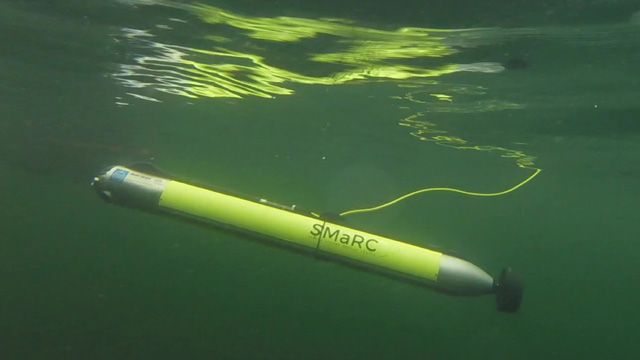
Ignacio Torroba Balmori is a postdoctoral researcher at KTH Royal Institute of Technology, affiliated with the Department of Aerospace, Mobility and Naval Architecture and the Robotics, Perception and Learning (RPL) division. He holds a PhD from RPL under the supervision of John Folkesson, focusing on Simultaneous Localization and Mapping (SLAM) for autonomous underwater vehicles (AUVs). His current research emphasizes underwater SLAM with sonar and camera systems, path planning, control strategies, and system identification for AUVs operating in open waters and confined spaces. His work centers on applications such as autonomous seabed surveying, algae farm monitoring, and seaweed mapping. He is actively involved in developing the AUV SAM, Kongsberg Hugin, BlueROV2, USV FloatSAM, and the AUV Lolo. As a mentor, he has supervised master’s theses on topics including underwater SLAM algorithms and bathymetric informative path planning. He teaches courses like 'Introduction to Robotics' (assistant) and 'Underwater Technology' (teacher). Key technical contributions include system identification for hydrobatic AUVs using physics-informed machine learning and tools for bathymetric SLAM, such as the SubmapsRegistration repository. His research is hands-on, prioritizing field robotics and problem-driven solutions.