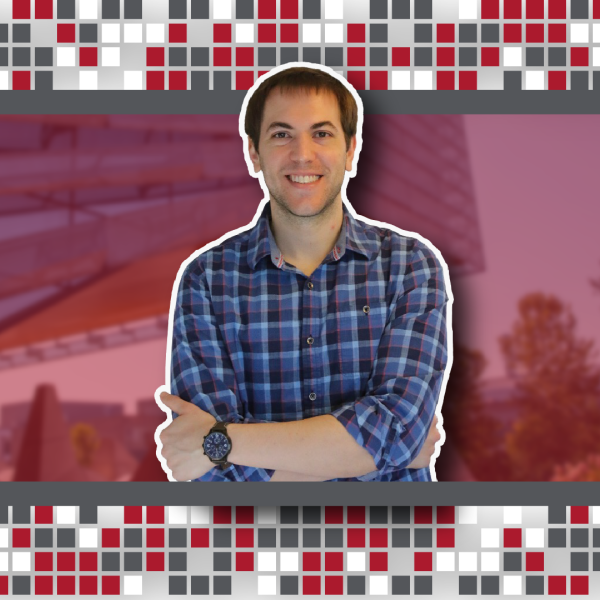
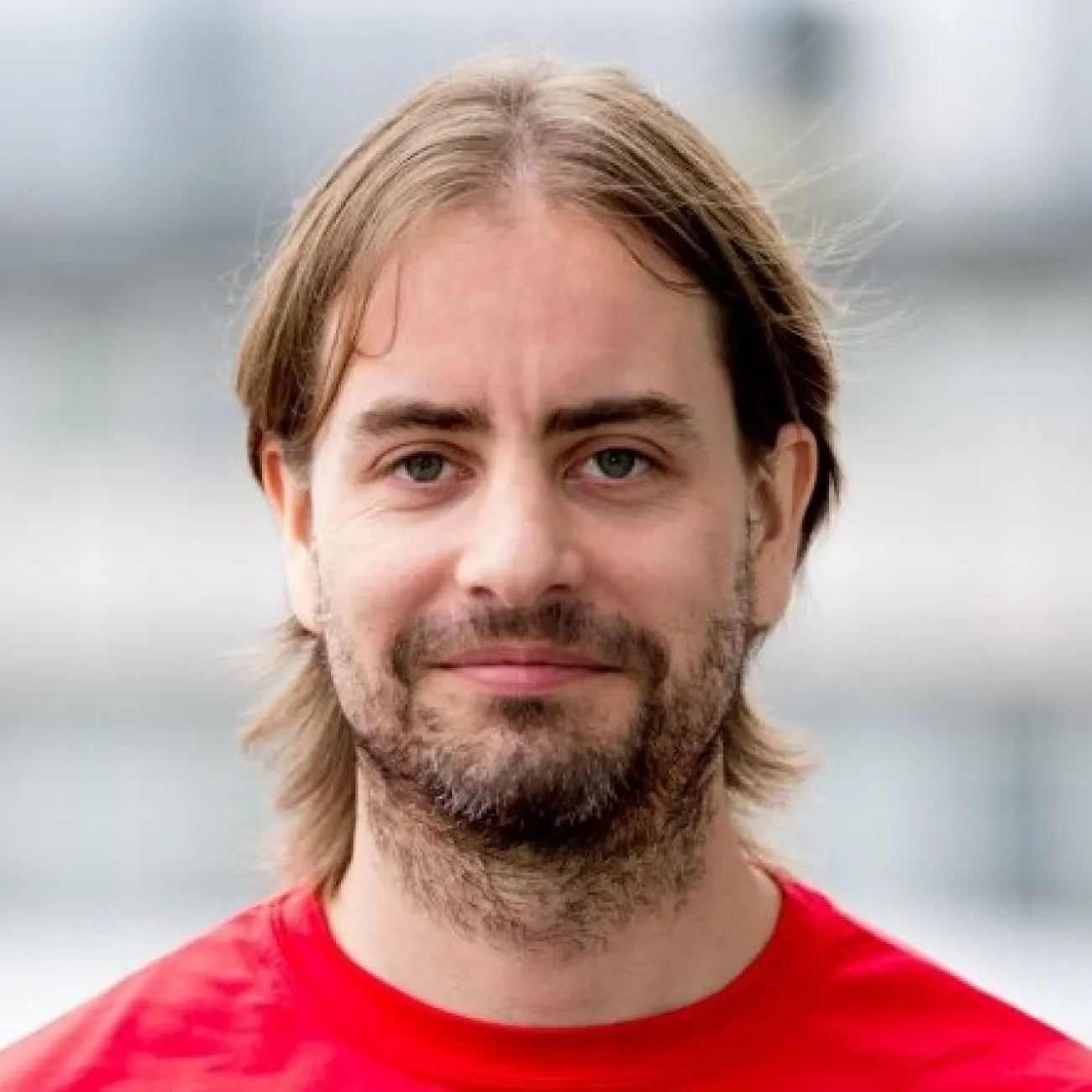
Hao Su is an Associate Professor in the Department of Computer Science and Engineering at University of California, San Diego . He serves as Chairman & CTO of Hillbot Inc , and leads the SU Lab which focuses on building autonomous systems that learn actively in physical environments. His affiliations include the Institute for Learning-enabled Optimization at Scale , Artificial Intelligence Group , Contextual Robotics Institute , Halicioğlu Data Science Institute , and Center for Visual Computing . As a researcher in Computer Vision, Robotics, and Neural Geometry , he has made significant contributions to 3D foundation models, reward-free world models, diffusion policy frameworks, and GPU-accelerated simulation environments. His 2024-2025 publications include advancements in hand-eye calibration, dynamic mesh reconstruction, and multi-stage robotic manipulation. His scientific awards include: Frontiers of Science Award (2025) TPAMI Young Research Award (2025) NSF CAREER Award (2023) ACM SIGGRAPH Best Doctorate Thesis Honorable Mention (2019) He has served as Program Chair for CVPR 2025 and Area Chair for ICLR 2022 and NeurIPS 2023 , while previously serving as Publication Chair for 3DV 2016 and Program Committee for SIGGRAPH Asia Workshops .
Michael Kaess is an Associate Professor at the Robotics Institute, Carnegie Mellon University (CMU), within the School of Computer Science. He leads the Robot Perception Lab (RPL) and contributes to the Field Robotics Center (FRC) and Computer Vision Group (CV). His research focuses on efficient perception algorithms for mobile robots, particularly in 3D mapping, SLAM, and sensor fusion using vision, LiDAR, inertial, and sonar data. Kaess holds a PhD in Computer Science from Georgia Tech and was a postdoc at MIT's Marine Robotics Lab. Education: Georgia Institute of Technology, PhD in Computer Science (2008) MIT, Postdoctoral Associate (2008–2010) Research Interests: Kaess develops algorithms for robust and efficient inference in robotics, emphasizing factor graphs and linear algebra. His work spans underwater robotics, aerial systems, tactile SLAM, and multi-sensor integration. Key areas include SLAM with planes/lines, imaging sonar reconstruction, and neural field methods for LiDAR-visual fusion. Publications: Over 145 papers, including work on EDPLVO (visual odometry), HoloOcean (underwater simulation), and neural radiance fields with LiDAR. Recent trends focus on robust incremental smoothing, acoustic-optical fusion, and real-time volumetric mapping. Awards: Recognized with the RSS Test of Time Award (2020), Outstanding Associate Editor (2022), and paper awards at ICRA/ICRA. Active in conference organization (IROS/ICRA program committees). Advising & Grants: Supervises 10+ current PhD/MSc students, with past advisees contributing to CoRL/ICRA work. Manages grants in perception, autonomy, and marine robotics. Teaches courses like Robot Localization and Mapping (16-833). Labs/Teams: Directs RPL, collaborates with FRC on field robotics. Develops open-source tools like GTSAM (GNU Toolkit for Smoothing and Mapping).
Olga Sorkine-Hornung is a Professor of Computer Science at ETH Zurich and head of the Institute of Visual Computing. She leads the Interactive Geometry Lab, focusing on theoretical and practical advancements in digital content creation, geometry processing, and shape modeling. Current position: ETH Zurich, Department of Computer Science Previous roles: Courant Institute (NYU), Technical University of Berlin Education: BSc and PhD from Tel Aviv University, postdoc at TU Berlin Her research spans shape representation, digital fabrication, computer animation, and fundamental geometry processing. Key contributions include Laplacian surface editing, as-rigid-as-possible deformation, and generalized winding numbers. She works on applications in VR, AR, and autonomous systems. Awards include Test of Time Awards (2024), ACM Fellow (2020), ERC Consolidator Grant (2020), and EUROGRAPHICS Young Researcher Award (2008). She has supervised numerous students and co-developed software libraries like libigl and Instant Meshes . Co-chair roles for SIGGRAPH, Eurographics, and Pacific Graphics Editorial board member for ACM Transactions on Graphics and other journals Keynote speaker at VMV, CVPR, and SIAM conferences Her work bridges mathematical rigor with practical implementation, advancing computer graphics and geometry processing through intuitive algorithms that maintain surface detail while enabling efficient computation.
Martin T. Wells is the Charles A. Alexander Professor of Statistical Sciences at Cornell University, with joint appointments in the Department of Statistical Science, Department of Biological Statistics and Computational Biology, Department of Social Statistics, and as Professor of Clinical Epidemiology and Health Services Research at Weill Medical School. He serves as Editor-in-Chief of the ASA-SIAM Book Series and Co-Editor of the Journal of Empirical Legal Studies. Cornell University, Ithaca, NY Weill Cornell Medical College Research Interests span applied and theoretical statistics, Bayesian methods, biostatistics, clinical epidemiology, and computational biology. His work bridges disciplines like finance, legal studies, and health services research. Article Trends highlight advancements in Bayesian modeling, quantum cognition machine learning, tensor analysis, and misclassification correction, with applications in genomics, finance, and public health. Fellow of the American Statistical Association Fellow of the Royal Statistical Society Contributions include developing statistical software (e.g., rTensor), methodological innovations in clinical trials, and empirical legal studies on civil rights and the death penalty.
Holger Fröning is a full professor at Heidelberg University’s Institute of Computer Engineering (ZITI), where he leads the Hardware and Artificial Intelligence (HAWAII) Lab. His research focuses on embedded machine learning , high-performance computing , and hardware-software co-design , with emphasis on resource efficiency, power optimization, and emerging architectures like analog , photonic , and resistive memory systems. He has held leadership roles including Managing Director of ZITI (2023–present) and Dean of Studies for Computer Science (2019–2022) , and has collaborated with institutions such as NVIDIA Research, Chinese Academy of Sciences, and Graz University of Technology. Research Trends : His recent publications explore Bayesian neural networks , green machine learning , analog computing noise mitigation , and GPU/FPGA optimization . Articles highlight photonic computing for AI , memory-efficient training , and hardware-aware DNN compression . Scientific Awards : 2025 HiPEAC Paper Award (Nature Computational Science) 2014 Google Faculty Research Award Multiple Best Paper Awards (IPDPS, ICPP, ECML-PKDD workshops) Leadership & Service : Organized workshops (WEML, ITEM, F4HD), chaired tracks at EuroPar and ISC, and served on program committees for ICPR, ECAI, and FPL. Education & Affiliations : PhD and MSc from University of Mannheim (2007/2001). Sponsors include DFG, FWF, FFG, NVIDIA, SAP, and XILINX.
Harri Lähdesmäki is an Associate Professor (tenured) at the Department of Computer Science, Aalto University, where he leads the Computational Systems Biology research group. His work focuses on probabilistic machine learning and deep generative models with applications in biomedicine and molecular biology. Key Research Interests: Probabilistic machine learning, deep generative models, computational biology, bioinformatics, longitudinal data modeling Contact: harri.lahdesmaki@aalto.fi | Konemiehentie 2, 02150 Espoo, Finland His recent publications highlight advancements in: Gaussian process priors for scalable deep generative models Single-cell analysis of immune repertoires in leukemia and diabetes Probabilistic deconvolution methods for RNA-seq data Epigenetic analysis using hidden Markov and mixed models Transformer-based survival prediction and missing data handling Harri’s work integrates mechanistic modeling with Bayesian inference, particularly applied to immunology, cancer biology, and early disease prediction.
Jee Choi is an Assistant Professor in the Department of Computer and Information Science within the College of Arts and Sciences at the University of Oregon. His research focuses on developing high-performance algorithms for big data analytics, particularly in tensor decomposition and parallel computing systems. Education: PhD in Electrical and Computer Engineering, Georgia Institute of Technology, 2015 MS in Electrical and Computer Engineering, Georgia Institute of Technology, 2004 BS in Electrical and Computer Engineering, Georgia Institute of Technology, 2000 Research Interests: Dr. Choi specializes in High Performance Computing with expertise in parallel algorithm design, performance modeling, and energy efficiency. His work targets Tensor Decomposition & Data Mining for big data, developing scalable solutions for sparse and dense tensor computations. He advocates leveraging HPC systems to transform massive datasets into societal benefits through efficient data mining techniques. Publication Trends: Choi's recent publications (2021-2025) demonstrate consistent innovation in tensor decomposition methodologies, with increasing focus on adaptive storage (Alto), streaming data factorization, and energy-aware autotuning. His work spans GPU clusters, distributed systems, and emerging architectures, maintaining strong connections to real-world big data challenges while advancing theoretical algorithm design. Professional Background: After completing his PhD under Richard Vuduc at Georgia Tech (notable for SpMV GPU autotuning and Energy Roofline Model), Choi conducted DoD-funded research on tensor decomposition at IBM Watson Research Center (2015-2018) before joining the University of Oregon faculty.
Teemu Roos is a Professor at the Department of Computer Science , University of Helsinki , and a Principal Investigator for the Complex Systems Computation Group under the Helsinki Institute for Information Technology. He serves as a Supervisor for the Doctoral Programme in Computer Science and leads multiple research initiatives, including Distributed AI in Supercomputing , AI & Kids , and Generation AI . Dr. Roos also holds a Docent title in Computer Science. His research spans Artificial Intelligence , Machine Learning , and Data Science , with a focus on AI education , graph neural networks , Bayesian modeling , and health informatics . He has pioneered tools like Elements of AI , a free online course now translated into 22 EU languages, and explores the ethical implications of AI-generated content in authorship and inventorship. The 15 most recent publications highlight applications in environmental forecasting (e.g., Mediterranean Sea via graph-based deep learning), healthcare (e.g., skin cancer detection with transfer learning), and social media analysis (e.g., explainable AI platforms for K-12 education). Methodologically, his work advances clustering algorithms , dimensionality reduction , and approximate nearest neighbor search . Scientific Awards: Cor Baayen Award (2009) Nokia Foundation Recognition Award (2019) Best Paper Honorable Mention Award (2013) ICT Influencer of the Year 2019 (Vuoden TiVi-vaikuttaja 2019) World Summit AI's Top-50 Innovators in 2020 Dr. Roos has supervised 2 doctoral students and contributed to 163 academic activities , including invited talks at MIT, University of Cambridge, and the Finnish Institute in Rome. He has secured funding from the Academy of Finland and the Strategic Research Council, focusing on projects like Fast AI-assisted Space Environment Prediction and Urban Exerciser .
Dr. Jia Zhang is the Inaugural Robert H. Dedman Jr. Endowed Department Chair and Professor of Computer Science at Southern Methodist University (SMU Lyle School of Engineering). She holds the Cruse C. and Marjorie F. Calahan Centennial Chair in Engineering and has a courtesy appointment in the Department of Operations Research and Engineering Management. Her research focuses on applying machine learning, natural language processing, and information retrieval to data science infrastructure, particularly scientific workflows, provenance mining, software discovery, knowledge graphs, cloud computing, immune AI, and applications in earth science and healthcare. Education: Ph.D. in Computer Science, University of Illinois at Chicago M.S. in Computer Science, Nanjing University B.S. in Computer Science, Nanjing University Dr. Zhang's work emphasizes data science infrastructure and machine learning for scientific workflows and knowledge graphs. Her recent publications highlight deep learning , graph neural networks , and optimization algorithms in cloud computing, cybersecurity, and environmental applications. Key trends include spatiotemporal modeling , hybrid neural architectures , and AI-driven service ecosystems . Scientific Awards: Best Paper Awards IEEE SCC (2011, 2017) Best Student Paper Awards IEEE ICWS (2014, 2018), IEEE ICCC (2018) Distinguished Paper Award ICSOC (2023) First Outstanding Service Award IEEE Technical Committee on Services Computing (2016) She has secured over $5 million in federal grants (as PI) and $11 million as PI/Co-PI from NSF, NASA, NIH, UTSW, Ericsson, SAP, and Google. Her lab (Caruth Hall 308) actively recruits research assistants. She previously served as a faculty member at Carnegie Mellon University, Northern Illinois University, and Nanjing University, and worked in industry as a software architect.
Academic Profile: Damir Filipovic is a Full Professor and the Swissquote Chair in Quantitative Finance at the College of Management of Technology (CDM) of École Polytechnique Fédérale de Lausanne (EPFL), Switzerland. He previously held academic positions at the University of Vienna, University of Munich, and Princeton University, and served as Head of the Vienna Institute of Finance. Research Focus: Quantitative finance, risk management, stochastic processes, term structure modeling, volatility risk, and machine learning applications in financial markets. Industry Collaboration: Co-developed the Swiss Solvency Test for insurance capital requirements while consulting for the Swiss Federal Office of Private Insurance. Publications: Contributed extensively to journals like Journal of Financial Economics, Mathematical Finance, and Annals of Applied Probability, with a textbook on Term-Structure Models. Academic Service: Editorial board member of multiple journals and organizer of advanced workshops on systemic risk and financial technology. Recent Research: His work emphasizes machine learning for portfolio risk management, kernel-based yield curve estimation, and robust stochastic modeling. Keynote speaker at international conferences on finance and insurance mathematics, with over 15 recent publications in 2023-2025 addressing high-dimensional financial problems, neural control systems, and causal inference in market data. Education: Ph.D. in Mathematics from ETH Zurich (2000). Graduate of ETH Zurich and University of Vienna. Teaching & Mentorship: Supervises current and former EPFL Ph.D. students in quantitative finance, including Nicolas Camenzind, Joshua Hayes, Andrea Ruglioni, and ten others. Former students like Damien Ackerer and Lotfi Boudabsa now lead research in risk management. Labs & Programs: Directs EPFL's Finance and Technology Programme, leads the Computational Finance Group (CSF) at EPFL, and contributes to Swiss Finance Institute initiatives. Scientific Leadership: Served on EPFL Committee of Academic Evaluation and Doctoral Program Finance committee.
Xia Ben Hu is a Professor in the Department of Computer Science at Rice University's Brown School of Engineering. He leads research in automated and interpretable machine learning algorithms with applications across social informatics, health informatics, and information security. His work has resulted in widely adopted systems including AutoKeras, TODS, and RLCard. Education: PhD from Arizona State University (supervised by Dr. Huan Liu) Master and Bachelor degrees from Beihang University Prof. Hu's research focuses on developing automated and interpretable machine learning algorithms for large-scale, networked, dynamic and sparse data. His work spans automated machine learning (AutoML), deep learning, fairness in AI, time series analysis, and interpretable AI. He has made significant contributions to neural architecture search, collaborative filtering, anomaly detection, and reinforcement learning in imperfect information games. His publication record shows a clear progression from foundational work in network embedding and collaborative filtering (2017) to more recent work on LLM optimization, quantization, and extending context windows (2024). A consistent thread throughout his research is the focus on making complex machine learning systems more accessible, efficient, and interpretable. Selected Awards: ACM SIGKDD Rising Star Award (2021) NSF CAREER Award (2018) Teaching + Research Excellence Award, Rice University (2023) Multiple Best Paper Awards at top venues including ICML, CIKM, and AMIA Prof. Hu has successfully mentored numerous graduate students, with recent graduates securing tenure-track positions at major universities. His research is generously supported by federal agencies including DARPA (XAI, D3M, NGS2), NSF (CAREER, III, SaTC), NIH, and industrial sponsors such as Adobe, Apple, Google, LinkedIn, and JP Morgan. He has served as General Co-Chair for WSDM 2020 and ICHI 2023, and Program Chair for AIHC 2024. He leads the DATA Lab at Rice University, which develops open-source systems for automated machine learning and reinforcement learning. The lab's AutoKeras system has over 8,000 GitHub stars and 1,000 forks, and their work has been integrated into TensorFlow, Apple production systems, and Bing production systems.
Dan Kowal is an Associate Professor in the Department of Statistics and Data Science at Cornell University, joining in 2024. His research focuses on Bayesian models for large/dependent data, mixed data modeling, and interpretable uncertainty quantification. Key areas include public health, environmental justice, epidemiology, and economics. He holds a PhD from Cornell University (2017) and previously served as an Assistant Professor at Rice University. Awards include the Blackwell-Rosenbluth Award (2021), Army Research Office Young Investigator Award (2020), and Lindley Prize Honorable Mention (2024). Notable grants include NSF funding for adaptive dependent data models (2022–2025) and Army Research Office support for Bayesian prediction methods (2020–2022). His work addresses racial inequities in statistical modeling and has been published in top journals like JASA and Bayesian Analysis. He advises multiple PhD students and develops R packages (e.g., SeBR, countSTAR) for Bayesian regression and data synthesis. Teaching roles include Bayesian Statistics at both undergraduate and graduate levels.
Daniel B. Szyld is a Professor in the Department of Mathematics at Temple University's College of Science and Technology. He is co-Director of the High-Performance Computing for Scientific Applications Professional Science Master’s program and a member of the Center for Computational Mathematics and Modeling. He holds leadership roles as President of the International Linear Algebra Society (ILAS, 2020–2026) and as a Board of Trustees member at ICERM (2024–2028), and previously served as Vice-President of SIAM (2014–2015). His research interests include Numerical Analysis , Scientific Computing , Numerical Linear Algebra , Iterative Methods , Preconditioning , Domain Decomposition , and High-Performance Computing . His work often focuses on Krylov subspace methods like GMRES, block solvers, and asynchronous algorithms, with applications in large-scale scientific simulations. The 15 most recent publications reflect a strong focus on enhancing the stability, convergence, and performance of iterative solvers, especially GMRES variants and domain decomposition methods. Topics include random sketching, deflation, weighted norms, multisketching in QR factorization, and asynchronous Schwarz methods. These works appear in top journals such as SIAM Journal on Matrix Analysis and Applications , Numerische Mathematik , and Electronic Transactions on Numerical Analysis , often in collaboration with leading researchers in the field. Scientific Awards and Recognitions: Commemorative medal, Charles University of Prague, 1997 Featured in Hall of Fame by Henk van der Vorst, SARA, 2010 Dean's Distinguished Award for Excellence in Research, Temple University, 2011 Fellow, American Mathematical Society, 2017 Fellow, Society for Industrial and Applied Mathematics, 2017 Achievement in Mathematics Award, Temple University, 2018 Faculty Senate Outstanding Service Award, Temple University, 2021 Daniel B. Szyld has served on the editorial boards of numerous prestigious journals, including Mathematics of Computation , Linear Algebra and its Applications , Numerical Linear Algebra with Applications , and was Co-Editor-in-Chief of Electronic Transactions on Numerical Analysis (2005–2013) and Editor-in-Chief of SIAM Journal on Matrix Analysis and Applications (2015–2020). His research has been supported by the National Science Foundation and the Department of Energy. He has advised students and postdocs, though specific names are not listed in the provided text. He is also involved in professional service through societies such as SIAM, AMS, ILAS, and NAM, and advocates for equity and ethical engagement in mathematics. Labs and Research Groups: He is a member of the Center for Computational Mathematics and Modeling at Temple University and co-Director of the High-Performance Computing for Scientific Applications Professional Science Master’s program, indicating active leadership in computational research and training.
Professor David Thomas holds the position of Professor in Computer Engineering at the University of Southampton's Electronics and Computer Science Department. His research focuses on the intersection of software and hardware, particularly leveraging FPGAs for novel digital architectures and event-driven computing. He has a notable academic trajectory, having previously served as a Lecturer and Senior Lecturer at Imperial College London before joining Southampton in 2021. Dr. Thomas is actively involved in supervising PhD students and contributes to interdisciplinary research projects funded by the EPSRC, such as the SONNETS initiative exploring scalable event-triggered systems. Education: BSc in Computer Science (Imperial College London), PhD in Digital Architectures (Imperial College London). Postdoctoral roles included Research Associate and Research Fellow at Imperial's Department of Computing. Research Interests: Event-driven computing, FPGA-based systems, high-level synthesis, and high-performance computing. His work emphasizes practical implementations of theoretical models, such as custom processors and application-specific accelerators. Current projects include optimizing random number generation for FPGAs and exploring meta-programming techniques for hardware design. Advising and Grants: Supervises multiple PhD students in areas like neuromorphic computing and algorithm optimization. Active in securing funding for distributed system architectures and FPGA-based solutions. Labs/Teams: Member of the Cyber Physical Systems research group. Collaborates with interdisciplinary teams on projects like POETS (Partially Ordered Event-Triggered Systems) for large-scale parallel computing.
Anne J. Shiu is a Professor in the Department of Mathematics at Texas A&M University. She holds a Ph.D. in Mathematics (2010) from the University of California Berkeley with advisors Bernd Sturmfels and Lior Pachter. Her career includes postdoctoral positions at Duke University (2010-2011) and the University of Chicago (2011-2014), followed by a faculty role at Texas A&M since 2014. Research Focus: Algebraic, geometric, and combinatorial approaches to mathematical biology, specializing in biochemical dynamical systems, neural coding, parameter identifiability, algebraic statistics, and genomics. Academic Contributions: Over 15 recent publications spanning identifiability in compartmental models, multistationarity in reaction networks, convexity analysis of neural codes, and algebraic robustness in biochemical systems. Scientific Recognition: Association of Former Students Distinguished Achievement College-Level Award in Teaching (2019) Invited speaker for Ethel Ashworth-Tsutsui Memorial Lecture (2018-2019) Current Research: Investigates structural identifiability in biological models, focusing on compartmental systems, reaction networks, and neural codes through algebraic methods and computational tools. Her work bridges abstract algebra with practical biological applications, including parameter estimation and robustness analysis. Grant Support: Recipient of NSF CAREER award (2018-2023), prior NSF grants (2010-2017), and Simons Foundation Collaboration Grant (#521874, 2017-2018). Academic Leadership: Organized multiple international workshops/conferences including SIAM conferences and Banff workshop. Currently an Associate Editor for SIAM Journal on Applied Mathematics and serves on the AIM Scientific Research Board.