Lexing Ying is a Professor of Mathematics at Stanford University. His research focuses on applied mathematics, computational science, and interdisciplinary areas such as quantum computing, machine learning, and numerical analysis. He has made significant contributions to high-dimensional problems, inverse problems, and the development of efficient algorithms for complex systems. His work spans theoretical advancements and practical applications, including quantum signal processing, tensor-based numerical methods, and probabilistic modeling. Key themes in his research include the analysis of diffusion models, stochastic systems, and optimization algorithms. Recent publications highlight innovations in solving high-dimensional PDEs, improving sampling techniques, and advancing quantum algorithms. Notably, Ying has developed methods for operator learning, functional hierarchical tensors, and robust phase estimation. His research often bridges mathematical theory and computational practice, addressing challenges in areas like statistical inference and numerical simulation.
Xiu Yang is an Associate Professor in the Department of Industrial and Systems Engineering at Lehigh University's College of Engineering. He previously worked at Pacific Northwest National Laboratory (PNNL) as a scientist and holds a Ph.D. in Applied Mathematics from Brown University, along with degrees from Peking University. His research focuses on modern scientific computing, including uncertainty quantification, quantum computing, physics-informed machine learning, and multi-scale modeling. Yang has applied these methods to fluid dynamics, hydrology, biochemistry, and energy storage systems, with recent emphasis on quantum computing algorithms and their applications in scientific computing. He has received notable awards, including the NSF CAREER Award (2022) and PNNL's Outstanding Performance Awards (2015 and 2016). His work bridges computational mathematics and real-world challenges, such as error modeling in NISQ devices and developing quantum algorithms for linear systems. Yang also contributed to the DOE applied mathematics visioning committee in 2019, reflecting his leadership in advancing computational science. His research outputs span interdisciplinary areas, combining quantum computing with machine learning (e.g., Quantum DeepONet) and enhancing Gaussian process regression techniques with constraints. This work underscores his commitment to advancing computational tools for complex scientific problems, from seismic wave equations to power grid systems.
Lixin Shen is a Professor in the Department of Mathematics at Syracuse University, part of the College of Arts and Sciences. His research focuses on applied and computational harmonic analysis, optimization, imaging science, and information processing. Shen holds a Ph.D. in Mathematics from Sun Yat-Sen University (1996), an M.Sc. from Peking University (1990), and a B.Sc. from Peking University (1987). Education: Ph.D., Mathematics, Sun Yat-Sen University, 1996 M.Sc., Mathematics, Peking University, 1990 B.Sc., Mathematics, Peking University, 1987 Research Interests: Shen’s work emphasizes sparse optimization, image and signal processing, computational mathematics, and their applications. Notable areas include wavelet analysis, tensor decomposition, and robust algorithms for noise removal and high-resolution imaging. Grants & Awards: NSF Grant: Collaborative Research: Sparse Machine Learning and Sparse Optimization (2022–2025) Excellence in Graduate Education Faculty Recognition Award, Syracuse University (2024) Air Force Summer Faculty Fellowship (2024, 2023, 2021, 2020) Service & Leadership: Chair of Graduate Committee, Mathematics Department (2024–2025) Editor, Frontiers in Applied Mathematics and Statistics Organizer, SIAM Conferences on Optimization and Imaging (2023–2020) Teaching: Recent courses include Numerical Linear Algebra, Numerical Methods with Programming, Sparse Optimization, and Partial Differential Equations.
Markus Hegland is a Professor and Head of the Centre for Mathematics and its Applications (CMA) at the Australian National University (ANU). He holds a PhD from ETH Zurich (1988) and has been affiliated with ANU since 1992, focusing on High-Performance Computing (HPC) and numerical analysis. As a Hans Fischer Senior Fellow at TUM-IAS, his research emphasizes high-dimensional problems, ill-posed systems, and data mining applications. His work bridges computational mathematics with practical domains like systems biology and spectral enhancement. Research interests include sparse grid techniques, regularization methods, and algorithm development for HPC. Notable contributions include the OPTICOM method for stable sparse grid solutions and convergence theory for variable Hilbert scales regularization. He has led projects on fault-tolerant HPC algorithms and collaborated with Fujitsu on HPC applications. Publications span numerical analysis, bioinformatics, and computational physics. His work on the chemical master equation and gyrokinetics showcases interdisciplinary impact. Currently, he explores resilient grid-based solvers and machine learning integration with HPC frameworks. No awards are explicitly listed, but his senior fellowship underscores recognition in his field. Grants and collaborations include ARC-funded research in bioinformatics and HPC resilience. His work on digital twins and algorithm optimization reflects broader interests in advanced computational modeling. He is actively involved in teaching and supervising in computational mathematics and data science at ANU.
Maciej Besta is a leading researcher at ETH Zurich's Institute for Computing Platforms, where he heads research initiatives at the Scalable Parallel Computing Lab (SPCL) and contributes to the ETH Future Computing Laboratory (EFCL). Working under the mentorship of Professor Torsten Hoefler, he has established himself as a prominent figure in high-performance computing, graph processing, and large language models. Position: Researcher at Institute for Computing Platforms, ETH Zurich Research Leadership: Head of Sparse Graph Computations and Large Language Models Research at SPCL Collaboration: Leads project management for SPCL's contributions to ETH Future Computing Laboratory Besta's research spans multiple abstraction levels, from hardware and network topologies to middleware, algorithms, and programming models. His primary focus areas include graph-enhanced language models, graph neural networks, graph databases, and sparse models, with applications across various computational settings. He approaches these problems through rigorous performance modeling and formal reasoning, emphasizing both scalability and practical implementation. His recent publications reveal a clear trend toward integrating graph structures with language models and AI systems. Besta has pioneered work on graph databases, knowledge graphs of thoughts, and higher-order graph neural networks, while maintaining his strong foundation in high-performance computing and network topology design. His research bridges traditional HPC with cutting-edge AI, creating novel approaches for efficient large-scale computation. IEEE TCSC Award for Excellence in Scalable Computing (Early Career, 2023) Multiple Best Paper Awards at Supercomputing conferences (2022, 2023) ACM SIGHPC Doctoral Dissertation Award (2022) ETH Medal for outstanding doctoral thesis (2021) Fellow of The Explorers Club (2022) Besta actively mentors ETH Zurich students through semester projects, Bachelor's, and Master's theses, focusing on graph processing and related computer science challenges. His mentorship extends beyond technical guidance, incorporating lessons from his extensive polar and mountaineering expeditions that emphasize mental resilience, efficient risk management, and leadership. He has supervised numerous student projects that have resulted in high-impact publications at top-tier conferences. As a core member of the Scalable Parallel Computing Lab, Besta collaborates with researchers across ETH Zurich and international institutions. His unique approach integrates insights from extreme environment expeditions into research methodology, creating a distinctive framework for tackling complex computational problems. The lab's work under his leadership spans theoretical modeling, practical implementation, and real-world deployment of high-performance systems.
Nick Vannieuwenhoven is an Assistant Professor at KU Leuven, affiliated with the Department of Computer Science and the NUMA Division. He serves as the Exchange Coordinator for the Master in Mathematical Engineering and is an Associate Editor for The Electronic Journal of Linear Algebra and SIAM Journal on Applied Algebra and Geometry . His research focuses on tensor decompositions, numerical analysis, Riemannian optimization, and applications in data science. He obtained his PhD in 2015 under Professors Karl Meerbergen and Raf Vandebril, funded by the FWO (Research Foundation Flanders). His postdoctoral research (2015–2021) was also supported by FWO fellowships. His research group investigates tensor decompositions, multilinear algebra, and numerical techniques for data science, with a focus on condition number analysis and Riemannian optimization. Collaborators include experts like Carlos Beltrán, Paul Breiding, and Simon Telen. Current students include Jana Jovcheva, Bram Leys, and David Thorsteinsson, working on manifold-valued function approximation, group-invariant networks, and data-based engineering. Key awards include FWO fellowships for his PhD and postdoctoral studies. Grants include support for postdoctoral researchers via MSCA and FWO schemes. Notable projects involve Tucker compression libraries (ATC) and geometric analysis of tensor networks. His work bridges algebraic geometry, numerical analysis, and machine learning, emphasizing stability and computational efficiency.
P. Sadayappan is a Professor at the School of Computing, University of Utah, specializing in high performance computing, compiler optimization, and scalable machine learning. His research focuses on developing efficient computational methods for scientific applications, particularly in the areas of sparse/dense matrix and tensor computations. His research interests include: Compiler Optimization for High Performance Computing Optimization of Sparse/Dense Matrix/Tensor Computations Scalable Machine Learning Algorithm-Architecture Co-Design Optimization Sadayappan's recent publications demonstrate a strong focus on tensor computations, GPU acceleration, and compiler optimizations for machine learning workloads. His work spans from fundamental compiler theory to practical implementations that improve performance across various architectures. A significant trend in his recent work involves the development of frameworks for efficient tensor operations, sparse matrix computations, and domain-specific code generation, with particular emphasis on performance portability across heterogeneous computing platforms. His notable scientific achievement includes receiving the ACM SIGPLAN Most Influential PLDI Paper Award in 2018 for his work on polyhedral compilation. Sadayappan has been principal investigator or co-investigator on numerous significant research grants, including: NSF award #2217154 (2022-2027): A Comprehensive Framework for Efficient, Scalable, and Performance-Portable Tensor Applications NSF award #2112606 (2021-2026): AI Institute for Intelligent CyberInfrastructure with Computational Learning in the Environment (ICICLE) NIH SBIR-Phase 2 (2023-2025): Enabling next generation machine learning for large scale image analysis NSF award #2009007 (2020-2024): Data Locality Optimization for Sparse Matrix/Tensor Computations DARPA SBIR-Phase 2 (2017-2022): Performance Portable Framework for Developing Graph Applications He teaches CS 4230/6230 (Parallel and High-Performance Computing) at the University of Utah and collaborates extensively with researchers across multiple institutions on projects involving computational chemistry, physics simulations, graph analytics, and machine learning.
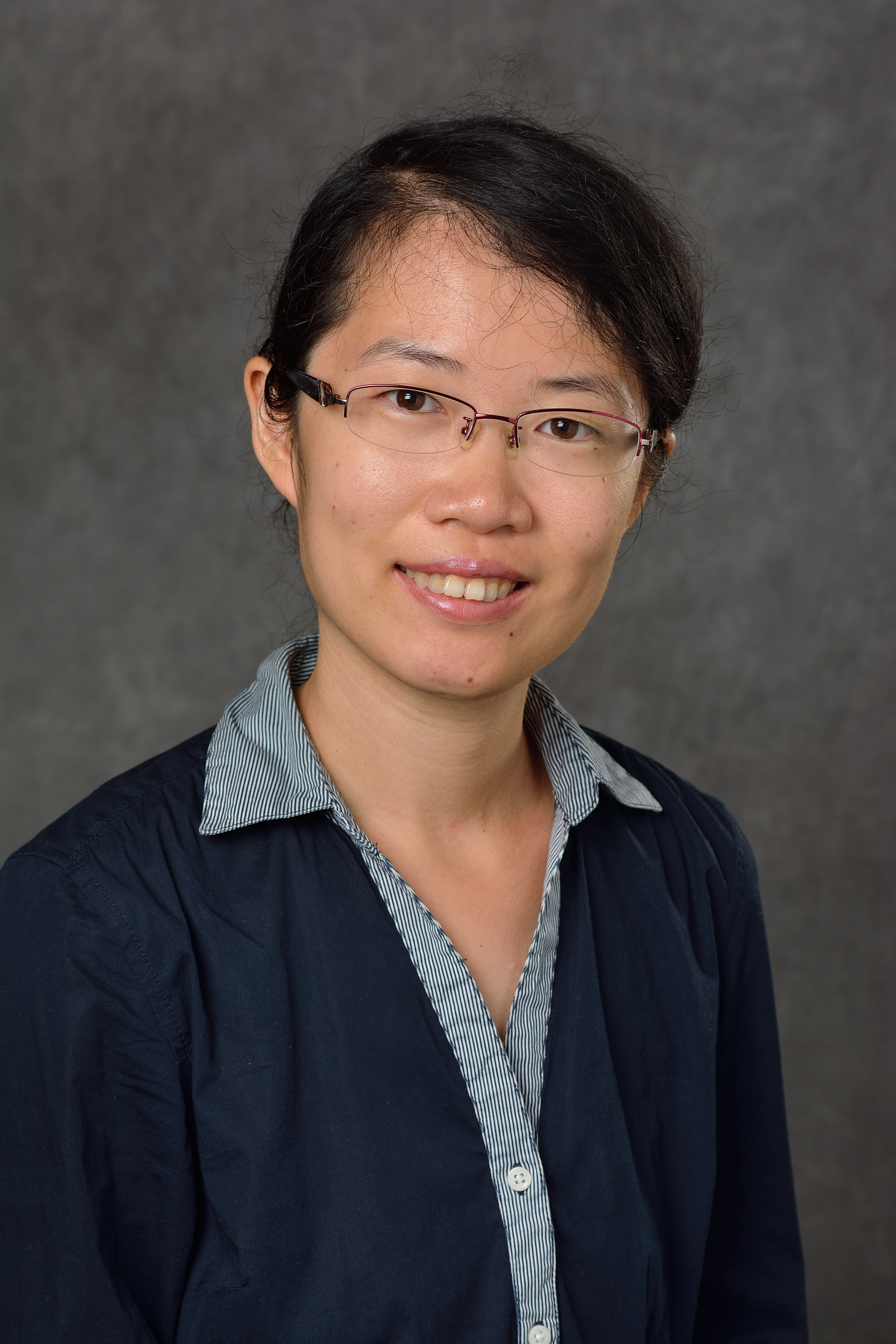
Wen-shin Lee is a Lecturer at the University of Stirling's Division of Computing Science and Mathematics, specializing in computational mathematics and signal processing. Her research focuses on exponential analysis, sparse interpolation, and symbolic-numeric computation. She holds a PhD from North Carolina State University and has held positions at institutions like the University of Antwerp and INRIA. Current affiliations include the Computational Mathematics and Optimisation Research Group (COMMON). Education: Bachelor’s in Mathematics, National Taiwan University PhD in Computational Mathematics, North Carolina State University Research Interests: Her work bridges computer algebra and signal processing, emphasizing applications like antenna positioning, radar imaging, and texture decomposition. Recent trends include sub-sampled exponential analysis, validated algorithms, and high-resolution signal reconstruction from sparse data. Labs/Groups: Active in the COMMON group at the University of Stirling and collaborates on the EXPOWER project (Exponential Analysis Empowering Innovation).
Yizhe Zhu is an Assistant Professor of Mathematics at the University of Southern California , specializing in theoretical and applied aspects of high-dimensional data analysis. His research bridges mathematics, computer science, and statistics, with a focus on random matrix theory, sparse data structures, and algorithmic analysis for machine learning and privacy-preserving data methods. Research Interests Yizhe Zhu’s work addresses fundamental questions in: Random Matrix Theory : Spectra of sparse and structured matrices, including outlier detection and universality. Graph and Hypergraph Analysis : Community detection, spectral properties, and non-backtracking algorithms for complex networks. Privacy and Data Synthesis : Theoretical frameworks for differentially private synthetic data generation. Tensor Completion : Efficient algorithms for recovering low-rank tensors from sparse observations. Publications Trends His recent research (2024–2025) emphasizes spectral analysis of random structures, optimization in non-convex settings, and privacy-preserving machine learning. Key themes include the interplay between sparsity, spectral theory, and algorithmic robustness in high-dimensional regimes.
Dr. Andrew Wynn is an Associate Professor in the Department of Aeronautics at Imperial College London, Faculty of Engineering. His research focuses on developing computational optimization methods to improve fluid mechanical systems, including active flow control, data-driven modelling, aeroservoelasticity, and semi-algebraic optimization techniques. He leads a research group addressing challenges in fluid-structure interactions, turbulence, and control systems. Wynn's affiliations include the Flow Control Research Group and the Aeroelastics Group. His work intersects interdisciplinary fields such as mechanical engineering, applied mathematics, and aerospace engineering. Key research topics include bluff body drag reduction, scaling laws for fluid flows, and estimator design for high-dimensional systems. Publications highlight contributions to fluid mechanics, optimization algorithms, and control theory. His group employs methods like semidefinite programming and dynamic mode decomposition to analyze and control complex flows. Ongoing projects involve wind farm optimization, global stability of viscoelastic fluids, and Bayesian optimization for experimental fluid dynamics. Education: Not explicitly stated in the provided text. Grants & Awards: Affiliated with Imperial College Research Fellowships (ICRF) and President's PhD Scholarships programs. Labs/Teams: Leads the Wynn Research Group, collaborating with the Flow Control and Aeroelastics Groups.
Shuchin Aeron is an Associate Professor in the Department of Electrical and Computer Engineering at Tufts School of Engineering, with joint appointments in the Departments of Computer Science and Mathematics. He holds a Ph.D. from Boston University (2009) and completed postdoctoral research at Schlumberger Doll Research, focusing on borehole acoustic signal processing. His research spans statistical signal processing, machine learning, compressed sensing, and information theory, with applications in geophysics, bioengineering, and imaging. Aeron has authored over 175 publications and holds patents in acoustic signal processing. He received the NSF CAREER Award (2016) and is a Senior Member of the IEEE. Educations: Ph.D., Electrical Engineering, Boston University, 2009 M.S., Electrical Engineering, Boston University, 2004 B.Tech., Indian Institute of Technology, 2002 Research Interests: Statistical signal processing (SSP), inverse problems, compressed sensing, information theory, convex optimization Machine learning applications in geophysical signal processing, imaging, and bioengineering His work emphasizes optimal sampling and recovery of multidimensional signals, with contributions to compressed sensing architectures and generative models for particle physics experiments. He leads NSF-funded projects on data science and domain generalization, and collaborates with industry partners like Schlumberger and Mitsubishi Electric Research Labs. Awards: NSF CAREER Award (2016) Mitsubishi Electric Research Lab Research Gift (2015) Grants and Funding: NSF HDR TRIPODS (2019–2023) AFOSR: Enabling Trusted Human-Like Artificial Teammates (2018–2023) NSF: Optimal Sampling and Recovery for Multilinear Signals (2013–2016) Aeron teaches advanced courses in probabilistic systems analysis, information theory, and machine learning. He directs the Tufts Data Science undergraduate and graduate programs, and serves on editorial boards of journals including Frontiers in Signal Processing and IEEE Transactions on Geoscience and Remote Sensing .
Michael J. Lindsey is an Assistant Professor in the Department of Mathematics at the University of California, Berkeley, and a Faculty Scientist at Lawrence Berkeley National Laboratory. His research focuses on computational methods driven by Numerical Linear Algebra , Optimization , and Randomization , particularly for High-Dimensional Scientific Computing in quantum many-body problems and applied probability. University : UC Berkeley (Assistant Professor since 2022) Lab Affiliation : Mathematics Group at Lawrence Berkeley National Laboratory Email : lindsey@berkeley.edu His work includes Semidefinite Relaxation for quantum and classical problems, Monte Carlo Sampling techniques, and Tensor Networks for high-dimensional functions. He has pioneered Variational Embedding theory with guaranteed energy bounds and scalable solvers for quantum systems. Recent publications span Quantum Chemistry , Machine Learning , and High-Dimensional Probability , with applications to Electronic Structure , Molecular Dynamics , and Optimal Transport . He received the 2024 Hellman Fellowship and the 2019 SIAM Student Paper Prize . Teaching includes graduate and undergraduate courses in numerical analysis and applied mathematics at UC Berkeley and New York University. He also organizes the HDSC Seminar on high-dimensional scientific computing.
Alexander Barvinok is a Professor in the Department of Mathematics at the University of Michigan, Ann Arbor. His office is located in East Hall (4066 East Hall), where he has been conducting research and teaching advanced courses in computational mathematics since receiving his Ph.D. from Leningrad State University in 1988. Professor Barvinok's research focuses on computational complexity and algorithms in algebra, geometry and combinatorics. He is particularly interested in connections between various notions of phase transition in statistical physics, analytical properties of partition functions and computational complexity. His work bridges theoretical mathematics with practical computational approaches, exploring how physical phenomena can inform algorithmic design and analysis. His research spans convex geometry, combinatorial optimization, and the computational aspects of polynomial systems. His recent publications (2016-2024) demonstrate a consistent focus on partition functions, computational aspects of convex bodies, and approximation algorithms for counting problems. He has made significant contributions to understanding the zeros of partition functions in statistical physics models, developing efficient volume estimation algorithms for polyhedra, and creating polynomial-time approximation schemes for problems previously thought to be computationally intractable. His work frequently connects algebraic properties of polynomials with computational feasibility. Professor Barvinok has authored several influential textbooks including "A Course in Convexity" (AMS Graduate Studies in Mathematics, 2002), "Integer Points in Polyhedra" (Zurich Lectures in Advanced Mathematics, 2008), and "Combinatorics and Complexity of Partition Functions" (Springer, 2016). He regularly teaches advanced graduate courses such as Math 669 on specialized topics including "Combinatorics, Geometry and Complexity of Integer Points" and "Topics in Convexity," with his lecture notes often evolving into significant research contributions.
Rongrong Wang serves as Associate Professor in both the Department of Computational Mathematics, Science and Engineering (CMSE) and Department of Mathematics at Michigan State University, based in the Engineering Building with contact email wangron6@msu.edu . Her academic journey includes: B.S. in Mathematics and B.A. in Economics from Peking University, Beijing Ph.D. in Applied Mathematics from University of Maryland College Park under John Benedetto and Wojciech Czaja Postdoctoral fellowship at University of British Columbia with Ozgur Yilmaz and Felix Herrmann Her research spans Applied and Computational Harmonic Analysis , Machine Learning , and Compressed Sensing with focus areas including neural network training dynamics, learning theory, tensor analysis, and inverse problems. She investigates theoretical foundations of deep learning while developing applications for medical imaging and signal processing. Recent publications (2024-2025) demonstrate strong interdisciplinary work at the intersection of deep learning theory and medical imaging, particularly exploring edge-of-stability phenomena in neural networks and diffusion-guided reconstruction techniques. Her work also advances tensor decomposition methods and in-context learning mechanisms in language models. Professor Wang actively recruits self-motivated graduate and undergraduate students with backgrounds in mathematics, computer science, or electrical engineering for research opportunities in her lab.
Dr. Yogesh Rathi is an Associate Professor of Psychiatry and Radiology at Harvard Medical School and Brigham and Women's Hospital. His research focuses on computational magnetic resonance imaging (MRI) techniques to analyze brain structure and function, particularly in psychiatric and neurological disorders. Associate Professor of Psychiatry and Radiology Brigham and Women's Hospital Harvard Medical School His research spans advanced diffusion MRI for faster imaging, ultra-high-resolution tractography, and harmonization of multi-scanner MRI data. He applies these methods to study white matter connectivity in humans and primates, alongside clinical applications for deep brain stimulation (DBS) and transcranial magnetic stimulation (TMS) in OCD, Parkinson’s, and depression. Dr. Rathi's work includes biophysical modeling of axon diameter estimation, functional connectivity analysis via fMRI, and development of real-time tools for precision targeting in neurosurgical interventions. His team secured significant NIH funding for harmonizing clinical diffusion MRI data. US Patent 10302727: Rapid Diffusion MRI Scanning NIH R01 Grant (4th percentile): MRI Harmonization Collaborator in $33M NIMH/FNIH Grant Key techniques developed by Dr. Rathi include real-time TMS targeting visualization and joint relaxation-diffusion MRI sequences for tissue characterization. These innovations are used in biomarker discovery and treatment monitoring.