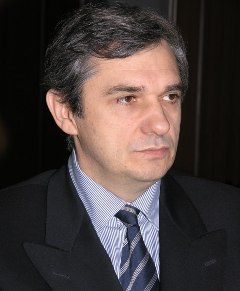
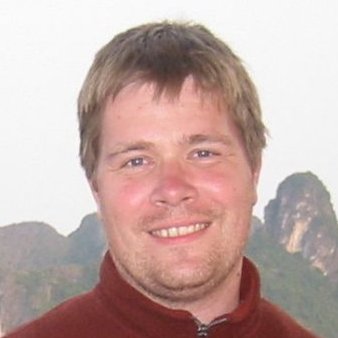
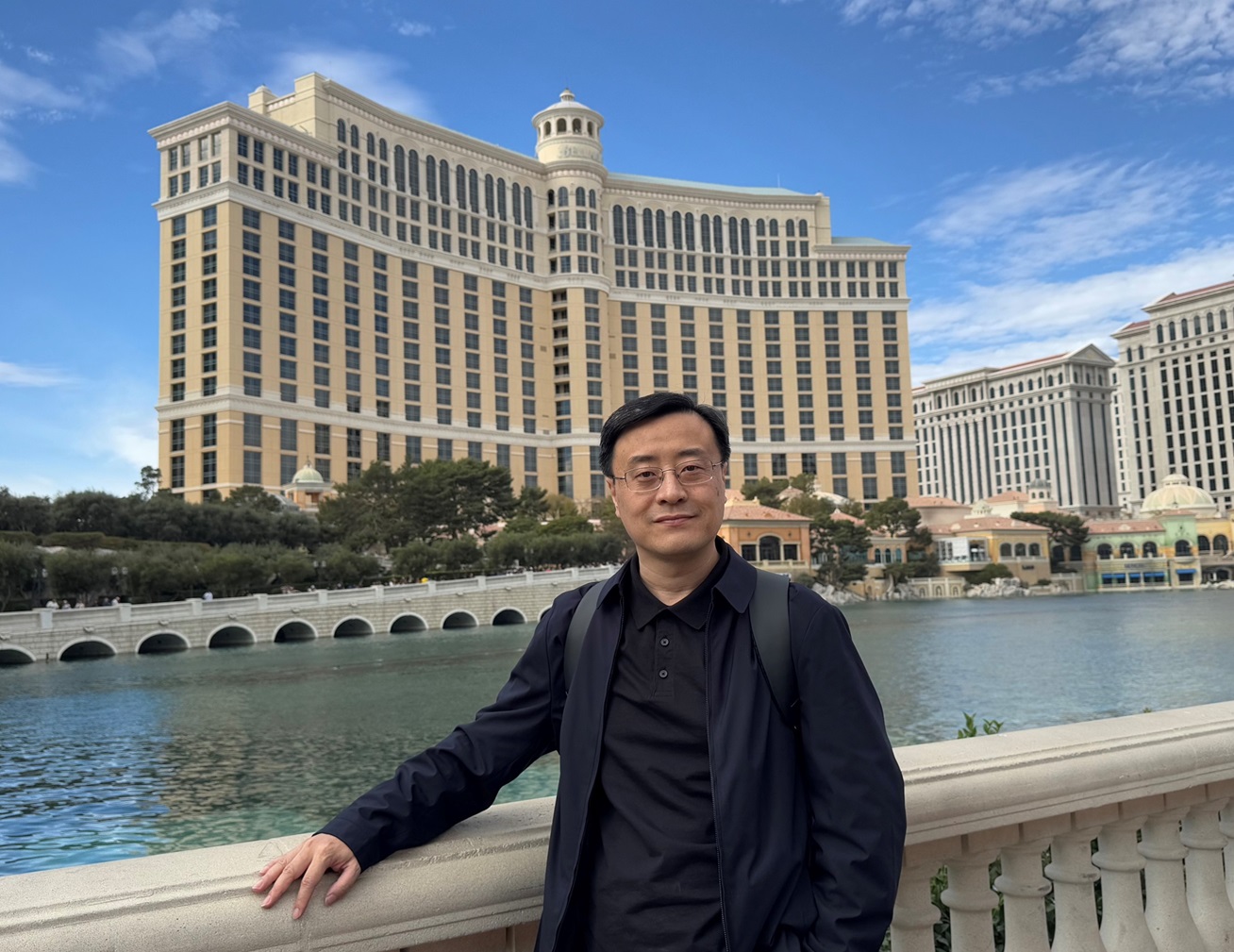
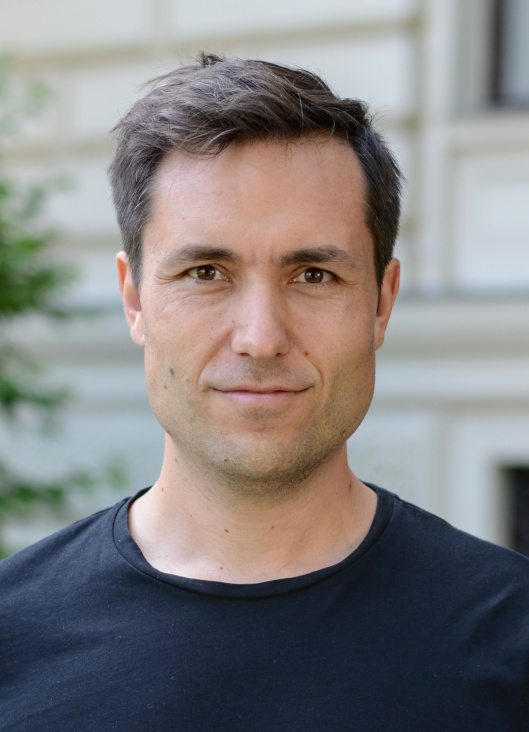
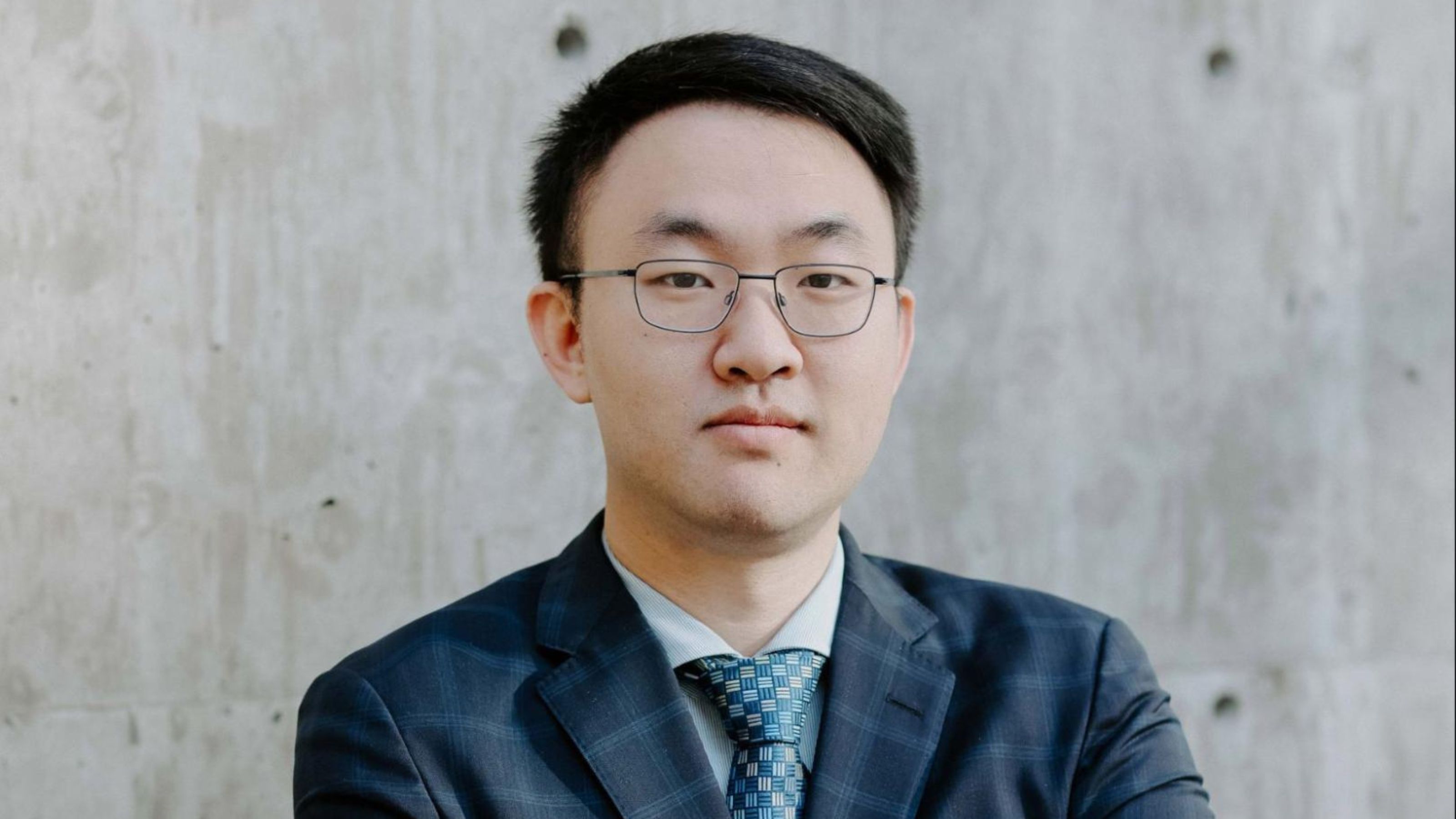
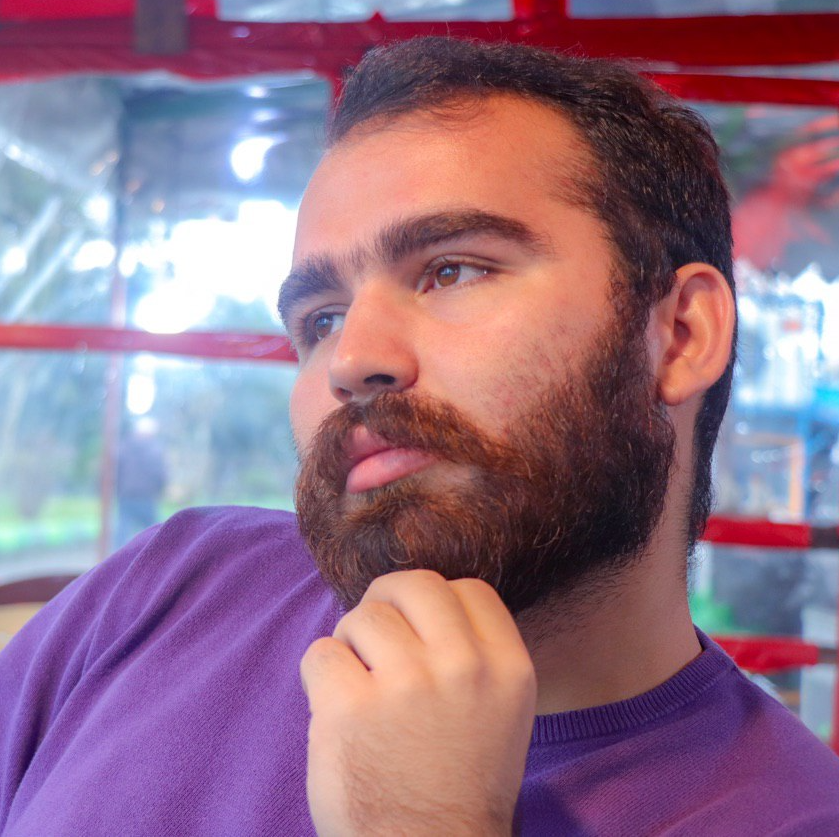
Hao Liu is a researcher affiliated with institutions like Chinese Academy of Sciences , Beihang University , and Stanford University . His work spans Computer Science , Artificial Intelligence , and Robotics . Key affiliations: National Space Science Center (Beijing), School of Astronautics (Beihang), Key Laboratory of Pervasive Computing (Tsinghua) Research interests include Machine Learning , Image Processing , Graph Neural Networks , and Wireless Communication Optimization His recent publications focus on: Advanced control systems for fuzzy models Medical imaging via hyperspectral analysis Transformer-based approaches in NLP and vision Quantum-safe and edge computing protocols
Ljubisa Stankovic is a Full Professor at the University of Montenegro with extensive academic and political experience. He has served as Rector of the University of Montenegro (2003-2008), Member of the National Academy of Sciences and Arts (CANU) since 1996, and Ambassador of Montenegro to the United Kingdom since 2010. As an IEEE Fellow (2012), he has made significant contributions to signal processing research. His research focuses on Signal Processing , particularly Time-Frequency Analysis , Data Processing in Joint Time and Frequency Domain , Analysis of Non-Stationary Signals , and Radar Signal Processing . With about 300 technical papers published (83 in leading international journals, mainly IEEE editions) and several textbooks in Signal Processing, his work has substantially influenced the field. The analysis of his recent publications reveals a consistent focus on advanced time-frequency methods applied to radar systems, non-stationary signal analysis, and emerging applications in machine learning and quantum processing. His research shows evolution from theoretical foundations toward practical implementations in communications, radar, and biomedical applications. His notable scientific achievements include: Member of the National Academy of Sciences and Arts (1996) Highest State award of Montenegro '13. jul' (1997) Fellow of the IEEE (2012) Fulbright fellowship (1984-1985) Alexander von Humboldt fellowship (1997) Volkswagen award grant (2001) Scientific Achievement Award by Montenegrin Academy of Science and Art (1991) Stankovic has held significant editorial positions including Associate Editor for IEEE Transactions on Image Processing, IEEE Signal Processing Letters, and IEEE Transactions on Signal Processing since 2003. He was also a member of the IEEE Signal Processing Society's Technical Committee on Theory and Methods (2002-2008). His research group received a Volkswagen Foundation research grant (2001-2003), demonstrating his ability to secure competitive funding. Beyond academia, he has held prominent political positions including Vice-president of Montenegro (1989-1991) and Member of Yugoslav Parliament (1992-1996).
Pascal Vincent is an Associate Professor at the Department of Computer Science and Operational Research , University of Montreal, and a key member of the Montreal Institute for Learning Algorithms (MILA) . He holds a PhD in Computer Science from the University of Montreal and has been pivotal in advancing machine learning and artificial perception. Education: PhD in Computer Science (University of Montreal, 2003) His research spans machine learning , deep learning , representation learning , and neural networks , focusing on unsupervised methods and geometrically inspired algorithms. He explores how intelligent systems can autonomously build meaningful representations from raw data, driven by principles like the manifold hypothesis . Key projects include generative stochastic networks , contractive autoencoders , and high-dimensional sequence transduction . His work has resulted in 15+ recent publications in top venues like NIPS, ICML, and CVPR. Scientific Awards : Best student-paper award at ICML 2012 Honorable mention at NIPS 2011 Funded by FCI, FRQNT, CRSNG, CIFAR, and IBM Pascal has supervised 15+ doctoral and Master’s students , including Florian Bordes, Tom Bosc, and Nicolas Boulanger-Lewandowski, across topics like representation learning and generative models . He is also a co-founder of the UNIQUE (Union Neurosciences & Intelligence Artificielle Québec) research consortium.
Sandra Keiper is a Lecturer at the Institute of Mathematics within Faculty II - Mathematics and Natural Sciences at Technical University of Berlin. She has held academic positions since at least 2011, including roles as Tutor, Assistant, and Lecturer, with teaching responsibilities in Analysis, Linear Algebra, and Partial Differential Equations for both mathematicians and engineers. Research interests include: Compressed Sensing and Sparse Signal Recovery Numerical Linear Algebra with applications to high-dimensional data Wavelet and curvelet transforms for geometric multiscale analysis Approximation theory for finite-valued and cartoon-like functions Deep learning and graph approximation techniques Professional activities : Active in teaching since 2011 (Analysis I-III, Functional Analysis, Integral Transforms) Supervising theses since 2015 on topics like Compressed Sensing and Deep Learning Invited lectures at Caltech, ETH Zurich, and Alan Turing Institute Research stays at Hausdorff Institute, ETH Zurich, and Duke University
Ivan Selesnick is a Professor of Electrical and Computer Engineering at the NYU Tandon School of Engineering, with joint appointments in Biomedical Engineering and Radiology. He holds affiliations with the Center for Advanced Technology in Telecommunications (CATT) and leads the Selesnick Lab. His research focuses on signal and image processing, sparse signal models, wavelet analysis, and biomedical applications. He received his degrees from Rice University (BS, MEE, PhD in EE) and has been recognized with prestigious awards including the Alexander von Humboldt Fellowship (1997), NSF Career Award (1999), and IEEE Fellow (2016). Education: BS, MEE, and PhD in Electrical Engineering from Rice University (1990, 1991, 1996). He joined NYU Tandon in 1997 and served as a visiting professor at the University of Erlangen-Nuremberg in 1997. Research Interests: Signal Processing, Sparse Signal Models, Wavelet Analysis, Biomedical Signal Processing, and Optimization Techniques. His work emphasizes applications in medicine, imaging, and engineering systems. Awards: In addition to his fellowships, he received the Jacobs Excellence in Education Award (2003) and the Budd Award for Best Engineering Thesis (1996). He has held editorial roles at IEEE Transactions on Image Processing, Signal Processing Letters, and Computational Imaging. Teaching: Courses include Signals, Systems, and Transforms (EE 3054), Digital Signal Processing I/II (EL 6113/EL 7133), Wavelets and Filter Banks (EL 7163), and Biomedical Signal Processing (EL 9133). Labs and Affiliations: Director of the Selesnick Lab, involved in NYU Tandon Future Labs (business incubators) and CATT (telecommunications research). His research spans biomedical sensing, radar signal processing, and algorithm development for medical diagnostics.
Kejun Huang is an Assistant Professor in the Department of Computer and Information Science and Engineering at the University of Florida's Herbert Wertheim College of Engineering. His primary research area is Machine Learning, with additional interests in algorithms, computer vision, and data science. He received his Ph.D. in Electrical Engineering from the University of Minnesota in 2016. His research focuses on machine learning, signal processing, optimization, and statistics. Recent work tackles unsupervised learning challenges and AI-powered medical research through NIH-funded projects. Dr. Huang's publications demonstrate consistent focus on optimization techniques for tensor decomposition, dictionary learning identifiability, and nonnegative matrix factorization. Key themes include algorithmic efficiency and theoretical guarantees in machine learning models.
Mauro Maggioni is a Professor in the Departments of Mathematics and Applied Mathematics and Statistics at Johns Hopkins University. His research focuses on the mathematical foundations of Data Science, with applications in molecular dynamics, hyperspectral imaging, and reinforcement learning. He employs techniques from Harmonic Analysis, Approximation Theory, and Probability to develop scalable algorithms, particularly multiscale methods for analyzing high-dimensional data. Maggioni’s work bridges theoretical mathematics and practical applications, including cardiac electrophysiology modeling, unsupervised segmentation of hyperspectral images, and reduced-order modeling of complex systems. Education: B.S. in Mathematics from Università degli Studi in Milan, Italy; Ph.D. in Mathematics from Washington University in St. Louis. He held a Gibbs Assistant Professorship at Yale before moving to Duke University and later becoming a Bloomberg Distinguished Professor at JHU. Research Interests: Mathematical foundations of Data Science, Machine Learning, Partial Differential Equations, and their applications in physical and biological systems. Notable contributions include diffusion wavelets, interaction kernel learning, and multiscale geometric analysis of molecular dynamics data. Scientific Awards: Popov Prize in Approximation Theory (2007), NSF CAREER Award and Sloan Fellowship (2008), Fellow of the American Mathematical Society (2013), Simons Fellowship (2020). Advising & Grants: Maggioni mentors postdocs and students in areas like stochastic systems and signal processing. His group’s work is supported by Simons Foundation grants, NSF funding, and collaborations with institutions like MINDS and CIS at JHU. Labs/Teams: Leads a research group focused on data-driven discovery in mathematics and applied sciences, emphasizing interdisciplinary collaboration across computational methods, statistics, and domain-specific applications.
René Vidal is the Rachleff & Penn Integrates Knowledge (PIK) University Professor at the University of Pennsylvania and Full Professor at Johns Hopkins University, with appointments spanning multiple departments including Electrical and Systems Engineering, Radiology, Computer and Information Science, and Statistics and Data Science. He serves as Director of the Center for Innovation in Data Engineering and Science (IDEAS) at UPenn and directs the NSF-Simons Collaboration on the Mathematical Foundations of Deep Learning. Education: PhD in Electrical Engineering and Computer Sciences from UC Berkeley (2003) Former Positions: Assistant and Associate Professor at Johns Hopkins University (2004–2015) Current Affiliations: Amazon Scholar, Affiliated Chief Scientist at NORCE Dr. Vidal’s research spans the mathematics of deep learning , sparse/low-rank representations , and trustworthy AI , with applications in computer vision and biomedical data science. His work has been recognized with prestigious honors including the IEEE Edward J. McCluskey Technical Achievement Award and Sloan Fellowship. Scientific awards include: 2021: IEEE Edward J. McCluskey Technical Achievement Award 2017: Jean D’Alembert Fellowship 2012: J.K. Aggarwal Prize 2009: ONR Young Investigator and Sloan Fellowship His lab has advised numerous PhD and MSc students, including Kyle Poe, Steven Kan, and alumni like Chong You (now at UC Berkeley) and Colin Lea (Oculus Research). He leads teams in optimization theory, adversarial robustness, and biomedical image analysis.
Lu Su is an Associate Professor at the School of Electrical and Computer Engineering , Purdue University , with prior appointments at SUNY Buffalo . His research spans Internet of Things , cyber-physical systems , mmWave sensing , and crowd-sourced data validation , focusing on quality-of-information aware distributed sensing and security in autonomous systems . Ph.D. in Computer Science (2013) and M.S. in Statistics (2012) from University of Illinois at Urbana-Champaign M.E. and B.E. from Harbin Institute of Technology Research Interests: IoT , cyber-physical systems , crowd sensing , security and privacy , and machine learning for sensor networks. His work addresses quality-aware information integration , adversarial attacks in autonomous vehicles , and privacy-preserving crowd-sourced systems . Recent publications focus on mmWave-based sensing (e.g., 3D pose reconstruction), federated learning (driver monitoring), and data poisoning attacks in crowd-sourced systems. His research also extends to traffic optimization and human activity recognition using wireless networks. Professional Roles: Workshop Chair (INFOCOM 2023, 2022) TPC Vice Chair (INFOCOM 2021) Program Committee Member for top conferences Editorial Board, ACM Transactions on Sensor Networks Teaching: Courses on Embedded Systems , Internet of Things , and Network Concepts at both undergraduate and graduate levels.
Martin Holler is a Professor at the Institute of Mathematics and Scientific Computing at the University of Graz, Austria, where he leads the research group Applied Mathematics and Machine Learning . His work bridges theoretical mathematics with practical applications in imaging and machine learning. Research Focus: His primary research areas include the mathematics of data science, variational methods in imaging, dynamic and multi-modality inverse problems, and biomedical imaging. He has made significant contributions to model-based regularization techniques, particularly with Total Generalized Variation (TGV) approaches for image and video reconstruction. Publication Trends: Over the past decade, Holler's research has evolved from traditional variational methods for image reconstruction toward increasingly sophisticated machine learning approaches. His recent work (2021-2023) focuses on integrating deep learning with variational methods, particularly for motion separation in medical imaging and learning-informed parameter identification in partial differential equations. His publications demonstrate a consistent thread of applying rigorous mathematical frameworks to solve practical problems in medical imaging and computer vision. Mathematics of data science and machine learning Generative models in machine learning Variational methods in imaging Dynamic and multi-modality inverse problems Model-based regularization Biomedical imaging Image and video decompression Technical Leadership: Holler has developed several open-source software packages implementing advanced reconstruction algorithms, particularly for multi-modal imaging problems. His GitHub repositories show active maintenance and development of these tools, which have been cited in the medical imaging community.
Qipei Mei is an Assistant Professor in the Department of Civil and Environmental Engineering at the University of Alberta's Faculty of Engineering. With an MSc in Computer Science and a PhD in Structural Engineering, he bridges civil engineering with artificial intelligence to enhance infrastructure productivity and sustainability. His research spans AI-driven design automation, robotics for construction safety, and IoT-based condition assessment. PhD, Structural Engineering - University of Alberta (2020) MSc, Computer Science - Georgia Institute of Technology (2018) MSc, Structural Engineering - University of Alberta (2014) B.E., Civil Engineering - Huazhong University of Science and Technology (2011) Mei's work focuses on three key areas: leveraging data-driven methods for design automation, applying sensing/robotics to construction operations, and using digital twins for infrastructure assessment. His team explores generative AI for housing design, robotic construction in remote communities, and smart monitoring systems. Recent publications highlight advancements in: lateral capacity prediction for monopile foundations, transformer-based architectural layout analysis, large language models for building code compliance, vision-language models for safety hazard detection, and sensor networks for bridge monitoring. These works demonstrate interdisciplinary integration of AI, structural engineering, and IoT. Mei actively collaborates with diverse researchers and welcomes graduate students to his Smart Infrastructure Technologies (SITE) Research Group, part of the Infrastructure and Human Tech Lab (IHT-Lab). He teaches advanced topics in structural and civil engineering while pursuing industry-funded projects through NSERC, CFI, and Alberta Innovates.
Min Peng is a Professor at Wuhan University's School of Computer Science. His research focuses on artificial intelligence, machine learning, natural language processing, and knowledge graphs. He has collaborated extensively with institutions like Hefei University of Technology and the University of Chinese Academy of Sciences. His work bridges theoretical advancements in AI with practical applications in finance, social media analysis, and network optimization. Recent contributions include neural-symbolic reasoning frameworks, contrastive learning for knowledge graphs, and financial benchmarking with large language models. Research interests emphasize scalable machine learning models for complex reasoning tasks, explainable AI, and domain-specific applications in finance and social networks. Over 100 publications span venues like WWW, ACL, and NeurIPS, highlighting interdisciplinary impact. Notable projects include SymAgent (neural-symbolic agent frameworks), PIXIU (financial LLM benchmark), and DTC (commonsense machine comprehension). Key technical trends include integrating large language models with structured data, temporal knowledge graph reasoning, and transfer learning across domains. His work often addresses real-world challenges in data efficiency, interpretability, and cross-domain scalability. Current efforts explore financial LLMs, agent-based reasoning systems, and multimodal applications. While no specific grants or awards are listed in the provided data, his prolific publication record indicates sustained research excellence. Collaboration networks include teams in computer science, electrical engineering, and finance disciplines.
Radu Timofte is an academic researcher specializing in computer vision and image processing. He completed his PhD in 2013 at Katholieke Universiteit Leuven, Belgium, with a thesis on sparse and collaborative representations for computer vision. His work focuses on advancing techniques such as image super-resolution, denoising, object detection, and deep learning-based image restoration. He has collaborated extensively with institutions like ETH Zurich and co-authored seminal papers in top-tier journals and conferences. His research bridges theoretical advancements with practical applications in areas like medical imaging, aerial scene analysis, and real-time visual tracking. Timofte’s contributions include developing efficient deep learning architectures for tasks like lightweight object detection (e.g., CH-YOLO-Lite), diffusion models for image-to-image translation (DiffI2I), and calibration-free raw image denoising. He has also contributed to the development of video restoration transformers (VRT) and frameworks for unsupervised real-time video enhancement. His work often emphasizes practicality and efficiency, addressing challenges such as small object detection in aerial imagery and underwater image super-resolution. Timofte’s collaborations span academia and industry, with notable co-authors including Luc Van Gool (ETH Zurich) and Kai Zhang (Nanjing University of Science and Technology). His research has been published in venues like IEEE Transactions on Pattern Analysis and Machine Intelligence, CVPR, ECCV, and the International Journal of Computer Vision.
Shayan Aziznejad is a Senior ML Scientist at Distran, working on the intersection of machine learning and acoustic imaging. He was previously an ML researcher at Daedalean AI (October 2022–December 2024) and a Ph.D. candidate at Ecole Polytechnique Fédérale de Lausanne (EPFL) , where he focused on mathematical optimization and signal processing under Prof. Michael Unser. His academic background includes dual B.Sc. degrees in Electrical Engineering and Pure Mathematics from Sharif University of Technology . Research Focus: Machine learning, neural network certification, wavelet analysis, Hessian-Schatten regularization, and sparse modeling. Scientific Recognition: Swiss National Science Foundation Postdoc Fellowship (2021) Best Student Paper Award at ICASSP (2019) Gold Medalist at Iranian National Mathematics Olympiad (2011) Academic Contributions: Authored 15+ publications in top-tier journals (SIAM, IEEE, etc.) and conferences (ICASSP, EUSIPCO), with a focus on Lipschitz-regularized models, spline-based optimization, and inverse problems. Advising Experience: Supervised 11+ students across master's theses, summer internships, and semester projects, including Eliana Renzo, Joaquim Campos, and Haojun Zhu. Email: shayan.aziznejad@gmail.com
Dr. Giang Tran is an Associate Professor in the Department of Applied Mathematics at the University of Waterloo, where she leads research in sparse modeling and computational mathematics. She holds a PhD from UCLA and previously served as a Bing Instructor at the University of Texas at Austin. Her research explores sparse optimization techniques with applications in medical imaging, dynamical systems, and data science. Recent publications focus on developing novel algorithms for sparse random feature expansions and dynamical system identification. She mentors numerous graduate and undergraduate researchers through projects on neural networks, transformers, and epidemic forecasting. Awards include the NSERC Discovery Grant and SIAM Student Paper Prize. Dr. Tran teaches advanced courses in numerical methods and functional analysis, contributing to curriculum development in computational mathematics.