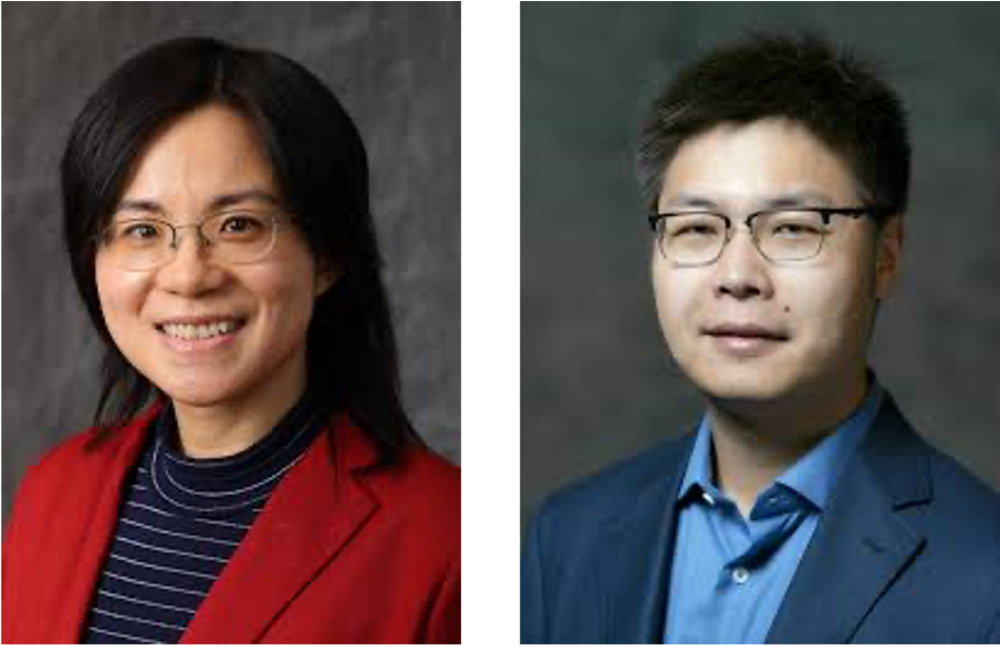
Jia Liang is a researcher at Henan Polytechnic University's School of Electrical Engineering and Automation, with a focus on Machine Learning , Compressed Sensing , and Privacy-Preserving Techniques . His work bridges Computer Science and Signal Processing , particularly in Radar Imaging and Medical Image Analysis . Key Collaborations: Di Xiao, Ying Luo, Qun Zhang, Hui Huang Technical Expertise: Federated Learning, SAR Imaging, Compressive Sensing, Adversarial Learning His research emphasizes secure data processing in IoT and cloud environments, with recent innovations in cross-disciplinary applications like biosignal analysis for cysticercosis diagnosis . Publications span top venues including IEEE Transactions on Aerospace Systems and Remote Sensing . Notable trends include privacy-preserving machine learning for federated systems and 3D radar imaging of rotating targets, alongside medical imaging solutions for chest radiographs and optical coherence tomography .
Meng Wang is a Professor in the Department of Electrical, Computer, and Systems Engineering at Rensselaer Polytechnic Institute (RPI), where she was promoted to Full Professor in June 2025. She received her B.S. and M.S. degrees (both with honors) in Electrical Engineering from Tsinghua University, China, in 2005 and 2007, respectively, and her Ph.D. in Electrical and Computer Engineering from Cornell University in 2012. After a postdoctoral position at Duke University, she joined RPI in December 2012 as an Assistant Professor, was promoted to Associate Professor with Tenure in 2019, and then to Full Professor in 2025. Her research spans machine learning and artificial intelligence, high-dimensional data analytics, power system monitoring, signal processing, and optimization methods. She has made fundamental contributions in sparse signal recovery and monitoring and control of smart grid using high frequency data from phase measurement unit (PMU). More recently, she has collaborated with IBM to produce theoretical guarantees of modern AI architectures such as graph neural networks and transformers used in large language models (LLMs). Wang's recent publications (2023-2025) reveal a strong focus on theoretical foundations of deep learning, particularly transformer architectures and graph neural networks. Her work bridges theoretical guarantees with practical applications in power systems, demonstrating how fundamental insights in machine learning can solve real-world energy challenges. She has increasingly focused on the intersection of AI and energy systems, developing methods for building-level load forecasting, energy disaggregation, and smart grid monitoring with behind-the-meter solar integration. AFOSR Young Investigator Program (YIP) Award (2019) Army Research Office (ARO) YIP Award (2017) James M. Tien '66 Early Career Award and Grant for Faculty (2022) School of Engineering Research Excellence Award (2018) IEEE Signal Processing Society Best Reviewer Award (2018) Professor Wang has mentored numerous Ph.D. students who have gone on to successful careers in academia and industry, including HongKang Li (now postdoc at University of Pennsylvania), Yi Ming (postdoc at University of Michigan), and Shuai Zhang (Assistant Professor at New Jersey Institute of Technology). Her research has been supported by multiple grants from the National Science Foundation, Air Force Office of Scientific Research, Army Research Office, and industry partners including IBM. She is actively involved with research centers including the Center for Future Energy Systems (CFES) and the Center for Materials, Devices, and Integrated Systems (CMDIS), where her group develops cutting-edge methods for power system monitoring and control. Her recent work has increasingly focused on the theoretical foundations of large language models and their applications to energy systems, positioning her at the forefront of AI for critical infrastructure.
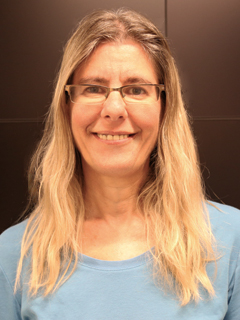
Odelia Schwartz is an Associate Professor in the Department of Computer Science at the University of Miami, College of Arts and Sciences. She also serves as Director of Undergraduate Studies for Computer Science and holds a secondary faculty appointment in Biology. Her research focuses on computational neuroscience, machine learning applications in healthcare and biology, and the intersection of artificial intelligence with visual and neural processing systems. Key research areas include machine learning analysis of medical signals (e.g., ECG for atrial fibrillation prediction), computational modeling of biological systems (e.g., endosymbiont population dynamics via microscopy image analysis), and hierarchical neural network models for visual cortex understanding. Her work integrates statistical methods with deep learning to bridge computational models and biological/neurological phenomena. Publications highlight applications in cardiology, neurotrauma recovery prediction, and visual cortex modeling. While no specific awards are listed, her contributions span interdisciplinary fields at the university and collaborative research institutions. Advising no listed students, but actively engages in graduate training through her faculty roles. No specific labs/teams are mentioned, though collaborations with medical and biological departments are evident.
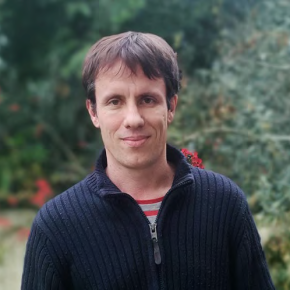
Olga Mula is a researcher at Eindhoven University of Technology (TU Eindhoven) in the Netherlands specializing in optimal transport theory, Wasserstein spaces, and model reduction techniques for partial differential equations. Her work bridges theoretical mathematics with practical applications in state estimation and inverse problems. Her research interests focus on Optimal Transport , Wasserstein Spaces , Model Reduction , and Numerical Analysis of PDEs . She develops algorithms for state estimation in metric spaces, particularly focusing on the Wasserstein space of probability measures. Her work includes developing reduced models using barycentric approximation, analyzing convergence properties, and addressing challenges in sensor placement for optimal data acquisition. Her recent publications demonstrate significant contributions to understanding how to build efficient reduced models in Wasserstein spaces for both forward and inverse problems. She has developed theoretical frameworks for state estimation algorithms, analyzed their performance in terms of Kolmogorov widths, and created practical implementations using sparse Wasserstein barycenters. Her work spans pure mathematical theory to applications in image processing and PDE-constrained optimization. Her scientific contributions include: Development of piecewise-affine algorithms for state estimation Nonlinear model reduction on metric spaces for conservative PDEs Sparse approximation using Wasserstein barycenters Applications to shape reconstruction and line completion Theoretical analysis of approximation rates in Wasserstein spaces She collaborates extensively with leading researchers in the field including Cohen, Dahmen, Feydy, and Rai. Her work demonstrates both theoretical depth and practical relevance, connecting abstract mathematical concepts to real-world problems in data assimilation and inverse modeling.
Gabriel Peyré is a CNRS Research Professor at the Department of Mathematics and Applications (DMA) of École normale supérieure (ENS) in Paris, France. A specialist in data science and artificial intelligence, he is renowned for his work on optimal transportation theory and its applications to imaging, machine learning, and neural network training. His research bridges mathematical theory with computational algorithm design, earning him the CNRS Silver Medal (2021) and multiple European Research Council (ERC) grants, including the 2024 Advanced Grant. Research interests include: Optimal Transport Machine Learning AI Theory Image Processing Computational Mathematics Neural Network Training His recent publications focus on advancing optimal transport methods in AI, with applications in neural network learning, spatial transcriptomics, and unsupervised data analysis. He has developed algorithms for large-scale optimal transport computations and contributed to theoretical understanding of transformer models and residual networks. Scientific awards: CNRS Silver Medal (2021) ERC Advanced Grant (2024) ERC Consolidator Grant (2016) ERC Starting Grant (2011) Blaise-Pascal Prize from the Academy of Sciences (2017) He supervises PhD students and postdoctoral researchers, including Raphaël Barboni, Valérie Castin, and Geert-Jan Huizing. His work involves collaborations with institutions like INRIA, MIT, and Heriot-Watt University. Peyré's affiliations include the Center for Data Sciences at ENS, where he contributes to interdisciplinary projects in biology and physics.
Işın Erer is a Professor at the Department of Electronics and Communication Engineering, Faculty of Electrical and Electronic Engineering, Istanbul Technical University (ITU). She is actively involved in research on radar signal processing, artificial intelligence, and image analysis, with a focus on ground-penetrating radar (GPR) and remote sensing applications. University: Istanbul Technical University School: Faculty of Electrical and Electronic Engineering Department: Department of Electronics and Communication Engineering Academic Rank: Professor Email: ierer@itu.edu.tr Her research interests span signal processing, radar systems, clutter removal, target detection, deep learning, vision transformers, U-Nets, and vital signs detection using stepped-frequency radar . She applies advanced machine learning techniques to enhance radar imaging and improve performance in challenging environments such as debris fields and outdoor conditions. The recent publication trends indicate a strong focus on integrating deep learning models (e.g., Vision Transformers, YOLOv5, U-Net) with radar signal processing for clutter removal, image restoration, and segmentation . Her work combines low-rank approximations, autoencoders, B-spline activation functions, and attention mechanisms to improve accuracy and robustness in GPR and remote sensing imagery. Applications include parcel boundary delineation, road segmentation, and life detection in search-and-rescue scenarios. She has received notable recognition for her academic mentorship: Best PhD Thesis Advisor in Telecommunications Engineering Program, 2018 She leads multiple active research projects funded by TÜBİTAK and ITU-BAP, focusing on real-time AI-based radar systems, through-wall vital sign detection, and clutter removal in GPR. She has supervised numerous graduate students, with 47 theses in progress or completed. Her research group works on both theoretical algorithm development and practical system implementation, bridging the gap between academia and real-world deployment. Current projects include developing integrated AI models for real-time GPR systems and ultra-wideband radar methods for behind-obstacle detection.
Müjdat Çetin is a Professor of Electrical and Computer Engineering and serves as the Robin and Tim Wentworth Director of the Goergen Institute for Data Science and Director of the New York State Center of Excellence in Data Science at the University of Rochester. He previously held faculty positions at Sabancı University and was a Research Scientist at MIT, with visiting roles at Boston University, Northeastern University, and MIT. Education: PhD in Electrical Engineering, Boston University, 2001 MS in Electrical Engineering, University of Salford, 1995 BS in Electrical Engineering, Boğaziçi University, 1993 His research lies at the intersection of signal processing, machine learning, and data science, with applications in biomedical imaging, radar, and brain-computer interfaces. He develops probabilistic and deep learning models for robust information extraction from noisy and complex data. His work emphasizes computational imaging, sparse representations, and multimodal data fusion. The recent publications reflect a strong trend toward integrating Bayesian methods and deep learning in imaging sciences, particularly in medical image reconstruction, neuroimaging analysis, and radar systems. His group actively explores transformer architectures, federated learning, and model-based deep learning for solving inverse problems in imaging. Scientific Awards and Honors: IEEE Fellow IEEE Signal Processing Society Best Paper Award IET Radar, Sonar and Navigation Premium Award Elsevier Signal Processing Best Paper Award Turkish Academy of Sciences Distinguished Young Scientist Award (GEBİP) ODTÜ Mustafa Parlar Foundation Research Incentive Award TÜBİTAK Career Award Boston University Best Engineering Research Award Professor Cetin has advised numerous PhD and Master’s students and led significant research grants in data science and imaging. He has served as a Senior Area Editor for IEEE Transactions on Image Processing and IEEE Transactions on Computational Imaging, and held editorial roles in several top journals. He has chaired major conferences including ICASSP, ICIP, and IVMSP workshops. He leads a multidisciplinary research group focused on data science and imaging, collaborating with neuroscientists and medical researchers. The team develops novel algorithms for brain-computer interfaces, medical image analysis, and remote sensing systems, often integrating machine learning with physical models of data acquisition.
Michael Muma is a Professor in the Department of Electrical Engineering and Information Technology at Technische Universität Darmstadt. His research focuses on robust data science theory and methods applied to signal processing and machine learning in biomedicine and engineering. He leads the ERC Starting Grant ScReeningData project, developing methods for reproducible information discovery in biomedical databases, and is a Principal Investigator in the LOEWE center emergenCITY and BMBF cluster curATime. Prior roles include Independent Junior Research Group Leader (Athene Young Investigator) and Lecturer at TU Darmstadt from 2017 to 2022, and Research Associate (Post-Doc since 2014) from 2009 to 2017. His research interests span robust statistical methods, high-dimensional data analysis, emergency response systems, and biomedical signal processing. Notable projects include FDR-controlled portfolio optimization, ECG delineation algorithms, and radar-based vital sign estimation. Muma has contributed to distributed sensor networks, robust clustering, and sparse regression techniques. His work addresses challenges in multi-source detection, financial data analysis, and genomics through interdisciplinary approaches combining signal processing, machine learning, and robust statistics. Recent publications emphasize scalable solutions for high-dimensional problems, including applications in robotics, cardiology, and financial index tracking.
Shuchin Aeron is an Associate Professor in the Department of Electrical and Computer Engineering at Tufts School of Engineering, with joint appointments in the Departments of Computer Science and Mathematics. He holds a Ph.D. from Boston University (2009) and completed postdoctoral research at Schlumberger Doll Research, focusing on borehole acoustic signal processing. His research spans statistical signal processing, machine learning, compressed sensing, and information theory, with applications in geophysics, bioengineering, and imaging. Aeron has authored over 175 publications and holds patents in acoustic signal processing. He received the NSF CAREER Award (2016) and is a Senior Member of the IEEE. Educations: Ph.D., Electrical Engineering, Boston University, 2009 M.S., Electrical Engineering, Boston University, 2004 B.Tech., Indian Institute of Technology, 2002 Research Interests: Statistical signal processing (SSP), inverse problems, compressed sensing, information theory, convex optimization Machine learning applications in geophysical signal processing, imaging, and bioengineering His work emphasizes optimal sampling and recovery of multidimensional signals, with contributions to compressed sensing architectures and generative models for particle physics experiments. He leads NSF-funded projects on data science and domain generalization, and collaborates with industry partners like Schlumberger and Mitsubishi Electric Research Labs. Awards: NSF CAREER Award (2016) Mitsubishi Electric Research Lab Research Gift (2015) Grants and Funding: NSF HDR TRIPODS (2019–2023) AFOSR: Enabling Trusted Human-Like Artificial Teammates (2018–2023) NSF: Optimal Sampling and Recovery for Multilinear Signals (2013–2016) Aeron teaches advanced courses in probabilistic systems analysis, information theory, and machine learning. He directs the Tufts Data Science undergraduate and graduate programs, and serves on editorial boards of journals including Frontiers in Signal Processing and IEEE Transactions on Geoscience and Remote Sensing .
Ashok BANDI is a Researcher at the Signal Processing & Satellite Communications group (SIGCOM) within the Interdisciplinary Centre for Security, Reliability and Trust (SnT) at the University of Luxembourg. His research focuses on Sparse Signal Recovery and Wireless Communications, particularly in structured sparsity modeling and signal recovery in communication systems. Education: Master’s degree from National Institute of Technology (NIT Trichy), India (2012). Research Interests: Design of physical layer systems for WLAN standards (802.11a/n/ac). Development of efficient algorithms for structured sparse signal recovery in satellite and wireless communication systems. Integration of sparsity principles into on-board beamforming for high-throughput satellite systems. Advisors: Prof. Björn Ottersten and Dr. Bhavani Shankar MYSORE RAMA RAO. Labs/Teams: Part of the Signal Processing & Satellite Communications (SIGCOM) research group led by Prof. Björn Ottersten.
Dustin Richmond is an Assistant Professor in the Department of Computer Science and Engineering at the Baskin School of Engineering, University of California, Santa Cruz. His work focuses on secure, usable hardware systems with applications in FPGA acceleration, RISC-V architectures, and side-channel analysis. Email: drichmond@ucsc Office: Engineering 2, Room 221 Research Interests: Secure hardware systems FPGA-based computing Manycore processors High-level synthesis Side-channel vulnerabilities Notable Article Trends: Recent publications emphasize cloud FPGA security, manycore design optimization, and hardware security. Earlier works focus on RISC-V acceleration, OpenCL compiler enhancements, and heterogeneous computing systems. GitHub Contributions: Maintains open-source projects like RISC-V-On-PYNQ and PYNQ-HLS, addressing FPGA programming challenges and RISC-V integration. Active in resolving community issues related to toolchain compatibility and hardware-software interfaces.
IRENA OROVIC is a researcher affiliated with COPELABS (Cognitive and People-centric Computing), focusing on signal processing and sparse signal reconstruction. She actively contributes to advanced research in compressive sensing, time-frequency analysis, and machine learning applications. Research Interests: Her work spans Compressive Sensing Sparse Signal Processing Signal Reconstruction Time-Frequency Analysis Watermarking Machine Learning Publications: Recent research outputs include advancements in adaptive compressive sensing, Hopfield network optimization, and Hermite transform applications, reflecting her expertise in sparse signal analysis and multidisciplinary computational methods.
Sylvain Sardy is an Associate Professor in the Department of Mathematics at the University of Geneva, where he conducts research at the intersection of statistics, optimization, and machine learning. He is affiliated with the Analysis, Mathematical Physics and Probability research group and has held significant editorial positions including Associate Editor for Computational Statistics and Data Analysis since 2020. Professor Sardy's research focuses on statistical machine learning, sparsity, and optimization with applications spanning astronomy, chemometrics, finance, and tomography. His work develops innovative methods for high-dimensional data analysis, particularly using wavelet-based approaches and LASSO regularization techniques for feature selection, denoising, and model selection. His publications reveal a consistent focus on finding sparse signals in complex datasets across diverse scientific domains. Professor Sardy has mentored numerous graduate students, currently supervising PhD candidate Maxime van Cutsem and having previously guided Dr. Xiaoyu Ma, Dr. Pascaline Descloux, Prof. Jairo Diaz Rodriguez, and Dr. Caroline Giacobino. His Master's students include Jairo Diaz (now Professor at Universidad del Norte, Colombia), Jean-Luc Baeriswyl, and others who have pursued careers in academia, industry, and education. His academic service includes leadership roles as Swiss representative at the European Regional Committee of the Bernoulli Society (2014-2018), President of the Doctoral School of Applied Statistics and Probability (2010-2013), and Student Advisor for the Mathematics Section (2008-2015). His teaching portfolio includes Optimization with Applications I, Statistical Machine Learning, and Pharmaceutical Statistics and Methodology, reflecting his expertise in statistical methodology and its practical implementation.
Rongrong Wang serves as Associate Professor in both the Department of Computational Mathematics, Science and Engineering (CMSE) and Department of Mathematics at Michigan State University, based in the Engineering Building with contact email wangron6@msu.edu . Her academic journey includes: B.S. in Mathematics and B.A. in Economics from Peking University, Beijing Ph.D. in Applied Mathematics from University of Maryland College Park under John Benedetto and Wojciech Czaja Postdoctoral fellowship at University of British Columbia with Ozgur Yilmaz and Felix Herrmann Her research spans Applied and Computational Harmonic Analysis , Machine Learning , and Compressed Sensing with focus areas including neural network training dynamics, learning theory, tensor analysis, and inverse problems. She investigates theoretical foundations of deep learning while developing applications for medical imaging and signal processing. Recent publications (2024-2025) demonstrate strong interdisciplinary work at the intersection of deep learning theory and medical imaging, particularly exploring edge-of-stability phenomena in neural networks and diffusion-guided reconstruction techniques. Her work also advances tensor decomposition methods and in-context learning mechanisms in language models. Professor Wang actively recruits self-motivated graduate and undergraduate students with backgrounds in mathematics, computer science, or electrical engineering for research opportunities in her lab.
David Donoho is the Anne T. and Robert M. Bass Professor of Humanities and Sciences and Professor of Statistics at Stanford University. His work bridges theoretical and computational statistics, signal processing, and harmonic analysis, with a focus on advancing reproducible research through innovative software development. His research explores the detection of rare but weak phenomena across multiple test statistics, addressing challenges in statistical inference and signal recovery. He has pioneered methods to transparently capture and share data analyses, promoting openness in computational science. Donoho's contributions to statistics and signal processing are foundational, particularly in high-dimensional data analysis and sparse representation. His expertise intersects disciplines such as applied mathematics, machine learning, and information theory.