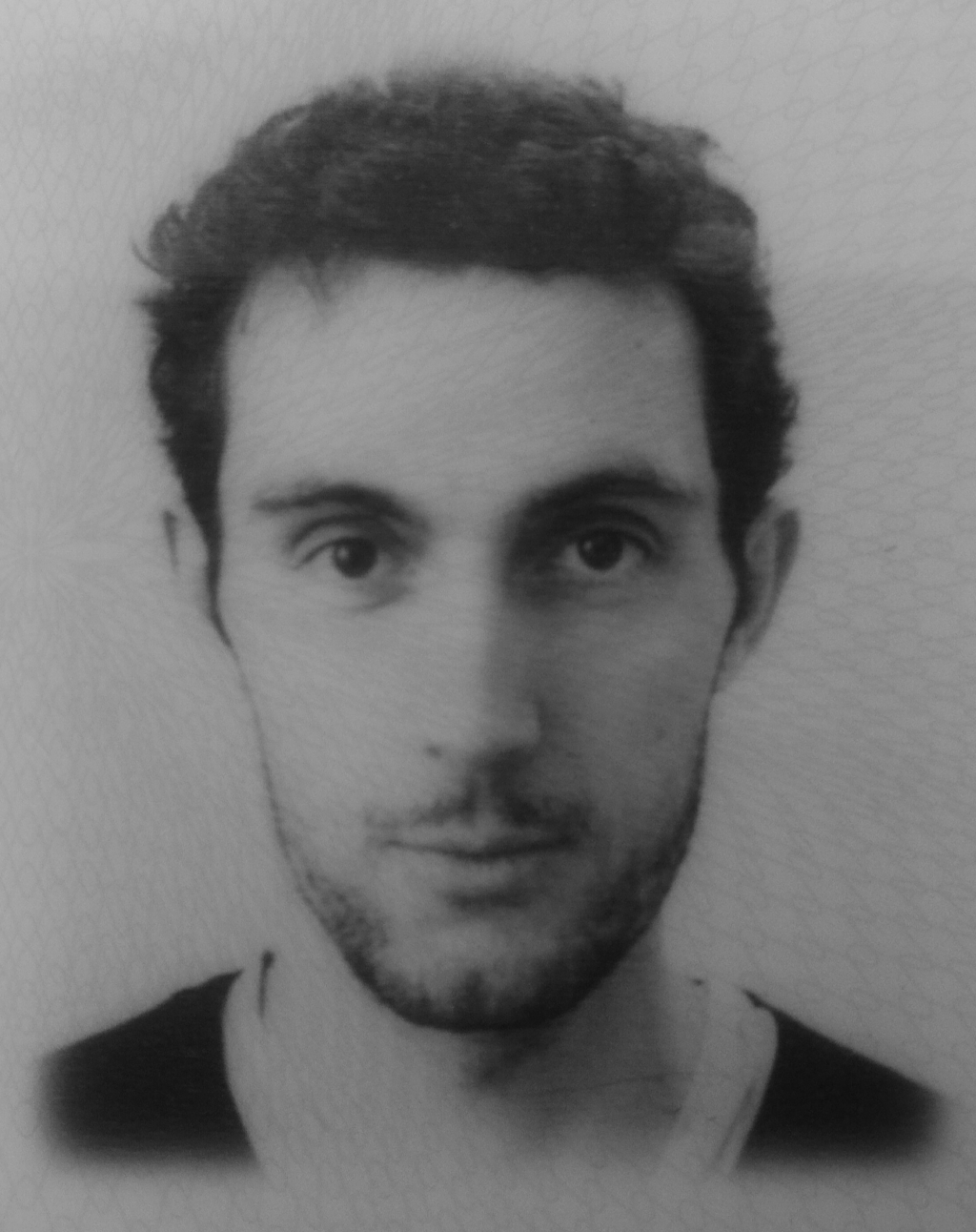
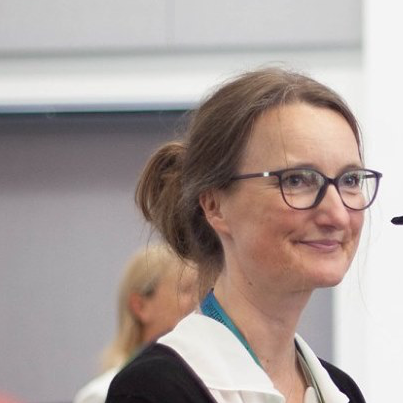
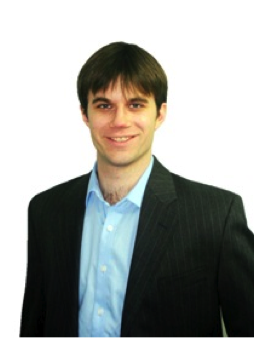
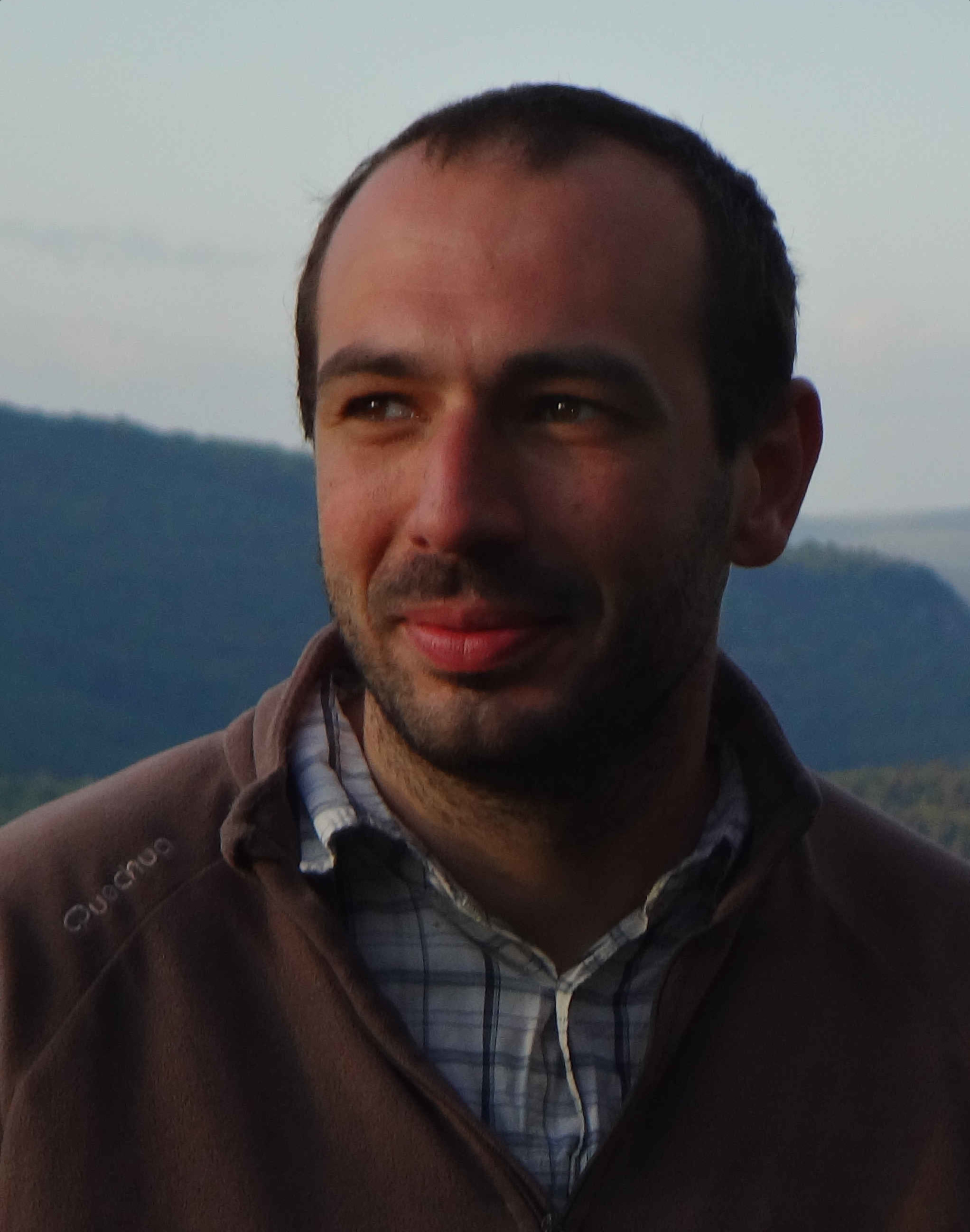
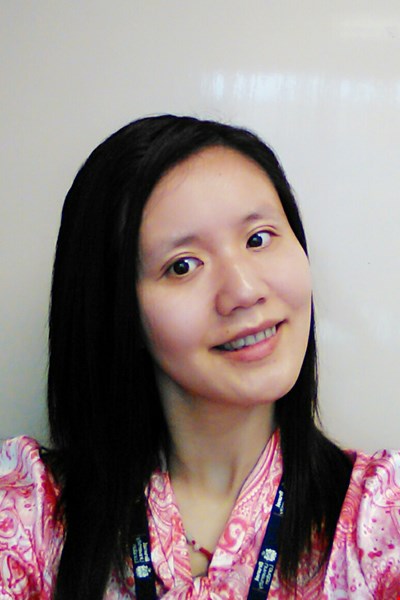
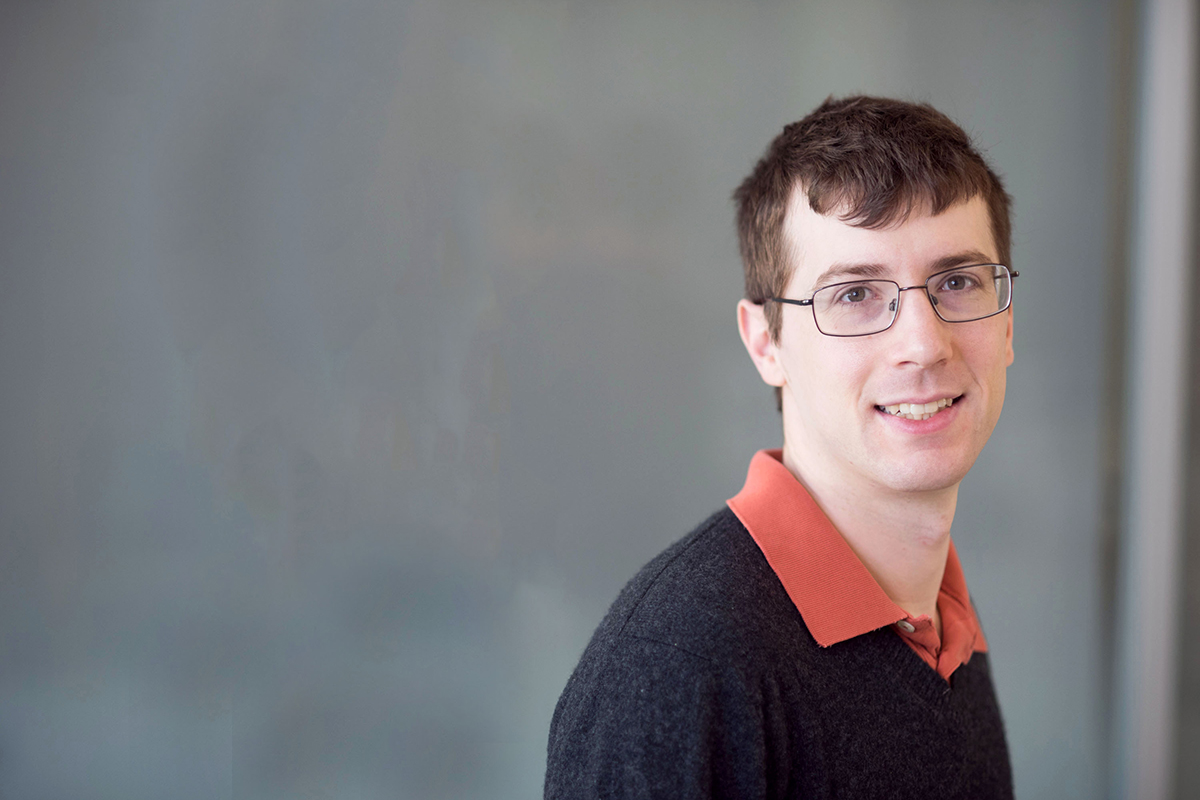
Florian Bossmann is an Associate Professor and Doctoral Supervisor at the School of Mathematics, Harbin Institute of Technology. His research focuses on applied signal processing with an emphasis on algorithm design and applications in inverse problems, sparsity, and compressed sensing. His work spans seismic exploration, ptychography, and video processing. Education: PhD (Mathematics, University of Göttingen, 2010-2013), Diploma in Mathematics (University of Duisburg-Essen, 2005-2009). Research interests include greedy methods, structured sparsity, and data denoising. His recent articles address topics like object reconstruction via K-approximation graphs and phase retrieval in ptychographic imaging. No scientific awards explicitly stated. Active in mentoring doctoral students and collaborations in applied mathematics and engineering. Labs/Teams: Engaged in interdisciplinary research groups focused on signal processing and mathematical modeling.
Antoine Honoré is a Researcher (Postdoc) at KTH Royal Institute of Technology, working in the Division of Information Science and Engineering. He collaborates with Prof. Ming Xiao at KTH and Prof. Volker Lauschke at Karolinska Institutet's Department of Physiology and Pharmacology. His research focuses on developing predictive models for clinical contexts, emphasizing generalizability, calibration, and implementation of deep learning architectures. Key projects include graph-based models for genetic variant analysis in drug transporter proteins, advancing personalized medicine. Education: He holds a PhD from KTH Royal Institute of Technology under Assoc. Prof. Saikat Chatterjee and Prof. Eric Herlenius at Karolinska Institutet, with a thesis on deep learning for neonatal sepsis detection. His work bridges signal processing, machine learning, and clinical informatics. Research Interests: Predictive modeling in healthcare, machine learning applications in neonatal sepsis detection, pharmacogenomics, and integration of clinical data sources. He has pioneered LSTM and HMM-based models for vital sign analysis, contributing to early sepsis identification in preterm infants. Publications: Over 15 peer-reviewed articles, including work on DANSE algorithms (IEEE Transactions on Signal Processing), neonatal sepsis detection (Acta Paediatrica), and pharmacogenomic variant prediction (2025). His research spans signal processing, generative models, and clinical decision support systems. Labs/Teams: Active in Prof. Ming Xiao's research group at KTH and collaborates with Karolinska Institutet's Physiology and Pharmacology department. His work integrates AI with healthcare systems to improve clinical outcomes through data-driven approaches.
Heidi Christensen is a Professor and Head of the School of Computer Science at the University of Sheffield. She holds an academic rank of Professor of Spoken Language Technology and is a member of the Speech and Hearing (SpandH) research group. Her research focuses on speech and language processing in healthcare, particularly in detecting cognitive impairments like dementia through technologies such as CognoSpeak. She has a PhD from Aalborg University (2002) and an M.Sc. (1996). Professional roles include serving as Faculty Director of Equality, Diversity, and Inclusion (2020–2022). Research interests include disordered speech recognition, conversational analysis, and paralinguistic trait detection. Notable projects include CognoSpeak for early dementia detection and COMPASS for stroke survivor cognitive assessment. She has secured grants from NIHR, UKRI, and Rosetrees Trust, among others. Her work emphasizes interdisciplinary collaboration and accessibility, with a focus on AI-driven healthcare solutions. Publications span over two decades, addressing speech technology for healthcare applications. Key achievements include the Rosetrees Trust Interdisciplinary Prize and contributions to open-source tools like NeuroSpeech. Current initiatives prioritize EDI in speech technology and expanding AI applications for underrepresented groups.
Prof. Matthias Eiber holds the position of Professor in Nuclear Medicine at the TUM School of Medicine and Health, Technical University of Munich. He is distinguished as a Humboldt Professor and Heisenberg Professor, reflecting his esteemed academic standing. His research focuses on sparse representation models, analysis operator learning, and applications in signal processing and machine learning. Key contributions include advancements in dictionary learning theory, sample complexity analysis, and optimization techniques on Riemannian manifolds. Eiber’s work bridges mathematical foundations with practical applications in medical imaging and high-dimensional data analysis. Education and Career: While specific educational details are not provided here, his academic trajectory includes prominent roles such as Humboldt and Heisenberg Professorships, indicating a trajectory of exceptional scholarly achievement. He is affiliated with the Department of Nuclear Medicine, integrating computational methods into medical diagnostic technologies. Research Interests: Eiber’s research emphasizes sparse representation theory, co-sparse analysis operators, and the theoretical underpinnings of dictionary learning. His work explores sample complexity bounds in machine learning, optimization algorithms for structured data, and applications in medical imaging. Recent publications address separable models, operator learning, and geometric optimization methods. Awards: Humboldt Professor Heisenberg Professor Advising & Grants: While specific student names or grant details are not listed here, his research output suggests active involvement in supervising PhD students and securing grants related to computational medicine and signal processing. His collaborations likely span interdisciplinary teams within TUM’s medical and engineering divisions. Labs & Teams: Affiliated with the Nuclear Medicine department’s research groups focused on computational diagnostics and medical imaging algorithm development. His work contributes to TUM’s broader initiatives in precision medicine and data-driven healthcare solutions.
Professor Celso Grebogi is the Sixth Century Chair in Nonlinear & Complex Systems at the School of Natural and Computing Sciences, University of Aberdeen, UK. He is the Founding Director of the Institute for Complex Systems and Mathematical Biology and Co-founder of the Aberdeen-Lanzhou-Tempe Research Centre, advancing interdisciplinary research in relativistic quantum chaos. He has been an External Scientific Member of the Max-Planck-Society since 1998 and maintains extensive international collaborations. BSc, Chemical Engineering, Federal University of Parana, 1970 MS, Physics, University of Maryland, 1975 PhD, Physics, University of Maryland, 1978 Post-doctoral Research Fellow, University of California at Berkeley, 1978–1981 Professor Grebogi is a leading expert in nonlinear and complex dynamics, with research spanning chaotic dynamics, fractal geometry, systems biology, neurodynamics, fluid advection, relativistic quantum chaos, and nanosystems. His work has profoundly influenced the understanding and control of chaotic systems, most notably through the OGY method for chaos control. He has pioneered research in strange nonchaotic attractors, multistability, and dynamical transitions in complex systems. The recent publications highlight a strong trend toward interdisciplinary applications, integrating nonlinear dynamics with machine learning, neuroscience, biomedical engineering, and quantum systems. His team applies advanced mathematical frameworks to real-world problems such as motor imagery recognition, brain dynamics in mental disorders, fatigue detection, and quantum scarring. The integration of data-driven methods with classical dynamical systems theory underscores a modern, hybrid approach to complexity science. Fulbright Fellowship Award, 1974 Senior Humboldt Prize, 1996 Doctor Honoris Causa, University of Potsdam, 1997 Controlling Chaos paper selected as milestone by Physical Review Letters, 2008 Citation Laureate - Researcher of Nobel Class, 2016 Lagrange Award for Lifetime Achievement, 2023 James Yorke Award, 2024 Professor Grebogi has delivered over 500 invited talks and authored more than 500 publications. He has supervised numerous PhD students and postdoctoral researchers, though specific names are not listed in the provided texts. His research has been supported by major international grants and collaborations, including partnerships with institutions in China, Brazil, and the US. He serves on multiple editorial boards and has held visiting professorships worldwide. He leads the Institute for Complex Systems and Mathematical Biology at Aberdeen, fostering interdisciplinary research in nonlinear science. The institute collaborates with global partners, including Lanzhou University and Arizona State University, and supports research in relativistic quantum chaos, systems biology, and complex network dynamics. His group integrates theoretical modeling, computational simulations, and data analysis to explore emergent behaviors in complex systems.
Billy Yiu is an Associate Professor at the Department of Health Technology, Technical University of Denmark. His research focuses on advanced ultrasound imaging techniques, including synthetic aperture methods, transducer engineering, and biomedical signal processing. Research Areas: 3D Ultrasound Imaging, Synthetic Aperture, Transducer Design, Beamforming, Coded Excitation, Pressure Gradient Estimation Key Collaborations: Supervising PhD projects on ultrasound wall shear stress estimation and 3D SURE imaging Recent publications highlight his work in enhancing ultrasound penetration depth, improving signal-to-noise ratios, and applying machine learning to channel recovery. His contributions include innovative beamformer designs and precision in in vivo pressure gradient estimations. He collaborates extensively with researchers like Jørgen Arendt Jensen and colleagues in developing cutting-edge medical imaging solutions. No specific scientific awards are mentioned in the provided text.
John Wright is an Associate Professor in the Department of Electrical Engineering at Columbia University's Fu Foundation School of Engineering and Applied Science, with additional affiliations in the Department of Applied Physics and Applied Mathematics and the Data Science Institute. He maintains his office at 408 Mudd Hall within the Data Science Institute and leads a research group focused on high-dimensional data analysis. Wright received his PhD in Electrical Engineering from the University of Illinois at Urbana-Champaign in October 2009, followed by a research position at Microsoft Research from 2009-2011 before joining Columbia University. His research focuses on developing algorithms for robustly recovering structured signal representations from incomplete and corrupted observations, with applications in imaging and vision. His research interests span high-dimensional data analysis, signal processing, computer vision, and optimization. Wright's work places particular emphasis on finding methods that perform well even when data is unreliable - noisy or corrupted - and which come with proofs of correctness. His research group develops tools for robustly analyzing high-dimensional data and applying them to practical problems such as image and video compression, face and object recognition. Wright's publication record shows a clear evolution from sparse representation and dictionary learning toward more complex deep learning architectures. His recent work focuses on geometric approaches to nonconvex optimization problems, blind deconvolution methods, and the theoretical foundations of deep networks. His publications consistently bridge theoretical guarantees with practical applications across computer vision and signal processing domains. Scientific Awards and Honors: 2009 Lemelson-Illinois Prize for Innovation for his work on face recognition 2009 UIUC Martin Award for Excellence in Graduate Research 2008-2010 Microsoft Research Fellowship 2012 COLT Best Paper Award (with Wang and Spielman) Wright has successfully mentored numerous PhD students who have gone on to prestigious positions at institutions including TTIC, Google, Rutgers University, and Boston University. He also co-authored the influential textbook 'High-Dimensional Data Analysis with Low-Dimensional Models: Principles, Computation, and Applications' published by Cambridge University Press in 2022, which has been used as course material at multiple leading universities. His research group maintains active collaborations across multiple institutions and regularly presents at top conferences including NeurIPS, ICML, CVPR, and COLT. The group holds weekly seminars (typically on Thursdays from 10-12 in 408 Mudd) where current research is discussed and developed.
Tselil Schramm is an Assistant Professor at Stanford University , with courtesy appointments in the Department of Computer Science and Department of Mathematics . Her research bridges Theoretical Computer Science and Statistics , focusing on algorithmic tools for high-dimensional estimation and information-computation tradeoffs. PhD : UC Berkeley (advised by Prasad Raghavendra and Satish Rao) Postdoc : Harvard and MIT (hosted by Boaz Barak, Jon Kelner, Ankur Moitra, Pablo Parrilo) Her work spans algorithms , optimization , and computational complexity in statistical contexts. Recent articles explore semidefinite programming , approximate message passing , and random geometric graphs , reflecting her focus on bridging discrete and continuous optimization for statistical inference. Scientific Awards : NSF CAREER award Stanford Gabilan Fellowship Microsoft Research Fellow Google Research Fellow Teaching : She has taught courses like Machine Learning Theory , Probability Theory , and The Sum-of-Squares Algorithmic Paradigm in Statistics at Stanford since 2021.
Nicolas Verzelen is a Senior Research Scientist at the MISTEA Laboratory within INRAE , affiliated with Université de Montpellier . His work bridges Statistics and Machine Learning , focusing on agroecological applications. Roles: Associate Editor for Annals of Statistics, Bernoulli, and Electronic Journal of Statistics; Editor-in-Chief for ESAIM: P&S Supervision: Mentoring 5 PhD/post-doc researchers; alumni include current professors at ENSAI, Centrale Supélec, and Telecom-Paris Research Interests: High-dimensional minimax theory, active learning, unsupervised learning (clustering, ranking), and applications to seed exchange networks and agroecology. His work addresses computational-statistical trade-offs in modern data science. Publication Trends: Recent outputs emphasize clustering algorithms, covariance adaptation, latent space modeling, community detection, and active learning frameworks. Collaborations span institutions like Université Paris-Saclay and Telecom-Paris. Teaching: Instructs Statistical Machine Learning (M2) at Université de Montpellier.
Mostafa Kaveh is a Professor in the Department of Electrical and Computer Engineering at the University of Minnesota, College of Science and Engineering. His research spans statistical signal processing, wireless communications, image processing, and biomedical ultrasound imaging. He has held leadership roles including Department Head (1990-2005), Associate Dean for Research and Planning (2005-2018), and Dean of the College of Science and Engineering (2018-2022). His academic credentials include a B.S. and Ph.D. from Purdue University (1969, 1974) and an M.S. from UC Berkeley (1970). Kaveh’s research focuses on: Statistical signal processing for antenna arrays and mobile localization Wireless communication systems with multiple antennas and collaborative transmission Image restoration algorithms based on partial differential equations Medical image processing for tomography and reconstruction Signal processing applications in genomics and biotechnology Google Scholar publications highlight trends in array signal processing, direction-of-arrival estimation, wireless channel modeling, and medical imaging techniques. His work has influenced GRAPPA algorithms for MRI, space-time interference-canceling receivers, and genomic data analysis.
Nicholas F. Marshall is an Assistant Professor in the Department of Mathematics at Oregon State University's College of Science. His academic journey includes a Ph.D. in Applied Mathematics from Yale University (2019) and a B.S. in Mathematics from Clarkson University (2014), with additional research experience at Princeton University as an NSF Postdoc. Ph.D. in Applied Mathematics, Yale University, 2019 B.S. in Mathematics, Clarkson University, 2014 His research focuses on the interplay between analysis, geometry, and probability, particularly as applied to data science challenges. Current investigations include harmonic analysis on geometric domains, randomized algorithms for linear systems, and mathematical frameworks for cryo-electron microscopy. His work bridges pure mathematical theory with computational applications in imaging and machine learning. Analysis of his recent publications reveals strong trends in computational harmonic analysis, with significant contributions to fast algorithms for spherical and disk harmonics, randomized linear solvers with momentum acceleration, and geometric approaches to hyperdimensional computing. His work consistently connects abstract mathematical concepts to practical computational problems in imaging and data science. Dr. Marshall actively mentors graduate students including Wyatt Whiting, Peter Cowal, and Heather Fogarty, and has supervised notable undergraduate research projects leading to publications in SIAM journals. His current teaching portfolio includes advanced courses in probability theory, numerical linear algebra, and data science mathematics. He maintains active research collaborations with institutions including Princeton University and Yale, focusing on applications in cryo-EM imaging and computational geometry. Personal interests include skiing (learned in Vermont) and kayaking along the Oregon Coast.
Dr. Lu Gan is a Senior Lecturer in the Department of Electronic and Computer Engineering at Brunel University London, within the College of Engineering, Design, and Physical Sciences. She earned her B.Eng and M.Eng in Electronic and Information Engineering from Southeast University, China, in 1998 and 2000, followed by a Ph.D. in Information Engineering from Nanyang Technological University, Singapore, in 2004. Before joining Brunel in 2008, she held faculty positions at the University of Newcastle, Australia (2004-2006) and the University of Liverpool, UK (2006-2007). Her research spans fundamental signal processing theories, machine learning, and applications in image/video coding, non-destructive terahertz/ultrasound imaging, wireless communications, and sparse antenna arrays. Education: B.Eng (Electronic and Information Engineering), Southeast University, China (1998) M.Eng (Electronic and Information Engineering), Southeast University, China (2000) Ph.D (Information Engineering), Nanyang Technological University, Singapore (2004) Her research focuses on structured sparse signal processing for infrared/terahertz systems, super-resolution in non-destructive imaging, deep learning for terahertz data, non-orthogonal pilot design for 5G systems, and separation of singing voice from music. She has secured funding from EPSRC, Innovate UK, BBSRC, UK Atomic Energy Authority, and TWI. She actively contributes to academic service as an Associate Editor for IEEE Signal Processing Letters, IEEE Transactions on Circuits and Systems-I, and as a Meta Reviewer for ICASSP 2025. Her work has been recognized with a Best Paper Award from the Journal of The British Blockchain Association in 2022 and a Gold Medal at the IEEE Audio and Acoustic Signal Processing Challenge (DCASE) in 2022. Dr. Gan also serves as a reviewer for top journals like IEEE Transactions on Information Theory and IEEE Transactions on Signal Processing, and participates in grant panels for the Royal Society and EPSRC. Recent publications emphasize cross-domain speech enhancement architectures, terahertz data reconstruction via spatio-temporal dictionary learning, and coprime array designs using Chinese remaindering over quadratic fields. Her work bridges compressive sensing, lattice structures, and practical applications in healthcare and communication systems. She is a Senior Member of IEEE, Fellow of the Higher Education Academy (UK), and actively contributes to departmental leadership as Course Director for MSc Wireless Communication Systems, Level 3 Coordinator, and Social Media Administrator.
Eric Price is an Associate Professor in the Department of Computer Science at the University of Texas at Austin. He received his undergraduate and graduate degrees from MIT under the advisement of Piotr Indyk, and held postdoctoral positions at the Simons Institute (Berkeley) and IBM Almaden Research Center before joining UT in Fall 2014. Starting Fall 2024, he is on leave at Microsoft AI. Education: MIT (Undergraduate and Graduate), advised by Piotr Indyk Research Interests: Theoretical computer science, focusing on data-limited computational problems Algorithms and lower bounds for sparse recovery, streaming, and compressed sensing Integrating deep learning with traditional signal processing Provably efficient methods for high-dimensional estimation Connections between neural networks and algorithmic analysis Computational limits of modern architectures Article Trends: Recent work spans attention mechanisms, diffusion models, and LoRA fine-tuning Focus on theoretical guarantees for generative models, gradient dynamics, and security analysis Active in improving efficiency and robustness of AI systems Benchmark design for evaluating model limitations Scientific Awards: SODA Best Student Paper (2014) George M. Sprowls Award (2013) Simons Graduate Fellowship (2012) NSF Graduate Research Fellowship (2009) Multiple math/CS competition accolades Advising: PhD advisee Zhao Song (2019)
Patrick Tardivel is an Associate Professor at the University of Burgundy, specializing in statistical learning and biostatistics. His research focuses on the SLOPE estimator, sparsity, and geometric properties in penalized estimation. He has contributed to mathematical modeling in metabolomics and occupational health risk assessment. Tardivel holds a PhD in Statistics and completed his HDR thesis on SLOPE estimator properties. Education: PhD in Statistics, HDR thesis on SLOPE estimator Research Interests: Tardivel's work bridges statistical learning, biostatistics, and metabolomics. Key areas include multiple testing procedures, sparse representations, and geometric interpretations of penalized estimation. He applies these methods to biomedical and occupational health data analysis. Collaborations: He actively participates in the joint statistical learning seminar organized by the University of Lund, University of Burgundy, and University of Wroclaw, hosted via Zoom. Tardivel also contributes to software development for NMR spectra analysis through the ASICS R package. Contact: Email: patrick.tardivel@u-bourgogne.fr
Prof. Dr. Felix Krahmer is an Associate Professor for Optimization and Data Analysis at the Department of Mathematics, Technical University of Munich (TUM) . His research focuses on mathematical foundations of data science, with expertise in Compressed Sensing Unlimited Sampling Quantization of Signals and Images Neural Networks Uncertainty Quantification Low-Rank Recovery He leads the Data Science research group within TUM's School of Computation, Information and Technology, collaborating with institutions like TU Berlin, RWTH Aachen, and Technion. His recent publications span topics like Robust blind deconvolution under adversarial noise Kronecker-structured dimensionality reduction Hysteresis in unlimited sampling systems Efficient sparse FFT algorithms Notable scientific awards include two August-Wilhelm-Scheer Visiting Professorships (2016, 2019) for hosting international collaborators. Former and current students include Olga Graf Dominik Stöger Claudio Verdun Felipe Pagginelli Patricio Juana Kostin He has co-organized workshops at SAMPTA, Oberwolfach, and ISIT, serving as associate editor for journals including SIAM Journal on Matrix Analysis and Frontiers in Signal Processing.