Jesper Jensen is a Professor at the Department of Electronic Systems, part of The Technical Faculty of IT and Design at Aalborg University. His research focuses on acoustic signal processing, machine learning, and speech enhancement, with particular expertise in applications like hearing aids, noise reduction algorithms, and deep learning architectures for audio systems. He serves as a project supervisor at institutions including Oticon A/S since 2007, and co-leads the CASPR (Centre for Acoustic Signal Processing Research) center. Key research interests include multichannel signal processing, robust speech enhancement in reverberant environments, and adaptive filtering techniques. His work integrates Bayesian methods, deep neural networks (DNNs), and sparse modeling to address challenges in audio localization, speech presence probability estimation, and sound zone control systems. Notable Achievements: Recipient of the prestigious 'Stor international pris' award in 2017 Over 135 publications in journals like IEEE Signal Processing Letters and conference proceedings Active collaborations with industry partners such as Oticon A/S His research outputs emphasize practical applications, including voice control systems for hearing aids, binaural speech enhancement in noisy environments, and acoustic reflector localization for robotics. Recent work explores transformer networks and learning-based frameworks for real-time audio processing.
Billy Yiu is an Associate Professor at the Department of Health Technology, Technical University of Denmark. His research focuses on advanced ultrasound imaging techniques, including synthetic aperture methods, transducer engineering, and biomedical signal processing. Research Areas: 3D Ultrasound Imaging, Synthetic Aperture, Transducer Design, Beamforming, Coded Excitation, Pressure Gradient Estimation Key Collaborations: Supervising PhD projects on ultrasound wall shear stress estimation and 3D SURE imaging Recent publications highlight his work in enhancing ultrasound penetration depth, improving signal-to-noise ratios, and applying machine learning to channel recovery. His contributions include innovative beamformer designs and precision in in vivo pressure gradient estimations. He collaborates extensively with researchers like Jørgen Arendt Jensen and colleagues in developing cutting-edge medical imaging solutions. No specific scientific awards are mentioned in the provided text.
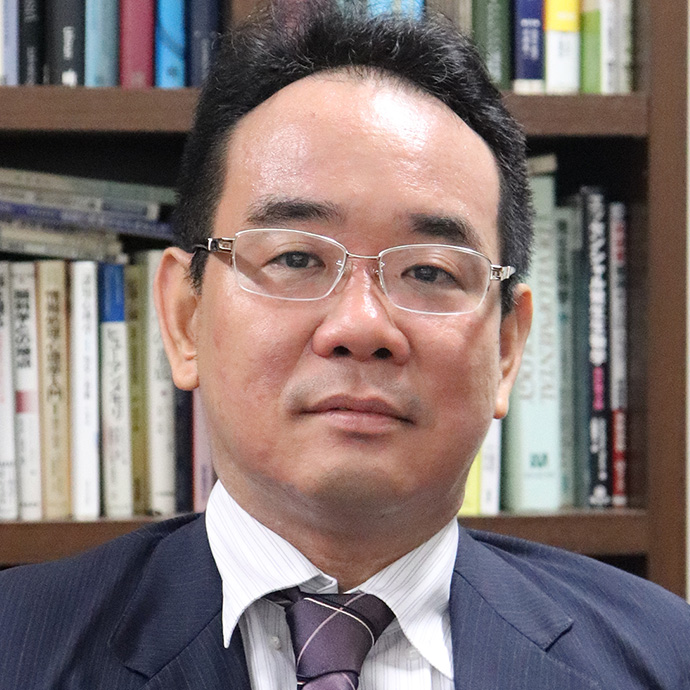
Kenichi Ohki is a Professor in the Department of Physiology at the Graduate School of Medicine, The University of Tokyo, and serves as Deputy Director and Principal Investigator at the International Research Center for Neurointelligence (IRCN). His research focuses on visual neuroscience and functional brain mapping, with particular emphasis on understanding how the visual cortex processes information at cellular resolution. Education: 1990-1996: Medical degree (MD) from Faculty of Medicine, The University of Tokyo 1996-2000: PhD in Medicine from Department of Physiology, The University of Tokyo 1996: Visiting scholar at Department of Brain and Cognitive Sciences, MIT Dr. Ohki is renowned for developing single-cell resolution functional mapping with two-photon calcium imaging in 2005, which revolutionized the understanding of visual cortex architecture. His work has revealed fundamental principles of how orientation selectivity emerges in visual neurons and how developmental programs interact with neural activity to shape cortical function. His laboratory continues to investigate the interplay between innate developmental circuits and neuronal activity in determining cortical function using advanced imaging and computational techniques. Analysis of Dr. Ohki's publications shows a consistent progression from foundational work on visual cortex organization to understanding developmental mechanisms and more recently, integrating neuroscience with artificial intelligence approaches. His recent work demonstrates increasing sophistication in analyzing neural circuits, with growing emphasis on computational modeling and cross-disciplinary approaches that bridge neuroscience and AI. Scientific Recognition: Multiple high-impact publications in Nature, Nature Neuroscience, and other top journals Development of innovative techniques for functional brain mapping Leadership as Deputy Director of IRCN, a major international research center Selection for Beyond AI Institute's mid- to long-term research project Regular recognition of laboratory members with research awards Dr. Ohki actively mentors a diverse research team including project assistant professors, postdoctoral researchers, and graduate students. His laboratory has received significant institutional support for research on visual neuroscience and neural circuit development. Several of his students have received prestigious awards at major neuroscience conferences in Japan, demonstrating his effective mentorship and the quality of research conducted in his laboratory. The Ohki Laboratory operates within the Department of Physiology at the University of Tokyo and is affiliated with the International Research Center for Neurointelligence (IRCN). The lab utilizes advanced techniques including in vivo two-photon calcium imaging, optogenetics, and computational modeling to investigate visual information processing in the mammalian brain. The research team consists of scientists with diverse expertise in neuroscience, imaging technology, and computational analysis, creating a highly collaborative and interdisciplinary research environment focused on understanding the fundamental principles of visual processing in the brain.
Line Clemmensen serves as Associate Professor at DTU Compute (Department of Applied Mathematics and Computer Science), Technical University of Denmark, where she has held faculty positions since 2010. Her interdisciplinary work bridges statistical learning, machine learning, and real-world applications in mental healthcare, biotechnology, and agricultural informatics. Her academic credentials include: Ph.D. in Image Analysis and Computer Graphics from DTU (2010), thesis: "High-dimensional sparse data analysis" M.Sc. in Applied Mathematics from DTU (2006) Exchange studies at Universitat Politecnica de Catalunya, Barcelona (2004) Mathematical graduate from Falkonergården upper secondary school (2000) Clemmensen's research centers on machine learning and statistical learning with emphasis on low-resource modeling, representation learning, and AI evaluation methodologies. She applies these techniques to mental health (developing biosensor-based OCD monitoring systems), biotechnology (spectral data analysis for pharmaceutical quality control), and environmental science (crop health assessment via remote sensing). Her work consistently addresses challenges in data scarcity and model interpretability. Analysis of her recent publications reveals dominant trends in computational psychiatry (e.g., detecting OCD episodes through physiological signals and oxytocin biomarkers) and agricultural AI (linking soil microbiome composition to crop health via machine learning). Methodologically, she pioneers interpretable deep learning frameworks for low-resource settings and robust time-series analysis techniques for physiological data. She has supervised 10 PhD students to completion (including Jacob Søgaard Larsen on NIR management and Gudmundur Einarsson on psychiatric motion quantification) and mentored 13 Master's/Bachelor's students. Current funding includes the LundbeckFonden LF-Experiment grant for the FAST project (Fast Assessment of psychiatric Symptoms to Transform Mental Health Care). Within DTU Compute's Section for Statistics and Data Analysis, Clemmensen leads collaborations with Novo Nordisk (biostatistics), the Danish Meat Industry, and clinical psychiatry teams, focusing on real-world AI deployment in mental healthcare and industrial applications.
Martin Dalgaard Ulriksen is an Associate Professor at Aarhus University's Department of Mechanical and Production Engineering, specializing in system dynamics and affiliated with the Mechatronics and Dynamics section. His work focuses on vibration theory, system identification, and control theory with applications in offshore structures and wind turbines. His research encompasses fault detection, parameter estimation, and digital twin technologies. Key projects include True Digital Twin (2024-2025) for wind turbine design and CP-SENS (2023-2026) for cyber-physical sensing in structural monitoring. Publications highlight methodologies like modal expansion, basis pursuit, and eigenstructure assignment for damage localization and system identification. Martin teaches vibration theory and system identification courses at both bachelor's and master's levels while supervising thesis projects. Current collaborations with researchers like D. Bernal demonstrate his emphasis on interdisciplinary approaches. Contact: mdu@mpe.au.dk | +45 93 50 88 66.