Azime Can is an Assistant Professor at the Swanson School of Engineering, University of Pittsburgh. Their research focuses on signal processing with applications in biomedical engineering, nonstationary signal analysis, compressive sampling, and control systems. Key areas include asynchronous signal processing techniques, sparse signal reconstruction, and event-based control systems. Research interests emphasize interdisciplinary challenges in biomedical signal analysis (e.g., swallowing accelerometry, heart sounds) and industrial fault diagnosis. Publications span theoretical advancements in time-frequency analysis and practical implementations in embedded systems. Recent work highlights contributions to compressive sensing, event-triggered control, and adaptive signal processing algorithms. No scientific awards are listed, but active research in high-impact areas suggests potential for future recognition. Advising and grant details are not provided in available data.
Gabriel E. Hine is a Postdoc researcher at the Biometric Systems and Multimedia Forensics Lab within the Department of Engineering at Roma Tre University, Italy. He is actively engaged in research at the intersection of signal processing, biometrics, and information security, and contributes to teaching in advanced signal processing and biometric systems. Bachelor’s Degree in Electronic Engineering, Roma Tre University (2013, cum laude) Master’s Degree in Information and Communication Technology Engineering, Roma Tre University (2015, cum laude) PhD in Applied Electronics, Roma Tre University (2018) Research collaboration at Telefonica I+D, Barcelona (2016) Research involvement in EU H2020 ENCASE and PRIN 2011/2012 projects His research focuses on biometric cryptosystems, template protection, and privacy-preserving biometric recognition, with significant contributions to fingerprint, palmprint, EEG, and signature-based systems. He has also conducted influential work on online social media dynamics, particularly analyzing 4chan’s /pol/ forum. The analysis of his recent publications reveals a strong trend in developing secure and unlinkable biometric templates using deep learning, sparse signal representations, and zero-leakage frameworks. His work spans both theoretical formulation and experimental validation on real-world data, particularly in finger-vein and palm-vein recognition. He also explores novel biometric modalities such as in-air 3D signatures and resting-state EEG. Best Paper Runner-Up, ICWSM-17 (2017) Selected as 'Best of Arxiv' paper Widely covered in Nature , MIT Technology Review , The Independent , Vice , and Italian media Hine has served as a lecturer and teaching assistant for courses including 'Biometric Systems' and 'Signal Theory' at Roma Tre University. He has led a didactic laboratory on biometric systems, guiding students in implementing and analyzing biometric recognition solutions. His research is supported by major grants such as EU H2020 ENCASE and PRIN 2011/2012. He collaborates extensively with Prof. Patrizio Campisi and other researchers in the BioMedia4n6 lab. He is a core member of the BioMedia4n6 research group, which specializes in biometrics, data hiding, and blind deconvolution, applying advanced signal processing techniques to multimedia forensics and security challenges.
Delphine Demange is an Associate Professor in Computer Science at the University of Rennes, affiliated with Inria, CNRS, and IRISA, where she conducts research in the Epicure group. Her work focuses on programming languages, formal semantics, compiler verification, and program verification using interactive theorem provers. Research Interests: Programming Languages Implementation Compiler Verification Formal Semantics Program Verification with Interactive Theorem Provers Static Analysis and Language-Based Security Her recent publications demonstrate a strong trend in mechanized semantics, verified compilation, and correctness of intermediate representations such as SSA forms and dataflow circuits. She frequently employs Coq for formal verification and contributes to foundational aspects of compiler correctness. Scientific Awards: EAPLS Best PhD Dissertation Award 2012 Gilles Kahn PhD Thesis Award 2013 Delphine Demange has held significant service roles, including Program Co-Chair for CC 2021 and General Co-Chair for JFLA 2023 and 2024. She has served on numerous program committees for top conferences such as POPL, PLDI, CPP, ESOP, and OOPSLA, reflecting her active engagement in the programming languages community. She teaches courses in programming, algorithmics, compilation, semantics, and software security at both undergraduate and master's levels. She is part of the Epicure research team at IRISA, focusing on verified systems and programming language foundations.
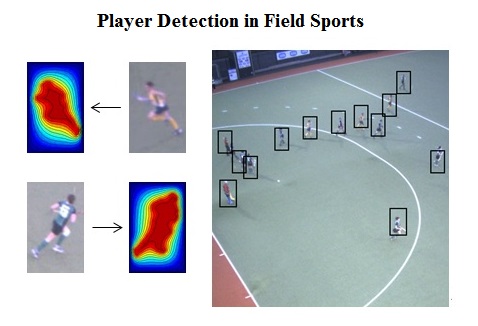
Cem Direkoğlu is a faculty member in the Department of Electrical and Electronics Engineering at Middle East Technical University - Northern Cyprus Campus (METU NCC), within the College of Engineering. His research is centered on computer vision and image analysis, with a strong emphasis on feature extraction, human behavior modeling, and video understanding. Research Interests: His primary research areas include computer vision, pattern recognition, image and video analysis, and signal processing. He focuses on human (individual and group) behavior analysis in sports and surveillance contexts, video event detection, object detection and localization, motion analysis and tracking, and feature/shape/skeleton extraction and segmentation. His ongoing projects involve crowd behavior analysis in surveillance videos, team behavior analysis in sports, and player detection and classification. Publication Trends: His recent work (2004–2014) shows a consistent focus on applying physical analogies (e.g., heat flow) and mathematical models to shape and feature extraction. Later publications shift toward higher-level video understanding, particularly in sports and surveillance, using motion trajectories, team activity modeling, and information retrieval methods for event detection. Scientific Awards: No awards mentioned in the provided text. Advising and Grants: There is no information available regarding students supervised or research grants received. However, his involvement in projects like SAVASA (TRECVid) suggests participation in collaborative research initiatives. Labs and Research Teams: While no specific lab is named, his work appears to be conducted within the research ecosystem of the Electrical and Electronics Engineering department at METU NCC, likely involving collaboration with researchers in multimedia and computer vision, as evidenced by co-authorship with researchers from institutions like Dublin City University.
Elias Zea Marcano is an Assistant Professor of Engineering Acoustics at the Marcus Wallenberg Laboratory for Sound and Vibration Research (MWL) at KTH Royal Institute of Technology. His research focuses on noise source separation, aeroacoustics, room acoustics, sparse signal processing, and data-driven methods. He reviews for prominent journals like the Journal of the Acoustical Society of America and serves as a Guest Editor for the Journal of Theoretical and Computational Acoustics. His work is supported by the Swedish Research Council and the European Commission. He teaches courses such as Room Acoustics and Spatial Audio and has supervised numerous graduate students and postdocs in areas like sustainable aviation noise reduction and acoustic material characterization. He actively participates in international conferences and publishes cutting-edge research on topics such as fan noise measurement and data-driven speech enhancement.
Kaie Kubjas is an Associate Professor at Aalto University in the Department of Mathematics and Systems Analysis, School of Science. Since 2024, she has held a tenured position, following a tenure-track role from 2017–2024. She earned her PhD in Mathematics at Freie Universität Berlin (2013) under Professors Christian Haase and Klaus Altmann, with postdoctoral research at institutions including the Max Planck Institute and MIT. Her research focuses on applied nonlinear algebra, algebraic statistics, and their applications in biology (e.g., phylogenetics and 3D genome reconstruction), as well as matrix/tensor decompositions. She has organized major events like the European Women in Mathematics General Meeting 2022 and the 2025 workshop on Algebraic Statistics and Multistate Models. Kubjas serves on editorial boards of journals like SIAM Journal on Applied Algebra and Geometry and Annales Fennici Mathematici . Recent work includes advances in log-concave maximum likelihood estimation, 3D genome reconstruction, and structured matrix decompositions. Her students, such as Olga Kuznetsova (Second Place MEGA 2021 Poster Award winner), have contributed to these areas. She regularly contributes to seminars like the Algebra and Discrete Mathematics at Aalto, fostering interdisciplinary collaboration.
Brent De Weerdt is a doctoral student and researcher at the Vrije Universiteit Brussel, affiliated with the Faculty of Engineering and the Electronics and Informatics department. His research focuses on interpretable deep learning, distributed source coding, generative AI, and AI explainability. He holds a Master of Science in Electrical Engineering from the same institution (2021). Current projects include the FWOSB140 DUST project, exploring interpretable and efficient deep unfolding sparse transformers for multimodal image processing and generation. He has published in top-tier venues like IEEE Transactions on Signal Processing and IEEE conferences, with contributions to sparse recovery, trajectory anomaly detection, and layered coding. De Weerdt actively engages in peer-review activities for journals such as IEEE Transactions on Multimedia and conferences like the European Signal Processing Conference. His work bridges theoretical signal processing with practical AI applications, emphasizing interpretability and efficiency in neural architectures.
Thomas Fel is a Research Fellow at the Kempner Institute, Harvard University , specializing in Explainable AI . His work integrates computational science , mathematics , and neuroscience principles. Previously, he completed a PhD at Brown University under Thomas Serre and contributed to the DEEL project at Toulouse University with SNCF support. He has also interned at Google and GoPro. Research Interests focus on advancing model interpretability through interdisciplinary approaches. Key projects include developing novel sparse autoencoder architectures (MP-SAE, RA-SAE, USAE) and creating benchmarks like Visual Anagrams to evaluate holistic shape processing in vision models. His work addresses generative model limitations, feature visualization stagnation, and conceptual blindspots in AI systems. Scientific Recognition : 2025 AFIA National PhD Thesis Award 2025 'Signal, Image, Vision' Best PhD Thesis Award 2025 ICML Top Reviewer Thomas has developed critical tools like LENS Project for feature visualization and Xplique Toolbox for attribution methods. His recent work at ICML 2025 explores hierarchical concept extraction and cross-modal representation alignment.
Chao Yin is a researcher at Shanghai University , Department of Computer Engineering and Science. His work spans multiple domains including Machine Learning, Cloud Computing, Fault Diagnosis, and Supply Chain Optimization. Key research areas: Machine Learning , Cloud Computing , Quantum Computing , Supply Chain Systems , Network Security Scientific Contributions (2024-2025): Developed heterogeneous graph neural networks for automotive supply chain analysis Created MSDF-VAE cloud-edge fault diagnosis framework using transfer learning Proposed quantum metrology methods with Heisenberg-limited precision Designed LARP pseudonym protocol for V2X communication Optimized fog computing resource scheduling with hybrid metaheuristics Prior Work (2012-2023): Contributed to fluid animation feature preservation from single images Developed label distribution learning for facial age estimation Designed erasure coding storage systems for big data Created multi-agent manufacturing networks in cloud environments
Jan Lellmann is a Professor at the Institute of Mathematics and Image Computing of the University of Lübeck, with affiliations to Fraunhofer MEVIS . His research focuses on variational image processing , emphasizing the systematic formulation of prior knowledge into energy functions for improved accuracy and data efficiency. Applications span medical imaging , earth sciences , and biological data analysis . He develops non-smooth optimization methods for problems with combinatorial aspects like image segmentation . His recent work includes manifold-constrained optimization and quantum algorithms for imaging tasks. He has contributed software libraries like MFOPT (for manifold optimization) and COAL (for convex energy minimization). Scientific Awards: Best Student Paper Award at SSVM 2021 Honorable Mention at CVPR 2016 Recent Research Trends: Integration of quantum computing with classical image registration. Advancements in Riemannian geometry for protein dynamics and cryo-EM. Development of meta-learning frameworks for adaptive image alignment. Focus on non-smooth and higher-order regularization for sparse data reconstruction.
Friedemann Zenke is an Assistant Professor at the University of Basel and a Junior Group Leader at the Friedrich Miescher Institute for Biomedical Research (FMI), Basel, Switzerland. His research lies at the intersection of computational neuroscience, machine learning, and neuromorphic engineering, focusing on modeling memory formation and information processing in neural networks. Assistant Professor, University of Basel (2022–present) Junior Group Leader, FMI (2019–present) SNSF Eccellenza Fellow (2022–2027) Education: PhD, School of Computer and Communication Sciences, EPF Lausanne, Switzerland (2014) Diplom in Physics, University of Bonn and Australian National University (2009) Postdoctoral Fellow, Stanford University (2015–2017) Sir Henry Wellcome Postdoctoral Fellow, University of Oxford (2017–2019) His research interests center on understanding how plasticity mechanisms—such as Hebbian, homeostatic, and predictive plasticity—enable learning and memory in biologically inspired neural networks. He develops computational models using spiking and rate-based networks, leveraging high-performance computing and machine learning tools. His work integrates theoretical analysis from dynamical systems and statistical physics with practical dimensionality reduction techniques to compare model outputs with experimental data. A major focus is on surrogate gradient methods for training non-differentiable spiking networks, enabling their application in neuromorphic hardware. The recent publications highlight a strong trend toward bridging theoretical neuroscience with practical AI and hardware applications. Key themes include credit assignment in spiking networks , energy-efficient neuromorphic learning , biologically plausible plasticity rules , and benchmarking frameworks for emerging neural models. His work increasingly emphasizes the co-design of algorithms and hardware for next-generation brain-inspired computing systems. Scientific Awards: SNSF Eccellenza Fellowship (2022–2027) Wellcome Trust Postdoctoral Fellowship (2016–2019) Swiss National Science Foundation Postdoctoral Fellowship (2015–2016) Teaching Award, EPFL (2012) Marie Curie PhD Fellowship (2010–2014) DAAD Fellowship (2006) Friedemann Zenke leads an active research group at FMI, advising multiple PhD students and mentoring postdoctoral fellows. His research is supported by competitive grants, including the SNSF Eccellenza grant. He is a key member of the Computational Neuroscience Initiative Basel , fostering interdisciplinary collaboration between theoretical and experimental neuroscience. His lab develops large-scale neural network simulations and contributes to open tools for evaluating spiking neural networks, such as the Heidelberg Spiking Data Sets. Future work aims to further unify principles of biological learning with scalable, efficient AI systems.
Amir Shaikhha is an Associate Professor (Reader) in the School of Informatics at the University of Edinburgh, specializing in data-analytics systems. Previously, he served as a Departmental Lecturer at the University of Oxford (2019-2020) and Assistant Professor at Edinburgh (2020-2024), following his 2018 PhD from EPFL where he received a Google Ph.D. Fellowship and thesis distinction award. His research spans: Databases Programming Languages Compilers Machine Learning Software Engineering with emphasis on high-performance system design through techniques like tensor algebra optimization, domain-specific languages, and probabilistic programming. Recent publications (2023-2025) reveal strong trends in quantum simulation synthesis, sparse tensor processing, and compiler-driven database optimization, evidenced by top-venue acceptances at PLDI, SIGMOD, and OOPSLA. His scientific recognition includes: Dahl-Nygaard Junior Prize (2025) Google Research Scholar Award (2025) Most Influential Paper Award at GPCE (2024) Best Paper Award at GPCE (2017) He actively mentors students including PhD graduate Hesam Shahrokhi (now at Huawei Research), award-winning MSc candidates like Youning, and CGO competition winners Jingwen and Callum. His service includes PC chair roles for GPCE 2023 and DBPL 2025, alongside program committee work for SIGMOD, VLDB, and ECOOP. As leader of the Data Analytics Lab (DAL), he develops open-source systems like StructTensor and VecHT for tensor processing, contributing to Edinburgh's Institute for Computing Systems Architecture with focus on bridging theoretical foundations with practical data-engineering solutions.
Antonio Vergari serves as a Reader (equivalent to Associate Professor) in the School of Informatics at the University of Edinburgh, affiliated with the Institute for Adaptive and Neural Computation (ANC). His research develops probabilistic machine learning systems that are provably reliable in real-world applications through the integration of complex reasoning, efficient inference, and neuro-symbolic learning paradigms. His primary research domains include Artificial Intelligence, Machine Learning, Probabilistic Modeling, and Neuro-symbolic AI, with specific expertise in probabilistic circuits, tensor networks, and constraint-satisfying architectures. Current investigations focus on unifying tensor factorization theory with circuit representations to overcome expressiveness limitations while maintaining computational tractability for complex reasoning tasks. Analysis of his publication trajectory reveals consistent advancement in reliable probabilistic modeling, particularly through circuit-based approaches that guarantee logical consistency in neural predictions. His work bridges theoretical foundations (e.g., expressiveness hierarchies) with practical implementations (e.g., Cirkit library), addressing critical gaps in benchmark complexity and scalable constraint satisfaction. Scientific recognition includes: ICLR 2024 Spotlight presentation (top 5% acceptance rate) NeurIPS 2023 Oral presentation (top 0.6% acceptance rate) NeurIPS 2021 Oral presentation (top 0.6% acceptance rate) Vergari leads the APRIL Lab, which actively contributes to open-source probabilistic modeling tools like Cirkit while organizing community initiatives such as the CoLoRAI workshop at AAAI-25. The lab maintains strong industry and academic collaborations focused on developing theoretically-grounded, deployable probabilistic systems.
Dr. Zhiru Zhang is a Professor in the School of Electrical and Computer Engineering at Cornell University and a member of the Computer Systems Laboratory. His research focuses on new algorithms, methodologies, and design automation tools for heterogeneous computing systems, with recent publications centering on high-level synthesis (HLS), hardware specialization for machine learning, and programming models for software-defined FPGAs. Dr. Zhang earned his Ph.D. in Computer Science from UCLA, where he co-founded AutoESL based on his dissertation research on HLS. AutoESL was acquired by Xilinx (now AMD), and its HLS tool evolved into Vivado HLS (now Vitis HLS), which is widely used for designing FPGA-based hardware accelerators. He also holds a B.S. in Computer Science from Peking University and an M.S. in Computer Science from UCLA. Dr. Zhang's research interests span hardware design, high-level synthesis, FPGA acceleration, machine learning acceleration, heterogeneous computing systems, and computer architecture. His work bridges the gap between software algorithms and hardware implementation, focusing on creating efficient design automation tools that enable specialized hardware for emerging applications, particularly in AI and machine learning. His recent publications demonstrate strong trends in differentiable programming for hardware design, sparse computation optimization, and efficient implementation of large language models on FPGAs. Dr. Zhang has received numerous prestigious awards including being named an IEEE Fellow, the Intel Outstanding Researcher Award, AWS AI Amazon Research Award, Facebook Research Award, Google Faculty Research Award, DAC Under-40 Innovators Award, Rising Professional Achievement Award from UCLA, DARPA Young Faculty Award, IEEE CEDA Ernest S. Kuh Early Career Award, and NSF CAREER Award. His papers have won multiple Best Paper Awards from top conferences including ASPLOS (2025), ISPD (2025), FPGA (2024, 2022, 2021, 2019), AutoML (2024), FCCM (2018), ACM TODAES (2012), and Top Picks in Hardware and Embedded Security (2020). His papers on HLS scheduling and application-specific instruction-set processor (ASIP) compilation have been inducted into the ACM/SIGDA TCFPGA Hall of Fame for the classes of 2022 and 2023, respectively. On the teaching side, Dr. Zhang has received the Ruth and Joel Spira Award for Excellence in Teaching (2018) and twice the Michael Tien'72 Excellence in Teaching Award (2016, 2022), the highest recognition for teaching in the College of Engineering. He teaches courses including ECE 5775/6775: High-Level Digital Design Automation, ENGRD/ECE 2300: Digital Logic and Computer Organization, ECE 6980: Special Topics on Hardware Acceleration of Deep Learning, ENGRG 1050: Freshman Engineering Seminar, and ECE 5950: Special Topics on High-Level Digital Design Automation. Dr. Zhang leads an active research group with numerous PhD students and postdocs. His current students include Jordan Dotzel, Jie Liu, Zichao Yue, Yixiao Du, Yaohui Cai, Andrew Butt, Hongzheng Chen, Jiajie Li, Niansong Zhang, Matthew Hofmann, Zhanqiu Hu, Vesal Bakhtazad, and Grace Dinh. His alumni have gone on to successful careers at companies like NVIDIA, Google, AWS AI, Meta, Microsoft, and academic positions at universities including University of Illinois Chicago and Zhejiang University. The group has received multiple research grants from industry partners including AWS, Intel, and Google.
Wei (Celia) Xu serves as Research Professor in the Computer Science Department at Stony Brook University and Computational Scientist/Trustworthy AI (TAI) Group Lead at Brookhaven National Laboratory's Computational Science Initiative, driving innovation in AI for scientific discovery across multiple domains. Her educational foundation includes a Ph.D. in Computer Science from Stony Brook University and dual M.S. degrees in Computer Science from Zhejiang University, establishing expertise in computational methods and visualization. Dr. Xu's research centers on developing explainable and trustworthy AI frameworks for scientific applications, with notable contributions in digital twins for simulation workflows, performance evaluation of quantum/classical computing systems, and visual analytics for X-ray imaging and climate science. Her work integrates GPU acceleration and virtual reality to enhance scientific data interpretation, emphasizing model interpretability and reliability in high-stakes domains. Analysis of her 15 most recent publications (2019-2025) reveals a strategic evolution toward trustworthy AI systems, with increasing focus on counterfactual explanations for medical diagnostics, digital twin implementations for ensemble simulations, and quantum state visualization—demonstrating cross-disciplinary impact in materials science, climate modeling, and high-energy physics. Her exceptional contributions have been recognized with prestigious awards: Best Paper Award, PacificVis (2025) Best Paper Award, IEEE SC/ISAV (2020) Honorable Mention Award, IEEE VIS (2018) Women@Energy Recognition (2014) Best Paper Award, Fully3D/HPIR (2009) Dr. Xu actively mentors through her TAI research group while securing sustained funding from DOE's Biological and Environmental Research (BER) program and SciDAC initiatives, complemented by Brookhaven National Laboratory internal projects (LDRD and NSLSII DSSI). She serves on program committees for SC, VIS, and AAAI conferences and has organized workshops including NYSDS and Fully3D, demonstrating leadership in advancing trustworthy AI methodologies for scientific communities.