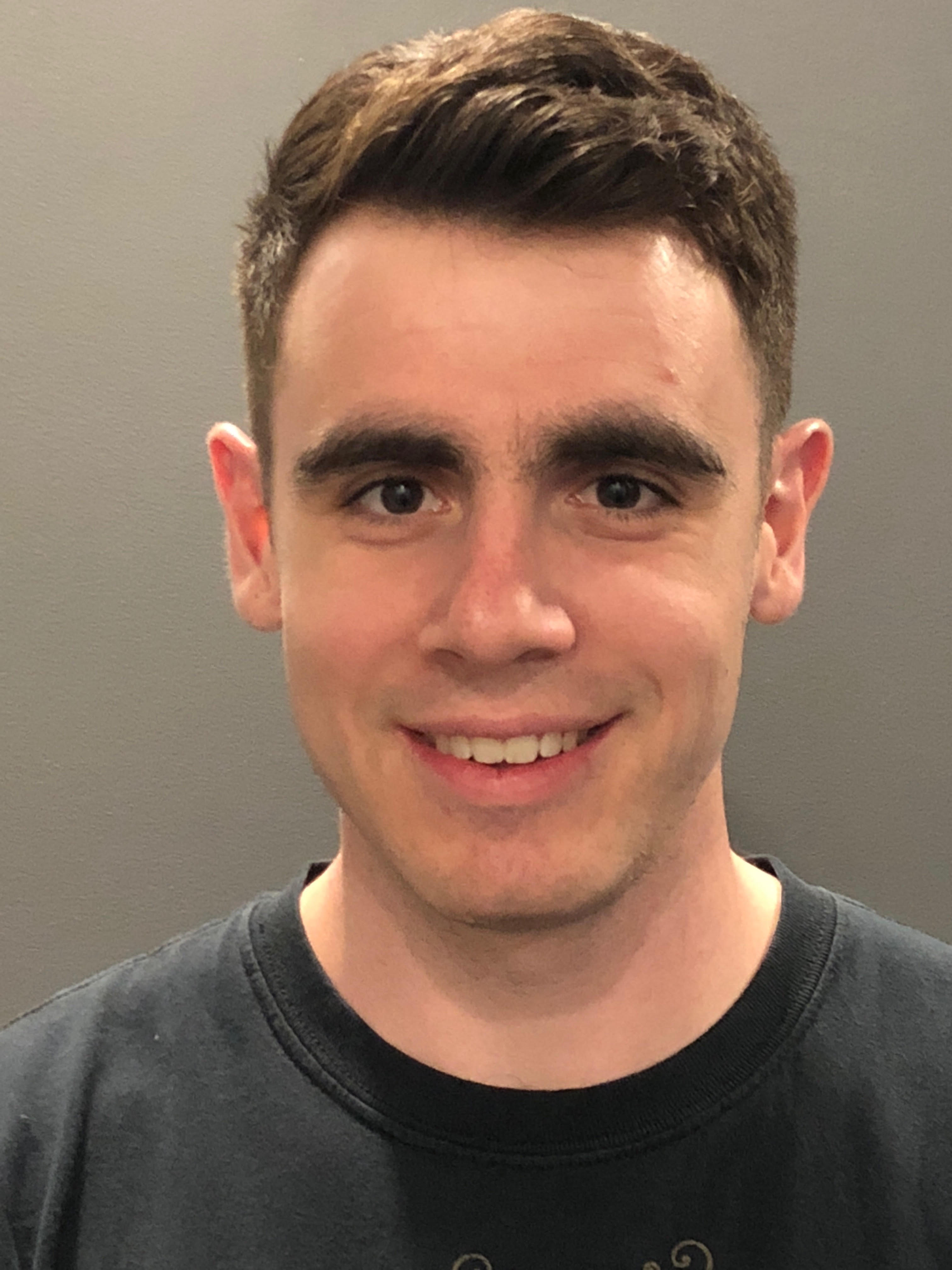
Jonathan Siegel is Assistant Professor of Mathematics at Texas A&M University. His research bridges approximation theory, neural network mathematics, statistics, and numerical methods for PDEs, with applications to materials science. Funded by NSF and ONR grants, his work develops theoretical foundations for deep learning algorithms. Research areas include: Mathematical theory of neural networks High-order approximation rates for shallow networks Sparse neural network training Optimization on manifolds Structure-informed materials prediction Recent publications analyze spectral bias of neural networks, approximation rates for ReLU networks, and greedy training algorithms.
Dr Dalia Chakrabarty is a Reader in Statistical Data Science at the Department of Mathematics, University of York. Previously, she held positions as Senior Lecturer at Newcastle University and Lecturer at Lancaster University. Her research focuses on probabilistic methods, Bayesian inference, and machine learning applications in fields such as medicine, astronomy, and materials science. She specializes in kernel methods, random graph analysis, and causal forecasting. Notable contributions include developing methodologies for uncertainty quantification and non-parametric learning. Her academic career includes a Royal Society Dorothy Hodgkin Fellowship and supervision of students like Kane Warrior. Dr Chakrabarty's work bridges theoretical statistics and real-world challenges, with publications spanning journals like Plos One and Artificial Intelligence in Medicine . She also authored the textbook Supervised Learning: Mathematical Foundations & Real-world Applications (2024, CRC Press). Research Highlights: Inter-graph distance metrics for medical data analysis Bayesian state-space modeling of galactic dynamics High-dimensional data applications in oncology and materials science Collaborations: Maintains ties with Brunel Mathematics for PhD supervision and international research networks. Contact: Email dalia.chakrabarty@york.ac.uk , Tel: +44 (0)1904 32 1486
Associate Professor at the University of Pavia's Department of Economics and Management, specializing in optimal control, partial differential equations, and mean field games with applications to economics and finance. Holds an Italian qualification (ASN) for associate professorship and a French qualification (maître de conférences). Research focuses on dynamic optimization, stochastic systems, and economic modeling of human capital, environmental quality, and pandemic impacts. Active in teaching mathematics for economics and optimization at undergraduate and graduate levels. Education: PhD in Mathematics from University of Padua (2015), postdocs at University of Graz (Austria) and University of Padua. Extensive visiting collaborations in France, Chile, and Brazil. Research Highlights: Pioneering work on mean field games modeling spatial interactions in human capital dynamics and environmental quality regulation. Contributions to sparse optimization, inverse problems in fracture mechanics, and large deviations in stochastic volatility models. Recent Publications Trends: Focus on infinite-dimensional mean field games (e.g., Hilbert spaces), pandemic economics, and environmental policy modeling. Over 15 peer-reviewed articles spanning optimal control, PDEs, and economic applications. Grants & Leadership: Coordinator of Italian GNAMPA projects on MFGs and environmental models. Organized conferences including AMASES 2022 and special sessions at international optimal control conferences. Referee for top journals like SIAM J. Control Optim. and J. Mathematical Economics. Teaching: Courses include 'Mathematics for Management,' 'General Mathematics,' and PhD-level 'Static and Dynamic Optimization.' Oversees tutoring programs and international collaborations via ERASMUS+.
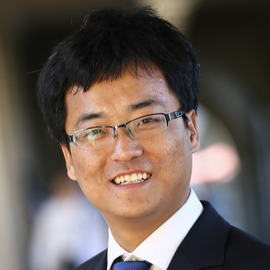
Dr. Dongjin Song is an Assistant Professor in the School of Computing at the University of Connecticut, specializing in continual learning, graph representation, and time series analysis. He holds a PhD from UC San Diego (2016) and previously worked at NEC Labs America. His NSF CAREER award (2024) supports research on evolving graph learning for applications in healthcare, energy, and transportation. Recognized with the Frontiers of Science Award (2024) and UConn AAUP Excellence Award (2025), he develops algorithms addressing catastrophic forgetting and generalization in dynamic systems. Research interests include: Robust representation learning for time-series and graph data Meta-knowledge distillation for heterogeneous systems Privacy-preserving federated learning LLM-enhanced multimodal forecasting He actively contributes as Area Chair at NeurIPS and Associate Editor for Neural Networks . Educational initiatives integrate research into AI/ML courses, and outreach targets K-12 STEM engagement. Current projects explore power outage prediction, clinical time-series analysis, and cross-platform mental health monitoring.
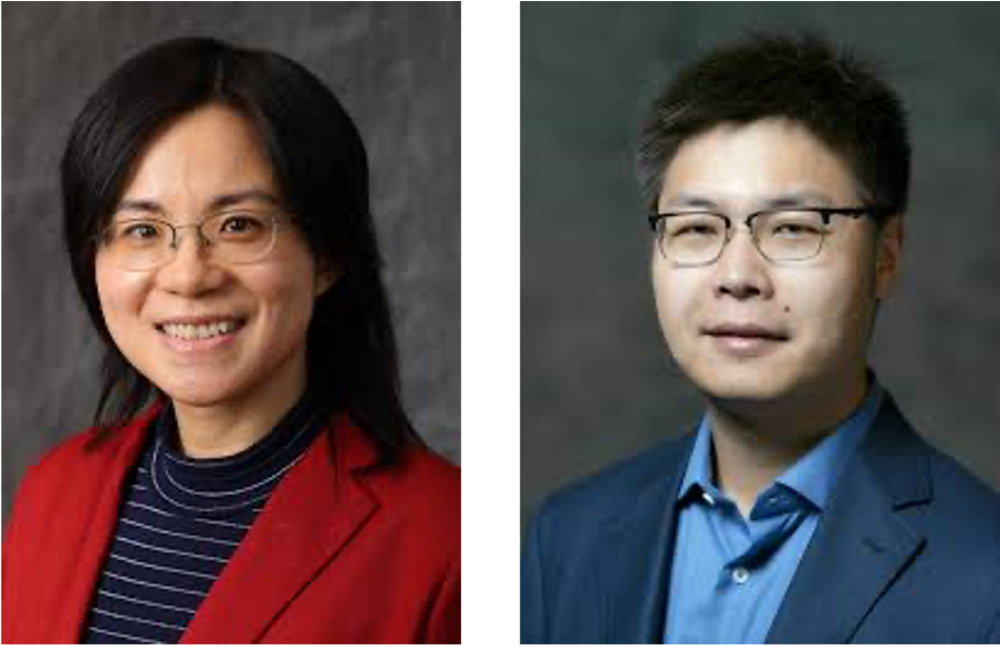
Zhigen Zhao is an Associate Professor and Beury Research Fellow at the Fox School of Business and Management, Temple University, within the Department of Statistics, Operations, and Data Science. He holds a Ph.D. from Cornell University (2009) and specializes in Bayesian/empirical Bayesian statistics, high-dimensional data analysis, and bioinformatics. His research is supported by the National Science Foundation. Dr. Zhao’s research focuses on developing statistical methodologies for high-dimensional problems, including selective inference, multiple comparisons, and sufficient dimension reduction. His work bridges theoretical advancements with practical applications in healthcare, genomics, and predictive analytics. Key contributions include Bayesian hierarchical models for electronic health records and novel techniques for controlling false discovery rates in genomic studies. He teaches courses such as Intermediate Statistics, Regression and Predictive Analytics, and Statistical Methods for Business Research at both undergraduate and graduate levels. His recent publications appear in top-tier journals like the Journal of the American Statistical Association and Journal of the Royal Statistical Society, Series B. Dr. Zhao’s grants include NSF funding for high-dimensional statistical research. He advises on methodological challenges in data science and collaborates on projects involving healthcare analytics, genomics, and machine learning applications.
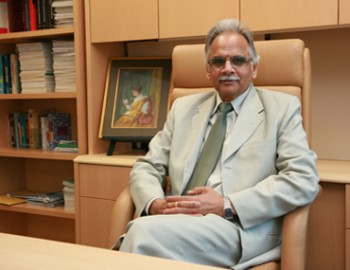
Dr. Mathukumalli Vidyasagar is the Cecil & Ida Green Chair in Systems Biology Science at The University of Texas at Dallas (UT Dallas), serving as Professor of Bioengineering and Head of the Bioengineering Department. He holds a part-time appointment as Distinguished Professor at the Indian Institute of Technology Hyderabad through the Jawaharlal Nehru Science Fellowship (2015–present). His academic journey includes roles as Director of the Centre for Artificial Intelligence and Robotics (1989–2000) and Executive Vice President at Tata Consultancy Services (2000–2009). He earned B.S., M.S., and Ph.D. degrees in Electrical Engineering from the University of Wisconsin–Madison (1965–1969). His research focuses on control theory, systems biology, and computational biology, with applications to cancer diagnostics and machine learning. Notable contributions include work on robust control, L1-optimal control, and statistical learning theory. Dr. Vidyasagar has authored over 140 peer-reviewed papers and 11 books. His accolades include Royal Society Fellowship (2012), IEEE Control Systems Award (2008), and the Rufus Oldenburger Medal (2012). He has advised 14 Ph.D. and 12 M.S. students, and sponsored 8 postdoctoral scholars.
Argheesh Bhanot is a Researcher at Savoie Mont-Blanc University, affiliated with Polytech Annecy-Chambéry and the LISTIC laboratory. His email is bhanota@univ-smb.fr , and he is located in office A127 at LISTIC’s campus in Annecy-le-Vieux, France. Research Interests : Bhanot’s work focuses on advanced signal and image processing techniques, including inverse problems, optimization, Markov Chain Monte Carlo (MCMC) methods, artificial intelligence (AI), and graph analysis. His research applications span environmental monitoring (e.g., avalanche dynamics) and medical imaging (e.g., fMRI connectivity analysis). Key Research Contributions : His recent work explores functional connectivity in neuroimaging through graph theory and independent component analysis (ICA), as well as dictionary learning algorithms for signal separation in fMRI and other domains. He also develops energy-efficient remote sensing systems for environmental studies. Labs & Teams : Bhanot is a core member of the LISTIC laboratory, which specializes in interdisciplinary research combining signal processing, AI, and applied mathematics.
Ruth Misener is a Professor in the Department of Computing at Imperial College London, where she leads the Computational Optimization Group and holds the BASF/RAEng Research Chair in Data-Driven Optimization (2022–2027). She is affiliated with the Faculty of Engineering and contributes to interdisciplinary research institutes including the Data Science Institute, the Institute for Molecular Science and Engineering, and the Sargent Centre for Process Systems Engineering. Her research lies at the intersection of numerical optimization, operations research, and machine learning, with applications in chemical engineering, bioprocess optimization, energy systems, and industrial scheduling. She develops global optimization algorithms for mixed-integer nonlinear programs (MINLP), focusing on real-world challenges such as heat recovery network design, petrochemical process optimization, and robust bioreactor operation. A key innovation is her work on optimizing over machine learning surrogates, including tree ensembles and neural networks, enabling data-driven decision-making under uncertainty. Her recent publications demonstrate a strong trend toward integrating Bayesian optimization with active learning, explainable AI, and industrial applications, particularly in collaboration with BASF, Royal Mail, and Eli Lilly. She develops and maintains open-source optimization tools such as ROmodel, OMLT, and ENTMOOT, which are publicly available on GitHub. STEM for Britain acceptance Runner-Up Presentation Award at PSE@ResearchDayUK Best Quality Poster to Simon Olofsson 1st Poster Prize at UK/Ireland Annual Meeting of the Society for Industrial & Applied Mathematics (2018) 2nd Poster Prize at Centre for Process Systems Engineering Industrial Consortium Meeting (2017) 1st Poster Prize at 2nd PSE@ResearchDayUK (2017) 2nd Presentation Prize at Department of Computing Research Associate Symposium (2017) Runner-Up for May Hicks Award (via student Natasha Page) Ruth supervises a dynamic research team and has examined and mentored numerous PhD students, including Jean Kossaifi, Robert Walecki, Alexander Thebelt, and Toby Boyne. She leads major research grants, including the BASF/RAEng Research Chair and the IConIC Prosperity Partnership, and collaborates with industry partners to advance continuous manufacturing and data-driven process optimization. Her team actively disseminates work through open-access publications, video presentations, and social media.
Dr. Thomas Zeiser serves as Head of Systems & Services and Chief Operating Officer HPC at NHR@FAU (Center for National High Performance Computing Erlangen) at Friedrich Alexander University Erlangen-Nuremberg. He leads the Systems & Services group of NHR@FAU and HPC4FAU since the end of 2020 and serves as deputy for NHR@FAU in the NHR Betreiberausschuss. His work focuses on transitioning from serving FAU only to national center operations, managing HPC systems, procuring new infrastructure, financial controlling of NHR@FAU's budgets, and supporting planning for a new data center building. Dr. Zeiser's research interests center around High-Performance Computing with specific expertise in Lattice Boltzmann Methods , large-scale simulations, evaluation of HPC hardware and software, and efficient operation of HPC systems. His work bridges the gap between theoretical computational methods and practical implementation in high-performance environments. He has implemented the first job-based job and performance monitoring for RRZE's HPC systems and has extensive experience in procurement of HPC infrastructure. Analysis of Dr. Zeiser's publication record reveals a consistent focus on practical applications of computational methods in HPC environments. His research demonstrates a progression from fundamental lattice Boltzmann method development toward increasingly complex system-level concerns including fault tolerance, performance monitoring, energy efficiency, and scalable implementations. The publications show strong collaboration patterns with researchers at FAU and other German institutions, particularly in the areas of computational fluid dynamics and parallel computing. Dr. Zeiser regularly serves as a reviewer for various journals and compute time commissions of different HPC centers. He is also one of the local organizers for the Ferienakademie of TUM, FAU, and Universität Stuttgart held in Sarntal. His work with NHR@FAU positions him at the forefront of national high-performance computing infrastructure in Germany. At NHR@FAU and RRZE (Regional Computing Center Erlangen), Dr. Zeiser leads teams responsible for operating some of Germany's most powerful academic supercomputing resources. His group plays a critical role in supporting computational research across multiple disciplines at FAU and increasingly at the national level through the NHR initiative.
Jia Liang is a researcher at Henan Polytechnic University's School of Electrical Engineering and Automation, with a focus on Machine Learning , Compressed Sensing , and Privacy-Preserving Techniques . His work bridges Computer Science and Signal Processing , particularly in Radar Imaging and Medical Image Analysis . Key Collaborations: Di Xiao, Ying Luo, Qun Zhang, Hui Huang Technical Expertise: Federated Learning, SAR Imaging, Compressive Sensing, Adversarial Learning His research emphasizes secure data processing in IoT and cloud environments, with recent innovations in cross-disciplinary applications like biosignal analysis for cysticercosis diagnosis . Publications span top venues including IEEE Transactions on Aerospace Systems and Remote Sensing . Notable trends include privacy-preserving machine learning for federated systems and 3D radar imaging of rotating targets, alongside medical imaging solutions for chest radiographs and optical coherence tomography .
Meng Wang is a Professor in the Department of Electrical, Computer, and Systems Engineering at Rensselaer Polytechnic Institute (RPI), where she was promoted to Full Professor in June 2025. She received her B.S. and M.S. degrees (both with honors) in Electrical Engineering from Tsinghua University, China, in 2005 and 2007, respectively, and her Ph.D. in Electrical and Computer Engineering from Cornell University in 2012. After a postdoctoral position at Duke University, she joined RPI in December 2012 as an Assistant Professor, was promoted to Associate Professor with Tenure in 2019, and then to Full Professor in 2025. Her research spans machine learning and artificial intelligence, high-dimensional data analytics, power system monitoring, signal processing, and optimization methods. She has made fundamental contributions in sparse signal recovery and monitoring and control of smart grid using high frequency data from phase measurement unit (PMU). More recently, she has collaborated with IBM to produce theoretical guarantees of modern AI architectures such as graph neural networks and transformers used in large language models (LLMs). Wang's recent publications (2023-2025) reveal a strong focus on theoretical foundations of deep learning, particularly transformer architectures and graph neural networks. Her work bridges theoretical guarantees with practical applications in power systems, demonstrating how fundamental insights in machine learning can solve real-world energy challenges. She has increasingly focused on the intersection of AI and energy systems, developing methods for building-level load forecasting, energy disaggregation, and smart grid monitoring with behind-the-meter solar integration. AFOSR Young Investigator Program (YIP) Award (2019) Army Research Office (ARO) YIP Award (2017) James M. Tien '66 Early Career Award and Grant for Faculty (2022) School of Engineering Research Excellence Award (2018) IEEE Signal Processing Society Best Reviewer Award (2018) Professor Wang has mentored numerous Ph.D. students who have gone on to successful careers in academia and industry, including HongKang Li (now postdoc at University of Pennsylvania), Yi Ming (postdoc at University of Michigan), and Shuai Zhang (Assistant Professor at New Jersey Institute of Technology). Her research has been supported by multiple grants from the National Science Foundation, Air Force Office of Scientific Research, Army Research Office, and industry partners including IBM. She is actively involved with research centers including the Center for Future Energy Systems (CFES) and the Center for Materials, Devices, and Integrated Systems (CMDIS), where her group develops cutting-edge methods for power system monitoring and control. Her recent work has increasingly focused on the theoretical foundations of large language models and their applications to energy systems, positioning her at the forefront of AI for critical infrastructure.
Yizhe Zhu is an Assistant Professor of Mathematics at the University of Southern California , specializing in theoretical and applied aspects of high-dimensional data analysis. His research bridges mathematics, computer science, and statistics, with a focus on random matrix theory, sparse data structures, and algorithmic analysis for machine learning and privacy-preserving data methods. Research Interests Yizhe Zhu’s work addresses fundamental questions in: Random Matrix Theory : Spectra of sparse and structured matrices, including outlier detection and universality. Graph and Hypergraph Analysis : Community detection, spectral properties, and non-backtracking algorithms for complex networks. Privacy and Data Synthesis : Theoretical frameworks for differentially private synthetic data generation. Tensor Completion : Efficient algorithms for recovering low-rank tensors from sparse observations. Publications Trends His recent research (2024–2025) emphasizes spectral analysis of random structures, optimization in non-convex settings, and privacy-preserving machine learning. Key themes include the interplay between sparsity, spectral theory, and algorithmic robustness in high-dimensional regimes.
Ilias Zadik is an Assistant Professor at Yale University's Department of Statistics and Data Science. His research focuses on computational-statistical trade-offs in modern machine learning, high-dimensional statistics, and probability theory. He has held postdoctoral positions at MIT (2021-2023) and NYU (2019-2021), and earned his PhD from MIT (2019), advised by David Gamarnik. He teaches courses like Stochastic Processes and has contributed to numerous conferences and workshops. His awards include MIT's Best Student Paper Honorable Mention (2017) and scholarships from Trinity College and the Onassis Foundation. Education: PhD in Operations Research, MIT (2019) MASt in Mathematics (Part III), University of Cambridge (2014) BA in Mathematics, University of Athens (2013) Internship at Microsoft Research New England (2017) Research Interests: Computational-statistical trade-offs, phase transitions in inference (e.g., All-or-Nothing phenomena), cryptographic methods in statistics, privacy-cost analysis, and algorithmic lower bounds. Awards: MIT Operations Research Best Student Paper Honorable Mention (2017) Trinity College Senior Scholarship (2014) Onassis Foundation Scholarship (2013-2014) SEEMOUS Gold Medal (2011), IMC First Prize (2011) Teaching & Service: Instructor for Yale's S&DS 351 (Stochastic Processes) and advanced courses on computational-statistical trade-offs. Co-organized the MaD+ seminar during the pandemic. Served on program committees for COLT, NeurIPS, and FOCS. Labs/Teams: Active in MIT's NSF/Simons Collaboration on Theoretical Foundations of Deep Learning and NYU's Math and Data group.
Odelia Schwartz is an Associate Professor in the Department of Computer Science at the University of Miami, College of Arts and Sciences. She also serves as Director of Undergraduate Studies for Computer Science and holds a secondary faculty appointment in Biology. Her research focuses on computational neuroscience, machine learning applications in healthcare and biology, and the intersection of artificial intelligence with visual and neural processing systems. Key research areas include machine learning analysis of medical signals (e.g., ECG for atrial fibrillation prediction), computational modeling of biological systems (e.g., endosymbiont population dynamics via microscopy image analysis), and hierarchical neural network models for visual cortex understanding. Her work integrates statistical methods with deep learning to bridge computational models and biological/neurological phenomena. Publications highlight applications in cardiology, neurotrauma recovery prediction, and visual cortex modeling. While no specific awards are listed, her contributions span interdisciplinary fields at the university and collaborative research institutions. Advising no listed students, but actively engages in graduate training through her faculty roles. No specific labs/teams are mentioned, though collaborations with medical and biological departments are evident.
Olga Mula is a researcher at Eindhoven University of Technology (TU Eindhoven) in the Netherlands specializing in optimal transport theory, Wasserstein spaces, and model reduction techniques for partial differential equations. Her work bridges theoretical mathematics with practical applications in state estimation and inverse problems. Her research interests focus on Optimal Transport , Wasserstein Spaces , Model Reduction , and Numerical Analysis of PDEs . She develops algorithms for state estimation in metric spaces, particularly focusing on the Wasserstein space of probability measures. Her work includes developing reduced models using barycentric approximation, analyzing convergence properties, and addressing challenges in sensor placement for optimal data acquisition. Her recent publications demonstrate significant contributions to understanding how to build efficient reduced models in Wasserstein spaces for both forward and inverse problems. She has developed theoretical frameworks for state estimation algorithms, analyzed their performance in terms of Kolmogorov widths, and created practical implementations using sparse Wasserstein barycenters. Her work spans pure mathematical theory to applications in image processing and PDE-constrained optimization. Her scientific contributions include: Development of piecewise-affine algorithms for state estimation Nonlinear model reduction on metric spaces for conservative PDEs Sparse approximation using Wasserstein barycenters Applications to shape reconstruction and line completion Theoretical analysis of approximation rates in Wasserstein spaces She collaborates extensively with leading researchers in the field including Cohen, Dahmen, Feydy, and Rai. Her work demonstrates both theoretical depth and practical relevance, connecting abstract mathematical concepts to real-world problems in data assimilation and inverse modeling.