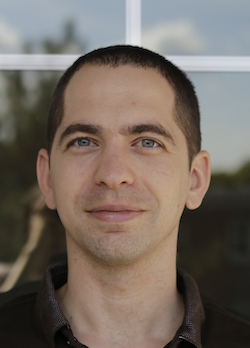
Jonas Striaukas is an Assistant Professor of Statistics and Finance at the Copenhagen Business School (CBS), Department of Finance, and a Marie Skłodowska-Curie Action fellow. His research focuses on econometrics, statistical/machine learning methods, and mixed frequency data modeling. He holds a PhD from Université Catholique de Louvain (2022), supervised by Professors Andrii Babii and Eric Ghysels. Prior to CBS, he was a research fellow at Fonds de la Recherche Scientifique—FNRS in Belgium. Research Interests: High-dimensional econometric modeling, nowcasting techniques, factor-augmented regressions, and applications of machine learning to financial and macroeconomic data. His work emphasizes robust statistical methods for time series analysis and sparse/dense model comparisons. Key Projects: Developed the 'midasml' and 'FAS' R packages for econometric analysis. Conducted a 2022 project at the National Bank of Belgium on machine learning-based nowcasting models. Affiliations: Department of Finance, Center for Statistics, CBS. Member of the Marie Skłodowska-Curie fellowship program.
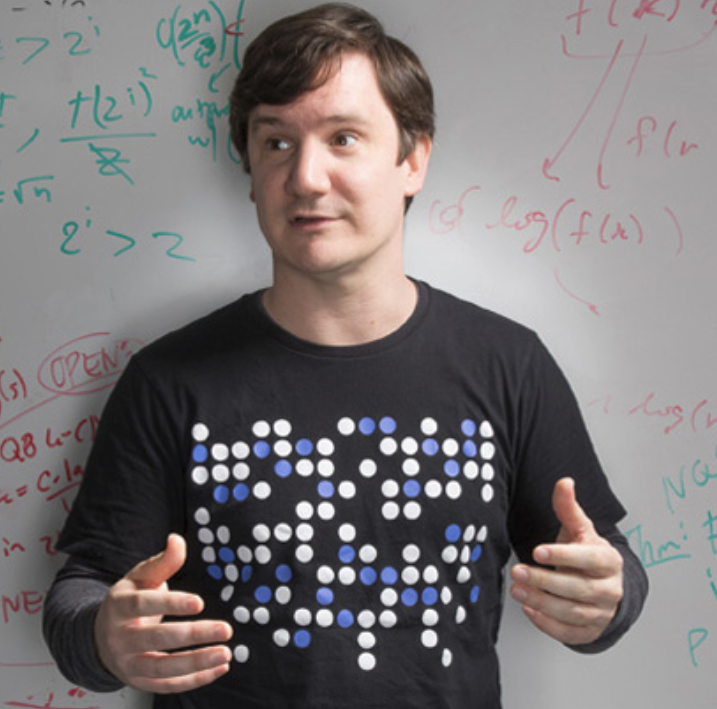
Omri Ben-Eliezer is a Senior Lecturer (Assistant Professor) and Taub Fellow at the Faculty of Computer Science in the Technion — Israel Institute of Technology. He holds a PhD from Tel Aviv University (2020, supervised by Noga Alon), followed by postdoctoral positions at the Weizmann Institute (hosted by Moni Naor), Harvard University (mentored by Madhu Sudan), and a research fellowship at the Simons Institute. He also served as an instructor in applied mathematics at MIT. His research focuses on the theoretical and algorithmic foundations of big data, including sublinear-time algorithms, privacy in machine learning, beyond worst-case analysis, and complex networks. He has contributed to topics such as adversarial robustness, approximation algorithms, and knowledge representation. Ben-Eliezer's work spans algorithm design and analysis, with notable awards including the PODS 2020 Best Paper Award and the 2021 ACM SIGMOD Research Highlight Award. His publications appear in top venues like FOCS, SODA, and ITCS, and he frequently serves on program committees for conferences such as FOCS and PODS. He actively mentors students interested in algorithmic research bridging theory and practice and is affiliated with multiple academic institutions and collaborative projects.
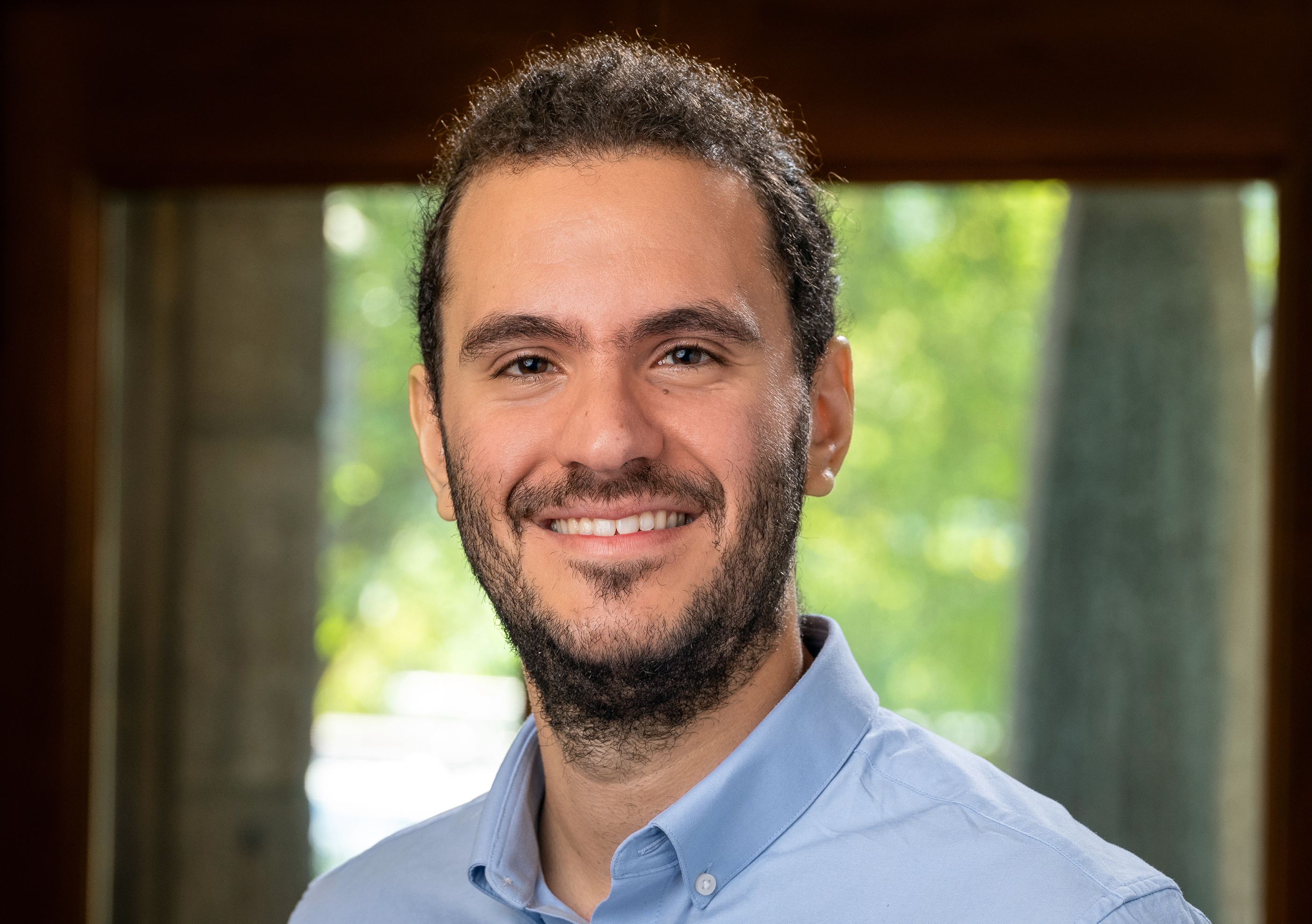
Ilias Zadik is an Assistant Professor at Yale University's Department of Statistics and Data Science. His research focuses on computational-statistical trade-offs in modern machine learning, high-dimensional statistics, and probability theory. He has held postdoctoral positions at MIT (2021-2023) and NYU (2019-2021), and earned his PhD from MIT (2019), advised by David Gamarnik. He teaches courses like Stochastic Processes and has contributed to numerous conferences and workshops. His awards include MIT's Best Student Paper Honorable Mention (2017) and scholarships from Trinity College and the Onassis Foundation. Education: PhD in Operations Research, MIT (2019) MASt in Mathematics (Part III), University of Cambridge (2014) BA in Mathematics, University of Athens (2013) Internship at Microsoft Research New England (2017) Research Interests: Computational-statistical trade-offs, phase transitions in inference (e.g., All-or-Nothing phenomena), cryptographic methods in statistics, privacy-cost analysis, and algorithmic lower bounds. Awards: MIT Operations Research Best Student Paper Honorable Mention (2017) Trinity College Senior Scholarship (2014) Onassis Foundation Scholarship (2013-2014) SEEMOUS Gold Medal (2011), IMC First Prize (2011) Teaching & Service: Instructor for Yale's S&DS 351 (Stochastic Processes) and advanced courses on computational-statistical trade-offs. Co-organized the MaD+ seminar during the pandemic. Served on program committees for COLT, NeurIPS, and FOCS. Labs/Teams: Active in MIT's NSF/Simons Collaboration on Theoretical Foundations of Deep Learning and NYU's Math and Data group.
Ryan Williams is a Professor of Electrical Engineering and Computer Science at MIT's Computer Science and Artificial Intelligence Laboratory (CSAIL) and the Department of Electrical Engineering and Computer Science. Previously, he held a faculty position at Stanford University from 2011 to 2016. He obtained his PhD in Computer Science from Carnegie Mellon University under Manuel Blum and completed his undergraduate studies at Cornell University. His research focuses on computational complexity theory, exploring the boundaries of efficient computation and connections between algorithm design and complexity lower bounds. He teaches advanced courses such as Automata, Computability, and Complexity Theory at MIT. Education: PhD in Computer Science, Carnegie Mellon University (Advisor: Manuel Blum) Bachelor's Degree in Computer Science, Cornell University Research Interests: His work addresses fundamental questions in theoretical computer science, including the P vs. PSPACE problem, circuit lower bounds, and the development of algorithms with provable efficiency. He investigates connections between algorithmic techniques and complexity-theoretic limitations, aiming to establish barriers to solving computational problems efficiently. Publications and Trends: Ryan Williams' recent work spans topics like space-bounded computation, probabilistic polynomial sparsity, circuit lower bounds, and algorithms for compression and graph problems. His research often bridges theoretical insights with practical algorithm design, emphasizing the interplay between computational models and their limitations. Advising and Grants: Current advisees include Rahul Ilango, Ce Jin, and Ted Pyne. He has mentored numerous PhD students who have contributed to areas like fine-grained complexity and circuit analysis. While specific grants are not detailed, his research aligns with foundational studies in theoretical computer science. Labs and Teams: Williams is affiliated with MIT CSAIL, where he collaborates on projects exploring computational complexity and algorithmic foundations.
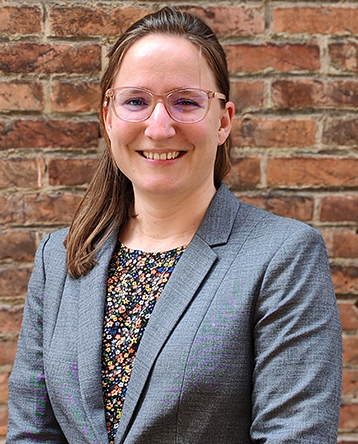
Frederike Dümbgen is an incoming Assistant Professor in the Department of Mechanical Engineering at Carnegie Mellon University's College of Engineering, starting in Spring 2026. She is currently a researcher with the Willow team at Inria Paris, focusing on optimization for robotics, and previously served as a postdoctoral fellow at the University of Toronto's Robotics Institute. Education: Ph.D. in Computer and Communication Sciences, École Polytechnique Fédérale de Lausanne (EPFL), Switzerland (2021) M.Sc. in Mechanical Engineering, EPFL (2016) B.Sc. in Mechanical Engineering, EPFL (2013) Her research centers on improving the efficiency and safety of robots operating in the physical world through principled optimization and machine learning methods. She emphasizes certifiable and globally optimal algorithms to build reliable foundations for next-generation robotics in domains such as autonomous vehicles, assistive technology, and manufacturing. Her work bridges robotics, control systems, and artificial intelligence, with a strong focus on mathematical rigor and scalability. The 15 most recent publications highlight a consistent trajectory in robotics-focused optimization, particularly in state estimation, SLAM, pose estimation, and data-driven methods. These works frequently employ semidefinite programming, convex relaxations, and Koopman-based linearization, demonstrating a deep integration of theoretical optimization with practical robotic applications. Keywords across these papers include robotics, optimization, machine learning, and estimation, with subfields like certifiable algorithms, global optimality, and sensor fusion recurring throughout. Dr. Dümbgen has not yet had scientific awards listed in the provided text. She has not yet advised any named students in the provided materials, and there is no mention of grants or funding sources. However, her research trajectory and publication record suggest active involvement in competitive research environments. Her experience includes internships at Disney Research and ABB, and her master’s thesis was completed at ETH Zürich’s Autonomous Systems Lab. She is currently affiliated with the Willow research team at Inria Paris, a group known for foundational work in computer vision, machine learning, and robotics. This team emphasizes mathematical rigor in algorithm design, aligning closely with her focus on certifiable and globally optimal methods.
Davide Amato is an Assistant Professor in Spacecraft Engineering at the Department of Aeronautics, Faculty of Engineering at Imperial College London. He leads the Computational Astrodynamics (COAST) research group focused on developing advanced computational methods to enhance space situational awareness and satellite dynamics analysis. His work emphasizes error correction in orbital data, machine learning applications for space systems, and sustainable space operations. Education: PhD from Technical University of Madrid (2017), MSc and BSc from University of Naples Federico II (2013, 2009). Prior positions include Postdoctoral roles at University of Arizona and University of Colorado Boulder. Research interests include astrodynamics, space debris mitigation, orbit propagation, and computational methods. His group develops algorithms for satellite maneuver reconstruction, error-bounded orbit prediction, and scientific machine learning applications in space systems. Recent work addresses challenges in space catalog accuracy and collision avoidance through advanced mathematical techniques. He actively supports PhD applications for computational astrodynamics research via Imperial's President's PhD scholarships. His research spans applied mathematics, aerospace engineering, and interdisciplinary collaborations with the Space Lab and Artificial Intelligence Network at Imperial.
Dr. Rui Han is an Assistant Professor at Louisiana State University, Department of Mathematics. He previously served as a Visiting Assistant Professor at Georgia Institute of Technology (2018–2020) and was a Member at the Institute for Advanced Study (2017–2018). His academic journey includes a B.S. in Mathematics from the University of Science and Technology of China (2008–2012) and a Ph.D. in Mathematics from the University of California, Irvine (2012–2017). Rui Han's research focuses on Mathematical Physics, Harmonic Analysis, and Dynamical Systems and Ergodic Theory. His work explores topics such as spectral theory, quasi-periodic operators, localization phenomena, and applications to quantum dynamics. He employs advanced analytical techniques to study problems in mathematical physics, including the analysis of Schrödinger cocycles, Lyapunov exponents, and the interplay between dynamical systems and spectral properties. His accolades include the Kovalevsky Outstanding Ph.D. Thesis Award (2017), the Von Neumann Award for outstanding performance (2016), and the Connelly Award for excellence in teaching and research (2014). He has secured significant grants, including the NSF CAREER Award (2022–2027) as Principal Investigator and the RTG grant in Topology, Representation Theory, and Mathematical Physics (2023–2028) as senior personnel. No specific laboratory or team affiliations are mentioned in the provided information.
Tselil Schramm is an Assistant Professor in the Department of Statistics at Stanford University, with courtesy appointments in Computer Science and Mathematics. She is actively engaged in research and teaching in theoretical computer science and statistics. Department: Department of Statistics School: School of Humanities and Sciences University: Stanford University Office: CoDa E254 Email: tselil@stanford.edu She earned her PhD from UC Berkeley under Prasad Raghavendra and Satish Rao, followed by postdoctoral work at Harvard and MIT with Boaz Barak, Jon Kelner, Ankur Moitra, and Pablo Parrilo. Her research lies at the intersection of theoretical computer science and statistics, focusing on high-dimensional estimation, information-computation tradeoffs, sum-of-squares algorithms, and random graph theory. She develops algorithms for statistical problems and investigates the boundaries between what is statistically possible and what is computationally feasible. Her recent publications span topics including the overlap-gap property, discrepancy algorithms, robust message passing, semidefinite programming, spectral clustering, and random geometric graphs, appearing in top venues such as STOC, FOCS, COLT, NeurIPS, and The Annals of Statistics. She teaches a range of courses, including Introduction to Statistics (STATS 60), Theory of Statistics II (STATS 300B), and Machine Learning Theory (STATS 214 / CS 228M), reflecting her expertise in both foundational and advanced statistical theory. Runner-up for Best Paper at COLT 2021 Invited to STOC 2022 special issue of SICOMP Invited to SODA 2016 special issue of ACM Transactions on Algorithms Invited to CCC 2019 special issue of Theory of Computing Tselil Schramm advises and collaborates with numerous students and researchers, including Shuangping Li, Misha Ivkov, and Siqi Liu. She has been involved in multiple research grants and projects, particularly in the areas of high-dimensional inference and algorithmic robustness. Her work often bridges theoretical guarantees with practical algorithmic design. She is affiliated with Stanford’s theoretical computer science and statistics research groups, contributing to a vibrant academic environment. Her future work is expected to further explore the limits of efficient computation in statistical settings, with potential applications in machine learning, signal processing, and network analysis.
Martijn Huynen is a tenure-track assistant professor and IMEC postdoctoral researcher at Ghent University's Faculty of Engineering and Architecture, Department of Information Technology (EA05). His work focuses on advanced electromagnetic modeling and signal integrity analysis for high-speed interconnect structures. Key projects: Stochastic modeling for electromagnetic interference (2014–2018), supervising Tim Pattyn (2023–2025) and Dries Bosman (2018–2023), and copromoting research on surface admittance operators. Research themes include electromagnetic scattering, interconnect modeling using Fokas-derived operators, and uncertainty quantification in high-speed circuits. Recent publications (2024–2017) span conferences like IEEE EDAPS and journals including IEEE Transactions on Microwave Theory. Topics emphasize mathematical formulations, 3D modeling, and mitigating signal integrity issues in mmWave and PAM-4 systems. He collaborates with researchers such as Dries Vande Ginste, Daniël De Zutter, and Hendrik Rogier, with funding from the Research Foundation - Flanders (FWO) and the Special Research Fund.
Professor Anuj Dawar is a leading academic in Theoretical Computer Science at the University of Cambridge's Department of Computer Science and Technology. He holds a PhD from the University of Pennsylvania (1993) and has been a faculty member since 1999. His research focuses on computational complexity via logic, descriptive complexity, and finite model theory, with applications to databases, verification, and games. Education: PhD in Computer Science, University of Pennsylvania (1993) Masters, University of Delaware Bachelor's, Indian Institute of Technology (Delhi) Research Interests: His work bridges logic and computation, investigating limits of symmetric algorithms and complexity through formal languages. Notable themes include: Descriptive complexity and homomorphism preservation Finite model theory and its applications Algorithmic model theory and constraint satisfaction Professional Activities: Editor-in-Chief, ACM Transactions on Computational Logic Former president of European Association for Computer Science Logic Committee roles for Gödel Prize, Church Award, and Nerode Award Advising & Teaching: Supervised over 15 PhD students and taught advanced courses like Quantum Computing, Complexity Theory, and Foundations of Functional Programming. Currently on sabbatical (2024–25).
J. Maurice Rojas is a Professor and Associate Head of Graduate Programs at Texas A&M University's Department of Mathematics. His research focuses on computational algebraic geometry, discrete geometry, and polynomial equation solving with applications in complexity theory and number theory. He holds a Ph.D. from the University of California, Berkeley (1995), alongside earlier degrees from Berkeley and UCLA. Rojas' work bridges theoretical and algorithmic approaches to problems in algebraic geometry, including fewnomial theory, real and p-adic root counting, and tropical geometry. His contributions address the computational complexity of polynomial systems, with recent emphasis on sparse polynomials and circuit-based algorithms. He has authored over 50 papers and contributed to NSF-funded projects on arithmetic geometry and algorithmic methods. His research has explored applications in statistical modeling of petascale data, topological data analysis, and interdisciplinary collaborations between mathematics and computer science. Notable achievements include foundational work on A-discriminants, Viro's patchworking, and the development of sub-linear algorithms for algebraic structures.
François Pirot is an Associate Professor (Maître de Conférences) at Université Paris-Saclay since September 1, 2021. He conducts research at the LISN laboratory within the GALaC team and teaches at the Faculty of Science of Orsay. PhD in Mathematics (Radboud University) and Computer Sciences (Université de Lorraine), 2019 Postdoctoral experience: ULB (2019), G-SCOP (2019-2020), Inria Sophia Antipolis (2020-2021) His research focuses on graph coloring problems in diverse contexts such as graph powers, locally sparse graphs, and distributed algorithms, utilizing probabilistic methods and connections to bio-informatics through circular codes. He has advanced bounds for h -conflict-free coloring, acyclic coloring, and dichromatic numbers in oriented graphs, with applications to minor-closed families and geometric group theory. Scientific contributions include: Asymptotically tight bounds for chromatic numbers in sparse graphs Efficient fractional coloring algorithms for K_t-minor-free graphs Structural analysis of comma-free and mixed circular codes in genetic alphabets Charles Delorme Prize for outstanding thesis in Graph Theory (2019) Collaborations span institutions like ULB, G-SCOP, Inria, and cross-disciplinary fields from computer science to mathematical biology.
Zafeirakis Zafeirakopoulos is a researcher at the National and Kapodistrian University of Athens (Greece) in the ELIDEK project led by Prof. Maria Chlouveraki. His academic career includes roles as an assistant professor at Gebze Technical University (2016-2022) and postdoctoral research at University of Athens (Greece), Galatasaray University (Turkey), and University of Geneva (Switzerland) under the Eccellenza project of Prof. Jehanne Dousse. PhD in RISC - Research Institute for Symbolic Computation (supervised by Prof. Peter Paule and Prof. Matthias Beck) Current affiliations: Mathematics department of National and Kapodistrian University of Athens Service roles: Information Director of ACM SIGSAM, Associate Editor of ACM CCA His research focuses on symbolic computation, discrete mathematics, and computational geometry. He has developed algorithms for parametric curve topology (PTOPO) and linear Diophantine systems (Polyhedral Omega), emphasizing efficiency and geometric interpretations. Recent work involves Julia/Maple implementations for practical applications. Publication trends highlight interdisciplinary work in symbolic algorithms, polyhedral geometry, and combinatorial optimization. He actively contributes to international conferences like ACA 2025 (co-organizer) and SCALE 2022.
Terence Tao is an Australian-American mathematician and professor of mathematics at the University of California, Los Angeles (UCLA), where he holds the James and Carol Collins Chair in the College of Letters and Sciences. Widely regarded as one of the greatest living mathematicians, Tao has received numerous prestigious awards including the Fields Medal, the Breakthrough Prize in Mathematics, and the MacArthur Fellowship. Dr. Tao's educational background includes: Bachelor's and Master's degrees from Flinders University (1991) Ph.D. from Princeton University (1996) under Elias M. Stein Tao's research spans an extraordinary breadth of mathematical fields. He is particularly known for his work in harmonic analysis, partial differential equations, combinatorics, and analytic number theory. His research has included groundbreaking contributions to compressed sensing, the Green-Tao theorem on arithmetic progressions in prime numbers, and progress on the Navier-Stokes equations. Tao is renowned for his collaborative approach, having worked with over 60 co-authors throughout his career. Tao's publications demonstrate remarkable diversity across mathematical disciplines. His work shows strong trends in connecting seemingly disparate areas of mathematics, often bringing techniques from one field to solve problems in another. He has made significant contributions to both theoretical and applied mathematics, with applications ranging from signal processing to number theory. Among his numerous scientific achievements, Tao has received: Fields Medal (2006) Breakthrough Prize in Mathematics (2014) Royal Medal (2014) MacArthur Fellowship (2006) Crafoord Prize (2012) Princess of Asturias Award (2020) Tao has mentored numerous students throughout his career, with Monica Vișan among his doctoral students. He has secured significant research funding through prestigious awards including the Packard Fellowship, Sloan Fellowship, and Simons Investigator award. His collaborative research has been supported by multiple National Science Foundation grants. Tao maintains an active research group at UCLA and frequently collaborates with mathematicians worldwide. His blog and public lectures have made advanced mathematical concepts accessible to broader audiences, demonstrating his commitment to mathematical education and outreach.
Alexander Barvinok is a Professor in the Department of Mathematics at the University of Michigan, Ann Arbor. His office is located in East Hall (4066 East Hall), where he has been conducting research and teaching advanced courses in computational mathematics since receiving his Ph.D. from Leningrad State University in 1988. Professor Barvinok's research focuses on computational complexity and algorithms in algebra, geometry and combinatorics. He is particularly interested in connections between various notions of phase transition in statistical physics, analytical properties of partition functions and computational complexity. His work bridges theoretical mathematics with practical computational approaches, exploring how physical phenomena can inform algorithmic design and analysis. His research spans convex geometry, combinatorial optimization, and the computational aspects of polynomial systems. His recent publications (2016-2024) demonstrate a consistent focus on partition functions, computational aspects of convex bodies, and approximation algorithms for counting problems. He has made significant contributions to understanding the zeros of partition functions in statistical physics models, developing efficient volume estimation algorithms for polyhedra, and creating polynomial-time approximation schemes for problems previously thought to be computationally intractable. His work frequently connects algebraic properties of polynomials with computational feasibility. Professor Barvinok has authored several influential textbooks including "A Course in Convexity" (AMS Graduate Studies in Mathematics, 2002), "Integer Points in Polyhedra" (Zurich Lectures in Advanced Mathematics, 2008), and "Combinatorics and Complexity of Partition Functions" (Springer, 2016). He regularly teaches advanced graduate courses such as Math 669 on specialized topics including "Combinatorics, Geometry and Complexity of Integer Points" and "Topics in Convexity," with his lecture notes often evolving into significant research contributions.