Dr. Thi Phuong Khanh Nguyen is a researcher at the Ecole Nationale d'Ingénieurs de Tarbes (ENIT) , affiliated with the College of Engineering and Department of Systems . Her work focuses on Prognostics and Health Management (PHM) , predictive maintenance, and industrial data analytics, combining machine learning with physics-informed modeling to address uncertainty in system degradation. Teaching: Mathematics for engineers, Probability, Statistics, Operating safety Research: Health indicators, diagnostics, prognostics, multimodal data fusion Methods: Data mining, physical and data-driven models, decision support systems Tools: FAST, Petri nets, UML, HMM, RNN, CNN, Transformer architectures Her recent publications highlight advancements in explainable AI , physics-informed neural networks , and multimodal learning for fault detection, battery RUL prediction, and robotic inverse dynamics. She also explores blockchain and federated learning for decentralized prognostics.
Jeroen ROMBOUTS is a Professor at ESSEC Business School (France) and holds the Full Professor position of the Accenture Strategic Business Analytics Chair since 2017. He joined ESSEC in 2013, previously serving as Associate Professor at HEC Montreal (2004–2012). His research focuses on financial econometrics, volatility modeling, and machine learning applications in financial markets. He holds a Ph.D. in Econometrics from the Catholic University of Louvain (2004) and has held visiting professorships at numerous institutions, including the University of Melbourne, Aarhus University, and Tilburg University. Education: PhD in Econometrics (2004), Catholic University of Louvain; Master's degrees in Statistics (2001), Econometrics (2000), and Economics (1999), all from the same institution. He is also a Researcher at the Finance and Insurance Lab (CREST) since 2014 and serves on editorial boards of journals like Quantitative Finance and International Journal of Forecasting . Research Interests: His work emphasizes volatility modeling, time series analysis, and applications of machine learning to forecast financial markets. Key areas include GARCH models, structural breaks, and cross-temporal forecasting for digital platforms. He has published extensively in top journals such as Journal of Econometrics and International Journal of Forecasting . Articles Overview: Recent contributions include novel methods for cross-temporal forecast reconciliation using machine learning and sparse change-point VAR models. His work bridges econometric theory with practical applications in asset pricing and risk management. Awards: Recipient of the 2024 Risk-Shift award in France. His research has been recognized for advancing methodologies in volatility modeling and financial econometrics. Advising & Grants: While no specific grants are listed, his roles as a researcher and editor highlight significant contributions to the academic community. He advises on policy and industry applications of his models through consulting roles in financial econometrics and macroeconomic forecasting. Labs & Teams: Affiliated with the Finance and Insurance Lab (CREST) and leads the Information Systems, Data Analytics, and Operations department at ESSEC. Collaborates with global institutions on projects involving high-frequency data and platform economics.
José Picheral is a Professor at CentraleSupélec, affiliated with the Laboratory of Signals and Systems (L2S). He holds a PhD (2003) and HDR (2017) in high-resolution signal processing methods and inverse problems. His research focuses on array processing, source localization, acoustic imaging, and vibration analysis, with applications in aeroacoustics, automotive systems, and industrial monitoring. He has supervised multiple PhD students and contributed to projects like Valeo’s smartphone-based car key replacement system. Education: Engineering Degree: Supélec (1999) and Politecnico di Milano (1999, Erasmus-TIME) PhD: Paris Sud University (2003) Habilitation (HDR): Université Paris Sud (2017) Research Interests: High-resolution methods for distributed sources, sparse signal processing, acoustic imaging, asynchronous measurements, and sensor array design. Current projects include spatial source covariance estimation, EEG spectrum analysis, and automotive applications using smartphone localization. Key Contributions: Over 50 publications in top journals/conferences (e.g., IEEE Transactions, ICASSP). Notable work on MUSIC algorithm robustness, DAMAS optimization, and sparse approaches for tip-timing signals. Advising & Collaboration: Supervised 7 PhD students. Collaborations with SAFRAN, Valeo, and academic teams in Bayesian inference and inverse problems. Active in L2S’s Inverse Problems Group and SYCOMORE team. Labs/Teams: Member of L2S’s Signal Processing and Statistics group, leading research in systems and control, telecommunications, and energy systems.
Yannick Berthoumieu is a Professor at the Université de Bordeaux , affiliated with the IMS Bordeaux laboratory. He leads the MOTIVE team under the Signal and Image Processing research group. His work spans Signal and Image Processing , Machine Learning , and Remote Sensing , with a focus on SAR image analysis, generative models, and geometric learning.
Simon Lacoste-Julien is an Associate Professor at Université de Montréal, affiliated with the Department of Computer Science and Operations Research (DIRO). He also serves as the Associate Scientific Director of Mila – Quebec Institute of Artificial Intelligence and holds the position of Vice President Lab Director at Samsung SAIT AI Lab Montreal (SAIL). His research focuses on machine learning, optimization, and their applications in areas like deep learning, generative models, causality, and computer vision. Lacoste-Julien has held academic positions at INRIA in Paris and has a PhD from UC Berkeley, with postdoctoral work at the University of Cambridge. He teaches advanced graduate courses on probabilistic graphical models and structured prediction. His work includes contributions to optimization algorithms (e.g., Frank-Wolfe methods), causal discovery, and generative models. Lacoste-Julien has supervised numerous students and postdocs, and his awards include being a CIFAR Fellow and Canada CIFAR AI Chair. His research spans theoretical foundations and practical applications, with a strong emphasis on scalable and efficient machine learning techniques.
Pierre-Alexandre Mattei is a research scientist at Inria, affiliated with the Maasai team in Sophia Antipolis and the J.A. Dieudonné Laboratory at Université Côte d'Azur. He holds a chair at the 3IA Côte d'Azur institute and has a strong academic background in applied mathematics, having earned his Ph.D. from Université Paris Descartes (now Université Paris Cité) under Charles Bouveyron and Pierre Latouche, followed by a postdoc at the IT University of Copenhagen with Jes Frellsen. Ph.D. in Applied Mathematics, Université Paris Descartes (2017) Postdoctoral Researcher, IT University of Copenhagen His research lies at the intersection of statistical machine learning, generative modeling, and uncertainty quantification, with a focus on hidden variables, missing data, and model interpretability. He has co-organized major workshops such as Artemiss, GenU, SophI.A Summit, and Statlearn, and teaches at the Generative Modeling Summer School (GeMSS). His recent work spans energy-based models, clustering, semi-supervised learning, and medical AI applications. The 15 most recent publications reflect a consistent trend in developing statistically principled methods for generative modeling, with emphasis on likelihood-based inference, missing data, and information-theoretic approaches to clustering and representation learning. His work frequently appears in top venues like NeurIPS, ICML, ICLR, and AISTATS, as well as in journals such as Statistics and Computing and JACC: Advances. Co-organizer, Generative Modeling Summer School (GeMSS) Co-organizer, Workshop on Generative Models and Uncertainty Quantification (GenU) Co-organizer, SophI.A Summit Co-organizer, Statlearn Mattei has advised several PhD students and postdocs, including Raphaël Razafindralambo, Hugo Senetaire, Louis Ohl, Federico Bergamin, and Hugo Schmutz, many of whom have gone on to research positions in Copenhagen, Grenoble, Linköping, and Marseille. He collaborates extensively with researchers across France and Denmark, particularly with Jes Frellsen, Frédéric Precioso, and Charles Bouveyron. He is actively involved in the development of open-source tools and libraries such as the GemClus Python library for discriminative clustering. He is a key member of the Maasai team at Inria Sophia Antipolis, which focuses on models and algorithms for artificial intelligence, and contributes to the broader 3IA Côte d'Azur initiative aimed at advancing AI research through interdisciplinary collaboration.
Marcelo Pereyra is an Associate Professor in the School of Mathematics and Computer Science at Heriot-Watt University and the Maxwell Institute for Mathematical Sciences. He is a visiting professor at the Physics Laboratory of École Normale Supérieure de Lyon (ENS de Lyon) from April 8–29, 2023, hosted by Julián Tachella. His research focuses on Bayesian analysis, computational imaging, and inverse problems, with applications in signal processing and machine learning. Education: Electronic engineering degrees from universities in Buenos Aires and Toulouse, followed by a PhD in signal processing from the Université de Toulouse (2012). Postdoctoral fellowships included roles at the University of Bristol (2012–2016), funded by Marie Curie, Brunel, and French Ministry of Defense grants. In 2019, he held a visiting professorship at the Institut Henri Poincaré. Current collaboration with ENS de Lyon’s SiSyPh team involves developing Bayesian-deep learning methods for blind/semi-blind inverse imaging problems and uncertainty quantification in pandemic modeling (e.g., COVID-19 reproduction number estimation). His work bridges Bayesian inference, convex optimization, and Monte Carlo sampling techniques. Awards: Marie Curie Fellowship, Brunel Postdoctoral Fellowship, French Ministry of Defense Fellowship. Key Projects: Bayesian imaging with Plug-and-Play priors, empirical Bayesian regularization estimation, sparse Bayesian mass-mapping in astronomy. He delivered a seminar on April 26, 2023, titled “Machine Learning and Signal Processing.”
Thomas Stoll is a tenured Professor at the Faculty of Science and Technology , University of Lorraine, Nancy, France. He leads research in Analytic and Combinatorial Number Theory , focusing on Diophantine equations , digital expansions , and sum-of-digits functions . He is affiliated with the IECL (Institut Élie Cartan de Lorraine) and has coordinated ANR-FWF research projects like MuDeRa and ArithRand .
Pietro Gori is a Professor in Artificial Intelligence and Medical Imaging at Télécom Paris, working within the IMAGES team of the LTCI laboratory. He has previously collaborated with Inria at the ARAMIS laboratory and NeuroSpin (CEA), focusing on computational anatomy and medical imaging. Education: MSc in Mathematical Modeling and Computation (DTU, Copenhagen), MSc in Biomedical Engineering (University of Padua), PhD in Bioinformatics (Université Pierre et Marie Curie - Paris VI), and HDR (Habilitation à diriger des recherches) in Medical Imaging (Institut polytechnique de Paris, 2024). His research spans machine learning , medical imaging , computational anatomy , shape analysis , and statistical learning . He contributes to open-source tools like deformetrica and Clinica , emphasizing algorithms for analyzing 2D/3D images and clinical neuroimaging studies. Recent publications highlight trends in contrastive learning for disease classification, self-supervised methods in digital pathology, and 3D modeling for surgical applications. His work integrates prior knowledge into AI models and explores biomarkers for psychiatric disorders. Scientific Awards: Habilitation à diriger des recherches (HDR), Institut polytechnique de Paris (2024). He collaborates with NeuroSpin (CEA) and contributes to pediatric surgery planning and psychiatric research , leveraging large datasets of healthy subjects for transfer learning. His patents focus on organ characterization and 3D anatomical model generation.
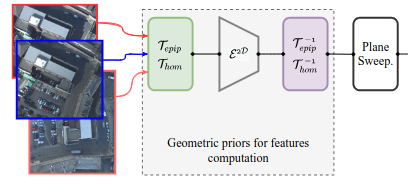
Ewelina Rupnik is a prominent researcher in photogrammetry and remote sensing, currently holding a researcher position at the Laboratory on Geographic Information Science (LaSTIG) at the French National Institute of Geographic and Forest Information (IGN) since 2017. She also serves as an associate researcher at the Paris Institute of Earth Physics (IPGP). Rupnik has established herself as a leading expert in historical imagery processing, neural radiance fields, and bundle adjustment techniques. Her educational background includes a PhD in photogrammetry from the Vienna University of Technology (2015), an MSc in Engineering in Photogrammetry from AGH University of Science and Technology, Poland (2005-2010), and an Erasmus exchange at the Technische Universitaet Muenchen, Germany (2009/2010). She recently completed her Habilitation from Université Gustave Eiffel in June 2025. Rupnik's research focuses on advancing photogrammetric techniques for processing historical imagery, developing novel neural radiance field approaches for satellite imagery, and improving bundle adjustment methodologies. Her work bridges traditional photogrammetry with modern deep learning techniques, particularly in the context of sparse satellite views and historical multi-epoch imagery. She has made significant contributions to the open-source MicMac photogrammetry software project. Her recent publications demonstrate a strong trend toward integrating deep learning with traditional photogrammetric methods, with a particular emphasis on satellite and historical imagery analysis. The research spans from fundamental algorithm development (like SparseSat-NeRF and Pointless Global Bundle Adjustment) to practical applications in earth sciences (landslide, earthquake, and glacier volume mapping). 2022 EuroSDR PhD Award for Corona satellite imagery processing Best Paper Award for BRDF-NeRF research Outstanding Reviewer at CVPR 2025 Rupnik actively contributes to the academic community through editorial and leadership roles, including serving as Editor-in-Chief of the French Journal for Photogrammetry and Remote Sensing (2021-2025), Advisory Board Member of the International Journal of Photogrammetry and Remote Sensing (2024-present), and Co-chair of the ISPRS Working Group on Image Orientation and Sensor Fusion (2022-2026). She regularly teaches at Université Paris Cité & ENSG (~30 hours/year since 2015) and has conducted numerous workshops worldwide on photogrammetry with historical images and MicMac software.
Christophe Kervazo is an Assistant Professor (Maître de Conférences) at Télécom Paris, France, affiliated with the IMAGES group under the Image, Data, Signal (IDS) department . His research focuses on sparse blind source separation, nonnegative matrix factorization, hyperspectral imaging, and optimization techniques for remote sensing and biomedical applications. Education: Engineering degree from Supélec (2015), Master of Science from Georgia Institute of Technology (2016), PhD in Signal and Image Processing from Université Paris Saclay (2019). His work spans deep learning for inverse problems (including deep unrolling techniques), remote sensing (hyperspectral imaging and SAR), and uncertainty quantification . Recent publications address synthetic data training for medical imaging, distributed sparse BSS, and nonlinear component separation. Collaborators include institutions like CEA Saclay, Université de Mons, and ONERA. Current students include PhD candidates working on topics such as digital breast tomosynthesis, hyperspectral unmixing, and SAR image reconstruction. Former students and interns have contributed to projects involving plug-and-play methods, unrolling algorithms, and implicit regularization. He is involved in teaching and research projects, including collaborations with Airbus and ONERA on hyperspectral imaging and spectral band optimization. His lab, LTCI (Information Processing and Communication Laboratory), supports interdisciplinary work in signal and image processing.
Sylvain Arlot is a Professor at the Mathematics Department of Université Paris-Saclay, affiliated with the Probability and Statistics team at Laboratoire de Mathématiques d'Orsay. He leads the Celeste INRIA Saclay project-team and is a junior member of the Institut Universitaire de France (IUF) since 2020. His research focuses on statistical learning theory, non-parametric methods, model selection, and change-point detection. Arlot has contributed to foundational work on cross-validation, penalization techniques, and random forests. He co-organizes the Séminaire Palaisien and serves as an associate editor for the Annales de l'Institut Henri Poincaré B. Education: PhD in Mathematics from Université Paris-Sud (2007), HDR (Habilitation) from Université Paris Diderot (2014). Research Interests: Core areas include statistical learning theory, resampling methods (e.g., cross-validation and bootstrap), and applications in high-dimensional data analysis. His work bridges theoretical guarantees with practical algorithm design, emphasizing data-driven model selection and robust estimation techniques. Grants & Projects: Leads the PEPR IA Project Causali-t-AI (2023–2028) and was a member of the ANR Fast-Big project (2018–2023). He coordinates the math-AI program under Labex Mathématique Hadamard. Awards: Junior IUF membership (2020–2025). Labs/Teams: Heads the Celeste team at INRIA Saclay, collaborating on statistical machine learning and data science challenges.
Jalal Fadili is a Professor at the National School of Engineers of Caen (ENSICAEN) and conducts research at the Research Group in Computer Science, Image, Automation and Instrumentation of Caen (GREYC - CNRS/ENSICAEN/Université Caen Normandie). He serves as director of the AISSAI center and was appointed as a junior member of the Institut Universitaire de France from 2013-2018. His educational background includes: Engineering Degree in Signal Processing from ENSI Caen (1996) MSc in Signal and Image processing from the University of Caen (1996) PhD in Signal and Image processing from the University of Caen (1999) Habilitation in Signal and Image processing from the University of Caen (2010) Professor Fadili's research focuses on signal and image processing, with particular emphasis on inverse problems, variational approaches, and optimization techniques. His work has significant applications in medical and astronomical imaging, including fMRI analysis where he developed wavelet-based methods for structural noise modeling and hypothesis testing. He has created numerous software tools for image processing tasks such as decomposition, inpainting, denoising, and deconvolution. His professional progression shows steady advancement from Assistant Professor at the University of Caen (2000-2001), to Associate Professor at ENSICAEN (2001-2011), and currently Full Professor at ENSICAEN since 2011. His research has resulted in innovative methodologies including MCALab for morphological component analysis and various image restoration techniques. His laboratory work centers around the GREYC research group, where he leads projects related to sparse representation-based image processing techniques and their applications across scientific domains.
Laure Blanc-Féraud is a CNRS Research Director at the Informatics, Signals and Systems Laboratory of Sophia-Antipolis (I3S), affiliated with Université Côte d'Azur. She is a Chairholder at the 3IA Côte d'Azur institute, focusing on AI for integrative computational medicine and biological imaging. Her work bridges advanced image processing, artificial intelligence, and biological applications. Research Interests: Dr. Blanc-Féraud specializes in solving inverse problems in image processing, particularly for 3D microscopy in biological contexts. Her research involves sparse l0 optimization, nonlinear regularization, variational and stochastic approaches, discontinuity preservation, sparse estimation, wavelet transforms, and image decomposition. She develops AI-driven algorithms to enhance super-resolution imaging and extract quantitative data from complex biological datasets. Her recent work emphasizes the development of novel acquisition methods and computational pipelines for analyzing large-scale, heterogeneous imaging data in biology. These efforts contribute to the broader domain of computational medicine and bio-image informatics. Scientific Awards: No awards listed in the provided text. Advising and Grants: As a CNRS Research Director and 3IA Chairholder, Dr. Blanc-Féraud likely leads research teams, supervises PhD students and postdoctoral researchers, and secures competitive research funding, though specific names and grants are not mentioned in the text. Labs and Teams: She is a key researcher at the I3S (Informatics, Signals and Systems Laboratory), a joint research unit of CNRS and Université Côte d'Azur, where she contributes to interdisciplinary projects at the intersection of AI, signal processing, and life sciences.
Hervé Delingette is a Research Director at Inria, a leading national research institute in France, where he is a key member of the Asclepios research team. He also holds a Chair at the 3IA Côte d'Azur Institute and leads the CardioSense3D Large Initiative Action, focusing on advanced modeling of the heart's electro-mechanical behavior. His work bridges artificial intelligence, medical imaging, and computational biology. His research interests are centered on computational medicine and include: Image Segmentation Surface Regularization and Simplex Mesh Surgery Simulation Cardiac and Brain Modeling Joint biological and imaging biomarkers in oncology Unsupervised deep learning for medical data Uncertainty quantification and sparse Bayesian feature selection His recent work emphasizes integrating imaging and biological data—particularly in lung cancer—to improve diagnosis and treatment planning by addressing confounding factors and leveraging AI. Although no specific publications or awards are listed in the source, his leadership in major research initiatives underscores his significant contributions to AI in medicine. He mentors researchers within his team and leads interdisciplinary projects funded through Inria and the 3IA Institute. He is based at Inria Sophia Antipolis and actively contributes to France's national AI for health strategy.