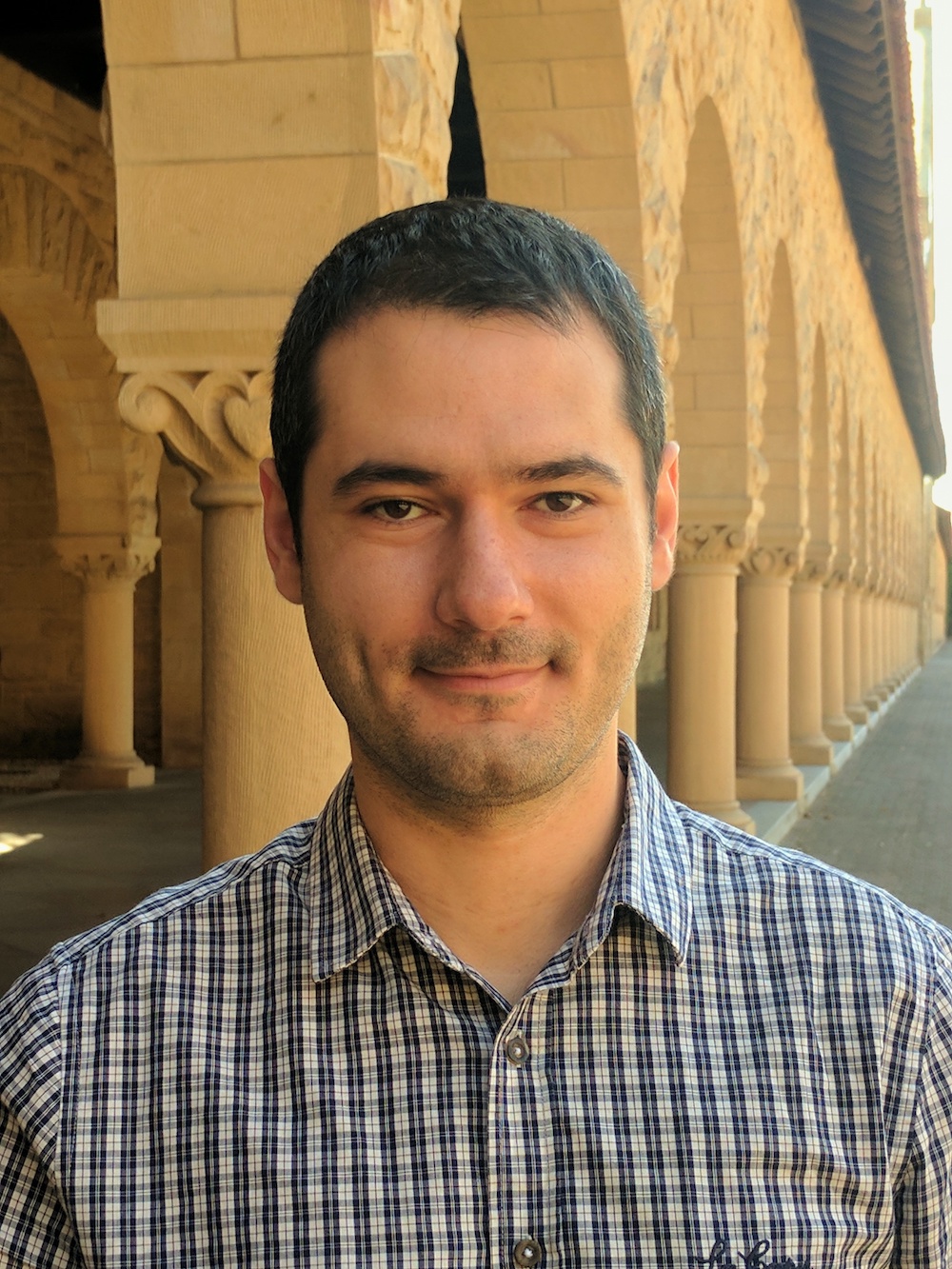
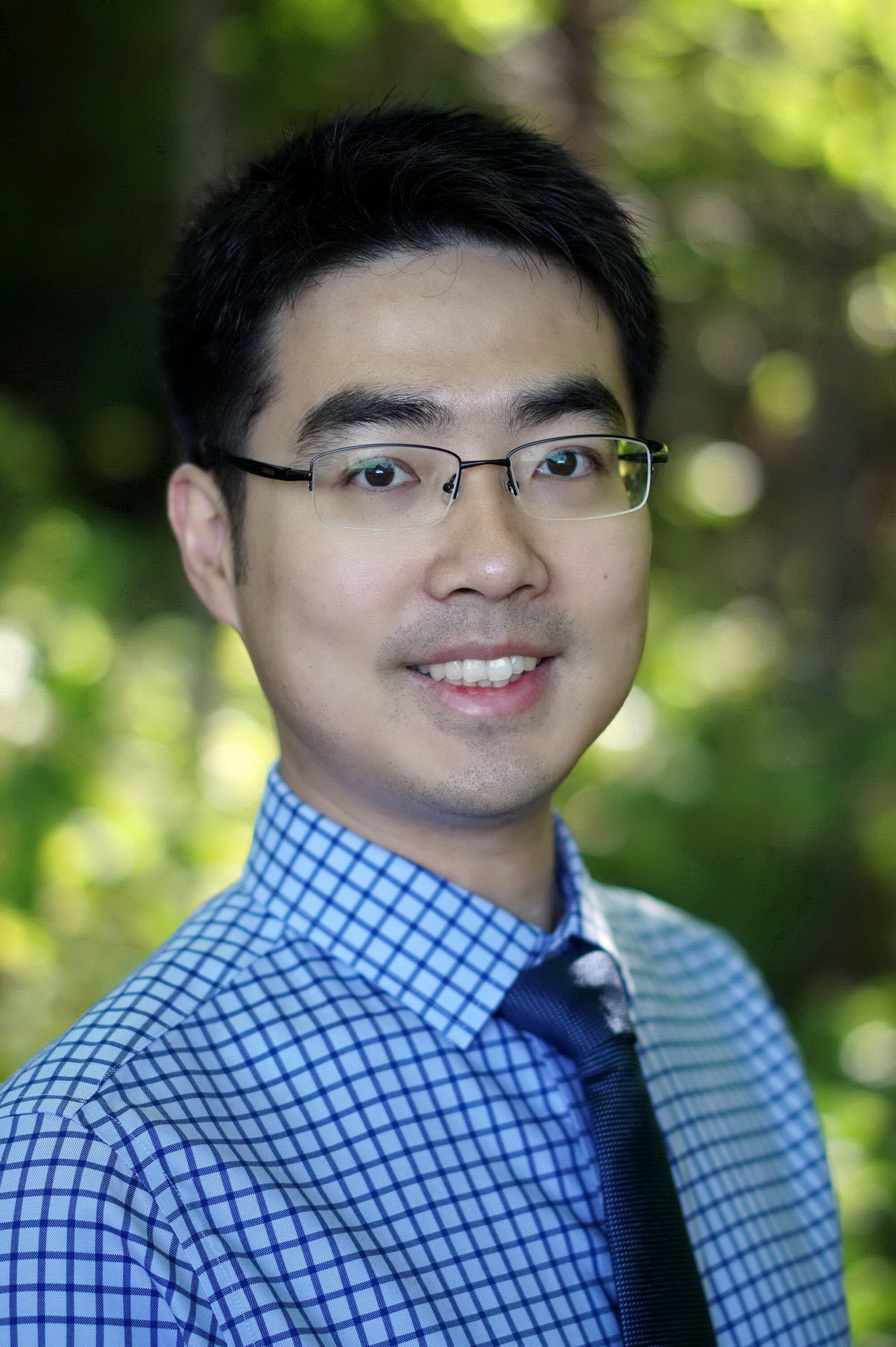
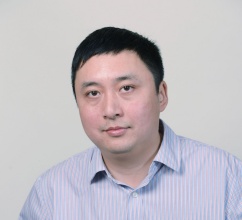
Yang P. Liu is an Assistant Professor at Carnegie Mellon University 's Department of Computer Science . He received his PhD from Stanford University under the supervision of Aaron Sidford and previously studied at MIT . Fields of Interest : Graph Algorithms, Optimization, High-Dimensional Geometry, Additive Combinatorics, Theoretical Computer Science. His research focuses on algorithmic design and analysis for graph problems, optimization, and combinatorics, with applications in machine learning and complexity theory. Recent work includes advancements in parallel repetition games , combinatorial lines , and dynamic graph algorithms . In 2024, his research spanned FOCS , STOC , and RANDOM conferences, addressing problems in k-CSPs , min-cost flow , and hypergraph sparsification . Earlier contributions (2023) included deterministic flow algorithms and spectral hypergraph techniques. Scientific Awards : NDSEG Fellowship (2018-2021), Google PhD Fellowship (2022-2023), FOCS Best Paper (2022), STOC Best Student Paper (2022), FOCS Best Student Paper (2021). He teaches CS 15-759 , a graduate course on convex optimization theory and applications, covering gradient descent, interior point methods, and algorithmic sparsification techniques.
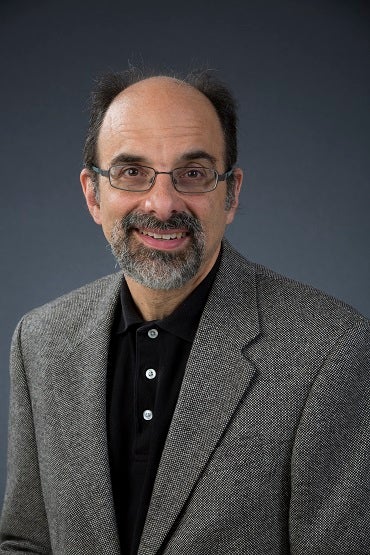
Alexandre Bouchard-Côté is a Professor of Statistics at the University of British Columbia (UBC), affiliated with the Department of Statistics within the Faculty of Science. His research focuses on computational statistics, Bayesian methods, and Monte Carlo techniques, with applications in evolutionary biology, cancer genomics, and computational linguistics. Education : PhD in Computer Science (with Designated Emphasis in Statistics) from UC Berkeley (2010), BSc in Mathematics and Computer Science from McGill University (2005). Affiliations : Director of the Blang probabilistic programming project and leader of the Bouncy Particle Sampler research group. Research Interests : Bouchard-Côté develops scalable Bayesian computational methods, including non-reversible Monte Carlo algorithms like the Bouncy Particle Sampler, and applies these to problems in cancer phylogenetics, evolutionary dynamics, and historical linguistics. His work emphasizes bridging theoretical foundations with practical tools for data science. Publications Trends : Recent work spans distributed sampling frameworks (e.g., Pigeons.jl), variational phylogenetic inference, and cancer clonal evolution modeling. His articles often address algorithmic scalability and interdisciplinary applications in biology and astronomy. Awards : CRM-SSC Prize in Statistics (2024) PIMS-UBC Mathematical Sciences Young Faculty Award (2018) Tweedie New Researcher Award (2016) Advising & Grants : Supervises graduate students (e.g., Son Luu, Nikola Surjanovic) and leads funded projects on distributed MCMC and cancer genomics. Collaborates with institutions like the Simons Foundation and the Canadian Statistical Sciences Institute (CANSSI). Labs/Teams : Core member of the UBC Statistical Machine Learning group, contributing to open-source tools like Blang and the Bouncy Particle Sampler implementation.
Mikhail (Misha) Belkin is a Professor at the Halicioglu Data Science Institute (HDSI) at the University of California San Diego , with an affiliated appointment in the Department of Computer Science and Engineering . He is also an Amazon Scholar , reflecting his impactful industry collaboration. Since January 2024, he has served as the Editor-in-Chief of the SIAM Journal on Mathematics of Data Science (SIMODS) . Research Interests: Belkin's research centers on the theoretical foundations of machine learning, particularly the mathematical understanding of modern deep learning. His work investigates interpolation , over-parameterization , and feature learning in neural networks. He is renowned for introducing the double descent risk curve, which reconciles classical bias-variance trade-offs with the success of overfitted models. His recent work identifies the Average Gradient Outer Product (AGOP) as a fundamental mechanism of feature learning, applicable across architectures like CNNs and transformers. Scientific Contributions and Trends: His recent publications, appearing in Science , PNAS , and NeurIPS , demonstrate a strong trend toward unifying theories of generalization and optimization in over-parameterized systems. He explores how interpolating models can be statistically optimal, how gradient descent converges in non-convex landscapes via the PL* condition, and how kernel methods can be enhanced to perform feature learning. ACM Fellow (2023) Editor-in-Chief, SIAM Journal on Mathematics of Data Science (2024–present) Advising and Grants: Belkin actively mentors students and collaborators such as Adityanarayanan Radhakrishnan , Daniel Beaglehole , and Chaoyue Liu , who are frequent co-authors. He is a Principal Investigator (PI) in the Collaboration on the Theoretical Foundations of Deep Learning , funded by the NSF and Simons Foundation. He is also an external collaborator with the Eric and Wendy Schmidt Center at the Broad Institute and part of the NSF-funded TILOS AI Institute . Laboratories and Teams: While not explicitly named, his research group at UCSD is deeply involved in theoretical machine learning, focusing on the intersection of statistics, optimization, and deep learning. His work often involves large-scale collaborations and is closely tied to initiatives like SIMODS and TILOS.
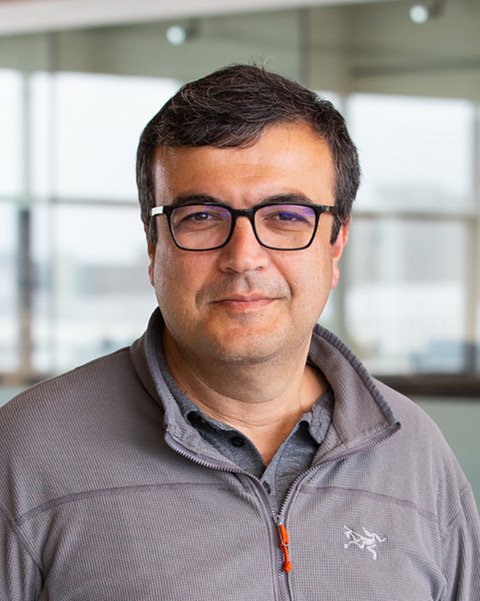
Murat Erdogdu is an Assistant Professor at the University of Toronto, jointly appointed in the Department of Computer Science and Department of Statistical Sciences . He is also a faculty member at the Vector Institute and holds the CIFAR Chair in Artificial Intelligence . PhD in Statistics, Stanford University (advised by Mohsen Bayati and Andrea Montanari) MSc in Computer Science, Stanford University BSc in Electrical Engineering and Mathematics, Bogazici University His research focuses on machine learning theory , high-dimensional statistics , and optimization . He has contributed to understanding gradient-based algorithms, sampling methods, and feature learning in structured data. Recent publications address problems in: Heavy-tailed sampling Mean-field Langevin dynamics Robust feature learning Minimax regression Stochastic optimization under infinite noise Scientific Awards: CIFAR Chair in Artificial Intelligence ICLR 2023 Spotlight NeurIPS 2019 & 2021 Spotlights He teaches graduate courses like STA 414/2104 (Statistical Methods for Machine Learning II) and STA 4273 (Modern Learning Theory) , emphasizing probabilistic modeling and theoretical analysis.
Stephen A. Vavasis is a Professor in the Department of Combinatorics and Optimization at the University of Waterloo, part of the Faculty of Mathematics. He holds a PhD in Computer Science from Stanford University (1989) and has held academic positions at Cornell University (1989–2006) before joining Waterloo. His research focuses on continuous optimization, data science, first-order methods, scientific computing, and computational mechanics. Current teaching includes courses on convex optimization and portfolio optimization methods. He has served as Associate Dean of Computing (2017–2020) and Interim Director of Data Science graduate programs. His work is supported by NSERC grants. Notable awards include the Hertz Fellowship, Churchill Scholarship, and Guggenheim Fellowship. Vavasis's research emphasizes applications of optimization to clustering, machine learning, and fracture mechanics. His publications span convex optimization frameworks, algorithmic analysis of gradient methods, and numerical methods in mechanics. Recent work explores unifying analyses of first-order optimization algorithms and robust optimization techniques for high-dimensional data problems.
Arrvindh Shriraman is an Associate Professor and Program Director of Software Systems at Simon Fraser University's School of Computing Science in Surrey. His research focuses on energy-efficient software, multicore memory systems, and optimizing hardware/software interfaces for parallel programming. He holds a Ph.D. (2010) and M.S. (2006) in Computer Science from the University of Rochester, and a B.Eng. (2004) from the University of Madras. He teaches courses on parallel programming and energy-conscious software design. His research interests include synchronization mechanisms for domain-specific architectures, cache optimization, and FPGA-based acceleration. He has contributed to frameworks like Mu-grind for HLS-generated RTL instrumentation and TAPAS for parallel accelerator generation. Notable projects include RANGE-BLOCKS for synchronization in domain-specific systems and TapeFlow for gradient computation in neural networks. His work emphasizes real-time verification of autonomous systems and safety-critical trajectory planning for underwater vehicles. Shriraman collaborates closely with the Tangent Lab, exploring cutting-edge solutions in hardware-software co-design and embedded systems. His teaching and research bridge theoretical computer science with applied engineering challenges, addressing scalability, efficiency, and safety in modern computing systems.
Chen Greif is a Professor in the Department of Computer Science at the University of British Columbia (UBC). His research focuses on numerical linear algebra, iterative solvers, preconditioning techniques, and scientific computing. He has held editorial roles in SIAM journals and book series, and served as Head of the Department of Computer Science from 2016 to 2020. Greif co-authored the SIAM bestselling textbook A First Course in Numerical Methods and has published extensively in top journals. Education: Ph.D., Mathematics, University of British Columbia, 1998 M.Sc., Mathematics, Tel Aviv University, 1994 B.Sc., Mathematics, Tel Aviv University, 1991 Research Interests: Scientific computing, numerical linear algebra, iterative methods for sparse linear systems, saddle-point systems, and elliptic PDEs. His work emphasizes preconditioning techniques and numerical stability. Publications Trends: Recent work includes multigrid methods for complex systems, preconditioners for saddle-point matrices, and eigenvalue bounds analysis. His contributions bridge theory and applications in computational science and engineering. Awards: SIAM Fellow (2022) CAIMS Research Prize (2023) Multiple teaching awards (2025, 2024, 2017, 2006, 2004) Advising & Grants: Greif has advised numerous students and contributed to grants in numerical methods and computational science. He has led major conferences (e.g., International Conference on Preconditioning Techniques, 2017) and served on SIAM committees. Labs/Teams: Engaged in interdisciplinary research groups at UBC, focusing on numerical algorithms and their applications in fluid dynamics, image processing, and computational geometry.
Ozgur Yilmaz is a Professor in the Department of Mathematics at the University of British Columbia (UBC). He is the Director of the Pacific Institute for the Mathematical Sciences (PIMS) and has held roles such as Interim Deputy Director at PIMS and Deputy Director at the Banff International Research Station (BIRS). His research focuses on applied harmonic analysis, signal processing, compressed sensing, and seismic signal processing. Education: PhD in Applied and Computational Mathematics from Princeton University (2001), B.Sc. in Mathematics and Electrical Engineering from Boğaziçi University (1997). Research Interests: Mathematical problems in analog-to-digital conversion, blind source separation, sparse approximations, compressed sensing, and their applications in seismic exploration. He has contributed to advancements in sigma-delta quantization, low-rank matrix recovery, and compressed sensing algorithms. Funding: Recipient of NSERC Discovery Grants, UBC Data Science Institute grants, and leadership in collaborative research groups (CRGs) on high-dimensional data analysis and applied harmonic analysis. His work bridges theoretical mathematics with practical applications in signal processing and AI-driven medical imaging. Students and Postdocs: Supervised numerous PhD and MSc students in areas like compressed sensing, seismic data reconstruction, and machine learning. Current advisees include Aaron Berk and Xiaowei Li. Former students hold positions at academic institutions and tech companies. Labs and Collaborations: Affiliated with UBC’s Data Science Institute (DSI), Centre for Artificial Intelligence Decision-making and Action (CAIDA), and the Institute of Applied Mathematics (IAM). Collaborates on projects integrating AI with scientific discovery, such as retinal biomarker identification using deep learning.
Chen Xu is an Associate Professor in the Department of Mathematics and Statistics at the University of Ottawa. He holds an M.A. from York University and a PhD from the University of British Columbia. His research focuses on sparse modeling, statistical learning, and big data processing, with an emphasis on both theoretical and computational advancements. Dr. Xu is affiliated with the Faculty of Science and contributes to editorial roles for journals such as the Journal of the American Statistical Association and Electronic Journal of Statistics. Education: M.A., York University PhD, University of British Columbia Research interests include feature selection, regularization methods, kernel methods, and high-dimensional regression. His work addresses computational challenges in big data, proposing efficient algorithms for tasks like singular value decomposition, clustering, and distributed feature screening. Recent publications highlight advancements in multiview PCA, low-tubal-rank tensor recovery, and model-free regression techniques. Publications span prestigious journals like the Journal of the American Statistical Association and IEEE Transactions series, focusing on statistical methodology, machine learning applications, and scalable computational solutions for complex data problems. Editorial Service: Associate Editor, Journal of American Statistical Association-T&M (2023–present) Associate Editor, Electronic Journal of Statistics (2023–present) Former Associate Editor, The Canadian Journal of Statistics (2019–2021) His research groups are Statistics and Biostatistics, and Data Science, Machine Learning, and Artificial Intelligence. He has no listed awards but maintains active editorial and academic collaborations in computational statistics and machine learning.
Meng He is a Professor in the Faculty of Computer Science at Dalhousie University. He obtained his PhD from the Cheriton School of Computer Science at the University of Waterloo in 2008 and held postdoctoral and research positions at Carleton University and the University of Waterloo before joining Dalhousie. He is affiliated with the Algorithms & Bioinformatics research cluster and is actively recruiting graduate students for master's and PhD studies, as well as supervising honors theses and USRA internships. His research focuses on the design and analysis of efficient algorithms and data structures, particularly in the areas of computational geometry, databases, text retrieval, and bioinformatics. His work often involves developing succinct and dynamic data structures for fundamental problems in graph theory, trees, and geometric data. His recent publications show a strong focus on path and distance queries in various graph types (especially interval graphs and trees), range counting, mode queries, and succinct representations. The research trend emphasizes theoretical foundations combined with practical efficiency, often addressing dynamic and space-constrained scenarios. Alberto Apostolico Best Paper Award of CPM 2017 Dr. He has supervised numerous PhD and master's students and collaborators, frequently co-authoring with researchers such as J. Ian Munro, Travis Gagie, Gonzalo Navarro, and Norbert Zeh. His research has been supported by grants from NSERC and other funding agencies, though specific grant details are not listed in the provided text. He has also contributed significantly to the academic community through editorial work for journals like Computational Geometry - Theory and Applications and Algorithmica , and by organizing major conferences such as CCCG and WADS. He leads a research group focused on algorithms and data structures, fostering collaborations both within Dalhousie and internationally. Future work is likely to continue exploring the theoretical and practical aspects of dynamic and succinct data structures, with applications in large-scale data processing and information retrieval systems.
Liqun Wang is a Professor of Statistics at the University of Manitoba, within the Faculty of Science. His research focuses on statistical inference in complex models, measurement error correction, boundary crossing problems in stochastic processes, and Monte Carlo simulation methods. He holds a prominent role in advancing methodologies for nonlinear time series analysis and Bayesian inference. His work integrates theoretical rigor with practical applications, addressing challenges in econometrics, environmental science, and public health. Notable contributions include advancements in instrumental variable estimation, second-order least squares methods, and high-dimensional covariance estimation. He actively mentors graduate students in these areas and has published extensively in top-tier statistical journals. Recent research highlights include Bayesian bias correction techniques, sparse covariance matrix estimation, and modeling SARS-CoV-2 dynamics via wastewater data. His methodologies often bridge computational efficiency with statistical accuracy, making them applicable to diverse fields such as finance, biostatistics, and environmental monitoring. Despite prolific output (over 70 publications since 1990), Dr. Wang has yet to be explicitly noted for formal scientific awards. His academic profile emphasizes methodological innovation, with a strong focus on real-world data challenges and interdisciplinary collaboration.
Elena Tuzhilina is an Assistant Professor in the Department of Statistical Sciences at the University of Toronto, specializing in machine learning, applied statistics, and computational biology. Her research focuses on statistical tools for chromatin 3D spatial structure reconstruction and analyzing emotional disorders' impact on brain function. Ph.D. in Statistics from Stanford University Specialist's degree from Moscow State University Two-year Data Science program at Yandex School Her research spans high-dimensional data analysis , dimension reduction , and statistical modeling in biological contexts. She has developed novel algorithms for chromatin conformation reconstruction and pandemic trajectory modeling. Recent publications focus on canonical correlation analysis , low-rank matrix approximation , and 3D genome architecture , with applications in computational biology and neuroscience. Dorothy Shoichet Women Faculty in Science Award JSM Student Travel Award Outstanding Teaching Assistance at Stanford Stanford Teaching Assistant Award Elena supervises PhD students and postdoctoral fellows across disciplines including statistical sciences, biochemistry, and applied mathematics. She has secured multiple grants including a NSERC Discovery Grant and University of Toronto Accelerator Grant .
Archer Yang is an Associate Professor in the Department of Mathematics and Statistics at McGill University, with additional affiliations as an Associate Academic Member of Mila - Quebec AI Institute, Associate Member of the School of Computer Science, and Member of the Quantitative Life Science Program. His academic journey began with a PhD from the University of Minnesota under the supervision of Hui Zou, establishing his foundation in statistical methodology and machine learning. Dr. Yang's research spans three interconnected themes: statistical machine learning, applications in drug discovery, and computational genomics and healthcare. In statistical machine learning, he focuses on developing dimensionality reduction, probabilistic models, and causality-inspired methods to address complex high-dimensional data challenges. His work in drug discovery involves creating machine learning models to accelerate drug candidate identification and enhance understanding of drug efficacy and safety. In computational genomics and healthcare, he develops techniques to analyze genomic data, identify biomarkers, and explore the genetic basis of diseases, with the goal of improving precision medicine and predicting patient outcomes. His overarching objective is to bridge advanced data-driven methodologies with impactful applications in pharmacology, genomics, and healthcare. His recent publications reveal a strong trend toward applying machine learning to healthcare challenges, particularly in congenital heart disease analysis, mortality prediction, and drug discovery. His work demonstrates expertise in developing interpretable models that can handle complex, high-dimensional biomedical data while maintaining statistical rigor. The integration of causal inference methods with machine learning appears to be a growing focus in his research trajectory. ICML Spotlight Paper (top 2.6%, 313/12,107) Dr. Yang actively supervises a large research group including multiple postdoctoral fellows, PhD students, and Master's students. His lab has developed several notable software tools, including ml-mr for machine learning in Mendelian randomization. His supervision extends across statistics, computer science, and biomedical applications, reflecting the interdisciplinary nature of his work. He appears to maintain strong collaborative relationships with researchers in healthcare and genomics fields. His laboratory, the Archer Yang Lab, maintains active GitHub repositories focused on machine learning applications in healthcare and drug discovery, with particular emphasis on interpretable models and statistical methodology development. The lab appears to work at the intersection of theoretical statistics and practical biomedical applications, with projects spanning from algorithm development to clinical implementation.
Kazem Cheshmi is an Assistant Professor in the Department of Electrical and Computer Engineering at McMaster University. His research focuses on compiler optimization techniques for accelerating scientific computing and machine learning applications on parallel architectures. He leads the SwiftWare Lab and teaches courses such as High-Performance Programming (COMPENG 4SP4/ECE 6SP4) and Special Topics in Computation (ECE 718). Education: B.Eng. (Ferdowsi University of Mashhad), M.A.Sc. (University of Tehran), Ph.D. (University of Toronto). He has held research positions at Microsoft Research, Adobe Research, Concordia University, and Rutgers University. Research Interests: High-performance computing, compiler design, sparse matrix computations, and their applications in machine learning and scientific computing. His work emphasizes optimizing sparse codes for parallel architectures and developing efficient QP solvers like NASOQ. Key Contributions: Developed Sympiler (a domain-specific compiler for sparse matrix codes) and NASOQ (a scalable QP solver). His awards include the ACM-IEEE CS George Michael Memorial HPC Fellowship (2020) and recognition for contributions to compiler-driven sparse computation optimization. Teaching and Service: Organizes SONAD’25, serves on program committees for PPoPP, Supercomputing, and IPDPS. Supervises students in compiler design, parallel programming, and high-performance computing. Labs/Teams: Leads the SwiftWare Lab focusing on compiler optimization and high-performance systems. Collaborates on open-source projects like Sympiler and NASOQ.
Joseph Paat is an Associate Professor at the Sauder School of Business, University of British Columbia, with a strong focus on discrete optimization and integer programming. He is an associate member of the Computer Science department and affiliated with the Institute of Applied Mathematics. BS, Denison University MA, Wake Forest University PhD, Johns Hopkins University His research interests lie at the intersection of discrete optimization, integer programming, and theoretical mathematics, particularly exploring applications of topology, combinatorics, and number theory to optimization problems. He also integrates machine learning techniques into discrete optimization in his teaching and research. Recent publications highlight advancements in proximity bounds, flatness theorems, and algorithmic efficiency for integer programs, alongside theoretical contributions to unimodular hypergraphs, quadratic-free sets, and block-structured optimization. His work often involves collaborations across disciplines and institutions, including ETH Zürich and Deutsche Bahn. Associate Editor, Discrete Optimization (2022–present) Secretary (2022–2025) and Chair (2025–2026) of the Mixed Integer Programming Society Chair of the Organizing Committee, Mixed Integer Programming Workshop (2024) At UBC, Paat teaches courses such as Logistics and Operations Management , Advanced Topics in Optimization , and Discrete Optimization II , emphasizing modeling practices, integer programming, and machine learning integration. He previously taught at ETH Zürich and Johns Hopkins University. Joseph Paat actively participates in research collaborations, supervises graduate students, and contributes to professional service through editorial and organizational roles in optimization societies.