Dr. Thi Phuong Khanh Nguyen is a researcher at the Ecole Nationale d'Ingénieurs de Tarbes (ENIT) , affiliated with the College of Engineering and Department of Systems . Her work focuses on Prognostics and Health Management (PHM) , predictive maintenance, and industrial data analytics, combining machine learning with physics-informed modeling to address uncertainty in system degradation. Teaching: Mathematics for engineers, Probability, Statistics, Operating safety Research: Health indicators, diagnostics, prognostics, multimodal data fusion Methods: Data mining, physical and data-driven models, decision support systems Tools: FAST, Petri nets, UML, HMM, RNN, CNN, Transformer architectures Her recent publications highlight advancements in explainable AI , physics-informed neural networks , and multimodal learning for fault detection, battery RUL prediction, and robotic inverse dynamics. She also explores blockchain and federated learning for decentralized prognostics.
Robert Brunner serves as Professor of Astronomy at the University of Illinois at Urbana-Champaign, where he bridges astrophysical research with computational innovation. His work focuses on extracting knowledge from massive astronomical datasets through advanced statistical and machine learning techniques, while also extending methodologies to finance and agricultural applications. Research interests center on developing machine learning algorithms (random forests, deep neural networks, Bayesian estimation) for astronomical data analysis, cosmological parameter constraints via n-point clustering measurements, and hardware acceleration using GPUs/cloud systems. His interdisciplinary approach spans source classification, transient phenomena detection in surveys like SDSS and DES, and applications in financial time-series analysis and agricultural remote sensing. Recent publications (2019-2025) reveal strong cross-domain expertise: astronomical catalogs for Rubin Observatory and Spitzer surveys coexist with financial market analysis using community detection methods and agricultural computer vision systems. Key methodological threads include spatio-temporal forecasting, multimodal learning for earnings calls, and anomaly detection via extended isolation forests, demonstrating consistent innovation in handling petascale datasets across scientific boundaries.
Andrea Migliorati is a Fixed-term Assistant Professor at the Department of Electronics and Telecommunications (DET) of Politecnico di Torino. He specializes in telecommunications and industrial/information engineering (IINF-03/A - Area 0009), with a focus on machine learning applications in signal processing and neural network optimization. Academic Role: Assistant Professor Department: Electronics and Telecommunications Research Branch: Telecommunications (IINF-03/A) University: Politecnico di Torino Migliorati's research explores neural network sparsification, quantization techniques, and robust training methods for secure systems. His work bridges telecommunications engineering with modern machine learning, targeting applications in wearable biometrics and edge computing. Key trends include: Advancing sparse trainable neural networks through concave regularization Developing ternary/binary quantization approaches for model compression Enhancing gait identification systems for wearable devices Improving adversarial robustness via Gaussian class-conditional training
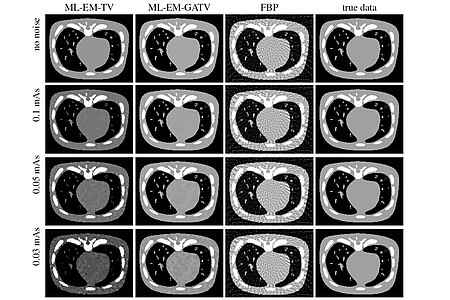
Jürgen Hesser is a Professor at the Mannheim Medical Faculty , Heidelberg University, specializing in Experimental Radiotherapy and Medical Imaging . His research focuses on solving inverse problems in imaging, particularly for CT reconstruction , brachytherapy planning , and low-dose imaging . Current affiliations: Clinic for Radiotherapy and Radiooncology, Mannheim University Hospital Collaborative ties: Interdisciplinary Center for Scientific Computing (IWR) and Center for Bioinformatics (ZITI) at Heidelberg University Research interests center on anisotropic total variation techniques for medical and industrial applications, including MR-guided interventions and real-time radiation therapy . His work has led to a 1000x speed improvement in brachytherapy planning algorithms. Recent publications highlight expertise in image reconstruction (CT/X-ray), noise optimization , machine learning for cancer classification, and big data management solutions. His methods are applied to both clinical and industrial imaging challenges. Additional contributions include scientific data infrastructure development and variance stabilization techniques for medical sensors. The research group maintains strong interdisciplinary links with Physics, Mathematics, and Computer Science faculties.
Eugene Y. Vasserman is an Associate Professor in the Department of Computer Science at Kansas State University's College of Engineering, where he also serves as Director of the Center for Cybersecurity and Trustworthy Systems. His office is located in 2171 Engineering Hall, and he holds office hours on Tuesdays from 2:30 pm to 4:00 pm and Wednesdays from 11:30 am to 1:00 pm during the Fall 2025 semester. Dr. Vasserman's research spans multiple critical areas of cybersecurity including network and distributed system security, privacy and anonymity, censorship resistance, operating system security, medical and IoT security, usable security, and applied cryptography. His work bridges theoretical security concepts with practical implementations, addressing real-world challenges in diverse domains from medical systems to blockchain technologies. His recent publications reveal a research trajectory that has evolved from foundational network security work to increasingly interdisciplinary research intersecting with artificial intelligence, medical systems, and cybersecurity education. The 15 most recent publications demonstrate his ongoing commitment to both theoretical advances and practical security solutions across multiple domains. Outstanding short paper award for 'Hypersparse Traffic Matrix Construction using GraphBLAS on a DPU' at IEEE HPEC 2023 Best graduate student poster award for 'Empowering pre-service teachers to utilize programming in the classroom' at ASEE Midwest Conference 2013 Dr. Vasserman has mentored numerous graduate students through the Systems and Network Security (SyNeSec) Lab, with alumni now working at organizations including Paycom, Corelight, Sandia National Labs, Microsoft, and Cerner. He teaches multiple cybersecurity courses each semester including CIS 525: Introduction to Network Programming, CIS 755: Systems Security, and CIS 351: Cyber Defense Basics, demonstrating his long-term commitment to cybersecurity education since at least 2010. As Director of the Center for Cybersecurity and Trustworthy Systems, he leads initiatives that address critical security challenges across multiple domains, fostering collaboration between researchers, students, and industry partners to develop trustworthy systems for the future.
Louis Theran is a Lecturer in Mathematics at the University of St Andrews , School of Mathematics and Statistics. His research bridges geometry, combinatorics, and algorithmic problems, with applications in physics, materials, and machine learning. Education: Ph.D. in Computer Science, University of Massachusetts, Amherst (2010) M.S. in Computer Science, University of Massachusetts, Amherst (2007) B.S. in Computer Science and Mathematics, University of Massachusetts, Amherst (2006) Theran’s research focuses on the rigidity theory of frameworks , exploring how geometric and combinatorial properties determine structural stability. He investigates discrete geometry, sparse hypergraphs, and pebble game algorithms, connecting these to machine learning (e.g., low-rank matrix completion) and materials science (e.g., auxetic metamaterials, sticky disks). His recent work analyzes rigidity transitions in random graphs , universal rigidity in one-dimensional frameworks, and maximum likelihood thresholds via graph rigidity. Collaborations span computational geometry, algebraic statistics, and physics, emphasizing interdisciplinary applications. Scientific Awards: Heilbronn small grants scheme (2021) NSF/KOSEF East Asia and Pacific Summer Institutes Fellowship (2006) Theran has supervised numerous BSc, MMath, and PhD projects , including topics like tensegrities, graphons, and geometric constraint systems. He has also contributed to Gaussian graphical models and universality theorems for Delaunay triangulations.
Archer Yang is an Associate Professor in the Department of Mathematics and Statistics at McGill University, with additional affiliations as an Associate Academic Member of Mila - Quebec AI Institute, Associate Member of the School of Computer Science, and Member of the Quantitative Life Science Program. His academic journey began with a PhD from the University of Minnesota under the supervision of Hui Zou, establishing his foundation in statistical methodology and machine learning. Dr. Yang's research spans three interconnected themes: statistical machine learning, applications in drug discovery, and computational genomics and healthcare. In statistical machine learning, he focuses on developing dimensionality reduction, probabilistic models, and causality-inspired methods to address complex high-dimensional data challenges. His work in drug discovery involves creating machine learning models to accelerate drug candidate identification and enhance understanding of drug efficacy and safety. In computational genomics and healthcare, he develops techniques to analyze genomic data, identify biomarkers, and explore the genetic basis of diseases, with the goal of improving precision medicine and predicting patient outcomes. His overarching objective is to bridge advanced data-driven methodologies with impactful applications in pharmacology, genomics, and healthcare. His recent publications reveal a strong trend toward applying machine learning to healthcare challenges, particularly in congenital heart disease analysis, mortality prediction, and drug discovery. His work demonstrates expertise in developing interpretable models that can handle complex, high-dimensional biomedical data while maintaining statistical rigor. The integration of causal inference methods with machine learning appears to be a growing focus in his research trajectory. ICML Spotlight Paper (top 2.6%, 313/12,107) Dr. Yang actively supervises a large research group including multiple postdoctoral fellows, PhD students, and Master's students. His lab has developed several notable software tools, including ml-mr for machine learning in Mendelian randomization. His supervision extends across statistics, computer science, and biomedical applications, reflecting the interdisciplinary nature of his work. He appears to maintain strong collaborative relationships with researchers in healthcare and genomics fields. His laboratory, the Archer Yang Lab, maintains active GitHub repositories focused on machine learning applications in healthcare and drug discovery, with particular emphasis on interpretable models and statistical methodology development. The lab appears to work at the intersection of theoretical statistics and practical biomedical applications, with projects spanning from algorithm development to clinical implementation.
Zhiqiang Que is a Research Associate in the Department of Computing at Imperial College London, affiliated with the Faculty of Engineering and the Centre for High-Throughput Digital Electronics and Machine Learning. His research focuses on computer architecture, embedded systems, high-performance computing, and CAD tools for hardware design optimization. His research interests include FPGA-based acceleration of machine learning models, hardware-software co-design, and real-time signal processing for scientific applications such as particle physics and gravitational wave experiments. He has contributed to projects involving low-latency graph neural networks (GNNs), Bayesian neural networks, and efficient stream processing on FPGAs. Recent work includes advancements in trustworthy design flows for deep learning acceleration, reconfigurable architectures for recurrent neural networks, and optimizing FPGA-based systems for high-energy physics experiments at the HL-LHC.
Jeroen ROMBOUTS is a Professor at ESSEC Business School (France) and holds the Full Professor position of the Accenture Strategic Business Analytics Chair since 2017. He joined ESSEC in 2013, previously serving as Associate Professor at HEC Montreal (2004–2012). His research focuses on financial econometrics, volatility modeling, and machine learning applications in financial markets. He holds a Ph.D. in Econometrics from the Catholic University of Louvain (2004) and has held visiting professorships at numerous institutions, including the University of Melbourne, Aarhus University, and Tilburg University. Education: PhD in Econometrics (2004), Catholic University of Louvain; Master's degrees in Statistics (2001), Econometrics (2000), and Economics (1999), all from the same institution. He is also a Researcher at the Finance and Insurance Lab (CREST) since 2014 and serves on editorial boards of journals like Quantitative Finance and International Journal of Forecasting . Research Interests: His work emphasizes volatility modeling, time series analysis, and applications of machine learning to forecast financial markets. Key areas include GARCH models, structural breaks, and cross-temporal forecasting for digital platforms. He has published extensively in top journals such as Journal of Econometrics and International Journal of Forecasting . Articles Overview: Recent contributions include novel methods for cross-temporal forecast reconciliation using machine learning and sparse change-point VAR models. His work bridges econometric theory with practical applications in asset pricing and risk management. Awards: Recipient of the 2024 Risk-Shift award in France. His research has been recognized for advancing methodologies in volatility modeling and financial econometrics. Advising & Grants: While no specific grants are listed, his roles as a researcher and editor highlight significant contributions to the academic community. He advises on policy and industry applications of his models through consulting roles in financial econometrics and macroeconomic forecasting. Labs & Teams: Affiliated with the Finance and Insurance Lab (CREST) and leads the Information Systems, Data Analytics, and Operations department at ESSEC. Collaborates with global institutions on projects involving high-frequency data and platform economics.
Zhen Xie is an Assistant Professor in the Department of Computer Science at Binghamton University (SUNY), serving as Director of the Parallel Computing and Intelligent System (PCIS) Lab. He holds a PhD from the Chinese Academy of Sciences and a BA from Wuhan University of Technology. His research focuses on high-performance computing (HPC), machine learning, and their intersections, particularly optimizing performance for HPC and AI/DL applications across heterogeneous architectures. Research Highlights: Dr. Xie’s work emphasizes system-level performance optimization for ML and HPC, including GPU acceleration, memory optimization, and AI accelerator selection. His team has won the ACM Gordon Bell Special Prize (2022) for their GenSLMs project predicting SARS-CoV-2 evolution. Recent grants include a 2024 gift from OpenAI for AI testbed initiatives. Awards: ACM Gordon Bell Special Prize (2022), Impact Argonne Awards (2023) Lab: PCIS Lab explores middleware for parallel computing, targeting scientific simulations and big data analytics. Collaborations include Argonne National Lab and Lawrence Berkeley National Lab. Teaching: Teaches Distributed Systems (CS 457/557) and oversees independent studies. Previously trained researchers at Argonne’s ATPESC program. Grants & Collaborations: Subcontract with Lawrence Berkeley Lab (HEVI-LOAD), Argonne testbed expeditions, and OpenAI-funded projects. Active in DOE labs like Summit and Aurora supercomputers.
Petros Dellaportas holds dual appointments as a Professor of Statistical Science at University College London (UCL) and a Professor of Statistics at the Athens University of Economics and Business (AUEB). His research focuses on Bayesian statistics, machine learning, financial econometrics, and dynamic pricing. He leads projects on topics such as Poisson processes for cybersecurity, reservoir computing for macroeconomic forecasting, and probabilistic fault detection in wind parks. His recent publications emphasize advancements in Bayesian methods, variational autoencoders, and spatio-temporal point processes. Dellaportas has supervised over 20 PhD students, contributing to areas like stochastic volatility models and inverse reinforcement learning. He co-founded Thales and Friends, an organization bridging mathematics and cultural activities, and organizes the Greek Stochastics workshop series on topics ranging from causal learning to computational statistics. Key projects include anomaly detection in VAT networks and scalable Gaussian process models. His work often integrates statistical theory with applications in finance, sports analytics, and environmental science. Dellaportas maintains active collaborations with institutions globally, advancing interdisciplinary research and methodological innovations in statistical science.
Melvin Wong is an Assistant Professor in the Department of Urban Planning and Transportation within the Built Environment school at Eindhoven University of Technology. His research focuses on transportation engineering, machine learning applications in urban mobility, reinforcement learning for traffic systems, and sustainable transportation solutions. He utilizes advanced computational methods including graph neural networks, generative AI, and physics-informed models to address challenges in traffic prediction, electric vehicle infrastructure, and urban design. His research interests encompass transportation optimization, spatiotemporal modeling, generative design methods, and behavioral analysis in urban systems. Recent publications demonstrate a strong focus on AI-driven solutions for traffic management, battery-swapping systems, and multimodal design optimization. Dr. Wong has received recognition including the Best Research Paper Award (2024) and Swiss Government Excellence Scholarship (2020). He contributes to academic activities through conference presentations, peer reviews, and course development in urban mobility and big data analytics.
Krzysztof Czarnecki is a Professor at the University of Waterloo's Department of Electrical and Computer Engineering, with a cross-appointment to the School of Computer Science. He serves as leader of the Waterloo Intelligent Systems Engineering Lab and holds the title of University Research Chair. His research focuses on generative software development, model-driven engineering, and autonomous systems, particularly in automotive cybersecurity and perception safety. Education: Doctorate in Computer Science, Technical University of Ilmenau (1999) Master of Science in Computer Science, Technical University of Ilmenau (1995) Bachelor of Science in Computer Science, California State University (1994) Research Interests: Dr. Czarnecki's work spans generative programming, software product lines, and safety-critical AI for autonomous vehicles. Recent projects address robust perception systems, uncertainty quantification in neural networks, and strategic driving behavior modeling. He co-authored Generative Programming (Addison-Wesley, 2000), a foundational text in the field. Publications Trends: Recent work emphasizes multimodal AI integration (e.g., LEO-MINI), 3D object detection improvements (OV-SCAN), and safety assurance frameworks for autonomous systems. His research bridges theoretical software engineering with applied robotics challenges. Awards: Premier’s Research Excellence Award (2004) British Computing Society’s Upper Canada Award (2008) University Research Chair, University of Waterloo (2023) Teaching & Leadership: Teaches courses like ECE 495 (Autonomous Vehicles) and ECE 651 (Software Engineering Foundations). Oversees WatCAR initiatives and collaborates on industry projects through the NSERC Bank of Nova Scotia Industrial Research Chair (previous). Labs & Teams: Directs the Waterloo Intelligent Systems Engineering Lab, focusing on AI-driven solutions for autonomous systems and safety-critical software. Active in cross-disciplinary collaborations with automotive and robotics partners.
Elena Mocanu is an Assistant Professor in the Department of Datamanagement & Biometrics and a faculty member of the Digital Society Institute. Her research focuses on advancing neural network architectures, particularly through dynamic sparse training techniques to enhance computational efficiency and model performance. Key areas include deep reinforcement learning applications in building energy optimization, federated learning for collaborative data environments, and sparse connectivity models that reduce resource usage without sacrificing accuracy. She has contributed to frameworks like the Digital Twin for autonomous driving and energy systems, emphasizing sustainability and scalability. Her work bridges theoretical advancements and practical implementations, addressing challenges in energy-efficient AI, robust noise filtering in reinforcement learning, and feature selection for medical imaging tasks. She actively organizes conferences such as ICLR workshops on sparsity in neural networks and IJCAI events, fostering interdisciplinary collaboration in artificial intelligence. Awards : Best Paper Award at AAMAS 2022 Workshop, ICML 2022 Outstanding Reviewer Award Conference Leadership : Organized ICLR 2023 Sparsity Workshop, EPIA 2023/2022 Conferences Research highlights include scalable training methods inspired by network science, energy optimization in smart buildings, and sparse ensembling techniques that achieve efficiency gains without overhead. Her contributions span foundational machine learning theory to applied domains like smart grids and autonomous systems.
Tesca Fitzgerald is an Assistant Professor in the Department of Computer Science at Yale University. Her research focuses on interactive robot learning, enabling robots to adapt to novel situations through human-guided learning. She holds a Ph.D. from Georgia Institute of Technology (2020) and a B.S. from Portland State University. Her research interests include cognitive robotics, human-robot interaction, transfer learning, and active learning. She emphasizes robots' ability to reason about novel objects, tasks, and interactions by leveraging human teachers' domain knowledge. Key areas include structuring human-robot interactions to meet learning goals and modeling training data derived from these interactions. Notable honors include the National Science Foundation Graduate Research Fellowship (2014-2017), IBM Ph.D. Fellowship (2017), and Georgia Tech GVU Center Foley Scholars Award (2017). Her work has been presented at top conferences like IJCAI, AAMAS, and HRI. Fitzgerald’s research lab, the IQR Lab, explores inquiry-based methods for robot learning. Prior to Yale, she was a postdoc at Carnegie Mellon University, collaborating with Henny Admoni, Reid Simmons, and Aaron Steinfeld. She has organized workshops on learning and interaction at IROS and served on conference committees, including HRI 2021.