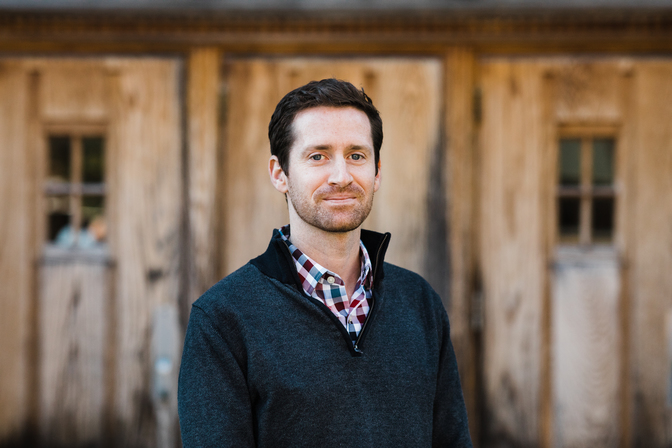
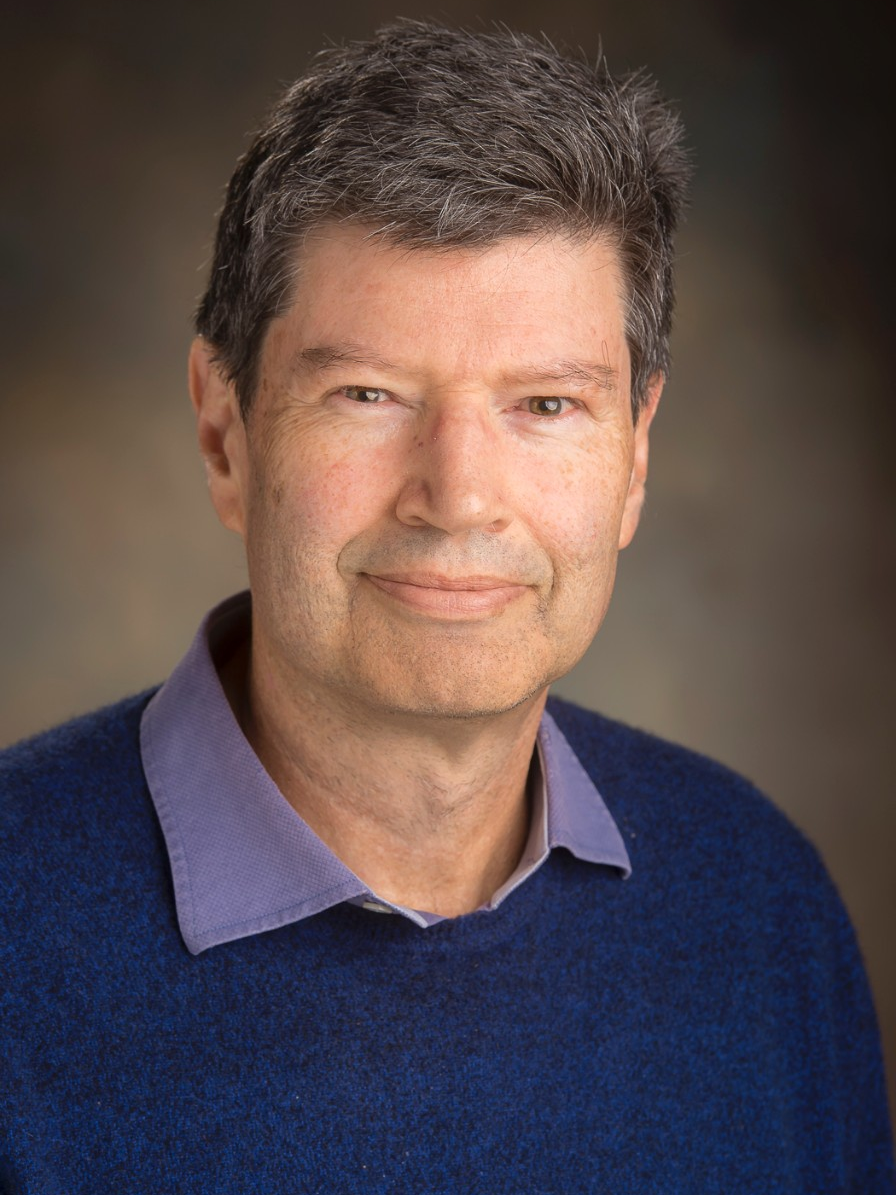
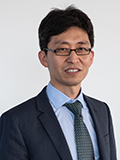
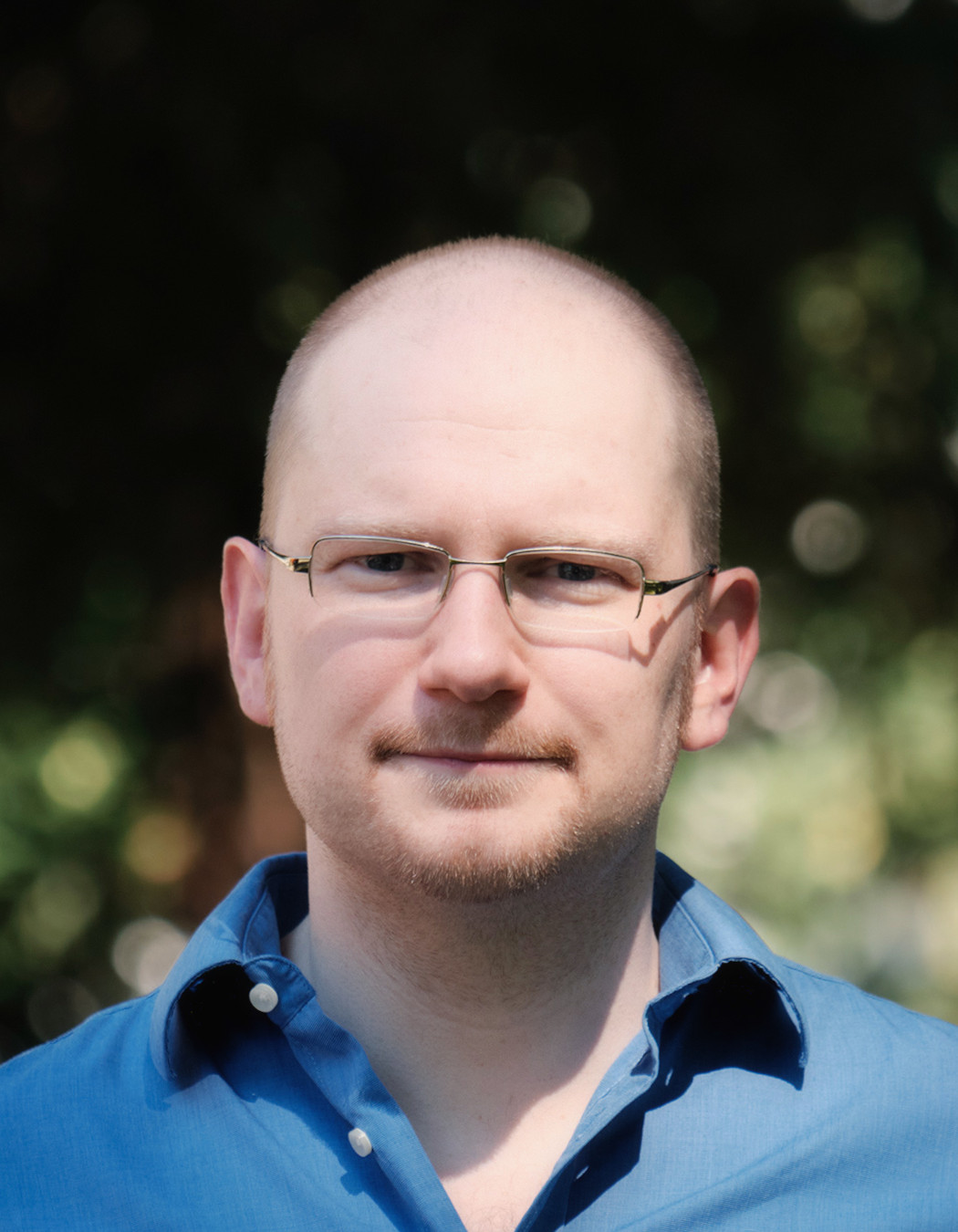
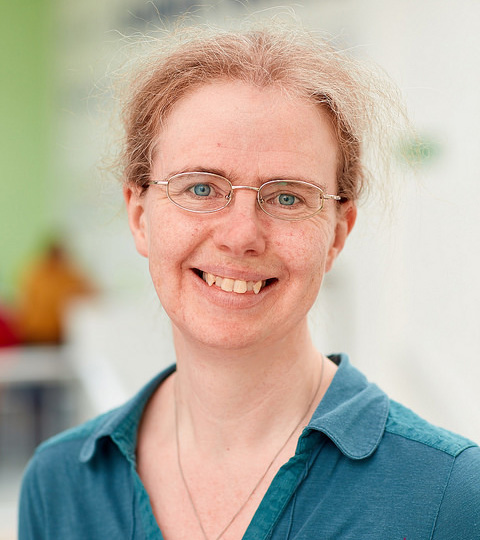
Jos Roerdink is a Professor at the Bernoulli Institute within the Faculty of Science and Engineering at the University of Groningen , Netherlands. His research spans multiple disciplines including computer science, mathematical morphology, data visualization, and neuroscience, with a focus on algorithm development and applications in medical imaging and astronomical data analysis.
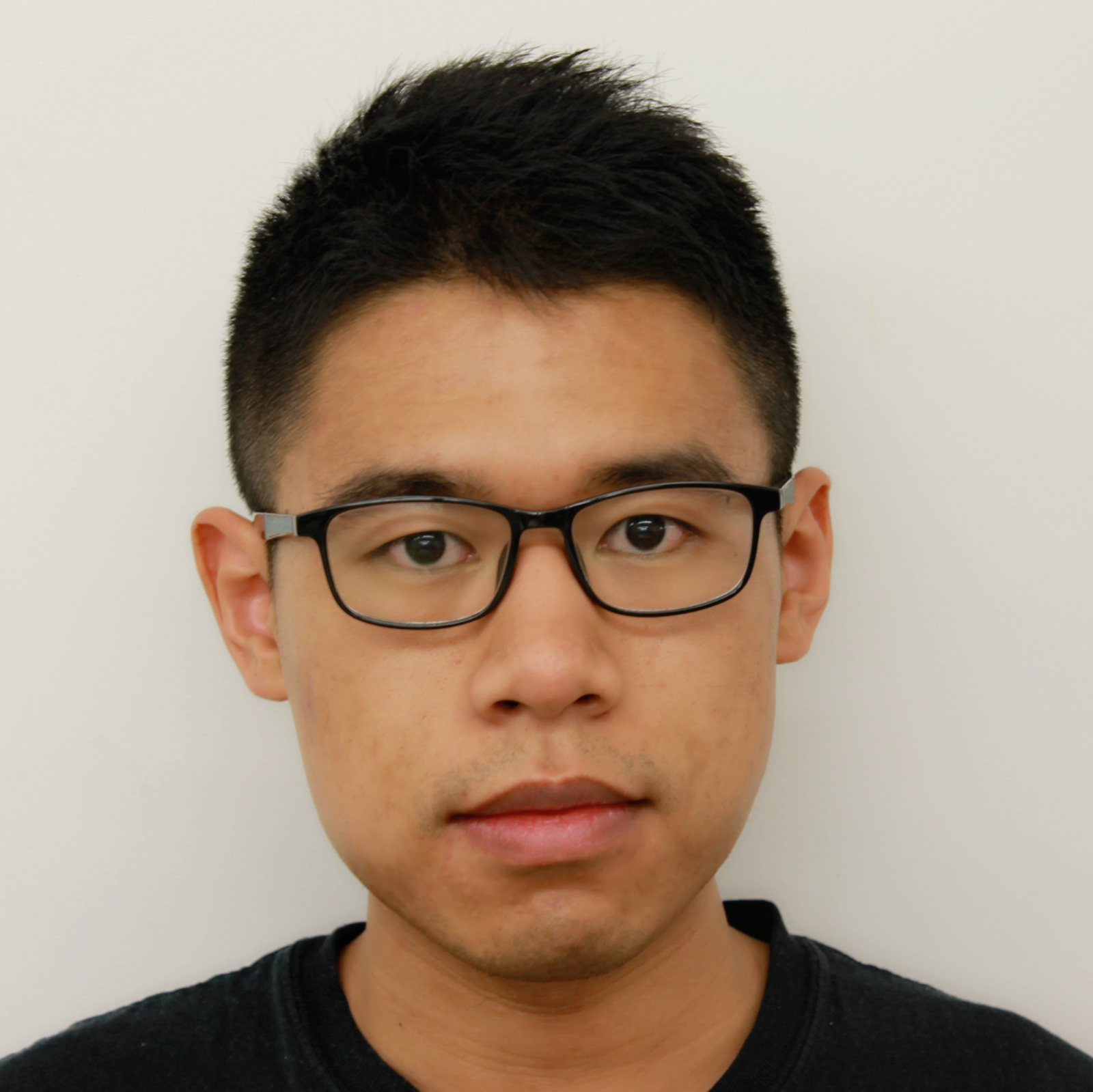
Wei Hu is an Assistant Professor in the Department of Computer Science and Engineering at the University of Michigan's College of Engineering. His research focuses on uncovering the theoretical and scientific foundations of deep learning, aiming to open the black box of neural networks through a combination of theoretical and empirical approaches. Dr. Hu received his PhD in Computer Science from Princeton University, where he was advised by Sanjeev Arora. Prior to his PhD, he completed his undergraduate studies at Tsinghua University as a member of the prestigious Yao Class. He also served as a FODSI postdoc at UC Berkeley before joining the University of Michigan faculty. His research interests center around understanding the fundamental mechanisms of deep learning, particularly focusing on training dynamics, generalization properties, and the theoretical underpinnings of neural networks. His work spans both clean, controlled problems and complex real-world models, with recent emphasis on transformer architectures, grokking phenomena, and the implicit biases in neural network training. Analysis of his recent publications reveals a strong focus on theoretical deep learning with particular attention to transformer models, grokking phenomena, and generalization theory. His work bridges the gap between theoretical understanding and practical deep learning applications, with significant contributions to understanding abrupt learning transitions, representation learning, and the dynamics of neural network training. AAAI New Faculty Highlights, 2024 Google Research Scholar Award, 2023 Siebel Scholar, 2021 Best paper award at ICML Workshop on Modern Trends in Nonconvex Optimization for Machine Learning, 2018 Gordon Y.S. Wu Fellowship, 2016 Gold medal (1st place), The 27th Chinese Mathematical Olympiad, 2012 Dr. Hu currently advises three PhD students: Pulkit Gopalani, Zhiwei Xu (co-advised with Yixin Wang), and Yongyi Yang. His research group has received substantial funding through awards including the Google Research Scholar Award. He teaches courses including Introduction to Machine Learning (EECS 445) and specialized topics in machine learning theory and large language models (EECS 598/CSE 598). His research group maintains an active presence in top machine learning conferences, with publications appearing regularly in venues such as NeurIPS, ICML, ICLR, and others. The group's work has gained significant recognition in the theoretical machine learning community for its rigorous approach to understanding deep learning phenomena.
Professor Dan Roche is a faculty member in the Computer Science Department at the United States Naval Academy . With a research focus on efficient algorithms for mathematical problems , he specializes in leveraging randomization techniques to enhance performance metrics like running time, space complexity, and communication costs . His work prominently features sparse polynomial computations and applied cryptography for secure cloud computing and mobile privacy . Recent publications highlight his contributions to oblivious data structures , sparse interpolation , and polynomial arithmetic . Notable works include Deterministic, Stash-Free, Write-Only ORAM (2017), ObliviSync (2017), and POPE: Partial Order Preserving Encoding (2016), reflecting trends in privacy-preserving algorithms and secure computation . His research spans symbolic computation , cryptography , and algorithmic complexity with specific attention to sparse and dense polynomial operations . Email: roche@usna.edu Location: Room 438 Hopper Hall, United States Naval Academy, Annapolis, MD 21402 Phone: (410) 293-6814
Amy Bastine is a Researcher at the School of Engineering within the ANU College of Systems & Society at the Australian National University. Her work focuses on advanced audio signal processing, acoustics, and machine learning applications in spatial audio environments. She is affiliated with the Information & Signal Processing cluster, emphasizing interdisciplinary research. Her research interests include room acoustic modeling, spatial audio capture using spherical microphone arrays, and developing neural network-based solutions for sound field analysis. She explores topics like active noise control, source localization in reverberant environments, and immersive audio technologies. Recent projects involve creating datasets for acoustic analysis and optimizing algorithms for real-world applications. Her publications from 2022-2025 highlight trends in physics-informed neural networks for sound field estimation, sparse representation techniques, and multi-channel ANC systems. These contributions aim to bridge theoretical acoustics with practical implementations in wearable devices and recording studios. No scientific awards or grants are explicitly listed in the provided texts. Her research has been applied to datasets like room impulse responses and spherical microphone array measurements. She collaborates on projects involving acoustic imaging, HRTF interpolation, and environmental noise mitigation strategies.
Dr. Joe Guinness serves as an Associate Professor and Director of Undergraduate Studies in the Department of Statistics and Data Science within Cornell University's College of Agriculture and Life Sciences (CALS). His research focuses on developing computationally efficient methods for analyzing large spatial-temporal datasets, with applications spanning earth sciences, environmental monitoring, epidemiology, and precision agriculture. His work bridges theoretical statistics with practical implementation through the development of the GpGp R package for Gaussian process computation. Dr. Guinness specializes in spatial statistics and Gaussian process modeling, particularly advancing Vecchia approximations for scalable computation. His research addresses critical challenges in interpolating satellite data, modeling environmental processes, and developing statistical frameworks for large-scale datasets. Current projects include applications in climate change modeling, soil chemistry analysis, medical imaging, and wildlife disease surveillance, with emphasis on computational efficiency and accurate uncertainty quantification. His publication record demonstrates significant contributions to scalable spatial statistics, with recent work focusing on Vecchia approximations, Gaussian process learning, and applications to earth science problems. His research shows consistent progression toward more efficient computational methods while expanding into new application domains including epidemiology (chronic wasting disease modeling) and sports science (Vaporfly shoe impact analysis). Cornell Atkinson Academic Venture Fund (AVF) seed grant (2021) supporting vital interdisciplinary collaborations Dr. Guinness actively mentors doctoral students, currently advising Megan Gelsinger at Cornell while having graduated five PhD students from North Carolina State University. His research is supported by collaborative grants across multiple disciplines, including environmental science, agriculture, and public health initiatives. The GpGp R package he developed has become a standard tool for efficient Gaussian process computation in spatial statistics. His research group develops computational frameworks for analyzing massive spatial datasets, with particular emphasis on earth science applications requiring innovative approaches to handle satellite observations, climate model output, and environmental monitoring data. Current projects integrate statistical methodology development with practical implementation for real-world environmental challenges.
Eugene Belilovsky is an Assistant Professor in the Department of Computer Science and Software Engineering at Concordia University. His research focuses on machine learning, computer vision, optimization algorithms, and their applications in medical imaging and federated learning. He explores topics such as continual learning, model merging, and bias mitigation in deep learning systems. His work bridges theoretical advancements with practical applications, including healthcare diagnostics and efficient training strategies for large models. Belilovsky's recent publications emphasize innovative methods like MuLoCo for inner optimizer design, FairDropout for enhancing minority group generalization, and techniques to scale multi-task learning with sparse masks. His studies on federated learning explore incentive mechanisms for decentralized systems and robust pre-training of large language models. His contributions to 3D reconstruction and motion prediction highlight interdisciplinary applications in computer graphics and generative models. His research trends reflect a strong emphasis on improving model efficiency, fairness, and adaptability across diverse domains. While no scientific awards are explicitly listed, his prolific publication record underscores his impactful contributions to AI and machine learning.
Michael Monagan is a Professor in the Department of Mathematics at Simon Fraser University (SFU), part of the Faculty of Science. He holds a Ph.D. from the University of Waterloo (1990) and is a leading researcher in Computer Algebra and Symbolic Computation. His work focuses on polynomial algebra, parallel algorithms, and the design of computer algebra systems, particularly Maple. Monagan has developed foundational algorithms for polynomial GCD, factorization, and sparse interpolation. Research interests include computational algebra, probabilistic algorithms, algebraic simplification, and high-performance computing. He leads SFU's Computational Algebra Group (CAG) and has collaborated on projects like NSERC grants for polynomial GCD and factorization algorithms. Monagan teaches courses in calculus, computer algebra, and algebraic geometry. Monagan has advised numerous graduate students and supervised undergraduate research in areas like Hensel lifting, sparse interpolation, and polynomial systems. He has authored over 100 articles, with recent work on black box GCD algorithms, transposed Vandermonde solvers, and parallel polynomial multiplication. His contributions to Maple and theoretical computer algebra have been internationally recognized. Key collaborations include the Magma Group (University of Sydney) and Maplesoft through NSERC grants. Monagan's work bridges theory and practice, emphasizing efficient algorithm design and implementation.
Viviane Pasqui is a Lecturer and researcher at Sorbonne Université, affiliated with the Institute of Intelligent Systems and Robotics (ISIR), where she is a member of the ASIMOV research team. Her work focuses on assistive and rehabilitation robotics, particularly technologies for elderly support and mobility assistance. Her research interests include assistive robotics, rehabilitation engineering, human-robot interaction, smart walkers, postural stability, gait analysis, and gerontechnology. She has conducted extensive research on mobility assistance devices, including sit-to-stand support systems and intelligent walking aids, with an emphasis on user-centered design and clinical validation. The 15 most recent publications highlight a consistent focus on robotic assistance for rehabilitation and elderly care, with recurring themes in human motion modeling, transparency in control, real-time monitoring, and evaluation of assistive devices. Her work integrates robotics, biomechanics, and clinical insights to develop practical solutions for mobility challenges. Scientific Awards: No scientific awards mentioned in the provided text. Advising and Grants: There is no mention of students, advising roles, or research grants in the provided information. However, her long-standing collaboration with multidisciplinary teams suggests active participation in funded research projects, particularly in robotics and biomedical engineering. Labs and Teams: Viviane Pasqui is a core member of the ASIMOV team at ISIR, which specializes in assistive robotics and human-robot interaction. The team develops innovative robotic systems for rehabilitation and daily living support, combining engineering, medical, and human factors expertise.
Mingshuai Chen is an Assistant Professor at Zhejiang University, leading the Formal Verification Group. He previously held a postdoctoral position at RWTH Aachen University. Education: Ph.D. in Computer Science from Institute of Software, Chinese Academy of Sciences (2019) B.Sc. in Computer Science from Jilin University (2013) His research focuses on formal verification, synthesis, programming theory, and probabilistic/quantum systems. Notable contributions include Exact Bayesian Inference and Lower Bounds for Probabilistic Programs . Scientific awards include: NSFC Excellent Young Scientists Fund Program (Overseas) Distinguished Paper Award at ATVA 2018 Best Paper Award at FMAC 2019 CAS-President Special Award (2019) 2nd Prize@ChinaSoft'24 He serves on program committees for OOPSLA 2026, TACAS 2026, and multiple other conferences.
Professor Dapeng Yu is a leading academic in river dynamics and flood modeling, holding the position of Professor of River Dynamics at Loughborough University since 2019. He co-founded Previsico, an insurtech company providing real-time flood forecasting solutions, and serves as its Chief Scientific Officer. His professional roles include Visiting Professor at East China Normal University (2017–2020), Editorial Board member for Frontiers of Earth Science and Journal of GeoVisualisation and Spatial Analysis , and Enterprise Director at Loughborough’s Department of Geography. Yu’s research focuses on urban flood modeling, emergency response during floods, and climate change impacts. Key interests include flood inundation dynamics, flood forecasting systems, and vulnerability assessment of critical infrastructure. His work integrates computational methods (e.g., deep learning, hydrodynamic modeling) with geospatial analysis to improve disaster resilience. Notable contributions include advancing surface water flood simulation techniques, evaluating emergency service accessibility during disasters, and modeling flood impacts on vulnerable populations. His research spans global regions, with case studies in China, the UK, and coastal cities. Yu has co-authored over 50 peer-reviewed articles, emphasizing interdisciplinary approaches to flood risk management and urban resilience. Professional service includes roles on EPSRC’s Peer Review College, NERC Grant Assessment Panel, and international advisory boards. His work bridges academia and industry, reflected in Previsico’s commercial flood prediction tools for insurers, governments, and humanitarian organizations.
Dr. Henrik Schumacher is a researcher in the work group on Harmonic Analysis led by Prof. Dr. Philipp Reiter at TU Chemnitz. His research focuses on geometric variational problems, numerical optimization, and differential geometry, with applications in computer graphics and computational mathematics. He holds a PhD in Mathematics from TU Chemnitz (2015) and a Master's in Mathematics from the same institution (2010), where his thesis explored generalized Seiberg-Witten equations. His work bridges pure and applied mathematics, including contributions to self-avoiding energies, fractional Sobolev spaces, and algorithmic optimization for geometric problems. Notably, he co-developed the Repulsive Curves and Surfaces frameworks for collision-aware modeling, recognized by the SIGGRAPH 2024 Best Technical Paper Award . He also contributes to software tools like CoBarS and Repulsor for polygon sampling and energy optimization. Active in academic outreach, Schumacher supervises student computer tutorials on topics such as Euler elastica, finite element analysis, and geometric evolution equations. His teaching emphasizes computational methods and interdisciplinary applications, including contributions to TU Chemnitz's new Data Science programs. Awards: SIGGRAPH 2024 Best Technical Paper Award Software: CoBarS, Repulsor, ConformalBarycenter, PardisoLink Grants/Projects: Collaborations on applied analysis, geometric optimization, and inverse problems Lab/Team Affiliation: Harmonic Analysis Group at TU Chemnitz Faculty of Mathematics.
Dr. Min Wan is an Assistant Professor in the Department of Electrical Engineering at Eindhoven University of Technology (TU/e). She holds a Master's degree in Optical Engineering from Beijing University of Technology (2017) and a PhD in Optical Imaging Techniques from University College Dublin (UCD, 2021). Prior to TU/e, she served as an Assistant Professor at UCD and held a visiting position there until 2029. Her research focuses on terahertz imaging systems, digital holography, subpixel displacement estimation, and biomedical applications of THz technology, contributing to UN Sustainable Development Goals related to education and innovation. Education: PhD in Optical Engineering, University College Dublin (2017-2021) Master's in Optical Engineering, Beijing University of Technology (2014-2017) Research Interests: Terahertz full-field imaging and tomography Optical imaging techniques for biomedical applications Subpixel motion estimation algorithms Digital holography and signal processing Optical system design and optimization Her work integrates advanced imaging modalities with computational methods, emphasizing practical implementations in terahertz systems. Recent Research Trends: Dr. Wan’s recent articles emphasize advancements in terahertz full-field imaging, beam illumination optimization, and subpixel tracking algorithms. Her 2025 studies on galvanometric illumination and Bai distribution sampling highlight innovations in imaging precision and signal analysis, while 2024 work on diffractive neural networks explores optical computing applications. Awards & Grants: No specific awards listed, but her research has received significant citations and funding for projects like the RECENTRE program (2024). Labs & Teams: Active in TU/e’s Electrical Engineering labs focusing on terahertz systems and optical imaging. Collaborates internationally on projects involving THz tomography and biomedical applications.
Yuanxiang Yang is a Doctoral Researcher and Doctoral Student affiliated with the School of Engineering , with primary research roles in the Spatial Planning and Transportation Engineering department and secondary involvement in the Department of Built Environment . Their work aligns with the UN Sustainable Development Goals, focusing on road engineering and traffic control solutions to enhance urban mobility and safety. Research interests include vehicle trajectory reconstruction, dynamic traffic modeling, and crash analysis. They develop interdisciplinary methods like hybrid data fusion approaches, latent class clustering, and numerical simulations to address complex transportation challenges. Recent studies emphasize improving traffic management through predictive algorithms and analyzing risks associated with risky driving behaviors and scooter-style electric bicycle crashes. Publications span 2024 and 2025, with a trend toward data-driven strategies in transportation engineering. Notable contributions include frameworks for vehicle trajectory reconstruction, lane-changing congestion mitigation strategies, and safety analyses of delivery rider behaviors. These works often appear in peer-reviewed journals like Transportmetrica A: Transport Science and Journal of Transportation Engineering . No scientific awards, grants, or formal advisees are mentioned. Collaborations with international researchers are indicated but not detailed. Specific laboratories or teams are not specified in the provided information.
Professor Elaine Crooks is a faculty member at Swansea University's School of Mathematics and Computer Science within the Faculty of Science and Engineering. Based at the Computational Foundry on Bay Campus, her research focuses on nonlinear partial differential equations with applications spanning materials science, ecology, and image processing. She specializes in singular limits of PDEs, reaction-diffusion systems, travelling waves, and geometric methods for feature detection in images. Her research investigates fundamental mathematical phenomena including: Asymptotic behavior of reaction-diffusion-convection systems Front propagation in anisotropic media Spatial segregation in population dynamics Compensated convex transforms for geometric singularity detection Phase transitions in liquid crystals Ecological invasion modeling Analysis of her recent publications reveals strong emphasis on: nonlinear diffusion phenomena, theoretical foundations of convex transforms, travelling wave solutions, and applications of PDEs to biological systems. Her work consistently bridges theoretical mathematics with practical applications in materials science and computational imaging. Professor Crooks actively supervises PhD students in areas including reaction-diffusion systems, mathematical neuroscience, and wave propagation analysis. She teaches foundational mathematics courses including Introduction to Analysis 1 & 2, offered in both English and Welsh.
Ralf Hielscher is a Professor at the Institute of Applied Analysis within the Faculty of Mathematics and Computer Science at the Technical University of Freiberg, Germany. His research lies at the intersection of applied mathematics, materials science, and imaging, with a strong focus on crystallographic texture analysis and electron backscatter diffraction (EBSD). He is a core developer and leading figure behind MTEX, a widely used open-source MATLAB toolbox for texture and orientation data analysis. Research Interests: His work centers on mathematical methods for analyzing crystallographic orientations, including spherical harmonic transforms, kernel density estimation on rotation groups, manifold-valued data processing, and inverse problems in tomography and texture reconstruction. He develops algorithms for parent grain reconstruction, orientation mapping, denoising, and visualization of microstructures. The recent publications reveal a consistent trend in advancing computational techniques for EBSD and texture analysis, particularly through the MTEX platform. His work bridges theoretical mathematics with practical materials characterization, enabling more accurate and efficient analysis of polycrystalline materials across geology, metallurgy, and engineering. Email: ralf.hielscher@math.tu-freiberg.de Scientific Contributions: While no formal awards are listed, his extensive publication record in high-impact journals such as SIAM Journal on Imaging Sciences , Journal of Applied Crystallography , and Inverse Problems underscores his significant contributions to the field. He has developed foundational algorithms now embedded in MTEX, which is used globally by researchers in materials science and geology. Teaching and Advising: He teaches courses such as Function Theory, Analysis 3, and Mathematics for Engineers. Although specific students are not mentioned, his leadership in MTEX and numerous collaborative publications suggest he mentors researchers and contributes to training the next generation of scientists in computational materials analysis. Labs and Teams: He is part of the team at the Institute of Applied Analysis and leads research efforts related to signal and image processing in crystallography. The MTEX project serves as a virtual research platform involving international collaborators in Germany, France, the UK, and beyond, facilitating open science in texture analysis.