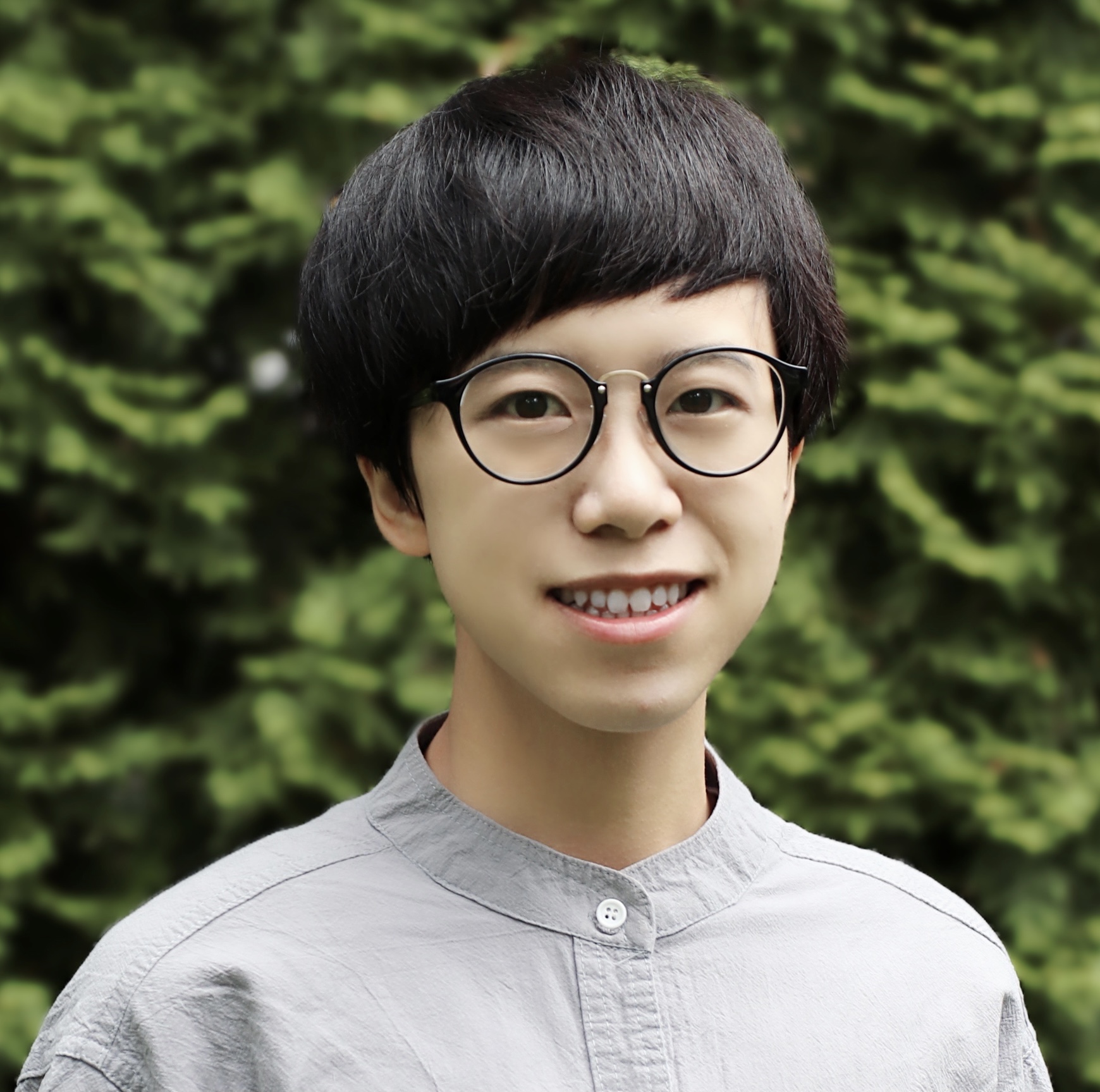
Wen-shin Lee is a Lecturer at the University of Stirling's Division of Computing Science and Mathematics, specializing in computational mathematics and signal processing. Her research focuses on exponential analysis, sparse interpolation, and symbolic-numeric computation. She holds a PhD from North Carolina State University and has held positions at institutions like the University of Antwerp and INRIA. Current affiliations include the Computational Mathematics and Optimisation Research Group (COMMON). Education: Bachelor’s in Mathematics, National Taiwan University PhD in Computational Mathematics, North Carolina State University Research Interests: Her work bridges computer algebra and signal processing, emphasizing applications like antenna positioning, radar imaging, and texture decomposition. Recent trends include sub-sampled exponential analysis, validated algorithms, and high-resolution signal reconstruction from sparse data. Labs/Groups: Active in the COMMON group at the University of Stirling and collaborates on the EXPOWER project (Exponential Analysis Empowering Innovation).
Remco W. van der Hofstad is a Full Professor and Chair of Probability at the Department of Mathematics and Computer Science, Eindhoven University of Technology (TU/e). He also serves as Scientific Director of EURANDOM (Dutch center for statistics, probability theory, and stochastic operations research) and co-directs the 'Random Spatial Structures' program at EURANDOM. His research focuses on probability theory, statistics, and their applications to complex networks including social media systems, with specific interests in percolation, random graphs, self-interacting random processes, and interdisciplinary applications in electrical engineering, computer science, and theoretical physics. Key Affiliations: Eindhoven University of Technology (TU/e) EURANDOM Gravitation Program NETWORKS Platform Wiskunde Nederland (spokesman) Research Highlights: He investigates probabilistic models for complex networks, combining theoretical mathematics with real-world applications. His work connects statistical physics concepts (e.g., percolation theory) with network science challenges in areas like glioma patient neuroimaging and pandemic transmission modeling. Scientific Recognition: Recipient of prestigious awards including the Prix Henri Poincaré (2003), Rollo Davidson Prize (2007), and NWO VIDI/VICI grants. His research contributes to UN Sustainable Development Goals related to scientific innovation. Collaborative Leadership: Active in interdisciplinary projects like the Gravitation Program NETWORKS and the Dutch Mathematics Platform. He also contributes to public dissemination through roles as Editor-in-Chief of the Network Pages community website.
Shu-Cherng Fang is a prominent academic in the fields of Operations Research , Optimization , and Machine Learning . His work spans theoretical advancements and practical applications in Mathematical programming Supply chain network design Fuzzy systems Support vector machines Algorithm development . While specific institutional affiliations and academic rank are not explicitly stated in the provided text, his extensive publication record in high-impact journals indicates a faculty-level role. Research interests include optimization under uncertainty , supply chain logistics , and kernel-free machine learning models . Key trends in recent articles focus on fourth-party logistics (4PL) network design distributionally robust optimization for machine learning mathematical modeling of customer behavior stochastic programming . Co-authors frequently include Min Huang, Zhibin Deng, Jian Luo, and Wenxun Xing, reflecting sustained collaborations. Articles emphasize interdisciplinary approaches combining fuzzy logic , game theory , and computational geometry to solve complex decision-making problems.
Prof. Hans-Joachim Bungartz is a Full Professor of Scientific Computing at the Technical University of Munich (TUM), leading the Department of Computer Science. He holds the TUM School of Computation, Information and Technology affiliation. His career includes roles at the University of Augsburg and Stuttgart, and he has been at TUM since 2004. He specializes in scientific computing, focusing on numerical algorithms, HPC software, and applications in fluid mechanics, plasma physics, and quantum simulations. Education: Bachelor/Master in Mathematics, Informatics, and Economics (TUM, 1982–1989) PhD (1992) and Habilitation (1998) in Sparse Grids and Numerical Methods (TUM) Research Interests: His work spans adaptive grids, parallel computing frameworks (e.g., Peano), and interdisciplinary applications in computational engineering. He emphasizes bridging modeling, algorithms, and HPC infrastructure. Awards: ISC PRACE Award (2013) Bavarian Habilitation Award (1994) His contributions include over 150 publications and leadership roles in institutions like the Leibniz Supercomputing Center and the TUM Graduate School. Leadership: As Dean of the Informatics Department (since 2013) and Director of the TUM Graduate School, he shapes academic policies. He chairs key national/international bodies like the German Research Network (DFN) Executive Board (2011–2020).
Xiaoxiao Shaun Li is an Assistant Professor in the Department of Electrical and Computer Engineering at the University of British Columbia (UBC), with an adjunct position at Yale School of Medicine. She holds positions as faculty at the Vector Institute and is a Canada CIFAR AI Chair and Canada Research Chair (Tier II) in Responsible AI. Her research focuses on developing trustworthy and efficient machine learning systems, particularly in federated learning, medical imaging, and agentic AI. Dr. Li earned her Ph.D. from Yale University and completed postdoctoral work at Princeton University. Education: B.S. (Honors), Zhejiang University, China, 2015 Ph.D., Yale University, 2019 Research Interests: Trustworthy AI foundational theories and algorithms Federated learning frameworks for privacy-preserving applications Agentic AI systems with robust decision-making Medical imaging analysis and fairness benchmarking Interpretable neuroimaging models for brain disorder prediction Grants & Awards: Canada Foundation for Innovation Grant (PI, 2023) UBC Green Lab Fund (PI, 2023) Canada Research Chair Tier II (2022–2027) Labs & Teams: Dr. Li leads the Trusted and Efficient AI (TEA) Lab at UBC, focusing on next-generation AI systems. The lab collaborates with industry partners like Vector Institute and academic institutions globally to bridge research and clinical applications.
Maggie Zhu (Fengqing Maggie Zhu) is an Assistant Professor at Purdue University's Department of Electrical and Computer Engineering, College of Engineering. She holds a Ph.D. in Electrical and Computer Engineering from Purdue (2011) and has focused on image processing, video compression, computer vision, and computational photography since joining the faculty in 2015. Ph.D. in Electrical and Computer Engineering (2011) Assistant Professor at Purdue (2015–present) Staff Researcher at Huawei Technologies (2012) Her research bridges machine learning with practical applications in image compression , 3D reconstruction , and nutrition analysis , particularly through wearable technologies and edge-cloud systems. Recent work includes class-incremental learning for 3D perception and low-rank adaptation for efficient vision models. Scientific awards include: Huawei Certification of Recognition (2012) NIH mHealth Summer Institute Participant (2011) Charles C. Chappelle Graduate Fellowship Motorola Foundation Fellowship She has contributed to food portion estimation using monocular imaging , neural video compression , and domain adaptation methods, with publications spanning learned compression techniques and healthcare applications. Recent grants focus on technology-enabled dietary assessment and collaborative computing frameworks.
Flavio SARTORETTO is an Associate Professor in Scientific Computing at Ca' Foscari University of Venice. He holds a Mathematics degree from the University of Padua and has held academic positions at University of Padua (1982-1992) and Sapienza University of Rome (1992-1993) before joining Ca' Foscari in 1993. His research focuses on numerical analysis, computational methods, and interdisciplinary applications including environmental modeling, cognitive processes, and assistive technologies. Key research areas include numerical solutions of PDEs, meshless methods, EEG signal analysis, and e-learning tools for impaired individuals. He has participated in major research projects such as EC Network (1992-1995), PRIN initiatives (1997-2010), and contributed to software development for geomechanical models and air quality systems. His work spans computational fluid dynamics, robotics applications, and cognitive studies. Recent publications highlight advancements in mesh refinement strategies, robotic assistive devices, and spatial cognition research. He has reviewed for prestigious journals and served in academic committees for state examinations and international conferences. He maintains active involvement in academic service, including roles in evaluation committees and contributions to professional societies like SIAM and CICAP.
Dr Bertrand Gauthier is a Lecturer at the School of Mathematics, Cardiff University , and a member of the Statistics and Data Science Research Group. His work bridges mathematics and data science, focusing on sampling-based approximation, spectral methods, and computational strategies for large-scale machine learning and uncertainty quantification. Current research: Sampling strategies, kernel methods, sparse approximation Past affiliations: KU Leuven (2015-2016), CNRS - Université de Nice (2012-2014), Université de Saint-Étienne (2007-2011) Research Interests include: Statistical learning and approximation theory Kernel-based modeling and integral operator approximation Low-rank matrix techniques and particle-flow methods Publications highlight his work on Nyström sampling optimization, kernel embedding of measures, and spectral decomposition for IMSE-optimal designs, spanning journals like SIAM Journal on Mathematics of Data Science and Positivity . Collaborations include researchers such as Matthew Hutchings and Kirstin Strokorb. Scientific Awards : Fellow of The Higher Education Academy Supervision includes postgraduate students Harry Bond, Alexandra Zverovich, and past supervisees like Matthew Hutchings (2024) and Michela Corradini (2024). His teaching covers Multivariate Data Analysis and Computational Statistics at undergraduate and postgraduate levels. Labs/Teams : Statistics and Data Science Research Group, Cardiff University School of Mathematics.
Dr.-Ing. Anna Krause is a researcher at the Chair of Data Science (Informatik X) within the Faculty of Mathematics and Computer Science at the University of Würzburg. She leads the Deep Learning for Dynamical Systems Group and has been actively involved in teaching at the university since 2019, including courses on Machine Learning for Time Series Analysis and Data Mining. Doctoral degree in Electrical Engineering (2019), University of Hannover Diploma in Electrical Engineering (2009), Technical University Dresden Her research focuses on Environmental Sensing and Time Series Analysis , particularly on enhancing physics-based models using machine learning techniques for meteorological applications and sparse sensor networks. She has made significant contributions to explainable AI, climate modeling, and fraud detection systems. Anna's recent publications demonstrate expertise in climate modeling (ConvMOS, ICLR 2024-2025), physics-informed neural networks (TaylorPDENet, ECMLPKDD 2023), and fraud detection (MIDAS workshops, ECMLPKDD 2020-2023). She actively contributes to conferences as organizer and PC member, including ECMLPKDD and ICLR workshops. Scientific Awards Best ML Innovation Award (2020) for Deep Learning in Climate Modeling Best Student Paper Award (2020) for Multi-Task Land Use Regression Best Paper Award (2020) for Financial Fraud Detection with INALU The DynaBench dataset introduced in 2023 provides benchmark tools for learning dynamical systems from low-resolution data. Her work combines theoretical advancements with practical implementations, including edge computing applications for beekeeping monitoring systems.
Wenying Ji is an Assistant Professor in the Sid and Reva Dewberry Department of Civil, Environmental, and Infrastructure Engineering at George Mason University's Volgenau School of Engineering. His research focuses on the integration of advanced data analytics, complex system simulation, and construction management to enhance decision-support processes in the Architecture, Engineering, and Construction (AEC) industry. Dr. Ji received his PhD in construction engineering and management from the University of Alberta, a master's degree from Texas A&M University, and a bachelor's degree from Southeast University. His research interests span several interconnected domains including construction engineering, infrastructure systems, disaster management, data analytics, and complex system simulation. Dr. Ji has developed innovative approaches that apply Bayesian methods and machine learning to solve critical problems in infrastructure resilience, particularly during and after natural disasters. His work emphasizes the integration of real-time data from social media and other sources to improve infrastructure restoration processes following extreme events. A significant portion of his research focuses on highway systems, flood management, and emergency response planning, with particular attention to equity considerations in infrastructure restoration. Analysis of Dr. Ji's recent publications reveals a clear progression toward increasingly sophisticated integration of data analytics with infrastructure engineering problems. His work shows a strong emphasis on Bayesian methods, machine learning applications, and spatiotemporal analysis for disaster management and infrastructure restoration. The research demonstrates practical applications for improving decision-making in construction management, particularly in contexts of uncertainty and emergency response. Dr. Ji's notable awards include: 2017 Outstanding Reviewer Award from ASCE's Journal of Computing in Civil Engineering 2018 ASCE outstanding reviewer award for ASCE Journal of Construction Engineering and Management Jeffress Trust Awards Program in Interdisciplinary Research (2019) WSC Outstanding Reviewer Award (2019, 16 out of 746 reviewers) Dr. Ji actively mentors PhD students including Yitong Li, Yudi Chen, Minjie Xia, and Yuzheng Xie, with several receiving awards for their research. His research group has secured significant funding, including an NSF grant in 2022 on 'Strengthening American Electricity Infrastructure for an Electric Vehicle Future.' He serves as Assistant Specialty Editor for the ASCE Journal of Construction Engineering and Management and regularly reviews for top journals in his field. Dr. Ji's research team collaborates with multiple institutions and participates in conferences such as the Winter Simulation Conference and ASCE International Conference on Computing in Civil Engineering.
Dr. Nurullah ACİR is a Lecturer in the Department of Soil Science and Plant Nutrition at Kırşehir Ahi Evran University. He holds a PhD (2014) and Master's (2010) in Soil Science from Gaziosmanpaşa University, alongside a BSc in Plant Production (2007). Current roles: Faculty Lecturer (2014–), Center Manager (2025–, Part-Time) Prior roles: Department Head (2014–2017, 2021–2024), Academician at Gaziosmanpaşa University (2010–2014) His research focuses on soil quality assessment , geospatial analysis , and land degradation mitigation in semi-arid and Mediterranean regions. He specializes in soil surveying, tillage system impacts, and soil-water conservation strategies, with a strong emphasis on sustainable agricultural practices and desertification prevention. Recent publications highlight his work on machine learning applications for soil fertility prediction, clay mineral spatial variability , and comparative soil quality studies across Turkey’s regions. His research integrates remote sensing, GIS, and analytical hierarchy processes to address salinity, carbon storage, and ecosystem service assessments. Scientific Awards : 2012-2013 Group Achievement Award in Engineering and Science, Gaziosmanpaşa University He has collaborated extensively with researchers like Prof. Hikmet Günal, Dr. İsmail Çelik, and Dr. Mesut Budak on projects funded by TÜBİTAK, TÜBA, and international agencies. His work spans soil conservation, tillage optimization, and environmental sensitivity mapping, with over 83 publications and a h-index of 16 (Google Scholar).
Michael J. Lindsey is an Assistant Professor in the Department of Mathematics at the University of California, Berkeley, and a Faculty Scientist at Lawrence Berkeley National Laboratory. His research focuses on computational methods driven by Numerical Linear Algebra , Optimization , and Randomization , particularly for High-Dimensional Scientific Computing in quantum many-body problems and applied probability. University : UC Berkeley (Assistant Professor since 2022) Lab Affiliation : Mathematics Group at Lawrence Berkeley National Laboratory Email : lindsey@berkeley.edu His work includes Semidefinite Relaxation for quantum and classical problems, Monte Carlo Sampling techniques, and Tensor Networks for high-dimensional functions. He has pioneered Variational Embedding theory with guaranteed energy bounds and scalable solvers for quantum systems. Recent publications span Quantum Chemistry , Machine Learning , and High-Dimensional Probability , with applications to Electronic Structure , Molecular Dynamics , and Optimal Transport . He received the 2024 Hellman Fellowship and the 2019 SIAM Student Paper Prize . Teaching includes graduate and undergraduate courses in numerical analysis and applied mathematics at UC Berkeley and New York University. He also organizes the HDSC Seminar on high-dimensional scientific computing.
Zafeirakis Zafeirakopoulos is a researcher at the National and Kapodistrian University of Athens (Greece) in the ELIDEK project led by Prof. Maria Chlouveraki. His academic career includes roles as an assistant professor at Gebze Technical University (2016-2022) and postdoctoral research at University of Athens (Greece), Galatasaray University (Turkey), and University of Geneva (Switzerland) under the Eccellenza project of Prof. Jehanne Dousse. PhD in RISC - Research Institute for Symbolic Computation (supervised by Prof. Peter Paule and Prof. Matthias Beck) Current affiliations: Mathematics department of National and Kapodistrian University of Athens Service roles: Information Director of ACM SIGSAM, Associate Editor of ACM CCA His research focuses on symbolic computation, discrete mathematics, and computational geometry. He has developed algorithms for parametric curve topology (PTOPO) and linear Diophantine systems (Polyhedral Omega), emphasizing efficiency and geometric interpretations. Recent work involves Julia/Maple implementations for practical applications. Publication trends highlight interdisciplinary work in symbolic algorithms, polyhedral geometry, and combinatorial optimization. He actively contributes to international conferences like ACA 2025 (co-organizer) and SCALE 2022.
Willi Rath is a Data Scientist at the GEOMAR Helmholtz Centre for Ocean Research in Kiel, Germany, with a focus on Ocean Dynamics. His research bridges marine science and data science, emphasizing Lagrangian methods, air-sea interactions, and biophysical simulations. Rath holds a PhD in Oceanography from Christian-Albrechts-Universität Kiel (2013) and a Diploma in Physics from Humboldt-Universität Berlin (2009). His work spans interdisciplinary collaborations, leveraging machine learning and geospatial analysis to address climate dynamics, disease dispersal in marine ecosystems, and oceanic current variability. Key projects include WarmWorld ELPHE , MarDATA , and OceanParcels , which integrate data science with ocean modeling for climate prediction and marine resource management. Rath’s recent publications highlight his contributions to understanding the Atlantic Meridional Overturning Circulation (AMOC), tropical Atlantic wind forcing, and deep-sea larval connectivity. His methodology incorporates advanced computational tools like echo state networks and metamorphic testing to enhance model transparency and reliability in climate research.
Prof. Dr. Kiran Varanasi serves as a Professor in Virtual and Extended Reality at the Faculty of Computer Science and Media, Leipzig University of Applied Sciences. His research focuses on 3D shape processing, real-time facial animation, and convolutional neural network applications in computer vision. University: Leipzig University of Applied Sciences School: Faculty of Computer Science and Media Academic Rank: Professor Research Interests: Varanasi's work bridges virtual reality , machine learning , and interactive systems . Key areas include: 3D reconstruction using deep learning Facial animation pipelines Light field data processing Surface defect classification with CNNs Interactive character control Publication Trends (2018–2021): His recent articles emphasize monocular 3D reconstruction , real-time feature extraction , and immersive VR environments , often leveraging convolutional networks and geometric warping techniques. Advising and Grants: No specific students or advisory roles are listed in the provided text. The faculty participates in collaborative projects like website redesign for the Egyptian Museum, though Varanasi's direct involvement isn't specified. Labs and Teams: The faculty includes multimedia labs and research groups in digital transformation, but Varanasi's direct affiliations with these units are not explicitly stated.