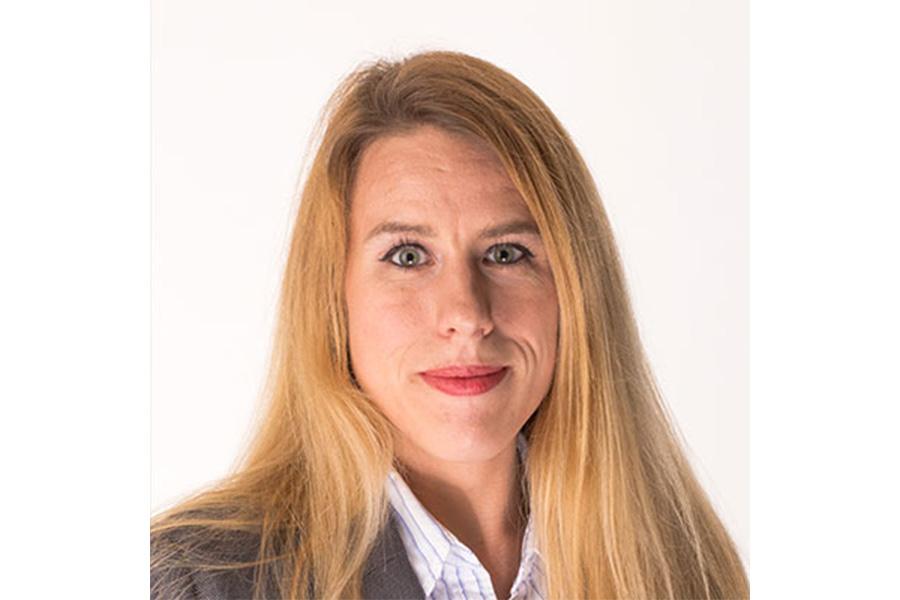
Karen Gunderson is an Associate Professor in the Department of Mathematics at the University of Manitoba's Faculty of Science. Her research spans graph theory, combinatorics, random graphs, percolation, hypergraphs, and extremal combinatorics. Research Focus : Graph theory, combinatorics, random graphs, percolation, hypergraphs, extremal combinatorics Academic Role : Associate Professor, Acting Associate Head Graduate Contact : Karen.Gunderson@umanitoba.ca , karen.gunderson@umanitoba.ca Her work includes bootstrap percolation , random geometric graphs , and extremal hypergraph problems , with applications in network modeling and probabilistic combinatorics. Recent publications focus on adversarial burning densities, Erdos-Ko-Rado robustness, and Turán numbers in switching contexts. Academic Leadership : Co-organizer of the University of Manitoba Combinatorics Seminar and key organizer for the 2023 CanaDAM conference and Movement & Symmetry in Graphs retreat.
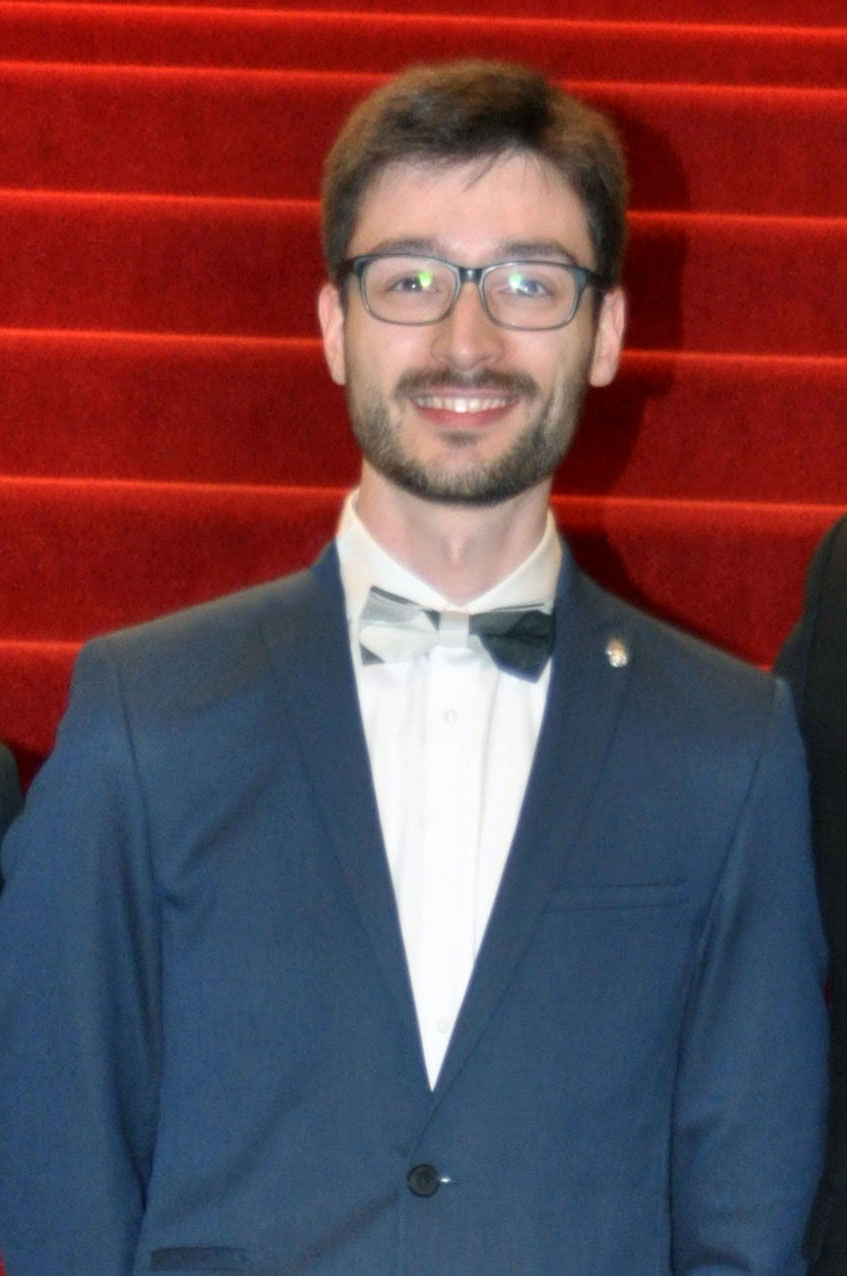
Marta Lazzaretti is a Research Fellow at the Department of Mathematics (DIMA) of the University of Genoa. Her work focuses on inverse problems in imaging, numerical analysis, and optimization algorithms in non-standard functional spaces. Affiliation: Department of Mathematics, University of Genoa Academic Rank: Research Fellow Research Interests: Specializing in regularization techniques and numerical optimization, her research spans: Off-the-grid methods for Poisson inverse problems Banach space formulations for geophysical data inversion Stochastic gradient descent in variable exponent Lebesgue spaces Dual descent regularization algorithms Publication Trends: Recent work emphasizes non-Hilbertian optimization frameworks (2023-2025), combining stochastic methods with deterministic regularization for imaging and subsoil inversion applications. Collaborations include Claudio Estatico, Luca Calatroni, and Giuseppe Rodriguez.
François Pirot is an Associate Professor (Maître de Conférences) at Université Paris-Saclay since September 1, 2021. He conducts research at the LISN laboratory within the GALaC team and teaches at the Faculty of Science of Orsay. PhD in Mathematics (Radboud University) and Computer Sciences (Université de Lorraine), 2019 Postdoctoral experience: ULB (2019), G-SCOP (2019-2020), Inria Sophia Antipolis (2020-2021) His research focuses on graph coloring problems in diverse contexts such as graph powers, locally sparse graphs, and distributed algorithms, utilizing probabilistic methods and connections to bio-informatics through circular codes. He has advanced bounds for h -conflict-free coloring, acyclic coloring, and dichromatic numbers in oriented graphs, with applications to minor-closed families and geometric group theory. Scientific contributions include: Asymptotically tight bounds for chromatic numbers in sparse graphs Efficient fractional coloring algorithms for K_t-minor-free graphs Structural analysis of comma-free and mixed circular codes in genetic alphabets Charles Delorme Prize for outstanding thesis in Graph Theory (2019) Collaborations span institutions like ULB, G-SCOP, Inria, and cross-disciplinary fields from computer science to mathematical biology.
Jean-François CHASSAGNEUX is a Full Professor in Finance at Université Paris, holding a permanent position at CREST (Center for Research in Economics and Statistics). His academic career focuses on the intersection of probability theory, numerical analysis, and financial mathematics, with particular expertise in backward stochastic differential equations and their applications to financial modeling. His research interests span Applied Probability, Financial Mathematics, Numerical Analysis, Stochastic Analysis, Backward Stochastic Differential Equations (BSDE), Large Population Stochastic Control, Non-linear pricing methods, and Markets with imperfections . His work bridges theoretical mathematics with practical financial applications, particularly in derivative pricing, risk management, and sustainable finance. CHASSAGNEUX has developed novel numerical methods for solving complex financial models, including probabilistic approaches to non-linear partial differential equations and advanced techniques for hedging problems. His publication record demonstrates consistent contributions to top journals in mathematics and finance, with a recent focus on sustainable finance applications including carbon markets and impact investing. His collaborative work with researchers like D. Crisan, G. Pagès, and A. Richou has significantly advanced the field of probabilistic numerical methods for financial engineering. As an educator, CHASSAGNEUX teaches advanced courses in Financial Mathematics (APM_4FI02_AE) and Numerical Methods in Financial Engineering (APM_5FI10_AE), training the next generation of quantitative finance professionals. His teaching combines theoretical foundations with practical computational techniques essential for modern financial engineering.
Miriam Schulte is a Professor at the Institute for Parallel and Distributed Systems (IPVS) at the University of Stuttgart . As Dean of Studies SimTech , she leads academic programs in simulation technology. Her research focuses on high-performance computing , multi-physics simulations , and scientific software development , with significant contributions to coupling libraries like preCICE and biophysical frameworks like OpenDiHu . Key Research Areas: High-Performance Computing (HPC) Multi-physics and Fluid-Structure Interaction (FSI) Sparse Grids and Hierarchical Numerical Methods Machine Learning in Simulation Software Parallel and GPU-Accelerated Algorithms Advising: Guided student projects on quantum neural networks , GPU-optimized sparse grids , and SYCL-based HPC frameworks . Coordinated SimTech Research Modules and IPVS/SGS team initiatives. Software Leadership: Maintains preCICE (coupling library for multi-physics) Develops OpenDiHu (neuromuscular simulations) Advances PLSSVM (parallel SVM library) and SG++ (sparse grids) Her recent publications (2022–2025) emphasize machine learning integration with multi-physics simulations , including groundwater heat pumps , brain tumor modeling , and neuromuscular EMG prediction . She actively promotes open-source software sustainability and collaborative research infrastructure at the University of Stuttgart.
Magnus Bruaset is a Professor and Director of the Software & AI Department at Simula Research Laboratory , with expertise in computational geosciences, numerical methods, and quantum computing. His work spans geological modeling, PDE solvers, and software development frameworks like Diffpack. Education : PhD in preconditioned iterative methods for elliptic problems (1992), Master's in preconditioning symmetric systems (1988). Research Interests : Focus on numerical analysis, GPU acceleration of geological simulations, stochastic modeling for uncertainty quantification, and quantum computing strategy. Key projects include Hamilton-Jacobi solvers, particle-based flow models, and contributions to digital contact tracing systems. Advising & Collaboration : Co-developed PhD training workshops for scientific communication and contributed to industrial-academic partnerships. Collaborated with institutions including ChevronTexaco, Wolfram Research, and University of Oslo.
Professor Jenny leads the Jenny Research Group at ETH Zürich, specializing in turbulent reactive flows, rarefied gas kinetics, and biomedical fluid dynamics. Her work bridges fundamental research with industrial applications in energy systems and fluid mechanics. Develops advanced turbulence models (TDDM, hybrid LES/RANS) for multi-scale flows Pioneers data assimilation frameworks for RANS simulations using adjoint methods Advances particle-based stochastic algorithms for fractured porous media transport Her recent publications emphasize adaptive time integration techniques, probabilistic modeling of non-linear transport phenomena, and optimized simulation tools for hydrogen storage systems. The group's methodological innovations focus on reducing computational costs while maintaining physical accuracy through novel regularization strategies. Key applications include combustion device optimization, high-pressure tank filling analysis, and fractured reservoir simulations. Current projects integrate machine learning with traditional CFD methods to address challenges in droplet clustering, flame surface density propagation, and supersonic spray dynamics. The research framework spans from direct numerical simulations of fundamental flow physics to industrial-scale hybrid modeling implementations.
Jean Mahseredjian is a Full Professor in the Department of Electrical Engineering at Polytechnique Montréal. He holds the NSERC/Hydro-Québec/RTE/EDF/OPAL-RT Industrial Research Chair in Multiscale Time Simulation of Transients in Large-Scale Electrical Networks and is a member of the Institute for Data Valorization (IVADO). His research bridges electrical engineering, numerical methods, and renewable energy integration. Research interests include: Advanced numerical simulation of power system transients Modeling and validation of wind farms and HVDC systems Electromagnetic compatibility and circuit theory Real-time simulation and parallel computing for large-scale grids His recent publications (2025-2026) demonstrate strong emphases on: EMTP simulation advancements for circuit breakers, cables, and converters Renewable integration challenges (wind/PV parks and battery systems) High-performance computing methods for power system analysis Awards and honors: IEEE Fellow (2013) for contributions to power system transients simulation Supervision and collaboration: Mentored 68 graduate students (31 PhD, 37 Master's) Leads industry-funded research with Hydro-Québec, RTE, EDF, and OPAL-RT Develops open-source simulation tools (e.g., Julia-based platforms)
Aditya Prakash is a Professor and Associate Chair for Academic Affairs at the School of Computational Science and Engineering, College of Computing, Georgia Institute of Technology. He is also core-faculty at the Center for Machine Learning (ML@GT) and the Institute for Data Engineering and Science (IDEaS) at Georgia Tech. His research has been supported by major organizations including NSF, CDC, DoE, NSA, and NEH, with tools developed by his group being used at ORNL, CDC, Walmart, and Facebook. Dr. Prakash received his Ph.D. in Computer Science from Carnegie Mellon University in 2012 and his B.Tech in Computer Science from IIT Bombay in 2007. His academic journey includes previous faculty positions at Virginia Tech before joining Georgia Tech. His research focuses on Data Science, Machine Learning, and AI with emphasis on big-data problems in networks and time-series, with applications spanning epidemiology, health, security, urban computing, and the web. His work combines theoretical analysis, algorithm development, and empirical studies on large-scale data to address challenges in understanding and managing dynamical mechanisms across natural, social, and technological systems. His recent publications demonstrate a strong trend toward integrating AI and machine learning techniques with epidemiological modeling, time-series forecasting, and network analysis. There's a clear focus on real-world applications, particularly in public health (including pandemic response), healthcare systems, and critical infrastructure. His work increasingly incorporates large language models, graph neural networks, and advanced uncertainty quantification methods. Facebook Faculty Award (2015) 'AI Ten to Watch' 2017 by IEEE NSF CAREER award (2018) Best Paper Award at AI4ABM workshop at ICML 2022 Best Poster Award at SDM 2024 1st place in the COVID-19 Symptom Data Challenge 2nd place in the C3AI COVID-19 Grand Challenge Dr. Prakash has advised numerous PhD students who have gone on to faculty positions at institutions like Virginia Tech, University of Michigan, and University of Iowa, as well as positions at leading tech companies including Google, Pinterest, and LinkedIn. His research has been supported by multiple NSF grants including a CAREER award, CDC funding, and industry partnerships. He leads the BEHIVE project, a multi-institution NSF initiative for developing the science of pandemic prevention and prediction. He is actively involved in the infectious diseases modeling MIDAS network and has developed tools that have been implemented in real-world settings including ORNL, CDC, Walmart, and Facebook. His group is currently working on impactful projects related to ML and data science for networks and time-series, including applications to COVID, hospital infections, campus mobility, and energy grids.
Niki Kilbertus is a Professor in the Department of Informatics at the Technical University of Munich and a group leader at Helmholtz AI (Helmholtz Munich). They are also affiliated with MCML, the Konrad Zuse School relAI, and the Munich Unit of ELLIS. Since 2024, they have been a member of the Junge Akademie and received the Leopoldina Prize for Young Scientists. In 2025, they were awarded an ERC Starting Grant and achieved tenure at TUM. Professor Kilbertus's research focuses on causal machine learning, mechanistic ML, dynamical systems, and AI for science. Their work spans theoretical foundations of causal inference and practical applications across scientific domains. They have made significant contributions to causal effect estimation, causal discovery in stochastic processes, learning differential equations, and fair machine learning. Their research often bridges computer science with physics, biology, and climate science, demonstrating the interdisciplinary nature of their work. Professor Kilbertus has published extensively in top machine learning venues including NeurIPS, ICML, and ICLR, with numerous publications in 2024-2025. Their recent work shows a strong trend toward causal discovery in continuous-time systems, intervention modeling, and physics-informed machine learning applications. Scientific Awards: Leopoldina Prize for Young Scientists (2024) ERC Starting Grant (2025) Professor Kilbertus actively supervises multiple PhD students and collaborates with researchers across institutions including Max Planck Institutes and Helmholtz centers. They serve as an Action Editor for TMLR and regularly review for major ML conferences. The research group is well-funded through the ERC grant and institutional support from TUM and Helmholtz AI, enabling active recruitment of new PhD students and postdocs. Based at Technical University of Munich and Helmholtz AI, Professor Kilbertus's team works at the intersection of theoretical machine learning and scientific applications, with particular strengths in causal reasoning for complex dynamical systems.
Cynthia Diane Rudin is a Professor of Computer Science, Electrical and Computer Engineering, Statistical Science, and Biostatistics & Bioinformatics at Duke University, where she directs the Interpretable Machine Learning Lab. Previously, she held faculty positions at MIT Sloan School of Management and research roles at Columbia University and NYU. PhD in Applied and Computational Mathematics, Princeton University BS in Mathematical Physics and Music Theory, University of Chicago Her research pioneers interpretable machine learning for high-stakes domains where transparency is non-negotiable. She challenges the accuracy-interpretability tradeoff myth, proving that transparent models can match black-box performance in healthcare, criminal justice, and power grid reliability applications. Her work has produced deployable systems like the 2HELPS2B ICU seizure predictor and NYPD's Patternizr crime detection tool. Rudin's publication record shows consistent focus on interpretable algorithms since 2007, with recent work exploring the Rashomon set of equally accurate models and causal inference frameworks. Her highly cited 2018 Nature Machine Intelligence paper fundamentally shifted industry practices toward transparent AI. Squirrel AI Award for AI Benefiting Humanity (2022) Guggenheim Fellowship (2022) Triple INFORMS Innovative Applications Award winner (2013, 2016, 2019) Fellow of AAAI, ASA, and IMS She actively mentors students through Duke's Data+ program and has advised teams winning international competitions. Her lab maintains strong industry partnerships focused on ethical AI deployment, with current grants from NSF, NIH, and DARPA supporting healthcare and criminal justice applications. Rudin serves on National Academies committees shaping federal AI policy and has testified before Congress on algorithmic transparency. The Interpretable Machine Learning Lab maintains an open-science ethos with all code publicly available. Current projects focus on sparse decision trees for medical diagnostics, causal inference frameworks for high-stakes decisions, and extending the Rashomon effect theory to new application domains.