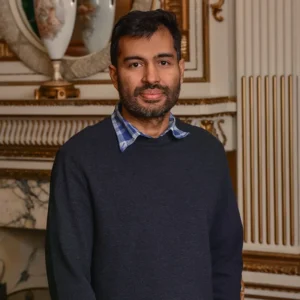
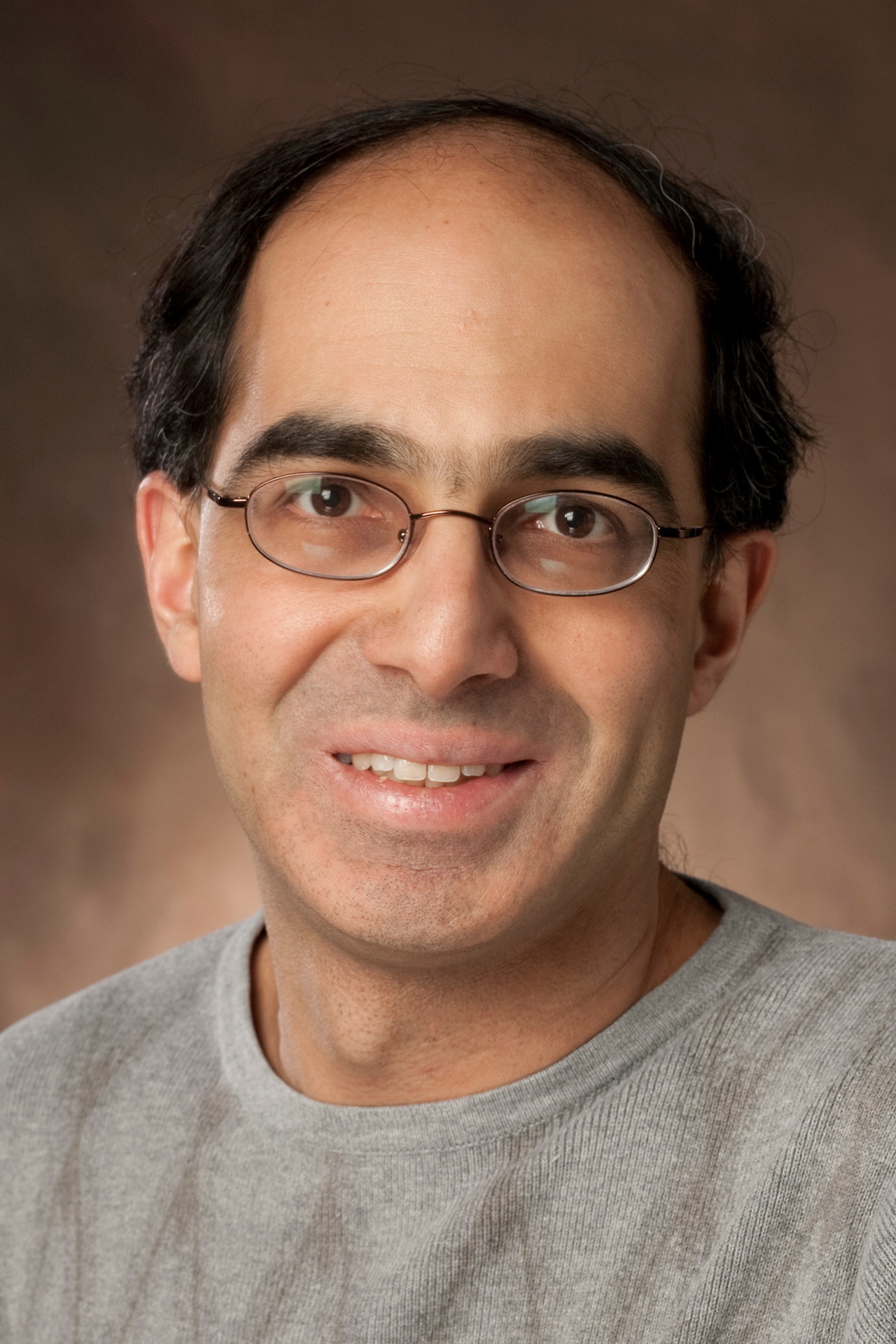
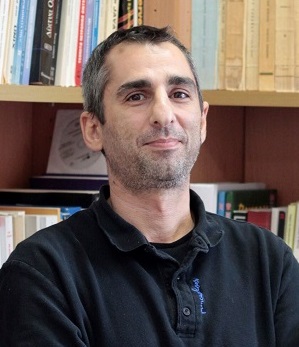
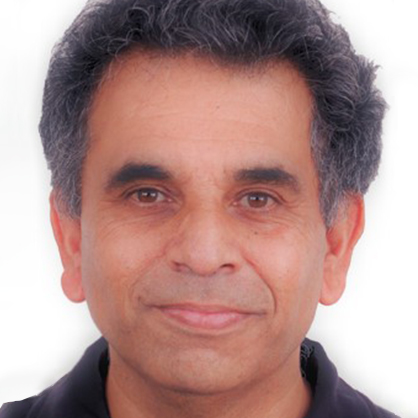
Dr. Saroj Aryal is an Associate Professor of Mathematics at Georgian Court University (2024–present), previously serving as Assistant Professor there (2020–2024) and at Montana State University Billings (2013–2019). He holds a PhD in Mathematics (University of Wyoming, 2013), an MS (2011), and a BS from Trinity College (2009). His research focuses on sparse moment problems, applied analysis, control systems, finance mathematics, and mathematics education. Notable projects include undergraduate collaborations on Fibonacci sequence properties, circulant matrices, and stability of polynomials. He emphasizes involving students in research, with grants from the New Jersey Space Grant Consortium. Publications span diverse topics like NCLEX-RN success indicators, moment sequences, and ETF volatility analysis. His work bridges theoretical mathematics with practical applications in healthcare, engineering, and finance.
Marcos Noy Serrano is a Professor in the Department of Mathematics at Universitat Politecnica de Catalunya (UPC), where he is a key member of the GAPCOMB research group focused on Geometric, Algebraic and Probabilistic Combinatorics. With a career spanning over three decades, he has established himself as a leading researcher in combinatorics and discrete mathematics. His research interests center on combinatorics, particularly in graph theory, enumerative combinatorics, and computational geometry. Noy's work frequently explores planar graphs, random structures, and combinatorial enumeration, with significant contributions to understanding the properties and counting of various combinatorial structures. His research combines algebraic, geometric, and probabilistic approaches to tackle fundamental problems in discrete mathematics. Noy's scholarly output shows consistent productivity with over 300 documented activities, including numerous journal articles in top combinatorics publications, research projects, and conference presentations. His recent work (2021-2024) focuses on chordal graphs with bounded tree-width, enumeration of various planar graph structures, random cubic planar maps, and logical properties of random sparse structures, demonstrating his continued engagement with cutting-edge problems in combinatorics. Among his notable recognitions are the prestigious Medalla Narcís Monturiol al mèrit científic i tecnològic and the Humboldt Research Award, highlighting the international impact of his work. He has also led significant research projects including the María de Maeztu Program for Centers and Units of Excellence in R&D and the COntemporary COmbinatorics and Applications (COCOA) project. Noy has supervised doctoral students, including Larrauri, L. who completed work on First Order Logic of Random Sparse Structures. He maintains active research collaborations across Spain and internationally, contributing to the vibrant combinatorics research community.
Dr. Vijay Pappu is an Adjunct Associate Professor of Computer Science at Columbia Engineering. He leads personalization efforts at Peloton Interactive Inc., focusing on scalable Machine Learning techniques for digital experiences. His research bridges Machine Learning, Optimization, and Engineering applications in domains like digital acquisition and product personalization. He teaches Applied Machine Learning courses at Columbia and has extensive industry experience at firms including Spotify, JP Morgan Chase, and American Express. Dr. Pappu holds a Ph.D. in Machine Learning from the University of Florida (2013), alongside advanced degrees in Management, Industrial & Systems Engineering, Mechanical & Aerospace Engineering, and a Bachelor’s from IIT Madras. His work includes over 300 citations, with publications in peer-reviewed journals/conferences. He co-edited Springer volumes and organized conferences on Biomedicine and Smart Grids. His research emphasizes high-dimensional data classification, feature selection, and optimization in areas like biomedical diagnostics and smart grid security. He has managed teams building large-scale recommender systems, demonstrating expertise in both academic research and industrial application.
Arne Winterhof is a Senior Fellow at the Johann Radon Institute for Computational and Applied Mathematics (RICAM) of the Austrian Academy of Sciences. He holds the title of University Lecturer (Univ.-Doz.) and has extensive experience in academic leadership, including project leadership roles in multiple FWF-funded research projects. His primary affiliation is with RICAM's Applied Discrete Mathematics and Cryptography group. Winterhof earned his Diploma (summa cum laude) and PhD (summa cum laude) in Mathematics from TU Braunschweig (1994, 1996) and completed his Habilitation at the University of Vienna in 2001. He has held positions at institutions such as Temasek Laboratories (National University of Singapore) and has been a Senior Scientist and Fellow at RICAM since 2003. In 2016, he declined a Full Professorship offer at the University of Rostock. His research focuses on Finite Fields, Number Theory, Coding Theory, Cryptology, Combinatorics, and Cryptography. He has received prestigious awards, including the Edmund and Rosa Hlawka Prize (2004) and the Austrian Mathematical Society Advancement Award (2010). He serves on editorial boards for journals like Finite Fields and Their Applications and Cryptography and Communications . Winterhof has led numerous research projects, including Generalized Cyclotomic Mappings of Finite Fields (2025–2027) and On the Hierarchy of Measures of Pseudorandomness (2014–2018). His work emphasizes pseudorandom sequence design, cryptographic applications, and theoretical foundations in discrete mathematics.
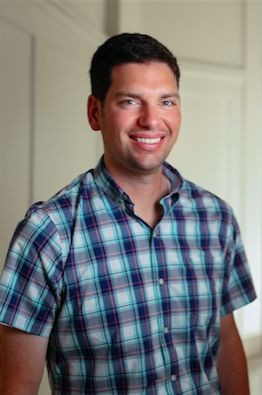
Dustin Mixon is Associate Professor of Mathematics at Ohio State University, specializing in applied harmonic analysis, compressed sensing, and frame theory. His research develops mathematical foundations for signal processing, including equiangular tight frames, optimal line packings, and phase retrieval guarantees. Recent work addresses max filtering injectivity, Euclidean distortion of orbit spaces, and clustering algorithms via semidefinite programming. Mixon has contributed to the theory of numerically erasure-robust frames (NERFs) and deterministic matrix constructions with the restricted isometry property. He co-authored papers on group-invariant packings and phase transitions in phase retrieval, solving open problems in combinatorial geometry. His blog 'Short, Fat Matrices' disseminates research on frame theory and compressed sensing.
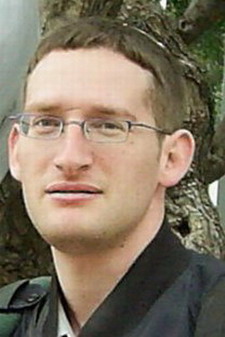
Ely Porat is an Associate Professor at the Department of Computer Science, Bar-Ilan University, where he has been since 2000. He holds visiting professorships at the University of Michigan and Tel Aviv University, and has worked at Google (Mountain View in 2007 and Tel Aviv in 2011). His academic contributions include redefining the BSc degree in Computer Science at Bar-Ilan University and significant involvement in teaching committees. Research Interests: Algorithms and Data Structures Streaming Algorithms Pattern Matching Coding Theory Compressed Sensing His work focuses on advancing efficient algorithms for data processing, with applications in information retrieval, signal processing, and bioinformatics. He has organized multiple conferences including Stringology (2009–2011), ICALP2011GT, and UM Coding. He has served on program committees for CPM, SPIRE, and ESA. Advising & Collaboration: Current advisees include Ariel Shiftan, Guy Feigenblat, and others. Former students include Ohad Lipsky and Klim Efremenko. He hosts short-term researchers from abroad and collaborates with institutions like Google and Weizmann Institute. Publications span FOCS , STOC , ICALP , and other top venues, emphasizing theoretical foundations and practical algorithmic solutions.
Sylvain Perron is a Full Professor at HEC Montréal's Department of Decision Sciences, affiliated with GERAD (Group for Research in Decision Analysis) and IVADO (Institute for Data Valorization). He specializes in mathematical programming, global optimization, and network analysis. His work focuses on developing algorithms for complex systems, including column generation, clustering, and quadratic programming applications. Education: Ph.D. in Engineering Mathematics (École Polytechnique Montréal, 2004) M.Sc. in Modeling and Decision (HEC Montréal, 1998) B.A.A. in Business Administration (HEC Montréal, 1995) Research Interests: Perron's research bridges theoretical and applied optimization, addressing challenges in logistics, telecommunications, and data science. Key areas include community detection in networks, vehicle routing optimization, and energy planning models. Publications: Recent work spans dynamic network analysis, heuristic algorithms for dispersion problems, and energy management systems. His contributions highlight interdisciplinary applications of optimization techniques. Awards: Recipient of multiple grants and awards, including the Bourgoin Grant (2000-2002) and Excellence Awards from HEC Montréal. His research is supported by funding from MITACS, CRSNG, and FQRNT. Grants: Projects include trajectory optimization for aviation, supply chain management, and data mining collaborations. Notable funding includes a $1.028M CRIAQ grant for air trajectory research and a GERAD-sponsored column generation project. Supervision: Advised over 20 graduate students, focusing on optimization, network analysis, and algorithm development. Current and past students include leaders in logistics, telecommunications, and academic research. Labs/Teams: Active in GERAD's optimization group and IVADO's data science initiatives, contributing to collaborative research networks across Quebec and internationally.
Dr. Reza Akhtar is a Professor of Mathematics at Miami University, serving as Associate Chair. He holds a Ph.D. in Mathematics from Brown University. His research focuses on Algebraic Geometry, Combinatorics, Quasigroups, and Abstract Algebra, with notable contributions to topics like group theory, combinatorial structures, and algebraic number theory. Dr. Akhtar has authored numerous publications in prestigious journals and has taught advanced courses such as Abstract Algebra, Algebraic Geometry, and Financial Mathematics. He is actively involved in graduate education, supervising graduate-level algebra courses. Education: Ph.D., Mathematics (Brown University); Senior Thesis on Cyclotomic Euclidean Number Fields Affiliations: Department of Mathematics, Miami University; Oxford, Ohio His research interests span a wide range of mathematical disciplines, including K-theory, algebraic geometry, combinatorics, and number theory. Recent work includes studies on quasigroups, zero-divisor graphs, and applications to cryptography. Dr. Akhtar has also contributed to interdisciplinary projects, such as Toric Residue Codes and connections between group theory and music theory through Messiaen's modes. Teaching highlights include courses like Algebraic Graph Theory, Financial Mathematics for Actuaries, and graduate-level Algebra sequences. He has been instrumental in mentoring students through Miami's SUMSRI program, focusing on topics like elliptic curves and advanced algebraic structures.
Charis Papadopoulos is a Professor at the Department of Mathematics, University of Ioannina, Greece. He holds a PhD in Computer Science (2005) and MSc (2001) from the University of Ioannina, and conducted postdoctoral research at the University of Bergen, Norway (2005-2007). His academic activities include visiting researcher positions at the University of Ioannina (2008-2010) before joining the faculty in 2011. Education: MSc and PhD in Computer Science, University of Ioannina Postdoc: Algorithms Research Group, University of Bergen (2005-2007) His research interests focus on Theoretical Computer Science, particularly: Design and analysis of algorithms Algorithmic graph theory Graph modification problems Width parameters and graph layouts Combinatorial enumeration Algorithm engineering Recent publications address structural parameterization of cluster deletion, subset feedback vertex set problems, avoidable vertex/path enumeration, and connectivity-preserving subgraphs. His work spans both journal publications (e.g., Algorithmica , Theory of Computing Systems ) and conference proceedings (e.g., WALCOM , SODA ). He has served on program committees for major conferences including: CIAC 2025 EuroCG 2025 WADS 2023 WALCOM 2023 Current projects include FANTA (Efficient Algorithms for Network Analysis) funded by H.F.R.I. and Separators and Cut Problems under HFRI grants. He has supervised PhD and Master's dissertations and collaborated with European research institutions.
Barun Chandra is an Associate Professor and Graduate Coordinator in the Computer Science department at the Tagliatela College of Engineering, University of New Haven. His academic roles include teaching and coordinating graduate programs in computer science. Education: Ph.D. in Computer Science from the University of Chicago, M.S. in Computer Science from the University of Rochester, M.S. in Mathematics from Colorado State University, and B.S. in Mathematics from St. Stephens College. Research interests focus on algorithms, graph theory, computational geometry, and approximation algorithms. His work includes contributions to the Traveling Salesman Problem, graph spanners, network reliability, and online algorithms. Notable research addresses combinatorial optimization challenges in theoretical computer science. No scientific awards are explicitly mentioned in the provided information. His academic contributions are reflected in peer-reviewed publications spanning algorithm design and computational theory. Barun Chandra teaches courses such as Discrete Mathematics for Computing, Data Structures, Algorithms, Database Systems, and Cryptography. He has no listed advisees or students, and no specific grants or labs are detailed in the profile.
Kemal Rose is a Postdoctoral researcher at KTH Royal Institute of Technology in Sweden, mentored by professor Sandra di Rocco. He holds a PhD from the Max Planck Institute for Mathematics in the Sciences (Leipzig), advised by Simon Telen and Bernd Sturmfels. His research focuses on algebraic geometry and optimization, with contributions to polynomial systems, tropical geometry, and computational methods in algebraic geometry. Key research themes include certification of polynomial system zeros, p-adic and real cubic surfaces, polyhedral homotopy algorithms, and the algebraic degree of sparse optimization problems. His work bridges theoretical mathematics with practical computational tools, emphasizing interdisciplinary applications in symbolic computation and geometric modeling. Publications span topics such as tropical implicitization, polyhedral-type analysis, and toric geometry. Current research trends reflect a focus on leveraging algebraic methods to solve high-dimensional optimization problems with sparse structures. No scientific awards or grants are explicitly listed in the provided materials. His academic advising history is not detailed here.
Hans-Joachim Böckenhauer is a Lecturer at the Department of Computer Science at ETH Zürich, specializing in theoretical computer science with a focus on algorithms, online algorithms, and computational complexity. His research explores algorithmic optimization in problems like knapsack, graph exploration, and parameterized complexity. Affiliation: ETH Zürich, Department of Computer Science Research Interests: Online Algorithms, Graph Theory, Algorithm Design, Computational Complexity His work emphasizes the theoretical foundations of algorithms, including advice complexity and reoptimization strategies. Recent contributions address online knapsack variants, graph exploration with limited memory, and parameterized problem-solving.
Tianyi Zhang is a Researcher at the Professorship for Theoretical Computer Science, ETH Zurich, located at OAT Z 29, Andreasstrasse 5. His research focuses on advancing fundamental algorithms in graph theory, with particular expertise in dynamic graph problems, efficient spanner constructions, edge coloring optimizations, and shortest-path computations. Dr. Zhang develops both theoretical frameworks and practical implementations for complex computational challenges. His core research areas include the design of near-linear and subquadratic time algorithms for graph optimization problems, fault-tolerant network structures, streaming-optimized graph coloring, and geometric graph embeddings. Recent work emphasizes breakthroughs in Vizing's theorem implementations, dynamic set cover deamortization, and space-efficient distance oracles. Dr. Zhang's publications demonstrate consistent innovation in algorithm efficiency for planar graphs, Euclidean spaces, and dynamic network settings. His 2023-2025 articles reveal concentrated efforts on: 1) Optimizing edge coloring through multi-step Vizing chains and streaming adaptations, 2) Enhancing spanner constructions for doubling metrics and planar environments, and 3) Developing failure-resistant path algorithms with improved time/space complexity. These contributions address scalability challenges in large-scale network processing. He collaborates within the Theoretical Computer Science research group at ETH Zurich, contributing to the institution's leadership in algorithmic innovation. No information about awarded grants, supervised students, or educational background is available in the source materials.
Hamed Hatami is an Associate Professor in the School of Computer Science at McGill University, with cross-appointment in Mathematics. His research lies at the intersection of theoretical computer science and mathematics, focusing on analytic methods in complexity theory, learning theory, analysis of Boolean functions, and additive combinatorics. Hatami received the IEEE Computer Society Technical Achievement Award in 2012 for his contributions. He has published extensively on graph theory, property testing, communication complexity, and combinatorial limits. Hatami teaches advanced courses in algorithm design, complexity theory, and analysis of Boolean functions, and mentors graduate students through research collaborations. Prior to McGill, he held positions at the Institute for Advanced Study and Princeton University.
Eli Upfal is the Rush C. Hawkins Professor of Computer Science at Brown University, where he has been a faculty member since 1998 and served as department chair from 2002 to 2007. Prior to Brown, he held positions as a researcher and project manager at IBM Almaden Research Center and a professor at the Weizmann Institute of Science. He earned his undergraduate degree in mathematics and statistics and a doctorate in computer science from the Hebrew University in Jerusalem, Israel. Education: B.Sc./M.Sc. in Mathematics & Statistics, Ph.D. in Computer Science Previous Institutions: IBM Almaden Research Center, Weizmann Institute Upfal's research focuses on the design and analysis of algorithms, particularly randomized algorithms and probabilistic analysis. His work spans combinatorial and stochastic optimization, routing and communication networks, computational biology, and computational finance. He has also contributed to applying Rademacher Averages and VC-dimension to sampling-based algorithms for graph analysis and pattern mining. Recent publications emphasize algorithmic applications in graph theory, machine learning, and handling distribution drift in data analysis. His work includes practical implementations of theoretical concepts, such as Abra for betweenness centrality approximation and frameworks for secure data exploration like VizCertify and VizRec . Scientific Awards IEEE Fellow ACM Fellow IBM Outstanding Innovation Award IBM Research Division Award Upfal has advised PhD student Matteo Riondato and received funding from the National Science Foundation (NSF), Defense Advanced Research Projects Agency (DARPA), Office of Naval Research (ONR), and National Institute of Health (NIH). He co-authored the textbook Probability and Computing: Randomized Algorithms and Probabilistic Analysis with M. Mitzenmacher.