Amin Coja-Oghlan is Professor of Efficient Algorithms and Complexity Theory at TU Dortmund University's Department of Computer Science. His research integrates probabilistic combinatorics, information theory, and statistical physics to solve fundamental problems in theoretical computer science. Education includes a doctorate in Mathematics (University of Hamburg, 2002) and habilitation in Computer Science (Humboldt University Berlin, 2005). Research advances understanding of phase transitions in constraint satisfaction problems, optimization landscapes, and random structures. Recent publications analyze SAT thresholds, group testing, and sparse matrix properties. Academic appointments include professorships at Goethe University Frankfurt and lectureships at Edinburgh and Warwick. Research contributions bridge discrete mathematics with computational complexity.
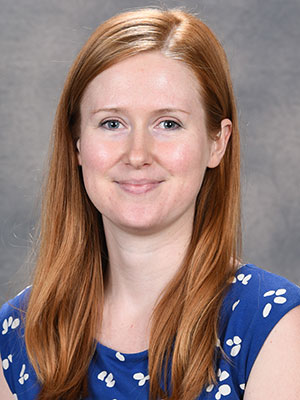
Signe Lundqvist is a researcher affiliated with the Department of Mathematics and Mathematical Statistics at Umeå University , Sweden. Her work focuses on discrete mathematics and geometric rigidity theory, particularly in planar point-line and rod configurations. Research Highlights : Rigidity under projective transformations, pebble game algorithms for structural analysis, Euclidean and projective hypergraph rigidity. Collaborations : Projects with Klara Stokes, Lars-Daniel Öhman, Tovohery Randrianarisoa, and Bernd Schulze. Her publications in journals like Discrete & Computational Geometry and Discrete Applied Mathematics reflect her contributions to computational and theoretical geometry.
Virginia Vassilevska Williams is Professor of Computer Science and Artificial Intelligence + Decision-making at MIT EECS. Her research focuses on theoretical computer science with emphasis on algorithms, computational complexity, and graph theory. She has made significant contributions to matrix multiplication complexity and fine-grained hardness results. Recent publications explore fundamental problems in graph algorithms including cycle detection, shortest paths, and clique enumeration. Her work demonstrates consistent advancement in understanding computational limits for graph problems and matrix operations. Key research themes include: Breaking barriers in matrix multiplication exponents Establishing hardness thresholds for approximation algorithms Developing efficient graph traversal methods for sparse structures Her 2024 publications continue this trajectory with refinements to the laser method for matrix multiplication and improved clique listing techniques. The research consistently pushes boundaries in algorithm optimality proofs and computational complexity theory.
David Evans is a Professor of Pure Mathematics at the Department of Mathematics, Imperial College London, within the Faculty of Natural Sciences. His research focuses on Model Theory and its interactions with Algebra and Combinatorics, particularly stability theory, Hrushovski constructions, and infinite permutation groups. He has advised numerous research students, including D. G. D. Gray, Reinhold Konnerth, and Marco Ferreira, among others. His work spans topics like automorphism groups of metric spaces, Ramsey properties of sparse graphs, and algebraic structures arising from combinatorial constructions. Evans has contributed significantly to understanding homogeneity in combinatorial structures and the simplicity of automorphism groups derived from Hrushovski's constructions. His affiliations include the Algebra and Algebraic Combinatorics research group and the Pure Mathematics section at Imperial. Key contributions include advancing the theory of omega-categorical structures, Ramsey theory applications, and algorithmic group theory.
Ciara Pike-Burke is a Lecturer in Statistics at the Department of Mathematics, Imperial College London, within the Faculty of Natural Sciences. Her research focuses on statistical machine learning, particularly sequential decision making under uncertainty, including multi-armed bandits, reinforcement learning, and online learning. She holds a PhD from Lancaster University (STOR-i program) and was a postdoc at Universitat Pompeu Fabra in Barcelona. Education: PhD in Statistics (Lancaster University, 2019) Postdoctoral Researcher (Universitat Pompeu Fabra, 2019-2022) Research Interests: She explores theoretical aspects of sequential decision problems in areas like education and healthcare, emphasizing algorithmic efficiency and regret minimization. Her work addresses challenges such as delayed feedback, sparse rewards, and privacy constraints in bandit and reinforcement learning frameworks. Publications: Her recent work includes advancements in hierarchical reinforcement learning, bandit algorithms with delayed feedback, and privacy-preserving techniques. Notable contributions include the QuACK algorithm for cooperative bandits and theoretical analyses of optimistic exploration strategies. Outreach: She develops educational tools like the TryBandits web-based game to introduce students to statistical concepts. She actively recruits PhD students in reinforcement learning theory, bandits, and online learning.
Alexander A. Razborov is the Andrew MacLeish Distinguished Service Professor of Computer Science and Mathematics at the University of Chicago and Adjoint Professor at the Toyota Technological Institute. His primary research focuses on complexity theory, including circuit complexity, proof complexity, quantum computations, and communication complexity. Previously he worked in combinatorial group theory and is actively exploring extremal combinatorics. He leads the Theoretical Computer Science Group, which connects computer science with physics, statistics, and mathematical sciences. His educational contributions include teaching Honors Discrete Mathematics, Mathematics of Quantum Computing, Complexity Theory, and other advanced topics. Razborov has received numerous prestigious awards including the Rolf Nevanlinna Prize (1990), Gödel Prize (2007), and election to the American Academy of Arts & Sciences (2020). He has supervised over 12 PhD and Master's students, with research spanning combinatorial open problems in proof complexity, continuous combinatorics, and communication complexity.
Kaave Hosseini is an Assistant Professor in the Department of Computer Science at the University of Rochester. He holds a PhD from UC San Diego and a BSc from Sharif University of Technology. His research focuses on theoretical computer science and additive combinatorics, emphasizing approximate algebraic structures and pseudorandomness. Education: PhD in Computer Science, UC San Diego (advisor: Shachar Lovett) BSc in Mathematics and Computer Science, Sharif University of Technology Research Interests: His work bridges theoretical computer science and mathematics, particularly in: Computational complexity Combinatorial structures Discrepancy theory Algebraic methods in computer science Key Publications: Recent works include advancements in communication complexity, pseudorandomness, and lower bounds. Notable achievements include a Best Paper Award at ICALP 2023. Awards: Best Paper Award at ICALP 2023. Teaching: He has taught courses such as Advanced Algorithms (CSC 484/284) and Analytic Methods in Computer Science (CSC 488/288) at the University of Rochester, and combinatorics and probability courses at Carnegie Mellon University. Professional Activities: Organized the Eastern Great Lakes (EaGL) workshop in Theory of Computation.
Prof. Dr. Marc Pfetsch is a full professor of Discrete Optimization at the Technical University of Darmstadt, holding the W3 chair since 2012. He leads the Optimization Group within the Department of Mathematics and has served as Dean of the Department from October 2022 to September 2024. His research focuses on optimization methodologies, particularly in gas network modeling, discrete and mixed-integer programming, and computational algorithms. He is a core developer of the SCIP Optimization Suite, a leading solver for mixed-integer programming problems. Education : Mathematics studies at the University of Heidelberg (1992–1997) Operations Research at Cornell University (1997–1998, via Fulbright Scholarship) PhD in Mathematics from TU Berlin (2002) Habilitation in Computational Aspects of Combinatorial Optimization (2008) Research Interests : Discrete and combinatorial optimization Gas network optimization and resilience design Symmetry handling in mixed-integer programming Algorithm development for SCIP and optimization software Key Projects : Transregio/SFB 154: Mathematical Modeling, Simulation, and Optimization of Gas Networks SCIP Optimization Suite development Clean Circles: Iron as an energy carrier for climate-neutral systems Awards : EURO Excellence in Practice Award 2016 for "Evaluating Gas Network Capacities" Grants and Labs : Principal investigator in multiple DFG projects (e.g., SPP 2298, Matheon) BMWi-funded projects on flexible heating networks and resilient systems
Alexander Litvak is a Professor in the Department of Mathematical and Statistical Sciences at the University of Alberta. His research focuses on convex geometry, random matrix theory, and probability theory with applications to high-dimensional geometry and stochastic processes. Education: He holds a Ph.D. from Tel Aviv University and an M.Sc. from Saint Petersburg State University. Research Interests: Litvak explores geometric probability, random structures, and their applications in optimization and functional analysis. His work often addresses questions related to convex bodies, matrix singularity, and the behavior of high-dimensional random systems. Key topics include minimal dispersion, random polytopes, and spectral properties of random graphs. Publications: His recent work (2020-2024) emphasizes probabilistic methods in convex geometry and random matrix theory, with notable contributions to linear bandits, sparse matrix analysis, and the circular law for digraphs. These studies reveal trends in understanding high-dimensional phenomena and probabilistic structures. Grants and Awards: No specific grants or awards listed in the provided materials. Advising and Labs: No student advisees or lab affiliations explicitly mentioned in the text.
Kevin Hendrey is a Research Fellow at the School of Mathematics, Monash University, specializing in graph theory and combinatorics. His research focuses on structural graph theory, treewidth, sparse graphs, and permutation spaces. He has published extensively in top-tier journals such as Combinatorics, Probability and Computing, and The Electronic Journal of Combinatorics. His work bridges theoretical mathematics and algorithmic applications, with recent contributions to the study of graph classes with bounded treewidth, extremal functions for sparse minors, and permutation space covering radii. Collaborations include international researchers in combinatorics and discrete mathematics. No scientific awards or grants are explicitly mentioned in the text, though his publications indicate significant scholarly impact. No advising activities or lab affiliations are detailed here.
Mohamed Omar is a Full Professor in the Department of Mathematics and Statistics at York University, located in Toronto, Canada. His research focuses on Discrete Mathematics, Combinatorics, and Pure Mathematics, with a particular interest in the application of polynomials to discrete structures. He holds a Ph.D. from the University of California, Davis, and an M.Sc. from the University of Waterloo. His notable awards include the AMS Claytor-Gilmer Fellowship, Karen EDGE Fellowship, and Henry L. Alder Award. His work spans algebraic combinatorics, graph theory, and neural coding, with contributions to permutation patterns, polynomial applications, and discrete geometry. Recent research highlights include studies on permutation descent words, partition lattice analysis, and sparse neural codes. He has authored books such as Graph Theory You Need Before Undergrad Research and Number Theory Toward RSA Cryptography , reflecting his commitment to undergraduate education and mathematical exposition.
Nina Miolane is an Assistant Professor in the Department of Electrical & Computer Engineering at the University of California, Santa Barbara (UCSB). She is affiliated with the Geometric Intelligence Lab and the Center for Aging and Longevity Studies (CALS). Her research focuses on Geometric Artificial Intelligence (Geometric AI), combining machine learning with geometric and topological principles to study brain health, neural networks, and biological systems. Miolane’s work spans AI-driven medical imaging analysis, Riemannian geometry applications, and the development of interpretable neural network models. Her research interests include topological deep learning, geometric deep learning, computational neuroscience, and shape analysis in biosciences. She leads initiatives in developing frameworks like TopoX and Geomstats , which enable machine learning on non-Euclidean domains. Miolane’s projects often intersect with aging research, leveraging AI to understand brain health through MRI data and neural recordings. Publications highlight contributions in manifold optimization, topological neural networks, and applications in cancer cell morphology analysis. She has received grants such as the NSF CAREER Award for advancing shape learning in biosciences. Miolane collaborates across disciplines, integrating mathematics, computer science, and biomedical engineering to advance interpretable AI systems.
Victoria Crawford is an Assistant Professor in the Department of Computer Science & Engineering at Texas A&M University, where she has held this position since 2022. She holds a Ph.D. in Computer Engineering (2022), an M.S. in Mathematics (2016), and a B.S. in Mathematics (2012), all from the University of Florida. Her research focuses on approximation algorithms, optimization, machine learning, and submodular optimization, with an emphasis on scalable solutions for large datasets and theoretical guarantees. Her educational background includes advanced studies in mathematics and computer engineering, complemented by teaching experience in algorithms and theory courses at Texas A&M. Crawford has received prestigious awards such as the Gartner Group Graduate Fellowship (2019) and the Harris Fellowship (2017), and her work includes high-impact publications in venues like IJCAI, ICML, and NeurIPS. Crawford actively contributes to academic service, serving on committees including the Texas A&M Graduate Admissions Committee and the Data Science Hiring Committee. She also chairs and advises doctoral students such as Wenjing Chen and oversees research projects funded through initiatives like the Texas A&M Targeted Proposal Teams and the TAMIDS Seed Program for AI/Computing/Data Science. Her research spans theoretical and applied domains, including algorithm design for submodular functions, bandit optimization, and network resilience. Recent work emphasizes fairness in algorithmic design and scalable solutions for billion-scale networks.
Professor Daniel Kráľ is the Alexander von Humboldt Professor for Discrete Mathematics at Leipzig University since April 2025, affiliated with the Max Planck Institute for Mathematics in the Sciences. Previously, he held the Donald Ervin Knuth Professorship at Masaryk University (2018–2025) and was a professor at the University of Warwick (2012–2020). He also serves as an honorary professor at Warwick and has held visiting roles at UC Berkeley (2025) and Georgia Tech (2005–2006). His research focuses on combinatorics, graph theory, and their intersections with computer science, particularly in extremal combinatorics, graph limits, and algorithmic graph theory. Education: Ph.D. in Computer Science (2004), Master's (2001) from Charles University, Prague. Early career included postdoc roles at TU Berlin and Charles University's Institute for Theoretical Computer Science. Research Interests: Theory of combinatorial limits, extremal combinatorics, structural and algorithmic graph theory, analytic methods in discrete mathematics. Key contributions include resolving Steinberg's Conjecture and Lovász-Plummer Conjecture, development of graph limit theory, and applications to algorithm design. Grants & Awards: Recipient of ERC Starting (CCOSA) and Consolidator (LADIST) grants, SIAM Fellowship (2024), AMS Fellow (2020), Philip Leverhulme Prize (2014), European Prize in Combinatorics (2011). Over 150 journal articles, with impactful work in Advances in Mathematics , Journal of the EMS , and others. Service: Editor-in-Chief of SIAM Journal on Discrete Mathematics , co-editor of Journal of Combinatorial Theory , co-founder of Advances in Combinatorics . Organized major conferences and workshops, including the 2025 Oberwolfach workshop on Graph Theory. Labs/Teams: Leading research groups in discrete mathematics at Leipzig and previously in Brno/Warwick. Collaborates with postdocs and students on projects spanning graph limits, integer programming, and combinatorial optimization.
Robert Hickingbotham is a Postdoctoral Research Fellow in the Computer Science Department at Université Libre de Bruxelles, Belgium, supervised by Gwenaël Joret. He completed his PhD at Monash University in 2024 under David R. Wood, receiving the Mollie Holman Award for the best doctoral thesis in the Faculty of Science. His academic background includes: PhD in Mathematics from Monash University (2024), thesis: "Exploring sparse and hereditary graph classes via products and tree-decompositions" Honours degree from Monash University (2019), thesis: "Graph minors and tree decompositions" Hickingbotham's research centers on structural graph theory, with deep expertise in coarse graph theory and graph product structure theory. He investigates sparse graph classes through tree decompositions, quasi-isometries, and minor-closed properties, bridging combinatorial mathematics with theoretical computer science. His work has significant implications for graph algorithms and geometric representations of discrete structures. Analysis of his recent publications reveals a cohesive research trajectory focused on structural characterizations of graphs via product decompositions and tree-like structures. Key recurring themes include induced minors, asymptotic dimension, coloring variants (defective/clustered), and the interplay between treewidth and geometric properties. His contributions consistently advance the understanding of sparse graph classes and their algorithmic applications. His scientific recognition includes: 2024 Mollie Holman Award for best doctoral thesis in Monash University's Faculty of Science While specific grant details are not provided, Hickingbotham actively shapes the academic community through conference organization—including the 2020 Australasian Graduate Symposium in Combinatorics and a planned April 2026 MATRIX workshop on Global Structure and Geometry of Graphs. His extensive collaborations with researchers like Maria Chudnovsky and David Wood demonstrate strong mentorship networks despite no formal advising roles being documented. He contributes to ULB's combinatorics research ecosystem under Gwenaël Joret's supervision, participating in a vibrant international collaboration network evident in his multi-institutional publications. His work forms part of broader efforts to unify structural graph theory with coarse geometric perspectives.