Dr Henry Moss is a Researcher at the Department of Applied Mathematics and Theoretical Physics within the School of Physical Sciences at the University of Cambridge. His work focuses on machine learning applications in climate modeling, Bayesian optimization, and Gaussian processes, bridging computational mathematics with environmental science and chemistry. His research interests include: Bayesian optimization for environmental and chemical systems Reinforcement learning in climate modeling Gaussian processes for molecular property prediction High-throughput machine learning in scientific domains Interpretable AI for coastal flooding prediction Hybrid ML-physics modeling Dr Moss's publications highlight his contributions to federated learning for climate models, sparse Gaussian process techniques, and multi-objective optimization frameworks. These works span applications in weather prediction, chemical engineering, and oceanography. Email: hwm26@cam.ac.uk
Professor Carl Edward Rasmussen is affiliated with the University of Cambridge , where he focuses on Machine Learning , Probabilistic Inference , Decision Making , and Reasoning Under Uncertainty . His work bridges theoretical advancements with practical applications in robotics, control systems, and computational biology. Academic Affiliation: University of Cambridge Academic Role: Professor His research emphasizes scalable Gaussian process methods, Bayesian system identification, and reinforcement learning. Recent projects include transfer learning for antibacterial discovery , graph neural processes for molecular functions , and efficient variational inference techniques . Key themes in his publications highlight uncertainty quantification , model generalization , and nonparametric approaches . Notable Scientific Contributions Advancements in sparse Gaussian process hyperparameter estimation Framework for Bayesian system identification in dynamic systems Hybrid models combining transformers and Gaussian processes
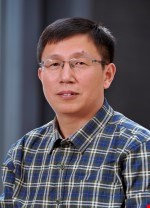
Maozhen Li is a Professor in the Department of Electronic and Electrical Engineering at Brunel University of London , within the College of Engineering, Design and Physical Sciences . He serves as the Vice-Dean of the NCUT Transnational Education (TNE) programme, overseeing a joint school with North China University of Technology. He has been at Brunel since 2002, progressing from Lecturer to Professor in 2013. Education: PhD, Institute of Software, Chinese Academy of Sciences (1997) Postdoctoral Research, School of Computer Science and Informatics, Cardiff University (1999–2002) His primary research interests lie in high performance computing, big data analytics, and artificial intelligence, with applications in smart grids, smart manufacturing, and cybersecurity. He focuses on developing interpretable, robust, and lightweight AI models, including work in causal AI, parallel machine learning, and edge computing. His research integrates advanced techniques such as deep learning, reinforcement learning, and blockchain for real-world system optimization. An analysis of his recent publications reveals a strong and consistent research trajectory in AI-driven solutions for environmental monitoring (e.g., PM2.5 prediction), industrial defect detection, IoT security, and intelligent transportation. His work frequently combines deep learning with graph-based modeling and federated or reinforcement learning, emphasizing scalability, efficiency, and robustness in distributed and edge environments. Scientific Awards and Recognition: Fellow of the Institution of Engineering and Technology (IET) Fellow of the British Computer Society (BCS) Shortlisted for the Computing UK BIG DATA EXCELLENCE AWARDS 2018 in the category of Most Innovative Big Data Solution Maozhen Li has successfully supervised 25 PhD students and examined over 30 PhD theses externally. He has secured significant research funding from EPSRC, the European Union (Horizon 2020), Innovate UK, and the Royal Society , with projects including Z-BRE4K, IoRL, and TDX-ASSIST. He serves as an Associate Editor for journals such as the Journal of Cloud Computing and the International Journal of Grid and High Performance Computing . Research Groups and Teams: He is affiliated with the Intelligent Engineering Frameworks (IEF) research group at Brunel, contributing to collaborative efforts in AI, IoT, and smart systems. His leadership in transnational education also fosters international research collaboration between Brunel and Chinese institutions.
Ali Gooya is a Senior Lecturer (Associate Professor) in Machine Learning at the School of Computing Science, University of Glasgow, UK. His research focuses on probabilistic deep learning applied to medical imaging, particularly in cardiology and oncology, emphasizing semi/unsupervised methods due to sparse expert annotations. He holds a PhD in medical image analysis from the University of Tokyo (2007) and has held academic positions at the University of Leeds and Sheffield before joining Glasgow in 2022. Affiliations: Senior Lecturer in Machine Learning, University of Glasgow (2022–present) Lecturer in Computing, University of Leeds (2018–2022) Lecturer in Computing, University of Sheffield (2016–2018) Postdoctoral Researcher, University of Pennsylvania (2008–2011) Research Interests: Deep learning for medical imaging, probabilistic modeling, cardiac and cancer imaging, computational anatomy, and marker discovery. Key applications include motion analysis, segmentation, and predictive modeling in healthcare. Key Achievements: Won prestigious fellowships including Allen Touring Institute (2022), JSPS Short-Term (2020), Marie-Curie IIF (2014), and JSPS-PDRA (2008). Pioneered Bayesian deep learning frameworks for cardiac motion assessment and generative models in medical imaging. Grants & Supervision: EPSRC Impact Acceleration Award (PI) EPSRC New Investigator Grant (EP/S012796/1) Actively supervising PhD students in areas like Bayesian deep atlases for cardiac motion analysis. Labs & Teams: Leads research in medical AI within the School of Computing Science, collaborating on projects integrating imaging and patient metadata for clinical decision support.
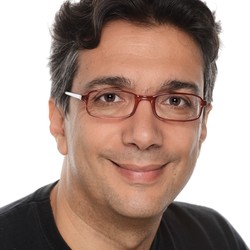
Petros Dellaportas holds dual appointments as a Professor of Statistical Science at University College London (UCL) and a Professor of Statistics at the Athens University of Economics and Business (AUEB). His research focuses on Bayesian statistics, machine learning, financial econometrics, and dynamic pricing. He leads projects on topics such as Poisson processes for cybersecurity, reservoir computing for macroeconomic forecasting, and probabilistic fault detection in wind parks. His recent publications emphasize advancements in Bayesian methods, variational autoencoders, and spatio-temporal point processes. Dellaportas has supervised over 20 PhD students, contributing to areas like stochastic volatility models and inverse reinforcement learning. He co-founded Thales and Friends, an organization bridging mathematics and cultural activities, and organizes the Greek Stochastics workshop series on topics ranging from causal learning to computational statistics. Key projects include anomaly detection in VAT networks and scalable Gaussian process models. His work often integrates statistical theory with applications in finance, sports analytics, and environmental science. Dellaportas maintains active collaborations with institutions globally, advancing interdisciplinary research and methodological innovations in statistical science.
Professor Christopher Nemeth of Lancaster University's School Of Mathematical Sciences is a leading researcher in computational statistics and probabilistic machine learning. His work focuses on Markov chain Monte Carlo (MCMC), sequential Monte Carlo (SMC), Gaussian processes, and approximate Bayesian computation, with applications in environmental science, target tracking, and econometrics. He currently holds a UKRI Turing AI Acceleration Fellowship and leads the ProbAI research hub. Research Interests: Development of probabilistic AI algorithms for large-scale learning, state-space modeling, and intersections between sampling and optimization algorithms. Grants: £9M UKRI-EPSRC ProbAI hub (2024-2029), £1.1M Turing AI Acceleration Fellowship (2021-2026), and multiple NERC grants. Academic Roles: Turing University Academic Liaison (2023-present), Associate Editor for ACM Transactions on Probabilistic Machine Learning (2023-present), and leadership roles in the Royal Statistical Society. Supervision: Completed supervision of 7 PhD students with projects on scalable Gaussian processes, Monte Carlo methods, and network modeling.
Professor Jian Zhang is a Professor of Statistics at the University of Kent's School of Mathematics, Statistics and Actuarial Science. His research focuses on non-parametric and high-dimensional statistics, bioinformatics, computational biology, statistical genetics, neuroimaging methods, and Bayesian modeling. He has advised students including Jie Li and Tong Wang. His work spans theoretical advancements and applied methodologies across diverse fields such as genomics, neuroimaging, and biomedical data analysis. Publications highlight contributions to Bayesian inference, neuroimaging techniques, and statistical genetics. Notable collaborations include studies on mixture models for genetic association analysis and beamforming methods for functional connectivity. He holds an ORCID iD and is based at Canterbury Campus, University of Kent.
Dr. Aretha Teckentrup is a Lecturer in the Mathematics of Data Science at the University of Edinburgh's School of Mathematics. Her research focuses on integrating mathematical models with observational data, particularly in areas like uncertainty quantification, Bayesian inverse problems, and computational methods for partial differential equations (PDEs). She holds a PhD in Mathematics from the University of Bath and has held postdoctoral positions internationally, including in Florida. Her work emphasizes interdisciplinary approaches, blending statistics, numerical analysis, and applied mathematics. Notably, she has contributed to advancing Gaussian processes, multilevel Monte Carlo techniques, and sparse grid methods for high-dimensional problems. Her academic journey reflects a strong commitment to bridging theoretical foundations with practical applications. She has published extensively on topics such as probabilistic numerical methods, error estimation in Bayesian inference, and adaptive sampling strategies. Dr. Teckentrup is an active member of the SIAM community, having received the prestigious SIAG/UQ Early Career Prize in recognition of her contributions to uncertainty quantification. Her research continues to explore innovative solutions for data-driven modeling challenges in science and engineering. Dr. Teckentrup’s work often addresses the growing importance of combining data with physical models, exemplified by her development of numerical methods for weather prediction and stochastic dispersion modeling. She advocates for collaboration across disciplines and emphasizes the transformative potential of integrating computational tools with real-world data. Her career trajectory underscores the dynamic and collaborative nature of modern academic research in applied mathematics and data science.
Gavin Cawley is a Professor in the School of Computing Sciences at the University of East Anglia (UEA), with additional affiliations to the Data Science and AI group, the Centre for Ocean and Atmospheric Sciences, and the Statistics group. His research spans machine learning, bioinformatics, climate modeling, and environmental data analysis. His primary research interests include Machine Learning , Kernel Methods , Model Selection , Bayesian Regularization , Bioinformatics , and Climate Modeling . He has made significant contributions to understanding overfitting in model selection, sparse logistic regression for gene and cancer classification, and time series classification using ensemble methods. His work bridges theoretical machine learning with practical applications in biology, archaeology, and environmental science. The recent trend in his publications shows a strong interdisciplinary focus, combining machine learning with climate science (e.g., Arctic sea ice prediction) and molecular biology (e.g., protein domain movements). His work often involves developing and evaluating statistical models for complex real-world problems, emphasizing robustness, interpretability, and predictive accuracy. While no specific awards are listed in the provided text, his extensive publication record in top journals such as Journal of Machine Learning Research , Bioinformatics , and Neural Networks , along with high citation counts (e.g., over 1,800 citations for his 2010 paper on overfitting), indicates significant recognition in the academic community. He has also contributed to organizing major machine learning challenges, such as the ChaLearn AutoML and Active Learning challenges. He has supervised or collaborated with numerous researchers across disciplines, though specific student names are not listed. His work involves methodological development in model selection, kernel learning, and survival analysis, often applied to biological and environmental datasets. He has been involved in projects related to predictive uncertainty, ozone forecasting, and microbial growth modeling. While no specific lab or team name is mentioned, his affiliations with the Data Science and AI group and the Centre for Ocean and Atmospheric Sciences suggest active participation in interdisciplinary research teams focused on data-driven environmental and biological modeling.
Dr. Omid Chatrabgoun serves as an Assistant Professor in Data Science and AI at the CEES School of Science, holding a PhD in Data Science from Shahid Chamran University (Iran, 2015). Previously affiliated with Malayer University, he teaches undergraduate and postgraduate courses including Statistical Learning, Data Science, and Machine Learning while actively supervising PhD students. His research focuses on uncertainty quantification and Bayesian machine learning for complex systems. Education: PhD in Data Science, Shahid Chamran University, Iran (2015) Dr. Chatrabgoun specializes in Modelling, Optimization, and Uncertainty Quantification (UQ) using (Deep) Gaussian processes, with applications spanning bioinformatics (Gene Regulatory Networks, Protein-Protein Interactions) and environmental engineering (coastal protection, flood modeling). He develops novel approaches for machine learning of linear operational equations to quantify uncertainty in highly complex systems, emphasizing computational efficiency through sparse approximations and kernel methods. His work bridges theoretical statistics with practical implementations in healthcare, environmental science, and industrial applications. Analysis of his 29 publications (2016-2025) reveals a consistent trajectory in Gaussian process methodologies, evolving from foundational graphical models to advanced deep Gaussian processes and probabilistic surrogate modeling. Key thematic clusters include bioinformatics network inference, environmental risk assessment, and computational optimization techniques, demonstrating interdisciplinary impact across computer science, statistics, and domain-specific applications. Dr. Chatrabgoun has secured research funding and conducted consultancy projects with the Iran National Science Foundation (INSF) and Research Institute for Grapes and Raisin (RIGR). His collaborative network spans international institutions, as evidenced by co-authorships across civil engineering, bioinformatics, and environmental science domains. Current projects involve developing machine learning frameworks for linear differential operators and expanding applications of pair-copula Bayesian models in high-dimensional data analysis. His research group actively explores uncertainty propagation in PDE-based models and spatio-temporal environmental simulations, maintaining strong industry-academia partnerships for knowledge exchange in data-driven decision systems.
Dr. Lan Truong is a Lecturer (Assistant Professor) at the School of Mathematics, Statistics and Actuarial Science (SMSAS), University of Essex since September 2023. Previously, he held roles including Research Associate at the University of Cambridge (2020–2023), Research Fellow at National University of Singapore (NUS) (2018–2019), and Lecturer at FPT University, Hanoi (2013–2015). He earned a PhD in Information Theory from NUS in 2018 and has industry experience as an Operation and Maintenance Engineer with MobiFone Telecommunications Corporation. His research focuses on deep learning theory, high-dimensional statistics, probability, and information theory. Notable contributions include work on multi-armed bandits, neural network generalization, and coding theory. He is a Senior Member of the IEEE. Key publications span topics like concentration properties of random codes, replica analysis in signal processing, and generalization bounds in deep learning. His work bridges theoretical foundations with practical applications in machine learning and telecommunications. Dr. Truong’s academic journey reflects a strong emphasis on advancing theoretical methodologies while addressing real-world challenges in information and communication technologies.
Jim Griffin is a Professor of Statistics at the University of Kent's School of Mathematics, Statistics and Actuarial Science. His research focuses on Bayesian nonparametric methods, computational statistics, and applications in financial and economic data analysis. He has collaborated extensively with researchers such as M. Kalli, F. Leisen, and M.F.J. Steel, producing influential work on nonparametric priors, volatility modeling, and sparse regression techniques. Griffin's research interests include developing novel Bayesian methodologies for high-dimensional data, time series analysis, and stochastic volatility modeling. His contributions to computational methods, such as adaptive MCMC and sequential Monte Carlo algorithms, have advanced efficient inference in complex statistical models. He has supervised numerous PhD students, including Alex Diana, Mark Sinclair-McGarvie, and Su Wang, whose work spans Bayesian nonparametrics, computational methods, and financial econometrics. Griffin has published widely in top-tier journals like the Journal of the Royal Statistical Society , Journal of Econometrics , and Bayesian Analysis . His recent work emphasizes integrating computational efficiency with theoretical rigor, addressing challenges in modern statistical applications across finance, ecology, and bioinformatics.
London School of Economics and Political Science (LSE)United Kingdom
Francesca Panero is an Assistant Professor (RTT) in Statistics at Sapienza University's Department of Methods and Models for Economics, Territory and Finance (MEMOTEF), with a concurrent role as Visiting Fellow at the London School of Economics (LSE) Department of Statistics. She holds a PhD in Statistics from the University of Oxford and prior degrees from the University of Turin and Collegio Carlo Alberto. Her research focuses on Bayesian models applied to complex networks , disclosure risk assessment , and Gaussian process modeling . Current projects include Bayesian nonparametric frameworks for sparse networks, spatio-temporal food insecurity prediction, and fair machine learning methodologies. She leads the GENIAL initiative at LSE, exploring GenAI's educational impact. She teaches courses on Probability and Stochastic Processes (Sapienza) and Deep Learning/Artificial Intelligence (LSE). Awards include the 2025 USI Visiting Lectureship and j-ISBA Chair Elect (2025-2026) . Her work is supported by grants such as the LSE RISF fund for food insecurity research. Publications span topics like graphex processes, fair ML algorithms, and optimal risk assessment methodologies. She actively engages in policy discussions through collaborations with organizations like the UN World Food Programme Hunger Monitoring Unit.
London School of Economics and Political Science (LSE)United Kingdom
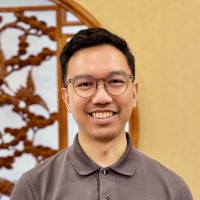
Haziq Jamil is an Assistant Professor in Statistics at Universiti Brunei Darussalam (UBD) within the Faculty of Science, Department of Mathematics. He concurrently serves as a Visiting Fellow at the London School of Economics and Political Science (LSE) Department of Statistics (2024-2027) and will transition to King Abdullah University of Science and Technology (KAUST) as a Research Specialist in August 2025, taking leave from UBD. His academic journey includes a PhD in Statistics (2018) and MSc in Statistics (2014) from LSE, and a BSc & Master in Mathematics, Statistics, Operational Research and Economics (2010) from Warwick University. His research spans statistical theory, methods, and computation with strong social science applications. Core interests include latent variable models, Gaussian processes, Bayesian statistics, and spatio-temporal modeling, particularly applied to Brunei's housing market and psychometric testing. He pioneered I-prior regression methodology using Fisher information kernels and developed bias-reduction techniques for Item Response Theory models. His publication record shows consistent output in high-impact journals with increasing focus on Brunei-specific applications since 2022. Haziq's 15 most recent publications (2022-2025) demonstrate methodological innovation in Bayesian computation, latent variable modeling, and spatial statistics, with growing emphasis on real-world applications in Brunei's housing market and educational assessment. Key trends include development of sparse Gaussian process models for property valuation, spatio-temporal analysis of Brunei's real estate, and bias-adjustment methods for psychometric models – reflecting his dual expertise in theoretical statistics and practical implementation. Teaching Excellence Award in Sciences (Universiti Brunei Darussalam, 2023) Arnold Zellner Thesis Award Honourable Mention (American Statistical Association, 2020) In-Service Training Scheme Scholarship (Brunei Public Service Commission, 2013-2018) Supreme Commander of Royal Brunei Armed Forces Scholarship (2006-2010) Best Student Award 2005 (Persekutuan Guru-Guru Melayu Brunei) Haziq serves as Graduate Programme Coordinator for Mathematics (2021-2025) and Faculty Liaison Committee member at UBD. His consultancy includes defense-related data analysis for Brunei's Ministry of Defence (2021-2022). He leads the Brunei R User Group (2024-2026) and maintains active research collaborations through the Bayesian Computational Statistics and Modelling (BAYESCOMP) group at KAUST. Current projects include open-source statistical tables, I-prior methodology R packages, and quantitative text analysis of Brunei's legislative council meetings. He directs multiple ongoing research initiatives including the Brunei housing market dataset covering 30,000+ transactions across three decades, Hamiltonian Monte Carlo educational tools, and quantitative analysis of Brunei's legislative proceedings. His work bridges theoretical statistics with practical applications in urban planning, defense analytics, and educational assessment within Brunei's unique socio-economic context.
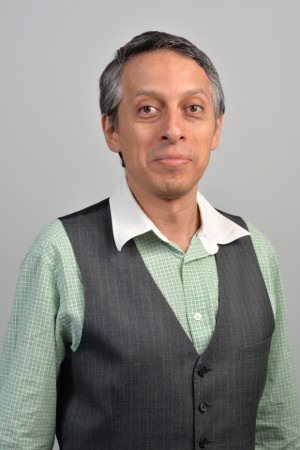
Dr Hugo Maruri-Aguilar is a Lecturer in Statistics at Queen Mary University of London, affiliated with the School of Mathematical Sciences and the Centre for Probability, Statistics and Data Science. His research focuses on algebraic statistics, computer experiments, and statistical modeling using likelihood and penalized likelihood techniques. He explores design of experiments through algebraic methods and develops emulators for computer experiments using polynomial models regularized by smoothness. His research interests include Lasso regression, topological data analysis, and applications in music generation and healthcare. Recent work emphasizes model selection and sparse polynomial prediction. He has collaborated on projects ranging from biomarker prognostic models in heart failure to AI-driven music composition. Dr Maruri-Aguilar has contributed to over 15 peer-reviewed publications across journals like Statistical Papers , Annals of the Institute of Statistical Mathematics , and Technometrics . His methodologies address challenges in optimal design, computational topology, and interdisciplinary applications in music and medicine.