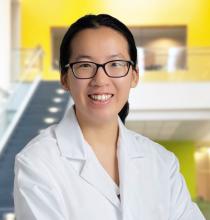
Qihui Lyu is an Assistant Professor in Residence at the University of California San Francisco (UCSF) Department of Radiation Oncology. She holds a PhD in Medical Physics from UCLA (2021) and completed clinical training at the UCLA Medical Physics Residency Program (2023). Her research focuses on image reconstruction, dual-energy CT, treatment plan optimization, and machine learning applications in radiotherapy. Education: B.S. in Physics (Nanjing University, 2016), Ph.D. in Medical Physics (UCLA, 2021) Research: Optimization algorithms for image-guided radiotherapy, machine learning in radiation oncology, and dual-energy CT applications Awards: AAPM BEST award (2022), Early-Career Investigator Symposium First Place (2022), Norm Baily Awards First Place (2022) Her publications emphasize advanced optimization techniques for volumetric modulated arc therapy (VMAT), proton therapy, and FLASH radiotherapy systems, with recent work on deep learning denoising and dual-layer multi-leaf collimator (MLC) integration. Collaborative projects include HDR prostate brachytherapy planning and high-energy X-ray dosing monitoring via tomographic photon detection.
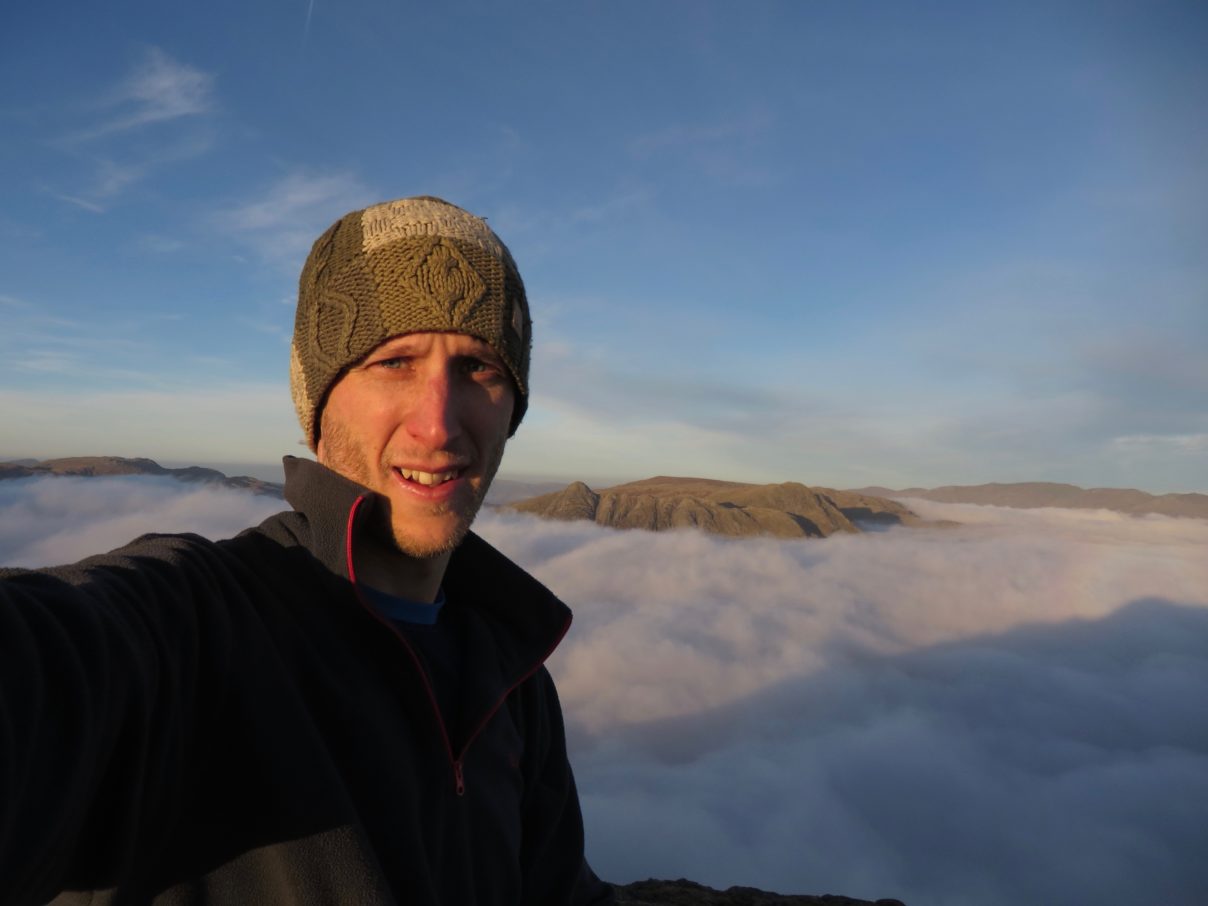
James Leger is a Professor in the Department of Electrical and Computer Engineering at the University of Minnesota , holding the Cymer Professorship for Advanced Optical Systems, Metrology, and Lasers. He directs the Leger Research Group , focusing on micro/nano optics, diffractive optics, and computational imaging for electro-optic and biomedical applications. Education: BS in Applied Physics (Caltech, 1974), PhD in Electrical Engineering (UCSD, 1980) Key Research Areas: Coherent beam combining, laser resonator design, gradient-index metrology, and biomedical sensing via surface plasmon resonance Article Trends: Recent work emphasizes non-line-of-sight imaging using plenoptic data, THz radiation, and spectral unmixing, alongside gradient-index beam shapers and laser vortex generation . His group investigates how passive systems can extract 3D information from scattered light and optimize beam combining architectures. Awards: OSA Fellow (1995), IEEE Fellow (2002), SPIE Fellow (2002), Joseph Fraunhofer Award (1998), George Taylor Research Award (2000) Students: Mentored 17 PhD/MS graduates, including Todd Ballen, Qiwen Zhan, and Eric Shields, with ongoing advising of 7 current students Teaching & Service: Directed lower-division programs at the University of Minnesota, served as Applied Optics topical editor (1997-2003), and chaired conferences for OSA and SPIE . Holds 16 patents in diffractive optics and laser beam combining.
James Osborn is a Research Professor at University of Durham 's Department of Physics , where he leads the free-space optics group and serves as founding director of the Durham University Space Research Centre (SPARC) . As a UKRI Future Leaders Fellow , his work spans atmospheric turbulence modeling , adaptive optics development , and space sustainability through interdisciplinary collaborations. Atmospheric Physics Free-space Optical Communications Astronomical Instrumentation Space Surveillance Space Sustainability Modeling His 15 most recent publications focus on: atmospheric turbulence profiling (Stereo-SCIDAR, SLODAR, SHIMM), adaptive optics for space communications , scintillation noise correction , and telescope enclosure turbulence monitoring . Key trends show integration of machine learning and real-time telemetry in optical system design. Scientific Awards : UKRI Future Leaders Fellowship Supervision : Mentoring Ian Dolby , Kathryn Barrett , and Puttiwat Kongkaew in photonics and space engineering projects. Labs : Develops Stereo-SCIDAR , SHIMM , and SciDome instruments for atmospheric monitoring and space sustainability.
Ollie Farley is a Researcher at the Department of Physics , Durham University , specializing in adaptive optics, atmospheric optical turbulence, and optical communications. His work bridges astronomical instrumentation with practical applications in photonic systems. Research Focus Atmospheric turbulence characterization for ground-space optical links Tomographic wavefront sensing techniques Scintillation noise correction in photometric data Development of turbulence monitoring instruments (24hSHIMM, SHIMM) Analysis of wind-driven artifacts in high-contrast imaging Optimization of adaptive optics for extreme telescopes Publication Trends Farley's recent work emphasizes 24-hour turbulence monitoring, photonic compensation methods for space communication, and urban atmospheric effects. His studies combine simulations, on-sky demonstrations, and instrument development for institutions like ESO and SPIE.
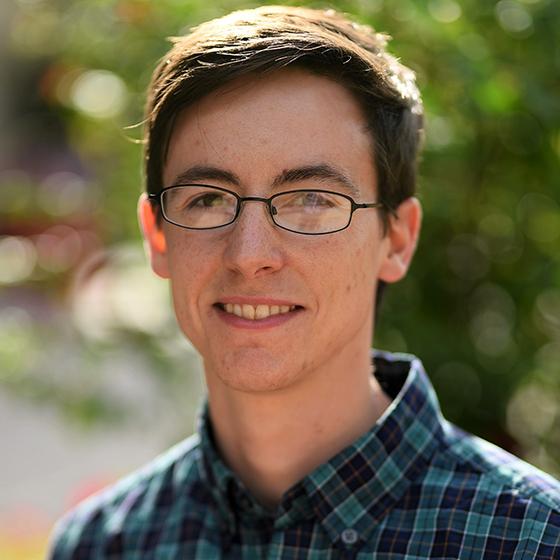
Riley Culberg is an Assistant Professor in the Department of Earth and Atmospheric Sciences at Cornell University, joining in July 2023. He holds a B.Sc. in Computer Science and Geospatial Information Science from the United States Military Academy, and an M.Sc. and Ph.D. in Electrical Engineering from Stanford University. Previously, he was a Hess Postdoctoral Fellow in Princeton University's Department of Geosciences. His research focuses on understanding near-surface hydrology and internal structure of ice sheets and icy planetary bodies using ice-penetrating radar. Key interests include Greenland and Antarctic ice sheet dynamics, englacial water systems, and cryo-hydrologic processes on icy satellites like Europa. Culberg employs quantitative hydrogeophysics, combining in situ observations, electromagnetic models, and geophysical inverse methods to study subsurface dynamics. He collaborates with remote sensing techniques, numerical models, and field measurements to link near-surface processes with climate and ice sheet mass balance. Recent work explores terrestrial analogs for Europa's cryospheric features. His publications emphasize radar-based innovations in glaciology, planetary science, and hydrology. Awards: Not explicitly listed in provided texts. Advising/Grants: No student names or grant details mentioned. Lab/Teams: Likely affiliated with Cornell's Earth and Atmospheric Sciences research groups focused on cryospheric processes and radar geophysics.
Dr. Karen Eguiazarian is a Professor of Signal Processing at the Department of Computing Sciences , Tampere University . He leads the Computational Imaging research group and has served as head of the Signal Processing Research Community (SPRC) at Tampere University of Technology (2016-2018). Education: M.Sc. in Mathematics, Yerevan State University, Armenia (1981) Ph.D. in Physics and Mathematics, Moscow State University, Russia (1986) Doctor of Technology in Signal Processing, Tampere University of Technology, Finland (1994) His research focuses on Computational Imaging , Compressed Sensing , and Efficient Signal Processing Algorithms , with significant contributions to Image/Video Restoration and Compression . Recent work includes AI-driven phase imaging, hyperspectral reconstruction, and noise-robust algorithms for remote sensing and biomedical applications. Scientific Awards: Service Award from the Society for Imaging Science and Technology (IS&T) (2014) Honorary Doctoral Degree from Don State-Technical University, Russia (2015) Dr. Eguiazarian has supervised 25 doctoral theses and published over 650 papers. He serves as Editor-in-Chief of the Journal of Electronic Imaging and associate editor of the IEEE Transactions on Image Processing , while co-founding Noiseless Imaging Oy , a Tampere University spin-off.
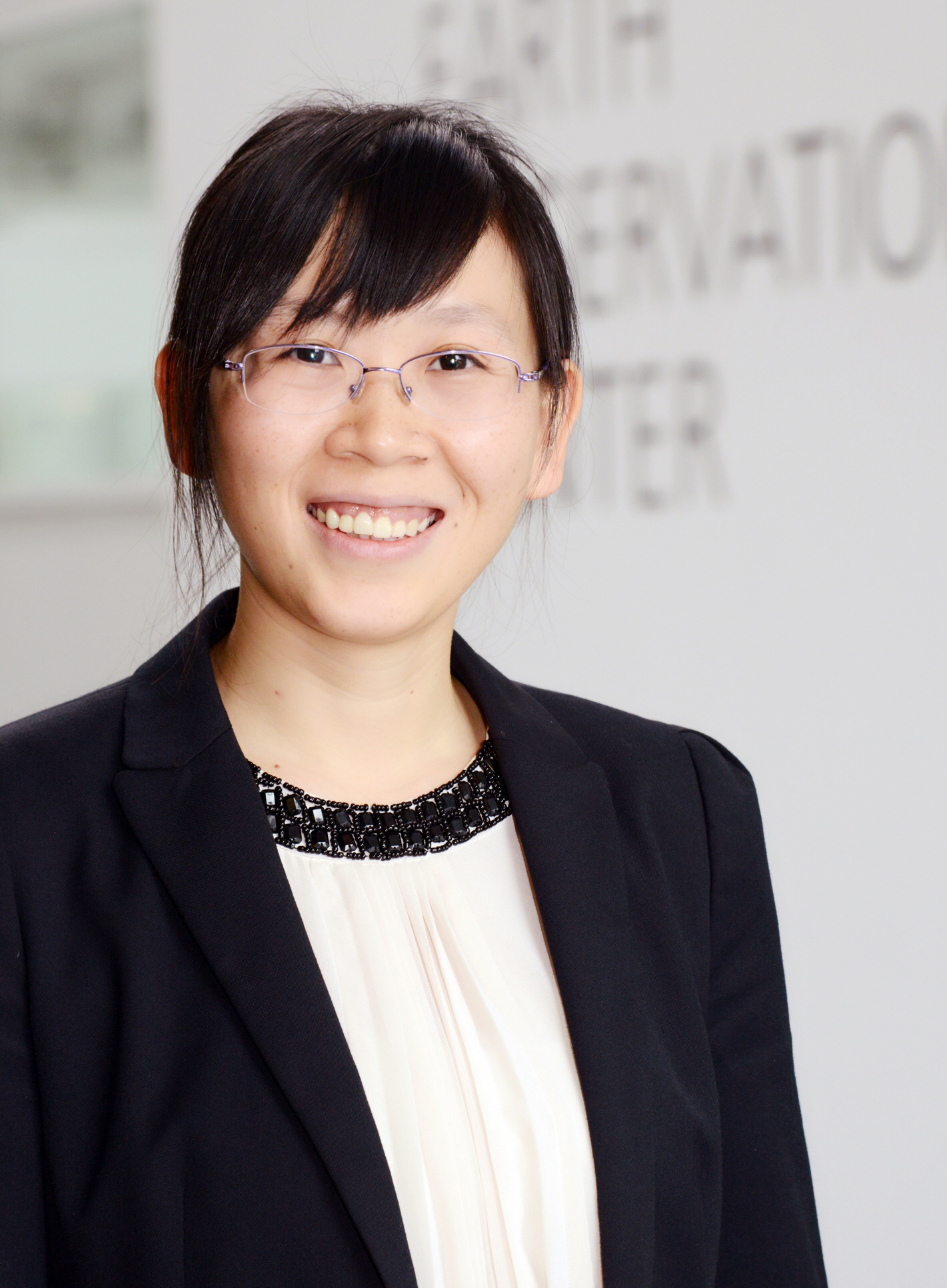
Xiaoxiang Zhu is a Full Professor for Data Science in Earth Observation at Technical University of Munich (TUM) and Director of the International AI Future Lab (AI4EO). She leads interdisciplinary research on signal processing and machine learning applied to Earth observation (EO) data, addressing global challenges like urbanization and climate change. Her work focuses on extracting geoinformation from big EO datasets using innovative AI techniques. Education & Positions: Professor (W3) since 2019, TUM Former Head of EO Data Science Department at German Aerospace Center (DLR) Adjunct Teaching Professor (2013–2015) Research Interests: Deep learning in SAR and multispectral imagery Global urban morphology mapping Uncertainty quantification in AI models EO data fusion and big data analytics Climate change monitoring via satellite data Articles Trends: Her publications emphasize AI-driven solutions for EO challenges, including SAR tomography, benchmark datasets (e.g., So2Sat LCZ42), and uncertainty estimation in neural networks. Over 220 journal papers and 173 conference papers highlight her contributions to geosciences and remote sensing. Awards: IEEE Fellow (2021) ERC Grants (Starting & Proof of Concept) Heinz Maier-Leibnitz-Preis (2015) Member of German and Bavarian Academies of Sciences Advising & Grants: Supervised PhD students (e.g., Mou) Secured €10M+ in research funding Co-led Helmholtz AI Research Field MASTr (2019–2022) Labs & Teams: Founder of AI4EO Lab Co-leader of Munich Data Science Research School (MUDS) Member of ELLIS Society and IEEE committees
Haobo Wang is a researcher affiliated with Zhejiang University , specifically within the School of Software Technology under the College of Computer Science and Technology . His work bridges Computer Science and Electrical Engineering , focusing on Machine Learning , Signal Processing , and Remote Sensing .
Jia Liang is a researcher at Henan Polytechnic University's School of Electrical Engineering and Automation, with a focus on Machine Learning , Compressed Sensing , and Privacy-Preserving Techniques . His work bridges Computer Science and Signal Processing , particularly in Radar Imaging and Medical Image Analysis . Key Collaborations: Di Xiao, Ying Luo, Qun Zhang, Hui Huang Technical Expertise: Federated Learning, SAR Imaging, Compressive Sensing, Adversarial Learning His research emphasizes secure data processing in IoT and cloud environments, with recent innovations in cross-disciplinary applications like biosignal analysis for cysticercosis diagnosis . Publications span top venues including IEEE Transactions on Aerospace Systems and Remote Sensing . Notable trends include privacy-preserving machine learning for federated systems and 3D radar imaging of rotating targets, alongside medical imaging solutions for chest radiographs and optical coherence tomography .
Peter Weinberg is a Professor of Cardiovascular Mechanics in the Department of Bioengineering at Imperial College London, Faculty of Engineering. He is based at the Royal School of Mines on the South Kensington Campus and can be contacted at p.weinberg@imperial.ac.uk. His research is centered on the biomechanics of cardiovascular diseases, particularly atherosclerosis and heart failure. He leads a research group focused on fluid dynamics, endothelial function, and advanced ultrasound imaging techniques. Education: Natural Sciences, University of Cambridge (Scholarship recipient) DIC, MSc, PhD in Physiological Flow Studies, Imperial College London Lady Davis Postdoctoral Fellowship, Technion – Israel Institute of Technology His research interests lie at the intersection of biomedical engineering, cardiology, and biomechanics . He investigates how hemodynamic forces such as wall shear stress influence endothelial permeability and atherosclerosis development. A major focus is on transcytosis of LDL , disturbed blood flow patterns , and non-invasive detection of heart failure using B-mode ultrasound and wave intensity analysis. His lab develops novel ultrasound imaging methods, including super-resolution techniques using nanodroplets and microbubbles, and coherence-based beamforming for 3D vascular mapping. His recent publications (2021–2025) demonstrate a strong trend toward advanced ultrasound diagnostics and molecular mechanobiology . The articles span from computational beamforming improvements to in vivo validation of endothelial activation pathways. Key themes include ultrasound velocimetry , macromolecule transport , shear stress modeling , and early disease detection . The work combines engineering innovation with deep biological inquiry, aiming to translate biomechanical insights into clinical tools. Scientific Awards and Honors: Fellow, Royal Microscopical Society Ordinary Member, The Physiological Society Member, British Atherosclerosis Society Committee Member, London Microcirculation Group Committee Member, British Society for Cardiovascular Research Committee Member, British Atherosclerosis Society Lady Davis Fellow Peter Weinberg has held key leadership roles in the Department of Bioengineering, including Director of Postgraduate Studies (Research) , Director of Research , and Academic Line Manager . He led the department’s efforts in the Research Assessment Exercise 2008 and Research Excellence Framework 2014. He founded and served as president of the Bioengineering Society (now BioMedEng), and was Associate Editor of the journal Atherosclerosis . He has organized major conferences such as the joint British Society for Cardiovascular Research and British Atherosclerosis Society meeting, and chaired BioMedEng18, attracting over 500 delegates. He has secured research grants, though specific details are not listed in the text. He leads a research laboratory in the Department of Bioengineering at Imperial College London, focusing on cardiovascular mechanics . The lab website details ongoing projects in ultrasound imaging, endothelial mechanobiology, and atherosclerosis modeling. The team uses a combination of computational modeling, in vitro bioreactors, and in vivo imaging to study vascular function and disease progression.
Müjdat Çetin is a Professor of Electrical and Computer Engineering and serves as the Robin and Tim Wentworth Director of the Goergen Institute for Data Science and Director of the New York State Center of Excellence in Data Science at the University of Rochester. He previously held faculty positions at Sabancı University and was a Research Scientist at MIT, with visiting roles at Boston University, Northeastern University, and MIT. Education: PhD in Electrical Engineering, Boston University, 2001 MS in Electrical Engineering, University of Salford, 1995 BS in Electrical Engineering, Boğaziçi University, 1993 His research lies at the intersection of signal processing, machine learning, and data science, with applications in biomedical imaging, radar, and brain-computer interfaces. He develops probabilistic and deep learning models for robust information extraction from noisy and complex data. His work emphasizes computational imaging, sparse representations, and multimodal data fusion. The recent publications reflect a strong trend toward integrating Bayesian methods and deep learning in imaging sciences, particularly in medical image reconstruction, neuroimaging analysis, and radar systems. His group actively explores transformer architectures, federated learning, and model-based deep learning for solving inverse problems in imaging. Scientific Awards and Honors: IEEE Fellow IEEE Signal Processing Society Best Paper Award IET Radar, Sonar and Navigation Premium Award Elsevier Signal Processing Best Paper Award Turkish Academy of Sciences Distinguished Young Scientist Award (GEBİP) ODTÜ Mustafa Parlar Foundation Research Incentive Award TÜBİTAK Career Award Boston University Best Engineering Research Award Professor Cetin has advised numerous PhD and Master’s students and led significant research grants in data science and imaging. He has served as a Senior Area Editor for IEEE Transactions on Image Processing and IEEE Transactions on Computational Imaging, and held editorial roles in several top journals. He has chaired major conferences including ICASSP, ICIP, and IVMSP workshops. He leads a multidisciplinary research group focused on data science and imaging, collaborating with neuroscientists and medical researchers. The team develops novel algorithms for brain-computer interfaces, medical image analysis, and remote sensing systems, often integrating machine learning with physical models of data acquisition.