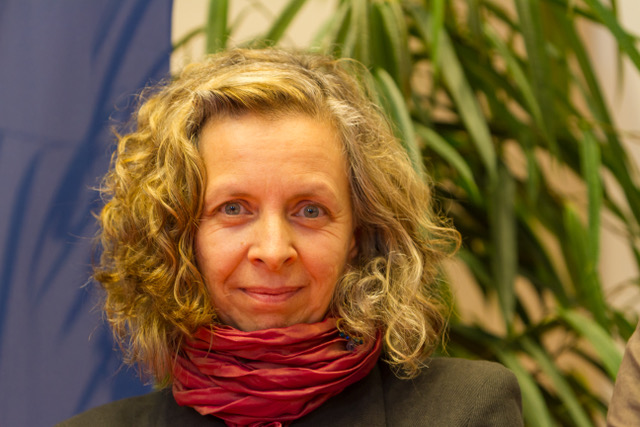
Lillie Padilla is an Assistant Professor of Spanish Linguistics at Sam Houston State University's Department of World Languages and Cultures. Holding a Ph.D. and M.A. in Spanish Linguistics from Arizona State University alongside a Bachelor of Arts from the University of Ghana, her research explores interdisciplinary connections between: Afro-Latinx representation in educational materials Discourse analysis and language ideologies Sociolinguistic studies in Equatorial Guinea Critical race theory applications in language teaching Her work focuses on Spanish subject pronoun expression patterns in multilingual contexts and curriculum development for inclusive pedagogy. Recent publications examine: Representation gaps in Spanish language textbooks Methodological challenges in Equatorial Guinea research Critical discourse analysis of Netflix's Elite series Intersectional representation of Afro-Latinx women Scientific achievements include: Finalist for American Association of Linguistics 2025 award for co-edited volume Representation, Inclusion and Social Justice in World Language Teaching Padilla's research continues to shape conversations about linguistic diversity and marginalized voices in language education through both empirical studies and theoretical frameworks.
Andrew Lynch serves as Professor and Associate Dean for Program Development in the Department of Modern Languages & Literatures within the College of Arts and Sciences at the University of Miami. His academic leadership extends beyond teaching responsibilities to include significant administrative contributions to program development across the institution. Lynch's research interests center on sociolinguistics with particular focus on Spanish language dynamics in Miami, heritage language socialization, bilingualism, and language ideology. His work examines how language functions within specific social contexts, especially in workplace environments where Spanish heritage speakers navigate linguistic demands. He investigates the complex interplay between language, identity, and social structures in postmodern urban settings, with special attention to the Cuban diaspora experience in South Florida. His publication record reveals consistent scholarly engagement with heritage language education, Spanish language variation, and the sociolinguistic landscape of global cities. Lynch's research demonstrates how language practices in Miami reflect broader patterns of linguistic adaptation and resistance within diasporic communities. His work often addresses the tension between linguistic heritage and social integration, examining how language ideologies shape educational practices and community identity. Lynch's scholarly contributions span multiple formats, including single-authored books, co-authored publications, handbook chapters, and journal articles in both English and Spanish. His work frequently appears in high-impact sociolinguistics and language education journals, reflecting his interdisciplinary approach that bridges theoretical linguistics with practical educational implications.
Salvatore Callesano is an Assistant Professor of Hispanic Linguistics at the University of Illinois Urbana-Champaign (UIUC), affiliated with the Department of Spanish and Portuguese and the College of Liberal Arts & Sciences. His research focuses on sociolinguistics, particularly bilingual communities in the U.S., language perception, and digital media representations of bilingualism. He employs both quantitative and qualitative methods to investigate how language variation interacts with identity, media, and social structures. Dr. Callesano collaborates on Project 16 of the Asociación de Lingüística y Filología de América Latina, addressing linguistic aspects of Latin American diaspora communities. His work bridges traditional sociolinguistic inquiry with modern digital practices, analyzing how social media shapes perceptions of language use among Latinx populations. Recent research highlights include studies on code-switching in Miami's linguistic landscape, dialect perception, and the role of media in mediating language attitudes. His publications span peer-reviewed articles and book reviews, emphasizing empirical rigor and interdisciplinary connections between language, culture, and society.
Christina García, Ph.D., is an Associate Professor of Spanish at Saint Louis University's Department of Languages, Literatures, and Cultures, within the College of Arts and Sciences. She specializes in Phonetics, Phonology, Sociolinguistics, and Second Language Acquisition, with a focus on Ecuadorian Spanish. Dr. García teaches courses such as Spanish Phonetics & Phonology, Spanish for the Health Professions, and Spanish in the World. Education: Ph.D., The Ohio State University, 2015 M.A., The Ohio State University, 2011 B.A., The Ohio State University, 2009 Her research interests emphasize the application of phonological principles to language teaching and the sociolinguistic variation of Spanish. She is a member of the Professional Latino Action Network (PLAN), reflecting her community engagement. Awards: 2017 Saint Louis University Faculty Commitment to Experiential Learning Award No advising or grant details are explicitly mentioned. She is affiliated with Morrissey Hall, Saint Louis, MO.
Jennifer Gómez Menjívar is Professor and Director of the M.A. in Media Industries and Critical Cultural Studies at the University of North Texas. Her research examines historical and ethno-linguistic movements influencing text production, circulation, and reception across print media, screen cultures, and digital communities. With over 18 years of teaching experience, she previously held positions at international organizations including the UNECE and UNDP. Her scholarly interests span media linguistics, film adaptation, digital activism, hemispheric animation histories, Indigenous sovereignty media, and Spanish-language media. Her publications demonstrate interdisciplinary work bridging media studies, cultural history, and postcolonial theory. Her extensive publication record includes books such as Tropical Tongues: Language Ideologies, Endangerment, and Minority Languages in Belize (2018) and Black in Print: Plotting the Coordinates of Blackness in Central America (2023), as well as co-edited volumes on Indigenous technology and hemispheric Blackness. She received a Senior Research Fellowship at Freie University Berlin for her upcoming work on Indigenous sovereignty media. Gómez Menjívar teaches courses including Introduction to Graduate Studies in Media Arts, Women in Film, and Global Media. She also mentors students in critical media analysis and serves as faculty advisor for media research projects.
Mariška Bolyanatz Brown is an Assistant Professor in the Department of Spanish and French Studies at Occidental College (Oxy), appointed in 2017. She holds a B.A. from Gordon College, an M.A. from the University of Illinois at Chicago, and a Ph.D. from UCLA. Her research focuses on socially conditioned variation in speech production and perception in Spanish, particularly examining the sociolinguistic implications of phonetic features in Chilean and Salvadoran Spanish. She teaches courses such as Introduction to Linguistics, Spanish in the United States, and Spanish Sociolinguistics, emphasizing inclusive pedagogy and data analysis skills. Education: B.A., Gordon College, Massachusetts M.A., University of Illinois, Chicago Ph.D., University of California, Los Angeles (UCLA) Research Interests: Sociolinguistics, Phonetics, Spanish Language Variation, Linguistic Discrimination, Heritage Language Maintenance, and the social meanings of phonetic variation in Spanish. Her work analyzes acoustic and morpho-phonological patterns to explore how speech features correlate with socioeconomic identity and intergroup perception. Publications: Dr. Bolyanatz Brown has published widely on topics such as coda /s/ weakening in Chilean Spanish, cross-dialectal acoustic differences in /s/, and sociophonetic perception of intervocalic /k/ voicing. Her research bridges laboratory-based phonetic analysis with sociolinguistic theory, contributing to debates on sound change and language variation. Teaching Philosophy: Her courses foster critical engagement with language use, encouraging students to connect linguistic patterns to broader societal issues such as racism and education policy. She emphasizes fieldwork and data collection, as seen in her Spanish in the United States course, where students conduct community-based research in Los Angeles. Labs/Teams: No specific lab is mentioned, though her research involves collaborative fieldwork and acoustic analysis projects with colleagues like Brandon Rogers and Franny Brogan.
Bistra Andreeva is a full Professor of Phonetics and Phonology at Saarland University, Department of Language Science and Technology. She is also a principal investigator of the DFG-funded project “Judeo-Spanish in Bulgaria: a contact language between archaism and innovation” (2022-2025) and leads or co-leads several other externally funded projects on prosody, information structure, and language contact. She teaches and has taught at Saarland University, Sofia University “St. Kliment Ohridski”, and other European universities. Education & Academic Background Habilitation (kumulative Habilitationsschrift): “Contrastive Prosody: Bulgarian vs. German”, Saarland University, 2016. PhD (Dr. phil.): “Zur Phonetik und Phonologie der Intonation der Sofioter-Varietät des Bulgarischen”, Saarland University, 2007. Research Interests Andreeva’s research focuses on the phonetics and phonology of intonation and rhythm, cross-language and individual differences in the production and perception of syllabic prominence, the relation between intonation and information structure, minority languages (especially Judeo-Spanish in Bulgaria), and the interaction between information density and prosodic structure. Her methodological expertise includes experimental phonetics, corpus-based studies, and acoustic analysis. Major Projects SFB 1102 C1: “Information Density and the Predictability of Phonetic Structure” (DFG, 2014-2026) JuSpa: “Judeo-Spanish in Bulgaria: a contact language between archaism and innovation” (DFG, 2022-2025) Prosodic aspects of Bulgarian compared to other languages with lexical stress (Bulgarian National Science Fund, 2019-2024) Prosodic manifestations of focus in French and English from a Bulgarian point of view (DAAD & Sofia University, 2021-2023) Scientific Awards & Recognition While no major named prizes are listed, Andreeva’s work has been continuously supported by competitive grants from the German Research Foundation (DFG), DAAD, and Bulgarian National Science Fund. Her publications appear in top-tier journals and conference proceedings (Journal of the Acoustical Society of America, Interspeech, Speech Prosody, International Congress of Phonetic Sciences). Teaching & Supervision She offers a broad spectrum of courses including Experimental Phonetics, Prosody, Phonetics & Phonology of Slavic Languages, Introduction to Instrumental Phonetics, and seminars on language contact. She has supervised numerous BA, MA, and PhD theses and regularly teaches at the PhD School of Sofia University. Labs & Teams She is affiliated with the Phonetics Laboratory at Saarland University and collaborates closely with the Institute for Bulgarian Language (Bulgarian Academy of Sciences), working in interdisciplinary teams involving phoneticians, computational linguists, and field linguists.
Ana Celia Zentella is a distinguished Professor in the Department of Ethnic Studies at the University of California, San Diego, renowned for pioneering "anthro-political linguistics" that examines language through sociopolitical and justice-oriented frameworks. Her work centers on U.S. Latin@ language communities, challenging linguistic discrimination and advocating for language rights. Education: Ph.D. in Educational Linguistics, University of Pennsylvania M.A. in Romance Languages and Literatures, Pennsylvania State University B.A. in Spanish, Hunter College (Bronx) Zentella's research critically analyzes U.S. Latin@ varieties of Spanish and English, Spanglish, and language socialization in families, with particular focus on Puerto Rican communities. She exposes how English-only laws and anti-bilingual education policies facilitate linguistic profiling that marginalizes communities. Her scholarship consistently bridges academic rigor and community advocacy, emphasizing "el habla del pueblo" (the people's speech) as resistance against top-down language classifications. Her publications reveal enduring themes: language as a site of political struggle (2018-2023), border linguistics examining Tijuana-San Diego dynamics (2013-2016), and historical analyses of Nuyorican language (2004). She challenges harmful frameworks like the U.S. Census Bureau's "linguistically isolated" category while documenting language revitalization efforts in multilingual urban centers. Scientific Awards: British Association of Applied Linguistics Book Prize (1997) Association of Latina and Latino Anthropologists Book Award (1997) Manhattan's "Doctor Ana Celia Zentella Day" declaration (1997) LASA Public Intellectual of the Year (2014) Society for Linguistic Anthropology Public Outreach Award (2016) American Academy of Arts and Sciences induction (2023) Choice Outstanding Academic Title (2018) Zentella actively mentors through community-engaged scholarship, co-authoring Multilingual San Diego (2008) and Multilingual Philadelphia (2010) with undergraduates. Her public outreach includes challenging linguistic erasure and advising policymakers on language-inclusive practices, demonstrating consistent commitment to translating academic work into tangible community impact.
Shannon Barrios is an Associate Professor in the Department of Linguistics at the University of Utah, where she has served since 2022. She co-directs the Speech Acquisition Lab and specializes in second language acquisition, phonetics/phonology, and psycholinguistics. Her research explores how adult learners develop perceptual and lexical representations of novel phonological contrasts, with a focus on cross-language speech perception, orthographic effects, and social factors in input processing. BA, Spanish (SUNY Geneseo, 2004) MA, Linguistics (Syracuse University, 2007) PhD, Linguistics (University of Maryland, 2013) Her research interests span adult second language acquisition , phonolexical development , and accent bias . She investigates how learners process phonological contrasts, the role of orthography in speech perception, and the influence of social roles (e.g., teachers vs. peers) on language learning. Her work combines behavioral experiments, ERP/MEG neuroimaging, and computational modeling. Barrios’ recent publications (2024–2020) focus on representational fuzziness , talker variability , and lexical contrast mechanisms . Her 2024 Languages paper proposes a factorial typology for evaluating auditory word recognition scenarios, while her 2024 JASA Express study highlights individual listener variation in cross-language speech perception. Earlier works examine allophone acquisition, orthographic input effects, and neural correlates of phonological mapping. She has received two teaching awards from the University of Maryland (2013). Her teaching portfolio includes undergraduate and graduate courses in phonetics , psycholinguistics , and second language acquisition theory . She also leads workshops on research ethics, mentee development, and academic literacies.
Brendan Regan is an Associate Professor of Spanish & Linguistics at Texas Tech University, directing the Sociolinguistics & Bilingualism Research Lab. He coordinates Hispanic Linguistics programs at both undergraduate and graduate levels. His research focuses on sociolinguistics, sociophonetics, and language variation, employing mixed-methods approaches including experimental design, corpus analysis, and discourse analysis. Education: Ph.D., The University of Texas at Austin (2017) M.A., Temple University B.A., University of Richmond Research Interests: His work addresses sociolinguistic variation, bilingualism, SLA, dialect contact, and language attitudes. Recent studies explore phonetic variation in Andalusian Spanish, language ideologies in heritage speakers, and place-name variation in Texas. Lab & Collaborations: The lab focuses on language variation in West Texas, offering research opportunities for students. Collaborative projects include corpus-based analyses of Spanish dialects and experimental studies on listener perception.
Dr. Martha Sidury Christiansen is a Professor of Applied Linguistics/TESOL at the University of Texas at San Antonio , where she serves in the College of Education and Human Development . She is the Principal Investigator of Project RESPETO , a NSF-funded initiative exploring racial equity in engineering education. Her work spans sociolinguistics, digital literacies, and raciolinguistic analysis, with a focus on transnational multilingual communities. Born in Veracruz, Mexico Ph.D. in Foreign/Second Language Education (Ohio State University, 2013) M.A. in English Composition (Indiana University, 2007) B.A. in English Language Teaching (Universidad Veracruzana, 2002) Her research examines how transnational youth navigate digital spaces through multiliteracies , challenges Western academic writing norms via Mexican decolonial methodologies , and investigates raciolinguistic intersections in identity formation. The 15 most recent publications reveal a strong focus on digital communication , transnationalism , and critical pedagogy across journals like TESOL Quarterly and Language@Internet . 2023-2025: Expanding raciolinguistic frameworks in digital contexts 2021-2022: Analyzing multimodal identity construction 2019-2020: Exploring Mexican bilinguals' online language use She has received multiple honors including ACUE Fellow (2023), Fulbright Scholar (2017), and Faculty Leadership Fellow (2021-2022). Her presentations at conferences like ICOLLITE and DDVM Lab highlight her expertise in critical sociolinguistic awareness and digital discourse analysis . Dr. Christiansen actively consults for nonprofits on linguistic equity and multilingual education .
D. Eric Holt is an Associate Professor of Spanish and Linguistics at the University of South Carolina, affiliated with the Department of Languages, Literatures, and Cultures and the College of Arts and Sciences. He has held academic appointments since 1994, including visiting roles at Georgetown University and lecturing positions in Ecuador and Spain. His expertise spans Hispanic linguistics, historical linguistics, second language acquisition, and phonological theory, with a focus on Optimality Theory and its applications to Spanish and Portuguese. Educated at Occidental College (BA), Georgetown University (MS, PhD), and with extensive summer programs in linguistics, Holt's research explores sound change, dialectology, and L2 pronunciation acquisition. He has supervised numerous graduate theses and dissertations, including notable works on connected speech perception and language contact phenomena. His teaching portfolio includes advanced courses on Spanish linguistics, phonetics, and historical language evolution. Holt has led international study programs in Spain, Costa Rica, and Ecuador, and contributes to academic service as an associate editor of Studies in Hispanic and Lusophone Linguistics and through professional organizations like Phi Beta Kappa. Holt's grants include funding for research on L2 speech perception and技术创新 in pronunciation teaching. He has presented globally at conferences such as NWAV and LSA, and his work appears in top journals like Probus and Georgetown University Round Table . His current projects include books on Optimality Theory in Spanish linguistics and debunking language myths.
Jeanna Matthews is a Full Professor of Computer Science at Clarkson University and an affiliate at Data and Society. She holds a PhD from UC Berkeley (1999) and teaches courses ranging from operating systems to cybersecurity. Her research focuses on algorithmic transparency, AI ethics, and societal impacts of automated systems. Matthews is a prominent ACM leader, serving on multiple committees including the Technology Policy Subcommittee on AI Accountability. She has pioneered work on forensic software analysis in criminal justice systems and delivered DEF CON presentations on virtualization security and adversarial testing. Awards include ACM Distinguished Speaker and Fulbright Specialist roles. Her work emphasizes open-source tools and critical thinking in education, extending to global service learning programs in the Dominican Republic and Brazil. Education: PhD in Computer Science (UC Berkeley, 1999), B.S. in Math/Computer Science (Ohio State, 1994), B.A. in Spanish (SUNY Potsdam, 2016). Research Interests: Cybersecurity vulnerabilities, algorithmic accountability frameworks, automated decision systems in justice contexts, and ethical AI design. Recent projects include investigating bias in DNA forensic software through a Brown Institute grant and analyzing political polarization on social platforms. Awards & Recognition: ACM Distinguished Speaker (2018-present) Fulbright Specialist (2018-present) 2018-2019 Brown Institute Magic Grant ACM SIGOPS Chair (2011-2015) ACM Special Interest Group Governing Board Chair (2016-2018) Teaching & Outreach: Designed courses integrating open-source tools and critical inquiry, including abroad programs in Mexico, Brazil, and the Dominican Republic. Advocates for lifelong learning strategies and questioning underlying assumptions in computing systems. Key Projects: Forensic Software Accountability: Examining discrepancies in DNA analysis tools Algorithmic Transparency: Frameworks for auditing automated systems Cybersecurity Education: Adversarial testing methodologies for justice software
Demirdache Hamida is a Full Professor of Linguistics at Nantes University and Director of the Nantes Linguistics Lab (LLING UMR 6310, CNRS). She holds a PhD from MIT (1991) and Habilitation à diriger des recherches from Nantes University (2003). Her research focuses on syntax-semantics interfaces, linguistic diversity, and formal syntactic theory with emphasis on Semitic languages and under-represented languages like Salish. She has pioneered experimental methodologies to probe logical form syntax, particularly in studies of temporal anaphora, distributivity, and quantification. Leadership roles: Founded LLING lab in 2004, elevated to CNRS status in 2016 Research grants: Coordinator of ANR-DFG projects (2022-2025), CHILL serious game initiative (2018-2021) Awards: Palmes académiques (2011), Descartes-Huygens Prize (2003), multiple PEDR/PES excellence awards Her experimental work bridges theoretical syntax and empirical child language studies, with recent focus on cross-linguistic variation in telicity and scalar implicatures. Supervised 15 PhD theses (including 3 double-doctorates) and 54 master’s theses. Active in international research networks including the Van Riemsdijk Foundation and Carnot Cognition Institute. LLING lab specializes in formal linguistics with particular expertise in: syntax-semantics interfaces, multilingualism, and experimental methods. Current projects investigate Boolean connectives (FRAL project), heritage language maintenance (AThEME EU project), and logical language acquisition through game-based learning (Cool Boole School).
Nicholas Henriksen is an Arthur F. Thurnau Professor and Professor of Spanish & Linguistics at the University of Michigan, where he has held faculty positions since 2012. His research focuses on laboratory phonology, experimental phonetics, sociophonetics, and intonational grammar in Spanish and other Romance languages. Notable projects include studies on sound change in Andalusian and Patagonian Spanish, bilingualism (Afrikaans-Spanish), and second language speech learning. He directs the Michigan Speech Production Lab and co-leads initiatives integrating gender-diverse language into Romance curricula. Henriksen earned a PhD in Linguistics from Indiana University (2010), MA in Hispanic Linguistics (2006), and BA in Spanish/Mathematics from Rutgers (2003). His teaching spans undergraduate and graduate courses in Spanish linguistics, sociolinguistics, and phonetics, emphasizing applied research and pedagogical innovation. He has received prestigious awards, including the LSA Early Career Award (2021) and the Class of 1923 Teaching Award (2018). His research has been funded by grants from the University of Michigan ADVANCE Program and the Humanities Collaboratory, supporting projects like From Africa to Patagonia: Voices of Displacement . Collaborations include work with scholars in Argentina, South Africa, and Spain, examining language contact, heritage language maintenance, and sociolinguistic identity. Publications span over 30 peer-reviewed articles and book chapters, with a focus on phonetic variation, intonation, and bilingualism. He mentors graduate students in experimental phonetics and sociolinguistics, with advisees contributing to studies on Andalusian Spanish, heritage language acquisition, and voice quality.