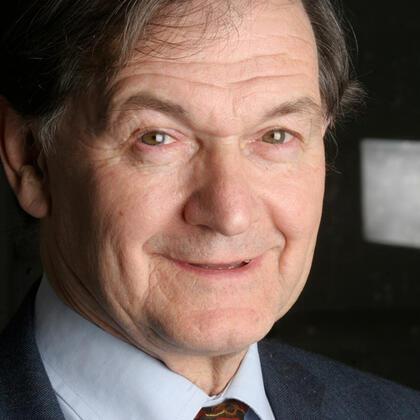
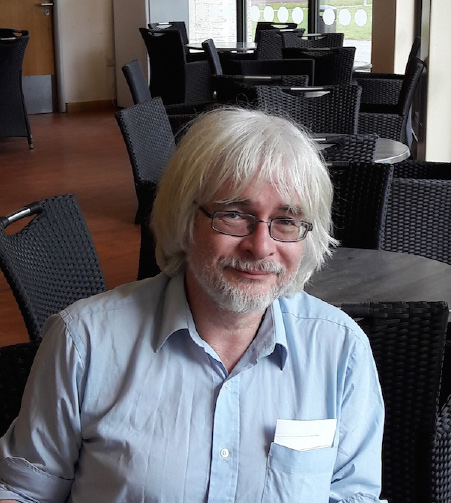
Sir Roger Penrose is a British mathematician and theoretical physicist renowned for his contributions to general relativity and cosmology. He held the Rouse-Ball Chair of Mathematics at the University of Oxford since 1973 and served as Professor of Geometry at Gresham College (1998–2001). His work with Stephen Hawking established the singularity theorems in black hole physics. Penrose also pioneered concepts like Penrose diagrams for visualizing spacetime and Penrose tiling in geometry. Education: PhD in Algebraic Geometry from the University of Cambridge (1957). Research Interests: Black holes, cosmology, quantum mechanics, consciousness studies, and mathematical physics. His theories include conformal cyclic cosmology, proposing an eternal succession of Big Bang events. He explored consciousness in The Emperor’s New Mind and Shadows of the Mind , arguing quantum processes underpin mental phenomena. Penrose’s accolades include the Nobel Prize in Physics (2020), Copley Medal (2008), and knighthood (1994).
Eleni Alexandra Kontou is a Lecturer in Mathematics Education with a primary affiliation in Theoretical Physics. Her work bridges mathematical formalism and gravitational physics, focusing on energy conditions, black hole thermodynamics, and quantum field theory in curved spacetime. She actively contributes to research in singularity theorems, wormhole stability, and semiclassical gravity. Current research areas include General Relativity , Quantum Field Theory , and Black Hole Physics . Key contributions involve Quantum Energy Inequalities , Hawking Radiation , and Effective Field Theory applications. Her publications address causal structure , cosmological models , and dimensional compactification effects . Recent work analyzes energy conditions in large N CFTs, wormhole stability, and gravitational microlensing phenomena. She collaborates internationally and maintains an ORCID profile with 7 citations.
Christina Sormani is a Professor in the Department of Mathematics at Lehman College, City University of New York (CUNY), and a doctoral faculty member at the CUNY Graduate Center. She has been a key figure in geometric analysis since joining Lehman College in Spring 2000. Her research spans Riemannian geometry, metric spaces, and geometric measure theory, with a focus on the intrinsic flat distance, a concept she co-developed with Stefan Wenger. She has held visiting positions at prestigious institutions including the Institute for Advanced Study (IAS), Simons Center for Geometry and Physics (SCGP), and MSRI. Her education includes a PhD from the Courant Institute (1996), followed by postdoctoral positions at Johns Hopkins and Harvard University. She is deeply committed to mentoring and outreach, especially for underrepresented groups in mathematics. Sormani’s research interests center on convergence of Riemannian manifolds, particularly in contexts involving scalar curvature, Ricci curvature, and general relativity. She investigates the stability of geometric theorems such as the Positive Mass Theorem and scalar rigidity results using intrinsic flat convergence. Her work often involves constructing explicit examples, analyzing limit spaces, and proving compactness theorems. She has organized major workshops like VWRS and long programs at SCGP and Fields Institute. Her publications reveal a consistent focus on intrinsic flat convergence, its applications in general relativity, and its interplay with other notions like Gromov-Hausdorff and measured Gromov-Hausdorff convergence. The articles show a trend toward geometric stability, limit spaces with singularities, and the behavior of scalar curvature under weak convergence. She has received significant recognition for her work and service: Fellow of the American Mathematical Society (2015) Fellow of the Association for Women in Mathematics (2024) Sormani has advised numerous doctoral students and postdocs, including Dan Lee, Sajjad Lakzian, Raquel Perales, and Brian Allen. She has secured research funding from the NSF and PSC-CUNY. Her outreach includes organizing the "Inspiring Talks in Mathematics" lecture series and maintaining online resources for underrepresented mathematicians. She is actively involved in editorial boards and professional committees, contributing to the broader mathematical community. She is affiliated with research groups and teams focused on geometric analysis, scalar curvature, and convergence, including collaborations with Misha Gromov, Stefan Wenger, and others. Her recent work explores spacetime intrinsic flat convergence and null distances in Lorentzian geometry.
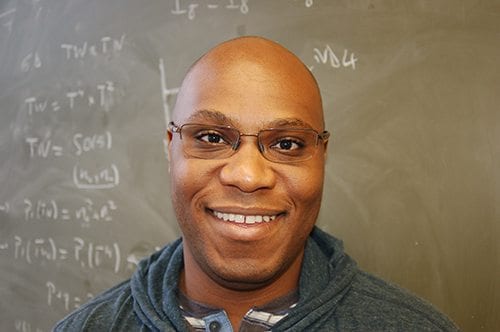
Ibrahima Bah is an Associate Professor in the Department of Physics & Astronomy at Johns Hopkins University (JHU), affiliated with the Krieger School of Arts and Sciences. His research focuses on theoretical high-energy physics, cosmology, and string theory, particularly exploring holography and the interplay between quantum field theories, gravity, and black holes. He joined JHU in 2017 after completing a PhD at the University of Michigan (2012), followed by postdoctoral positions at the University of Southern California, the Institut de Physique Théorique in France, and the University of California, San Diego. Education: PhD in Physics & Astronomy, University of Michigan, Ann Arbor (2012) Bachelor's/Master's degrees (not explicitly stated in text) His research interests include supergravity, non-invertible symmetries, brane dynamics, and the geometric resolution of black hole singularities. He actively investigates quantum gravity via holographic duals of superconformal field theories (SCFTs) and the role of black holes in fundamental physics. Recent articles highlight work on higher condensation defects, geometric resolutions of Schwarzschild horizons, and non-BPS bubbling geometries. His contributions bridge string theory and gravitational phenomena, with implications for understanding quantum entanglement and spacetime structure. Bah has no listed advising grants or scientific awards in the provided texts. His work often involves collaborations on AdS/CFT correspondence and M5-brane configurations, contributing to the broader field of physical mathematics.
Dr. Charles Wang is a Reader in the Department of Physics at the University of Aberdeen, within the School of Natural and Computing Sciences. He has held this position since 2005 and is also an Honorary Cruickshank Lecturer in Astronomy at the same institution. His academic journey began with a BSc in Physics from National Taiwan University, followed by a Certificate of Advanced Study in Mathematics from Cambridge, and culminated in a PhD in Mathematical Physics from Lancaster University. Education: BSc (National Taiwan University), CASM (Cambridge), PhD (Lancaster) Current Position: Reader, Department of Physics, University of Aberdeen Additional Role: Honorary Cruickshank Lecturer in Astronomy Dr. Wang's research lies at the intersection of theoretical physics and experimental gravity, focusing on general relativity, quantum gravity, modified gravity, astrophysics, and cosmology. He is a pioneer in quantum gravity phenomenology, particularly through atom interferometry techniques. His work extends into applied mathematics, including differential geometry, Clifford algebra, and the Cosserat theory of rods. He actively collaborates with industry and research institutions on quantum sensing, gravity gradiometry, and precision measurement applications. His recent publications reveal a strong trajectory in quantum aspects of gravity, including Unruh radiation, gravitational decoherence, quantum sensing of spacetime fluctuations, and loop quantum gravity formulations. These works are published in high-impact journals such as Physical Review D, Classical and Quantum Gravity, and the European Physical Journal C. Scientific honors include being a Fellow of the STFC Centre for Fundamental Physics. He has secured significant research funding from sources like MoD/Dstl, EPSRC, UKSA, and BP for projects related to quantum gravity experiments and gravity sensing technologies. STFC Centre for Fundamental Physics Fellow Dr. Wang has supervised PhD students and contributed to major international collaborations such as STE-QUEST (ESA mission candidate), GG-TOP (with Birmingham), and CERN-related supernova research. He has also served in professional roles including Grampian Regional Organiser for the Institute of Physics in Scotland and as a Series Editor for Springer Briefs in Physics. He is affiliated with research groups including the Plasma Science Research Group (PSRG) and contributes to interdisciplinary initiatives such as the Advanced Centre for Energy and Sustainability (ACES).
Alessia Benedetta Platania is an Associate Professor at the Niels Bohr Institute , University of Copenhagen, specializing in Quantum Gravity , Black Hole Physics , and Gravitational Cosmology . Her research focuses on non-perturbative approaches to quantum gravity, particularly asymptotic safety, and its implications for black hole entropy, singularity resolution, and early universe cosmology. Research Themes : Quantum gravity phenomenology, black hole thermodynamics, renormalization group flows, multi-messenger astronomy Recent Collaborations : Key contributions to collaborative frameworks involving institutions across 15+ countries, with significant media coverage and Wikipedia citations Her 2025 work on photon-graviton flows explores intersections between positivity bounds, weak gravity conjectures, and asymptotic safety. Earlier studies (2022–2024) investigate causality/unitarity in quantum gravity and quantum evaporation mechanisms. She co-authored the White Paper and Roadmap for Quantum Gravity Phenomenology (2025), a community-driven initiative for experimental validation strategies. Scientific Networks : Collaborated with 100+ researchers globally Contributions to Journal of High Energy Physics , Classical and Quantum Gravity , and Physics Letters B Research disseminated through 20+ news outlets and social media platforms (X, Bluesky, Mendeley)
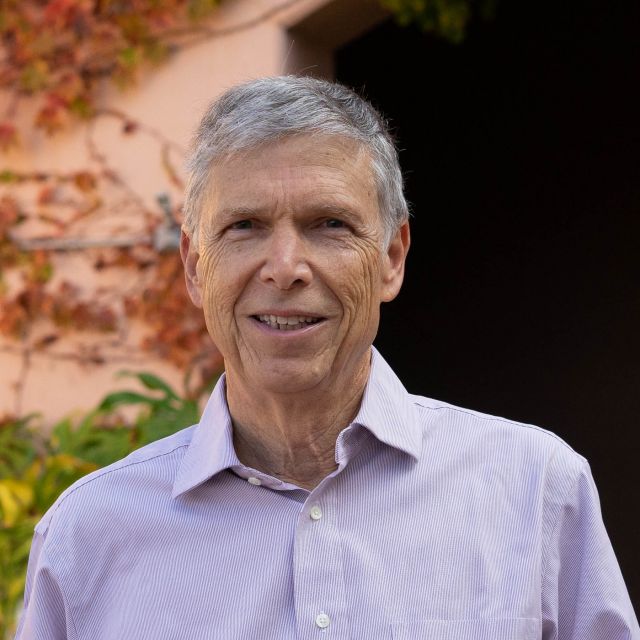
Gary Horowitz is a distinguished Professor of Physics at the University of California Santa Barbara, with a research career spanning over four decades. He holds appointments in the Department of Physics at UCSB and maintains an active research program in theoretical gravitational physics. Horowitz's research interests focus on both classical and quantum aspects of gravitational physics, particularly gravity under extreme conditions including the big bang in cosmology and spacetime inside black holes. His work centers on understanding spacetime singularities through string theory, examining black holes in higher dimensions, quantum properties of black holes, and quantum descriptions of singularities. He has made significant contributions to the application of gauge/gravity duality to understand quantum gravity and aspects of particle physics. His scholarly work shows consistent focus on theoretical foundations of gravity, with publications spanning from foundational work in the 1990s through recent contributions to the field. His research trajectory demonstrates deep engagement with the most challenging problems in gravitational physics. Scientific Recognition: Elected Member of the National Academy of Sciences (2010) Elected Member of the American Academy of Arts and Sciences (2013) Horowitz has held significant leadership positions including President of the International Society on General Relativity and Gravitation (2013-2016), head of the Astrophysics, Gravity, and Cosmology panel at the National Academy of Sciences (2014-2017), and chair of the Division of Gravitational Physics at the American Physical Society (2019-2020). His work continues to influence both theoretical physics and cosmology through innovative applications of string theory to gravitational phenomena.
Tomasz Placek is a Professor at the Jagiellonian University within the Institute of Philosophy , specifically the Department of Epistemology . His work bridges philosophy of physics , ontology , and theories of agency , with a focus on quantum mechanics, relativity, and epistemological frameworks. Research Interests : Philosophy of physics (quantum theory, relativity), causal set theory, determinism vs. indeterminism, and modal interpretations of spacetime. Key Contributions : Analysis of Wigner’s Friend paradoxes, causal structures in quantum correlations, and topological issues in indeterministic models. Email : tomasz.placek@uj.edu.pl
Thomas Mertens is an Associate Professor in the Department of Physics and Astronomy at Ghent University's Faculty of Sciences. His research focuses on quantum gravity, string theory, and black hole physics, with particular expertise in Jackiw-Teitelboim gravity, the SYK model, and holographic principles. He has established himself as a leading researcher in lower-dimensional quantum gravity models and their connections to quantum information theory. Dr. Mertens' research interests span Quantum Gravity, String Theory, General Relativity, Field Theory, and Black Hole Physics. His work primarily investigates solvable models of quantum gravity, particularly Jackiw-Teitelboim gravity and its supersymmetric extensions. He explores connections between quantum gravity in low dimensions and quantum information theory, with significant contributions to understanding black hole evaporation, entanglement islands, and the holographic nature of quantum gravity. His research often employs advanced mathematical techniques from quantum groups, representation theory, and conformal field theory to address fundamental questions about quantum spacetime. Analysis of Dr. Mertens' publication record reveals a strong focus on Jackiw-Teitelboim gravity and its connections to the SYK model, quantum information, and holography. His recent work extends into q-deformed structures, modular doubles, and the mathematical foundations of gravity models. The research shows a clear progression from foundational work on string thermodynamics near black holes toward increasingly sophisticated treatments of quantum gravity in low dimensions, with a growing emphasis on connections to quantum information theory and computational aspects of gravity. Dr. Mertens has supervised at least one PhD student (Andreas Blommaert, who completed in 2020) and maintains active research collaborations, particularly with Henri Verschelde (17 joint papers), Andreas Blommaert (9 papers), and David Dudal (4 papers). His research is supported through the Department of Physics and Astronomy at Ghent University, where he contributes to projects focused on quantum gravity models and black hole horizons. Dr. Mertens leads research within Ghent University's theoretical physics group, focusing on quantum gravity and its connections to quantum information. His team investigates mathematical structures underlying quantum gravity models, with particular attention to solvable systems that can provide insights into the quantum nature of spacetime and black holes.
Dr Edwin Beggs is a Reader in Mathematics within the School of Mathematics and Computer Science at Swansea University, located at the Computational Foundry on Bay Campus. His research spans Algebra, Differential Geometry, Noncommutative Geometry, Theoretical Physics, and the computability of physical systems. He co-authored the influential 2020 Springer book Quantum Riemannian Geometry , contributing to the Grundlehren series. His work bridges mathematical formalism with physical applications, focusing on quantum structures, geometric frameworks, and computational models interfacing with physical systems. Research interests include noncommutative differential operators, quantum geodesic flows, and the interplay between algebraic topology and physics. Notable contributions address quantum gravity models, soliton dynamics, and the theoretical limits of measurement and computation in physical systems. He is actively involved in postgraduate supervision and has explored computational paradigms using physical oracles, such as the Wheatstone bridge and kinematic systems, to redefine computational boundaries. His interdisciplinary approach is reflected in publications spanning quantum geometry, analogue-digital computation models, and the mathematical foundations of measurement theory. Collaborations with Shahn Majid highlight his role in advancing noncommutative geometry's applications to modern physics.
David Brown is a Professor in the Department of Physics at North Carolina State University (NC State), affiliated with the College of Sciences. He holds an office in Riddick Hall 319F and can be reached at jbrown@ncsu.edu. Brown earned his PhD from The University of Texas at Austin in 1985 and held postdoctoral positions at the University of Vienna, Austria, The University of Texas, and the University of North Carolina. He joined NC State in 1992 as a visiting professor, transitioning to a regular faculty position in 1995. His research focuses on general relativity, with particular emphasis on gravitational dynamics, spacetime geometry, and relativistic continuum mechanics. His work explores topics such as hyperelastic models in curved spacetime, singular Lagrangians, and numerical relativity techniques for simulating black hole systems. Key areas of interest include geodesic deviation in cosmological models, Mathisson-Papapetrou-Dixon equations for extended bodies, and the Dirac-Bergmann algorithm for constrained Hamiltonian systems. Brown’s recent publications (2021–2023) highlight advancements in elasticity theory within general relativity and the application of hyperelastic models to Schwarzschild spacetime. His earlier work (2009–2012) includes foundational contributions to numerical relativity, such as BSSN formulations and moving-puncture methods for black hole simulations. While no specific honors are listed, his extensive publication record underscores his expertise in theoretical physics and cosmology. He has advised no formally documented students in the provided materials. His research has been supported by methodologies involving both analytical and computational approaches, though specific grants are not detailed here. No affiliated laboratories or research teams are explicitly mentioned in the text.
Günther Hörmann is an Associate Professor at the Faculty of Mathematics, Department of Mathematics, University of Vienna. With an academic career spanning from 1995 to present, he has established himself as a prominent researcher in mathematical analysis with particular expertise in generalized functions, microlocal analysis, and partial differential equations. His research interests span several interconnected areas of mathematical analysis and its applications: Generalized functions and Colombeau algebras Microlocal analysis and wavefront sets Partial differential equations, particularly wave equations Mathematical physics applications in quantum field theory Geophysical modeling and earth deformation Non-smooth geometry and regularization techniques Hörmann's scholarly output demonstrates a consistent focus on developing rigorous mathematical frameworks for analyzing differential equations with singular coefficients or data. His work often bridges pure mathematical theory with applications in physics, particularly in quantum mechanics, relativity, and geophysics. A distinctive feature of his research is the application of generalized function theory to problems that involve singularities or low regularity conditions. His publication record shows remarkable productivity across nearly three decades, with significant contributions in both theoretical mathematics and its applications. The interdisciplinary nature of his work is evident in collaborations across mathematics, physics, and even biomedical research as seen in his 2023 prostate cancer study.
Xinliang An is an Associate Professor of Mathematics at the National University of Singapore (NUS), where he joined in July 2018. His research focuses on understanding singularity formation, regularity, asymptotic stability, long time behavior, and geometric shapes of solutions to important partial differential equations, with particular emphasis on Einstein's equations in general relativity, Euler equations and Navier-Stokes equations in fluid dynamics, and elastic wave equations in elastic mechanics. Dr. An received his Ph.D. in June 2014 from the Department of Mathematics at Princeton University, where he was advised by Professor Sergiu Klainerman, a renowned expert in general relativity and partial differential equations. His doctoral work laid the foundation for his subsequent research on gravitational collapse and singularity formation. Dr. An's research spans multiple areas of mathematical physics, with a focus on gravitational collapse, big bang singularities in cosmology, and the detailed mathematical analysis of fluid dynamics and elastic mechanics. His work bridges pure mathematics with theoretical physics, particularly in understanding the formation of singularities in Einstein's equations. He has made significant contributions to the mathematical theory of black hole formation, including the emergence of apparent horizons and the analysis of spacelike singularities inside black holes. His recent work extends to studying the stability of Taylor-Couette flows in fluid dynamics, demonstrating how rotational effects influence dissipation rates through enhanced dissipation phenomena. Analysis of Dr. An's publication record reveals a strong progression from vacuum spacetimes to more complex physical systems. His early work focused on trapped surface formation in vacuum Einstein equations, then expanded to include electromagnetic fields (Einstein-Maxwell system), charged scalar fields, and fluid dynamics. A key theme across his publications is the development of scale-critical techniques to analyze singularity formation, with numerous papers establishing polynomial blow-up upper bounds for various geometric quantities near singularities. His research demonstrates exceptional technical mastery in handling non-strictly hyperbolic systems with multiple wave speeds. Dr. An has made significant methodological contributions by connecting Christodoulou's short-pulse method with Klainerman-Rodnianski's signature counting argument to the peeling properties studied in small-data regimes. This innovative approach has allowed him to avoid elliptic estimates and geometric renormalizations in some cases, providing new technical improvements and simplifications to existing results. His work on low-regularity ill-posedness for elastic wave systems has established that the Cauchy problem for 3D elastic waves is ill-posed in H³(ℝ³) due to instantaneous shock formation.
Jorge Pullin is a Professor and Horace C. Hearne, Jr. Chair of Theoretical Physics at Louisiana State University (LSU), affiliated with the Department of Physics & Astronomy within the College of Science. He holds a Ph.D. from the Instituto Balseiro, Argentina (1988). His research focuses on quantum gravity and general relativity, particularly canonical quantization methods and loop quantum gravity. Collaborating with Rodolfo Gambini since 1990, Pullin has co-authored influential works like the book Loops, knots, gauge theories and quantum gravity (1996). He challenges mainstream string theory by advocating for quantization of general relativity itself. His work also explores black hole collisions, leveraging LSU's access to the world's fastest university-controlled supercomputer for numerical relativity simulations, and contributes to gravitational wave detection via LIGO collaborations. Recent articles highlight interdisciplinary efforts in quantum foundations, including interpretations of quantum mechanics and consciousness theories, alongside advancements in dark matter searches and scalar field interactions with quantum black holes. Pullin's group has pioneered the Lazarus Project and developed novel lattice-based quantum gravity approaches. Awards: Hearne Chair of Theoretical Physics His advising and grants activities reflect no listed students but significant collaborative efforts. Research is anchored at the Hearne Institute of Theoretical Physics, where he leads investigations into quantum gravity's implications for spacetime and black hole physics.
Christina Sormani is a Professor of Mathematics at Lehman College and the CUNY Graduate Center, part of the City University of New York system. She earned her doctorate from the Courant Institute in 1996 and worked as a postdoc at Johns Hopkins and Harvard before joining Lehman College in Spring 2000. She is also a frequent visitor at Stony Brook, working with doctoral students and postdocs conducting mathematics research. Professor Sormani is an American Mathematical Society Fellow (2015) and a Fellow of the Association for Women in Mathematics (2024). Her research is in Geometric Analysis, specializing in Riemannian Geometry, Metric Spaces, and Geometric Measure Theory. She is particularly known for her work on the Intrinsic Flat Distance, which she developed with Stefan Wenger, providing a powerful framework for studying convergence of Riemannian manifolds with applications to General Relativity. Her research program has been consistently funded by the National Science Foundation (NSF DMS) and PSC CUNY. She has held prestigious visiting positions including at the Mathematical Sciences Research Institute (MSRI) in 2013, the Institute for Advanced Study (IAS), and Simons Center for Geometry and Physics (SCGP) during her 2018-2019 fellowship leave. Her work has focused on stability problems for the Positive Mass Theorem, scalar curvature, and convergence theory. American Mathematical Society Fellow (2015) for 'contributions to geometry, including the study of Ricci curvature, and for mentoring activities, especially for young mathematicians from underrepresented groups' Association for Women in Mathematics Fellow (2024) for 'utilizing every opportunity to open pathways to mathematics for more women and students by creating and maintaining online access to advice, mathematical resources, and information about women mathematicians; for organizing the 'Inspiring Talks by Mathematicians' lecture series featuring under-represented speakers, and for dedicated and active contributions to the Association for Women in Mathematics' Professor Sormani has been deeply committed to mentoring and outreach throughout her career, particularly for women and underrepresented groups in mathematics. She organizes the 'Inspiring Talks by Mathematicians' lecture series and has created extensive online resources to support young mathematicians. Her research group includes numerous doctoral students and postdocs, and she has been instrumental in developing workshops and programs that bridge geometric analysis with general relativity.