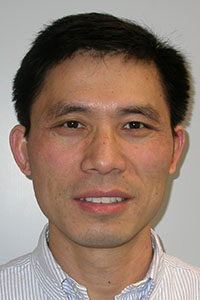
Reed Essick is an Assistant Professor at the Canadian Institute for Theoretical Astrophysics (CITA), University of Toronto. His research focuses on experimental gravity, astrophysical signals, and nuclear physics, with particular emphasis on neutron stars, black holes, and gravitational waves. He develops advanced statistical methods like hierarchical Bayesian inference and nonparametric analysis for interpreting observational data from pulsars and gravitational wave detectors. Dr. Essick collaborates extensively with international observatories such as LIGO, Virgo, and KAGRA, contributing to cutting-edge projects like multimessenger astronomy and precision cosmology. His work bridges computational astrophysics with observational techniques, addressing fundamental questions about dense matter and strong-field gravity. Key contributions include studies on gravitational wave equation-of-state constraints, pulsar timing analysis, and the application of machine learning to detector data. His research leverages both ground-based interferometers and space-based observations to explore extreme astrophysical environments.
Dr. Jennifer Volk is an Assistant Professor at the College of Engineering, University of Wisconsin-Madison, specializing in Electrical & Computer Engineering. Her research focuses on leveraging novel technologies like superconductor electronics and photonics to create efficient systems for datacenters, neuromorphic computing, quantum computing, and space/sensing applications. She employs a holistic approach spanning circuit design, materials science, and computer microarchitecture. PhD (2024), University of California, Santa Barbara BS (2016), University of California, Santa Cruz Her research interests include superconducting logic , bio-based architectures , and novel computing mediums , emphasizing co-optimization of logic and circuit blocks. Her work develops design abstractions to simplify adoption of unconventional technologies. Dr. Volk's publications demonstrate expertise in superconducting circuit design, radiation-hardened CMOS for particle physics, and photonic materials. She has received numerous awards including the 2025 John D. Wiley Assistant Professorship and IEEE fellowships in applied superconductivity. 2025 John D. Wiley Assistant Professorship 2024 UC Santa Barbara President's Dissertation Year Fellowship 2023 IEEE CSC Graduate Study Fellowship in Applied Superconductivity 2022 IEEE Micro Top Picks Honorable Mention 2021 IEEE Micro Top Picks She teaches E C E 340 - Electronic Circuits I (Spring 2025). Her work bridges materials science, circuit design, and system architecture to enable next-generation computing platforms.
Jessica J. Fridrich is a Distinguished Professor in the Department of Electrical and Computer Engineering at Binghamton University, part of the State University of New York (SUNY) system. She is affiliated with the T. J. Watson School of Applied Science and Engineering. Her research focuses on steganography, steganalysis, digital forensics, and machine learning, with notable contributions to secure data hiding and patented camera fingerprinting techniques approved for legal evidence. Education: PhD in Electrical and Computer Engineering from Binghamton University Her research interests include steganography and steganalysis of digital images, digital forensics for linking photos to cameras via sensor fingerprints, signal estimation and detection, and applications of machine learning. Earlier work explored chaotic nonlinear dynamical systems and encryption. Her methods have led to over 150 refereed publications and seven successfully commercialized patents. Her articles emphasize advancements in batch steganography, JPEG compatibility, and adaptive embedding strategies. Recent work leverages machine learning for steganalysis and explores security trade-offs in high-dimensional feature spaces. 2006-2007 Chancellor's Award for Excellence in Scholarship and Creative Activities 2002 Chancellor's Award for Outstanding Inventor Narrative on advising and grants: She mentors graduate students and leads projects funded by AFOSR, NSF, and AFRL. Her research addresses challenges in data hiding security, forensic analysis, and optimizing steganographic algorithms. The Digital Data Embedding Lab, which she directs, focuses on algorithmic innovation and empirical validation in steganography and forensics. Labs/Teams: Digital Data Embedding Lab
Allon Guez is a Professor in the Department of Electrical and Computer Engineering at Drexel University. His research focuses on control systems, robotics, artificial intelligence, medical robotics, and automated decision making. He actively bridges academia and industry through high-tech entrepreneurship. Education PhD in Electrical Engineering, University of Florida MS in Electrical Engineering, University of Florida MBA in Finance, Drexel University BS in Electrical Engineering, Technion - Israel Institute of Technology His research portfolio spans medical robotics, automated decision making systems, and advanced control algorithms. Key areas include wearable safety devices, radiation control in imaging systems, and closed-loop brain stimulation technologies. Notable contributions include founding ControlRad (radiation reduction systems) and GraceFall (fall detection technology). His work demonstrates a strong emphasis on translating academic research into commercial medical devices. Recent publications highlight innovations in: Fetal brainwave monitoring Postural disturbance detection Seizure prediction algorithms Magnetic microrobotics Dynamic CT collimation Cardiac tissue modeling
Pablo Parra Espada is an Associate Professor at the Department of Automática, University of Alcalá (Spain), affiliated with the Space Research Group (SRG-UAH). He holds a PhD from the University of Alcalá (2012) titled Integración de tecnologías de desarrollo y análisis basadas en componentes bajo un enfoque multi-plataforma , supervised by Dr. Sebastián Sánchez Prieto and Dr. Óscar Rodríguez Polo. His research focuses on space systems engineering , particularly in RISC-V processor design , embedded systems , and model-driven engineering . Key areas include hardware-software co-design for satellite systems, real-time computing, and fault-tolerant architectures. He has contributed to the Solar Orbiter mission through work on the Energetic Particle Detector (EPD) and its on-board software validation. His recent work emphasizes virtualization techniques for LEON processors, FPGA-based digital beamforming , and spaceborne phased array systems . He also explores model-driven approaches for automated configuration of ground support equipment. His interdisciplinary contributions bridge computer architecture with aerospace applications. Prof. Parra Espada has published extensively on topics such as hardware performance monitoring, memory management units for satellites, and system-level verification of space software. His work combines rigorous engineering methodologies with cutting-edge technologies to address challenges in space instrumentation and embedded systems.
Dr. Sueda Saylan is an Assistant Professor at the Faculty of Engineering, Özyeğin University, since 2024. Her academic journey includes a Ph.D. in Interdisciplinary Engineering (2016) from Masdar Institute (now Khalifa University), postdoctoral research at Khalifa University (2016-2022), and an MSCA Postdoctoral Fellowship at Bilkent University (2022-2024). She has also held visiting researcher positions at MIT (2014) and the University of Tokyo (2016). Education Doctorate: Interdisciplinary Engineering, Masdar Institute of Science and Technology (2016) Master's: Microelectronic Manufacturing Engineering, Rochester Institute of Technology (2004) Bachelor's: Mechanical Engineering, Middle East Technical University (2002) Dr. Saylan's research focuses on memristive devices , photovoltaics , and light-matter interactions at micro/nanoscale . Her work bridges materials science and electronic engineering, with recent publications on memristor-based sensors, spectral filtering in silicon, and machine learning integration for biomedical diagnostics. Key trends from her 15 most recent articles (2013-2025) include: Advancing memristor technology for radiation sensing and vacuum monitoring Optimizing photovoltaic efficiency through light management and antireflection coatings Developing compact, low-power diagnostic devices for pathogen detection Exploring nanoscale electrode materials and switching mechanisms Applying Fourier transforms and interferometry in optical systems Scientific Awards Marie Skłodowska-Curie Actions (MSCA) Postdoctoral Fellowship (2022-2024) Dr. Saylan has received research support from prestigious programs and has contributed to interdisciplinary projects involving semiconductor physics, optical engineering, and biomedical diagnostics. Her collaborations span institutions like Khalifa University, MIT, and the University of Tokyo.
Prof. G. Scott Watson is a Professor in the Department of Physics at Syracuse University, affiliated with the College of Arts & Sciences. His research focuses on the interplay between fundamental particle physics and cosmology, particularly early universe cosmology, inflationary models, dark matter/energy, and string theory applications. He holds a Ph.D. in Physics from Brown University (2005) and B.S. degrees in Mathematics and Physics from the University of North Carolina at Wilmington (2000). Key research interests include string phenomenology as a quantum gravity framework, probing inflationary scenarios through cosmic microwave background (CMB) studies, and exploring dark matter origins. He leads major projects like CMB-S4 and contributes to the CMBPol mission concept. Watson has received the American Physical Society Outstanding Referee Award (2021) and serves on high-profile collaborations such as the Inflation Probe Study Analysis Group (IPSAG). Teaching responsibilities include advanced courses like Quantum Field Theory, Relativity and Cosmology, and Quantum Mechanics II. He actively mentors students through independent studies and advises on graduate admissions. Watson has secured significant grants, including a Department of Energy-funded project on theoretical particle physics and cosmology (2013–2025) and NSF support for cosmic acceleration research (2018–2023).
Brian Walsh is an Associate Professor of Mechanical Engineering at Boston University, with affiliations in the Departments of Astronomy and Electrical and Computer Engineering. He holds a Ph.D. in Mechanical Engineering from Boston University (2011) and a B.A. from Colgate University (2006). His research focuses on experimental space physics and spacecraft instrumentation, particularly studying solar wind-magnetosphere interactions, magnetopause reconnection, and X-ray imaging techniques. His work investigates energy transfer from the Sun to Earth's space environment, with a primary focus on the magnetopause. Walsh develops instruments for NASA and ESA missions, including the LEXI lunar X-ray imager and the CuPID CubeSat. He has contributed to missions like SMILE and pioneered compact solar energetic particle telescopes. His research spans CubeSat-based observations and large-scale space missions, emphasizing cross-scale coupling and global magnetospheric dynamics. Key research interests include plasma turbulence, magnetosheath dynamics, and exosphere variability. Walsh collaborates on projects like the Trans-Heliospheric Survey and the Magnetospheric Constellation (MagCon), aiming to advance understanding of heliospheric plasma behavior. His work also addresses space weather prediction and instrument calibration, such as the Carruthers Observatory Student Solar Monitor (COSSMo). Walsh's recent studies explore solar wind acceleration, ionospheric outflow asymmetry, and the role of recirculated plasmasphere material in ring current dynamics. His contributions to instrumentation and mission design highlight his dual role as a researcher and engineer in aerospace and space physics.
Leonid Chernyak is a Professor in the Department of Physics at the University of Central Florida's College of Sciences. He received his PhD in Physics from Weizmann Institute of Science (Israel) in 1996 and joined UCF in 1999 after spending a year as a Research Associate at Colorado State University and Texas Tech University. Dr. Chernyak's research focuses on semiconductor physics, particularly wide bandgap semiconductors including Gallium Nitride (GaN), Zinc Oxide (ZnO), and Gallium Oxide (Ga2O3). His work centers on electron transport phenomena, radiation effects on semiconductors, and device characterization using techniques like electron beam induced current (EBIC) and cathodoluminescence. His research has significant applications in radiation-hardened electronics, power devices, and optoelectronics. His publication record shows a consistent research trajectory with over 100 publications spanning more than two decades, with recent work focusing increasingly on Ga2O3 as a promising ultra-wide bandgap semiconductor for next-generation power electronics. His articles demonstrate expertise in characterizing radiation damage and developing mitigation strategies through electron injection techniques. Scientific Awards 7 National Science Foundation Awards (2002-2021) 2 American Chemical Society Awards (2002-2021) 7 NATO Awards (2002-2021) 3 US-Israel Binational Science Foundation Awards (2002-2021) 3 Israel Ministry of Defense Awards (2002-2021) University of Central Florida Research Incentive Award (2004, 2015, 2021) Senior Member, Institute of Electrical and Electronics Engineers (IEEE) (1999) Minerva Award of German-Israeli Scientific Foundation (1992) Dr. Chernyak has served as a reviewer for numerous funding agencies, with 15 invitations to NSF panel reviews and 3 invitations to NATO panels between 2001-2020. His work has been recognized with an h-index of 28, and he has been included in various editions of Who's Who in America and Who's Who in Science and Engineering. His research has secured approximately $6 million in funding, demonstrating significant external recognition of his work's importance. He has also contributed 7 book chapters to the field, further establishing his expertise in semiconductor physics and materials characterization.
Pasquale Scarlino is a Tenure Track Assistant Professor in the Institute of Physics at École Polytechnique Fédérale de Lausanne (EPFL), where he founded and leads the Hybrid Quantum Circuits (HQC) Laboratory. He holds a dual appointment with the School of Basic Sciences (SB) and the Physics Section (SB-SPH), conducting research at the intersection of semiconductor and superconducting quantum technologies. His laboratory develops hybrid quantum hardware for advanced quantum information processing. His educational background includes a Master's degree in Physics from the University of Salento (Italy, 2011), where he was a student of Scuola Superiore ISUFI, followed by a Ph.D. from TU Delft (2016) in the Spin Qubits group of Prof. L.M.K. Vandersypen at the Kavli Institute of Nanoscience-Qutech. His doctoral work focused on Si/SiGe spin qubits in collaboration with the M. Eriksson Group at Wisconsin University. Scarlino's research centers on experimental quantum physics using hybrid superconductor/semiconductor devices with electrostatically defined quantum dots coupled to high-impedance microwave resonators. He investigates light-matter interactions in unconventional regimes, quantum transport in low-dimensional systems, and spin/charge qubit implementations. His work aims to merge semiconductor and superconducting platforms to expand quantum information capabilities, with applications in quantum computing, quantum optics, and analog quantum simulation. Early career achievements include establishing the first coherent interface between superconducting and semiconducting quantum systems using high-impedance resonators. His publication record shows strong focus on microwave photon-mediated interactions between quantum systems, with recent work exploring quantum acoustics, topological band engineering, and criticality-enhanced sensing. The articles demonstrate increasing specialization in hybrid quantum hardware, with a shift toward germanium-based systems and advanced resonator designs in the latest publications. Scarlino has advised eleven Ph.D. students at EPFL and teaches courses including General Physics (Electromagnetism), Solid State Systems for Quantum Information, and Introduction to Quantum Science and Technology. His teaching emphasizes experimental quantum hardware approaches and critical assessment of quantum computing platforms. The Hybrid Quantum Circuits Laboratory operates within EPFL's Institute of Physics, utilizing state-of-the-art nanofabrication facilities and cryogenic measurement setups. The team collaborates extensively with leading quantum research groups worldwide, maintaining strong ties with previous institutions including ETH Zurich, TU Delft, and Microsoft Station Q Copenhagen.
Christopher Hearty is a Professor in the Department of Physics & Astronomy at the University of British Columbia (UBC), Faculty of Science, and serves as an IPP (Institute of Particle Physics) Principal Research Scientist. His office is located in Hennings 268 with laboratory space at TRIUMF/Hennings 222, where he conducts cutting-edge experimental particle physics research using major international facilities. Hearty earned his B.Sc. in Mathematics and Physics from Simon Fraser University (1982), followed by a Ph.D. in Physics from the University of Washington (1987). He completed postdoctoral research at Lawrence Berkeley National Laboratory from 1987 to 1994 before joining UBC. B.Sc., Mathematics and Physics, Simon Fraser University, 1982 Ph.D., Physics, University of Washington, 1987 Postdoctoral Researcher, Lawrence Berkeley National Laboratory, 1987-1994 His research program focuses on direct searches for physics beyond the Standard Model through e+e- collisions, with particular emphasis on dark sector phenomena including dark photons, axion-like particles, and strongly interacting dark matter. As a key contributor to the Belle II experiment, he develops advanced calorimeter calibration techniques, reconstruction algorithms, and trigger systems while mentoring students in machine learning applications for large-scale data analysis. His work bridges theoretical phenomenology with experimental verification in the search for new fundamental particles. Recent publications demonstrate a concentrated effort on dark sector exploration at Belle II, featuring innovative approaches like graph neural networks for photon reconstruction and sophisticated analysis of displaced vertices. The research spans both visible and invisible decay channels, significantly advancing constraints on dark matter models while establishing Belle II's sensitivity to elusive particles through precision measurements of e+e- collision data. Hearty's scientific recognition includes: APS Fellow (2015) Breakthrough Prize in Fundamental Physics (2016) as part of the T2K collaboration He actively supervises graduate students on thesis projects spanning dark photon searches, axion-like particle detection, and detector development, while serving on UBC's teaching peer review committee and as LHCb chief reviewer for CERN's LHCC committee. His mentorship provides students with hands-on experience in international collaborations, detector instrumentation, and advanced data analysis techniques. Based at TRIUMF Canada's particle accelerator centre and UBC's Department of Physics & Astronomy, Hearty leads a research group within the global Belle II collaboration. His team contributes to multiple detector subsystems including calorimetry and tracking systems, while developing novel analysis frameworks for new physics signatures in high-energy collision data.
Jina Kang is an Assistant Professor in the Department of Curriculum & Instruction at the University of Illinois Urbana-Champaign , with an affiliate appointment at the Siebel Center for Design . Her research focuses on immersive technology-supported learning environments , collaborative problem-solving dynamics , and educational data mining for understanding multimodal engagement in science education. Recent publications examine embodied cognition in STEM through gesture-based learning simulations, joint attention dynamics in astronomy VR environments, and systematic reviews of immersive technology applications in collaborative education. Her work integrates XR platforms , Bayesian knowledge tracing , and multimodal behavioral analysis to enhance science learning outcomes. She teaches graduate courses including CI 539: Introduction to Educational Data Mining and CI 489: Educational Technology Capstone Course , where students develop technology-supported learning activities using studio-based approaches.
Leonardo Ricci is an Associate Professor at the Department of Physics, University of Trento , with a 28-year teaching career spanning 56 courses (31 in English) and extensive roles in the Interdepartmental Center for Mind/Brain Sciences - CIMEC (30% affiliation). His research bridges nonlinear dynamics , information theory , and neuroscience , focusing on chaos detection in time series and entropy analysis. Academic Career : From 1994 post-doc at Max-Planck-Institut to 2022 promotion to Associate Professor Teaching : Courses in Experimental Physics, Advanced Electronics, and Statistical Methods across Physics and Computer Science programs Ricci leads the NSE Lab (Nonlinear Systems and Electronics) , developing hardware/software systems for experimental research. His 2022 Entropy cover story on permutation entropy highlights his impact in information theory. Scientific Contributions : 20 patents (visibility measurement devices), collaborations with international researchers on complex systems Editorial Roles : Associate Editor for Chaos, Solitons & Fractals and Frontiers in Network Physiology
Guifang Li is a Professor of Optics and Electrical & Computer Engineering at the University of Central Florida (UCF), affiliated with CREOL, The College of Optics and Photonics. He holds the position of Editor-in-Chief of Advances in Optics and Photonics . His academic journey includes a Ph.D. from the University of Wisconsin-Madison and leadership roles such as Director of the NSF IGERT program in Optical Communications and Networking at UCF. Dr. Li's research focuses on optical communication and networking , RF photonics , and all-optical signal processing . His innovations include pioneering work on photonic computing architectures and high-capacity optical communication systems. He co-founded Optium, UCF's first venture startup, which became a public company (OPTM) in 2006 and later part of II-VI. His scientific contributions are recognized through prestigious awards, including the NSF CAREER Award, Office of Naval Research Young Investigator Award, and fellowships from IEEE, OSA, SPIE, and the National Academy of Inventors. He has advised over 20 Ph.D. students and leads a multidisciplinary research group involving postdoctoral scholars and graduate students. Recent research trends in his publications emphasize photonic computing (e.g., photonic matrix processors, floating-point arithmetic) and advanced optical systems (e.g., quantum cascade lasers, MPLC-based demultiplexers). His work bridges fundamental optics with practical applications in telecommunications and sensing. Labs/Teams: His research team specializes in optical communication systems, photonic integrated circuits, and computational optics.
Professor Dominic O'Brien is a Professor of Engineering Science at the University of Oxford and Senior Research Fellow at Balliol College. He serves as Director of the UK National Hub in Quantum Computing and Simulation. His research focuses on optoelectronics, optical wireless communications, and quantum key distribution. He leads the optical communications group and has authored over 200 publications in these areas. His work emphasizes high-speed free-space optical systems, UV-based secure communication, and beam-steering technologies. Education: MA and PhD from the University of Cambridge, followed by a DPhil from the University of Oxford. His research interests include quantum networks, photonics, and energy-efficient optical systems. Notable projects include handheld low-cost quantum key distribution systems and terabit-per-second fiber-wireless links. He collaborates on initiatives like the WORTECS project for virtual reality applications using optical wireless. Publications span topics from UV solar-blind OWC to liquid crystal beam steering. His work bridges academic and industrial applications, addressing challenges in both classical and quantum communication systems. He contributes to standards for visible light communications and next-generation wireless infrastructure.