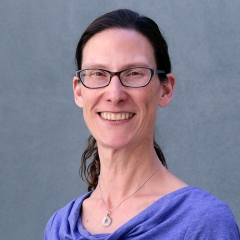
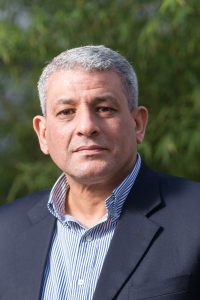
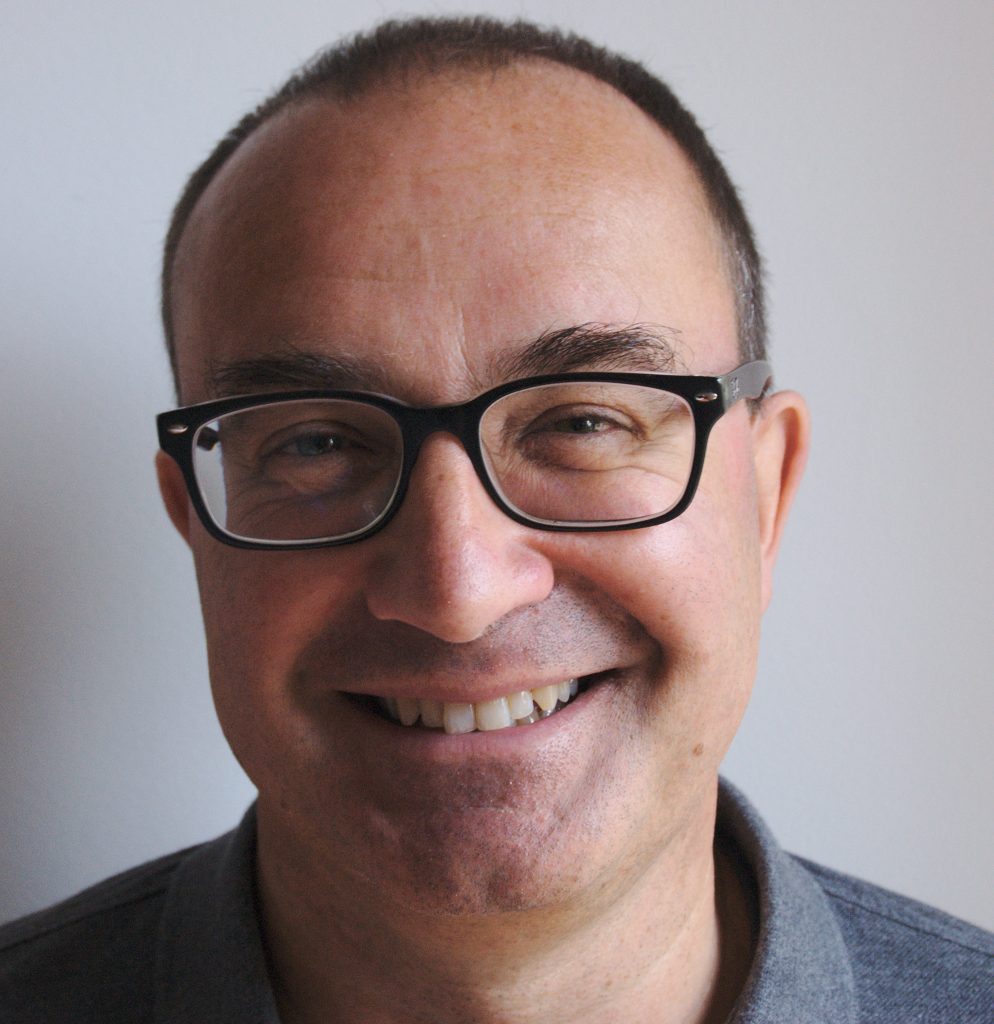
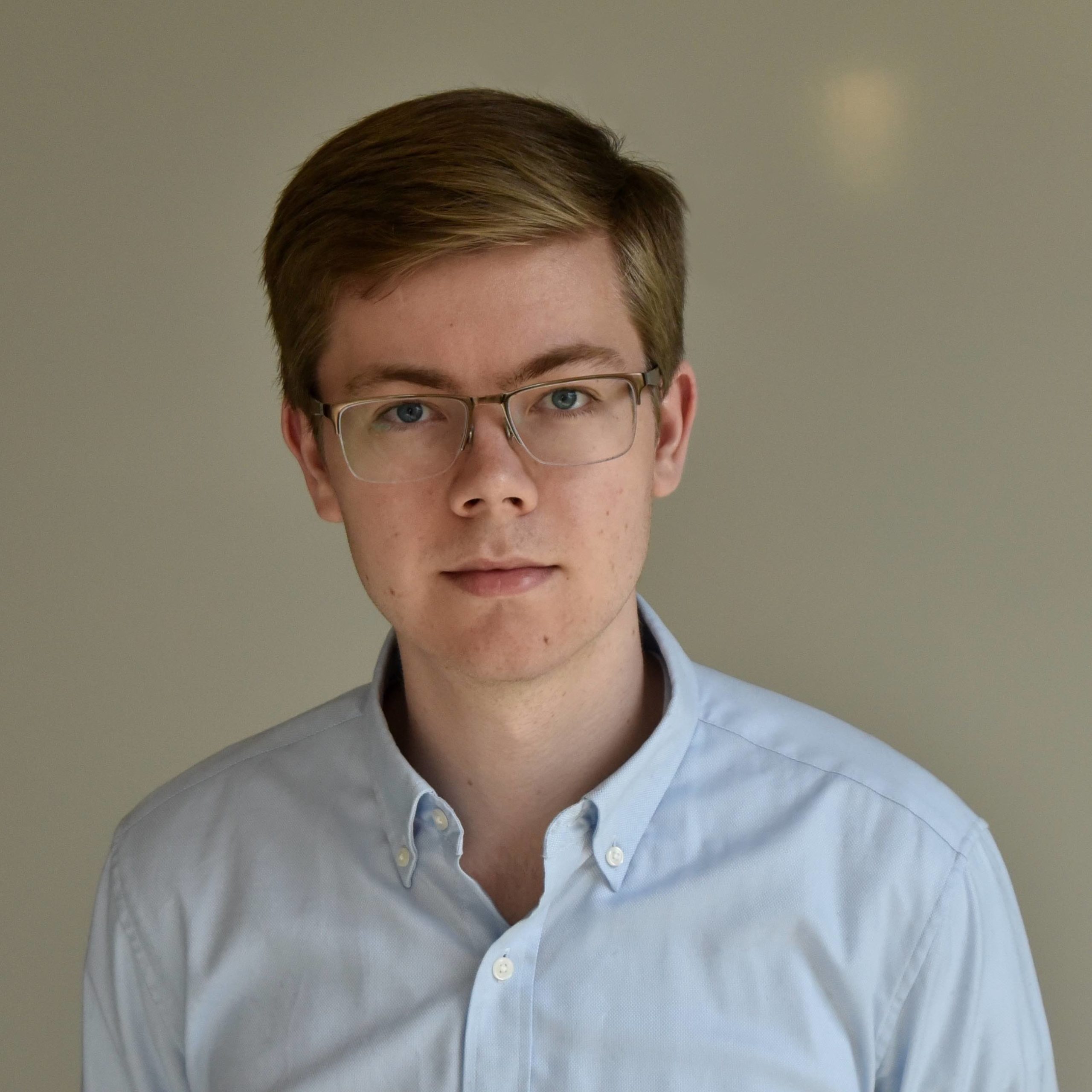
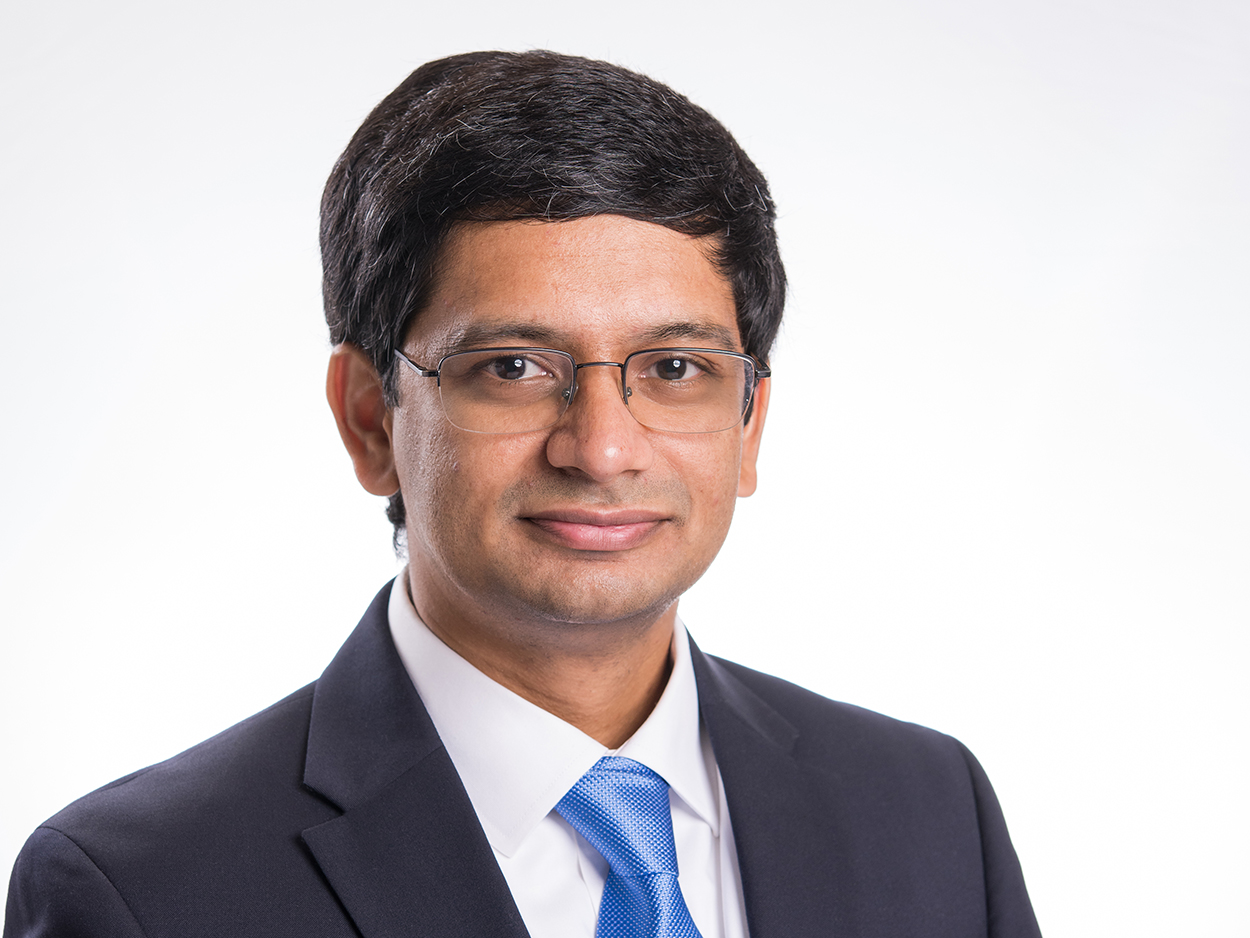
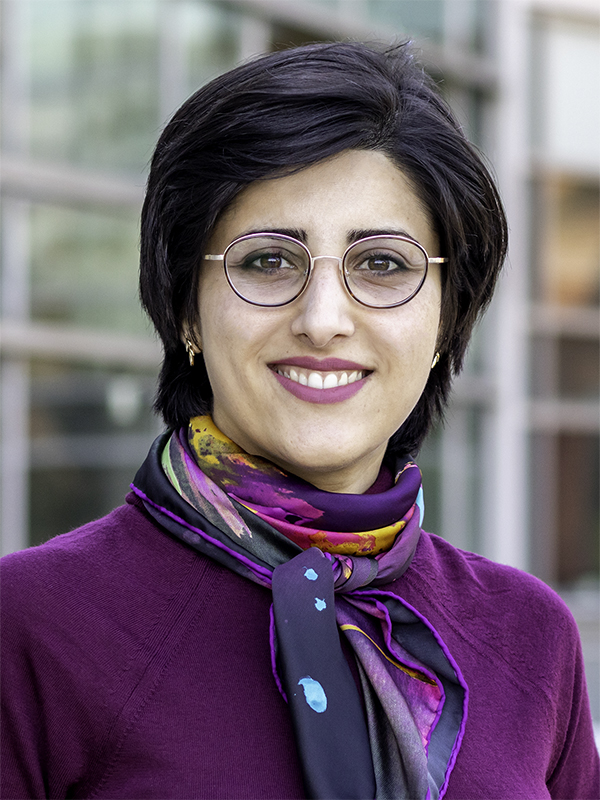
Nadia Figueroa is the Shalini and Rajeev Misra Presidential Assistant Professor in the Mechanical Engineering and Applied Mechanics (MEAM) Department at the University of Pennsylvania. She holds secondary appointments in Computer and Information Science (CIS) and Electrical and Systems Engineering (ESE), and is a core faculty member at the GRASP Lab. Prior to Penn, she was a Postdoctoral Associate at MIT’s CSAIL and earned her PhD in Robotics from EPFL under Prof. Aude Billard. Her research focuses on physical and perceptual adaptive intelligence for robots, enabling fluid collaboration with humans in dynamic environments. Key applications include robot learning from demonstration , human-robot co-manipulation , safe navigation in human-centric spaces , and rehabilitation robotics . Her work integrates machine learning control theory artificial intelligence biomechanics psychology with guarantees of stability, safety, and robustness . Recent publications highlight advancements in reactive collision avoidance dynamical system learning intent estimation EEG-driven assistive control origami-based reconfigurable robots across platforms like autonomous vehicles and humanoid robots. She has authored a 2022 textbook on dynamical systems for robot control and received the Presidential Assistant Professorship at Penn.
Wendy Ju is an Associate Professor of Information Science at Cornell Tech, with appointments in the Cornell Ann S. Bowers College of Computing and Information Science, the Jacobs Technion-Cornell Institute, and the Technion-Israel Institute of Technology. Previously, she served as executive director of interaction design research at Stanford University's Center for Design Research and as an associate professor of interaction design at the California College of the Arts. Her work bridges human-computer interaction, design, and robotics with a focus on how interactive devices can communicate with people without interrupting them. PhD in Mechanical Engineering from Stanford University Master's degree in Media Arts and Sciences from MIT Professor Ju's research centers on implicit interactions, human-robot collaboration, and automotive interfaces. She investigates how people interact with automated systems in natural contexts, develops methods for early-stage prototyping of autonomous technologies, and examines the social implications of robotics in urban environments. Her work spans from theoretical frameworks to practical applications, with particular emphasis on designing systems that integrate seamlessly into human activities without demanding constant attention. Her recent publications reveal a strong trajectory toward understanding human-robot interaction in public urban spaces, with increasing focus on robot navigation in city streets, the social implications of autonomous vehicles, and the integration of generative AI in design processes. Her work consistently bridges theoretical HCI frameworks with practical applications in transportation, urban design, and everyday robotics. Inducted into the ACM SIGCHI Academy (2025) Multiple Honorable Mention Awards at ACM CHI and DIS conferences Best Paper Award at Multimodal Technologies and Interaction (2023) Best Student Paper Award at IEEE Intelligent Vehicles Symposium (2017) Best Demonstration Award at HRI (2017) Professor Ju actively mentors numerous PhD and master's students, many of whom have become leading researchers in HCI and robotics. Her research has been supported by significant grants from NSF and industry partners, enabling extensive field studies of human-robot interaction in real-world settings. She has pioneered methodologies for studying autonomous vehicle interactions through both simulated and naturalistic driving environments. Her work with the Jacobs Technion-Cornell Institute supports interdisciplinary research at the intersection of computing, design, and urban technology. She has established research partnerships with transportation authorities, automotive companies, and urban planning organizations to study how emerging technologies can enhance urban mobility while respecting human needs and social contexts.
Katie Byl is an Associate Professor in the Departments of Electrical and Computer Engineering and Mechanical Engineering at the University of California, Santa Barbara (UCSB). Her research focuses on robot dynamics and control, particularly in locomotion and manipulation, with applications in rough terrain legged locomotion, supervised autonomy, and flapping-wing flight. She holds B.S., M.S., and Ph.D. degrees in Mechanical Engineering from MIT. Affiliations: Center for Control, Dynamical Systems and Computation (CCDC) Mechanical Engineering Department Research Interests: Byl’s work emphasizes modeling and control of underactuated systems, stochasticity in real-world environments, and the development of robust control principles for dynamic systems. Her applied projects include exoskeletons, autonomous robots like RoboSimian (part of the DARPA Robotics Challenge), and flapping-wing microrobotics. Scientific Awards: NSF Early Career Development Award Hellman Faculty Fellowship Alfred P. Sloan Foundation Fellowship in Neuroscience Regents’ Junior Faculty Fellowship Teaching & Advising: Byl teaches courses in control systems (e.g., ECE 147B, ECE 179D) and robotics. She advises students in UCSB’s Robotics Lab, emphasizing a mix of control theory, mechanical design, and algorithm development. Undergraduate researchers are also recruited annually for summer projects. Labs & Teams: Her Robotics Lab focuses on hardware implementation of control ideas, maintaining a high robot-to-student ratio. Collaborations include the Army’s Institute for Collaborative Biotechnologies and the DARPA Robotics Challenge with JPL.
Dr. Tarek Sayed is a Professor at the University of British Columbia's Department of Civil Engineering within the Faculty of Applied Science. He specializes in Transportation Engineering, focusing on road safety analysis, traffic operations, and Intelligent Transportation Systems (ITS). He serves as the Director of the Bureau of Intelligent Transportation Systems and Freight Security (BITSAFS-Engineering) and Editor of the Canadian Journal of Civil Engineering . His research addresses three core areas: improving road safety evaluation techniques, enhancing safety through traffic operations and highway design analysis, and advancing ITS technologies. Notable contributions include frameworks for safety-audits of infrastructure projects like the Sea to Sky Highway and methodologies for evaluating transit signal priority systems in Vancouver. He has authored/co-authored over 250 publications and supervised 60 graduate students. Key Roles: Professor, BITSAFS Director, Journal Editor Awards: Tier 1 Canada Research Chair, Wilbur Smith Award, Sandford Fleming Award, Prince Michael International Road Safety Award Consulting: Global projects in traffic safety and ITS for agencies like ICBC, FHWA, and Ashghal His research integrates Bayesian statistical methods, extreme value theory, and machine learning to model traffic conflicts, pedestrian behavior, and safety interventions. Current projects include real-time safety optimization using autonomous vehicle data and analyzing shared space interactions between cyclists and pedestrians. Dr. Sayed chairs national/international committees, including the U.S. Transportation Research Board’s safety data committee. His work bridges academia and practice, influencing policy and infrastructure investment decisions worldwide.
Michele Zorzi is a Professor of Telecommunications at the School of Engineering, University of Padova, Italy, where he has held a faculty position since 2003. He leads the SIGNET (Signal processing and Networking) Research Group, focusing on cutting-edge wireless networking challenges including mmWave communications and underwater networks. His extensive publication record exceeds 600 papers in top-tier journals and conferences, reflecting significant contributions to the field through both theoretical and experimental work. He received his Laurea Degree (1990) and Ph.D. (1994) in Electrical Engineering from the University of Padova. Prior academic appointments include Politecnico di Milano (1993-1996), University of California San Diego (1995-1998), and University of Ferrara (1998-2003), where he progressed from Associate Professor to full Professor. His educational trajectory demonstrates deep roots in Italian academia with international exposure. Professor Zorzi's research spans wireless communications and networking, with current emphases on mmWave networking for vehicular systems, underwater acoustic/optical communications, non-terrestrial networks, and AI-driven networking solutions. His group conducts experimental validations including at-sea trials for underwater systems and testbeds for vehicular networks. Key projects include PRATA for predictive QoS in autonomous driving and IoT-based environmental monitoring of the Venice Lagoon, demonstrating practical applications of theoretical work. Analysis of his 2022-2025 publications reveals strong trends in applying artificial intelligence to networking challenges across diverse environments. There is significant emphasis on vehicular networks (predictive QoS, teleoperated driving), underwater systems (acoustic/optical communications, AUV swarms), and satellite networks (Starlink integration, NTN security). Experimental validation in real-world scenarios like the Venice Lagoon monitoring project and underwater sea trials characterizes his applied research approach. His scientific accolades include: IEEE Fellow (2007) IEEE Communications Society Best Tutorial Paper Award (2008, 2019) Stephen O. Rice Best Paper Award (2018) Multiple best paper awards at IEEE conferences (2005-2020) As principal investigator for numerous European and US research projects plus 20+ industry-funded initiatives, Professor Zorzi has mentored over 35 PhD students and post-docs. Graduates now hold prominent positions at institutions including Stanford, UCSD, CTTC, and Huawei. His SIGNET group maintains active international collaborations and contributes to open-source networking tools via GitHub, demonstrating commitment to community engagement. The SIGNET Research Group, housed within the Department of Information Engineering, operates specialized experimental facilities for mmWave and underwater communications. Current initiatives include AI-based predictive QoS frameworks for vehicular networks, underwater optical communication systems using ultraviolet light, and large-scale IoT deployments for environmental monitoring. The group's GitHub presence indicates strong open-science practices, while recent sea trials confirm hands-on experimental capabilities beyond theoretical work.
Connor Coley is the Henri Slezynger (1957) Career Development Assistant Professor at the Massachusetts Institute of Technology (MIT) School of Engineering. His research bridges chemistry and machine learning, focusing on autonomous molecular discovery, predictive chemistry, and laboratory automation. Education: Ph.D., MIT (2019) M.S.CEP., MIT (2016) B.S., Caltech (2014) Research Interests: Dr. Coley’s work centers on domain-informed machine learning for chemistry, computer-aided molecular design, and autonomous laboratories. Key themes include predictive modeling of chemical reactivity, optimization of synthesis pathways, and integration of AI with experimental data for drug discovery and materials science. Publications: His recent articles highlight advancements in AI-driven reaction prediction, molecular representation learning, and laboratory automation. Trends include applications of Bayesian optimization, contrastive learning, and diffusion models to chemical discovery. Scientific Awards: Camille Dreyfus Teacher-Scholar Award (2025) James W. Swan Outstanding Faculty (2025) Schmidt Futures AI2050 Early Career Fellow (2022) NSF CAREER Award (2021) Forbes 30 Under 30: Healthcare (2019) Software & Tools: He leads the open-source ASKCOS software suite for synthesis planning, adopted by 35,000+ chemists and deployed at 15+ pharmaceutical companies. His team also develops tools for metabolomics and molecular representation learning.
Joydeep Biswas is an Associate Professor in the Computer Science Department at the University of Texas at Austin, where he serves as the Director of the Autonomous Mobile Robotics Laboratory (AMRL). He is also affiliated with Texas Robotics, the UT Machine Learning Laboratory, and UT Good Systems. Previously, he was an Assistant Professor in the College of Information and Computer Sciences at the University of Massachusetts Amherst. Dr. Biswas earned his PhD in Robotics from Carnegie Mellon University in 2014 and his B.Tech in Engineering Physics from the Indian Institute of Technology Bombay in 2008. His educational background has provided him with a strong foundation in both theoretical and applied aspects of robotics and artificial intelligence. Dr. Biswas's research focuses on enabling long-term autonomy for mobile robots operating in human environments. His work spans robot perception, motion planning, control systems, and AI, with the ultimate goal of creating self-sufficient autonomous mobile robots that can perform tasks accurately and robustly in real-world settings. He is particularly interested in perception, planning, and failure recovery for autonomous mobile robots, which supports his vision of having autonomous service mobile robots deployed at campus-to-city scale, both indoors and outdoors, performing assistive tasks over deployments spanning years. His IJCAI 2019 Early Career Spotlight talk summarizes much of his research to date and ongoing interests. His recent research has shown a strong trend toward social navigation, human-robot interaction, and the application of machine learning techniques to robotics problems. There's a clear progression from fundamental robotics research toward more complex, real-world applications that require robots to understand and navigate human social spaces effectively. His work increasingly integrates large language models and other advanced AI techniques with traditional robotics approaches, as evidenced by his recent publications on topics like preference-conditioned navigation, social navigation benchmarks, and instruction-following navigation systems. Dr. Biswas has received numerous prestigious awards including the NSF CAREER Award (2021), J.P. Morgan Faculty Research Award (2019), Amazon Research Award (2019), and a grant from Northrop Grumman Mission Systems (2018). These awards recognize his innovative contributions to the field of robotics and autonomous systems. As a dedicated educator and mentor, Dr. Biswas actively supervises PhD and master's students, with his PhD student Sadegh Rabiee winning the student poster award at the Northrop Grumman University Symposium 2019. He has secured significant grant funding from the National Science Foundation for projects including 'Introspective Perception and Planning for Long-Term Autonomy' and 'Interactive Synthesis and Repair For Robot Programs,' demonstrating his ability to secure competitive research funding and his commitment to advancing the field. Dr. Biswas leads the Autonomous Mobile Robotics Laboratory (AMRL), which serves as a hub for interdisciplinary research in mobile robotics. The lab has developed notable resources such as the UT Campus Object Dataset (CODA) for 3D perception research and SOCIALGYM, a framework for benchmarking social robot navigation. His team regularly deploys robots on the UT Austin campus and in urban environments to test and refine their approaches in realistic settings, bridging the gap between simulation and real-world application.
Hossam Hassanein is a Professor and Director of the School of Computing at Queen's University. He received his B.Sc. in Electrical Engineering from Kuwait University in 1984, M.Sc. in Computer Engineering from the University of Toronto in 1986, and Ph.D. in Computing Science from the University of Alberta in 1990. He joined Queen's University School of Computing in 1999 and has established himself as a leading researcher in telecommunications and networking. Dr. Hassanein's research interests span wireless sensor networks, mobile ad hoc networks, edge computing, Internet of Things (IoT), radio resource management, and data-centric networks. His seminal contributions include pioneering work on WSN planning, load-balanced routing protocols, and energy-efficient network designs. He has championed research in IoT, developing frameworks for smart spaces that use contextual information to enhance IoT applications in healthcare, transportation, and infrastructure. His recent publications (2023-2025) demonstrate a strong focus on cutting-edge areas including extreme edge computing, vehicular networks, and AI/ML integration in networking. Research trends show increasing emphasis on practical applications in telesurgery, digital twins, and industrial IoT, addressing challenges in resource allocation, task offloading, and real-time processing in constrained environments. Dr. Hassanein has received numerous recognitions for his work: Fellow of the IEEE Queen's University School of Graduate Studies Award for Excellence in Graduate Student Supervision (2015) Multiple best paper awards from top international conferences As founder and director of the Telecommunications Research Lab (TRL), Dr. Hassanein has supervised over 75 students who have made substantial contributions in academia and industry. The TRL is one of Queen's largest research groups with extensive international collaborations. Dr. Hassanein has successfully attracted significant research funding from government and industry sources in the competitive telecommunications field. The Telecommunications Research Lab has developed innovative platforms including SPROUTS, a rugged sensor platform used in mining, steel manufacturing, and smart-grid monitoring. TRL's work has had significant impact in WSN planning, data dissemination, and resource reuse in wireless networks, with contributions featured in IEEE Wireless Communications Magazine.
Elahe Soltanaghai is an Assistant Professor in the Department of Computer Science and a Faculty Affiliate in Electrical and Computer Engineering at the University of Illinois Urbana-Champaign. She is also a 2022 NCSA Fellow and received her PhD in Computer Science from the University of Virginia (2019), MS in Computer Engineering from Sharif University of Technology (2014), and dual BS degrees in Computer and Information Technology Engineering from Amirkabir University of Technology (2011, 2013). PhD: University of Virginia, Computer Science, 2019 MS: Sharif University of Technology, Computer Engineering, 2014 BS (Computer Engineering): Amirkabir University of Technology, 2011 BS (Information Technology Engineering): Amirkabir University of Technology, 2013 Her research spans wireless sensing and communication, focusing on Millimeter-wave Radar Sensing (for automotive, mixed reality, structural monitoring), Machine Learning for Wireless Systems (adaptive sensing/communication), Forest IoT (through-canopy biomass and soil sensing), Metaverse Technologies (gaze-based VR/AR), and Low-Power Backscatter Communication (WiFi/power-line tags). She directs the Wireless, Sensing & Embedded Networked Systems (iSENS) Lab and co-directs the Illinois Center for IoT. Her work bridges wireless networking with cyber-physical sensing , emphasizing environmental monitoring (e.g., wildfire fuel detection via radar tags) and human-computer interaction (e.g., gaze-tracking in VR). Recent articles include innovations in passive radar profiling , through-canopy biomass characterization , and integrated communication-sensing protocols . Scientific Awards: Google Research Scholar Award (2022) N2Women Rising Star (2021) ACM SIGMOBILE Dissertation Award (2020) EECS Rising Stars (2019) NCSA Faculty Fellowship (2023) Best Demo Runner-up, IPSN (2023) Teaching Excellence Award (2023) Grants: NASA FireTech Program Grant (2025) NSF Grant for Radar-based Perception (2024) Insper-Illinois Grant for VR Research (2024) Keysight Research Gifts (2022, 2023) T-Mobile Research Gift (2022)
Felicity McArdle is a Professor in the Department of Early Childhood Education within the Faculty of Education at Queensland University of Technology. With a distinguished career spanning over two decades, her work centers on reimagining early childhood pedagogy through critical lenses of social justice, art education, and play-based learning. Her research has significantly influenced Australian early childhood policy and practice. McArdle's research interests demonstrate a consistent commitment to transformative education. She critically examines how art and play function as vehicles for social justice, challenging neoliberal discourses in early childhood education. Her work on refugee children's artistic expression and anti-bias curriculum development reveals her dedication to equity-oriented pedagogy. Through collaborative drawing methodologies and visual research approaches, she has pioneered innovative ways of understanding children's perspectives. Her publication trends reveal a sophisticated evolution from foundational work on visual arts in education (2001-2010) toward increasingly critical examinations of power, policy, and social justice (2011-2021). The consistent citation impact of her work—particularly her 2002 paper 'Early Childhood Art Education: A Palimpsest' with over 13,000 citations—demonstrates her field-defining contributions to reconceptualizing art education as critical praxis. McArdle has held significant editorial roles including co-editing the influential 2013 volume 'Young Children, Pedagogy and the Arts' and serving on the editorial board of Australian Journal of Early Childhood. Her collaborations with leading scholars like Susan Grieshaber, Jennifer Sumsion, and Linda Knight have produced seminal work on intentional teaching and play-based learning. Her research methodology expertise centers on visual and arts-based approaches, particularly collaborative drawing techniques that engage children as active research participants. This methodological innovation reflects her commitment to ethical research practices that honor children's agency while generating meaningful insights about early childhood experiences.
Josie Hughes is a Tenure Track Assistant Professor at the Swiss Federal Institute of Technology Lausanne (EPFL) within the School of Engineering's Institute of Mechanical Engineering. She leads the Computer Robot Design and Fabrication Laboratory (CREATE Lab) and serves on the doctoral program committee for Robotics, Control and Intelligent Systems. Her roles include teaching courses in product development, engineering design, and data-driven manufacturing methods while maintaining active research and student supervision. Her research centers on soft robotics with emphasis on adaptive design, fabrication techniques, and real-world applications. Key areas include agricultural robotics (exemplified by the GraspBerry raspberry harvester), biomimetic materials like self-healing e-skins, and developmental robotics (BabyBot project). She pioneers approaches integrating morphological computation, variable stiffness mechanisms, and machine learning for robotic control, while championing open-source principles and diversity in robotics through accessible educational initiatives like balloon robot kits. Analysis of her recent publications reveals dominant trends in soft robotics adaptability, particularly in variable-stiffness structures, sensor integration, and task-specific optimization. Her work bridges fundamental material science with practical applications in agriculture, food science, and human-robot interaction, frequently employing computational methods like Bayesian optimization and neural networks for design and control. Scientific awards: No specific awards were mentioned in the source materials. Dr. Hughes actively supervises 16 doctoral students across diverse projects including soft grippers for agriculture, biomimetic locomotion, and robotic manipulation systems. Her advising portfolio shows strong alignment with her research themes, with current students working on topics like modular soft arms, agricultural automation, and developmental robotics. While grant details weren't specified, her high publication volume indicates robust research funding. The CREATE Lab under her leadership focuses on holistic co-design of hardware and software for soft robotic systems, with notable projects including the GraspBerry agricultural harvester and BabyBot developmental platform. The lab emphasizes open-source development and educational outreach, maintaining strong industry and academic collaborations while pushing boundaries in reconfigurable robotics and human-centered applications.
Giuseppe Carlo Marano is a Full Professor at the Department of Structural, Building and Geotechnical Engineering at Politecnico di Torino. He is also a component of the SISCON Interdepartmental Center for Infrastructure Safety. With expertise in civil and structural engineering, his work focuses on machine learning applications, seismic risk reduction, and sustainable structural optimization. Education Graduated cum laude in Structural Engineering from Polytechnic University of Bari PhD in Structural Engineering from University of Florence (2000) Research Interests Marano's research spans structural optimization, seismic engineering, and machine learning applications in civil infrastructure. He develops advanced computational models for: Seismic retrofitting of existing structures Optimization of steel and masonry structures Recycled materials in concrete production AI-driven structural health monitoring Multiobjective design methodologies Publication Trends His recent work emphasizes: Machine learning for concrete mix design and damage assessment Optimization of gridshells and arch structures Seismic isolation systems and vibration control Sustainable construction practices with recycled materials Multiobjective genetic algorithms for structural design Scientific Recognitions National Scientific Qualification - First Band (2013, MIUR Italy) Certificate of Appreciation for Outstanding Lecture (2012, China) Academic Contributions As an educator, he teaches: Consolidamento Strutturale (Structural Consolidation) Dinamica delle Vibrazioni Random (Random Vibration Dynamics) Progettazione Generativa (Generative Design) He also leads Challenge@PoliTo initiatives and contributes to national infrastructure safety regulations. Research Projects ADAPT4CE - Adaptive Digital Systems for Circular Economy (2025-2028) AI-ENVISERS - AI for Seismic Retrofit Environmental Impact (2023-2025) ADDOPTML - Additive Manufacturing Optimization (2021-2025)
Kristofer Pister is a Professor in the Department of Electrical Engineering and Computer Sciences at the University of California, Berkeley. He co-directs the Berkeley Sensor and Actuator Center (BSAC) and the Ubiquitous Swarm Lab. His career spans groundbreaking innovations in Micro/Nano Electro Mechanical Systems (MEMS), Control Systems, and Low-Power Circuits, with a focus on Smart Dust and synthetic insects. Education: Ph.D. and M.S. in EECS from UC Berkeley (1992, 1989); B.A. in Applied Physics from UC San Diego (1986). His research areas include MEMS , Control Systems , Robotics , and Integrated Circuits , with recent work on self-powered micro-sensors, crystal-free radios, and interplanetary swarm networks. Key awards include the ISA Albert F. Sperry Founder Award (2009) , Alexander Schwarzkopf Prize (2006) , and the NSF CAREER Award (1996) . He has authored numerous influential publications in wireless sensor networks and microrobotics. His lab, Ubiquitous Swarm Lab , explores distributed robotics and swarm intelligence. Pister emphasizes open collaboration in research, ethical conduct in academia, and efficient resource utilization for graduate students.
Robert Pilawa-Podgurski is a Professor in the Electrical Engineering and Computer Sciences Department at UC Berkeley and founding director of the Berkeley Power and Energy Center (BPEC). He earned BS, MEng, and PhD degrees from MIT. His research focuses on power electronics, including renewable energy systems, electric vehicles, and high-efficiency power converters. He has received prestigious awards such as the IEEE Fellow (2024), Bakar Fellows Spark Award (2024), and the IEEE Richard M. Bass Outstanding Young Power Electronics Engineer Award (2014). His work emphasizes experimental validation through hardware prototypes. Education: BS in Physics and EECS (MIT, 2005), MEng (MIT, 2007), PhD in EECS (MIT, 2012). Research interests include power electronics for renewable energy, electric vehicles, energy harvesting, and advanced converter topologies. His lab has developed high-power density converters and innovative control techniques for flying capacitor multilevel converters. Recent publications focus on hybrid switched-capacitor architectures, voltage balancing, and ultra-high-current applications. Awards include over 17 IEEE prize papers and teaching accolades like the 2023 UC Berkeley EECS Outstanding Teaching Award. His group has advised numerous students, including postdocs and PhD candidates working on cutting-edge power electronics projects. Labs/Teams: Pilawa Research Group at UC Berkeley, collaborating on power electronics for clean energy and high-performance computing.
Frede Blaabjerg is a Professor at Aalborg University (AAU Energy) , affiliated with the Faculty of Engineering and Science . Since 1998, he has pioneered power electronics research in applications such as wind turbines , photovoltaic (PV) systems , reliability engineering , and Power-2-X technologies. Education : PhD in Electrical Engineering (1995, Aalborg University) Honorary Degrees : Honoris Causa at University Politehnica Timisoara (2017) and Tallinn Technical University (2018) His research focuses on power electronics control , system optimization , and reliability for renewable energy and electric mobility . Recent work includes grid-forming converters , virtual synchronous generators , and smart EV charging systems. Key publication trends span 15+ years , with over 3,733 peer-reviewed articles and 900+ journal papers in power electronics , renewables , and energy storage . Notable book series: Control of Power Electronic Converters and Systems (4 volumes, Elsevier). Scientific Awards : 46 IEEE Prize Paper Awards 2020 IEEE Edison Medal 2019 Global Energy Prize 2014 IEEE William E. Newell Power Electronics Award Leadership Roles : Editor-in-Chief, IEEE Transactions on Power Electronics (2006–2012) Chairman, Danish Council for Research and Innovation Policy (2020–) President, IEEE Power Electronics Society (2019–2020)