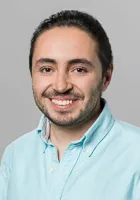
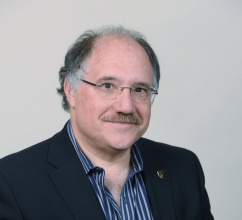
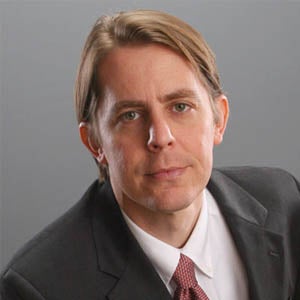
Jeong Joon (JJ) Park is an Assistant Professor in the Department of Computer Science and Engineering at the University of Michigan. His research focuses on computer vision, graphics, and artificial intelligence with applications in 3D/4D reconstruction, generative modeling, robotics, and medical imaging. He holds a position in the College of Engineering and actively seeks PhD students and postdoctoral researchers aligned with his research interests. Dr. Park’s work emphasizes interdisciplinary approaches, combining geometric deep learning with generative models to address challenges in scene understanding, novel view synthesis, and multi-modal perception. His lab explores both foundational techniques and applied systems, often collaborating with industry and academia on real-world problems. Key research directions include diffusion models for sparse data restoration, trajectory-conditioned 4D generation, and uncertainty-aware sensor fusion for autonomous systems. His publications span top-tier conferences like CVPR, ICCV, and NeurIPS, reflecting a strong publication record in computer vision and graphics. He teaches courses in computer vision and advises students on advanced projects requiring significant weekly commitments. Prospective applicants are encouraged to apply through the U-M CSE PhD program and contact him directly for collaboration opportunities.
Sergii Strelchuk is an Associate Professor of Computer Science at the University of Oxford, specializing in quantum computing and its applications. His research sits at the intersection of quantum information theory, computer science, and bioinformatics, with a focus on developing quantum algorithms for practical problems in genomics and beyond. Professor Strelchuk's primary research interests include quantum algorithms and their applications (particularly in bioinformatics), classical simulation methods for quantum computation, quantum complexity theory, and quantum learning theory. His work bridges theoretical quantum computing with practical applications, especially in the emerging field of quantum genomics and pangenomics, with significant implications for understanding human and pathogen genomes. His recent publications demonstrate a strong focus on applying quantum computing techniques to genomic data analysis, developing efficient fermion-qubit mappings for quantum simulation, and exploring fundamental aspects of quantum complexity theory. His research shows a clear trajectory toward making quantum computing practically applicable to biological data analysis and advancing our theoretical understanding of quantum computational models. Among his notable scientific achievements are: Royal Society University Research Fellow Leverhulme Early Career Fellow John and Delia Agar Research Fellow Professor Strelchuk leads several significant research projects including the Wellcome Leap "Human and Pathogen Quantum Pangenomics" project (2023-2026), which recently entered Phase 3 in April 2025, the EPSRC "Structure and symmetry in quantum verification" grant (2023-2025), and the "Quantum Algorithms for Quantum Field Theory" project (2022-2025). His research has attracted substantial funding for quantum computing applications in genomics. His work has received significant attention in both academic and popular science media, including coverage in Quanta Magazine and collaborations with institutions like the Sanger Institute to tackle complex genomic challenges using quantum computing approaches, with recent publicity about his leadership in the final phase of the Wellcome Leap-funded quantum pangenomics project.
Steven M. LaValle is a Professor at the University of Oulu's Faculty of Information Technology and Electrical Engineering since 2018. Previously, he held tenured positions at the University of Illinois Urbana-Champaign (UIUC) and was a Principal Scientist at Oculus VR. His research spans robotics, motion planning (notably pioneering RRT algorithms), virtual reality, and sensor fusion. He has authored influential textbooks like Planning Algorithms and Virtual Reality . Education: PhD (1995), MS (1993), and BS (1990) in Electrical Engineering from UIUC. Research Interests: Focuses on minimal information requirements for robots, perception engineering, and foundational VR/AR systems. His work integrates control theory, computational geometry, and human perception. Achievements: Recipient of the IEEE ICRA Milestone Award (2019), University Scholar (UIUC, 2012), and XTIC Award 2024 for Innovation. Leads the Perception Engineering Group at Oulu, advancing VR/AR and telepresence technologies. Grants & Industry: ERC Advanced Grant (2021–2026), former VP of Huawei's VR/AR division, and collaborator with institutions like IIT Madras. Advises startups in robotics and virtual reality.
Randall D. Beer is a Provost Professor at Indiana University with affiliations across multiple departments and centers, including the Cognitive Science Program , Program in Neuroscience , School of Informatics, Computing, and Engineering , and the Center for Complex Networks and Systems Research . His research focuses on understanding how organisms function as integrated wholes, emphasizing the interplay between brains, bodies, and environments. He develops computational models of neuromechanical systems, biologically-inspired robotics, and dynamical systems approaches to cognition. Education: While formal educational details are not explicitly listed, Beer's academic trajectory is reflected in his extensive publications and roles in interdisciplinary research programs. Research Interests: Beer investigates: - Embodied cognition and enaction frameworks - Neurodynamics and central pattern generators - Evolution of behavior in artificial agents - Metabolic and developmental systems biology - Dynamical systems theory - Computational modeling of C. elegans locomotion Software Contributions: Beer has developed tools like Dynamica (for dynamical systems analysis), CTRNN (neural network simulation), and Evolutionary Agents (robotics control frameworks). These tools are widely used in computational neuroscience and robotics research. Advising and Teams: He supervises a large group of graduate students and postdocs, contributing to projects such as neuromechanical modeling and evolutionary robotics. His work is supported through grants focusing on embodied cognition and systems biology. Labs and Collaborations: Active in the Center for Complex Networks and Systems Research and collaborates with interdisciplinary teams exploring topics like autopoiesis, viability theory, and robotic embodiment.
Ming-Hsuan Yang is a Professor in the Department of Computer Science & Engineering at the University of California, Merced , where he also serves as the Graduate Chair for the Electrical Engineering and Computer Science (EECS) graduate group. His research spans computer vision , machine learning , and pattern recognition , with a focus on image and video restoration, object tracking, and 3D scene understanding. Ph.D., University of Illinois at Urbana-Champaign (2000) M.S., University of Texas at Austin (1994) M.S., University of Southern California (1992) B.S., National Tsing-Hua University, Taiwan (1991) His research interests include computer vision (object tracking, image deblurring, saliency detection), machine learning (transfer learning, sparse representation), and 3D reconstruction (Gaussian splatting, scene generation). He has pioneered methods in diffusion models , transformer architectures , and multi-modal vision-language systems . Recent publication trends show leadership in 3D mesh generation (ICCV 2025), video diffusion (CVPR 2025), and image restoration (PAMI 2025), with interdisciplinary applications in medical imaging (TMI 2024) and human motion analysis (WACV 2025). Scientific awards include Nvidia Fellowships and EECS Rising Stars recognitions for advisees, with Meta , Google DeepMind , and Adobe alumni placements. He has advised 18 PhD students and 13 MS students since 2009, with notable fellowships including Chancellor's Graduate Fellowship and GSOP Fellowship . His Visual Tracking and Learning Lab produces high-impact work in object tracking , image enhancement , and semantic segmentation , supported by NSF grants and industry collaborations . Lab alumni now lead R&D at top tech companies like Stability AI and Meta .
Mark Crowley is an Associate Professor in the Department of Electrical and Computer Engineering at the University of Waterloo , with a cross-appointment in the Cheriton School of Computer Science . He is actively involved in the Waterloo Artificial Intelligence Institute (WAII) , the Waterloo Institute for Complexity and Innovation (WICI) , and serves as National Secretary for the Canadian Artificial Intelligence Association (CAIAC) , coordinating the Canadian Conference on AI . Research interests span the theoretical and applied aspects of Reinforcement Learning , Deep Learning , Manifold Learning , and Ensemble Methods . His work addresses challenges in domains with spatial dynamics, multi-agent systems, and uncertainty, particularly in Computational Sustainability (forest fire management, sustainable forestry), Autonomous Driving , Medical Imaging , and Material Design . Recent research focuses on integrating causal modeling with generative representation learning to improve out-of-distribution robustness in motion forecasting applications. Key publications include foundational work on ChemGymRL environments for safe chemical process reinforcement learning, Generative Causal Representation Learning for robust forecasting, and collaborative work on multi-advisor reinforcement learning in multi-agent settings. He co-authored a textbook Elements of Dimensionality Reduction and Manifold Learning (Springer, 2023) with Prof. Ali Ghodsi and Prof. Fakhri Karray. Teaching includes graduate and undergraduate courses in Algorithm Design , Computational Intelligence , Reinforcement Learning , and Data Modeling at the University of Waterloo since 2018. His research group has produced several notable graduates including Benyamin Ghojogh (2021), who continued as a postdoc until 2022.
Antonio Vairo is a full Professor at the Department of Physics, TUM School of Natural Sciences, Technical University of Munich, where he holds the Chair of Theoretical Physics - Applied Quantum Field Theory (T39) at the James-Franck-Str. 1/I campus in Garching bei München. His research focuses on the theoretical foundations of quantum chromodynamics with emphasis on heavy quark systems and non-perturbative phenomena. Professor Vairo's primary research interests include Quantum Chromodynamics (QCD), Heavy Quark Physics, Lattice Gauge Theory, Effective Field Theories, and Exotic Hadron Spectroscopy. His work bridges computational approaches with analytical frameworks to investigate quarkonium dynamics in extreme environments like the quark-gluon plasma, while developing novel applications of Born-Oppenheimer effective theory to multi-quark systems. Recent investigations extend into dark matter bound state formation in the early universe, demonstrating interdisciplinary reach across particle physics and cosmology. Analysis of his 2024-2025 publications reveals three dominant research thrusts: (1) quarkonium suppression mechanisms in heavy-ion collisions using open quantum systems approaches, (2) high-precision lattice QCD computations of static forces and chromoelectric correlators, and (3) systematic development of effective field theories for exotic hadrons and dark matter pairs. His work on pNRQCD (potential non-relativistic QCD) provides critical connections between lattice results and experimental observables in heavy-ion physics. Professor Vairo maintains active research leadership through collaborations with international groups including the Belle II experiment, as evidenced by his contributions to 'The Belle II Physics Book'. His methodological innovations in applying quantum trajectory methods to quarkonium evolution and developing FeynOnium computational tools for effective field theories demonstrate significant technical contributions to the field. Current research directions emphasize next-to-leading order corrections in heavy quark dynamics and Debye mass effects in dark matter bound state formation.
Vinod M. Vokkarane is a Professor in the Department of Electrical and Computer Engineering at the University of Massachusetts Lowell, where he serves as Director of the Center for Smart Cyber-Physical Systems (SCyPS) and Director of Advanced Computer Network Labs. Previously, he was an Associate Professor at University of Massachusetts Dartmouth from 2004 to 2013 and a Visiting Scientist at MIT's Research Laboratory of Electronics from 2011 to 2014. His extensive research portfolio spans multiple domains of advanced networking and cyber-physical systems. Dr. Vokkarane earned his educational foundation with a B.S. from University of Mysore, India (1999), followed by an M.S. (2001) and Ph.D. (2004) in Computer Science from the University of Texas at Dallas. His dissertation focused on optical burst-switched networks, establishing the foundation for his future research trajectory. His research interests center on Cyber-Physical Systems, Network Optimization, Reliability, Smart Grids, and Cyber-Security, with particular expertise in the design, analysis, and modeling of architectures, protocols, and algorithms for ultra-high speed networks including Optical networks, Grid/Cloud networks, and Big-data networks. His work bridges theoretical foundations with practical implementations, often addressing critical challenges in network reliability, security, and efficiency. His research has received significant recognition through numerous best paper awards and substantial external funding. Analysis of his recent publications reveals a clear evolution toward increasingly sophisticated integration of cyber-physical systems with power infrastructure, particularly in the areas of grid resilience and observability. His work has expanded from fundamental optical networking research to address critical infrastructure challenges, with a growing emphasis on machine learning applications for network optimization and power system monitoring. The recent focus on PMU networks, disaster resilience, and cyber restoration demonstrates his strategic pivot toward addressing national security and critical infrastructure protection challenges. UMass Dartmouth Scholar of the Year Award (2011) UMass Dartmouth Chancellor's Innovation in Teaching Award (2010-11) University of Texas at Dallas Computer Science Dissertation of the Year Award (2003-04) Multiple Best Paper Awards including IEEE GLOBECOM 2005, IEEE ANTS 2010, ONDM 2015, ONDM 2016, and IEEE ANTS 2016 Texas Telecommunications Engineering Consortium Fellowship (2002-03) Dr. Vokkarane has successfully mentored numerous graduate students who have contributed significantly to his research projects, with several going on to successful careers in academia and industry. His research has been consistently supported by major funding agencies including NSF, DOE, and USMC, with recent projects totaling over $5 million in funding. Current projects include Unified Post-Disaster Restoration Planning for Cyber-Physical Power Distribution Systems (ONR, $550K), CyberCARE: Northeast University Cybersecurity Center (DOE, $3.5M), and Flexible Spectrum Allocation in Next-Generation Optical Networks (NSF, $350K). He leads the Center for Smart Cyber-Physical Systems (SCyPS) and Advanced Computer Network Labs at UMass Lowell, where his research teams work on cutting-edge problems in network architecture, cyber-physical security, and infrastructure resilience. His labs collaborate extensively with national laboratories and industry partners to translate theoretical advances into practical solutions for real-world infrastructure challenges.
Farzan Banihashemi serves as a Research Fellow at the Chair of Energy Efficient and Sustainable Design and Building at the Technical University of Munich (TUM), maintaining this affiliation since 2019 while concurrently working as a Data Scientist at Climateflux GmbH since 2023. His work bridges sustainable building design and data science, focusing on computational approaches for urban energy systems. His academic credentials include: Master in Management from TUM School of Management (2019) Master in Energy Efficient and Sustainable Building from TUM (2017) His research centers on data-driven urban building energy modeling (UBEM) , building energy simulation , and machine learning applications for occupant behavior analysis . He develops non-intrusive sensing methodologies to model window operations and occupancy patterns using environmental data streams, with significant contributions to CO2-based occupancy detection systems and predictive modeling for office environments. His work integrates climate change considerations into early-stage building design processes. Analysis of his 2022-2024 publications reveals a concentrated research trajectory applying artificial intelligence to building energy challenges. Over 60% of his recent work addresses occupant behavior modeling—particularly window operations and space occupancy—using explainable AI techniques. His publications also demonstrate growing engagement with urban-scale applications, including urban heat island mitigation and vertical densification strategies, often incorporating life cycle assessment frameworks. No scientific awards were documented in the source materials. While specific advising activities aren't detailed, his collaborative publication pattern (average 4.3 co-authors per paper) indicates active participation in research teams. Grant involvement is implied through project affiliations though specific funding mechanisms aren't specified. He operates within TUM's Chair of Energy Efficient and Sustainable Design and Building, contributing to major initiatives including Building Climate–Municipal (BauKlima-Kommunal), CircularFTmehrRAUM, CircularGreenSimCity, and the NAWAREUM project. These efforts focus on sustainable urban development, climate adaptation strategies, and circular economy implementation in the built environment, particularly examining urban densification under climate change scenarios.
Prof. Ping Lu is the Albert W. Johnson Distinguished Professor and Department Chair in the Department of Aerospace Engineering at San Diego State University (SDSU), College of Engineering. He holds a PhD from the University of Michigan. His research focuses on advanced guidance systems, autonomous trajectory planning, flight control, and flight mechanics, with applications to space transportation systems like the X-33, Orion Crew Exploration Vehicle, and Mars missions. Prof. Lu has contributed to major programs such as the Evolvable Mars Campaign and has pioneered algorithms for propellant-optimal guidance and trajectory optimization. His awards include the NASA Director’s Innovation Group Achievement Award (2016) and AIAA Mechanics and Control of Flight Award (2008). Research highlights include model predictive guidance algorithms, six-degree-of-freedom rocket landing optimization, and fuel-optimal strategies for Mars and lunar missions. His work bridges theoretical control systems with practical aerospace applications, emphasizing real-world feasibility through convex optimization and numerical methods. Key contributions include over 150 peer-reviewed articles, with recent trends focusing on end-to-end trajectory optimization from entry to powered descent, asteroid landing trajectory design, and robust abort protocols. He leads SDSU’s aerospace systems research, collaborating on cutting-edge projects like the Pterodactyl entry vehicle and fractional-polynomial guidance frameworks.
Anna Perona is a Research Fellow at the University of Warwick's Department of Physics, affiliated with the Physics Centre for Fusion, Space and Astrophysics. Her research focuses on plasma physics phenomena, including magnetic reconnection and energetic particle behavior in fusion and space plasmas. She has conducted postdoctoral work at leading institutions like JET (Culham) and CEA (Cadarache), investigating fast ion dynamics and plasma stability. Her current work emphasizes electron acceleration during magnetic reconnection events, supported by a custom numerical tool analyzing 3D magnetic field effects on electron trajectories. Collaborations include projects with Julia Branke on visualizing plasma dynamics. No awards are explicitly stated, but her work contributes to advancing fusion energy and space plasma understanding. Education & Experience: Postdoctoral Research Fellow at University of Warwick Research stages at JET (Tokamak disruptions) and CEA (fusion physics) Research Interests: Numerical modeling of energetic electrons and ions in magnetized plasmas Magnetic reconnection dynamics and its impact on particle acceleration Development of 3D plasma simulation tools Advising & Grants: No formal advisees listed Collaborations with institutions like JET and CEA Labs & Teams: Part of the Physics Centre for Fusion, Space and Astrophysics at Warwick Contributions to the HAGIS code for energetic ion studies
SangHyung Ahn is a Lecturer at the School of Civil Engineering , University of Queensland (UQ), since 2017. He joined UQ as a postdoctoral research fellow in 2015 after earning his PhD in Civil Engineering (Construction Engineering and Management) from Purdue University, USA. Prior to his academic career, he worked as an assistant manager at Hyundai Engineering and Construction Co., Ltd. (2003-2007) and holds an MBA in international business from Hanyang University and a B.Sc in Civil Engineering from Korea University. Research Focus: Construction process modelling with virtual reality, decision support systems for construction, automation of data-driven simulation modelling, sensor-based operations analysis, and integration of Building Information Modelling (BIM). Teaching: Coordinates undergraduate courses Introduction to Project Management (CIVL3510) and Construction Engineering Management (CIVL4522) . Research Trends: His recent publications highlight interdisciplinary work in transportation engineering, structural design, and AI-driven simulation tools. Key themes include application of machine learning to car-following models, drone-based vehicle identification, and optimization of public transport systems using agent-based simulations. Supervision: Available for supervision, with completed supervision of PhD and Master’s theses on topics such as BIM-LCA integration, pedestrian trajectory analysis, and AI-driven driving behavior models.
Andrew Rau-Chaplin is a Professor and Dean of the Faculty of Computer Science at Dalhousie University, where he leads the Risk Analytics Lab and contributes significantly to research in high performance computing, parallel algorithms, and risk analytics. He is affiliated with the Institute for Big Data Analytics and has a strong academic and administrative presence. Education: Postdoc - DIMCS (Princeton, Rutgers, Bell Labs) PhD - Carleton University (1993) MCS - Carleton University (1990) BCS - York University (1986) His research focuses on applying parallel and high performance computing to data-intensive domains such as data warehousing, OLAP, catastrophe modeling, and risk analytics. He emphasizes both algorithmic design and practical system implementation, with a strong grounding in experimental evaluation. His work spans theoretical studies and real-world applications in finance, bioinformatics, and geospatial systems. The 15 most recent publications reflect a consistent focus on parallel data processing, OLAP optimization, indexing techniques (e.g., Hilbert curves), and risk modeling. Key themes include scalable data cube computation, view selection, adaptive coding, and spatial analytics, demonstrating expertise in both algorithmic innovation and systems-level performance. He has served on numerous scientific committees and grant panels, including NSERC and Compute Canada, and has been a journal editor for JPDC and DMTCS. Dr. Rau-Chaplin has supervised a wide range of graduate students in areas including risk analytics, GPU computing, text analytics, and parallel algorithms. His lab has received funding for postdoctoral, graduate, and undergraduate research positions. He teaches courses such as Parallel Computing, Software Engineering, Data Structures, and Risk Analytics, and has developed software tools like LaHave, Clustal XP, and Digital Coliseum. His lab, the Risk Analytics Lab, focuses on integrating analytics, risk management, and HPC for challenges in catastrophe modeling and financial risk. The lab leverages technologies such as stochastic simulation, optimization, and spatial OLAP.
Stéphane Doncieux is a University Professor in Computer Science at Sorbonne University, where he is affiliated with the Institute of Intelligent Systems and Robotics (ISIR), a joint research laboratory with CNRS. Since January 2024, he has served as Director of ISIR, following a term as Deputy Director from 2019 to 2023. He leads the ASIMOV research team and is based at the Pierre and Marie Curie Campus in Paris. His primary research interests lie in cognitive and developmental robotics, with a strong focus on open-ended learning, evolutionary algorithms, and adaptive systems. He investigates how robots can autonomously learn diverse skills through mechanisms such as novelty search, quality-diversity optimization, and intrinsic motivation. His work bridges theoretical foundations in artificial life and practical applications in robotic manipulation, perception, and control. The recent publications highlight a consistent trend in advancing robotic learning under sparse rewards and in open-ended environments. Key themes include quality-diversity optimization for grasping, state representation learning, sim-to-real transfer, and the development of behavioral repertoires. These works are published in high-impact journals such as IEEE Transactions on Robotics, Evolutionary Computation, and Frontiers in Robotics and AI. Coordinator, DREAM FET H2020 project (2015–2018) Principal Investigator, ANR projects on Creative Adaptation by Evolution, Learning Movement Skills, and Grasping with Multimodal Feedback Involved in European initiatives including VeriDREAM and HumanE-AI-Net He has supervised numerous PhD and Master’s students, including Leni Le Goff, Giuseppe Paolo, Alban Laflaquière, and Achkan Salehi, often in collaboration with leading researchers like Olivier Sigaud and Jean-Baptiste Mouret. He teaches computer science and robotics at both undergraduate and graduate levels at Sorbonne University. Doncieux has been instrumental in shaping research directions in evolutionary and developmental robotics, notably through his leadership in the IEEE Task Force on Evo-Devo-Robotics and his editorial contributions. His lab, ASIMOV, fosters interdisciplinary research integrating computer science, neuroscience, and engineering to create more autonomous and intelligent robotic systems.
Jason H. Hafner is a Professor of Physics and Astronomy and of Chemistry at Rice University, affiliated with the Rice Space Institute. His research bridges fundamental physics with biological applications through nanoscale phenomena, focusing on light-matter interactions at molecular interfaces. Education: 1993: BS in Physics, Trinity University 1996: MA in Physics, Rice University 1998: PhD in Physics, Rice University (advisor: Richard Smalley) Hafner's work centers on nanophotonics and interfacial biophysics , utilizing Surface Enhanced Raman Scattering (SERS) as a primary tool. His lab pioneers structural analysis of lipid membranes, gold nanoparticle surface chemistry, and vibrational spectroscopy of bioactive compounds including anthraquinones in lichens and flavonoids. Current projects integrate computational modeling with experimental SERS to decode cholesterol structure and analyze environmental particulates from aerospace events. Publications since 2015 reveal a trajectory from foundational nanomaterial studies toward complex biological systems, increasingly combining DFT simulations with experimental Raman data. His work spans astrobiology-relevant molecules to spacecraft-related environmental analysis, demonstrating consistent methodological innovation in vibrational spectroscopy. Major recognitions include: Beckman Young Investigator Award (2002) Norman Hackerman Award for Chemical Research from Welch Foundation (2011) Hafner has mentored multiple PhD students including Aobo (gold nanoparticle surface chemistry) and Mathieu (lipid membrane structure via SERS), while teaching undergraduate physics for nearly a decade. His editorial role at ACS Nano (2010-2017) reflects standing in the nanoscience community. The Hafner Lab maintains an agile, interdisciplinary approach—recently collaborating with planetary scientist Phil Metzger to analyze SpaceX launch debris using Raman spectroscopy, demonstrating real-world application of fundamental research techniques to emerging aerospace challenges.