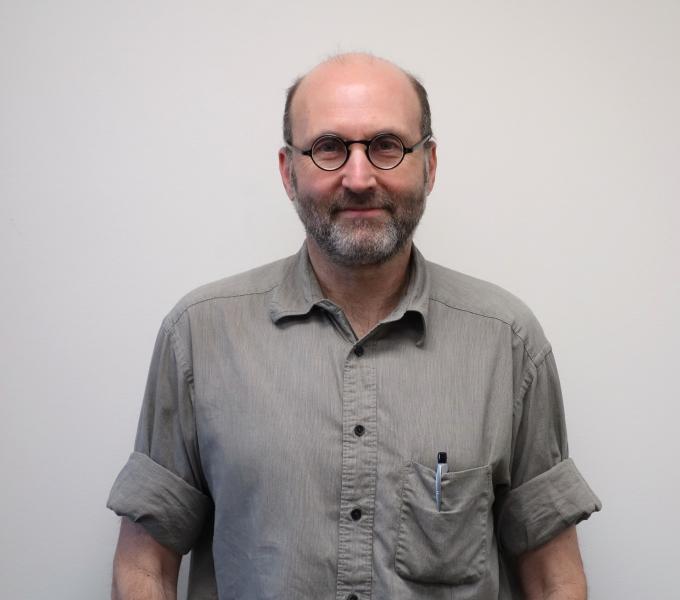
Smriti Srinivas is a Professor in the Department of Anthropology at the University of California, Davis. Her research focuses on urban cultures, religion, and South Asian studies, with a particular emphasis on Indian Ocean worlds. She holds a Ph.D., M.Phil., and M.A. in Sociology from Delhi School of Economics, and a B.A. in Economics from Madras Christian College. Her research has explored topics such as spirit possession in Himalayan borderlands, memory in Bangalore’s high-tech landscape, and transnational religious movements centered on Sai Baba. She has been supported by grants from the Mellon Foundation, Rockefeller Humanities, and the National Endowment for the Humanities, among others. Srinivas currently serves on the advisory board of the International Journal of Urban and Regional Studies and is Series Editor for the Routledge Series on the Indian Ocean. Her teaching spans undergraduate and graduate courses in cultural anthropology, urban studies, and comparative religions. Notable publications include Landscapes of Urban Memory (2001), In the Presence of Sai Baba (2008), and Reimagining Indian Ocean Worlds (2020). Awards include the 2020 Graduate Studies Distinguished Mentoring Award and the 2016 Social Sciences Dean’s Leadership Award.
Srijan Sengupta is an Associate Professor of Statistics at North Carolina State University (NC State) since 2020. Previously, he served as an Assistant Professor at Virginia Tech from 2016 to 2020. He holds a Ph.D. in Statistics from the University of Illinois at Urbana-Champaign (2016) and degrees from the Indian Statistical Institute (B.Stat and M.Stat with Distinction). His research focuses on statistical methodology for network data, anomaly detection, bootstrap methods, and scalable inference, with applications in healthcare analytics, epidemiology, and cybersecurity. Education: Ph.D. in Statistics, University of Illinois at Urbana-Champaign (2011–2016) M.Stat (1st Division with Distinction), Indian Statistical Institute (2007–2009) B.Stat (1st Division with Distinction), Indian Statistical Institute (2004–2007) Research Interests: His methodological work includes statistical inference in networks, anomaly detection, bootstrap techniques, and scalable algorithms for big data. Applications span social determinants of health, healthcare analytics, space physics, epidemiology, and cybersecurity. He emphasizes interdisciplinary collaborations, particularly in patient safety event analysis and medical device safety. Awards and Grants: Norton Prize for Outstanding PhD Thesis (2015) NIH R01 Grant ($890,055, Principal Investigator) for statistical algorithms in patient safety (2019–2022) Multiple grants for network inference and anomaly detection (NSF, Socially Determined Inc., Virginia Tech Foundation) Advising and Service: Advises over 20 students across PhD, master’s, and undergraduate research programs. Serves as an Associate Editor for Sankhya, Series B and peer reviewer for top journals. Active in university service roles at NC State and Virginia Tech, including faculty hiring committees and curriculum development. Labs and Collaborations: Leads research on statistical network analysis, including projects funded by NIH and NSF. Collaborates with institutions globally on topics like epidemic thresholds, cybersecurity defenses (e.g., phishing detection), and healthcare analytics.
Konstadinos (Kostas) Goulias is a Professor of Transportation in the Department of Geography at the University of California, Santa Barbara (UCSB), where he has served since 2004. Previously, he held academic positions at Penn State University from 1991 to 2004, including roles as Associate and Full Professor of Transportation Engineering. His research focuses on transportation systems planning, travel behavior dynamics, activity-based modeling, GIScience, and spatial analysis of transportation data. **Education**: Ph.D. in Civil Engineering (Transportation), University of California, Davis, 1991 M.S. in Civil Engineering, University of Michigan, Ann Arbor, 1987 Laurea Magistrale in Engineering, University of Calabria, Italy, 1986 **Research Interests**: Transportation demand modeling and microsimulation Activity-travel behavior analysis Spatiotemporal analysis of mobility using big data GIScience applications in transportation Policy implications of emerging technologies (e.g., autonomous vehicles) **Key Contributions**: Co-founder and Editor-in-Chief of Transportation Letters Principal Investigator of $6.5M in research projects Authored/edited three books and over 350 peer-reviewed publications Led the development of the SimAGENT microsimulation framework Directed the GeoTrans Laboratory at UCSB since 2007 **Awards**: Pyke Johnson Award (2021, 2016) Best Paper Award (2021) Chair of TRB committees on traveler behavior and activity-based approaches **Grants/Students**: Supervised multiple graduate students in transportation and geography Managed projects with sponsors including USDOT, state agencies, and international organizations **Labs/Teams**: GeoTrans Laboratory: Focused on smart city planning and transportation innovation Collaborations with institutions globally, including Australia, Europe, and Qatar
Francesco Bullo is a Distinguished Professor of Mechanical Engineering at the University of California, Santa Barbara (UCSB), affiliated with the College of Engineering. He holds joint appointments in Electrical and Computer Engineering, Computer Science, and the Center for Control, Dynamical Systems, and Computation. His research focuses on distributed control, network systems, and neural networks, with notable contributions to contraction theory and social dynamics analysis. Education: Laurea (1994, University of Padova), PhD (1998, Caltech). Leadership roles: Former IEEE CSS President, SIAG CST Chair. Research interests include biological/artificial neural networks, distributed control of robotic networks, and synchronization in power grids. He authored books like Lectures on Network Systems and Contraction Theory for Dynamical Systems . His work spans 300+ publications, including impactful articles on Hopfield networks, power grid stability, and optimization. Awards include IEEE Fellow, ASME Fellow, and SIAM Fellow. Advising and grants: Mentored over 30 PhD students and led major projects like the NSF MURI on team behavior modeling. Current research includes neural synchronization and AI-driven control. Labs/teams: Directs the UCSB Center for Control, Dynamical Systems, and Computation, and collaborates on interdisciplinary initiatives like the Network Science for Medicine white paper.
Giovanna Tinetti is a Professor of Astrophysics and Vice Dean (Research) at King's College London's Faculty of Natural, Mathematical & Engineering Sciences. She leads the European Space Agency's Ariel mission, a space telescope surveying exoplanet atmospheres, set to launch in 2029. As co-founder of the London Centre for Space Exochemistry Data and Blue Skies Space Ltd, she pioneers satellite technology for scientific data collection. She holds a PhD in Theoretical Physics from the University of Turin, with prior affiliations at Caltech/JPL, the Institute of Astrophysics in Paris, and University College London (UCL), where she was a Royal Society University Research Fellow. Her research focuses on exoplanetary atmospheres, molecular spectroscopy, and advanced data science techniques. With over 300 publications, her 2019 paper on water vapor in K2-18b's atmosphere achieved the highest altmetric score in Physical Sciences that year. She has delivered over 350 international talks and lectures. Education: PhD in Theoretical Physics (University of Turin) Affiliations: King's College London, UCL (past), ESA's Ariel Mission, Blue Skies Space Ltd Research Interests: Exoplanet atmospheres, molecular spectroscopy, space science, data-driven analysis methodologies, and atmospheric modeling. Her work bridges observational astronomy with computational chemistry to interpret exoplanet compositions and climates. Awards: Royal Society University Research Fellow Highest Altmetric Score (2019 Physical Sciences) Grants & Projects: Principal Investigator for ESA's Ariel mission Co-leader of the Ariel Data Challenge 2025 Labs/Teams: London Centre for Space Exochemistry Data, Blue Skies Space Ltd technical team, and the international Ariel collaboration network.
Prof. Ovidiu Cârjă is a Professor of Mathematical Analysis at the Faculty of Mathematics, University of Iasi, Romania. He holds a PhD from the same university (1984) and has held academic positions since 1981, progressing from Assistant Professor (1984) to his current role. His research focuses on controllability, viability theory, and Hamilton-Jacobi-Bellman equations, with significant contributions to differential inclusions and nonlinear analysis. Education: B.Sc. Mathematics, University of Iasi (1976) M.Phil. Mathematics, University of Iasi (1977) Ph.D. Mathematics, University of Iasi (1984) Research Interests: Optimal control and time-optimal control problems Viability and invariance for differential inclusions Hamilton-Jacobi-Bellman equations Nonlinear functional analysis and semilinear systems Awards and Fellowships: Romanian Academy 'Simion Stoilow' Award (1991) Fulbright Award (UCLA, 1993–1994) NATO Fellowship (CMAF Lisbon, 1998–2002) Invited Professorships at University of Perpignan and Tor Vergata Rome Professional Activities: Editor of the Applied Analysis and Differential Equations (World Scientific, 2007) Co-author of influential books on nonlinear analysis and viability theory
Daniel Müller-Gritschneder is an Adjunct Teaching Professor (Privatdozent) at the Technical University of Munich (TUM), affiliated with the Chair of Electronic Design Automation. He leads the 'Electronic System Level' research group, focusing on embedded systems, TinyML, virtual prototyping, and hardware resilience. He temporarily served as head of the Chair of Real-Time Systems (2019–2020) and holds a senior membership in IEEE. His research spans: TinyML : Optimizing neural network inference for microcontrollers. Virtual Prototyping : Fast simulation for embedded software development (e.g., ETISS simulator). Runtime Verification : Hardware monitoring for safety-critical systems. Fault Tolerance : Cross-layer resilience against soft errors. Design Automation : NoC synthesis and RISC-V toolchain optimization. His publications emphasize RISC-V-based systems, TinyML deployment, fault injection, and embedded AI. Recent works show trends toward compiler-assisted security, thermal management, and automated design-space exploration for edge devices. Awards: Best Paper Award (SiPS 2019) Habilitation Award (Bund der Freunde der TUM, 2019) 2nd Best Paper (SMACD'15) Best Paper nominations at DAC'07, DATE'10, Analog'10, NOCS'13 He advises researchers in the Electronic System Level group and contributes to EU projects (e.g., Scale4Edge). His lab develops tools like ETISS, MLonMCU, and Seal5 for RISC-V and TinyML ecosystems.
Andrew Bishara, MD, is an Assistant Professor in Residence in the Department of Anesthesiology within the School of Medicine at the University of California, San Francisco (UCSF). He is affiliated with multiple UCSF clinical sites, including Mission Bay, Mount Zion, and Parnassus, and is actively involved in the AI Clinical Innovation Lab, Transplant Anesthesia Research Group, and POCCO (PeriOperative Cardiac Complications Observatory). His clinical practice as an anesthesiologist is deeply integrated with his research in machine learning and artificial intelligence for perioperative care. Dr. Bishara's educational background includes a BSE in Mechanical Engineering from MIT (2009), an MD from Harvard Medical School (2014), and a D.ABA. in Anesthesiology from UCSF (2019). He also completed specialized training in Medical Informatics and Artificial Intelligence through the Bakar Computational Health Sciences Institute (2020) and a Diversity, Equity, and Inclusion Champion program at UCSF (2022). His research focuses on developing and validating machine learning models to predict and prevent surgical complications such as acute kidney injury, postoperative delirium, pain, and blood loss in real time. He emphasizes creating clinically usable models and improving AI-human interfaces for seamless integration into clinical workflows. His work also explores gender-based disparities in coronary artery disease diagnosis using EHR data analytics. His recent publications demonstrate expertise in AI quality improvement, model implementation in acute care, and predictive modeling across diverse surgical and critical care domains. He co-founded Bezel Health, a company focused on healthcare quality measurement, reflecting his commitment to translating research into real-world impact. Clinical Artificial Intelligence Quality Improvement Real-time Risk Assessment in Surgery AI Integration in Anesthesia Gender Disparities in Cardiac Care Transplant Anesthesia Research Regulatory Aspects of AI in Medicine Dr. Bishara is actively engaged in advancing perioperative medicine through innovation in data science and AI, with a strong emphasis on improving patient outcomes, equity, and clinical workflow efficiency.
Isabella Di Lenardo is a Lecturer and Scientist at the Digital Humanities Institute (DHI) at École Polytechnique Fédérale de Lausanne (EPFL), where she also serves as the coordinator of the EPFL Time Machine Unit and the European Local Time Machines. She holds affiliations across multiple departments, including DHI-GE, SAR-ENS, SHS-ENS, and EDDH-ENS, reflecting her interdisciplinary role in teaching and research. Her educational background includes a PhD in Theories and Art History, with postdoctoral and faculty experience at institutions such as INHA (Paris), EPFL, and IUAV (Venice). Her research spans Digital Humanities, Art History, Urban History, and GIS , with a focus on digital urban reconstruction, historical cadastres, and AI applications in cultural heritage. She employs advanced computational methods including machine learning, 4D modeling, and semantic segmentation to analyze historical maps, cadastral records, and art archives. Her work bridges humanities scholarship with computer science, particularly in reconstructing urban evolution and analyzing visual patterns. The recent publications reveal a consistent trend in AI-powered historical data analysis , especially in processing non-standardized historical documents, reconstructing urban spaces, and developing open-source tools for digital heritage. Her work frequently involves large-scale datasets from Venice, Lausanne, Paris, and Jerusalem, demonstrating a transnational and interdisciplinary approach. She has contributed to significant collaborative projects such as the Venice Time Machine , Parcels of Venice , and Time Machine Organization , often acting as a principal investigator or project leader. Her role involves coordinating diverse teams of researchers, engineers, and cultural institutions. Scientific contributions include: Development of the Morphograph tool for visual pattern recognition in art archives Automatic vectorization and analysis of Napoleonic cadastres Creation of 4D models for historical cities AI-driven text and pattern extraction from historical maps Building discovery engines for digital art history She actively teaches ex cathedra courses in Digital Urban History and Art History at EPFL and internationally. Her work in grants and projects emphasizes open data, reproducibility, and interdisciplinary collaboration. She has led research funded by organizations supporting digital heritage innovation. She is a key member of the Digital Humanities Laboratory at EPFL and the Time Machine Organization , where she fosters collaboration between computer scientists, historians, and cultural institutions. Her work in the Replica Project and ARCHiVe center highlights her leadership in digitizing and making accessible large art historical archives.
Marcelo Coelho is a Design Tech Innovation Fellow and Visiting Lecturer at Cornell University's Department of Design Tech within the College of Architecture, Art, and Planning. He is also a Lecturer at the MIT Department of Architecture and Director of the MIT Design Intelligence Lab. His interdisciplinary work bridges artificial intelligence, industrial design, and human-computer interaction, with a focus on physical expression and collaboration between humans and machines. Ph.D., MIT Media Lab Faculty, MIT Department of Architecture Director, MIT Design Intelligence Lab Design Tech Innovation Fellow, Cornell University Marcelo Coelho's research centers on Artificial Intelligence, Machine Learning, Interaction Design, and Industrial Design . His work explores how computation can be embodied in physical forms to enable new modes of creative expression and interaction. He investigates the materiality of computation through installations, products, and large-scale performances that merge art, technology, and design. Projects such as Six-Forty by Four-Eighty and Resolution explore redefining digital pixels in physical space, while Window to the Heart and Beyond Vision demonstrate how computation can transform public experiences. His recent publications reflect a strong trend in physical AI and generative design , particularly in creating intelligent objects and environments that respond to human interaction. Themes include tangible interfaces, crowd-driven assembly, and shape-changing technologies, indicating a trajectory toward more embodied, situated, and collaborative forms of artificial intelligence in design contexts. Marcelo Coelho has received numerous accolades for his innovative work, including: Prix Ars Electronica awards (multiple) Design Miami/ Designer of the Future Award (2010) Red Dot Design Award Fast Company’s Innovation by Design Award Core77 Design Awards (2021, 2014) AIGA 50 Books | 50 Covers (2020) Webby Honoree (2020) Times Square Valentine Heart Design Winner (2018) He has led design initiatives at Formlabs as Head of Design, directing an international team across disciplines including industrial design, software, and mechanical engineering. His work has been exhibited globally at venues such as the Rio 2016 Paralympics, Times Square, Ars Electronica, and the Tel Aviv Museum of Art. He collaborates with artists like Vik Muniz and Aranda\Lasch, and his projects often involve public participation and community engagement. His labs and teams, particularly the MIT Design Intelligence Lab, focus on experimental design research at the intersection of computation and physicality.
Professor Sungheon Gene Kim holds a faculty position at the Weill Cornell Medicine Graduate School of Medical Sciences within the Department of Radiology . His research focuses on quantitative MRI methodology for oncological applications , particularly in breast cancer and head and neck cancer . Kim's lab develops advanced dynamic contrast-enhanced MRI (DCE-MRI) and diffusion MRI (dMRI) techniques to assess tumor microenvironment and treatment response . Key research areas include: Tumor vascular properties via 3D UTE-GRASP MRI Cellular microstructural analysis through POMACE framework Adipose-tissue cancer interaction via MR spectroscopic imaging His lab has received continuous funding from the National Cancer Institute (R01CA219964, UG3/UH3CA228699, R01CA160620). Recent publications demonstrate technical advancements in ultrafast MRI reconstruction , deep learning-enhanced perfusion analysis , and multi-parametric tumor characterization . Collaborations with the National Institutes of Health Quantitative Imaging Network have produced novel cellular water exchange rate measurements that correlate with patient survival outcomes .
Dr. Mohammad Yazdani-Asrami is a Lecturer in Electrically Powered Aircraft and Operations at the Autonomous Systems & Connectivity (ASC) division of the James Watt School of Engineering, University of Glasgow. He leads research in electrification and cryo-electrification of transportation, particularly in aviation, leveraging applied superconductivity and AI techniques. His research interests span the Electrification and cryo-electrification of power and transportation systems Design of superconducting components (machines, cables, fault current limiters) for aviation Application of AI, machine learning, and big data in engineering and superconductivity Hydrogen electrolysis, production, and integration in aerospace and power networks His recent publications demonstrate a strong trend toward intelligent modeling and AI-driven solutions in superconducting technologies, with a focus on electric aircraft, fault protection, and thermal management using cryogenic fluids. Dr. Yazdani-Asrami has received notable scientific recognition, including: UK Royal Academy of Engineering Global Talent (2021) Young Professional of the Year, Cryogenic Society of America (2023) He actively supervises PhD students and hosts visiting researchers. His advising portfolio includes Alireza Sadeghi, Kerr Smith, Dedao Yan, Giacomo Russo, and Fábio Gregório. He has secured funding from the EPSRC, University of Glasgow, and CSC for PhD students. He also supports postdoctoral fellowships from the Royal Academy of Engineering, Leverhulme Trust, and Marie Skłodowska-Curie actions. He is involved in several research groups and collaborations, particularly within the Aerodynamics, Propulsion and Electrification group. His editorial roles include serving on the boards of Superconductor Science and Technology , World Journal of Engineering , Aerospace Systems , and others. He regularly contributes to major conferences such as the Applied Superconductivity Conference and the International Conference on Magnet Technology.
Christoph Heinzl is a Professor of Cognitive Sensor Systems at the University of Passau since September 2022. He leads the Knowledge-based Image Processing research group at the Fraunhofer Development Center X-ray Technology (EZRT) . His academic background includes a PhD in Informatics and a Habilitation in 2022 , both from TU Wien . Research Focus: Scientific visualization, visual analytics, immersive analytics, virtual/augmented reality, machine learning, and X-ray computed tomography (XCT). Key Trends: Development of novel visualization techniques for complex volumetric data (e.g., dynamic volume lines, visual coherence frameworks), parameter space analysis, and cross-virtuality collaboration tools. Applications: Aerospace component inspection, defect analysis in composites (CFRP, GFRP), porosity quantification, and 4DCT time-series exploration.
Rodrigo González is an Assistant Professor at the Department of Mechanical Engineering, Eindhoven University of Technology, since 2022. His research focuses on data-driven modeling, estimation, and control methods for high-tech precision systems, with applications in motion control and continuous-time system identification. Education: Ph.D. in Electrical Engineering (KTH Royal Institute of Technology, 2022) M.Sc. in Electronic Engineering (Universidad Técnica Federico Santa María, 2016) His work emphasizes continuous-time system identification, state-space modeling, and Bayesian estimation techniques. Key research themes include motion control tuning, multivariable systems, and noise/disturbance modeling in precision engineering applications. Rodrigo has received the Best Electronic Engineering Student Award (2016) and Best Thesis Award from Universidad Técnica Federico Santa María. He has active collaborations with institutions like Universidad Técnica Federico Santa María through visiting researcher appointments. Scientific awards include: Best Electronic Engineering Student Award (2016) Best Thesis Award (Universidad Técnica Federico Santa María)
John D. Norton is a Distinguished Professor in the Department of History and Philosophy of Science (HPS) at the University of Pittsburgh, where he has been a faculty member since 1983. He served as Chair of the department from 2000 to 2005 and as Director of the Center for Philosophy of Science from 2005 to 2016. His work bridges the history and philosophy of physics, with deep engagement in Einstein’s relativity, quantum theory, statistical mechanics, and foundational issues in scientific reasoning. His educational background includes a PhD in the School of History and Philosophy of Science from the University of New South Wales (1982) and a Bachelor of Engineering in Chemical Engineering from the same institution (1974). Before transitioning to philosophy, he worked as a technologist at the Shell Oil Refinery in Sydney. Norton is renowned for his development of the material theory of induction , which challenges formalist approaches by asserting that inductive inferences are warranted by domain-specific facts rather than universal logical rules. He has also made significant contributions to the philosophy of spacetime, particularly through his analysis of the hole argument , and has published extensively on thought experiments, causation, and the thermodynamics of computation. His recent publications (2021–2025) reflect a sustained focus on induction, spacetime ontology, and the limits of thermodynamic reversibility and information processing. Key themes include the critique of Bayesianism, the historical development of thermodynamics, and the philosophical implications of time travel models in general relativity. His two major books— The Material Theory of Induction (2021) and its sequel The Large-Scale Structure of Inductive Inference (2024)—form a comprehensive philosophical framework for understanding scientific reasoning beyond formal logic. Co-Founder and Executive Committee Member, philsci-archive.pitt.edu Editor for Philosophy of Physics (Space and Time, General Physics), Stanford Encyclopedia of Philosophy Contributing Editor, Archive for History of Exact Science (1996–present) Associate/Co-Editor, Studies in History and Philosophy of Modern Physics Contributing Editor, Collected Papers of Albert Einstein , Volumes 3 and 4 Norton has advised numerous graduate students and has been instrumental in shaping the academic landscape of philosophy of science through editorial leadership and archival initiatives. His teaching includes graduate seminars on confirmation theory and the popular undergraduate course Einstein for Everyone , for which he maintains a freely available online textbook.