Meta Berghauser Pont is a Professor of Urban Morphology and Urban Planning at Chalmers University of Technology. She leads the Spatial Morphology Group (SMoG), focusing on quantitative analysis of urban form, space syntax, and design theory. Key research themes: urban density, sustainable cities, social-ecological systems, pedestrian movement modeling Authored the 2023 book Spacematrix: Space, Density and Urban Form , redefining density metrics Her work bridges analytical urban morphology with practical urban planning applications, particularly in noise/air quality management, transport infrastructure, and digital twin city modeling. She manages pedagogical development for architecture programs at Chalmers. Active projects include: Digital Twin Cities Centre (EU/VINNOVA) Sustainable Urban Form (Formas) Green Infrastructure Integration (Mistra Urban Futures) Multi-scale Climate Proofing (VINNOVA) Urban Design Calculator (Naturvårdsverket) Her lab develops open-source tools like the Place Syntax Tool (PST) for morphological analysis of cities.
David Kroik is a researcher at Mid Sweden University's Department of Humanities and Social Sciences. His work focuses on Southern Sami language and education, with a specialization in linguistic research and Indigenous educational contexts. Research areas: Sociolinguistics, Language revitalization, Educational linguistics Key project: Saajve - Stories, didactics and artistic practice in a Sami preschool Education : Licentiate thesis: Differential object marking in South Saami (2016) Doctoral thesis: The construction of spaces for Saami language use (2023) Research interests : David's work explores language revitalization through educational frameworks, focusing on Indigenous language rights, sociolinguistic landscapes, and policy implementation. His studies emphasize early childhood education in Sami preschools and the creation of supportive linguistic environments through artistic practices. Publication trends : Language revitalization in educational settings Indigenous language rights and policy Sociolinguistic landscapes Corpus development for minority languages
Gizem Yenel Güler serves as a Researcher at the Division of Ergonomics, KTH Royal Institute of Technology, where she investigates the interplay between built environments and human behavior with emphasis on workplace settings. Her academic foundation includes a PhD in Interior Architecture and Environmental Design from Bilkent University and an MSc in Interior Design from Politecnico di Milano. Her doctoral work employed space syntax to analyze visual privacy impacts in open-plan offices, followed by research on activity-based flexible offices during a visiting researcher stint at KTH School of Architecture. Her research interests encompass workplace design, human behavior in built environments, open-plan and activity-based offices, visual privacy, space syntax applications, and well-being optimization. This work aims to translate spatial configurations into improved social interactions and employee welfare through evidence-based environmental design. No scientific awards are documented in the provided information. There is no mention of student supervision, grant funding, or advisory roles in the available text. Her current research operates within KTH's Division of Ergonomics, leveraging interdisciplinary approaches to ergonomics and environmental psychology in workplace contexts.
Ioanna Stavroulaki is an Associate Professor in the Department of Architecture and Civil Engineering at Chalmers University of Technology and a core member of the SMoG_Spatial Morphology Group (smog.chalmers.se). Her research specializes in spatial morphology at urban and building scales, focusing on developing analytical methods and digital tools like the Place Syntax Tool for modeling spatial layouts. She investigates relationships between spatial form, human behavior, and social dynamics—including movement flows, co-presence patterns, usage behaviors, and spatial cultures—to advance evidence-based design practices. She co-founded Urban Calculator AB, a non-profit company creating design-oriented analytic tools for architects and urban planners. Her teaching spans undergraduate and postgraduate courses such as ACE535 Social-ecological urbanism, ACE445 Design Systems, and ACE615 Space, form and structure, emphasizing spatial morphology and systems thinking. No scientific awards were documented in the provided materials. While she actively teaches and mentors students in her courses, specific advisees and research grants are not detailed in the source text. Her work bridges academic research through SMoG and practical applications via Urban Calculator AB, driving innovation in spatial analysis tools for real-world urban design challenges.
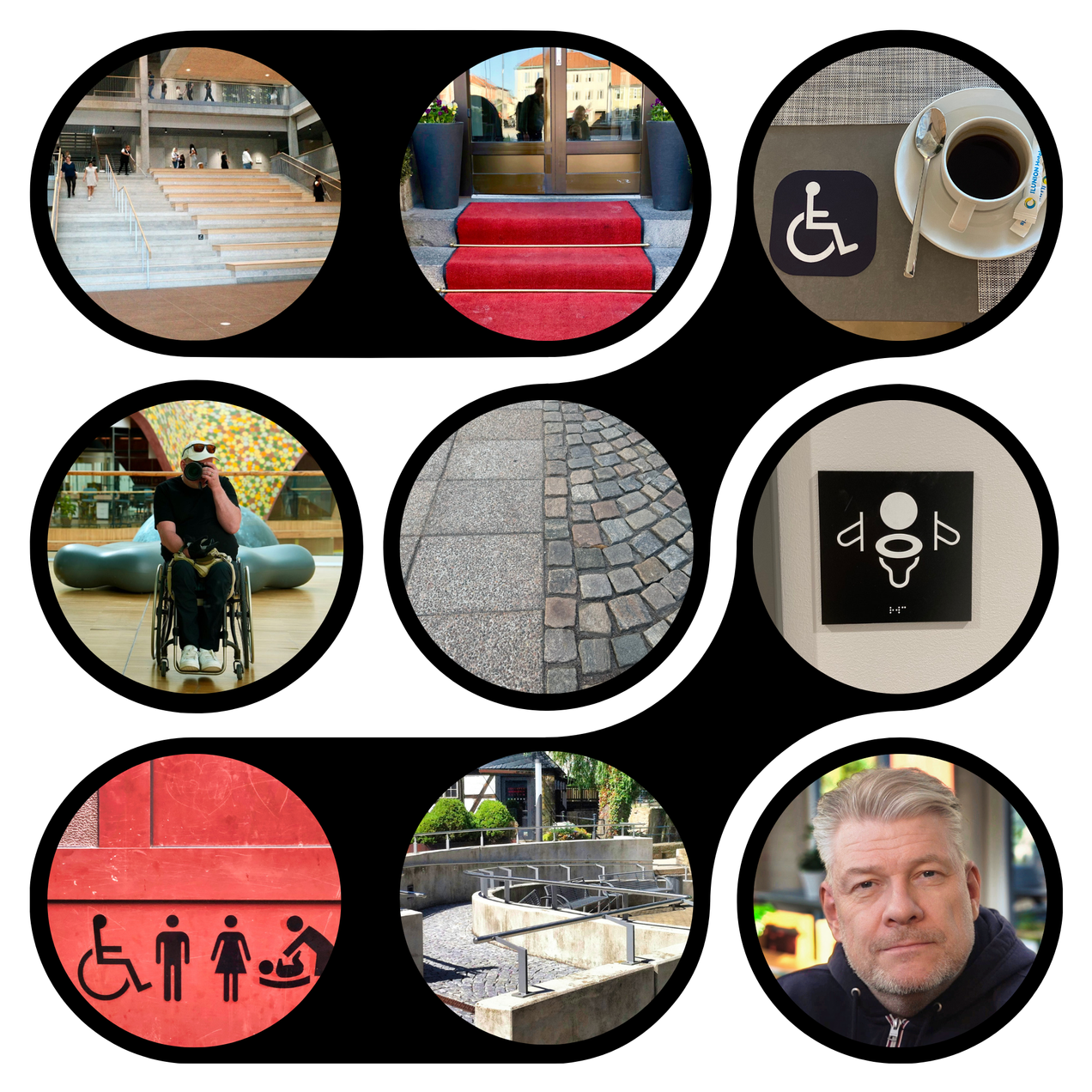
Per-Olof Hedvall is Professor of Design at Mid Sweden University and Director of Certec, Lund University , focusing on accessibility, participation, and universal design . With a background in computer engineering, he integrates Cultural-Historical Activity Theory to explore how design empowers marginalized groups through human-technology interaction. His work challenges norm-deviation dichotomies in categorisation systems. Current research examines equity in design and nonclusive design as alternatives to traditional inclusion frameworks Projects funded by Vinnova and FORMAS address universal design in urban planning, autism accessibility, and maritime safety Teaching at Industrial Design and Graphic Design programs emphasizes design theory , norm-critical design , and disability studies Hedvall supervises PhD candidates across Swedish institutions and collaborates internationally on socially sustainable design . His 86+ research outputs bridge human-computer interaction with disability rights , advocating for design that "opens opportunities rather than closes them" . Key projects include "The Syntax of Equality" and "Visualization for Universal Design" , while his personal website peohedvall.com shares visual and written reflections on inclusive design.
Agnes Löfgren is an Associate Professor at the Department of Culture and Society (IKOS), Linköping University, where she conducts research in linguistic and multimodal interaction within cultural contexts. She is affiliated with the Division of Language, Culture and Interaction (SKI) and contributes to the Language and Culture research environment. Research Interests: Her work primarily explores how people use language, voice, and body in real-time coordination, especially in artistic settings like opera rehearsals. Key areas include non-lexical vocalizations (e.g., 'ugh', 'aargh'), depictions, intersubjectivity, and the interplay between song and speech. Her research bridges linguistics, semiotics, and performing arts, emphasizing embodied and multimodal aspects of communication. The recent publications show a consistent focus on vocal and bodily practices in collaborative and performative settings, particularly in opera. These works highlight how syntax, prosody, and physical gestures are suspended or transformed during depiction, contributing to theories of interaction and cognition. No scientific awards listed Advising and Grants: Information about students, advisees, or funded grants is not available in the provided texts. Labs and Teams: Agnes is part of the Language and Culture research environment at Linköping University, focusing on interdisciplinary research at the intersection of language, interaction, and culture. She leads and participates in projects such as Non-lexical Vocalizations , which investigates vocal coordination in real-time collaborative activities.
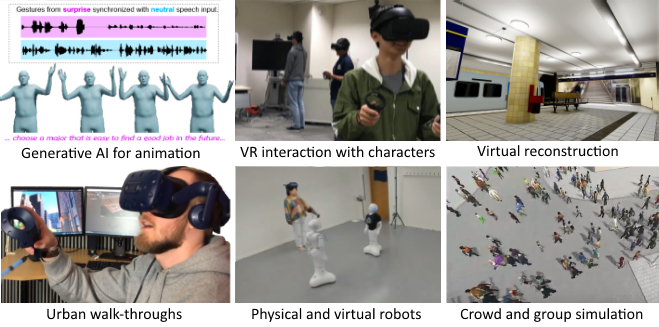
Christopher Peters is a Professor and Director of the Embodied Social Agents Lab (ESAL) at KTH Royal Institute of Technology. He holds a PhD from Trinity College Dublin (2004) and is affiliated with the Department of Computational Science and Technology (CST) within the School of Electrical Engineering and Computer Science (EECS). His work focuses on Socially Interactive Agents and Embodied AI, exploring computational models of visual attention, affect, memory, and theory of mind. Peters leads projects on human-agent interaction, urban spatial contexts, and multimodal systems involving humanoid agents and robots. Education: PhD in Computer Science, Trinity College Dublin, 2004. Research Interests: Peters investigates embodied AI through socially interactive agents, emphasizing real-time control systems for gaze, emotion, and group dynamics. His studies span virtual characters, physical robots, and VR applications. Key areas include politeness behaviors in human-robot interactions, crowd navigation algorithms, and urban spatial analysis. Recent work includes the CreativeBot project, leveraging LLMs to enhance child creativity through storytelling robots. Projects & Grants: Peters is Principal Investigator for EU Horizon 2020 projects CLIPE (€4M), ANIMATAS (€3.9M), and ProsocialLearn. He leads a Swedish Research Council grant (4 MSEK) on VR applications for human-robot collaboration. His projects address societal challenges in urban planning, digital transportation, and educational robotics. Labs & Teams: Directs ESAL, a lab developing embodied agents for social interaction. Collaborates with industry and academic partners in Europe and globally through projects like METROPOLIS and HUMAINE.
Anastasia Makarova serves as Professor in the Department of Modern Languages at Uppsala University, specializing in Slavic Languages. Her academic credentials include Docent and PhD qualifications, with ORCID identifier 0000-0002-0468-9867. She maintains active research and teaching responsibilities within the university's humanities framework. Professor Makarova's research interests span theoretical linguistics with particular focus on Russian language phenomena. She employs empirical methodologies primarily within cognitive linguistics framework, investigating Russian aspect, aktionsart, deictic words, language change, error analysis in spontaneous speech, and language acquisition. Her work demonstrates commitment to rigorous data collection through linguistic experiments, corpus analysis (utilizing Russian National Corpus, ParaSol, and Czech National Corpus), and quantitative statistical methods using R software. She advocates for research transparency through public archiving of data and statistical code. Analysis of her publication record reveals consistent scholarly output focused on Russian verbal morphology, spatial and temporal expressions, semantic networks, and grammatical phenomena. Her work demonstrates interdisciplinary approach bridging theoretical linguistics with cognitive science, historical linguistics, and discourse analysis. Recent publications show particular interest in reflexive constructions, threat language, and the interplay between spatial and temporal cognition in Slavic languages. Professor Makarova contributes to academic service as editor of Slovo journal, which publishes research on Slavic languages, literatures and cultures. Her collaborative work with scholars like Tore Nesset, Laura Janda, and Anna Endresen demonstrates active participation in international linguistic research networks. She has presented work at major conferences including the International Cognitive Linguistics Conference.
Michael Dunn is a Professor in General Linguistics at Uppsala University, where he has held his position since 2014. Affiliated with the Department of Linguistics and Philology, his work bridges theoretical linguistics with empirical research on language evolution and diversity, making significant contributions to multiple subfields within linguistic science. Professor Dunn's research focuses on the evolutionary dynamics of language change, with expertise spanning language description, linguistic typology, and phylogenetics. His scholarly work encompasses multiple language families including Indo-European, Dravidian, Uralic, and Chukotko-Kamchatkan languages. He employs interdisciplinary methodologies combining computational approaches, historical analysis, and fieldwork to investigate how languages evolve and diversify across time and space. His research has particularly emphasized the application of phylogenetic methods to linguistic data, examining grammatical structures, lexical borrowing patterns, and typological features across diverse language families. Analysis of his recent publications reveals a consistent scholarly trajectory centered on language evolution through phylogenetic frameworks. His work demonstrates sophisticated integration of computational methods with traditional linguistic analysis, particularly evident in studies of grammatical gender systems, politeness evolution in Indo-European languages, and borrowing profiles in basic vocabulary. The interdisciplinary nature of his research is reflected in publication venues spanning linguistics, evolutionary science, and digital humanities journals, indicating broad scholarly impact across multiple academic domains. Professor Dunn maintains an active research agenda with numerous collaborations across international institutions, as evidenced by his extensive co-authorship network. His work has been referenced across various academic platforms including Wikipedia pages, news outlets, and social media, demonstrating significant scholarly influence. While specific grant information isn't detailed in the available materials, his extensive publication record across high-impact journals suggests sustained research funding and institutional support for his linguistic investigations.
Evgeniya Bobkova is a researcher at Chalmers University of Technology within the Department of Architecture and Civil Engineering, specializing in Urban Design and Planning. Her work focuses on the intersection of urban morphology, spatial configuration, and city planning, with particular expertise in plot systems analysis. Her research interests include urban morphology, spatial configuration, plot systems analysis, urban design, street design guidelines, city structure analysis, and urban interventions monitoring. Dr. Bobkova has developed analytical frameworks for classifying plot systems and examining their relationship to economic activity and urban processes across European cities. Her publication record shows a strong focus on quantitative approaches to urban morphology, with significant contributions to understanding how plot systems influence urban diversity, economic activity, and spatial configuration. She has developed data-driven typologies of plot systems and explored their configurational dimensions in street design guidelines. Dr. Bobkova has collaborated extensively with researchers including Meta Berghauser Pont and Lars Marcus on multiple projects examining urban form across European cities. Her work spans theoretical development, methodological innovation, and empirical validation of urban morphological concepts.
Marlene Johansson Falck is Deputy Dean of the Faculty of Arts and Professor of English Linguistics at Umeå University. She holds a PhD in English Linguistics from Luleå University of Technology (2005) and was a postdoctoral fellow at the University of California, Santa Cruz (2008–2010). Her academic roles include serving as Associate Editor for Metaphor and Symbol , co-chair of MetNet Scandinvania, and leadership in the Scandinavian Association for Language and Cognition (SALC). She is also a Recognised University Teacher (2020). Her research focuses on Cognitive Linguistics, particularly metaphor, spatial language, and embodied cognition. Key areas include the influence of artifacts on language structure, preposition usage in English/Swedish, and applying cognitive principles to language teaching. Notable projects include the 2010–2014 study on prepositions funded by the Swedish Academy. Recent publications (2020–2025) explore embodied scenes in language learning, metaphor identification methodologies, and spatial-temporal metaphors. She has supervised six PhD candidates, emphasizing collaborative and creative pedagogical approaches. Her work bridges theory and practice, influencing second language education through cognitive frameworks. Awards include recognition for teaching excellence. She contributes to interdisciplinary networks like CogLing UmU and collaborates internationally, including visits to Georgetown University and repeated collaborations with UCSC researchers.
Petter Ericson is a Researcher at the Department of Computer Science , Umeå University , specializing in Responsible AI . His work bridges graph theory , formal grammars , and ethics , with interdisciplinary interests in music and sociotechnical systems . Affiliated with the Responsible AI Research Group , he explores the alignment of AI with human values. Ericson’s research spans formal computational models , including hyperedge replacement grammars and order-preserving DAGs , alongside AI ethics and fairness frameworks . His publications address sociotechnical limits in AI safety, artistic shifts through AI, and graph language learnability. He has contributed to interdisciplinary projects like Concordia , a musical XR instrument for planetary data sonification, and Musereduce , a hierarchical music analysis framework. Ericson applies computational methods to Bayesian music theory and jazz harmony datasets.
Elzbieta Strzelecka serves as a Senior Lecturer in the Department of Humanities and Social Sciences at Mid Sweden University in Sundsvall, specializing in Swedish language didactics and linguistic research. Her academic career spans decades with significant contributions to cognitive linguistics and grammar pedagogy, particularly for Swedish as a second language. Her research centers on cognitive linguistics frameworks applied to Swedish grammar instruction, with emphasis on particle verb semantics, container metaphors, and cross-linguistic comparisons between Swedish and Polish. She pioneered phenomenographic analyses of students' grammar histories, revealing emotional and cognitive dimensions of language learning. Her work bridges theoretical linguistics with practical classroom applications, focusing on spatial language concepts and teacher strategy development. Analysis of her publication trajectory shows consistent evolution from foundational cognitive linguistic studies of particle verbs toward contemporary grammar pedagogy innovation. Recent work emphasizes teacher training methodologies and student-centered approaches, with strong collaboration patterns particularly with Lena Boström. Her publications demonstrate interdisciplinary reach spanning cognitive science, educational psychology, and contrastive linguistics while maintaining focus on practical Swedish language instruction.