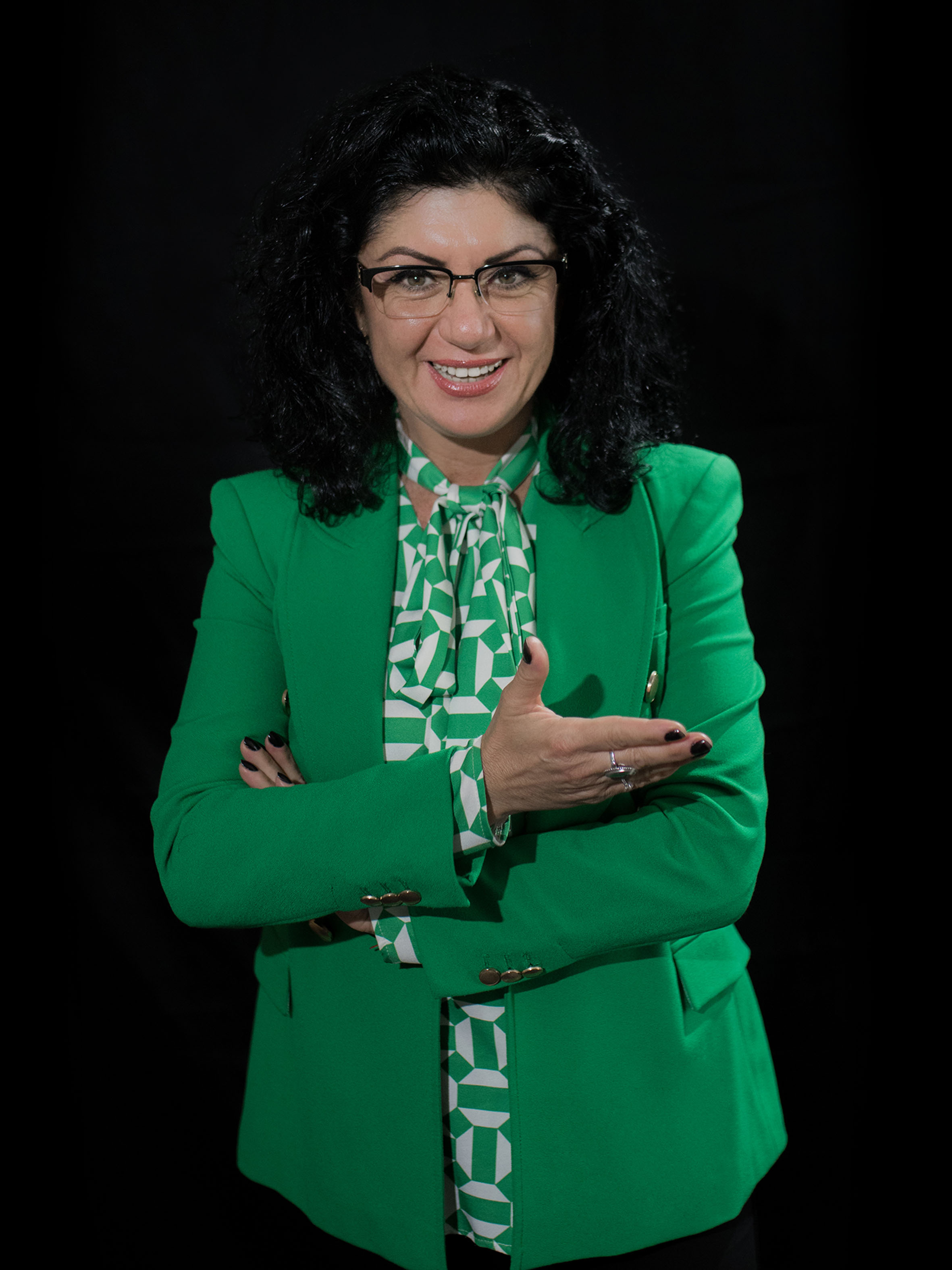
Sevil Yazıcı is an Associate Professor at the Department of Architecture , Istanbul Technical University , with a focus on computational design, material efficiency, and structural performance in architecture. She previously served as a Doctor Lecturer at Ozyegin University (2013–2020). Educational background: PhD in Building Sciences (2009–2013), Istanbul Technical University Degree in Architecture from Architectural Association School of Architecture (2004–2006) Research interests span computational design, bio-inspired material organization, and sustainable construction. Her recent work explores VR-driven spatial performance analysis, demolition waste reuse, and microstructure-informed shell topologies. Selected trends in publications include: Integrating environmental/structural data in early design Material-efficient generative models Biomimetic computational analysis AI-assisted architectural creativity Scientific awards highlight her achievements: 2024 Best Article Award (Frontiers of Architectural Research) 2018 Gold Medal (Istanbul International Invention Fair) 2016 UK Graduate Professional Achievement Award 2014 ITU Most Successful Doctoral Thesis Award Advising includes theses on reversible structures, sustainable façades, AI-driven design, and material-efficient fabrication. She served on the Executive Board of the Informatics in Architectural Design Graduate Program (2021–present) and was Deputy Head of Department (2022).
Vlahogianni Eleni is a Professor and Dean of the Department of Transportation Planning and Engineering at the National Technical University of Athens (NTUA). Her research focuses on integrating machine learning , quantum computing , and reinforcement learning with urban mobility and traffic engineering , addressing challenges in eco-routing , congestion pricing , and autonomous vehicle interactions . Her work emphasizes data-driven approaches to traffic forecasting, including quantum neural networks and theory-aware unsupervised learning . Recent publications explore mixed traffic environments , shared space modeling , and parking occupancy prediction , highlighting her commitment to advancing intelligent transportation systems . Professor Vlahogianni leads the Traffic Engineering Laboratory at NTUA and contributes to policy frameworks for connected and automated transport , wildfire resilience , and dynamic mobility solutions . She is actively involved in the LEVITATE project and advocates for explainable AI in transportation applications.
Adetola B. Adesida serves as a full Professor in the Department of Surgery within the Faculty of Medicine & Dentistry at the University of Alberta . His laboratory focuses on developing autologous cell-based tissue engineering strategies for cartilage and meniscus repair, leveraging interdisciplinary collaborations between chemists, biologists, clinicians, and material scientists. PhD in Pharmacy, Victoria University of Manchester (1999) Postdoctoral Research, Wellcome Trust Centre for Cell-Matrix Research Dual Fellowship, Harvard University/Massachusetts General Hospital (2006) Marie-Curie Fellowship, European Commission (2007) Dr. Adesida's research centers on stem cell biology and tissue engineering for musculoskeletal regeneration, with emphasis on: Meniscus and articular cartilage repair mechanisms Stem cell-chondrocyte interactions in 3D microenvironments Bioreactor conditioning (hypoxia, dynamic compression) Sex-specific responses in knee osteoarthritis models Space-related microgravity effects on joint tissues His work bridges fundamental mechanobiology with clinical translation through industry partnerships like CellCoTec. Recent publications demonstrate a strong trend toward 3D bioprinting of nasal and meniscal tissues, sex-dimorphic responses in osteoarthritis, and space medicine applications . Key themes include bioink development, molecular characterization of fibrochondrocytes, and prevention of post-traumatic joint degeneration through regenerative strategies. CIHR Research Award (2013) Harvard University/Massachusetts General Hospital Fellowship (2006) European Commission Marie-Curie Fellowship (2007) Dr. Adesida leads the Orthopaedic Tissue Engineering Laboratory , directing multiple CIHR-funded projects on meniscus regeneration using mesenchymal stem cells. His research integrates advanced bioreactor systems for mechano-hypoxia conditioning and collaborates with aerospace initiatives through Canadian Space Agency partnerships. Current work explores simulated microgravity effects on human meniscus models and develops clinically applicable matrices incorporating bioactive molecules for cartilage formation.
Michael Hyland is an Associate Professor in the Department of Civil and Environmental Engineering at the Samueli School of Engineering, University of California, Irvine. His research focuses on the modeling, analysis, and optimization of smart urban transportation systems, with particular emphasis on shared autonomous vehicles, microtransit integration with fixed-route transit, and sustainable mobility solutions. He employs methodologies from operations research (optimization, Markov decision processes), statistical modeling (discrete choice, regression), and economic analysis to address challenges in urban mobility. Education: Ph.D., Civil and Environmental Engineering (Transportation), Northwestern University, 2018 M.Eng., Civil and Environmental Engineering (Transportation), Cornell University, 2013 B.S. Civil and Environmental Engineering, Cornell University, Magna Cum Laude, 2013 His recent research explores emerging mobility paradigms through topics such as dynamic fleet management, vehicle miles traveled (VMT) impacts, equity in job accessibility, electricity demand implications of e-bikes, and human-machine collaborative planning frameworks. The work often combines large-scale simulation with interpretable modeling techniques. Hyland leads the Hyland Lab , which develops computational tools for evaluating integrated transportation systems. The lab's work spans theoretical modeling (e.g., state-space representations, decomposition heuristics) and applied policy analysis (e.g., assessing Senate Bill 1 infrastructure projects, AV-era parking reforms, and micromobility deployment strategies).
Brandon Lucia is a Full Professor in the Department of Electrical and Computer Engineering at Carnegie Mellon University's College of Engineering. He leads the abstract research group focusing on the intersection of computer architecture, systems, and programming languages. His work bridges theoretical foundations with practical implementations in energy-constrained environments. Lucia's research centers on intermittent computing systems and edge computing in extreme environments. His work on energy-harvesting systems has established fundamental principles for batteryless computing, while his orbital edge computing research pioneers computational intelligence for nanosatellite constellations. These research thrusts address critical challenges in reliability, efficiency, and programmability for systems operating under severe power constraints. His publication record shows a clear evolution from foundational work on intermittent computing models to sophisticated applications in space computing and edge intelligence. Recent publications demonstrate increasing integration of dataflow architectures with energy-harvesting constraints, particularly in satellite constellations where computational resources must be managed across distributed, power-constrained platforms operating in extreme environments. NSF CAREER Award (2017) IEEE TCCA Young Computer Architect Award (2019) Sloan Foundation Fellowship (2021) ASPLOS Best Paper Awards (2018, 2020) OOPSLA Distinguished Paper and Artifact Awards (2015) Lucia actively mentors numerous PhD students including Brad Denby, Zhuo Cheng, and Emily Ruppel, many of whom contribute significantly to his research program. His abstract research group maintains strong industry connections while pursuing fundamental advances in computing systems. The group has developed multiple open-source tools including Legerdemain for program analysis and MultiCacheSim for cache coherence simulation. His laboratory work spans from theoretical foundations of intermittent computing to practical implementations in space systems. Current projects include computational nanosatellite constellations, energy-minimal dataflow architectures, and secure edge computing systems that operate reliably despite frequent power failures.
Volker Mehrmann is a full professor at the Technical University of Berlin in the Institute of Mathematics , Faculty II - Mathematics and Natural Sciences. He has held academic positions at Chemnitz University of Technology and RWTH Aachen University . His roles include leadership in research centers: Spokesperson for the DFG Research Center Matheon (2008-2016), President of the European Mathematical Society (2017-2022), and committee member of the Cluster of Excellence MATH+. PhD: Bielefeld University (1982) Habilitation: Bielefeld University (1987) His research interests span Numerical Linear Algebra , Differential-Algebraic Equations (DAEs) , Control Theory , and Industrial Mathematics . Recent work focuses on port-Hamiltonian systems and model order reduction for multi-physics applications. Key scientific contributions include: ERC Advanced Grant (2011-2016) on multi-physics systems Hans Schneider Prize (2019) SIAM Fellow (2011) and AMS Fellow (2022) He serves as editor-in-chief of Linear Algebra and Its Applications and contributes to numerous editorial boards. His leadership roles include presidency in the European Mathematical Society and GAMM .
Fredrik Sandin is a Professor in the Department of Computer Science, Electrical and Space Engineering at Luleå University of Technology, where he leads the Machine Learning research group with approximately thirty members. His work focuses on neuromorphic technologies and the intersection of machine learning with computational physics to solve challenging real-world interaction problems. He coordinates the 'Teknisk fysik och elektroteknik' program at LTU and has been instrumental in establishing neuromorphic research activities at the university. Luleå University of Technology, Department of Computer Science, Electrical and Space Engineering Member of WASP (Wallenberg AI, Autonomous Systems and Software Program) and ELLIS (European Laboratory for Learning and Intelligent Systems) Coordinator of Neuromorphic Innovation Platform Sweden with KTH, Lund University, Uppsala University, FOI, ABB, Ericsson, and SAAB Fredrik earned his PhD in Physics from Luleå University of Technology in 2007, with thesis work focusing on dense states of matter in neutron stars. His academic journey began with an MSc diploma work in ATLAS at CERN in 2001, followed by postdoctoral research in computational physics at IFPA in Belgium (2008-2009) and brain-like computing at EISLAB with Prof. Jerker Delsing (2010-2011). Professor Sandin's research interests center around neuromorphic technologies, particularly neuromorphic computing and spiking neural networks. He investigates sensor/detector and intelligent systems co-design where constraints like energy, power, latency, and dynamic range challenge conventional digital approaches. His work spans mixed-signal neuromorphic circuits, algorithms, and systems, as well as machine learning projects involving industrial data and collaboration. He has been a key figure in establishing neuromorphic research at LTU, supported by The Kempe Foundations, particularly through the 2014 Gunnar Öquist Fellowship. His recent publications demonstrate a strong interdisciplinary focus spanning quantum phase transitions, particle physics detector optimization, renewable energy materials, and the integration of large language models into control systems. This diverse portfolio reflects his approach connecting machine learning with fundamental physics and practical engineering applications, particularly in neuromorphic computing and intelligent systems design, with emphasis on solving real-world problems through co-design of hardware and algorithms. Gunnar Öquist Fellowship Award and 3 MSEK grant from The Kempe Foundations ISSP award for an Original Work in Theoretical Physics (signed by Prof. 't Hooft and Prof. Zichichi) New-Talents award for original work in theoretical physics at the International School of Subnuclear Physics in Erice Professor Sandin has supervised numerous PhD students working on topics ranging from neuromorphic TinyML to materials for neuromorphic computing, privacy-preserving machine learning at the edge, and intelligent fault diagnosis. He has secured substantial research funding from various sources including Vinnova, ÅForsk, Kempe Foundations, WASP-WISE, and EU programs like ECSEL JU Arrowhead Tools and ITEA3 AutoDC. His current major projects include the Neuromorphic Innovation Platform Sweden and several initiatives focused on neuromorphic condition monitoring and computing, with total funding exceeding 30 MSEK in the past five years. He leads the Machine Learning group at LTU, which collaborates extensively with industry partners including ABB, Ericsson, SAAB, SKF, and RISE. The group is active in developing neuromorphic technologies for wireless sensor networks, condition monitoring systems, and next-generation intelligent systems that address energy, power, and latency constraints that challenge conventional digital approaches.
Andries "Andy" van Dam is a distinguished Dutch-American professor of computer science at Brown University, where he also served as vice-president for research. Born in Groningen, the Netherlands on December 8, 1938, van Dam has been instrumental in shaping computer science education and research for over five decades. He helped establish Brown's computer science program, serving as its first department chair from 1979 to 1985, and was appointed Thomas J. Watson, Jr. University Professor of Technology and Education in 1995. His educational background includes a B.S. with Honors in Engineering Sciences from Swarthmore College (1960) and M.S. and Ph.D. degrees from the University of Pennsylvania (1963, 1966), where he was the second person to receive a PhD in Computer Science. Van Dam's research interests span computer graphics, hypertext systems, virtual reality, and educational technology. He is particularly known for his pioneering work in hypertext systems, having co-developed the first hypertext system with Ted Nelson in the late 1960s. His influential textbook "Computer Graphics: Principles and Practice" is often referred to as the "Bible" of computer graphics. His work has consistently focused on making complex computing concepts accessible through innovative interfaces and educational approaches. His research publications demonstrate a consistent trajectory from foundational work in computer graphics and hypertext to more recent explorations in immersive virtual reality, digital visual literacy, and next-generation educational software. His work bridges theoretical computer science with practical applications in education, medicine, and scientific visualization. Among his notable honors are: IEEE Centennial Medal (1984) Fellow of the Association for Computing Machinery (1994) ACM SIGGRAPH Distinguished Educator Award (2019) Van Dam has mentored numerous students who have gone on to make significant contributions in computer science, including Randy Pausch, Danah boyd, Scott Draves, and Steven K. Feiner. His teaching extends beyond traditional academic settings, as evidenced by his influence on the character of Andy in the film Toy Story, which pays tribute to his pioneering work in computer graphics. He continues to serve on the technical board of Microsoft Research and as chairman of the Rhode Island Governor's Science and Technology Advisory Council. His research lab has been instrumental in developing innovative approaches to human-computer interaction, with particular focus on post-WIMP (Windows, Icons, Menus, Pointer) interfaces, immersive environments, and educational technologies that transform how we learn and interact with digital information.
Daniela Margareta Chiorean serves as University Professor in the Graphics Department at the University of Art and Design Cluj-Napoca, where she has held academic positions since 2000 and currently serves as Prorector responsible for quality assurance (2023-2024). She previously served as Dean of the Faculty of Plastic Arts (2012-2015) and Department Director for Graphics (2015-2023). Concurrently, she maintains an active legal practice as an attorney specializing in civil law and intellectual property at the Cluj Bar Association since 2007. Her educational background includes a PhD in Visual Arts (2007) from UAD Cluj-Napoca with thesis 'Man - Media. Traditional and new media in graphics,' a Master's in Civil Law (2005-2007), Law degree (2001-2005), and dual Master's degrees in Visual Arts (2001-2003). She completed specialized training in intellectual property at WIPO (2002) and cultural management/multimedia in Germany (2002-2003). Chiorean's research bridges graphic design, digital media, and intellectual property law, examining how traditional media interacts with contemporary digital environments. Her work explores symbolic dynamics in advertising, the evolution of typography from Gutenberg to virtual publications, and the legal frameworks governing creative works in digital spaces. She investigates how new technologies transform artistic practices while maintaining connections to historical techniques, with particular focus on remix culture and copyright issues in visual communication. Her publication trends reveal consistent exploration of media transitions, with recent work analyzing digital image processing, urban-nature representations in artificial environments, and comparative studies of display versus print media. These publications demonstrate her interdisciplinary approach connecting artistic practice with scholarly inquiry into media evolution. Premiul UAP România pentru grafică - tineret (2002) Premiul Vespasian Lungu pentru grafică (1997) As a researcher, she has led multiple nationally-funded projects including 'Vector – Design and Book Illustration' (2012) through the National Cultural Fund and 'Center for Promoting Entrepreneurship in Sustainable Development' (2010-2013). She coordinates international collaborations through Erasmus+ and Leonardo da Vinci programs, organizing workshops on infographics, bookbinding, and digital media. Her professional activities span academic leadership, legal practice in intellectual property, and active participation in national and international artistic communities as both creator and evaluator. She coordinates specialized workshops in infographics and bookbinding techniques, and participates annually in the Brâncuși International Workshops for sculpture, painting, and graphics. Her collaborative network extends across European institutions through multiple international partnerships, with recent involvement in Korea's 'O întâlnire și o altă călătorie începe' exhibition (2024).
Prof. Dr. Peter Manz leads the Experimental Plasma Physics group at the Institute of Physics, University of Greifswald . His research focuses on understanding plasma turbulence in magnetically confined fusion plasmas and simulating astrophysical phenomena like accretion disks through laboratory experiments. The group collaborates with the Max Planck Institute for Plasma Physics in Greifswald and Garching. Conducts fundamental experiments using the linear plasma experiment VINETA Investigates drift wave turbulence and its impact on fusion reactor designs Develops tabletop models for astrophysical systems Recent Research Highlights include publications on tokamak density limits (2025) and vortex dynamics in Keplerian rotation experiments (2025). The group emphasizes collaborative research with international institutions and offers thesis opportunities in both experimental and theoretical plasma physics. Teaching includes lectures on fusion plasmas (Fr. 12-14) and low-temperature plasmas (Fr. 8-10) at the University of Greifswald.
Leonard Wesley is an Associate Professor in the Department of Computer Science at the College Of Science, San Jose State University. His research spans interdisciplinary domains at the intersection of Bioinformatics , Computational Biology , and Machine Learning , with specific applications in Pharmaceutical Drug Discovery , Genomic Data Analysis , and Autonomous Robotics . Education: Ph.D. in Computer Science, University of Massachusetts M.S. in Computer Science, University of Massachusetts B.A. in Physics and Math, Northeastern University Research Interests include Approximate Reasoning (probabilistic, evidential, and fuzzy logic), Agent-Oriented Systems , and Sensor Fusion . His work applies these methodologies to Drug Portfolio Management , Protein Structure Scoring , and Medical Diagnostics . Publication Trends show a consistent focus on Computational Biology , Robotics , and Uncertainty Quantification over four decades. Early work in Computer Vision evolved into modern applications in Pharmaceutical Analytics and AI in Aerospace . Key Projects include SVM-based drug affinity prediction, evidence-driven decision support systems for biopharma, and real-time agent development frameworks like ROADS. He has contributed to CFD code control and Mobile Network Congestion solutions. Collaborations with institutions like NASA, Los Alamos National Laboratory, and international conferences (WMSCI, ICINCO, AIAA) highlight his cross-disciplinary impact. His teaching includes Artificial Intelligence and Bioinformatics courses.
Dr. Matt Amy is an Assistant Professor in the School of Computing Science at Simon Fraser University (SFU), holding the Canada Research Chair in Quantum Computing. His research focuses on quantum compilers, programming languages, and formal verification of quantum programs. He also explores quantum circuit optimization and models of quantum computation. Education: PhD in Computer Science (University of Waterloo, 2019), M.Math in Quantum Information (2013), and B.Math in Computer Science (2011), all from the University of Waterloo. Research Interests: Quantum compilers and languages, circuit optimization, formal verification, and quantum computation models. His work bridges theoretical foundations with practical implementations, emphasizing efficient quantum software development. Recent research trends include advancing quantum compilation techniques, exploring NP-hard optimization problems in quantum circuits, and developing formal methods for quantum program analysis. His work on symbolic synthesis and equational theories for quantum circuits demonstrates a focus on foundational algorithmic challenges. Scientific Awards: Canada Research Chair (2025–present) Advising and Grants: While no current advisees are listed, his research is supported by grants focused on quantum computing and formal methods. He collaborates with industry through SFU’s School of Computing Science. Labs and Teams: Involved with the Tangent Lab, a research group exploring quantum algorithms and software systems at SFU.
Jonathan Blazek is an Assistant Professor of Physics at Northeastern University's College of Science, specializing in observational and theoretical cosmology. His research focuses on large-scale astronomical surveys to understand cosmic structure and dark energy, particularly through galaxy clustering and weak gravitational lensing. He is a key member of the Dark Energy Survey and Vera C. Rubin Observatory collaborations, leading efforts to combine multi-wavelength datasets for cosmological insights. Blazek earned his Ph.D. from UC Berkeley and completed postdoctoral fellowships at EPFL (Switzerland) and Ohio State University. Education: Ph.D. in Physics, University of California, Berkeley Postdoctoral Fellowships: EPFL (Switzerland), Ohio State University Research Interests: His work centers on cosmological modeling using galaxy surveys, particularly refining analytic and numerical methods to connect observations with theoretical frameworks. Key areas include: Weak gravitational lensing and galaxy clustering Combined-probe cosmology (integrating datasets across wavelengths) Dark matter and dark energy dynamics Large-scale structure formation Publications & Grants: Blazek has authored over 50 peer-reviewed articles, including foundational work on intrinsic alignment modeling and cosmic shear analysis. He leads the NSF CAREER grant project exploring dark sector physics with galaxy surveys. His recent publications address baryonic feedback effects, CMB lensing cross-correlations, and next-generation survey methodologies. Labs & Collaborations: He contributes to the Northeastern Cosmology Group and the Dark Energy Science Collaboration, advancing projects like the Legacy Survey of Space and Time (LSST) at Vera Rubin Observatory.
Rachel Bean is Jacob Gould Schurman Professor of Astronomy at Cornell University and Senior Associate Dean for Math and Science. Her cosmology research focuses on dark energy properties, gravitational physics, and the early universe using cosmic microwave background and galaxy survey data. As co-recipient of the Gruber and Breakthrough prizes, she contributed to precision cosmology through the WMAP mission. Research develops methods to extract cosmological information from large astrophysical datasets, including cross-correlation techniques between CMB experiments (Atacama Cosmology Telescope, Simons Observatory) and galaxy surveys (DESI, Rubin LSST). Current projects investigate modified gravity constraints using cluster abundances and novel statistical approaches to kSZ velocity reconstruction. Publication themes include precision cosmology, gravity tests, and multi-messenger astrophysics. Recent work advances machine learning applications for cosmological inference, while earlier research established foundations in semiconductor device physics. Articles consistently demonstrate innovative approaches to cosmological parameter estimation and physical theory testing. Awards: Gruber Prize (2012), Breakthrough Prize (2018), Presidential Early Career Award, and Cottrell Scholar Award. Leadership includes former chair of LSST Dark Energy Science Collaboration and service on the Astronomy and Astrophysics Advisory Committee.
Stef Aupers serves as Professor of Media Culture at KU Leuven's Institute for Media Studies within the Faculty of Social Sciences. His research centers on cultural sociology of media, examining meaning production, representation, and consumption in contemporary digital cultures with particular focus on conspiracy theories, game studies, and religious mediatization. His primary research domains include: Conspiracy Theory Discourse in Digital Spaces Digital Game Culture and Social Dynamics Religion-Media Intersections Popular Culture Analysis Mediatization of Modern Myth Analysis of his 2021-2025 publications reveals consistent exploration of how conspiracy theorists construct worldviews through digital platforms, the commodification of religion in gaming ecosystems, and socio-technical exclusion mechanisms. His work demonstrates methodological sophistication in analyzing YouTube/Reddit communities, audiovisual rhetoric, and epistemological boundary work between mainstream and alternative knowledge systems. Aupers actively contributes as keynote speaker, conference organizer, and academic journal reviewer, with expertise spanning media analysis, conspiracy culture interpretation, and science-religion discourse. His research provides critical frameworks for understanding contemporary digital culture's most contentious phenomena through cultural sociological lenses.