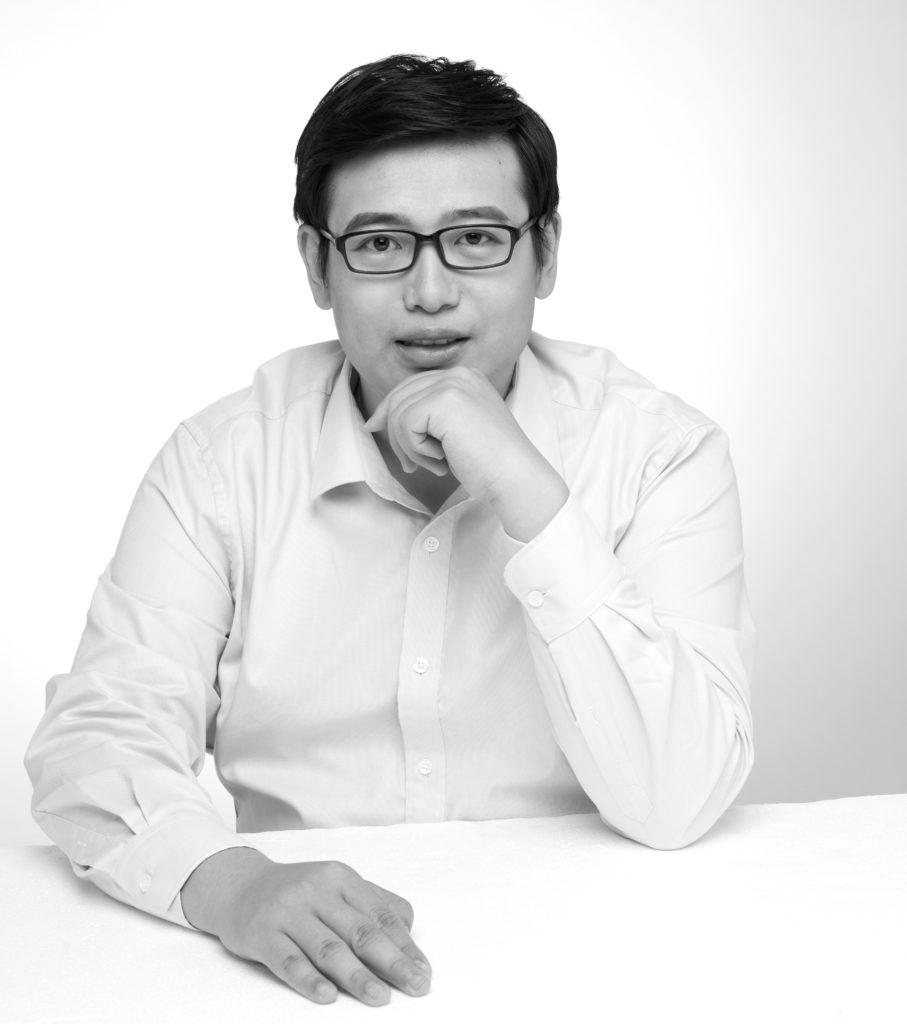
Stacey Scott is a Professor and Director of Graduate Studies at the University of Guelph 's School of Computer Science. With a focus on Human-Computer Interaction and User-Centred Design , her research explores interface design for emerging technologies in entertainment and agriculture. She leads the Collaborative Systems Laboratory (CSL), which operates in both Guelph's School of Computer Science and Waterloo's Department of Systems Design Engineering . Her interdisciplinary work spans: Precision Livestock Farming (digital technologies for animal welfare) Animal-Computer Interaction (designing interfaces for non-human species) Multi-Display Environments (collaborative spaces with digital tabletops/walls) Global Fan Experiences (K-pop live streaming interfaces) Recent publications demonstrate expertise in cross-device interaction , awareness systems , and collaborative workflows . She is actively seeking students with backgrounds in psychology, sociology, or animal behavior who possess strong technical capabilities.
Dr. Venkatesh Uddameri is a Professor in the Department of Civil & Environmental Engineering at Lamar University, with over 25 years of experience in groundwater hydrology and environmental engineering. His career has focused on sustainable water management, decision support systems, and AI/ML applications. PhD (Civil and Environmental Engineering), University of Maine 1998 M.S. (Civil Engineering), University of Maine 1993 B.E. (Civil Engineering), Osmania University 1991 His research interests span sustainable water resources management, sensor applications in civil engineering, and AI/ML for environmental systems. Funded by NSF, NOAA, USGS, and Texas state agencies, he has developed decision tools for groundwater sustainability, drought risk assessment, and contaminant transport modeling. Recent publication trends show expertise in machine learning for aquifer modeling, drought forecasting frameworks, and sensor-based water quality monitoring. His work includes applications in Texas Gulf Coast and Ogallala aquifers, with a focus on agricultural water security. Awards include: 2021 George T. and Gladys Abel-Hanger Award for Teaching Excellence 2020 Fellow of American Water Resources Association 2020 Editor's Choice Recognition from Water (MDPI) As an advisor, he supervises doctoral research on non-traditional water reuse for climate-smart agriculture. His work integrates geospatial technologies and optimization frameworks for water-energy-food nexus solutions. Teaching includes undergraduate environmental engineering and graduate-level Python programming for civil engineers.
Prof. Dr. Davy Janssens is a leading transportation safety researcher at Hasselt University's Institute for Transportation Research (IMOB). He heads the Route2School initiative, which focuses on reducing child traffic accidents through innovative technologies like crowdsourcing platforms, AI-driven traffic analysis, and gamified educational tools. His work spans 80+ Flemish municipalities and includes spin-off ventures like Route2School. Research pillars include dangerous route mapping via crowdsourcing, traffic safety route planners considering subjective safety metrics, drone-based traffic bottleneck analysis, decision-support tools for policymakers, and educational platforms for schools. His projects integrate drones, AI, and behavioral science to improve urban mobility safety. Current efforts emphasize bicycle infrastructure evaluation, gamified traffic education for adolescents, and policy support systems. Collaborations with municipalities and international partners address global child safety challenges.
Dr. Laurence Larry D. Merkle is a Research Assistant Professor of Computer Science in the Department of Electrical and Computer Engineering at the Air Force Institute of Technology (AFIT), where he has served since 2022, following his tenure as Assistant Professor from 2015 to 2022. He conducts computer science research aligned with Air Force and Department of Defense needs and mentors graduate students in master’s and doctoral research. Ph.D. in Computer Engineering, Air Force Institute of Technology, 1996 M.S.C.E., Air Force Institute of Technology, 1992 B.S. in Computer and Systems Engineering, Rensselaer Polytechnic Institute, 1987 Dr. Merkle’s research spans evolutionary computation, quantum computing, cybersecurity, and AI-driven education. He applies evolutionary algorithms to optimize complex systems in defense and engineering, and explores quantum circuit optimization, error mitigation, and hardware security. His work in computer science education includes gamification, robotics in teaching, and curriculum design. His recent publications reflect a strong trend toward quantum computing and defense applications, particularly in space situational awareness and secure quantum hardware. He has also contributed significantly to educational technology, including serious games for networking and pedagogical tools for introductory courses. Best Presentation, AMOS Conference (2019) Order of the Engineer (2019) Best Poster, CISS Education Colloquium (2018) Who’s Who in Engineering Education (2005–2006) Best Paper, ASEE Conference (2005) Air Force Achievement Medal (2000) Dr. Merkle has successfully led funded research projects totaling over $1.1 million as PI or Co-PI. He has chaired 2 Ph.D. and 13 master’s thesis committees and served on 19 additional graduate committees, demonstrating extensive mentorship. His grants focus on evolutionary optimization, quantum computing, and cybersecurity education, often in collaboration with AFRL and other DoD entities. He is actively involved in the AFIT Quantum Information Science (QIS) Seminar series and has contributed to DARPA and AFRL research initiatives in polymorphous computing and high-power microwave systems. His work bridges academic research and military application, particularly in secure and reliable computing systems.
Maj Kullen Waggoner is an Assistant Professor in the Department of Aeronautics and Astronautics at the Air Force Institute of Technology (AFIT), where he joined the faculty in 2024. He teaches courses in spacecraft dynamics and control, contributing to AFIT's mission in advanced aerospace education and research. Education: BS in Aerospace Engineering, University of Michigan, 2012 MS in Electrical Engineering, Air Force Institute of Technology, 2018 PhD in Astronautical Engineering, Air Force Institute of Technology, 2024 His research focuses on space situational awareness, particularly in the cislunar domain. He investigates spacecraft dynamics, stochastic estimation techniques, and optimal control strategies for tracking and navigating in deep space. His work leverages passive RF sensing, TDOA/FDOA measurements, and Doppler ratios to enhance the accuracy of orbit determination for distant objects. His recent publications reveal a strong trend in advancing cislunar surveillance capabilities using existing and novel sensor architectures. These works span conference presentations at IEEE Aerospace, AIAA SCITECH, and AMOS, with a focus on estimation accuracy, trajectory tracking, and system design for deep-space object monitoring. Scientific Awards: No awards listed in the provided text. There is no public information on student advising or research grants in the provided content. His research appears to be closely aligned with U.S. Air Force and intelligence community interests, particularly in space domain awareness and secure space operations. While no specific lab or research team is named, his work suggests collaboration with space surveillance and aerospace control groups, potentially leveraging AFIT's partnerships with the Space Surveillance Network and intelligence research programs.
Filippo Bergamasco is an Associate Professor at Ca' Foscari University of Venice, affiliated with the Department of Environmental Sciences, Computer Science and Statistics. He is a member of the Scientific Committee of the Center for Studies on Port Economics and Management (DAIS). His work bridges computer vision, environmental monitoring, and oceanography, with a focus on developing advanced imaging techniques for ocean wave analysis and stereo reconstruction. He leads projects like the WASS pipeline, an open-source tool for 3D stereo reconstruction of ocean waves, and collaborates on studies involving rogue wave dynamics, low-cost sensors, and Arctic sea-state analysis. His research leverages machine learning, deep learning, and real-time systems to address challenges in environmental and marine sciences. Research interests include computer vision applications in oceanography, stereo imaging systems, wave dynamics modeling, and environmental monitoring technologies. He has contributed to over 80 peer-reviewed publications, with recent works focusing on real-time wave tracking, 3D reconstruction, and the integration of physics-driven models with neural networks. His expertise spans interdisciplinary collaborations, including projects on fish oil's impact on wind waves and the development of robust camera calibration methods. He actively publishes in top journals like IEEE Transactions on Image Processing, Ocean Modelling, and Physical Review Letters, and engages in international conferences such as ECCV and ICPRAM.
Sven Dickinson is a Professor in the Department of Computer Science at the University of Toronto, where he has held roles such as Chair (2010-2015) and Acting Chair (2008-2009). He also served as Vice President and inaugural Head of the Samsung Artificial Intelligence Research Center in Toronto (2018-2024). His academic journey includes positions at Rutgers University and affiliations with MIT, University of Maryland, and others. Education: B.A.Sc. in Systems Design Engineering, University of Waterloo (1983) M.S. and Ph.D. in Computer Science, University of Maryland (1988, 1991) Research Interests: Focuses on object recognition, shape perception, and the integration of human and computer vision. Key areas include generic object recognition, shape abstraction, symmetry detection, and multiscale part-based representations. His work bridges low-level image features and high-level shape models, emphasizing mid-level shape priors and perceptual grouping. Awards and Honors: NSF CAREER Award (1996) Ontario Premiere's Research Excellence Award (2002) Lifetime Research Achievement Award from CIPPRS (2012) Fellow of IEEE and IAPR Contributions: Co-edited influential volumes like Object Categorization: Computer and Human Vision Perspectives (2009) and Shape Perception in Human and Computer Vision (2013). Served as Editor-in-Chief of the IEEE Transactions on Pattern Analysis and Machine Intelligence (2017–2021), and on multiple editorial boards. Active in organizing workshops and conferences, including CVPR 2014 and WACV 2019. Labs and Collaborations: Involved with the Vector Institute for Artificial Intelligence, and has collaborated on projects in artificial intelligence, robotics, and vision-based applications for accessibility and navigation.
Zakaria Djebbara is an Associate Professor at Aalborg University's Department of Architecture, Design and Media Technology, part of The Technical Faculty of IT and Design. His research explores how built environments influence human cognitive processes, focusing on neural synchronization patterns and the interplay between architectural features and attention/working memory. He employs Virtual Reality (VR) combined with mobile EEG and body tracking to study these phenomena. Key Projects: "Neuronal and Urban rhythms effect on memory" (2024-2027, PhD supervision) "Architecture & Transitions: an enactive and electrophysiological approach" (2017-2020) Research Themes: Neuroarchitecture and cognitive neuroscience Embodied cognition and sensorimotor interactions Mobile brain/body imaging (MoBI) His work bridges architecture, neuroscience, and technology, examining how spatial rhythms and visual patterns shape neural activity. Recent studies include EEG investigations in historical cities like Ghardaïa, Algeria, and VR experiments analyzing navigation strategies. Awards: 2021 Spar Nord Fondens Forskningspris 2020 Brain Products MoBI Award Key Contributions: Developed the BeMoBIL pipeline for multimodal neuro-architectural data analysis Advocated for biophilic design and adaptive facades to enhance well-being Co-organized the Designing Atmospheres symposium (2023)
Scott Zimmerman is an Associate Professor of Mathematics at The Ohio State University at Marion. His research focuses on geometric measure theory, analysis in metric spaces (particularly Carnot groups like the Heisenberg group), and harmonic analysis. He explores extension problems, Whitney extension theorems, and Lusin approximation for curves in non-Euclidean settings. Research Areas: Analysis on metric spaces, Geometric measure theory, Harmonic analysis His work often addresses theoretical challenges in sub-Riemannian geometry, such as curve regularity, singular integrals, and Sobolev extensions. Recent contributions include advancements in Whitney extension theorems for horizontal curves in Heisenberg groups and studies of 1-rectifiable measures in Carnot groups. His articles highlight interdisciplinary connections between pure mathematics and applied fields like computer vision (e.g., object tracking in video data). Despite no listed awards, his research demonstrates sustained innovation in geometric analysis. No advising or grant details are provided, but his active publication record reflects ongoing academic engagement.
Roles and Affiliations: Distinguished Professor Saeid Nahavandi is the inaugural Associate Deputy Vice-Chancellor (Research) and Chief of Defence Innovation at Swinburne University of Technology. He leads defence innovation and research strategy, with a focus on autonomous systems, robotics, and AI. Previously, he served as Pro Vice-Chancellor (Defence Technologies) at Deakin University and founded its Institute for Intelligent Systems Research and Innovation. Research Focus: Specializes in robotics, haptics, autonomous systems, AI, and advanced modelling/simulation. His work bridges academia and industry, with collaborations spanning Airbus, Boeing, NASA, and NATO. He has secured over $150M in funding and established three tech startups. Key research areas include motion simulation, teleoperation systems, and defence technologies. Articles Overview: Over 1,300 publications span AI, robotics, and control engineering. Recent work emphasizes autonomous navigation reviews, uncertainty-aware AI, and motion cueing algorithms. His research addresses real-world applications like driver distraction detection and robotic ultrasound. Awards and Recognition: Recipient of the 2022 Clunies Ross Entrepreneur of the Year Award, 2021 Australian Space Awards Researcher of the Year, and multiple engineering excellence accolades. A Fellow of ATSE, IEEE, and other leading institutions. Grants & Industry Impact: Led ARC Training Centres for automated vehicles and energy storage. Notable grants include a $15M ARC Training Centre for Automated Vehicles in Rural/Remote Regions (2024–2029). Collaborates globally on defence, aerospace, and smart transportation projects. Labs & Teams: Heads Swinburne’s Defence Innovation Group and collaborates with Harvard University (as an Associate) and the University of Windsor (adjunct professor). Advises governments and industries on technology strategy and innovation.
Dorit Aviv serves as Assistant Professor of Architecture at the University of Pennsylvania's Stuart Weitzman School of Design with a secondary appointment in the Material Science and Engineering graduate group. She directs the cross-disciplinary Thermal Architecture Lab focused on decarbonizing the built environment through thermodynamic innovations in architectural materials and forms. Her educational credentials include a PhD in architectural technology (energy and computation track) and M.Arch with urban policy certificate from Princeton University, complemented by a B.Arch from The Cooper Union. Prior academic appointments include teaching roles at Cooper Union, Pratt Institute, and Princeton University. Aviv's research integrates environmental performance with human health outcomes, specializing in radiant cooling systems, evaporative technologies, and bio-based materials to address urban heat islands. Her work bridges architectural design with material science to develop carbon-neutral cooling solutions that enhance energy efficiency while maintaining thermal comfort in extreme climates. Key focus areas include membrane-assisted radiant cooling, hydrogel applications for desert climates, and blockchain-integrated energy monitoring systems. Analysis of her recent publications reveals a dominant trajectory toward decarbonization through passive cooling strategies, with strong emphasis on urban heat island mitigation, carbon-sequestering materials, and human-centered thermal comfort metrics. The research portfolio demonstrates systematic progression from fundamental radiant heat transfer studies toward scalable urban interventions. Aviv's scientific recognition includes: Holcim Award for Sustainable Design and Construction (2021) for desert climate cooling prototype Holcim Foundation Acknowledgement Prize for Hydroculus project Her research program is supported by substantial federal funding including U.S. Department of Energy, National Science Foundation, and National Park Service grants, alongside industry partnerships with Microsoft, Ripple, and Armstrong World Industries. Current initiatives include the Penn4C mobile urban cooling station for North Philadelphia and Ramboll Foundation-funded research on membrane-assisted radiant cooling. The Thermal Architecture Lab operates as a nexus for interdisciplinary collaboration between architecture, engineering, and environmental science, actively developing prototypes like the evaporative cooling roof chimney and carbon-absorbing concrete systems while maintaining strong industry and community partnerships for real-world implementation.
Carlos Guestrin is the Fortinet Founders Professor of Computer Science at Stanford University, Director of the Stanford AI Lab (SAIL), and Senior Fellow at the Stanford Institute for Human-Centered AI (HAI). He also serves as Chief Scientist at Visual Layer and Virtue AI, and is a Member of the National Academy of Engineering. His research centers on Machine Learning Methods, Explainability, Fairness & Ethics of AI, and Machine Learning Systems. He develops interpretable and reliable models, addresses algorithmic fairness, and builds efficient large-scale ML systems through frameworks like XGBoost. His work bridges theoretical rigor with real-world applications in healthcare and human-centered AI. His recent publications (2023–2025) demonstrate leadership in generative AI evaluation, model reliability, and ethical frameworks. Key trends include developing live benchmarks for research synthesis, on-device calibration techniques, multi-objective optimization with constraints, and societal impact assessment tools—showcasing a trajectory from foundational ML systems to responsible AI deployment. Honors include: Member of the National Academy of Engineering Details about his advising and grant activities were not provided in source materials, though his leadership roles indicate extensive mentorship and funding oversight. As Director of SAIL, he shapes one of the world’s premier AI research centers, while his HAI fellowship drives interdisciplinary initiatives ensuring AI advances human welfare. His industry roles at Visual Layer and Virtue AI translate academic research into practical AI solutions.
Prof. Shmuel Avidan serves as a Professor in the School of Electrical Engineering at Tel Aviv University's Iby and Aladar Fleischman Faculty of Engineering. Holding a Ph.D. from Hebrew University's School of Computer Science (1999), he brings extensive industry experience from Adobe, Mitsubishi Electric Research Labs, MobilEye, and Microsoft Research to his academic role. His educational trajectory features: Ph.D. in Computer Science, Hebrew University of Jerusalem (1999) Avidan's research centers on pixel-centric computational problems, with seminal contributions in video object tracking and 3D object modeling from 2D images. His work spans computer vision, image processing, and machine learning, emphasizing practical applications in industrial settings. Current investigations explore neural rendering, foundation models, and diffusion-based architectures for visual understanding. Recent publications (2023-2025) demonstrate concentrated innovation in neural radiance fields (NeRF), category-agnostic pose estimation, and texture-aware segmentation. These works increasingly integrate foundation models with domain-specific applications in medical imaging, autonomous systems, and materials science, reflecting a strategic shift toward scalable vision systems. Though specific awards aren't documented in source materials, his prolific publication record and sustained industry partnerships signify substantial field impact. His research group maintains active collaboration with leading technology firms, translating academic discoveries into real-world solutions. Professor Avidan mentors graduate students in computer vision while securing competitive grants for projects at the intersection of theoretical computer vision and industrial implementation. His lab focuses on developing robust algorithms for challenging visual environments, particularly in autonomous driving and medical imaging contexts. Leading an active research group within Tel Aviv University's Electrical Engineering department, he drives innovation in neural rendering and vision-language models. The team regularly contributes to premier conferences including CVPR, ICCV, and ECCV, maintaining strong industry ties through ongoing partnerships with automotive and imaging technology companies.
Doug Bessette is an Associate Professor in the Department of Community Sustainability at Michigan State University's College of Agriculture and Natural Resources. His work bridges interdisciplinary human-environment systems with applied decision research to address complex energy and sustainability challenges at multiple scales. His primary research interests focus on sustainable energy systems and community energy development, with specific expertise in large-scale solar implementation, energy transitions, and community engagement processes. Bessette employs structured decision-making frameworks that incorporate value-focused thinking to help stakeholders identify objectives, generate alternatives, predict consequences, and make explicit tradeoffs between values and strategies. His recent publications reveal a strong emphasis on understanding community acceptance of renewable energy projects, particularly large-scale solar development. His work examines the relationship between community values, identity, sense of place, and project support, challenging the traditional NIMBY (Not In My Backyard) hypothesis. He has developed practical tools like the US Renewable Energy Organized Opposition & Support Database and the Community-Centered Solar Development guidebook to support evidence-based decision-making. Bessette leads the Energy Values Lab at MSU, which has secured research funding for multiple projects examining the social dimensions of energy transitions. His lab employs both graduate and undergraduate researchers, including work on survey methodology for assessing community attitudes toward solar development. His research extends beyond energy to include organic and sustainable agriculture, coastal climate risk management, natural resource management in developing territories, and green infrastructure. Notably, his work on women's empowerment and electricity access in Zambia demonstrates his commitment to understanding the intersection of energy access and social equity.
Chuang Gan is a distinguished researcher holding dual positions as a Principal Research Staff Member at the MIT-IBM Watson AI Lab and an Assistant Professor at the University of Massachusetts Amherst. His work bridges academic research and industrial applications in artificial intelligence, with particular focus on advancing the frontiers of computer vision and multimodal learning systems. Dr. Gan's research interests span multiple interconnected domains within artificial intelligence. He specializes in video understanding, with deep expertise in representation learning, neural-symbolic visual reasoning, audio-visual scene analysis, and embodied intelligence. His work frequently integrates graph deep learning techniques with neuro-symbolic approaches to create more interpretable and robust AI systems. The recurring themes across his research portfolio include developing models that can understand physical dynamics from visual inputs, creating systems capable of embodied reasoning, and building bridges between symbolic and neural approaches to artificial intelligence. His publications reveal a strong trend toward increasingly sophisticated multimodal systems that integrate visual, auditory, and linguistic information. Over time, his work has evolved from basic video understanding tasks to complex embodied reasoning systems capable of physical simulation, 3D scene understanding, and multi-agent collaboration. A notable pattern is the progression from analyzing static scenes to understanding dynamic physical interactions and embodied agent behaviors in increasingly complex environments. Microsoft Fellowship Baidu Fellowship Dr. Gan's research has received significant recognition from major technology companies through prestigious fellowships and has been widely covered by leading media outlets including CNN, BBC, The New York Times, WIRED, Forbes, and MIT Tech Review. His work at the MIT-IBM Watson AI Lab provides him with access to substantial resources for cutting-edge AI research, while his academic position enables him to train the next generation of AI researchers. His collaborations with prominent researchers like Antonio Torralba demonstrate his integration within the top echelons of the computer vision and AI research community. At the MIT-IBM Watson AI Lab, Dr. Gan leads research initiatives focused on advancing video understanding and embodied intelligence. His work contributes to the lab's mission of developing AI systems that can perceive, reason about, and interact with the physical world in more human-like ways. His research group likely focuses on developing novel architectures for multimodal learning, creating benchmarks for physical reasoning, and building systems that can transfer knowledge between simulation and real-world environments.