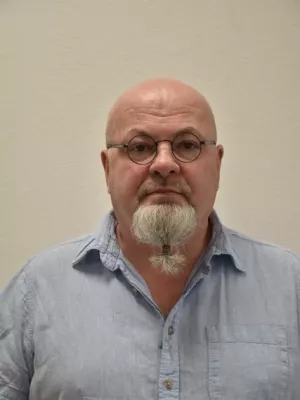
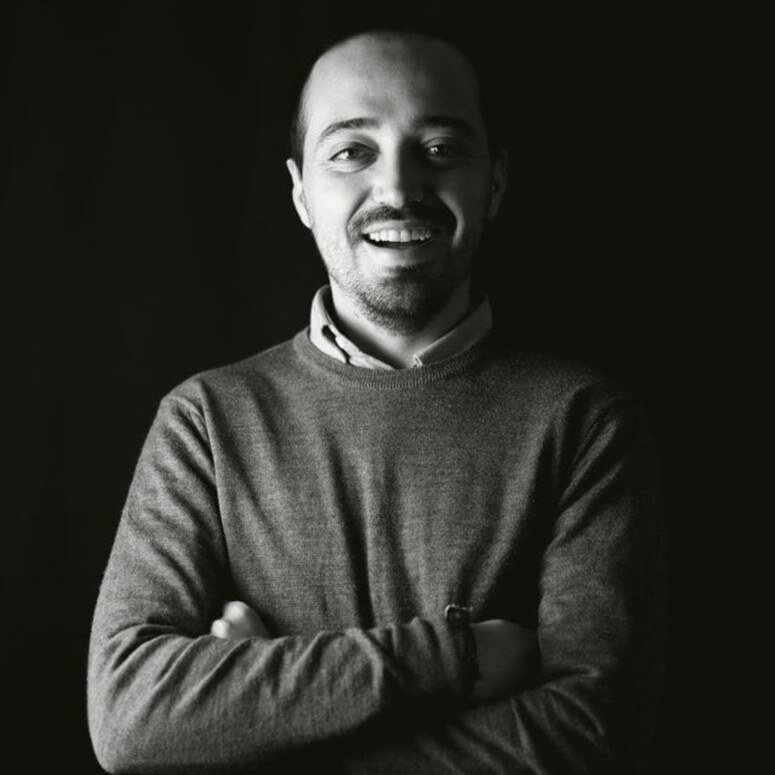
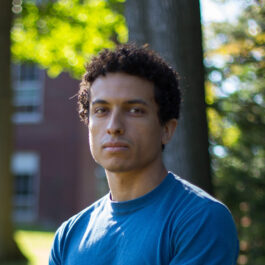
Edward Jones is a prominent academic researcher with a focus on interdisciplinary studies at the intersection of computer vision, biomedical engineering, and automotive systems. His work spans multiple domains including image processing, sensor optimization for autonomous vehicles, and medical imaging technologies. Collaborating extensively with institutions and researchers in Ireland and beyond, he has contributed to advancing perception systems in challenging environments and improving safety-critical applications in transportation. Research Interests: Automotive perception systems, medical imaging, low-light imaging, wireless communication for vehicular networks, and algorithm optimization for embedded systems. Key Contributions: Published over 90 papers in top-tier journals/conferences such as IEEE Transactions on Intelligent Transportation Systems, Sensors, and IEEE Access. Notable work includes low-light image enhancement algorithms, cyclist safety analysis via driver gaze tracking, and optimizing camera exposure for automotive applications. Recent trends in his publications emphasize cross-disciplinary solutions for autonomous systems, leveraging advances in computer vision and signal processing to address real-world challenges like adverse weather conditions and sensor degradation. Recipient of grants for projects involving automotive networks, breast cancer detection via microwave imaging, and distributed speech recognition systems.
Monica Castelhano is a Professor and Chair of the Cognitive Neuroscience Program in the Department of Psychology at Queen's University. She holds a B.Sc. from the University of Toronto (2000), M.A. (2002), and Ph.D. (2005) from Michigan State University. Her research focuses on visual attention and memory in real-world scenes, examining how perception, attention, and long-term memory interact. Using behavioral and eye-tracking methods, her work investigates how scene context influences attentional guidance and memory encoding. Research Interests: Her primary areas of investigation include the hierarchical structure of scene representations, the role of object-function in guiding attention, and the impact of spatial associations on visual search. She explores depth-based biases in scene processing and the integration of contextual and object-based cues during scene perception. Lab and Collaborations: Dr. Castelhano's lab employs eye-tracking technology to study gaze behavior in naturalistic environments. Her work bridges cognitive psychology and neuroscience, contributing to theories of scene perception and attentional mechanisms. Recent trends in her publications highlight interdisciplinary approaches, incorporating computational models and machine learning frameworks to analyze scene analysis processes. Advising and Grants: While specific grant details are not listed, her active research program indicates sustained funding support. No awards are explicitly mentioned in the provided materials. She supervises graduate students in experimental psychology and cognitive neuroscience.
Jenny Gabel, M.Sc., is a Researcher at the Department of Informatics, University of Hamburg, focusing on Human-Computer Interaction (HCI) and Virtual Reality (VR) applications. She is affiliated with the Human-Computer Interaction Research Group led by Prof. Dr. Steinicke and the Cluster of Excellence ‘Understanding Written Artefacts’ (UWA), particularly within Research Field B: ‘Inscribing Spaces’. Her work emphasizes spatial interaction techniques, XR tool development, and digital humanities applications. Education: Bachelor’s in Human-Computer Interaction (Universität Hamburg), Master’s in Computer Science with a focus on Extended Realities (XR). Professional experience includes UX consulting and academic research since 2020. Research Interests: Object selection in XR, raycasting in VR, interaction design for immersive environments, and the application of VR tools for studying cultural heritage and written artefacts. Projects include the ‘Immersive City Scripts’ initiative analyzing ancient inscriptions and the ‘Ancient Theatre of Miletus’ VR research tool. Publications span VR/AR interfaces, spatial computing, and digital humanities, with recent work presented at IEEE VR, ACM SUI/VRST, and ISMAR. Awards include a Best Paper Award (2020) and Honorable Mentions (2021, 2024). Teaching: Lectures on 3D user interfaces, interaction design, and usability engineering. Supervised over 10 student theses on topics like VR navigation, raycasting visualization, and AR maintenance tools. Labs/Teams: Core member of the HCI Research Group and UWA’s Inscribing Spaces team, contributing to interdisciplinary projects blending computer science and cultural studies.
Phoebe George is a Research Officer at the University of Western Australia (UWA), affiliated with the School of Population and Global Health. She holds a casual teaching role in Multi-Discipline studies. Her work focuses on environmental influences on health, particularly the impact of natural and built environments on child development, rural health, and physical activity promotion. Her research expertise aligns with UN Sustainable Development Goals, emphasizing health equity and sustainable communities. Key areas include socioemotional development in early childhood, blue/green space utilization, and policy implementation in childcare settings. She contributes to projects like the SENSitivity grant, exploring movement trends in early childhood for health outcomes. Phoebe’s publications (n=15) analyze relationships between environmental factors and child health, with recent work highlighting coastal proximity benefits for boys' socioemotional growth and blue space assessment tools. Her studies employ mixed-methods approaches, including latent profile analysis and cohort studies (e.g., PLAYCE cohort). Collaborations include the SENSitivity project (Stan Perron Charitable Foundation-funded), involving 8 researchers. Her findings have been cited 4+ times and received 21 Mendeley readership. She actively engages with policy development through Delphi studies and pragmatic trials, addressing barriers to physical activity implementation in early childhood education.
Dr. Alexander Petrov is an Associate Professor in the Department of Psychology at Ohio State University with a courtesy affiliation in the Department of Philosophy (since 2019). He directs the Visual Cognition Lab and holds a PhD in Cognitive Science from New Bulgarian University (1998) and a BS/MS in Computer Science from Sofia University (1995). His post-doctoral training included work with John R. Anderson at Carnegie Mellon University and Barbara A. Dosher at UC Irvine. Research Focus: Petrov's interdisciplinary work bridges cognitive psychology, vision science, and philosophy. His lab investigates: (1) High-level relational reasoning and analogy-making mechanisms, (2) Visual extraction of spatial relationships in dynamic scenes, (3) Neural implementations of cognitive processes, and (4) Philosophical foundations of perception. Methodologies combine behavioral experiments, computational modeling (ACT-R, Leabra), eye-tracking, and pupillometry. Publication Trends: His 15 most recent articles demonstrate consistent focus on visual perception dynamics (shape processing, stereoscopy), perceptual learning mechanisms, and cognitive modeling. Recent work increasingly incorporates neurophysiological validation and methodological innovations in measurement techniques. Awards and Honors: Fred Brown Research Award (2023, 2017) Clifford T. Morgan Best Article Award (2022, 2016) Extraordinary Ability status, U.S. Immigration (2002) Grigor Parlichev Award for Outstanding Achievements (1997) Academic Leadership: Actively advises PhD students (recent graduates: Yuhui Du, 2023; Ying Yu, 2020). Leads the Visual Cognition Lab, recruiting students from psychology, computer science, and philosophy. Organized the interdisciplinary workshop Philosophy and Psychology of Visual Space (2019).
David Hobbs is a Professor in the Department of Physics at Lund University, specializing in astrometry and space missions. He is a key contributor to the European Space Agency's Gaia mission, focusing on astrometric data processing and fundamental physics applications. His research includes developing algorithms for the Astrometric Global Iterative Solution (AGIS) and analyzing Gaia's data to study galactic structure, exoplanets, and stellar dynamics. Hobbs has also proposed the GaiaNIR mission, aiming to expand astrometry into near-infrared wavelengths. Earlier work includes software development for XMM-Newton and Integral observatories, as well as spacecraft attitude control algorithms for Herschel and Planck missions. Research interests include: High-precision astrometry and mission design Galactic structure analysis using Gaia data Exoplanet detection via astrometric methods Near-infrared astrometry for obscured regions Data processing algorithms for large astronomical surveys Recent articles highlight advancements in Gaia DR3 data exploitation, including chemical cartography of the Milky Way and discovery of black holes via astrometric techniques. Future work focuses on GaiaNIR's development to enhance astrometric capabilities for 12 billion stars.
Francesco De Pace is a PostDoc Researcher at the Institute of Visual Computing and Human-Centered Technology within the Faculty of Informatics at Vienna University of Technology (TU Wien). His research focuses on the intersection of augmented reality, virtual reality, and human-robot interaction, with particular emphasis on developing innovative interfaces for industrial applications. Dr. De Pace's research spans several key areas in immersive technologies and human-computer interaction. His primary interests include Augmented Reality (AR) and Virtual Reality (VR) systems, Human-Robot Interaction (HRI), Brain-Computer Interfaces (BCIs), and advanced tracking and localization techniques. He has made significant contributions to the development of AR/VR interfaces for industrial robots, outdoor tracking with Real-Time Kinematic GPS, and SLAM (Simultaneous Localization and Mapping) systems. His work bridges theoretical research with practical industrial applications, focusing on creating more intuitive and effective human-machine interfaces. Dr. De Pace's recent publications demonstrate a clear trajectory toward enhancing human-robot collaboration through immersive technologies. His research shows increasing sophistication in integrating multiple modalities (visual, spatial, and neural) to create more natural interaction paradigms. A notable trend is the application of AR/VR to industrial settings, particularly for assembly tasks, path planning, and training scenarios. His systematic evaluation of RTK-GPS for wearable AR represents important foundational work for outdoor AR applications, addressing critical challenges in positional accuracy across different environmental conditions. While specific awards are not prominently documented in the available information, Dr. De Pace's research has been supported by significant funding mechanisms, including grants from the Austrian Research Promotion Agency (FFG) under Grant Agreement No FO999886342 KIRAS MRespond, indicating recognition of the importance and potential impact of his work. Dr. De Pace appears to be actively involved in multiple research projects, including PostDisaster and MRespond as indicated in his profile. His collaborative approach is evident through his extensive co-authorship with researchers across institutions. While specific student advising information isn't detailed in the available materials, his role as a PostDoc Researcher likely involves mentoring junior researchers and contributing to the academic development of students working on related projects. Dr. De Pace is associated with the Mixed Reality Lab at TU Wien, as indicated in the website navigation. His research appears to be conducted within collaborative frameworks that include both academic and industry partners. His work on the MRespond project suggests engagement with emergency response applications of mixed reality technologies, indicating interdisciplinary team involvement spanning computer science, engineering, and potentially public safety domains.
Christoph Heinzl is Privatdozent at Technische Universität Wien, Faculty of Informatics, Institute of Visual Computing & Human-Centered Technology, and an associated researcher at University of Applied Sciences Upper Austria, Wels. His work bridges scientific visualization and industrial X-ray computed tomography, with applications in non-destructive testing and metrology. Education & qualifications: Heinzl holds a Dipl.-Ing.(FH) degree and a doctorate (Dr.) from TU Wien; in 2021 he completed his professorial dissertation (Habilitation) on visualization and analysis of XCT data. Research interests revolve around interactive visual analysis of high-dimensional and multimodal industrial data, uncertainty visualization, metrological evaluation of CT data, and development of immersive analytics workspaces for materials characterization. Across 60+ peer-reviewed publications since 2006 he has advanced techniques for porosity quantification, defect tracking, metal-artefact reduction, and comparative visualization of 3-D volumes, often in close cooperation with the Austrian COMET centre “EXCELLENCE IN COMET” and the K-project “ADVANCED METROLOGY”. Awards & recognition: While no major personal prizes are listed, Heinzl has served as paper co-chair and editorial guest editor for leading visualization venues, indicating peer recognition. Teaching & supervision: He regularly offers bachelor thesis topics such as “ImNDT: Immersive Workspace for Analysis of Multidimensional NDT Data” and teaches courses on visualization and computer graphics; specific PhD students are not named in the supplied sources. Funding & labs: Research is embedded in the university’s Visual Computing research area and supported by national competence centres for metrology, providing access to state-of-the-art XCT facilities and VR/AR laboratories.
Wolfgang Stuerzlinger is a Professor at Simon Fraser University's School of Interactive Arts & Technology, where he leads research in virtual reality, 3D user interfaces, and human-computer interaction. His work focuses on developing novel interaction techniques for virtual environments, with particular emphasis on eye-tracking systems, text entry methods, and immersive analytics. His research interests span multiple domains within human-computer interaction, with significant contributions to virtual reality interaction techniques, gaze-based interfaces, and 3D navigation systems. He has developed innovative approaches to eye-hand coordination training, text entry in VR, and multiscale environment navigation, advancing our understanding of how users interact with complex virtual spaces. Analysis of his recent publications reveals a strong focus on practical interaction techniques for virtual and augmented reality, with particular attention to gaze-based interaction, 3D pointing performance, and the development of novel input methods. His work often combines empirical studies with practical system development, resulting in both theoretical contributions and usable interfaces. Dr. Stuerzlinger has received recognition through numerous high-impact publications in top venues including CHI, IEEE TVCG, and VR conferences. His research has been consistently funded and has influenced both academic research and industry applications in the VR space. He actively supervises doctoral students and maintains extensive collaborations with researchers worldwide. His current work explores the integration of AI with user interface design, personalized navigation systems, and advanced techniques for distant object manipulation in virtual environments.
Seth Gossage is a Research Associate at the Center for Interdisciplinary Exploration and Research in Astrophysics (CIERA) at Northwestern University, where he was promoted from CIERA postdoc in 2024 after three years (2021-2024). He collaborates extensively with Professor Vicky Kalogera on stellar evolution modeling and population synthesis. His research focuses on stellar evolution , particularly through computational modeling using MESA and development of the POSYDON population synthesis code. Key interests include: Effects of stellar rotation on observational signatures Binary star evolution pathways Convective dynamics in low-mass stars Progenitor systems for supernovae and gravitational wave sources Analysis of his 15 most recent publications (2023-2025) reveals a strong emphasis on binary interactions across metallicity ranges, with significant contributions to understanding stripped-envelope supernovae, double neutron star formation, and gamma-ray burst progenitors. His work bridges theoretical modeling with observational constraints from HST and spectroscopic surveys. Notable scientific contributions include: First-author paper on convective turnover times in low-mass stars (ApJ 2025) Key role in POSYDON v2 development for cosmological metallicity ranges Analysis of Be star-black hole binaries using LAMOST data Gossage mentors through CIERA's REU program (evidenced by student presentations at AAS meetings) and contributes to outreach initiatives. His current work involves developing grids of 1D stellar models to replicate population data while investigating rotational effects.
Professor Andrew Greentree is a theoretical physicist at RMIT University, specializing in quantum physics, diamond-based technologies, and neurocognition in insects. He holds the position of Professor in the School of Science and is a Chief Investigator in the ARC Centre of Excellence for Nanoscale BioPhotonics. His roles include teaching, research coordination for Higher Degree Research (HDR) in Physics, and involvement in RMIT's ERA submission and Research Integrity Advisory Network. Research interests span quantum optics, quantum information, diamond magnetometry, and the cognitive abilities of bees. Notable achievements include pioneering the Jaynes-Cummings-Hubbard Model and spatial adiabatic passage, leading to novel quantum devices. Collaborations include work with Prof. Brant Gibson on diamond-glass hybrid materials and Prof. Adrian Dyer on bee numerical cognition. Greentree has developed advanced magnetometry techniques and contributed to understanding bees' ability to perform arithmetic, published in high-impact journals like Science . Awards: RMIT Award for Research Excellence (2019), ARC Future Fellow (2017), Fellow of the Institute of Physics (2012). Advising: Supervises PhD projects in quantum AI, diamond magnetometry applications, and bee cognition. Lab/Teams: ARC Centre of Excellence for Nanoscale BioPhotonics, Theoretical Chemical and Quantum Physics Group.
Adrian Wills is an Associate Professor in the School of Engineering (Mechatronics) at the University of Newcastle, Australia. He leads the Mechatronics Engineering program and holds academic appointments since July 2015. His research focuses on Bayesian estimation, system identification, and control engineering, with applications in robotics and mechatronics. Wills has collaborated with institutions globally, including Linköping University, Uppsala University, and the University of British Columbia. He earned his B.E. (Elec.) and Ph.D. from the University of Newcastle in 1999 and 2003, respectively. Teaching expertise includes delivering advanced courses in estimation and optimization within the Mechatronics Engineering program. Administrative roles include program convenor for Mechatronics Engineering. Research highlights include contributions to state-space models, nonlinear system identification, and model predictive control. His work bridges theoretical advancements with practical applications in engineering systems and healthcare. Key collaborations involve Professors Lennart Ljung, Thomas Schön, and Bhushan Gopaluni, among others. His technical contributions span MATLAB toolboxes (e.g., UNIT), FPGA/ASIC implementations for control systems, and interdisciplinary projects in strain measurement using neutron diffraction.
J. Christopher Clemens is a Professor specializing in astrophysics and stellar seismology. His research focuses on white dwarf stars, exoplanets, interacting binaries, and astronomical instrumentation. He holds a B.S. in Astrophysics from the University of Oklahoma (1985) and a Ph.D. in Astronomy from the University of Texas at Austin (1994). Postdoctoral roles include NASA Hubble Fellow at Iowa State University (1994-1996) and Sherman Fairchild Fellow at Caltech (1996-1998). Key research areas include asteroseismology of white dwarfs, debris disks around stars, and exoplanetary systems. He has pioneered studies of magnetic emission in white dwarfs, relativistic corrections in pulsation models, and planetary influences on stellar rotation. Clemens is also an expert in advanced spectrograph design, including volume phase holographic (VPH) gratings for large telescopes. His work integrates observational astronomy with theoretical modeling, leveraging facilities like the Kepler and TESS space telescopes, the Whole Earth Telescope, and the Southern African Large Telescope (SALT). Collaborations include the PROMPT telescope array and the Edinburgh-Cape Blue Object Survey (WIRED for EC project). Clemens has contributed to groundbreaking discoveries such as lithium pollution in white dwarfs tracing exoplanet accretion and the electromagnetic counterpart of the neutron star merger GW170817. His instrumentation innovations have advanced high-resolution spectroscopy in both ground-based and space-based observatories.
Professor John Schofield is a leading figure in cultural heritage studies and contemporary archaeology at the University of York. He directs the Cultural Heritage Management MA program and the Centre for Applied Heritage Studies. His research focuses on heritage's role in addressing global challenges like marine plastic pollution, combining archaeological methods with environmental science. He has held adjunct positions at Griffith University (Australia), Flinders University (Australia), and the University of Turku (Finland). Schofield's over 200 publications include seminal works on contemporary archaeology and heritage policy. He serves on editorial boards for journals like World Archaeology and Journal of Contemporary Archaeology . Adjunct Roles: Adjunct Professor at Griffith University, Senior Visiting Fellow at Flinders University, Docent at Turku. Key Projects: Galapagos Conservation Trust collaboration on marine plastics, Cold War heritage studies, and heritage's role in health and wellbeing. Awards: Corresponding Fellow of the Australian Academy of the Humanities, Vice Chancellor's Gold Award (2011). His research emphasizes archaeology's potential to address urgent environmental issues, using object biographies and citizen science to transform public perception of waste. Current projects explore plastic pollution's archaeological dimensions and its impact on World Heritage sites like Galapagos. He also investigates heritage's role in social justice and inclusive practices, supervising PhD students in diverse topics from Andean health traditions to urban heritage. Teaching and supervision focus on heritage management, contemporary archaeology, and interdisciplinary approaches. Recent collaborations span marine biologists, public health researchers, and international institutions, reflecting his commitment to heritage as a transformative practice.
Marta Marrón Romera is an Associate Professor at the Department of Electronics, School of Engineering, University of Alcalá. Her research focuses on intelligent systems, embedded systems, mobile robotics, computer vision, and assistive technologies. She holds a PhD in Electronics Technology (2008) and has over 25 years of research experience, including a 15-week stay at KTH Royal Institute of Technology in Sweden. Her work spans probabilistic algorithms for autonomous robots, machine learning, and applications in smart environments. She has led 33 research projects (19 national, 2 European, and 20 private) and holds 3 patents. She has authored 39 peer-reviewed journal articles (36 in JCR-indexed journals, 24 Q1-Q2), 5 book chapters, and over 70 conference communications. Her h-index ranges from 17 to 21, with over 1,200 citations. She has supervised 2 Cum Laude PhD theses (European), 4 ongoing PhDs, 19 master's, and 35 bachelor's theses. She actively participates as an evaluator for national research agencies, including the Spanish State Research Agency and Andalusian Quality Agency. She has organized 9 workshops and a Special Session on Multisensor Signal Processing. Her research is recognized by continuous 'sexenios' (research activity valuations) since 2015. Key contributions include the GEINTRA group's work on sensor fusion for intelligent spaces, autonomous wheelchairs, and human activity monitoring. She pioneers edge computing solutions for real-time surveillance and healthcare applications.