
Prof. Dr. Olena Palko is a historian specializing in Eastern Europe, the Soviet Union, and Ukraine. She holds the SNSF Professorship at the University of Basel's Department of History, focusing on East European History. Her research emphasizes Soviet minority policies, cultural politics, and national identity formation in interwar Ukraine. She is a leading scholar with notable works including Making Ukraine Soviet (2021), awarded the 2023 Alexander Nove Prize. Her current SNF-funded project, Red Tower of Babel , examines Soviet minority experiments in Ukraine. Education: PhD from University of East Anglia (2017); Kandydat nauk from National Academy of Sciences of Ukraine (2013). Research Interests: Soviet nationality policy, minority history, Ukrainian twentieth-century history, transnational border dynamics. Her work bridges archival analysis with transnational perspectives, addressing contested borderlands between Poland and the USSR. Key publications include co-edited volumes like Making Ukraine (2022) and Ukraine's Many Faces (2023). She actively contributes to academic governance roles, including co-convening the BASEES Study Group for Minority History and serving on the Scientific Advisory Council of the Council of Europe's history observatory.
جستجوی استاد راهنمای دانشگاهی
برای مسیر پژوهشیتان، استاد راهنما، استاد دانشگاه و پژوهشگر مناسب را پیدا کنید و با آنها ارتباط بگیرید.
نمایش ۱-۱۵ از ۷۵۵ استاد راهنما
اطلاعات پروفایلها از صفحات عمومی دانشگاهها گرفته شده و ممکن است بهروز نباشد.

Kamila Kociałkowska is an Assistant Professor in the Department of History of Art at the University of Warwick, Faculty of Arts. She joined the department in 2024 after holding postdoctoral fellowships at the Metropolitan Museum of Art, the Getty/ACLS, and Harvard University’s Davis Center. Education: PhD in History of Art, University of Cambridge MA in History of Art, Courtauld Institute of Art MA in Fine Art, University of Edinburgh Her research centers on modernism in Eastern Europe, especially the interplay between artistic production and systems of censorship and surveillance in the Soviet Empire and its peripheries. She employs new materialist approaches to analyze redacted and fragmented visual and textual sources, rethinking the origins of abstraction beyond traditional resistance narratives. Her work also explores the cryptographic imagination and the impact of surveillance technologies on interwar avant-garde aesthetics. Her recent publications span topics such as Suprematist resistance, undead imagery in Stalinist propaganda, and explosive futurist texts, reflecting a deep engagement with avant-garde experimentation under repression. These works reveal recurring themes: the materiality of censorship, subversive semiotics, and the transformation of political constraint into aesthetic innovation. Scientific Awards and Fellowships: Leonard A. Lauder Postdoctoral Fellow, Metropolitan Museum of Art Getty/ACLS Postdoctoral Fellow in the History of Art Visiting Scholar, Davis Center, Harvard University She is currently completing her first book, The Black Square and the Blue Pencil: Censorship and the Stimulation of Modernist Style , which charts how censorship shaped avant-garde aesthetics in Russia, Georgia, Ukraine, and Azerbaijan. Her second project, Coding Modernity: The Cryptographic Imagination and the Interwar Avant-Garde , investigates the cultural history of spying and secret policing in interwar Europe. She does not currently have any listed advisees or research grants in the provided text.

Mark B. Smithمشاهده پروفایل
دانشیار
Dr. Mark B. Smith is an Associate Professor in Modern European History at the University of Cambridge’s Department of History. His research focuses on Soviet and European history, particularly the Soviet Union’s social structures, welfare policies, urban development, and cultural dynamics from Stalinism through late socialism. He teaches courses on welfare states, Soviet life, and 20th-century European violence. Key research areas include Soviet urban housing programs, welfare state evolution, and Cold War-era cultural exchanges. His publications analyze topics like Khrushchev’s housing reforms, post-Stalin urban welfare systems, and Soviet pension policies. Smith has co-edited special issues on European urban societies and authored books such as *The Russia Anxiety* (2019) and the forthcoming *Exit Stalin* (2026). He advises doctoral students on Soviet history, welfare states, and Cold War topics. His work bridges legal history, social policy analysis, and cultural studies, emphasizing how everyday life reflected broader ideological and structural changes in Soviet society.

Kyle Bellucci Johansonمشاهده پروفایل
استادیار مهمان
Kyle Bellucci Johanson serves as a Visiting Critic in Cornell University's College of Architecture, Art, and Planning, Department of Art. Holding an MFA from California Institute of the Arts and a BA in Art and Reconciliation Studies from Bethel University, he merges artistic practice with critical theory through performance architecture and collaborative media. Whitney Independent Study Program (2022–23) Founding fellow at land's edge free school (Los Angeles) Teaching experience at SAIC, UIC, CUNY, and Cooper Union His research investigates: Power structures through spatial interventions Critical theory applications in art practice Post-capitalist imaginaries Hauntology and historical materialism Transdisciplinary approaches to social critique Project trends reveal: Reinterpretation of Soviet design principles Investigation of worker identity in post-industrial contexts Temporal and spatial dislocation in artistic practice Monument critique through performative methods Quantum theory-inspired architectural concepts Reimagining of common spaces as political sites Scientific awards include: Creative Research Grant (2025) Whitney ISP participation (2022–23) Automata Studio Residency (2022) Artists Run Chicago Grant (2021) BOLT Residency (2020–21) Through projects like KLUB WRKR —a nomadic workers' club reimagined for the gig economy—and table (2018–2022), a Chicago-based experimental space for artistic practice, he interrogates institutional frameworks while fostering community through discursive meals and collaborative exhibitions.
- Collaborative practice
- Digital media
- Drawing
- +۱۴ مورد دیگر

Nicholas Guyatt serves as Professor of North American History in the Faculty of History at the University of Cambridge and is a Fellow of Jesus College. He joined Cambridge in 2014 after teaching positions at Princeton University, Simon Fraser University, and the University of York. His academic foundation includes a BA and M.Phil. from the University of Cambridge and a Ph.D. from Princeton University under Daniel T. Rodgers. Guyatt's research centers on race, national identity, and state formation in 18th-19th century America, with core expertise in colonial history, the Atlantic World, and intellectual history of American imperialism. His work critically examines racial segregation, maritime history, and evolving concepts of citizenship and world order. Analysis of his recent publications reveals consistent thematic focus on racial ideologies, colonization projects, and imperial thought across the early republic and Civil War eras. His scholarship demonstrates methodological breadth spanning political, intellectual, and social history with particular attention to African American experiences and transnational connections. His distinguished recognition includes: Stanford Humanities Center Faculty Fellow (2009-2010) British Academy Mid-Career Fellow (2013-2014) Senior Visiting Research Fellow at Oxford's Rothermere American Institute (2013-2014) He actively supervises M.Phil. and Ph.D. candidates in 18th-19th century American/Atlantic history, especially welcoming research on Native Americans, African Americans, slavery/abolition, and empire. His editorial leadership with Zed Books' 'Global History of the Present' series reflects commitment to diversifying historical scholarship beyond Eurocentric frameworks. Current major projects include co-authoring 'Jefferson's Wolf: The Struggle to End Slavery in the Founding Era' (Harvard University Press, 2026) and editing 'The Oxford Illustrated History of the United States' (OUP, 2026), demonstrating sustained scholarly productivity through collaborative academic networks.
Barbara Zanchettaمشاهده پروفایل
مدرس ارشد
Barbara Zanchetta is a Senior Lecturer in the Department of War Studies at King’s College London, affiliated with the Faculty of Social Science & Public Policy. She specializes in Cold War history, American foreign policy, and transatlantic relations. Her work examines US-Soviet détente, nuclear arms control, and the strategic implications of post-Cold War policies. She is the author of The Transformation of American International Power in the 1970's and co-author of Transatlantic Relations since 1945 . Currently, she is researching US policies toward the Persian Gulf and their role in the collapse of the Soviet Union. Her teaching includes courses on international history, US national security, and the War on Terror. She is affiliated with the Sir Michael Howard Centre for the History of War, the Latin American Security Research Group, and the Centre for Grand Strategy. Her research explores the intersections of diplomacy, conflict, and security policy, with a focus on Cold War legacies and modern geopolitical challenges. Zanchetta has organized international conferences, including a hybrid event in Paris on the consequences of the Cold War’s end. Her commentary on contemporary issues, such as NATO’s expansion and Russia’s aggression in Ukraine, reflects her expertise in historical and strategic analysis.
Stuart Croft is Vice-Chancellor & President of the University of Warwick and Professor of International Security in the Department of Politics and International Studies (PAIS). Since joining Warwick in 2007 he has served as Pro-Vice-Chancellor for Research (Arts & Social Sciences), Provost, and since February 2016 as the University’s chief executive, leading 5,500 staff across all disciplines. Education & Career: 18 years at the University of Birmingham, latterly Professor of International Relations and Head of the School of Social Sciences. Appointed Professor of International Security, University of Warwick, January 2007. Pro-Vice-Chancellor for Research (Arts & Social Sciences) 2011-2013. Provost 2013-2016. Vice-Chancellor & President from February 2016. Research Interests: Professor Croft’s scholarship lies at the intersection of security studies and political culture, using constructivist and narrative approaches to analyse how identities and discourses shape security policy. He has published extensively on the War on Terror, NATO transformation, European security governance, and the securitisation of Islam in Britain. His work combines large-scale funded empirical projects with theoretical innovation in International Relations. Publications & Grants Trend: Over the past two decades his output has clustered around three themes—cultural narratives of terrorism and counter-radicalisation, institutional governance of Euro-Atlantic security (NATO/EU), and arms-control regimes—moving from traditional strategic studies toward critical security approaches that foreground identity, discourse and governance. Scientific Awards & Fellowships: Academician, Academy of Social Sciences (2006) Fellow, Royal Society of Arts (2006) International Studies Association – International Security Section Book Award short-list 2007 Doctoral Supervision & Mentoring: He has successfully supervised 21 PhD students at Birmingham and Warwick, examined 25 UK PhDs as external examiner, and currently supervises 6 doctoral researchers. He has mentored 9 ESRC, EU and British Academy post-doctoral fellows. Editorial & Professional Leadership: Editor of the Palgrave ‘New Security Challenges’ book series since 2005; co-editor of Contemporary Security Policy 1989-2004; editorial board member of Critical Studies on Terrorism and Dynamics of Asymmetric Conflict . Chair (2009-2011) and President (2011-2013) of the British International Studies Association.
Sarah Wilson is Professor of Modern and Contemporary Art at The Courtauld Institute of Art, University of London. She has been a faculty member since 1982 and has held leadership roles including Head of the Modern and Contemporary Section (2005-2008) and Head of Diploma programmes (2014-2015). She is internationally recognized as the English-language expert on Post-War European art and has held visiting positions at Paris-IV Sorbonne and the University of Versailles-Saint Quentin. Wilson was educated at the University of Oxford (BA English Literature) and at the Courtauld Institute of Art (MA and PhD). She was awarded the title Chevalier des Arts et des Lettres in 1997 for services to French art and culture, and received the International Association of Art Critics' Award for Distinguished Contribution to Art Criticism in 2015. She has held visiting professorships at Paris-IV Sorbonne (2002-2004), École Nationale Supérieure des Beaux-Arts (2006-2007), and University of Versailles-Saint Quentin (2012-2013). Sarah Wilson's research spans post-war and Cold War European art, contemporary global art practices, and the intersections between conceptual art, political theory, and visual culture. Her work extends from European avant-gardes to contemporary art across the former Soviet Union and Asia. She is particularly known for her expertise in French Stalinism, neo-Marxism and the arts, and conceptual art practices beyond the 'first world.' Wilson has initiated important academic programs such as the 'Global Conceptualism' MA course with Boris Groys, which connects Anglo-American conceptual art with practices from Moscow and beyond. She has also expanded her research to include modern and contemporary Asian art since 2013. Her extensive publication record shows a consistent focus on European art history with increasing engagement with global perspectives, particularly Asian contemporary art since 2013. Wilson's scholarship bridges art historical analysis with philosophical inquiry, especially regarding French theory and its visual manifestations. Her major publications include 'Paris, Capital of the Arts, 1900-1968' (2002) and 'The Visual World of French Theory: Figurations' (2010), with a second volume 'The Visual World of French Theory II: Interventions' in preparation. Chevalier des Arts et des Lettres (1997) International Association of Art Critics' Award for Distinguished Contribution to Art Criticism (2015) Marie Curie Actions – RBUCE-UP, Chaire d'excellence, Université de Versailles-Saint Quentin (2012-2013) Professor Wilson has supervised 36 PhD students to completion and over 230 MA dissertations, creating what she describes as 'a unique English-language archive in the field of post-1945 European and global art history.' Her former students now hold prominent positions in major institutions worldwide including Tate, the British Museum, Design Museum, Scottish National Gallery of Modern Art, British Council, Centre Georges Pompidou, Kunsthalle Bremen, and universities across Europe and North America. She has received significant research funding including a Marie Curie Actions grant for her project 'Globalisation before globalisation: avant-gardes, academies, revolutions.' Wilson is actively involved with the Courtauld alumni's former East Wing Collection (now VS1, Vernon Square) and has contributed to the Research Forum's programmes. She has curated numerous exhibitions including the 'Global Conceptualism'-related projects and served on the curatorial team of the 1st Asian Biennale (China-Guangzhou) in 2014. Her commitment to women artists has led to early exhibitions of artists like Zofia Kulik and Alina Szapocznikow before their international prominence. She is involved with CCRAC (Cambridge-Courtauld Russian Art Centre), Calvert 22, and Pushkin House in London, reaching out to Russia and Eastern Europe.

Jochen Hellbeck is a Distinguished Professor of History and Vice Chair for Graduate Education in the Department of History at Rutgers University's School of Arts and Sciences, where he has been teaching since 2003. He holds a Ph.D. from Columbia University and specializes in the history of the Soviet Union, with particular focus on individual life stories and the shaping of the self in modern Europe. Professor Hellbeck's research centers on the place and self-understandings of individuals during cataclysmic 20th century events, including the Russian Revolution, Stalin's terror regime, and World War II. His work examines how narratives of redemptive violence and transformation attached themselves to individuals on the ground, revealing how authors of diaries and personal texts became co-authors of the revolutionary script. More recently, he has explored comparative and transnational aspects of how Soviet, German, and British states mobilized citizens during World War II, highlighting the centrality of the Soviet war effort to the broader history of the conflict. His acclaimed book Stalingrad: The City that Defeated the Third Reich (2015) was the first Western study to probe the meaning of the Battle of Stalingrad for Soviet soldiers and civilians. The book draws on dozens of oral histories recorded by Moscow historians during and after the battle. Hellbeck's research consistently focuses on personal narratives and eyewitness accounts to provide grounded perspectives on major historical events. Morphomata Fellowship, Cologne (2019) Guggenheim Fellowship (2017) Short list, non-fiction prize of the Moscow Book Fair (2017) Davis Center Fellowship, Princeton (2016) Damals prize for best historical monograph (2013) American Academy in Berlin Fellowship (2009) Rutgers Board of Trustees Fellowship for Scholarly Excellence (2007) Michigan Society of Fellows (1997-1999) As a member of the Rutgers graduate faculty, Professor Hellbeck works with students interested in modern Russia and the Soviet Union, and in transnational explorations of Communism, World War II, and the Cold War. He encourages prospective graduate students to contact him before application deadlines. His website, Facing Stalingrad , features portraits and voices of veterans he interviewed during his research.
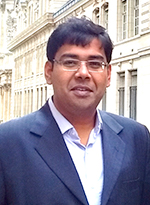
Auritro Majumder is Associate Professor of English at the University of Houston's College of Liberal Arts and Social Sciences, holding a courtesy appointment in the India Studies Program. His academic profile spans literary scholarship, critical theory, and intellectual history with a focus on non-Western perspectives. His educational background includes a Ph.D. in English from Syracuse University (2014), a Certificate in Critical Theory from Cornell University (2012), an M.A. (First Class) in English from Jadavpur University (2009), and a B.A. (First Class Honours) in English from Jadavpur University (2007). Majumder's research centers on peripheral internationalism and decolonial knowledge production , examining literary traditions across India, the Soviet Union, China, Latin America, and the United States. His work bridges literary theory , critical race studies , and global political movements , with particular emphasis on Bengali literature, caste-race intersections, and South-South cultural networks. His monograph Insurgent Imaginations: World Literature and the Periphery (Cambridge University Press, 2020) redefines world literature through non-Western frameworks. Analysis of his 15 most recent publications reveals consistent engagement with decolonial aesthetics , transnational solidarity , and subaltern epistemologies . His scholarship demonstrates interdisciplinary reach spanning literary studies, political theory, film criticism, and comparative intellectual history, with increasing focus on contemporary debates around planetary consciousness and peripheral modernities. His scientific recognition includes: Project Completion Grant, CLASS (2019) William Lee Pryor College Professorship (2018-2019) Research Progress Grant (2017) CLASS Research Funds (2016) New Faculty Summer Research Grant (2015) Majumder actively contributes to academic service as Executive Committee member of the Modern Language Association’s South Asian and South Asian Diasporic Language, Literature and Culture Forum, editorial board member for Mediations , jurist for the National Endowment for the Humanities, and reviewer for multiple international journals. He has lectured globally across North America, South Asia, Europe, and Brazil. His teaching portfolio includes courses on postcolonial literature, modern Indian literature, and graduate seminars in postcolonial theory. Current projects include a monograph titled The Global South in Literature and Theory and a co-edited anthology Cultures of the Cold War in South Asia .

Terry Martin is the George F. Baker III Professor of Russian Studies at Harvard University, affiliated with the Department of History within the Faculty of Arts and Sciences. He holds dual affiliations with the Davis Center for Russian and Eurasian Studies and the Weatherhead Center for International Affairs. His research focuses on Soviet history, ethnicity, identity, surveillance, and political violence. He is renowned for works like The Affirmative Action Empire and co-edited A State of Nations . Currently, he is completing a book on Soviet state information-gathering from the revolution to Stalin’s death. Research interests include the intersection of nationalism, empire, and state policies in the USSR, with attention to religion, political police, and comparisons between Nazi and Soviet systems. His work bridges historical analysis with sociopolitical theory. His affiliations and academic contributions underscore his role as a leading scholar of Russian and Eurasian studies, with a focus on 20th-century imperial and international history.
- Soviet History
- Ethnicity
- Identity
- +۷ مورد دیگر
Denis Kozlovمشاهده پروفایل
دانشیار
Denis Kozlov is an Associate Professor in the Department of History at Dalhousie University, specializing in modern Russian and Soviet history. His academic journey includes a BA from Herzen Russian State Pedagogical University, an MA from the University of Massachusetts Amherst, and a PhD from the University of Toronto. He holds appointments within Dalhousie's Faculty of Arts and Social Sciences and maintains an active research profile focused on cultural and intellectual transformations in the Soviet Union. His educational background reflects deep engagement with Russian studies: BA: Herzen Russian State Pedagogical University MA: University of Massachusetts Amherst PhD: University of Toronto Kozlov's research centers on Soviet cultural and intellectual history during the post-Stalin era (1953-1991), with particular emphasis on memory practices, reading audiences, and migration. His work examines how Soviet citizens processed historical trauma through literature and media, especially during the Thaw period, and explores transnational migrations from the USSR in the 1970s-1980s. He investigates intersections between literature, society, and historical consciousness, revealing how cultural production shaped Soviet identity and social change. Analysis of his 15 most recent publications shows consistent focus on Soviet cultural history, with dominant themes including reading practices during de-Stalinization, migration as political expression, and memory politics. His methodology combines archival research with cultural analysis, increasingly incorporating transnational perspectives in recent works on Soviet Jewish migration and Eastern European identity. His scholarly recognition includes significant awards: SSHRC Insight Grant (2019-2024) Andrew W. Mellon Fellowship at Institute for Advanced Study, Princeton (2010-2011) Harvard University Postdoctoral Fellowships (2008-09) Faculty of Arts and Social Sciences Teaching Award (2014-2015) Kozlov actively supervises graduate research in Soviet history while securing major grants including SSHRC and NEH funding. His teaching spans introductory surveys to advanced seminars on Soviet Russia and comparative cultural history, with recent courses including HIST 2021F (Soviet Russia) and HIST 3088F (History & Memory Russia and West) for 2024-2025. While no dedicated research labs are mentioned, his collaborative projects like the NEH-funded conference "The Thaw: Soviet Society and Culture during the 1950s and 1960s" demonstrate his role in building scholarly networks. Current work focuses on Soviet migration patterns and their ideological implications.
- Russian History
- Soviet History
- Cultural History
- +۴ مورد دیگر
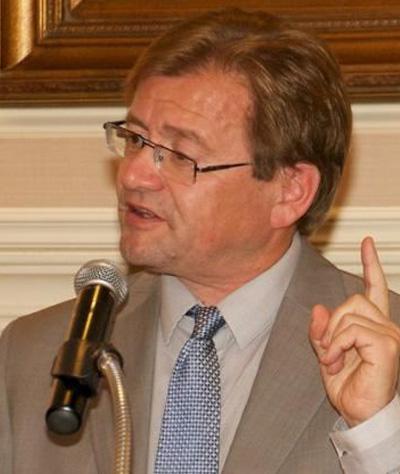
Vladislav Zubok is a Professor of International History at the London School of Economics (LSE), where he also leads the Russia International Affairs Programme at LSE IDEAS. His career spans teaching roles at institutions like Amherst College, Ohio University, Stanford University, University of Michigan, and Temple University (tenured in 2004). Born and educated in Moscow (Moscow State University BA, PhD from the Institute for the USA and Canada), his work focuses on Cold War history , Soviet Union , Stalinism , and Russian intellectual history in the 20th century. Research Interests : Zubok’s scholarship bridges political history and cultural analysis , particularly examining the USSR’s Cold War dynamics, the collapse of authoritarian regimes, and the role of intellectuals in post-Stalinist Russia. His publications reveal trends in ideological evolution , geopolitical miscalculations , and economic fragility of superpowers. Recent works like Collapse (2021) emphasize authoritarian state failure and democratic populism in the USSR’s final decade. Awards & Grants : Lionel Gelber Prize (for A Failed Empire ) Marshall Shulman Prize (for A Failed Empire ) Grants from MacArthur Foundation, Carnegie Corporation of New York, Yeltsin Foundation, and Russkii Mir Foundation Fellowships at Norwegian Nobel Institute, Woodrow Wilson Center, Collegium Budapest, Rockefeller Center (Bellagio), Hoover Institute
- Cold War History
- Soviet Union
- Stalinism
- +۵ مورد دیگر
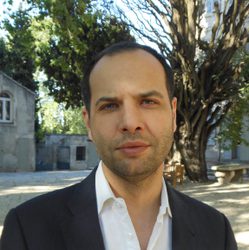
Ricardo Soares de Oliveira is a Professor of International Politics of Africa at the Department of Politics and International Relations, University of Oxford, and Full Professor of Political Science at CERI Sciences Po. He is an Official Fellow at St Peter's College, University of Oxford, and a Fellow with the Global Public Policy Institute, Berlin. His work spans comparative politics, political economy, and global governance, with a focus on African states and their interactions with offshore economies. BA, MPhil, PhD in Political Science His research explores the international political economy of African states, particularly extractive industries, financial sector dynamics, conflict/post-conflict reconstruction, and African-Asian relations. He investigates transnational kleptocracy, authoritarianism's influence on the global economy, and offshore finance's impact on African politics. Recent publications analyze trends in kleptocratic networks, offshore finance, and authoritarian economic strategies. His work underscores the role of global financial systems in enabling corruption and the challenges of statebuilding in resource-rich contexts. Leverhulme Trust/British Academy Senior Research Fellowship (2023–24) British Academy Senior Research Fellowship (2023) Leverhulme Trust Fellowship (2011) Soares de Oliveira advises PhD students and has secured grants from the Leverhulme Trust, ESRC, DFID/FCDO, and the Calouste Gulbenkian Foundation. He co-directs the Oxford Martin Programme on African Governance and collaborates with institutions like the European Commission, World Bank, and UNCTAD. His media commentary appears in the Financial Times , Foreign Affairs , and Times Literary Supplement .

Filip Slaveskiمشاهده پروفایل
مدرس ارشد
Dr Filip Slaveski is a Senior Lecturer in Russian/Soviet and East European History at the School of History, The Australian National University. He specializes in Soviet Empire studies, focusing on mass conflict, food crises, political control, and their contemporary echoes. His work examines Ukraine, Russia, and post-WWII dynamics, particularly Soviet governance and post-war reconstruction. Slaveski holds a PhD in History and has published extensively on Soviet famines, post-war Ukraine, and Soviet-German occupation policies. His notable works include Remaking Ukraine after WWII (2021) and The Soviet Occupation of Germany (2013). He has received funding through ARC DECRA grants and contributed to major projects on Soviet famines and post-war recovery. Research Interests: Soviet Union, Ukraine, Conflict Studies, Famine, Repression, Nationalism. Grants: ANU Futures Scheme (2023–2026) and The Last Soviet Famine Project (2021–2025).
نمایش نتایج تا ۷۵۰ مورد اول. برای یافتن نتایج دقیقتر، جستجوی خود را با فیلترها محدود کنید.